Table of Contents
- Custom Backpacks UK: What a Custom Backpack Programme Actually Involves
- From Brief to Shipment: The Seven-Stage Production Timeline
- Specification and Tech Pack: What to Send Before Sampling Starts
- Material Selection: Shells, Linings, Hardware and Trims
- Logo and Branding Methods Compared
- Sampling: Prototype, Revision and Pre-Production Sign-Off
- UK Market Compliance: UKCA, UK REACH and Textile Labelling
- Cost Structure: Where Every Pound of Unit Cost Goes
- MOQ Tiers and How Volume Changes Unit Price
- Quality Control: AQL 2.5, Inline Checks and Pre-Shipment Inspection
- Packaging Options: Retail, E-commerce and Bulk Cartons
- Logistics, Payment Terms and Incoterms: FOB Xiamen and T/T 30/70
- How to Brief Us: Getting an Accurate Quote in 48 Hours
- Frequently Asked Questions
Custom Backpacks UK: What a Custom Backpack Programme Actually Involves
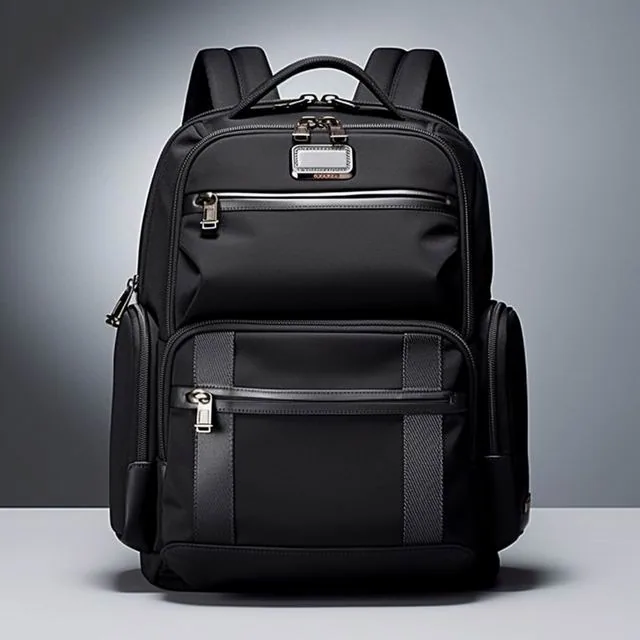
Custom backpacks UK buyers ask for usually fall into one of four jobs. A retail brand wants an own-label range that matches its clothing line in colour and trim, and needs consistency across repeat seasons. A corporate buyer wants 500 to 5,000 units for a staff onboarding kit, a conference or a client gift, with a logo applied cleanly and a delivery date that cannot move. A gym, club or leisure trust wants a membership bag that survives daily abuse and can be reordered in the same colourway twelve months later. And an Amazon or Shopify seller wants a product that differs enough from the marketplace default to hold a price. Each of those four has a different critical constraint, and a good brief names it up front.
A custom backpack programme is not a single transaction; it is a sequence with seven gates. It starts with a written brief and a technical specification, moves through material sourcing and sampling, then laboratory testing, then a pre-production sample that is the legal reference for the bulk order, then bulk production itself, then inspection, then shipment. Skipping any one of those gates is possible and is the single most common cause of a bad outcome. Most disputes between a British buyer and an overseas production base trace back to a missing pre-production sample or an unapproved material substitution, not to malice.
The commercial parameters that matter most at the briefing stage are minimum order quantity, unit cost, tooling cost, lead time and payment terms. For wholesale backpacks UK programmes run through our production team, the standard minimum is 500 pieces per colourway, sampling takes 6 to 10 working days for a standard construction and 12 to 15 working days for a complex build, bulk production runs 35 to 50 days from pre-production approval, inspection is performed to AQL 2.5 under ISO 2859-1, and standard terms are T/T 30/70 against FOB Xiamen. Those five numbers are the spine of every quote, and understanding what moves each of them is the point of this guide.
Our 4,950 m² SGS-verified production floor operates 7 lines with 149 machines and 137 people, giving a nominal capacity of 200,000 units per month. That figure matters to a buyer in two ways. First, it sets the ceiling on what can be booked in a single window without subcontracting. Second, and more usefully, it means a 3,000-piece order occupies a small fraction of available capacity, so schedule risk for a mid-size British order is low provided materials are booked early. The material booking, not the sewing capacity, is almost always what determines whether a 35-day bulk window is achievable.
This page is written for British buyers who need to make a decision rather than browse. It covers the full process in order, compares every branding method available, sets out the UK compliance regime you are responsible for as the importer, breaks the unit cost into its component parts, and gives you the exact information to include in a brief so that a quotation comes back accurate first time. If you already know what you want, you can send the brief directly from our quote page.
From Brief to Shipment: The Seven-Stage Production Timeline
The timeline is the part of a custom backpack order that most British buyers underestimate, because the visible number is the 35 to 50 day bulk window while the invisible number is everything that has to happen before it. Counting from the day a brief is confirmed, a realistic programme for a new style runs 14 to 19 weeks to arrival at a UK warehouse. That breaks down roughly as one week for specification and costing, one week for material sourcing, two weeks for a prototype sample and a revision round, one to two weeks for third-party laboratory testing, one week for the pre-production sample and sign-off, five to seven weeks for bulk production, three days for inspection, and four to five weeks for sea freight and UK customs clearance.
Air freight compresses the last leg from roughly 30 days to 5 to 8 days and roughly triples the freight cost per unit. It is worth doing for a launch event with a fixed date or for a reorder where stock has run out, and it is rarely worth doing for a first order, because the saving in time is small compared with the total programme length. The better lever is to start material booking during the prototype stage rather than after pre-production approval, which can remove two to three weeks from the overall schedule at no cost.
Where programmes slip, they slip at the same three points. The first is artwork approval: a logo that arrives as a low-resolution bitmap rather than a vector file adds a week while it is redrawn. The second is custom hardware: a moulded puller or a bespoke buckle needs tooling that runs 20 to 30 days before sampling can even begin. The third is laboratory testing: a failed test result requires a material change, a new sample, and a retest, which can add four weeks. All three are avoidable with planning.
The pre-production sample deserves particular emphasis because it is the contractual reference. A pre-production sample is built on the production line, from bulk-booked materials, with production trims and the final branding method. Once it is signed off, it becomes the standard against which the bulk order is inspected. Any British buyer who approves bulk production on the basis of a prototype built in substitute fabric has, in effect, agreed to an unspecified product. Insist on a pre-production sample for any order above 1,000 pieces, and keep it sealed as your reference.
One further timing note for British buyers: avoid scheduling a bulk window that completes in the two weeks before Chinese New Year or across the October holiday period, when line capacity and inland haulage are both constrained. A programme that would normally take 40 days can slip by three weeks if it lands across a shutdown. Build a two-week buffer into any launch-critical date.
| Stage | Typical duration | Output | Who signs off |
|---|---|---|---|
| Brief and tech pack | 1 to 3 working days | Costed specification | Buyer |
| Material sourcing | 3 to 7 working days | Approved swatches and trim card | Buyer |
| Prototype sample | 6 to 10 working days, 12 to 15 if complex | First physical sample | Buyer comments |
| Laboratory testing | 7 to 12 working days | Third-party test report | Buyer and compliance |
| Pre-production sample | 5 to 8 working days | PP sample from bulk materials | Buyer sign-off |
| Bulk production | 35 to 50 days | Finished goods | Production and QC |
| Inspection and shipment | 2 to 3 days plus transit | AQL report, bill of lading | Buyer release |
Specification and Tech Pack: What to Send Before Sampling Starts
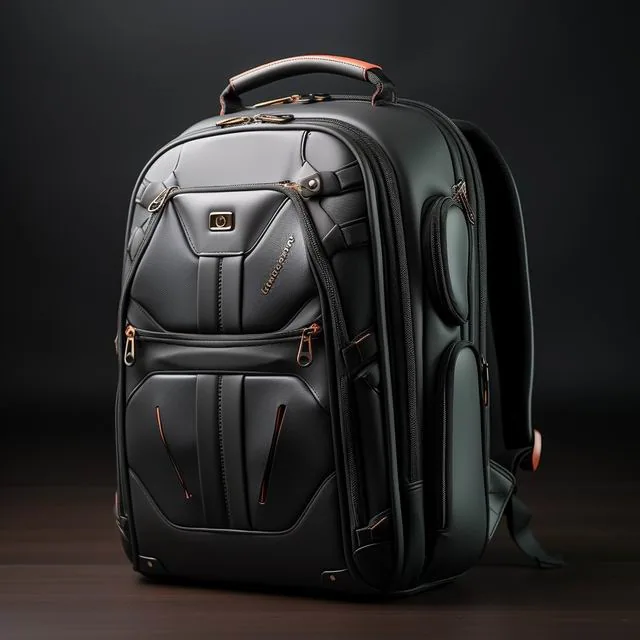
A tech pack is the single document that determines whether a prototype comes back right first time. It does not need to be a thirty-page fashion-industry artefact; for a backpack it needs eight things: a flat sketch showing front, back and side views with seam lines and pocket placement; a measurement spec in centimetres with tolerances; a full material specification including fabric denier, coating type and Pantone references; a trim schedule listing every zip, buckle, webbing, label and thread; a construction note covering stitch type, seam allowance and reinforcement points; the branding specification with artwork, position and dimensions; the packaging specification; and the testing requirement. Anything missing from that list becomes a guess, and guesses cost a sampling round.
Measurement tolerances are worth stating explicitly because they prevent the most common argument in bulk production. A handmade soft-goods product cannot be held to millimetre tolerances. The industry norm for a backpack is plus or minus 5 mm on external dimensions up to 300 mm and plus or minus 10 mm above that, with plus or minus 3 mm on branding placement. Put those numbers in the tech pack and both sides know what a conforming bag looks like. Leave them out and a 4 mm discrepancy becomes a rejection discussion at inspection.
Pantone references deserve a specific warning for British brands. A Pantone TCX reference is a dyed cotton standard, while a Pantone TPX or a plastic QC card is a different substrate. Polyester takes dye differently from cotton, and a coated nylon will read a shade darker than the same dye on an uncoated face. The practical approach is to approve a physical lab dip or a fabric swatch under a standard light box rather than to approve against a paper colour reference. Our production team will send swatch cards on request; approve those, not the Pantone number.
Artwork format is the other recurring problem. Send vector files in AI, EPS or SVG with fonts converted to outlines, plus a PDF proof. A JPEG logo lifted from a website has to be redrawn, and redrawing takes three to five working days before sampling can start. Also state the maximum and minimum branding size, because a logo designed for a business card may be illegible when embroidered at 25 mm on a webbing strap. If your brand guidelines fix a minimum clear space, include it, or the artwork will be scaled to fit the panel rather than to your rules.
Finally, state the testing requirement in the brief rather than after sampling. If you need UK REACH restricted-substance evidence, a colourfastness result, or a specific physical test, name the standard and the target level at briefing stage. Adding a test requirement after the pre-production sample means either a retest on the same materials or a material change and a new sample, and both cost weeks rather than days.
Include a packing specification too, because it is the item most often left out and it affects both cost and container cube. State whether bags are flat-packed or stuffed, whether tissue or a poly bag separates units, and the maximum units per master carton. A stuffed pack presents better on a shelf and can occupy up to 25 percent more space, which is a freight decision disguised as a presentation one.
Material Selection: Shells, Linings, Hardware and Trims
Shell fabric choice sets both the price and the character of the bag. A 600D recycled polyester with a PU backing is the workhorse of the British promotional and mid-market retail sector: it costs little, takes print well, and survives three to four years of daily use. An 840D nylon with a TPU laminate steps up in abrasion and hydrolysis resistance and is the right choice for a bag that will sit on wet ground. A 1680D ballistic nylon is used for base panels and high-abrasion zones rather than for whole shells, because it is heavy and expensive. A 210D or 420D ripstop lining is standard, and a brushed tricot lining is used only where a device needs protection.
Coatings deserve as much attention as the base fabric. Polyurethane coatings are cheap and flexible but hydrolyse after roughly three to five years, particularly in a humid climate, producing the tacky, powdery interior that ends a bag's life. TPU laminates resist hydrolysis, stay flexible in the cold, and cost more. For a UK programme, where the bag will spend months in damp conditions, specifying TPU on any bag expected to last beyond three years is money well spent. Recycled content is now a mainstream requirement: a GRS-certified recycled polyester costs a small premium and is increasingly a tender condition rather than a nice-to-have.
Hardware is where cheap bags fail and where specification is most often vague. Zips should be named by brand and gauge: a branded number 10 coil on a main compartment, a number 8 on secondary openings. Buckles and sliders should be named by material, because acetal and stainless survive a chlorinated pool environment while plated zinc-alloy corrodes within a season. Webbing should be specified at 25 mm, 38 mm or 45 mm by application, and any load-bearing webbing should be a minimum of 40 mm. Ask for a physical trim card with every component attached and approved before sampling, and keep it with the pre-production sample.
Sustainability requirements now routinely appear in British tenders and should be answered with evidence rather than adjectives. Ask for the recycled content certificate, the dyehouse audit reference, and the restricted-substance test report. Ask specifically about azo dyes, which are restricted under UK REACH, and about nickel release from any metal component that contacts skin. Independently, AATCC test methods cover colourfastness to perspiration, rubbing and light, and quoting a method is far more useful than quoting a marketing claim.
Lead time on materials is the quiet constraint. A stock colourway from a mill can be booked in a week; a custom-dyed colourway with a minimum dye lot of typically 1,000 to 3,000 metres per colour adds two to four weeks and may force a higher minimum order quantity. If your brand depends on an exact shade, book the dye lot at the prototype stage rather than after pre-production approval, and accept that the mill minimum will govern your effective MOQ.
One more specification line worth adding is a named second source for every critical trim. If a single branded zip supplier is out of stock, an unnamed substitution is a change to the product that you never approved. Naming an acceptable alternative in the tech pack turns a potential four-week delay into a documented, pre-approved swap, and it costs nothing to write down at briefing stage.
Logo and Branding Methods Compared
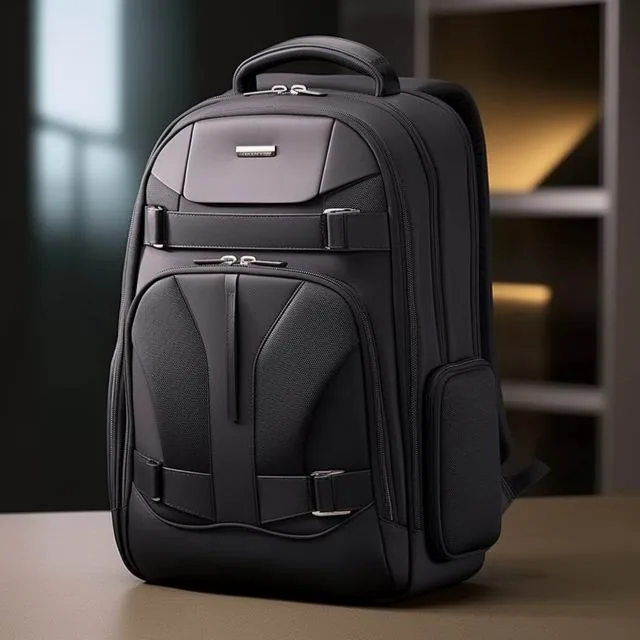
There are five mainstream ways to put a brand on a backpack, and the right one depends on the substrate, the artwork, the volume and how long the bag has to last. Embroidery is the premium option on fabric and the one British buyers associate with quality. Screen printing is the default for large flat areas and for promotional volumes. Heat transfer handles full-colour and photographic artwork at low setup cost. Woven labels carry brand identity on a small scale and are effectively permanent. Metal badges are the most expensive and the most durable, and are used where the brand is the product.
Embroidery stitches the logo directly into the shell or onto a separate patch that is then sewn on. It costs more per unit than printing, typically £0.45 to £1.20 depending on stitch count and size, and carries a one-off digitising charge of £25 to £60 per design. It will not run, fade or peel, and it survives industrial washing. Its limits are fine detail below roughly 3 mm, gradients, and very stretchy or coated fabrics where the needle perforations can compromise a waterproof laminate. On a TPU-laminated shell, an embroidered patch applied after lamination is safer than direct stitching.
Screen printing lays ink through a mesh onto a flat panel. Setup is £15 to £40 per colour per position, unit cost is low at £0.08 to £0.30, and it handles bold single or two-colour artwork extremely well. It does not reproduce photographic gradients, it adds one setup charge per colour, and on a coated nylon it needs a curing-compatible ink or it will crack at the fold. Plastisol inks are the usual choice on polyester; silicone inks give a softer hand and better stretch on technical shells. Print should be applied to a flat panel before assembly wherever possible, because printing onto a constructed bag is slower and less consistent.
Heat transfer applies a printed film under heat and pressure. It is the only practical route to full-colour, gradient and photographic artwork, setup is modest at £30 to £80 for a transfer sheet, and unit cost runs £0.20 to £0.60. Its weakness is durability: a transfer on a high-flex area will crack within a year, and a transfer applied over a seam or a fold will lift. Specify it on flat, low-flex panels only, and test it on the actual production fabric rather than on a swatch, because coating chemistry varies and adhesion is coating-specific. Woven labels are damask-woven on a loom, cost £0.05 to £0.25 per unit with a £40 to £90 loom setup, and are sewn in, which makes them effectively permanent and the cheapest way to carry fibre-content and compliance text. Metal badges in zinc alloy or brass cost £0.60 to £2.50 per unit plus tooling of £150 to £600, and are fitted with prongs or rivets.
| Method | Best substrate | Setup cost | Unit cost | Durability | Artwork limit | Lead time impact |
|---|---|---|---|---|---|---|
| Embroidery | Woven fabric, webbing, patches | £25 to £60 digitising | £0.45 to £1.20 | Excellent | No gradients, min 3 mm detail | None |
| Screen print | Flat polyester and nylon panels | £15 to £40 per colour | £0.08 to £0.30 | Good | Spot colours only | 2 to 3 days |
| Heat transfer | Flat low-flex panels | £30 to £80 per sheet | £0.20 to £0.60 | Fair on flex areas | Full colour, gradients | 2 to 3 days |
| Woven label | Any, sewn in | £40 to £90 loom setup | £0.05 to £0.25 | Excellent | Limited colour count | 5 to 8 days |
| Metal badge | Flat reinforced panel, webbing end | £150 to £600 tooling | £0.60 to £2.50 | Excellent | Raised or etched metal | 20 to 30 days tooling |
Sampling: Prototype, Revision and Pre-Production Sign-Off
Sampling is where a custom backpack programme is won or lost, and it is worth understanding what each round is for. A prototype answers the question "is this the right bag". It is usually built in a substitute fabric if the production colourway has not been dyed yet, and it is expected to have rough edges. A revision sample answers "have my comments been understood". A pre-production sample answers "is this exactly what 3,000 units will look like", and it is built on the production line from bulk materials with the final branding method. Treating all three as the same thing is the most expensive mistake available in this process.
Standard sampling through our production team runs 6 to 10 working days for a conventional construction. A complex build, which means custom hardware, a moulded component, a welded pocket, a bespoke frame sheet or an unusual closure, runs 12 to 15 working days. Those numbers start from the point at which artwork, material selection and tech pack are all confirmed, and they do not include courier time. Courier from Xiamen to a UK address is typically 3 to 5 working days on an express service, so allow two calendar weeks from confirmation to a sample in hand even for a simple bag.
Sample cost is usually charged and usually credited against the bulk order. A first prototype on a 25-litre backpack typically runs £45 to £95 plus courier, depending on how much custom material has to be bought in. British buyers occasionally ask for free samples; the honest answer is that a sample costs real money to make because a pattern has to be cut and a machinist has to be taken off production, and a supplier who agrees to unlimited free sampling is either absorbing the cost into your unit price or is not actually making samples.
How you review a sample determines how many rounds you need. Work to a written checklist rather than to a general impression: measure every dimension against the spec and record the variance, open and close every zip twenty times, load the bag to its stated capacity and wear it for ten minutes, check the branding position against the artwork proof, and photograph anything you intend to change. Send comments as a numbered list with marked-up photographs. A vague note saying "the shape feels wrong" produces another round; a note saying "reduce the lid depth from 90 mm to 75 mm" produces a corrected sample.
Approve the pre-production sample in writing, and keep the sealed reference unit. That unit is what a QC inspector compares bulk goods against at final inspection, and it is what any dispute will be settled against. If a change is made after sign-off, however small, get a revised pre-production sample or a written confirmation that the change has been recorded. Verbal approvals made on a video call are the origin of a large share of bulk-quality disputes.
Keep a written sample log with dates. Record when each sample was requested, when it arrived, what was commented on and when the revised version shipped. That log is the fastest way to resolve any later disagreement about whether a change was requested, approved or missed, and it takes about five minutes to maintain across a programme.
UK Market Compliance: UKCA, UK REACH and Textile Labelling
Compliance is the responsibility of the economic operator placing the product on the Great Britain market, which for a British brand importing its own bags is the brand itself. That is worth stating plainly because it is commonly misunderstood: an overseas production base can provide test reports and a technical file, but it cannot assume the importer's legal duty. Three regimes matter for a backpack sold in Great Britain, and a fourth applies if you also sell into Northern Ireland.
The first is product safety and the UKCA marking. Backpacks themselves are generally outside the scope of the UKCA sector regulations, which cover categories such as electrical equipment, toys, PPE and machinery. However, if a bag incorporates a regulated component, a power bank, an LED light, a heated element or a radio device, that component falls within scope and carries its own conformity obligations, and the assembled product inherits them. Where UKCA does apply, the government's UKCA marking guidance sets out the technical file, the declaration of conformity and the marking requirements, and the regime for goods imported into Great Britain is explained in the guidance on placing UKCA or CE marked products on the market. If you are unsure whether your product is in scope, check before you place the order rather than after the container ships.
The second is chemicals. UK REACH restricts certain substances in articles placed on the Great Britain market, and for soft goods the provisions that bite are the restrictions on azo dyes that can release listed aromatic amines, on certain flame retardants, on formaldehyde in resin-finished textiles, and on nickel release from metal components that contact skin. The practical response is a restricted-substance test from an accredited laboratory against the current UK REACH restriction entries, repeated whenever a material, dye lot or trim supplier changes. Ask for the report by material rather than by finished product, because a report scoped to one fabric says nothing about the webbing or the printed label.
The third is fibre labelling. Textile products placed on the GB market must carry a durable, legible fibre composition label, and the enforcement framework is the Textile Products (Labelling and Fibre Composition) Regulations 2012, which operates alongside the retained EU Regulation 1007/2011 on fibre names. A backpack is a textile product for these purposes, so the composition line matters, and the label must also identify the responsible economic operator. Get the artwork checked against the approved material list before bulk label booking, because a composition error discovered at customs is expensive to fix.
The fourth regime applies only if you sell into Northern Ireland, which remains aligned to EU rules, and it means two independent compliance paths for a brand selling across the whole of the United Kingdom. If that applies to you, build two market tabs into your material and label matrix from the start rather than retrofitting a second label variant at the packing stage. Finally, general product safety duties apply regardless of sector, so retain the technical file, test reports and approved samples for at least ten years.
Cost Structure: Where Every Pound of Unit Cost Goes
Understanding the cost structure is what turns a negotiation from a haggle into a specification exercise. A mid-market 25-litre commuter backpack with a 600D recycled polyester shell, a branded zip set, a laptop sleeve and a screen-printed logo, ordered at 3,000 pieces, will typically land between £6.80 and £9.20 per unit FOB Xiamen. That number is not arbitrary and it is not mostly profit. It decomposes into eight components, and knowing the decomposition tells you which specification changes will move the price and which will not.
Fabric is the largest single line at roughly 30 percent of unit cost. A 25-litre bag consumes about 1.4 to 1.8 metres of shell fabric plus 0.9 to 1.2 metres of lining, and at a mill price of £1.40 to £2.60 per metre depending on denier, coating and recycled content, that is £3.20 to £5.00 of material before cutting waste. Cutting waste adds 8 to 15 percent depending on panel geometry. Lining and interlining add a further 9 percent, hardware another 16 percent, and webbing and trims about 7 percent.
Labour is roughly 18 percent and is the component most British buyers overestimate. A backpack requires somewhere between 18 and 40 minutes of sewing time depending on complexity, and at a fully loaded line cost that translates to £1.10 to £2.40 per unit. Complex bags are expensive not because of fabric but because of minutes: a bag with a moulded back panel, five zipped compartments and a welded wet pocket can take twice the sewing time of a simple one-compartment pack. If you need to hit a price point, simplifying construction is far more effective than downgrading fabric.
Packaging is 4 to 6 percent and testing and compliance 2 to 3 percent. Freight, duty and VAT sit outside the FOB price and are the numbers British buyers most often forget. Sea freight on a 40-foot high-cube container running Xiamen to Felixstowe or Southampton is a variable figure, but a working planning number is £0.35 to £0.90 per unit depending on how efficiently the cartons cube out. UK import duty on bags under the UK Global Tariff typically falls in the 3 to 12 percent band depending on the commodity code and the outer surface material, and import VAT at 20 percent applies at the point of entry and is recoverable if you are VAT-registered.
Two cost levers are consistently underused by British buyers. The first is carton cube: a bag that flat-packs rather than stuffs can reduce per-unit freight by 20 to 25 percent across a 40-foot high-cube container, which on an £8.00 unit is worth more than most specification savings. The second is consolidating colourways, which removes both a dye-lot minimum and a line setup from the bill. Both are decided at briefing stage and neither can be recovered later.
Landed cost, not FOB cost, is the figure that belongs in your margin model. Add freight, duty, VAT and UK inland delivery to the FOB number before you set a retail price, and re-run the model whenever a dye lot or a fabric specification changes, because a material substitution that saves £0.20 FOB can still leave you worse off once duty and freight are applied.
| Cost component | Share of FOB unit cost | Typical value at £8.00 FOB | Main lever |
|---|---|---|---|
| Shell fabric | 30% | £2.40 | Denier, coating, recycled content |
| Lining and interlining | 9% | £0.72 | Lining weight, foam spec |
| Hardware | 16% | £1.28 | Branded vs generic zip, buckle material |
| Webbing and trims | 7% | £0.56 | Width, quantity of adjusters |
| Labour | 18% | £1.44 | Construction complexity, stitch count |
| Packaging | 5% | £0.40 | Retail vs bulk packing |
| Testing and compliance | 3% | £0.24 | Scope of test panel |
| Overhead and margin | 12% | £0.96 | Volume, schedule |
MOQ Tiers and How Volume Changes Unit Price
The standard minimum order quantity for a custom backpack programme is 500 pieces per colourway. That figure is not arbitrary: it is set by the mill minimum for a custom-dyed fabric lot, by the trim supplier's minimum for branded hardware, and by the line setup time, which is the same whether the run is 500 or 5,000. Below roughly 500 pieces, a genuinely custom bag stops making economic sense, and the right answer is usually a stock bag with a branding application rather than a bespoke construction.
Understand what "per colourway" means, because it is the clause that most often surprises British buyers. An order of 1,500 bags split across three colourways is three production runs of 500, not one run of 1,500, and it is priced accordingly. If your budget is fixed at 1,500 units and you can accept a single colourway, you will get a materially better unit price and a shorter production window than if you split it three ways. When a programme genuinely needs multiple colours, the cheapest configuration is a single shell colour with different lining, zip tape or branding, because that changes trim rather than the fabric dye lot.
Unit price falls with volume in a curve that flattens after a few thousand pieces. Moving from 500 to 1,000 typically improves the unit price by 8 to 14 percent, because setup is amortised over more units. Moving from 1,000 to 3,000 improves it by a further 6 to 10 percent. Beyond 10,000 pieces the gain comes less from labour and more from material: at that point a fabric mill will book a dedicated production window and a trim supplier will run a dedicated tooling batch, which together are worth another 8 to 12 percent.
Capacity matters at the top end. With 7 lines, 149 machines and 137 people across a 4,950 m² SGS-verified production floor, nominal output is 200,000 units per month, so a 50,000-piece programme is comfortably within capacity and can be scheduled as a dedicated booking rather than slotted between other orders. That dedicated booking is what produces the largest price movement and the most reliable delivery date, because the line is not being re-set for other styles between batches.
Reorders behave differently from first orders and are worth planning for at the outset. Because the pattern, the tooling and the approved material list already exist, a reorder skips the prototype stage entirely and can move straight to a pre-production sample, which typically removes two to three weeks from the programme. Reorders also qualify for better pricing at lower volumes, because setup has already been amortised. If you expect to repeat a style, say so at briefing stage and ask for a tooling retention clause so that custom mouldings and print screens are held between runs.
| Order size per colourway | Unit price index | Sampling | Bulk window | Notes |
|---|---|---|---|---|
| 500 pcs | Base plus 18% | 6 to 10 working days | 35 to 40 days | Standard MOQ, stock colourways preferred |
| 1,000 pcs | Base plus 8% | 6 to 10 working days | 35 to 45 days | Custom dye lot viable |
| 3,000 pcs | Base | 6 to 10, or 12 to 15 if complex | 40 to 50 days | Reference tier for costing |
| 10,000 pcs | Base minus 10% | 12 to 15 working days if complex | 45 to 50 days | Mill booking, dedicated trim batch |
| 50,000 pcs and above | Base minus 18% | 12 to 15 working days | Scheduled programme | Dedicated line booking |
Quality Control: AQL 2.5, Inline Checks and Pre-Shipment Inspection
Quality control on a custom backpack programme runs at three points, and only one of them is visible to the buyer. Inline checks happen during cutting and sewing, where a line supervisor catches panel mismatches, skipped stitches and hardware faults before the bag is assembled. A pre-final check happens when goods are packed. The pre-shipment inspection is the one the buyer sees, and it is the one that determines release. All three matter, but the inline stage is where a defect is cheap to fix.
The inspection standard used for soft goods is AQL, the acceptance quality limit, defined in ISO 2859-1. AQL 2.5 is the normal commercial level for bags and means that a lot is accepted if the number of defects found in a random sample falls at or below the accept number for that sample size. It is not a promise of zero defects; it is a statistical threshold. For a 3,000-piece order at general inspection level II, the sample size is 125 units, with 7 defects allowed for acceptance and 8 triggering rejection. Buyers who want a tighter outcome specify AQL 1.5 or add a critical-defect rule of zero tolerance.
Defects are classified as critical, major or minor, and the classification matters more than the count. A critical defect is one that makes the product unsafe or illegal: a broken buckle on a load-bearing strap, a sharp exposed edge, or a missing compliance label. A major defect is one a customer would notice and return: a visible seam fault, a misaligned logo, a zip that catches. A minor defect is cosmetic and within tolerance. Most inspection reports allow zero critical defects regardless of the AQL level, and that is the clause worth checking in your inspection brief.
Who performs the inspection is a commercial decision. An in-house QC team reporting to the production base has a structural conflict of interest, though a well-run operation will still report honestly because the cost of a rejected lot exceeds the cost of a rework. An independent third-party inspector costs roughly £200 to £350 per inspector-day in Asia and reports to you. For a first order with a new programme, or any order above 3,000 pieces, an independent inspection is worth the money. Once a programme is running and the defect history is clean, inline reporting plus a documented final check is usually sufficient.
When a lot is rejected, the usual remedy is a re-sort at the production base, followed by a re-inspection at the buyer's cost or the supplier's depending on the contract terms. Agree that in writing before bulk starts, along with the defect allowance for over-shipment. A common and sensible arrangement is a 3 percent spare-parts or over-shipment allowance on branded components, so that a small number of field failures can be resolved without air-freighting replacements.
Ask for the inspection report to include photographs of every defect found, not just a count. A count tells you whether the lot passed; photographs tell you whether the failure mode will recur in the next order. A repeated fault at the same seam or on the same trim is a specification or tooling problem, and it will keep recurring until it is corrected at source rather than sorted out at the end.
Packaging Options: Retail, E-commerce and Bulk Cartons
Packaging is specified late and costs money late, which is why it is the most common source of an unexpected charge on a first order. There are three standard routes and they are genuinely different products. Retail packaging is what a high-street buyer sees: each bag individually poly-bagged, with a printed hangtag, a barcode label, a sewn-in or printed compliance label, and retail-ready presentation. E-commerce packaging is optimised for a single-unit shipment: a poly mailer or a brown box sized to the product, with minimal void, and no requirement for shelf presentation. Bulk carton packing is the cheapest route: bags stacked, separated by tissue or a single poly bag per unit, into a master carton, ready for a UK warehouse to break down.
Retail packaging adds roughly £0.35 to £1.10 per unit depending on how much print is involved. A hangtag on 300 gsm board with a four-colour print and a barcode runs £0.08 to £0.22 each at 3,000 pieces. A printed belly band or a sleeve is £0.15 to £0.40. A rigid swing ticket with a string and a seal is more. The cost driver is not the board, it is the print setup and the number of print positions, so consolidating to one tag with everything on it is the fastest way to cut the line.
E-commerce packaging is growing fast among British brands and has its own specification discipline. If you sell through a fulfilment network, the outer carton dimensions and the unit weight drive your per-unit fulfilment fee, and a bag packed 20 mm too deep can move you into a higher fee band across thousands of units. Specify the packed dimensions as a requirement, not as an outcome. Ask for a compression test on the mailer, and ask for the carton to be sized so that a bag can be inserted without folding the back panel, because a folded panel arrives creased and generates returns.
Master carton specification applies to all three routes and is where damage happens. A standard export carton for backpacks is a five-ply corrugated board with a bursting strength appropriate to the load, typically holding 10 to 25 units depending on bag size. Overfilling a carton to save freight costs increases compression damage at the bottom of a container. Underfilling wastes cube. A sensible target is a carton weight under 15 kg for manual handling in a UK warehouse, and a carton that cubes out a 40-foot high-cube container to at least 85 percent utilisation.
Finally, labelling and marking. Every carton should carry a shipping mark with the style number, colourway, quantity, carton number in sequence and the purchase order reference, printed on at least two faces. Barcode labels for retail should be verified against your retailer's manual before bulk printing, because a barcode that scans but does not match the retailer's item file will be rejected at their goods-in desk. Send the retailer's packaging manual as part of the brief if you have one.
Carton drop testing is worth specifying for any e-commerce programme. A standard protocol drops a loaded carton from a defined height onto each face and corner, followed by an inspection of the units for damage. It costs very little to run, and it is the difference between a returns rate you can predict and one you discover from customer reviews.
Logistics, Payment Terms and Incoterms: FOB Xiamen and T/T 30/70
Standard commercial terms for a wholesale backpacks UK programme are T/T 30/70 against FOB Xiamen. Read that as two clauses. FOB Xiamen means the seller's responsibility and cost end when the goods are loaded on board the vessel at the port of Xiamen; from that point the buyer carries freight, insurance, import duty and VAT, and the risk transfers at the ship's rail. T/T 30/70 means 30 percent of the order value is paid as a deposit to release materials and book production capacity, and the remaining 70 percent is paid against a copy of the bill of lading or after a passed pre-shipment inspection, depending on the agreed contract wording.
Alternatives exist and are worth knowing. EXW shifts more responsibility to the buyer and is rarely advantageous unless you have your own consolidator in the region. CIF or CFR to a UK port bundles freight into the supplier's price, which looks simpler and usually costs more, because the freight margin sits inside a price you cannot benchmark. DDP to a UK address is available and genuinely convenient for a first-time importer, but it means the seller is declaring your goods, which has implications for who holds the import compliance records. For most British buyers with a freight forwarder, FOB plus your own forwarder is the cleanest and most auditable structure.
Transit planning is straightforward once you know the numbers. Sea freight from Xiamen to a major UK port runs roughly 25 to 35 days port to port, plus 3 to 7 days for UK customs clearance and inland delivery. Add the 35 to 50 day bulk window and the 2 to 3 day inspection, and a realistic order-to-warehouse figure is 8 to 12 weeks from pre-production approval. Air freight cuts the transit leg to 5 to 8 days at roughly three times the cost, and is the right call for a launch deadline or a stock-out reorder rather than for routine replenishment.
Duty and VAT need to be in the landed-cost model from the first quote, because they are not small. UK import duty on bags varies by commodity code and by the outer surface material, commonly falling between 3 and 12 percent under the UK Global Tariff. Import VAT at 20 percent is charged at entry and is recoverable as input tax if the importing entity is VAT-registered; if it is not, that 20 percent is a real cost. Get your commodity code confirmed by your forwarder or by HMRC before you commit to a landed-cost budget, because classifying a bag incorrectly is a costly correction. Confirm the commodity code in writing with your forwarder before you approve the order, because the classification sits with you as importer of record, not with the production base.
Documentation closes the loop. You will need a commercial invoice, a packing list, a bill of lading, a certificate of origin if you are claiming preferential treatment, and any test reports and conformity documentation required for the GB market. Keep the full set with the approved pre-production sample: together they are the technical file, and you should retain them for at least ten years after the last unit is placed on the market.
Insurance is the last line most buyers skip. Marine cargo cover on a container of finished goods is inexpensive relative to the value of the goods, and FOB terms mean the risk sits with you from the point of loading. Confirm with your forwarder that cover is in place before the vessel sails rather than after.
How to Brief Us: Getting an Accurate Quote in 48 Hours
A quotation is only as accurate as the brief behind it, and the difference between a vague enquiry and a good brief is about fifteen minutes of work. The eight things that let our production team quote accurately first time are: the product type and intended use; the target capacity and key dimensions; the shell material and colourway, or a reference product if you have one; the quantity per colourway; the branding method, position and artwork in vector format; the packaging requirement; the testing and compliance requirement; and your target delivery date and delivery point. With those eight, a costed response normally comes back within 48 working hours.
The three most useful optional extras are a reference photograph, a marked-up sketch, and a target price. A reference photograph of a bag whose proportions you like communicates more in one image than three paragraphs of text, and a target price tells the team which materials to quote rather than making you work through three costing rounds. If you have a target landed cost per unit in GBP rather than an FOB target, say so, because working backwards from a landed number is the fastest way to a realistic specification.
What you should expect back is a costed specification, not a single number. That means unit price at your quantity, unit price at two higher volume tiers so you can see the curve, sampling cost and sampling lead time, tooling cost if any, the bulk production window, the payment terms, the packaging cost broken out, and the validity period of the quote. A quote valid for 30 days is standard, because fabric and freight move. If a response arrives as one figure with no breakdown, ask for the breakdown before you compare it with anything else.
Two things are worth doing before you commit. First, order a physical sample even if you are confident in the specification; a bag that reads well on paper can feel wrong on the shoulder, and £60 of sampling protects several thousand pounds of bulk. Second, ask for the material swatch card and keep it, because it is the reference for colour and hand feel on every reorder. Colour consistency across reorders is the single most common complaint in this category, and a retained swatch is the only reliable defence.
When you are ready, send the brief through our quote page, attaching the tech pack or sketch, the vector artwork, the quantity per colourway and your target delivery date. You will get a costed specification back, and if the programme needs a compliance or construction discussion before costing, that conversation happens before you spend anything on sampling. For product context across the wider range, see our guides to the best backpacks for men, the work backpack for men and the anti theft backpack for men.
If you are comparing two quotations, compare them on the same basis. Check that both include the same packaging, the same testing scope and the same payment terms, and check whether either excludes tooling. A lower FOB price that omits a £400 tooling charge and a £0.40 retail hangtag is not the lower price. Ask every supplier to quote against your written brief rather than against their own assumptions, and the comparison becomes straightforward.
Frequently Asked Questions
What is the MOQ for custom backpacks in the UK?
The standard minimum is 500 pieces per colourway. It is set by the fabric mill minimum for a custom-dyed lot, by the trim supplier's minimum for branded hardware, and by line setup time, which is the same whether the run is 500 or 5,000.
Does MOQ mean per colourway or per order?
Per colourway. An order of 1,500 bags split across three colours is three production runs of 500 and is priced that way. If budget is fixed, a single colourway gives a materially better unit price and a shorter window.
How long does sampling take?
Standard sampling runs 6 to 10 working days from confirmed artwork, materials and tech pack. A complex build with custom hardware, a moulded component or a welded pocket runs 12 to 15 working days. Add 3 to 5 days express courier to a UK address.
What is the bulk production lead time?
Bulk production runs 35 to 50 days from pre-production sample sign-off. A 500-piece run typically completes in 35 to 40 days; a 3,000-piece run with a custom dye lot takes 40 to 50 days. Material booking, not sewing capacity, usually governs the window.
How much does a sample cost?
A first prototype on a 25-litre backpack typically runs £45 to £95 plus courier, depending on how much custom material must be bought in. Sample cost is normally credited against the bulk order.
Which logo methods do you offer?
Embroidery, screen print, heat transfer, woven label and metal badge. Embroidery suits woven fabric at £0.45 to £1.20 per unit; screen print suits flat panels at £0.08 to £0.30; heat transfer handles full colour; woven labels are £0.05 to £0.25; metal badges need £150 to £600 tooling.
Can you reproduce a full-colour or photographic logo?
Yes, with heat transfer, which is the only practical route to gradients and photographic artwork. Specify it on flat, low-flex panels only and test adhesion on the actual production fabric, because coating chemistry is substrate-specific.
What artwork format should I send?
Vector files in AI, EPS or SVG with fonts converted to outlines, plus a PDF proof. State the maximum and minimum branding size. A JPEG taken from a website must be redrawn, which adds three to five working days before sampling can start.
How is quality controlled before shipment?
Inline checks run during cutting and sewing, and a pre-shipment inspection is performed to AQL 2.5 under ISO 2859-1. At general inspection level II a 3,000-piece order draws a 125-unit sample with 7 defects allowed. Critical defects are normally zero-tolerance.
What is AQL 2.5 and why does it matter?
AQL is the acceptance quality limit defined in ISO 2859-1. AQL 2.5 is the normal commercial level for bags and is a statistical threshold, not a promise of zero defects. Specify AQL 1.5 plus a zero critical-defect rule if you need a tighter outcome.
Who is responsible for UKCA and UK REACH compliance?
The economic operator placing the product on the Great Britain market, which for a British brand importing its own bags is the brand itself. A production base can supply test reports and a technical file, but cannot assume the importer's legal duty.
Do backpacks need a UKCA marking?
Plain backpacks generally sit outside the UKCA sector regulations, but a regulated component such as a power bank, LED light or heater brings the assembled product into scope. Check scope before ordering rather than after the container ships.
What fibre labelling is required in Great Britain?
A durable, legible fibre composition label identifying the composition and the responsible economic operator, under the Textile Products (Labelling and Fibre Composition) Regulations 2012 and the retained EU Regulation 1007/2011 on fibre names.
What payment terms do you use?
T/T 30/70 against FOB Xiamen: 30 percent deposit to release materials and book capacity, 70 percent balance against a copy of the bill of lading or a passed pre-shipment inspection, depending on the contract wording.
What does FOB Xiamen mean for a UK buyer?
The seller's cost and risk end when goods are loaded on board at Xiamen. From that point the buyer carries freight, insurance, UK import duty and VAT. Most British buyers with a forwarder find FOB the cleanest and most auditable structure.
How long does sea freight take to the UK?
Roughly 25 to 35 days port to port from Xiamen to a major UK port, plus 3 to 7 days for customs clearance and inland delivery. Order to UK warehouse is realistically 8 to 12 weeks from pre-production approval.
What duty and VAT apply on backpack imports?
UK import duty commonly falls between 3 and 12 percent depending on commodity code and outer surface material. Import VAT is 20 percent at entry and is recoverable as input tax if the importing entity is VAT-registered. Confirm your commodity code before budgeting.
What packaging options are available?
Retail, e-commerce and bulk carton. Retail adds £0.35 to £1.10 per unit for poly bag, hangtag and barcode. E-commerce is sized for single-unit shipment and drives fulfilment fees. Bulk carton is the cheapest and suits a UK warehouse breakdown.
What is a pre-production sample and why is it required?
A pre-production sample is built on the production line from bulk-booked materials with final trims and branding. Once signed off it becomes the reference the bulk order is inspected against. Always approve it in writing and keep the sealed unit.
What production capacity do you have?
Our 4,950 m² SGS-verified production floor operates 7 lines with 149 machines and 137 people, giving nominal capacity of 200,000 units per month. A 50,000-piece programme can be scheduled as a dedicated line booking rather than slotted between other orders.
Get a Free Quote for Custom Custom Backpacks UK
Planning a branded programme? Our production team works to MOQ 500 pcs, 6-10 working day sampling and 35-50 day bulk lead times, with AQL 2.5 inspection to ISO 2859-1. Send your brief and we will return a costed quotation in 24-48 hours.
Mens Backpack Guide Editorial Team — Buying guides and sourcing notes for the UK men's backpack market, coordinated by QUANZHOU JUNYUAN BAGS. Commercial figures such as MOQ 500 pcs, 6-10 day sampling and 35-50 day production reflect published programme terms.