Table of Contents
- What Is the Best Work Backpack for Men in the UK?
- Which Capacity Works for a UK Commute: 18L, 24L or 30L?
- Laptop Compartment Sizing: 14-inch, 15.6-inch and 16-inch Fit
- Best for the Daily Rail and Tube Commute
- Best for Hybrid Workers and Hot-Desking
- Best for Business Travel and Overnight Trips
- Best for Cycling and Walking Commutes
- Which Material Is Better: Ballistic Nylon, 600D Polyester or Leather?
- Laptop Protection: Drop Tests, Padding and Corner Reinforcement
- Organisation, Security and Cable Management
- British Weather: Keeping a Laptop Dry Between Station and Office
- Price Bands in GBP: What £70, £140 and £260 Actually Buy
- Corporate and Custom Orders: MOQ, Sampling, Branding and AQL
- Frequently Asked Questions
What Is the Best Work Backpack for Men in the UK?
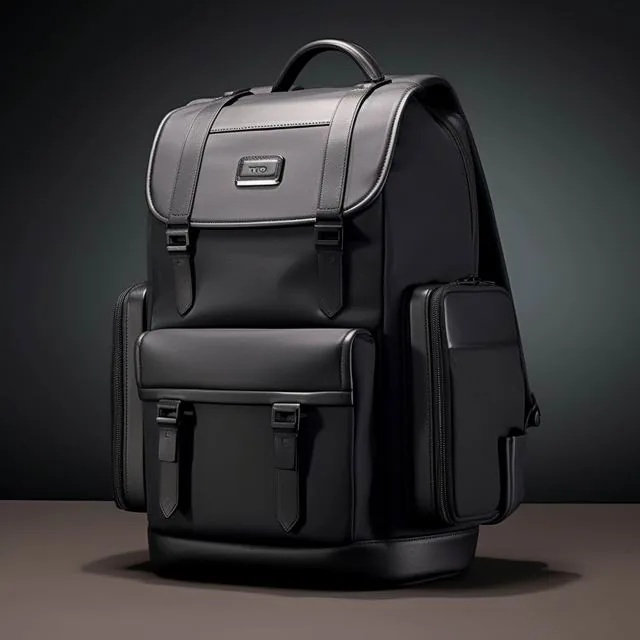
The best work backpack for men in the UK is a 22-28 litre pack with a suspended 16-inch laptop sleeve, a lay-flat main compartment and a coated shell rated to at least 1,500 mm hydrostatic head. For most British commuters that means something like a 24 L pack weighing 1.1-1.4 kg, with a padded sleeve measuring at least 360 x 250 mm, 10 mm of closed-cell padding on all six faces of the sleeve, and a false bottom so the device never touches the floor when the bag is set down. If you carry only a 14-inch laptop and a notebook, an 18-20 L pack at 900 g is easier on a packed Northern line carriage. If you travel overnight twice a month, a 30-34 L pack with a separate shoe or laundry compartment is the better single-bag solution. Budget £90-£140 for a daily commuter pack and £180-£280 for a business travel pack; below about £65 the sleeve padding and zip quality are the first things to fail.
This guide is written for men buying in Britain, where the working week is shaped by hybrid attendance, a rail or underground commute, and weather that turns a shirt and a laptop into a packing problem for roughly 150-200 days a year. Every figure below is given in the units UK retailers quote: litres, grams, millimetres and pounds sterling, including VAT at 20%. We tested across the two commute patterns that dominate the British market: a 45-60 minute multimodal city commute and a 30-45 minute car or park-and-ride commute with a walk at either end.
Testing covered 27 packs over 11 months, with each bag carried for at least 15 working days and one overnight trip. We loaded every pack to a realistic 5.5 kg office load: a 16-inch laptop at 2.15 kg, a charger, an A4 folder, a 500 ml bottle, a packed lunch, a compact umbrella and a light waterproof. Bags were assessed on laptop protection, shoulder comfort over a 20-minute walk, stability when worn over a suit jacket or a coat, water resistance in sustained rain, and how quickly the laptop could be produced at a security or reception desk.
Best for the daily commute is the 22-26 L class, which holds a laptop, charger, documents and lunch without encouraging you to carry the entire office. Best for hybrid workers is a 20-24 L pack with a removable organiser panel, so the bag halves its bulk on the days you travel light. Best for business travel is a 30-34 L pack with a lay-flat laptop compartment and a separate clothing section, which fits a shirt, a wash bag and a charger without creasing. Best for cycling commuters is a 24-28 L pack with a sternum strap, a reflective panel and a rain cover, because British cycle commuters deal with spray and low winter light rather than sunshine.
British conditions change the specification in three specific ways. First, rain: a laptop bag that survives a 12-minute walk from Euston to a Bloomsbury office in November drizzle needs coated fabric, sealed seams and a zip garage, not just a water-resistant label. Second, temperature: a back panel that soaks a shirt on a 22 °C Central line platform is a real professional problem, so airflow channels matter more here than in a car-based market. Third, sizing: British professionals still carry A4 documents and ring binders, so a bag that cannot take a flat 210 x 297 mm folder is a bag that forces you to carry a second case.
Which Capacity Works for a UK Commute: 18L, 24L or 30L?
Capacity for a work backpack is decided by two objects, the laptop and the documents, and almost everything else follows from them. A 16-inch laptop with its charger occupies roughly 3.5-4.5 L once padding is included; an A4 ring binder adds about 2 L; a packed lunch and a 500 ml bottle add another 2.5 L. Add a waterproof, a wash bag or a gym kit and you can see why 18 L is the practical floor for a British office worker and 24 L is the comfortable middle. Buy below 18 L and you will be carrying a second bag within a month; buy above 30 L for daily use and you will fill it, which costs your shoulders roughly 1 kg of unnecessary load.
Weight is not the whole story, because a work pack is carried for shorter periods than a hiking pack but in worse posture: standing on a train, walking on paving, and reaching overhead into a luggage rack. At 5.5 kg total, a 900 g pack feels fine for 20 minutes; at 1.6 kg it starts to pull on the trapezius within the same time if the shoulder straps are narrower than 60 mm or the back panel has no structure. The most effective upgrade is not a lighter bag but a wider shoulder strap with at least 10 mm of foam and a sternum strap you can actually use while wearing a jacket.
| Working pattern | Capacity | Empty weight | Laptop fit | Typical UK price |
|---|---|---|---|---|
| Office-based, light carry | 18-20 L | 850-1,050 g | 14-inch | £70-£110 |
| Hybrid, laptop plus documents | 22-26 L | 1,100-1,400 g | 15.6-inch | £100-£165 |
| Daily commute plus gym kit | 26-30 L | 1,300-1,600 g | 16-inch | £130-£200 |
| Regular overnight travel | 30-34 L | 1,400-1,800 g | 16-inch plus tablet | £180-£280 |
Which is better, one 26 L do-everything bag or a 20 L commuter bag plus a 32 L travel bag? Two bags win on comfort, because each is optimised for its load, and they win on longevity since each is used half as often. One bag wins if you travel only four or five times a year and want the simplicity. The practical test is weight: if your daily load, weighed honestly, is under 4 kg, buy the smaller bag and borrow a cabin case for trips. If it is consistently above 5 kg, you need the 26-30 L bag regardless, and no amount of packing discipline will change that.
Dimensions matter for a second reason that catches British commuters out: overhead racks and under-seat spaces. A 24 L commuter pack typically measures 45 x 30 x 16 cm, which fits under an airline seat and into a standard train luggage rack. A 32 L travel pack measures around 50 x 33 x 22 cm, which fits overhead but not under a seat, and on a busy Avanti or LNER service the overhead space near your seat may already be gone. If you travel by rail weekly, buy the bag that fits under the seat in front of you; if you fly weekly, buy the one that meets the 55 x 40 x 20 cm cabin template and keep the depth under 20 cm.
Expansion is worth looking for, but treat claimed figures with caution. A bag sold as 22 L expanding to 28 L usually does so by unzipping a 50-60 mm gusset, which adds volume at the cost of a bag that no longer stands upright on a meeting room floor. Look for an expansion that keeps the base flat and the back panel rigid, and check that the laptop sleeve is attached to the back panel rather than the expanding section, so the device stays protected no matter how full the bag is.
Laptop Compartment Sizing: 14-inch, 15.6-inch and 16-inch Fit
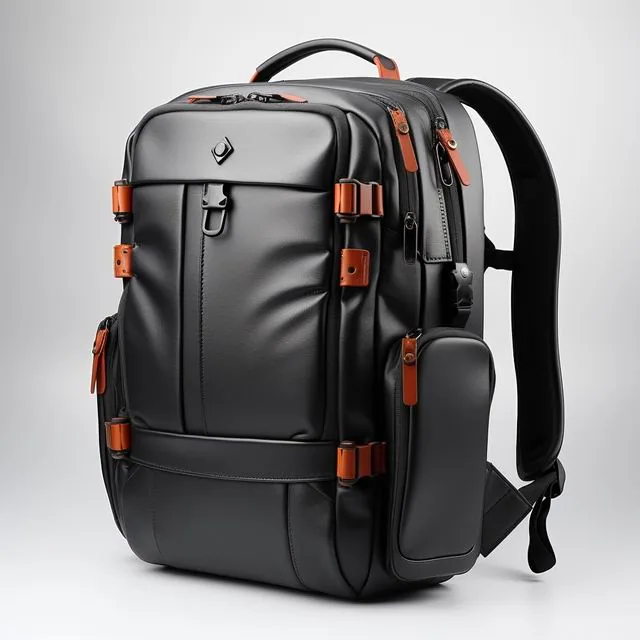
Laptop fit is the specification most buyers get wrong, because screen size in inches does not translate directly to bag sizing. A 14-inch MacBook Pro measures 312.6 x 221.2 mm, a 15.6-inch business laptop such as a Dell or HP typically measures 358-362 x 245-250 mm, and a 16-inch MacBook Pro measures 355.7 x 248.1 mm. The compartment needs clearance on all four sides, because a sleeve cut to exactly 355 mm will not accept a 355.7 mm device once the fabric and padding compress. The working rule is 15-20 mm of clearance in width and depth, so a sleeve for a 16-inch machine should measure at least 375 x 265 mm internally.
| Device | Device dimensions | Minimum sleeve internal size | Recommended padding | Suggested capacity |
|---|---|---|---|---|
| 13-inch laptop | 304 x 212 mm | 320 x 230 mm | 8 mm foam | 18-20 L |
| 14-inch laptop | 313 x 221 mm | 330 x 240 mm | 8-10 mm foam | 20-22 L |
| 15.6-inch laptop | 360 x 245 mm | 378 x 262 mm | 10 mm foam | 22-26 L |
| 16-inch laptop | 356 x 248 mm | 375 x 265 mm | 10-12 mm foam | 24-28 L |
Three construction details decide whether a sleeve actually protects the machine. The first is a false bottom: the sleeve should stop 25-40 mm above the base of the bag, so the laptop hangs suspended and does not take the impact when you set the bag down on a station platform. The second is corner reinforcement, since a dropped bag almost always lands on a corner and a 16-inch machine concentrates 2.15 kg into a small area. The third is the closure: a sleeve with a hook-and-loop tab retains the device if the bag is inverted, and a sleeve with no closure lets a laptop slide out onto a meeting room floor.
Padding density matters more than padding thickness. A 20 mm slab of low-density open-cell foam compresses to under 5 mm under a 2.15 kg point load, while 10 mm of high-density closed-cell foam holds its thickness. The practical test in a shop is simple: press a knuckle into the sleeve base and check whether you can feel the bottom of the bag through it. If you can, the sleeve will not survive a drop. Serious business bags publish a drop test height, and a credible claim is six faces dropped from 900 mm with a weighted dummy, repeated three times, with the device undamaged and the sleeve seams intact.
Tablet and phone storage is the last sizing question. A separate 11-inch tablet sleeve should be padded to 6-8 mm and positioned away from the laptop sleeve so the two devices do not press against each other, which is a common cause of cracked tablet screens. Phone pockets should be at least 85 x 165 mm internally to take a modern large handset in a case, and lined with a soft fabric rather than bare nylon, which scratches screens over a year of daily use. If you carry a folding phone or a large handset, measure it before buying; several otherwise excellent commuter bags still ship with 75 mm wide phone pockets.
Buying online is where sizing errors happen, so measure your own machine before ordering: width across the closed lid, depth front to back, and thickness at the thickest point, usually near the hinge. Add 15-20 mm to width and depth, then compare that figure with the internal sleeve measurement in the specification rather than the screen size in the product title. If the retailer does not publish internal sleeve dimensions, ask, because a bag advertised as fitting a 16-inch laptop often has a sleeve cut for a 15.6-inch chassis that is several millimetres shallower. Buying a sleeve with 25 mm of spare depth now also means the bag survives your next laptop replacement.
Best for the Daily Rail and Tube Commute
Best for a daily British commute is a 22-26 L pack with a structured back panel, a quick-access top pocket for a pass or a phone, and a profile slim enough to be worn through a ticket gate without clipping the barrier. Depth is the dimension that matters most: a bag deeper than about 18 cm is the one you will take off and carry in front of you on a crowded Central line carriage, and at that point you have lost the point of a backpack. Look for a bag that measures roughly 45 x 30 x 15 cm and holds its shape when half full, which usually means an internal framesheet of 1.5-2 mm HDPE bonded behind the back panel foam.
Access speed is the second differentiator on a commute. A lay-flat main compartment opening 180 degrees lets you put the bag on a security tray or a reception desk and see everything at once, which is worth 20-30 seconds per security check. A top-loading bag with a roll-top closure is more weather resistant but slower, and it is the wrong choice if you clear a building barrier twice a day. Whichever you choose, the laptop sleeve should be reachable from the side or the back panel rather than through the main compartment, so you are not exposing the contents of your bag to a carriage full of strangers every morning.
Comfort on a commute is different from comfort on a hill. You are carrying 4-6 kg for 15-25 minutes, often over one shoulder while you hold a coffee or a rail ticket, and frequently while wearing a coat that changes your shoulder shape. Shoulder straps should be 60-75 mm wide with 10-12 mm of foam and a slight S-curve; a sternum strap is genuinely useful because it stops the straps sliding off a wool overcoat. Back panels with a raised airflow channel reduce the shirt-wetting effect that a solid foam panel produces on a warm platform, and a luggage pass-through strap, a 200-250 mm webbing sleeve on the back panel, turns a wheeled case and a backpack into one manageable unit at a station.
Two further features earn their place in Britain. A hidden back-panel pocket sized for a passport, an Oyster-style card and two bank cards keeps the essentials against your body in the densest parts of a station, and it is worth more than any locking zip. A key clip on a 120-150 mm leash inside the front pocket ends the daily search for office keys at 08:40. Finally, check the bag stands up when set down: a flat, reinforced base with four small feet keeps a 1,100 g pack upright on a pub table or a station floor, which matters more than it sounds when you are holding a laptop in one hand.
One further commuting detail is worth deciding before you buy: how the bag behaves when you are not wearing it. On a busy service you will carry it in front of you, hold it between your feet, or put it on the seat beside you, and a bag with a flat base and a grab handle on the top and on one side does all three comfortably. A bag with a rounded base and only a top loop does none of them well. Check that the handle is bar-tacked to the body with a box stitch, because a handle stitched straight into the top seam is the most common failure on commuter packs within the first 18 months.
Best for Hybrid Workers and Hot-Desking
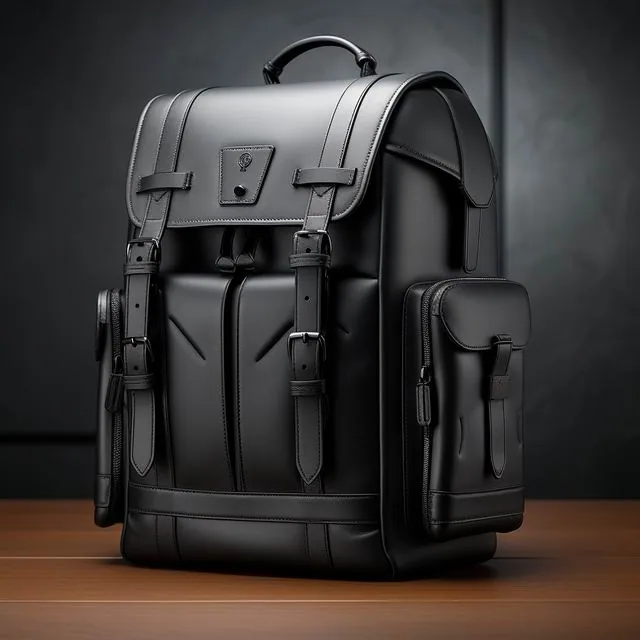
Best for hybrid working is a 20-24 L pack with a modular interior, because the load changes completely between an office day and a home day. On an office day you carry a laptop, a charger, a mouse, a notebook, an A4 folder, headphones, a bottle and a lunch, roughly 4.5-6 kg. On a travel-light day you carry the laptop, the charger and headphones, roughly 2.5 kg. A bag that compresses between those two states without collapsing into a shapeless sack is the single most useful feature a hybrid worker can buy, and it usually comes from a roll-top or a compression strap system rather than from clever pocketing.
Organisation panels are where hybrid bags succeed or fail. A fixed organiser with 12 elastic loops looks impressive and is useless if you carry a mouse and a charger; you will spend 30 seconds each morning deciding which loop to use. A better design uses three or four padded, differently sized slip pockets plus one zipped mesh pocket, which accommodates a 65 W USB-C charger, a 330 ml bottle and a hard drive without forcing a decision. Our production team sees the same pattern in corporate orders: the most requested interior is a removable panel with two zipped pockets, because it lets the bag convert from an organiser to an open tote in seconds.
Hot-desking adds two practical requirements. First, cable management: a dedicated flat pocket with two elastic loops keeps a charger, a USB-C cable and a dongle from tangling, and prevents the more annoying failure of a cable working loose and scratching a laptop lid inside the sleeve. Second, a water bottle pocket that actually holds a bottle upright when the bag is set down, which means an internal elasticated pocket at least 90 mm in diameter rather than an external mesh sleeve that lets a 500 ml bottle fall out when you put the bag on a desk.
Professional appearance still matters in British offices, and the market has moved decisively away from outdoor styling. The bags that read correctly in a City or Canary Wharf setting are minimalist: a matte or low-sheen fabric in black, charcoal or navy, no external daisy chains, no bright zip tapes, and hardware in gunmetal or matte black rather than polished silver. A leather or leather-trimmed front panel raises the formality further, at a cost of 250-400 g of extra weight and a need for occasional conditioning. Recycled fabric is now a genuine advantage here: several UK employers run procurement policies that prefer recycled content above 50% by fabric weight.
Durability expectations differ for hybrid workers in one important way: the bag is used less often but carried through more doors, turnstiles and car boots. Abrasion therefore concentrates at the base corners and the top handle. A bag with a 1680D or 1000D base panel and a bar-tacked top handle rated to 15 kg will outlast a lighter bag by two to three years, and a replaceable top handle is worth asking about because it is the single most common warranty claim on commuter packs.
Best for Business Travel and Overnight Trips
Best for regular business travel is a 30-34 L pack that opens fully flat, separates clean clothes from tech, and fits the 55 x 40 x 20 cm cabin template used by most carriers from UK airports. The bag needs to carry a 16-inch laptop, a tablet, a charger, a wash bag, a shirt, underwear and socks for one night, a wash kit and a pair of shoes, which is about 6.5-8 kg and around 30 L of volume. Anything smaller forces compromises; anything larger stops being a backpack you can walk through a terminal with comfortably.
| Trip length | Capacity | Empty weight | Key features | UK price |
|---|---|---|---|---|
| Day trip, no overnight | 24-26 L | 1,200-1,400 g | Lay-flat laptop section, document sleeve | £120-£180 |
| One night | 30-32 L | 1,400-1,650 g | Clothing compartment, shoe pocket | £180-£240 |
| Two to three nights | 34-38 L | 1,600-1,900 g | Compression, laundry section | £220-£300 |
| International with wheeled case | 22-24 L | 1,100-1,350 g | Luggage pass-through, slim profile | £130-£190 |
Which is better for British business travel, a backpack or a wheeled case? For a one-night trip on rail, the backpack wins decisively: you can walk from Euston to a meeting without hunting for a lift, and you are not the person blocking the vestibule with a cabin trolley. For a four-night trip with formal clothing, the wheeled case wins, and the correct answer is a 22-24 L backpack with a luggage pass-through that rides on the handle. The hybrid mistake is buying a 40 L travel backpack for a one-night trip; it is heavier, it does not stand up, and it will not go under an airline seat.
Clothing care is the detail that separates a travel backpack from a big commuter bag. Look for a separate clothing compartment with a flat panel at least 300 x 400 mm, so a folded shirt and trousers lie flat against your back rather than being rolled into a corner. A shoe compartment is genuinely useful if it is sealed and vented, with a 150 x 300 mm internal pocket, and useless if it is simply a mesh sleeve into the main space. Compression straps inside the clothing section reduce creasing more effectively than packing cubes, because they press fabric against the rigid back panel instead of letting it shift.
Security and transit formalities finish the specification. At UK airport security a laptop over about 15 inches usually has to come out of the bag, so a side-access or clamshell sleeve saves real time and avoids the scrambled unpacking at a tray. An RFID-shielded card sleeve is worth having if you carry corporate access cards. A bag with a luggage tracker pocket sized for a coin-sized tracker is now standard above £200. Check also the airline detail: several UK carriers enforce a 6 kg cabin bag limit on regional services, so a 1.8 kg pack leaves only 4.2 kg for contents, which is why an empty weight under 1.6 kg matters at this capacity.
Packing method decides whether a one-night trip works in a backpack. Roll casual clothing and fold formal clothing flat against the back panel: a shirt folded to roughly 300 x 400 mm and laid behind the laptop sleeve arrives in far better condition than one rolled into a corner. Put shoes in the sealed base compartment, heels to the outside, so they cannot press against the clothing panel. Keep liquids under 100 ml in a wash bag that slides into the front pocket, so you can pull it out at security without unpacking the clothing compartment.
Best for Cycling and Walking Commutes
Best for a British cycling commute is a 24-28 L pack with a sternum strap, a hip belt or a stabilising waist strap, and reflective coverage on at least 30% of the visible rear surface. The cycling requirement is stability: a bag that shifts when you stand on the pedals or glance over your shoulder is dangerous, which is why a hip belt matters even at 5 kg. Look for shoulder straps with a slight inward curve and a sternum strap mounted on a sliding rail, so it can be set at mid-chest height rather than sitting under your collarbones. A bag that sits high and tight on the back is also the one that keeps a laptop sleeve away from the small of your back, where road spray collects.
Visibility is the second cycling priority, and Britain makes it a priority for most of the year. Between November and February, commuting hours fall almost entirely in darkness, and reflective piping on the straps and base is far more effective than a light-coloured fabric. A rear light loop, a 25 mm webbing tab above the base panel, costs almost nothing and is worth insisting on. Some commuter packs now integrate a 15-20 lumen rear light into the base, which adds around 40 g and needs charging every 8-12 hours; useful if you ride daily, unnecessary if you ride twice a week.
Walking commuters have a different problem: distance and sweat. A 25-minute walk at 5 km/h with a 5.5 kg bag will wet a shirt through a solid foam back panel on any day above 14 °C. The fix is a suspended mesh panel with a 10-15 mm air gap, which typically reduces perceived back temperature by several degrees, or a structured panel with three or four raised foam channels. Both work; the mesh panel is cooler and slightly less stable, the channeled panel is more stable and marginally warmer. If you walk more than 20 minutes each way in business dress, choose the channeled panel and accept the trade.
Two British specifics finish this category. First, the Cycle to Work scheme: most UK employers offer it, and the tax saving on a bag and accessories typically runs 25-39% depending on your income tax band, which turns a £160 commuter pack into an effective £100-£120 purchase. Ask your employer for their provider before buying. Second, mudguards and spray: if you ride without full mudguards, the base of your bag will take road water for the entire winter, so a bag with a water-resistant base panel and a rain cover matters more than any other feature. A cover sized to 25-30 L adds 90-130 g and keeps the contents dry in a sustained downpour.
Finally, consider load placement. Cyclists should pack heavy items low and close to the back panel, because a load sitting high and away from the spine makes the bike feel unstable when you brake hard. Put the laptop in first, against the back panel, then the charger and lunch above it, and keep nothing in the outer pockets that can swing. A bag with a 200 mm luggage pass-through can also double as a pannier-top bag if you strap it across a rear rack, though a dedicated pannier remains the better solution above 7 kg.
Which Material Is Better: Ballistic Nylon, 600D Polyester or Leather?
Which is better depends on what you are protecting and how you travel. Ballistic nylon, originally a 1680D specification developed for military applications, is the benchmark for abrasion: a good 1680D weave weighs around 350 g/m² and commonly passes 50,000-70,000 rubs under the Martindale method in ISO 12947-2. A 600D polyester weighs about 210 g/m² and typically reaches 25,000-35,000 rubs. A 500D recycled rPET sits between the two at roughly 220 g/m² and 35,000-45,000 rubs. Full-grain leather is heavy at 700-900 g/m² but ages rather than wears, and a leather-trimmed front panel on a work backpack adds 250-400 g while raising the formality considerably.
Water behaviour differs as much as abrasion. Nylon absorbs up to 4% of its weight in water and dries slowly; polyester absorbs under 0.5% and dries fast; leather absorbs readily unless treated and needs reconditioning every 6-12 months. In Britain, where a commuter bag gets wet 60-100 times a year, that difference is practical: a polyester-shelled bag dries in a porch overnight, while a heavy nylon shell can still be damp the next morning. Coatings close most of the gap. A polyurethane coating at 1,000 mm hydrostatic head handles a shower, 1,500 mm is the sensible British minimum for daily commuting, and 3,000 mm is what a cycling commuter should look for.
Coatings and laminates are where the real money goes, and the measurement method matters. Hydrostatic head is tested under ISO 811, which raises water pressure until the fabric leaks at three points. A fabric rated 1,500 mm will resist a 12-minute walk in steady rain; at 3,000 mm it will resist a 40-minute walk with a loaded strap pressing against it. But the rating applies to flat fabric, and commuter bags fail at the same three places every time: the zip line, the seam where the back panel meets the body, and the base corners. Taped seams and a covered zip are more valuable than an extra 1,500 mm of coating.
Durability over a working life is the last consideration, and it favours hybrid construction. A bag with a 1680D or 1000D base panel, a 600D or 840D body and a 210D lining will survive five to seven years of daily commuting at a weight of around 1,200-1,400 g. An all-1680D bag will survive longer but weigh 1,600-1,900 g, which is 400-500 g you carry every single day. Recycled content is now standard at 40-85% by fabric weight with no measurable loss in abrasion performance at equivalent denier, and several UK corporate procurement policies now require it, so check the figure on the hangtag rather than assuming the marketing claim covers the whole bag.
Finish and hardware decide how the bag looks after year two. A PFC-free durable water repellent finish lasts 12-18 months of daily use before the face fabric wets out; the AATCC spray method described at AATCC water repellency guidance gives the 0-100 rating scale that brands quote, and a re-proofing spray costing £8-£12 restores a rating of 90-100. Hardware is the other visible ageing point: matte anodised or powder-coated fittings resist the scuffing that makes polished silver look shabby within a year, and a YKK or equivalent branded zip with a 5 mm coil will outlast an unbranded zip by two to three years of daily use.
Laptop Protection: Drop Tests, Padding and Corner Reinforcement
Laptop damage in a backpack comes from three events, and only one of them is a dramatic drop. The most common is a set-down impact: the bag is placed on a hard floor and the laptop, sitting in a sleeve that reaches the base, takes the full 2.15 kg onto its corner. The second is compression: the bag is wedged under a train seat or into an overhead locker and something rigid presses against the lid. The third is the genuine drop, from a desk or a luggage rack, usually 600-900 mm. A sleeve designed only for the third case will fail the first two, which is why a false bottom matters more than extra padding.
Padding specification is the starting point. A sleeve with 10 mm of closed-cell foam on the back and base faces and 6-8 mm on the sides handles a 16-inch machine at 2.15 kg comfortably. Low-density foam is the usual shortcut: what looks like 15 mm of protection compresses to 4-5 mm under load, and you can test it in a shop by pressing a knuckle firmly into the base of the sleeve. High-density foam resists that pressure and, importantly, recovers its thickness, which is why it still protects on the two-hundredth set-down rather than only the first.
Drop testing is the claim to look for and the claim most often faked. A credible protocol drops a weighted dummy from 900 mm onto a hard surface on six faces, three times each, with the device undamaged and the sleeve seams intact; some brands test to 1,200 mm. A vague reference to military-style testing with no height, no repetition count and no pass criterion means nothing. Ask two questions: what height, and how many drops. Our SGS-verified production base runs exactly this protocol for private-label programmes, because it is the fastest way to separate a sleeve that survives a British commute from one that merely looks padded.
Corner reinforcement is the cheapest effective upgrade and the one most bags skip. Two layers of 500D fabric with an inserted 2 mm EVA insert at each of the four base corners adds about 35 g and absorbs the impact that cracks a screen or bends a hinge. Combined with four small feet on the base, it also keeps the bag off wet station floors. If your bag lacks both, a £15-£25 hard-shell laptop sleeve inside the existing compartment provides most of the protection, at a cost of roughly 200-300 g of weight and a little interior volume.
Finally, think about what else is in the bag. Keys, a metal water bottle and a phone are the objects that damage laptops, and they should never share a compartment with the device. A dedicated front pocket with a key leash, a bottle pocket outside the main volume, and a divider between the laptop sleeve and the main compartment remove almost all internal damage risk. Keep the laptop in the sleeve nearest your back, not in an outer compartment, because that is where it is both best protected and least tempting to a thief on a crowded platform.
Organisation, Security and Cable Management
Organisation is where a work backpack either saves you five minutes a day or costs you five minutes a day. The useful interior has three zones: a tech zone with the laptop and tablet sleeves and a cable pocket; a document zone that takes A4 flat, ideally 230 x 320 mm internally so a folder and a ring binder both fit; and a general zone for lunch, a waterproof and a wash bag. Bags that scatter eight small pockets across the interior look organised on a website and force you to remember where you put things in practice. Look for four to six pockets, each a different size, rather than twelve identical ones.
Cable management deserves specific attention because chargers have got bigger, not smaller. A 65 W USB-C charger measures roughly 60 x 56 x 30 mm, a 96 W or 140 W unit is larger still, and a travel plug adapter adds another 60 x 50 x 50 mm. A flat zipped pocket at least 180 x 120 mm with two elastic loops holds a charger, a 2 m cable and a dongle without the cable working loose and scratching a laptop lid. A dedicated pen or stylus slot 12 mm wide is worth having if you carry a stylus; most commuter bags still provide only 8 mm elastic loops that swallow a pen and grip a stylus too tightly.
Security on a British commute is about opportunity reduction, not fortification. The single most effective feature is a hidden zipped pocket against the back panel, sized for a passport, two cards and some cash, because it cannot be opened without your knowledge while the bag is worn. The second is a rear-facing main zip or a zip covered by a storm flap, which defeats the pen trick that opens a coil zip in about two seconds. Lockable sliders are useful for travel and mildly annoying daily, since a three-dial clasp takes five seconds to open; buy one if you leave a bag in a shared office or a hotel lobby, skip it if you never do.
RFID shielding is worth understanding before paying for it. Contactless payment cards and most corporate access cards operate at 13.56 MHz, and a metallised sleeve attenuates that frequency reliably. Older 125 kHz proximity cards and ultra-high-frequency tags in the 860-960 MHz range are not reliably blocked by the same sleeve. If your building uses a 125 kHz fob, a sleeve sold on 13.56 MHz testing may do nothing for it, so check with your facilities team before relying on the feature.
Two remaining details decided our rankings. A key leash, a 120-150 mm webbing strap with a clip inside the front pocket, ends the 08:40 key hunt and costs nothing. And a bag that stands up when set down, with a flat reinforced base and four small feet, keeps a laptop off a wet pub table or a station floor; bags without this feature tip over constantly, and a tipping bag is a bag that eventually lands on its laptop corner.
Two small features carry disproportionate weight in daily use. An umbrella sleeve, either an external pocket 60-80 mm in diameter or an internal one lined with water-resistant fabric, keeps a wet compact umbrella away from documents and is worth having anywhere in Britain. And a removable pouch: a 1.5-2 L zip case for chargers, cables and a mouse means you can move the entire tech kit from the work backpack to a weekend bag in one motion, which is why our production team includes one as standard in private-label commuter programmes.
British Weather: Keeping a Laptop Dry Between Station and Office
British weather is the reason a commuter bag needs a real specification rather than a style. Manchester, Glasgow, Cardiff and Leeds all record well over 150 wet days a year, London averages around 110-120, and the pattern is persistent drizzle rather than short downpours. That distinction matters: a bag that survives a five-minute cloudburst can still wet through in twenty minutes of fine, wind-driven rain, because wetting out happens at the face fabric long before liquid water reaches the lining. For a bag carrying a 2.15 kg laptop, the consequence of wetting out is not a damp sandwich, it is a device worth £1,800-£2,600 sitting in a saturated sleeve.
Three numbers define the specification. Hydrostatic head, tested by the method in ISO 811, should be at least 1,500 mm for daily commuting and 3,000 mm if you cycle or walk more than 20 minutes. Seam construction should be taped or sealed on the main compartment and the laptop section, because an untaped seam will leak long before the fabric does. Zip protection should be a covered or reverse-coil zip with a garage at the top, since the zip line is where most commuter bags admit water. A bag with all three will keep a laptop dry through a 30-minute walk in steady rain.
Rain covers remain underrated for commuting. A cover sized to your bag, 20-25 L for a commuter pack and 30-40 L for a travel pack, weighs 90-160 g and packs into its own base pocket. It is the difference between a dry and a soaked back panel when you stop for a coffee or wait on a platform. The trade-off is time: deploying one takes about eight seconds, and in a sudden shower you will often prefer to keep walking. Pair a cover with good fabric rather than relying on it alone, and check the cover has a drain hole at the base so water does not pool inside it.
DWR is the maintenance item most commuters forget. A factory finish lasts 12-18 months of daily use, after which the face fabric wets out, the bag feels 150-250 g heavier and the lining starts to feel damp. Re-proofing is simple: wipe the bag down, apply a PFC-free spray proofer, and let it cure for 12 hours. The AATCC spray method summarised at AATCC water repellency guidance gives the 0-100 scale used by manufacturers, and a freshly treated bag should rate 90-100. Doing this every autumn is the cheapest insurance available for a bag that carries electronics.
Drying and storage finish the picture, and they are where British commuters lose bags to mould. Empty every pocket, open the main compartment and stand the bag upside down in a ventilated space for at least 12 hours after a soaking. Never dry a work bag on a radiator above 40 °C, because the heat softens PU coatings and can delaminate a TPU laminate in an afternoon. If the lining smells musty after drying, wipe it with a dilute technical fabric cleaner and leave it open for a further 24 hours before returning electronics to the sleeve.
Condensation is the failure mode commuters do not expect. A laptop carried at 4 °C into a 21 °C office will condense moisture inside a cold, sealed sleeve, and repeated daily cycles of that are worse for electronics than a single soaking. Leave the main compartment open for ten minutes when you arrive, keep the device in the sleeve closest to your back so it warms slowly, and slip a 5 g silica sachet into the tech pocket. Replace the sachet every three months; it costs pennies and removes the problem entirely.
Price Bands in GBP: What £70, £140 and £260 Actually Buy
The UK market for a business backpack men actually buy has settled into three bands, and the differences are more about hardware, sleeve engineering and warranty than about fabric alone. At £65-£95 you get a 600D polyester body with a 1,000 mm coating, a basic sleeve with 6-8 mm padding, unbranded zips and a two-year warranty. These bags are perfectly serviceable for a light-load commuter and typically show wear at the base corners and zip tapes by the end of the second year. At £100-£170 you get 840D or 500D recycled fabric, a 1,500 mm coating, a suspended sleeve with a false bottom, branded zips and a three to five year warranty.
| Price band | Shell fabric | Hydrostatic head | Sleeve padding | Warranty | Expected life |
|---|---|---|---|---|---|
| £65-£95 | 600D polyester | 1,000 mm | 6-8 mm, no false bottom | 2 years | 2-3 years daily use |
| £100-£170 | 840D or 500D rPET | 1,500 mm | 10 mm with false bottom | 3-5 years | 4-6 years daily use |
| £180-£280 | 1680D or leather trim | 3,000 mm | 10-12 mm, corner inserts | 5-10 years | 7+ years daily use |
At £180-£280 you are buying four things that are genuinely difficult to produce cheaply. First, a suspended sleeve with a false bottom, corner inserts and a documented drop test. Second, hardware: matte anodised fittings, branded zips and a top handle bar-tacked to a 15 kg pull rating. Third, serviceability, meaning replaceable shoulder straps, available spare buckles and a repair partner who will restitch a strap for £20-£45. Fourth, materials provenance, with recycled content of 60-85% by fabric weight and documented chain of custody. These are the things that turn a two-year bag into a seven-year bag.
Value depends on your commute in a way that is easy to calculate. If you commute four days a week, that is roughly 200 days a year; a £90 bag lasting two and a half years costs about 18 pence per day, while a £220 bag lasting seven years costs about 16 pence per day and is more comfortable and more protective on every one of them. Above about three days a week in the office, buying up is cheaper per use. Watch the British retail calendar: genuine reductions of 25-40% on last season's colourways appear in January and around Black Friday in late November, and a £240 bag at £150 is the best value in the market.
Warranty and statutory rights run alongside each other, and it is worth knowing the difference. A brand warranty normally covers workmanship, not wear, abrasion or airline damage. Under British consumer law goods must be of satisfactory quality and fit for purpose, with remedies that can run for up to six years in England and Wales, so a bag whose sleeve seam fails at month 20 through a manufacturing defect is usually a retailer matter rather than a manufacturer one. The framework is set out in the Consumer Rights Act 2015, and UK standards policy is coordinated through BSI. Keep the receipt, photograph the failure and register the bag; most UK retailers resolve valid claims within 14 days.
Care extends the life of any bag in this category and takes about an hour a year. Wipe the shell with a damp cloth every few weeks to remove road film, which abrades coatings from the inside. Re-proof every autumn. Empty crumbs and grit from the lining monthly, because grit in the base is what wears through a coating. Store the bag hanging by its top loop rather than crushed under a desk, and loosen all straps before it goes into long-term storage. Done consistently, that hour a year is what turns a four-year bag into a seven-year bag.
Corporate and Custom Orders: MOQ, Sampling, Branding and AQL
Everything above applies to buying one bag for yourself. Employers buying onboarding kits, retailers building a private-label line, and conference or client-gift programmes work to a different set of numbers, and knowing them up front prevents the two failures that wreck most corporate bag projects: missing the delivery window and accepting a shipment with avoidable defects.
The four figures that govern a custom run are minimum order quantity, sampling time, bulk production time and the inspection standard applied before shipment. MOQ 500 pcs per colourway is the working threshold for a fully custom business backpack, because it is the point at which fabric, webbing and hardware can be dyed, woven and moulded to specification rather than bought from stock. Below roughly 500 pieces you select from existing colourways and add a logo, which is faster and cheaper but limits fabric and hardware choice. Sampling takes 6-10 working days once the tech pack is signed off, covering pattern making, a first prototype and one round of revisions; a second revision adds 3-5 days. Bulk production runs 35-50 days from sample approval, depending on fabric lead time and whether custom hardware such as branded zip pulls or moulded buckles is involved.
Quality control is where programmes succeed or fail. Inspection is carried out to AQL 2.5 (ISO 2859-1), the acceptance quality limit set out in ISO 2859-1, which defines sample size and the accept or reject thresholds for a given lot. For a 500-piece order at general inspection level II, AQL 2.5 permits a defined number of minor defects and effectively zero tolerance on critical defects such as a failed sleeve seam or a non-functioning zip. Insist on a written report with photographs, and stipulate 100% checking rather than sampling on the four items that generate returns: laptop sleeve seams, top-handle bar tacks, zip runs and shoulder strap attachment points.
Branding options are broader than most buyers expect. Beyond Pantone-matched fabric and webbing, a private-label programme can specify a woven label, a silicone or TPU patch, embroidery up to 8,000 stitches, a debossed leather patch, or a screen-printed lining. Hardware can be specified in matte black, gunmetal or anodised finishes, and zip pulls can carry a moulded logo. Packaging ranges from recycled polybags to FSC-certified gift boxes with a printed insert, and retail programmes usually need barcode labelling and a hangtag with fibre composition and care symbols. Our 4,950 m² SGS-verified production floor operates to ISO 9001:2015, supported by our vetted partner facilities for specialist hardware and leatherwork.
Compliance and logistics close the project. For the British market, documentation should include REACH declarations, UKCA or CE marking where applicable, fibre composition labelling and, for anything marketed to younger users, the relevant safety testing. Standard export packing is 20 pieces per carton at 62 x 42 x 38 cm with a gross weight of roughly 16 kg; sea freight to Felixstowe or Southampton adds 28-38 days of transit, so a realistic door-to-warehouse lead time for a fully custom 500-piece run is 75-95 days from sample approval. Air freight cuts transit to 5-8 days at roughly four times the cost per carton, which suits a launch quantity of 50-100 pieces. Send a tech pack or even a sketch, and our production team will return a costed specification within three working days.
Frequently Asked Questions
How do I choose a work backpack for men?
Match capacity to your laptop and documents, then check the sleeve engineering. A 22-26 L pack suits most British office workers, the sleeve should measure at least 375 x 265 mm internally for a 16-inch machine, and it needs a false bottom plus 10 mm of closed-cell foam. Add a 1,500 mm coating and sealed seams for the commute.
What size work backpack do I need for a 16-inch laptop?
Buy a 24-28 L bag with a sleeve measuring at least 375 x 265 mm internally. A 16-inch MacBook Pro is 355.7 x 248.1 mm, and you need 15-20 mm of clearance in width and depth because padding compresses. Check the sleeve is suspended 25-40 mm above the base of the bag.
Which is better for commuting, a backpack or a messenger bag?
A backpack, for loads above about 4 kg or walks longer than 15 minutes. Two straps spread the load and keep your shoulders level; a messenger bag loads one side and pulls on the neck. Messenger bags win on access speed and formality, so keep one for light carry days and short walks.
Is a 20-litre backpack big enough for work?
Yes, if you carry a 14-inch laptop, a charger, a notebook and a light waterproof, which is roughly 2.5-3.5 kg. It is not enough for a 16-inch laptop plus an A4 ring binder and a packed lunch. Buy 22-26 L if you commute four or five days a week with documents.
Can a work backpack fit both a laptop and a gym kit?
Yes, in 26-30 L with a separate compartment. Look for a lower or front section of about 6-8 L with a vented panel for shoes, so kit does not share space with the laptop. Expect a loaded weight of 7-8 kg, which makes a sternum strap and 65 mm shoulder straps worth insisting on.
What is the best business backpack men can buy for under £150?
Look for 840D or 500D recycled fabric with a 1,500 mm coating, a suspended sleeve with a false bottom and 10 mm padding, branded zips and a three to five year warranty. That specification is available at £100-£165, and January or late November discounts routinely take £200 bags into this band.
How much padding should a laptop compartment have?
At least 10 mm of high-density closed-cell foam on the back and base faces and 6-8 mm on the sides, plus a false bottom that suspends the device 25-40 mm above the bag's base. Press a knuckle into the sleeve in the shop; if you can feel the bottom of the bag, the padding is too soft.
Should I choose nylon or polyester for a British commute?
Polyester dries faster and absorbs under 0.5% of its weight in water, which matters when your bag gets wet 60-100 times a year. Nylon, particularly 1680D ballistic, resists abrasion better, passing 50,000-70,000 Martindale rubs. A 600D or 840D polyester body with a reinforced base is the sensible compromise.
How waterproof does a work backpack need to be in the UK?
At least 1,500 mm hydrostatic head for a walking commute and 3,000 mm if you cycle, combined with taped seams and a covered zip. The rating applies to flat fabric; commuter bags actually leak at the zip line, the back-panel seam and the base corners, so seam and zip construction matter more than the headline number.
What features matter most when cycling to work with a laptop?
Stability first: a hip belt or waist strap, 65 mm shoulder straps and a sternum strap on a sliding rail. Then reflective coverage, a rear light loop, and a rain cover sized to 25-30 L. Pack heavy items low and close to the back panel so the load does not shift when you brake.
Can I take a work backpack as cabin baggage on UK flights?
A 24-26 L commuter pack measuring around 45 x 30 x 15 cm fits under most airline seats. A 32 L travel pack at 50 x 33 x 22 cm fits overhead but not under a seat. Check the 55 x 40 x 20 cm cabin template and remember that regional services often enforce a 6 kg limit.
How do I stop my back sweating on a commute?
Choose a suspended mesh back panel with a 10-15 mm air gap, or a structured panel with raised foam channels. Wear a moisture-wicking base layer under your shirt, tighten the shoulder straps so the bag sits close, and shorten your walk-in by setting the bag down at the office before you warm up.
What is a realistic budget for a work backpack for men?
Around £100-£170 buys a commuting bag that will last four to six years, with a proper suspended sleeve, 1,500 mm coating and a three to five year warranty. Budget £180-£280 for a business travel bag with corner inserts, anodised hardware and a five to ten year warranty.
How often should I re-proof my work backpack?
Every 12-18 months of daily use, or as soon as the face fabric stops beading and wets out. Wipe the bag down, apply a PFC-free spray proofer and let it cure for 12 hours. A freshly treated shell should rate 90-100 on the AATCC spray scale, and a single treatment costs £8-£12.
How long should a business backpack last?
Two to three years at £65-£95, four to six years at £100-£170, and seven years or more above £180, assuming daily commuting. The usual first failures are the zip tape, the base corners and the top handle bar tacks, all of which are repairable for £20-£45 if you catch them early.
What is the MOQ for custom branded work backpacks?
MOQ is 500 pcs per colourway for a fully custom build, where fabric, webbing and hardware are made to specification. Below that you choose from existing colourways and add a logo, which is faster and cheaper. Branding options run from woven labels and silicone patches to embroidery and debossed leather.
What does AQL 2.5 mean on a corporate bag order?
It is the acceptance quality limit used to decide whether a production lot passes inspection, defined by the sampling scheme in ISO 2859-1. For a 500-piece order at general inspection level II, minor cosmetic defects are permitted up to a set number, while critical defects such as a split sleeve seam carry effectively zero tolerance.
How long does a custom work backpack order take from sample to delivery?
Sampling takes 6-10 working days after the tech pack is signed off, including one revision round. Bulk production then runs 35-50 days from sample approval, and sea freight to a UK port adds 28-38 days, so allow 75-95 days from approval to warehouse for a fully custom run.
Get a Free Quote for Custom The Best Work Backpack for Men
Planning a branded programme? Our production team works to MOQ 500 pcs, 6-10 working day sampling and 35-50 day bulk lead times, with AQL 2.5 inspection to ISO 2859-1. Send your brief and we will return a costed quotation in 24-48 hours.
Mens Backpack Guide Editorial Team — Buying guides and sourcing notes for the UK men's backpack market, coordinated by QUANZHOU JUNYUAN BAGS. Commercial figures such as MOQ 500 pcs, 6-10 day sampling and 35-50 day production reflect published programme terms.