Table of Contents
- Backpack vs Tote Bag for the Office Commute: The Direct Answer
- Key Differences at a Glance
- Capacity, Dimensions and Packing Efficiency
- Comfort, Weight and Carry Dynamics
- Materials, Weather Resistance and Durability
- Access, Organisation and Security
- UK Price, Value and Cost per Use
- Which Works Better in Real British Scenarios?
- Testing Standards and Bulk Custom Orders
- Common Buying Mistakes to Avoid
- Final Verdict: Who Should Choose Each?
- Frequently Asked Questions
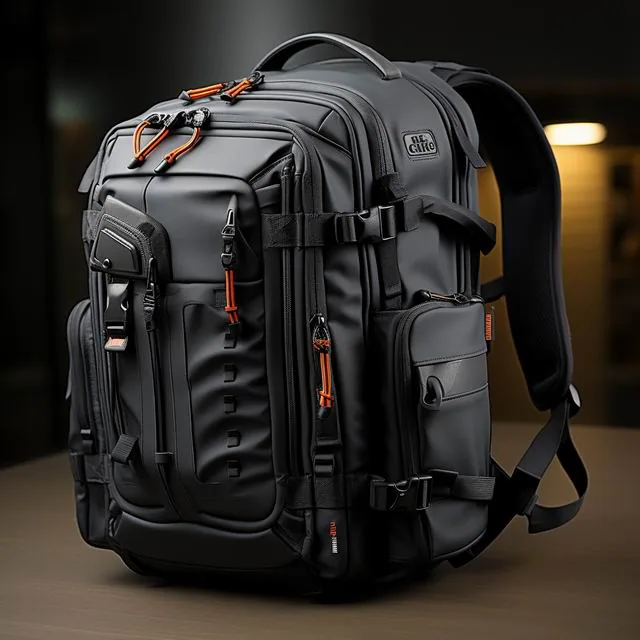
Backpack vs Tote Bag for the Office Commute: The Direct Answer
A tote is a box with two handles and no pretensions. That absence of structure is simultaneously why it looks right in a client meeting and why it is the wrong answer for almost every journey longer than fifteen minutes. There is no harness, no load path, nothing transferring weight to your skeleton: your hand, your forearm or the crook of your elbow does all of the work, and whichever of those you choose, the muscles involved are small ones that fatigue quickly.
Here is the decision in plain terms. If your commute is under fifteen minutes each way, your load is under four kilograms, and your day involves sitting down at a desk from which you can put the bag on the floor, a structured tote with a closed top and a padded sleeve insert will serve you well and look considerably better doing it. Anything longer, heavier or further than that belongs in a backpack, and the reason is not comfort fashion: it is that forearm grip strength and elbow endurance run out long before the working day does.
- Grip limit: holding three kilograms by two narrow handles becomes uncomfortable after roughly eight to ten minutes, and pinching a thick handle in a full grip is exactly the posture occupational health practitioners flag when they assess forearm and shoulder strain.
- Neck cost: carrying a loaded tote hooked over the elbow or held at the hip forces a lateral neck bend of ten to fifteen degrees, held statically, which is the single most common cause of end-of-day neck ache reported by City workers.
- Opening: an open-topped tote collects rain at a rate no coated fabric can resist and presents its entire contents to anybody walking past your table at a Pret.
- Structure: without a base board and metal feet, a 4 kg load pulls the base into a curve within weeks and the handles start tearing away from the top edge.
- Appearance dividend: a tote goes on the meeting table without comment, where a technical backpack reads as though you arrived from an expedition.
There is one compromise worth knowing about before you decide, because it resolves most of this argument for most people. The modern work tote is not the cotton book bag you are picturing: it has a zip or magnetic closure, flat internal panels, a detachable padded sleeve, a reinforced base with feet and sometimes a hidden pair of backpack straps in the back panel. That product exists between £70 and £160 in the British market and it behaves quite differently from a £19 shopper.
And there is a genuinely British wrinkle to this decision. Our commute involves rain, stairs, platforms and pavements, in that order of unpleasantness. Every one of those conditions punishes a two-handle bag: rain enters from above, stairs require a free hand for a rail, platforms are crowded, and pavements are where you discover that a swinging 4 kg box knocks into your own knee on every stride.
Key Differences at a Glance
The columns below compare a 20–26 L commuter backpack with a 14–20 L structured work tote. They are separated deliberately: an unstructured cotton shopper is not a fair comparison at any price and loses on every row except purchase cost.
| Attribute | Commuter backpack (20–26 L) | Structured work tote (14–20 L) |
|---|---|---|
| Load path | two shoulders and the spine | hand grip, forearm or elbow crook |
| Practical load ceiling | 6–8 kg | 4 kg |
| Comfortable carry duration | several hours | 10–15 minutes continuous |
| Typical body size | 44–47 cm tall, 30–33 cm wide, 17–20 cm deep | 30–38 cm tall, 35–45 cm wide, 12–16 cm deep |
| Empty weight | 850–1,150 g | 500–1,300 g depending on leather or board |
| Rain behaviour | sheds from the top if the zip line is covered | funnels in through the top unless closed |
| Typical British price | £55–£150 | £45–£160 structured, £15–£40 unstructured |
| Natural home | train, cycle, longer walk | short walk, car, taxi, office floor |
Two rows deserve attention because buyers rarely read them properly. Empty weight: a leather tote can easily weigh more than the backpack it is meant to replace, and that is before contents. And overall width: totes run significantly wider than any backpack, which is fine in an office and a nuisance everywhere else, particularly on a rush-hour Northern service.
Capacity, Dimensions and Packing Efficiency
Tote volumes are usually quoted honestly because the shape is honest: a rectangular box with no hidden depth and nothing to round off. The practical consequence is that a 16 L tote feels larger than a 16 L backpack and is simultaneously less usable, because there is no vertical dimension to stack against and no compression to hold things still. Everything you put in a tote ends up in a pile at the bottom, and a 2 kg laptop lying horizontally in that pile is taking the entire load of whatever is placed above it.
This is why the sleeve insert matters so much more here than in any other format. A padded slip case of 360 by 250 by 25 mm occupies about 2.2 L, costs between £18 and £35 depending on construction, and converts an unstructured tote into a usable laptop bag in about four seconds. Without it, the alternative is a neoprene sleeve that protects against scratches and precisely nothing else; the first time somebody sets a bag of shopping down on top of your tote, your machine takes the weight.
Paper is the deciding item for most British office workers and it is worth being specific about the sizes involved. A4 paper measures 297 by 210 mm, so any tote needs an interior clear dimension of at least 310 by 240 mm to take documents flat, and ideally 330 mm of internal height to take them upright in a folder. A foolscap lever-arch file at around 320 by 280 mm requires more width than many fashion totes offer. Exercise books for teachers, A3 sketch pads for designers and ring binders for anyone in construction all fail in different ways, and the simplest protection is to take the largest object you carry twice a week with you to the shop.
- Flat items belong flat against the widest panel, ideally in a dedicated slip pocket sewn to one wall rather than loose against the base.
- Heavy items belong directly above the feet or above the base board, never suspended from the handles by their own pockets.
- Liquids need their own zipped pocket: in a tote there is no secondary compartment to contain a leak, so a leaking bottle will pool at the bottom and soak documents.
- Everything loose migrates. A tote with no internal fastening is a bag you will find yourself reorganising at least twice a day.
Packing efficiency therefore comes down to internal panels rather than volume. Two flat slip pockets and one zipped section do more for a 16 L tote than 18 L of unstructured space, and the single best after-market purchase most tote owners make costs under £25: a felt organiser insert sized to the interior, which both divides the space and gives the bag the missing base stiffness.
Comfort, Weight and Carry Dynamics
Comfort with a tote is a question of which of three carrying positions you end up using, because most people cycle between all three within a single walk without noticing. The first is hand carry, in which grip endurance is the limiting factor and somewhere between eight and twelve minutes of loaded walking is realistic before you switch. The second is over the forearm with the bag braced against the hip, which transfers some load to the pelvis and causes the iliotibial band and hip abductors to work isometrically for as long as you walk. The third is hooked over the elbow or carried on the shoulder, which is the worst of them, forcing a static lateral neck bend and a raised shoulder on the loaded side.
Handle geometry determines most of this. A handle drop of 240 to 280 mm from the top edge of the bag to the apex of the strap is required before the bag will clear the crook of a British arm wearing a winter coat; anything less and you can only carry it in your hand. Width matters just as much: 20 to 25 mm of webbing or rolled leather is comfortable to hold, whereas anything narrower than 15 mm cuts into the palm under load, and anything wider than 40 mm cannot be gripped at all. If the bag is intended for shoulder carry the handle should be padded over a 120 to 150 mm section, which is achievable only with webbing or with a leather sleeve slid over it.
The manual handling guidance published by the Health and Safety Executive applies more directly than most buyers expect to the everyday habit of carrying everything in one hand. Its assessment asks about load, distance and frequency, and it also stresses something most people ignore entirely: the benefit of splitting a load between two hands, or better, of putting it on a frame that transfers it to the skeleton. A trolley sleeve, stitched to the back panel so the bag slides over the handle of a wheeled case, is the single most transformative feature available on a work tote for anybody doing half a mile of pavement each morning.
Also consider what happens when the tote is put down. Every British working day involves putting the bag on a floor: under a desk, on a train, in a pub, on a taxi seat. A structured base panel with five to eight metal feet raises the lowest point of fabric by about 8 to 12 mm, keeps it out of standing water and grime along the floor line, and greatly slows abrasion. Unstructured cotton shoppers fail here first, second and third, and their failure is always a hole rather than a repairable tear.
Materials, Weather Resistance and Durability
Material choice in this category splits four ways, and each has a distinctly different lifespan. Cotton canvas at 12 to 16 ounces per square yard is the classic: it looks good, takes a reproofing treatment, creases honestly, and will develop a hole at the base fold after two to four years of five-day-a-week service. Coated canvas, usually a PU or TPU laminate over the same base cloth, roughly doubles that life and improves wet performance enormously. Full-grain leather lasts longest of all but adds between 700 g and 1.4 kg of empty weight, and needs conditioning twice a year in our climate. Recycled PET felt and industrial-grade synthetics sit somewhere between canvas and coated canvas, with the advantage of being wipe-clean.
Weather behaviour is where the tote's shape works against every material improvement available. Even with a 3,000 mm coating, an open top will take in water at whatever rate the rain is falling across the plan area of the opening, and a 350 by 140 mm aperture in moderate British rain of around 4 mm per hour accumulates roughly 0.4 L per minute. No coating helps with that, because the water is not passing through the fabric; it is simply arriving. A zip-top or a full-width magnetic closure with a storm flap solves it, and this is the single specification line that separates a work tote from a shopping bag.
The other vulnerability is colour transfer, which is far more of an issue for totes than for backpacks because the bag is carried against clothing for minutes at a time and pressed against a suit jacket or a wool coat. Dark indigo dyes and certain cheap reactive prints will mark light fabric, particularly when damp. Any serious supplier should be able to evidence colourfastness to rubbing against the published ISO 105 textile colour-fastness methods and should quote a grey-scale rating rather than offer an opinion.
- Require a 20 mm minimum turn-down or binding at every raw edge; unbound canvas edges fray within a year and are the first thing a buyer notices going downhill.
- Check that the handle is attached through the body rather than simply to it: an internal reinforcing plate or a rivet-and-washer assembly spreads the tearing force across a much larger area.
- Look for a base board, either removable or sewn in, of at least 3 mm; this one component is what stops a tote collapsing into a hammock shape.
- Prefer a wipe-clean lining rated against staining; coffee and leaky lunch containers destroy light-coloured cotton linings irreparably.
Access, Organisation and Security
Here the tote wins in ways that are immediately obvious and loses in ways that take a month to notice. It wins on reach: everything is visible from directly above, there is no layer to dig through, and retrieving a pen takes about two seconds. It also wins on what might be called desk behaviour, since in most British offices a tote sits beside you rather than behind you, and being able to reach into it without standing up has genuine value during a working day.
It loses on site behaviour. There is no way to rummage in a tote on a moving train without either removing it from your shoulder or hoisting it to counter height, which means both hands are engaged and your balance is compromised. There is also no secure position: while standing on a platform with an open tote, the entire contents are visible and reachable from behind you, and pickpockets on the London Underground target open-topped bags because the return for a single reach is so high. A magnetic closure is measurably better than nothing, a zip better still, and a zip whose pulls can be parked under a flap better again.
Organisation for this format should be bought rather than specified, with one exception. Because tote interiors are simple boxes, the aftermarket in felt organiser inserts is mature and cheap: £18 to £30 buys a stiffened multi-pocket insert that provides the structure and division the bag lacks. The exception is anything valuable or liquid: those belong in pockets actually sewn into the bag, because a loose organiser can be lifted out of an open tote in one movement in a crowded place.
One point specific to professional use is worth adding. Lawyers, barristers, accountants and consultants in this country routinely carry papers that should not be publicly visible. An open-topped tote carried into a client's reception with six case files visible is a minor professional risk that no closure retrofits neatly; if your work product has any confidentiality attached, this alone should settle the decision in favour of a closed-top bag or a backpack.
UK Price, Value and Cost per Use
The British market divides into three clear groups. Under £40 sits the fashion shopper: printed cotton, no closure, no structure, no reinforcement, and a service life of roughly one winter with daily use. Between £45 and £110 sits coated canvas, twill or synthetic work totes with a closure, a sleeve or a base board, from office-supply and travel brands. From £120 upward sits leather and designer territory, where an increasing share of the price is brand rather than construction, with the caveat that a £190 full-grain leather tote genuinely will outlast three £50 canvas ones.
Cost per use is unflattering to cheap bags here in a way that few other categories manage. A £22 cotton shopper used daily for academic or office purposes reaches its first structural failure somewhere between nine and fourteen months; across roughly 280 uses that is about seven pence per use, which sounds excellent until you add the replacement cycle and note that its failure tends to be sudden and public. A £95 coated-canvas work tote lasting four years across 960 uses costs about nine pence per use and never once deposits your belongings on the pavement outside Liverpool Street.
- £15–£40: acceptable as a secondary bag, a gym bag or a shopper kept in a car boot; not acceptable as a daily work carry.
- £45–£110: the correct band for a genuine work tote, and where a closure, reinforcement and a two-year warranty become standard.
- £120–£200: leather or technical fabrics with proper structure; buy here only if appearance is part of the job requirement.
- Above £200: you are paying for the name; check the handle attachment method rather than the logo, because it is frequently no better than the £90 version.
Add two predictable ownership costs. A reproofing treatment at around £12 a year roughly doubles the effective water resistance of cotton canvas, and a replacement organiser insert at about £25 is usually required within three years. Budget both and the value comparison shifts further away from cheap unstructured cotton.
Which Works Better in Real British Scenarios?
The same four journeys, tested against the same two bags, produce genuinely different answers, which is why this comparison cannot be resolved in the abstract.
Scenario one: a twelve-minute walk from Clapham to the office
One laptop in a sleeve at 1.6 kg, a notebook, papers, a light lunch — around 3.2 kg. The structured tote wins comfortably. Twelve minutes of hand carry is within grip endurance, there is no stairs-and-platform penalty, and looking right at reception has real value. Add a cross-body strap if your hands must stay free for coffee and a phone.
Scenario two: District line, Northern line, eleven-minute walk
Same load, thirty-eight minutes door to door including two staircases and a busy interchange. The backpack wins and it is not subtle. By the third minute of hand carry most people either switch hands and lose four seconds doing it, or hook the bag over an elbow and begin the neck-bending process that produces the ache complainers describe every January.
Scenario three: a client-facing day with confidential documents
Both fail differently. An open tote is a visibility problem; a backpack worn on the back through a crowded station is a theft-exposure problem and additionally looks wrong when you arrive. The correct answer is a closed work tote with a zip, carried by a strap rather than handles, which is why this hybrid has taken over professional markets in Britain over the past decade.
Scenario four: mixed car, train and long-walk week
Wednesday involves a train to Milton Keynes, Thursday a client visit driven by car, Friday a nine-minute walk. The genuinely correct answer is to own both and to accept that tote days will also be the days you carry less. Anyone who tries to force one bag into every configuration ends up with the version they least like: an unstructured tote overloaded to 5 kg, or a technical backpack carried into a boardroom.
| Journey type | Distance and mode | Winner | Deciding factor |
|---|---|---|---|
| Short urban walk | under 15 min on foot | Tote | Grip endurance is sufficient and appearance counts |
| Rail commute with interchange | 25–45 min | Backpack | Hands must be free for tickets, rails and stairs |
| Client meetings with papers | any distance | Closed tote | Contents stay private and it sits correctly on a table |
| Mixed car and rail week | variable | Own both | Each day's load and mode differ too much for one answer |
| Cycle leg included | 10–30 min riding | Backpack | A tote cannot be secured while riding |
Testing Standards and Bulk Custom Orders
Acceptance testing for totes should be led by one observation: every structural load in this format passes through the handle roots. Four checks cover the ground. Hang five times the stated working load from the handles and hold for sixty seconds, then inspect both faces at the top edge for any stitch movement. With the bag loaded to 6 kg, walk fifty metres on each carrying position and check that the handle apex has not elongated. Cycle each closure fifty times and check alignment, since magnetic closures that are 2 mm out of register become progressively easier to open accidentally. Finally, wet the base and place it on unglazed paper for thirty minutes; any wicking through the base seam is unacceptable in a British climate.
Documented evidence should be requested rather than assumed. Handle webbing and body fabric strength is most often evidenced against the ASTM grab-test method, which is a fair proxy for how a loaded tote behaves. Colourfastness references belong with ISO 105 rather than with a supplier's own opinion. And where a programme involves volume, attribute sampling at AQL 2.5 under ISO 2859-1 is defined in the published ISO 2859-1 procedure, with cartons opened from more than one pallet position so that a defect confined to one part of a batch cannot pass.
Commercial terms follow the template used on every programme we run: MOQ 500 pcs per style and colourway, sampling in 6–10 working days (12–15 where there is tooling, leather cutting or welded seam work), bulk production 35–50 days after sample sign-off, inspection at AQL 2.5 under ISO 2859-1, payment by T/T 30/70, shipment FOB Xiamen. QUANZHOU JUNYUAN BAGS operates as a sourcing and programme-management partner, founded in 2014, whose team has been in this trade since 2004: specification writing, sampling co-ordination and inspection are handled internally, while cutting and sewing are passed to our production partners.
Those partners occupy a 4,950 m² SGS-verified production floor running 7 production lines with 149 machines and 137 colleagues, producing around 200,000 pieces monthly. Specifications can be sent to service@junyuanbags.com, or reach us directly on WhatsApp at wa.me/8617750020688.
For the British market, two obligations apply. Fibre-composition labelling is mandatory on textile products, so the handle webbing, the lining and the body all need to be accounted for. Any tote supplied with a charging lead, power bank or illuminated hardware element requires UKCA marking before sale, with further detail in the government's UKCA marking guidance, and the UK responsible person must be named on the packaging.
Common Buying Mistakes to Avoid
These five errors account for most of the returns and replacements in this category, and each is avoidable with a minute's attention in the shop.
- Buying on handle comfort alone. Handle comfort is what you feel immediately and handle attachment is what fails eventually; check where the strap enters the body, not just how it feels to hold.
- Choosing an open top for a rainy commute. An uncovered aperture collects far more water than any fabric deficiency could.
- Ignoring internal width. A bag 5 mm narrower than your A4 folder is a bag you will not use, whatever its capacity claims.
- Carrying a laptop loose in the bottom. A sleeve insert costs £18 to £35 and prevents the most common and most expensive failure in this whole category.
- Assuming leather means strong. Unreinforced leather handles stretch permanently by 10 to 15 mm in the first year and then tear at the rivets.
A sixth mistake is choosing tote over backpack purely on looks and then quietly developing the shoulder habits that physiotherapists see every autumn. If you have any neck complaint at all, this is the comparison where you should let comfort win.
Final Verdict: Who Should Choose Each?
Choose a structured tote if three things are true at once: your daily walk is under fifteen minutes, your load stays below four kilograms, and your working life involves sitting at desks and tables where the bag can be put beside you rather than carried. Lawyers, architects presenting to clients, managers whose commute is short, and anyone whose day is a car rather than a train should be looking here, provided the top closes.
Choose a backpack if any part of your week involves fifteen minutes of continuous carrying, two hands needing to be free, a laptop larger than 13 inches without a separate sleeve, or stairs. Practical load ceiling is the whole argument: four kilograms against eight, ten minutes against several hours.
- Buy the tote for appearance and short distances, and only with a zip or full-width closure.
- Buy the backpack for rain, distance, stairs and anything above four kilograms.
- Buy a closed-top work tote with a detachable cross-body strap if confidentiality matters as much as convenience.
- Buy both if your week genuinely alternates, and accept one or two suitcase-worthy transitions a week rather than one compromised bag every day.
Whichever you settle on, spend the first £25 wisely: an organiser insert for the tote or a £12 dry pouch for electronics in the backpack. In forty years of British bag design nothing else returns so much utility for so little money.
Frequently Asked Questions
Which is better, a backpack or tote bag, for daily use?
For most office commuters in Britain the backpack, because most trips involve more than fifteen minutes of walking and more than four kilograms.
The tote is better when the journey is short, the load is light and professional appearance carries real weight.
How much capacity do I need when comparing these two options?
Twelve to 18 L covers a paper notebook, a laptop in a sleeve and lunch in a tote; twenty to 26 L covers the same load plus shoes or a coat in a backpack.
Do not size up in a tote to gain capacity: extra volume without structure simply means contents pile up and slide.
What empty weight is reasonable for this type of backpack?
Between 500 g and 900 g for a canvas or synthetic work tote, though leather examples routinely exceed 1.2 kg before you put anything in them.
Compare like for like: a heavy leather tote can weigh more than the backpack it replaces.
Is a backpack more durable than a tote bag?
A backpack usually lasts longer under equivalent loads because effort is spread across two shoulders and four anchors, whereas a tote concentrates everything at the two handle roots.
A leather tote with a riveted and plated handle attachment is the exception and can outlast several backpacks.
Can a tote bag protect a laptop during British commuting?
Only with a dedicated padded sleeve insert rather than a slim neoprene cover, since anything above it in an unstructured bag presses directly onto the machine.
Budget £18 to £35 for a proper sleeve, and check it sits clear of the base when the bag is set down.
Which option handles persistent UK rain more reliably?
The backpack, decisively. An open top collects water at roughly the rate it falls across the aperture regardless of the fabric coating, and few coatings survive that.
If you must carry a tote, buy one with a zip or magnetic closure and a storm flap over the opening.
How much should British buyers pay for good quality?
Expect £45 to £110 for a genuine work tote with reinforcement and a closure, and £55 to £150 for a competent commuter backpack.
Below about £40 neither format has the structure to survive daily British service for more than a year.
What dimensions work best on trains and short flights?
A tote needs to be narrow enough not to occupy aisle width, so keep the widest dimension under 45 cm and the depth under 16 cm.
A zip-top version then works as a personal item on most short-haul carriers, provided nothing extends above the aperture.
Should I choose a backpack for loads above eight kilograms?
Yes, and choose it well before eight. Four kilograms is already beyond what a tote should be carrying continuously, and by eight you need load lifters and usually a hip belt.
No tote of any construction handles eight kilograms safely over distance.
Is a tote bag practical for mixed work and weekend use?
Surprisingly yes, more than most buyers expect, because the open box takes a farmers-market shop, a gym kit and office documents equally well.
The caveat is rain and distance: a fifteen-minute walk to the shops is fine, forty minutes home in drizzle is not.
How should bulk buyers specify these backpack designs?
Specify handle webbing width and breaking strength, handle attachment method and reinforcement area, base board thickness, foot count, closure type, internal clear dimensions for A4 and colourfastness rating.
Require a five-times static load test written into the specification and keep two sealed approval samples.
Can both options pass useful durability and quality checks?
Yes, though the targets differ. Totes need handle-root and closure-cycle testing; backpacks need harness and back-panel testing.
Six checks written into the purchase order will uncover almost every weak build before shipment.
What makes a tote comfortable rather than merely tolerable?
Three things: a handle drop of 240–280 mm so it clears a coat, a handle width of 20–25 mm so it can be gripped fully, and a total load under four kilograms.
Add a detachable cross-body strap and the same bag becomes tolerable for considerably longer journeys.