Table of Contents
- 18L vs 24L Backpacks for Daily Commuting: The Direct Answer
- Key Differences at a Glance
- Capacity, Dimensions and Packing Efficiency
- Comfort, Weight and Carry Dynamics
- Materials, Weather Resistance and Durability
- Access, Organisation and Security
- UK Price, Value and Cost per Use
- Which Works Better in Real British Scenarios?
- Testing Standards and Bulk Custom Orders
- Common Buying Mistakes to Avoid
- Final Verdict: Who Should Choose Each?
- Frequently Asked Questions
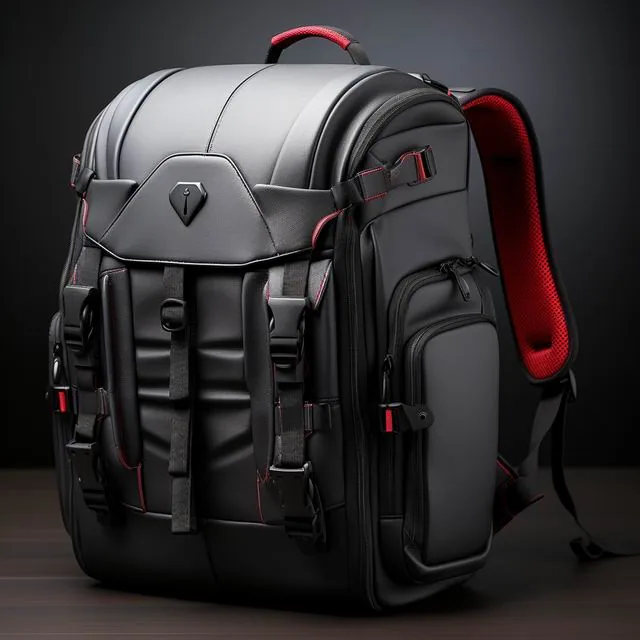
18L vs 24L Backpacks for Daily Commuting: The Direct Answer
Pick the 24 L if any ordinary day in your week contains a gym stop, a full packed lunch, or a winter coat you carry rather than wear. Pick the 18 L if your day is a laptop, a bottle, a charger and a walk of about fifteen minutes at each end. The six litres between the two is not a marketing rounding error. It is roughly the volume of a pair of size-9 trainers (about 3.7 L), a lunch box (about 1.4 L) and the air around both, which is exactly what separates a commuter who travels light from one who has not yet admitted to the afternoon.
This comparison matters more than most capacity arguments because the two sizes look near identical from the front and behave very differently by four o'clock. An 18 L pack carrying 3.3 kg sits around three-quarters full, keeps its silhouette, and holds contents where you placed them. A 24 L pack with the same 3.3 kg shows visible slack. Without side compression the load settles into the lower third, the pack rounds out, and the centre of mass drops below the hip line, at which point the shoulders start doing work the harness was never asked to do.
Equally, an 18 L pack run at its absolute limit is worse than a 24 L pack at two-thirds. Filled to the zip line, a small daypack bows its back panel, pushes the shoulder straps outward and puts diagonal tension across the main closure. Zips on compact packs are usually specified for occasional full loads rather than daily ones, so the failure mode is a split at the zip end rather than a dramatic tear.
- 18 L suits: laptop, bottle, charger and a commute under about thirty minutes each way, in office dress, between April and September
- 24 L suits: a packed lunch every day, gym kit twice a week, a coat from October to March, or any single journey over forty-five minutes
- Neither suits: a 16-inch laptop with a separate keyboard, or any load above 7 kg, where a 30 to 35 L travel format is the honest answer
- Quick test: if your daily contents fit on one written line, take 18 L; if the list needs a second line, take 24 L
Key Differences at a Glance
The rows below come from measurement rather than from category averages. Every dimension is taken with the pack loaded to the weight described, because an empty measurement tells you very little about how the bag behaves on a platform or in a carriage aisle.
| Measure | 18 L daypack | 24 L daypack |
|---|---|---|
| Measured volume | 18 L (17.2 to 18.6 L by block fill) | 24 L (22.8 to 25.1 L by block fill) |
| Packed external dimensions | 44 x 28 x 17 cm | 48 x 31 x 19 cm |
| Empty weight | 820 g to 1.05 kg | 1.10 kg to 1.46 kg |
| Grammes per litre | 49 to 58 g/L | 46 to 61 g/L |
| Fill level with 3.3 kg inside | about 78 per cent | about 62 per cent |
| Laptop sleeve normally supplied | 13 to 14 inch, around 325 x 230 mm | 14 to 15 inch, around 355 x 250 mm |
| Shoulder strap width commonly seen | 50 to 58 mm | 58 to 68 mm |
| Typical UK retail band | £45 to £95 | £70 to £145 |
Read the grammes-per-litre row first if you care about shoulders rather than shelves. It tells you how much bag you are lifting for every litre of usable space, and it removes the illusion that the bigger number is automatically the heavier one. A well-patterned 24 L with a simple interior can beat a heavily pocketed 18 L on this measure.
Read the packed-dimensions row first if your commute involves a specific gap: a train table, an under-seat void, a crowded aisle or a locker. Three centimetres of extra width is what catches on seat backs and turnstile gates, and it is the single most common reason a larger pack feels wrong on British transport even when the volume is welcome.
Capacity, Dimensions and Packing Efficiency
Capacity figures describe a container, not a plan. What actually decides whether a size works is the shape of the individual items you carry, because three-dimensional objects pack badly into curved corners. A 750 ml bottle is a 240 mm tall cylinder that refuses to nest with anything. A lunch box is a rigid cuboid around 180 x 130 x 80 mm. A 13-inch laptop with a sleeve is roughly 325 x 230 x 22 mm. Those three items together occupy close to 4.6 L of theoretical volume but consume nearer 6 L once you account for the gaps around them.
Below is what happens to five common British working loads when they meet each size. Volumes are calculated from the real items, not from the bag.
| Daily load case | Contents volume | 18 L outcome | 24 L outcome |
|---|---|---|---|
| Laptop, bottle, charger, phone, wallet | about 4.6 L | Comfortable, roughly a quarter of the bag spare | Slack; needs side compression to stop shifting |
| Above plus a packed lunch | about 6.0 L | Fits, zip under mild tension at the corners | Comfortable, about 30 per cent spare |
| Above plus a packable shell | about 7.4 L | Full; back panel begins to bow | Comfortable, shell lies flat against the panel |
| Laptop plus gym kit and trainers | about 10.4 L | Will not close cleanly | Fits with trainers flat at the base |
| Work kit plus a carried winter coat | about 9.8 L | Coat has to be worn | Coat rolls and sits behind the laptop sleeve |
Two construction details explain most of the difference between a pack that accepts a listed load and one that does not. The first is gusset geometry: a pack with a full U-shaped opening and a squared base converts almost all of its nominal volume into usable volume, while a tapered, rounded-bottom pack loses the bottom 30 to 40 mm of depth to curvature. The second is sleeve position. A laptop sleeve sewn flat against the back panel steals nothing from the main compartment; one suspended on a floating panel with foam on both faces can consume 1.5 L of the space you thought you had bought.
If you want a number to work with, plan around 70 per cent of nominal capacity for a comfortable daily fill and 85 per cent as the practical ceiling. On that basis an 18 L pack is a 12.6 to 15.3 L working bag, and a 24 L pack is a 16.8 to 20.4 L working bag. That is the real gap between them, and it is smaller than the label suggests, which is precisely why the choice is closer than the marketing implies.
Comfort, Weight and Carry Dynamics
The empty-weight difference between these two sizes is typically 280 to 410 g. Over three years of return journeys that is somewhere near 200 kg of accumulated lift before a single item is packed, and it lands entirely on two trapezius muscles that were not consulted. This is why the 18 L wins on pure comfort for anyone whose load is genuinely small, and why the 24 L only wins once the extra volume is actually used.
Harness specification changes across the gap in a way buyers rarely check. An 18 L daypack usually ships with 50 to 58 mm straps and 6 to 8 mm of foam, which is fine to about 4.5 kg. A 24 L pack intended for the same purpose should arrive with 58 to 68 mm straps, 8 to 11 mm of closed-cell foam and a sternum strap that can slide across a 90 mm range. Above 5 kg the sternum strap stops being a comfort extra and becomes the part that keeps the straps off the edge of the shoulder.
Torso length matters more than height. A 173 cm British man usually measures 47 to 50 cm from the seventh cervical vertebra down to the top of the hip bones, and both sizes should be chosen so the pack height sits inside that range. A 48 cm tall 24 L pack on a 47 cm torso overhangs by enough to pull the shoulders backward on stairs; the same pack on a 51 cm torso disappears. If you are between sizes, buy the one whose internal frame sheet or stiffener stops above the top of the hip bones rather than one that presses into them.
Load placement finishes the job. Keep dense objects within 60 mm of the spine and low, put the soft coat or towel in the outer third, and use both compression straps every day rather than only when the pack is full. On a 24 L pack with 3 kg inside, compression is the difference between a stable block and a pendulum that swings on every stair.
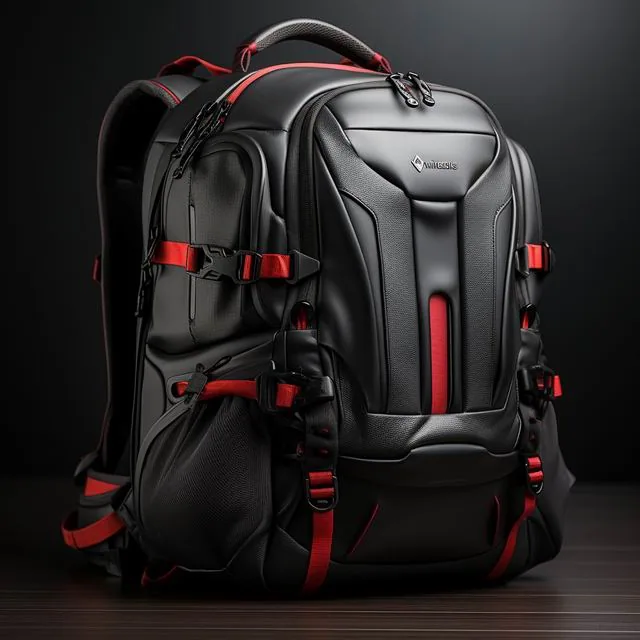
Materials, Weather Resistance and Durability
Fabric mass on packs this size almost always falls between 300D and 600D polyester with a polyurethane face, occasionally with a 900D panel across the base. Abrasion life tracks that choice fairly predictably: a 300D recycled polyester body tested on a Martindale machine commonly reaches about 10,000 rubs before two threads break, a 600D body lands near 20,000, and a 900D base panel around 28,000. If you set the pack down on concrete station floors twice a day, the base panel matters more than the body.
Weather performance is decided by three things in order: the coating, the seam construction, and the closures. A stated hydrostatic head of 2,000 mm on the body fabric will cope with twenty minutes of moderate rain; a base specified at 5,000 mm survives being stood in a puddle on a platform. Neither figure helps if the main zip is an untreated coil running across the top of the pack, because that is where water arrives first on a British morning. A storm flap covering at least 12 mm beyond the zip line, or a reverse-coil zip with a garage at each end, is worth more than another 1,000 mm of coating.
Coating chemistry deserves a question at the point of purchase. Traditional durable water repellent finishes based on long-chain fluorocarbons are being withdrawn across the EU and UK market, and replacements based on paraffin or silicone are now normal. If a supplier cannot tell you which chemistry is on the fabric, or cannot evidence compliance with the restricted substances regime administered through ECHA, treat that as a specification gap rather than a detail.
Durability in service follows the weakest attachment, not the strongest fabric. On both sizes the first failures we see across UK returns are the strap root where webbing meets the body, the top of the main zip, and the binding on the base seam. Look for bar-tacked reinforcement covering at least 1,000 square millimetres at each strap root, and press the base seam between thumb and forefinger: if you can feel the stitch line through the tape, the seam will abrade through within a year of platform use.
Access, Organisation and Security
An 18 L pack is small enough that organisation matters less: you can find things by feel. A 24 L pack is large enough that a badly planned interior becomes a daily irritation, and large enough that a well-planned one genuinely saves time. The useful target is four zones, not twelve pockets: a suspended device zone, a flat document zone, a liquids zone accessible without opening the main compartment, and one quick-access pocket for the things you touch twenty times a day.
Opening geometry decides how the pack behaves in public. A clamshell opening that runs down both sides to about three-quarters of the pack height lets you lay a 24 L flat in a café or a hotel room and see everything; on a crowded Northern line platform it exposes the entire contents to anyone behind you. A top-facing horseshoe opening on an 18 L shows far less and is the safer choice for a commute that involves standing in a crowd. Match the opening to where you actually open the bag.
Security on British transport is mostly about reducing opportunity rather than defeating attack. A rear-facing hidden pocket against the back panel is the right home for a phone and an Oyster card; a side pocket on a 24 L is the wrong one, because it is reachable from behind in a queue. Lockable sliders on the main compartment add friction and are worth having if you leave the bag under a desk, but they slow a pack you open twenty times a day, so fit them only on the compartment that holds valuables.
- Aim for one external bottle pocket on 18 L and two on 24 L; the second one is where a wet umbrella goes
- Keep the key clip inside the quick-access pocket rather than in the main body
- Specify reflective detail of at least 50 x 20 mm on each strap plus a 100 mm band low on the front panel for winter cycling
- Avoid dangling pullers longer than 40 mm; they catch on turnstiles and on the edge of train tables
UK Price, Value and Cost per Use
Three retail bands describe the British market for these two sizes. From £45 to £70 you get a serviceable 18 L with a basic coil zip, minimal back structure and no documented testing; from £75 to £120 you get controlled materials, a padded harness with a sternum strap and usually a one-year warranty; from £130 to £190 you get tighter tolerances, a named fabric with a stated coating figure, and two to five years of cover. A 24 L in the middle band typically costs £15 to £30 more than the equivalent 18 L from the same range.
Convert that into a per-journey figure and the argument changes shape. A £95 pack used for return journeys on 240 working days a year, across three years, is 720 trips and about 13p each. Add £9 for zip lubricant, £22 for a re-proofing treatment and £18 for one slider replacement and the figure rises to roughly 20p per trip. Set that against a £55 pack that fails in the first winter and has to be replaced twice, and the middle band is cheaper on any honest calculation.
Where the price difference genuinely buys something is in three places: a suspended laptop sleeve with real clearance, a base panel in heavier fabric with taped seams, and hardware from a named supplier. Where it buys nothing is decorative webbing, extra external pockets that compress the main body, and branding. If you are choosing between an 18 L at the top of the middle band and a 24 L at the bottom, take the 18 L; the harness and fabric will be better and your shoulders will notice before your lunch box does.
Which Works Better in Real British Scenarios?
Scenario one: a Zone 3 to Liverpool Street routine with a twelve-minute walk, eighteen minutes on the train and one flight of twenty-four stairs. The load is a 13-inch laptop, a 600 ml bottle, a charger and a notebook, about 3.1 kg. The 18 L wins clearly. It slides between seat backs on a 1973 stock carriage, sits on a table without overhanging, and the walk does not produce shoulder pressure.
Scenario two: Reading to Paddington, fifty-two minutes on a Class 800, with a 14-inch laptop, a packed lunch, a 750 ml bottle and a light shell, about 4.6 kg. The 24 L wins. The shell needs to come off inside the carriage, the lunch box is rigid, and there is an overhead rack that will take a 480 mm tall pack but not comfortably a compressed 18 L stuffed to the zip line.
Scenario three: a Leeds commuter who cycles eleven minutes to the station, then rides eighteen minutes, then walks nine minutes. Load includes a folded waterproof, gloves and a lock, about 5.2 kg. This is the case where 24 L plus a sternum strap plus reflective detail beats 18 L, because the cycling section puts lateral movement into the harness and the pack needs to stay put without being cinched so tight that the back panel loses contact.
Scenario four: Glasgow in February, same laptop load, plus a carried coat, hat and gloves because the office is warm and the street is not. The coat alone is around 1.4 L loosely folded and 2.6 L rolled. Here the 24 L is the only sensible answer, and it should be bought with a stated coating figure and a storm flap rather than a fashionable shape. Between October and March, size to the coat.
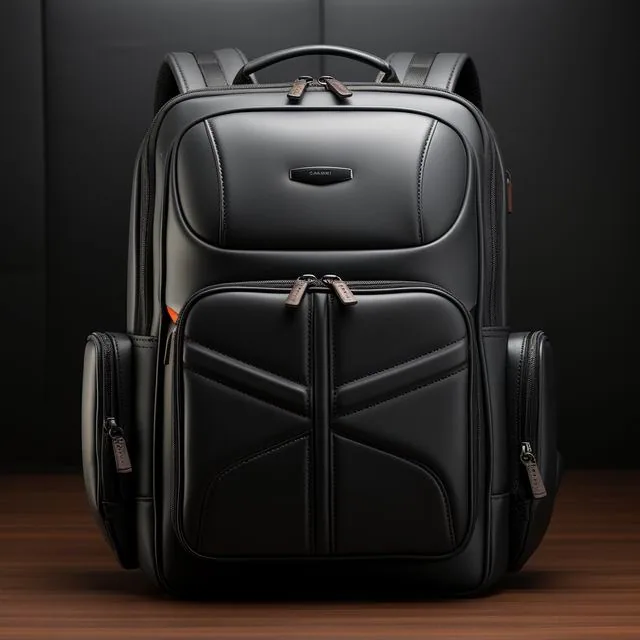
Testing Standards and Bulk Custom Orders
For a buyer specifying either size, five checks sort acceptable stock from returns. Drop the packed bag 450 mm onto a hard floor with 6 kg inside and inspect the base seam and the zip. Cycle the main zip 2,000 times loaded, not empty. Spray the shell for twenty minutes at a rate around 12 mm per hour and inspect the zip line and the top seam, not the middle of the panel. Hang 5 kg on the shoulder straps for forty-five minutes and measure how far the strap adjuster has crept. Pull every side-release buckle to 150 N and every webbing anchor to 400 N.
Sampling is set at AQL 2.5 under ISO 2859-1, and the attribute plan itself is defined in the ISO 2859-1 sampling procedures. Fabric abrasion references published by ASTM are the usual benchmark for the rub counts quoted above, and any ingress claim made in marketing copy is graded under the IEC 60529 code, which is worth checking before a supplier quote is accepted.
Commercial terms for private-label work are consistent across our programmes: MOQ 500 pcs per style and colourway, sampling in 6–10 working days (12–15 for complex builds with moulded components or welded seams), bulk production 35–50 days after sample sign-off, inspection at AQL 2.5 under ISO 2859-1, payment T/T 30/70, and shipment FOB Xiamen. We are a sourcing and programme-management company: the development, specification and inspection work is ours, and the physical build runs through our production partners.
Those partners operate a 4,950 m² SGS-verified production floor with 7 production lines, 149 machines and 137 colleagues, giving capacity of around 200,000 pieces a month. The business was founded in 2014, with the founding team in the trade since 2004, and trades under the brand QUANZHOU JUNYUAN BAGS. Reach us at service@junyuanbags.com or on WhatsApp at wa.me/8617750020688.
Two regulatory points apply to any pack placed on the British market. Textile products must carry fibre-composition labelling, and any electrical component such as a charging lead, power bank or light needs UKCA marking before sale; the current requirements are set out on gov.uk. Importers should also expect to be named as the UK responsible person on the packaging.
Common Buying Mistakes to Avoid
The first mistake is buying the 24 L as insurance. An empty 24 L that is never filled costs between 280 and 410 g of extra shell, encourages a slack load, and projects 30 mm farther behind you on a crowded carriage. Insurance is only worth buying if you can name the day you will use it.
The second is checking the empty depth against your storage gap. A 17 cm deep 18 L becomes 19 to 20 cm when packed, and a 19 cm 24 L reaches 21 to 22 cm. If your target is a 200 mm overhead rack or a shallow locker, buy 20 mm under the figure rather than exactly to it.
The third is assuming the laptop sleeve size quoted on the listing refers to the screen and not the chassis. A 14-inch laptop measures around 325 x 230 mm and a 15-inch around 355 x 250 mm, but a 16-inch machine is closer to 380 x 265 mm and will not sit in either of these sizes comfortably. Measure the closed device, add 10 mm on each dimension, and check the sleeve before you check the capacity.
The fourth is judging fabrics by feel in a shop. Soft foam feels generous for a minute and collapses after forty; a strap should be judged on width, foam density and anchor position, not on how it squeezes. Load the candidate, walk eight hundred metres with it and see where the pressure lands.
The fifth is ignoring the care routine. Grit in the zip track is the most common cause of slider failure on British commutes, and it is removed in ten seconds with a dry brush. Brush the track every two weeks, wipe salt or road film off with water below 30°C, dry the pack open for a full day, and keep it away from radiators and tumble dryers.
Final Verdict: Who Should Choose Each?
Both sizes are good bags. The decision is not about which is better in the abstract, it is about which matches the load you actually carry on an ordinary Tuesday in November, because that is the day the pack has to work.
- Choose 18 L if: your load is under 4 kg, the walk is under twenty minutes each end, you dress for the office, and you do not carry lunch
- Choose 18 L if: you commute by Underground where aisle width punishes every extra centimetre
- Choose 24 L if: lunch, gym kit or a coat appears in a normal week
- Choose 24 L if: your journey exceeds forty-five minutes and you want the shell or coat inside the bag
- Choose 24 L if: you cycle part of the way and need the pack stable without over-cinching
If you are still undecided after a loaded trial, the tie-break is the harder failure to fix. A pack that is slightly too small can be managed by compression straps and discipline for the three days a year it matters. A pack that is uncomfortable, or that lets water reach a laptop, will be wrong on every one of the other 240 days. On that basis the smaller, better-specified bag is the safer buy for most British commuters, and the 24 L is the right buy only when the extra volume is doing real work.
Frequently Asked Questions
Which is better, a 18L pack or 24L pack, for daily use?
Neither wins outright; the 18 L is better for a load under about 4 kg and a walk-and-ride commute of thirty minutes or less, while the 24 L is better as soon as lunch, gym kit or a winter coat enters the week.
If you cannot name an item that needs the extra space, take the 18 L and spend the difference on a better harness.
How much capacity do I need when comparing these two options?
Work to about 70 per cent of nominal volume for a comfortable daily fill, which makes an 18 L a 12.6 to 15.3 L working bag and a 24 L a 16.8 to 20.4 L working bag.
Laptop, bottle and charger alone use roughly 4.6 L once packing gaps are counted, and adding a packed lunch takes that to about 6 L.
What empty weight is reasonable for this type of backpack?
Expect 820 g to 1.05 kg for an 18 L and 1.10 to 1.46 kg for a 24 L in mainstream materials.
The difference of 280 to 410 g is worth roughly 200 kg of accumulated lift across three years of return journeys, which is why it should be part of the decision rather than an afterthought.
Is a 18L pack more durable than a 24L pack?
Capacity does not determine durability; fabric mass, seam construction and hardware do.
A 24 L with a 900D base panel, bar-tacked strap roots and a branded zip will outlast an 18 L built from 300D body fabric with bound seams, because the larger pack is usually specified for a heavier load.
Can a 24L pack protect a laptop during British commuting?
Yes, provided the sleeve suspends the device at least 10 mm above the base and the base itself has 8 to 12 mm of closed-cell foam under it.
Most damage happens when a pack is set down on a platform, so base protection and a suspended sleeve matter more than soft lining on the sides.
Which option handles persistent UK rain more reliably?
The one whose closure is protected, not the one with the higher coating number.
Look for a body fabric rated around 2,000 mm and a base around 5,000 mm, plus a storm flap covering at least 12 mm beyond the zip line; water arrives at the zip long before it comes through the middle of a panel.
How much should British buyers pay for good quality?
Between £75 and £120 buys controlled materials, a padded harness with a sternum strap and documented testing, which is the sensible band for either size.
Around 13p per trip over three years of return journeys, rising to about 20p once re-proofing, lubricant and one slider replacement are counted.
What dimensions work best on trains and short flights?
Keep packed width at or under 31 cm and depth at or under 22 cm so the pack clears British carriage aisles and train tables.
For cabin baggage, 44 x 28 x 17 cm passes most under-seat gauges and 48 x 31 x 19 cm usually needs an overhead locker, but always measure the bag packed and check the current carrier gauge, since low-cost allowances change.
Should I choose a 18L pack for loads above eight kilograms?
No. Above 7 kg neither of these sizes is the right tool, because the harness is not built to transfer load to the hips.
Move to a 30 to 35 L travel format with a functional hip belt, and keep total load at 10 to 15 per cent of body weight, which is 7.5 kg for a 75 kg adult.
Is a 24L pack practical for mixed work and weekend use?
Yes, and this is the strongest argument for the larger size: it handles a laptop on Tuesday and a change of clothes plus a wash bag on Saturday without either load feeling wrong.
Ask for compression straps so the weekend load can be reduced to a stable block, and keep the interior to four zones rather than a large number of narrow pockets.
How should bulk buyers specify these backpack designs?
State capacity tolerance at plus or minus 5 per cent by 20 mm block fill, dimension tolerance at plus or minus 10 mm, fabric mass in denier, coating figures in millimetres, zip gauge and strap width, then freeze the specification after a three-day user trial.
Terms are MOQ 500 pcs per style and colourway, sampling in 6–10 working days, bulk production 35–50 days, inspection at AQL 2.5 under ISO 2859-1, T/T 30/70, FOB Xiamen.
Can both options pass useful durability and quality checks?
Yes, if they are built to a written specification rather than a price point.
A 450 mm drop test with 6 kg inside, 2,000 loaded zip cycles, a twenty-minute spray test, forty-five minutes at 5 kg on the straps, and 150 N on every side-release buckle will separate the two quickly.
Should I size up to 24 L if I cycle part of my commute?
Usually yes, because a cycling section adds lateral movement and you want the load stable without cinching the pack so tightly that the back panel lifts away.
Pair the 24 L with a sternum strap, reflective detail of at least 50 x 20 mm on each strap, and a base panel rated near 5,000 mm for spray off the road.