Table of Contents
- Laptop Backpack vs Laptop Sleeve for Commuting: The Direct Answer
- Key Differences at a Glance
- Capacity, Dimensions and Packing Efficiency
- Comfort, Weight and Carry Dynamics
- Materials, Weather Resistance and Durability
- Access, Organisation and Security
- UK Price, Value and Cost per Use
- Which Works Better in Real British Scenarios?
- Testing Standards and Bulk Custom Orders
- Common Buying Mistakes to Avoid
- Final Verdict: Who Should Choose Each?
- Frequently Asked Questions
Laptop Backpack vs Laptop Sleeve for Commuting: The Direct Answer
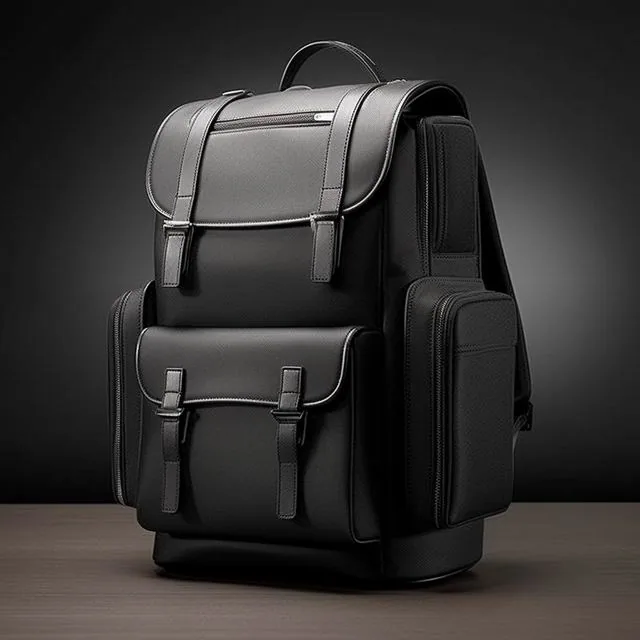
A laptop sleeve protects the device and nothing else. A laptop backpack protects the device and carries everything else. That is the whole comparison, and it resolves quickly once you write down what else travels with you: if the answer is a charger, a bottle, a lunch, a notebook and a rain shell, the sleeve cannot do the job on its own and you are really comparing a backpack with a sleeve-plus-some-other-bag.
Run the weight arithmetic before you decide, because it is closer than people expect. A 4 mm neoprene envelope for a 14-inch machine weighs about 260 g; a canvas tote to carry it in weighs 700 g; that pair is 960 g and occupies one hand. A 24 L commuter backpack with a suspended 14-inch sleeve weighs about 950 g and occupies neither hand. On weight, the two solutions are identical. On hands free, they are not.
- Sleeve alone: right for a three-minute walk from a car park, wrong for a fifteen-minute walk plus a train.
- Sleeve inside a tote or messenger: a two-item system that ties up one hand and gets put down on floors.
- Backpack with a suspended sleeve: the default for any commute involving public transport, stairs or a bike.
- Sleeve inside a backpack: sensible for a 16-inch device worth more than the bag, or for rough travel.
Protection is the other axis, and it is where the sleeve has an undeserved reputation. A sleeve is a padded envelope; it resists scuffs and it absorbs a small corner knock. It does not suspend the device above the base of anything, because there is nothing to suspend it from. A backpack sleeve that is specified correctly holds the machine 10-25 mm clear of the base with at least 6 mm of closed-cell foam on every face, which is what actually survives a 500 mm drop onto a station platform.
The energy involved is worth stating. A 16-inch laptop at 2.10 kg dropped 500 mm arrives with about 10 joules concentrated on one corner. Six millimetres of closed-cell foam spread over a 360 square centimetre face reduces peak force substantially; a folded neoprene envelope compresses to about 1.5 mm at the corner and does not. That is the difference between a dented lid and a cracked logic board.
Key Differences at a Glance
The grid compares a working 24 L commuter backpack with a suspended sleeve against two common sleeve setups: a slim envelope carried in a tote, and a moulded EVA shell carried by hand.
| Attribute | Laptop backpack | Sleeve in a tote | Moulded EVA sleeve by hand |
|---|---|---|---|
| Empty system weight | 950 g | 960 g (260 g sleeve + 700 g tote) | 580 g |
| Hands free | Both | One | One |
| Carries charger, bottle, lunch | Yes, 24 L usable | Yes, if the tote is large | No |
| Drop protection from 500 mm | Good with a suspended sleeve | Depends on the tote base | Moderate, corners only |
| Base clearance for the device | 10-25 mm | Zero unless the tote has a base pad | Zero |
| Rain behaviour | 1,500 mm shell, 20-minute shower | Tote wets through in about 5 minutes | Neoprene face wets, seams leak |
| Security on a crowded platform | Silhouette hides the device | Announces a laptop | Announces a laptop |
| Best for | Any commute over 10 minutes | Car to desk, client visits | Short internal moves |
The hands-free row is the one buyers undervalue. On a British commute the bag is set down on a platform, carried up 24 stairs, held while you find a ticket and lifted into an overhead rack. Every one of those actions is easier with two hands and harder with a device in one of them, and the riskiest moment for a laptop is the moment it is put down.
Appearance is a legitimate factor and the sleeve wins it. In a client reception, a slim envelope under the arm reads better than a 30 L pack, and if your working week includes two days of client-facing meetings, owning both is a reasonable answer rather than a compromise.
Capacity, Dimensions and Packing Efficiency
Capacity is where the comparison stops being close. A 24 L commuter backpack yields about 21 L of usable space, which absorbs a 14-inch device at 0.90 L, a 65 W charger and cable at 0.34 L, a 1.40 L lunch box, a 750 ml bottle at 0.88 L, a 0.55 L notebook and a compressed shell at 0.90 L with roughly 16 L to spare. A sleeve holds the device and, at most, a slim charger in a front pocket; everything else needs a second bag.
Device fit is the specification that matters most in both cases. A 14-inch machine is about 324 x 223 mm, a 15-inch about 358 x 247 mm and a 16-inch about 381 x 266 mm. Buy the sleeve or the compartment to the device plus 10-15 mm of margin: tighter than that and you will strain the zip and load the corners; looser by 25 mm or more and the machine shifts, which defeats the padding.
- Sleeve internal dimensions should be device plus 10-15 mm in both directions.
- Backpack compartment should add 6-8 mm of foam on every face and 15 mm of clearance above the base seam.
- Lateral movement of a 15-inch machine inside the compartment should be under 15 mm when the bag is tilted 45 degrees.
- A 16-inch device needs a compartment at least 400 x 285 mm internally once foam is counted.
Packing efficiency also differs in a way that only appears in week two. In a backpack the device sits flat against the panel and the rest of the load packs around it. In a tote, the sleeve is a rigid slab that dictates the shape of everything else, and the tote's open top means a bottle and a lunch box end up lying on their sides. That is a small daily irritation and a large reason people revert to a backpack.
One point in the sleeve's favour: it makes a laptop backpack smaller. If you carry a 13-inch machine and almost nothing else, a 16 L backpack with a 13-inch compartment is lighter and neater than a 24 L one, and the sleeve inside it is optional. Size the bag to the device plus the day, not to a category.
Comfort, Weight and Carry Dynamics
Comfort is not close. A backpack puts the load on two shoulders with the centre of mass close to the spine; a tote puts it on one shoulder with the load hanging 150-250 mm from the body; a sleeve by hand puts it on the forearm and the grip. At 5 kg, a single-shoulder carry produces measurable lateral lean within about ten minutes and shoulder tightness within about forty-five.
- 1.55 kg, a 14-inch device on its own: trivial in a backpack, fine for ten minutes in a tote or by hand.
- 3 kg with a charger and documents: comfortable in a backpack, shoulder pull after twenty minutes in a tote, grip fatigue after fifteen minutes by hand.
- 5 kg with lunch and a bottle: comfortable in a backpack with 60 mm straps, producing lateral lean and shoulder pain in a tote, and not viable by hand.
- 7 kg with a second device: needs a sternum strap in a backpack, and is unsuitable in either sleeve-based option.
The asymmetry is the real problem with one-shoulder carrying. A 4 kg tote on the right shoulder makes the left side of the trunk compensate, and over 240 commutes that pattern is what physiotherapists see as unilateral neck and shoulder complaints. Loads above about 8 kg should be lifted and carried with care in any case, and the Health and Safety Executive publishes the assessment approach for manual handling that applies to work-related carrying.
On the backpack side, two specifications govern comfort at commuter weights. Straps should be 60-70 mm wide with 8-10 mm of resilient foam once the load passes 5 kg, and the device should sit against the panel rather than in front of the load. Put a 2 kg laptop in an outer compartment and the bag will pull backwards from your shoulders by 30-40 mm, which is felt as neck strain rather than shoulder strain.
Materials, Weather Resistance and Durability
Sleeve materials split into three families with distinct behaviour. Neoprene, typically 3-5 mm with a jersey face, is light at 180-300 g and soft, but it compresses under a concentrated load and its stitched seams leak. Moulded EVA shells at 450-700 g spread a corner impact across a wider area and resist water, at the cost of bulk and a hard edge that can mark a desk. Padded ballistic or Cordura envelopes at 280-420 g sit between the two and are the best all-round answer if you want a sleeve that also slides inside a bag.
Backpack shells are the usual suspects: 600D polyester with a 1,500 mm coating for urban commuting, 420D nylon ripstop where wet abrasion matters, and a 900D base panel. The device compartment adds one material requirement of its own - closed-cell foam rather than open-cell, because open-cell foam takes a compression set within about six months and then provides no clearance at all.
- Foam: closed-cell, 6-10 mm on every face, with a compression-set check after 1,000 loaded cycles.
- Lining: a brushed or low-abrasion face, because a 16-inch aluminium lid rubs against the lining every time it goes in.
- Zips: number 8 on the device compartment; a compartment zip that has done 5,000 cycles should still close without a gap.
- Hardware: metal sliders and brass fittings cost 40-90 pence more per unit and remove the most common first-year failure.
Rain separates the options decisively. A sleeve carried by hand or under an arm in persistent drizzle wets through at the stitched seams within three to five minutes, and neoprene's fabric face holds water against the device. A backpack with a 1,500 mm coating and a storm flap behind the compartment zip keeps the device dry through a twenty-minute shower; above that, the zip ends are the entry point, and a £12 dry pouch is cheap insurance for a machine you cannot replace.
Abrasion and coating test methods are published by ASTM International, and the inspection vocabulary used below comes from the ISO catalogue.
Access, Organisation and Security
Access means two different things here. Getting the device out at a security line or a hot desk is faster from a sleeve: one zip, one motion, about three seconds, and the device is on the desk. From a backpack it is eight to twelve seconds including taking the bag off, unless the compartment has its own external zip on the side or top, which is the feature to look for if you clear airport security weekly.
Getting everything else out is the opposite. A tote with a sleeve inside is a single open volume, and finding a charger means digging past a lunch box. A backpack separates device, documents, liquids and quick-access items, which is why most people carry 8 to 14 objects a day and need only four zones.
- Device zone: padded, suspended, against the panel, with its own closure.
- Document zone: flat, A4-capable, no rings or pen loops pressing into the device.
- Liquids zone: a bottle pocket that drains, not an internal sleeve that leaks.
- Quick-access zone: card, keys, phone - reachable within about 8 seconds and without putting the bag on the floor.
Security is the other half of this section and the sleeve loses it. A slim envelope under the arm on a busy high street is a clear signal that a laptop is present, and it is carried in the hand that also holds a coffee. A backpack obscures the silhouette and, if it is worn on both shoulders, cannot be snatched without a struggle. Opportunistic theft of devices from bags is a worn-bag and set-down-bag crime; a sleeve that has been put down beside a café chair is the easiest target in the room.
For anyone carrying a device worth more than about £800, the belt-and-braces answer is a thin sleeve inside a laptop backpack. The sleeve adds 8-12 mm and 260 g, and it means that if the bag is opened or the compartment zip fails, the device is still in a padded envelope. Check the combined thickness against the compartment dimensions first, because an over-tight fit will strain the compartment zip and eventually split it.
UK Price, Value and Cost per Use
British pricing is straightforward. A usable neoprene or padded sleeve costs £12-£35; a moulded EVA or leather sleeve costs £35-£75. A commuter backpack with a properly specified device compartment costs £55-£130, and above that you are paying for materials and brand rather than protection. A sleeve plus a decent tote costs £45-£100, which is the same money as a good backpack without the hands-free benefit.
| Option | Typical UK cost | Cost per commute over 240 days | Expected service life |
|---|---|---|---|
| Neoprene sleeve | £12-£35 | 5p-15p | 2-3 years before the seams split |
| Moulded EVA or leather sleeve | £35-£75 | 15p-31p | 4-6 years |
| Sleeve plus tote | £45-£100 | 19p-42p | Tote handles fail first, usually year two |
| Commuter backpack | £55-£130 | 23p-54p | 4-8 years depending on hardware |
Cost per commute is the fairest comparison because it flattens the price difference: across a working year everything in that table costs between 5p and 54p per day. The decision is therefore about hands, protection and appearance rather than money, which is why it is worth buying both if your week genuinely splits between client-facing and commuting days.
Add the small costs: £9 for a zip lubricant, £14 for a reproofing treatment, and £18 for a zip repair by a local cobbler or repair shop. Over four years those amount to less than a third of a mid-band backpack and they are what turn a three-year bag into a six-year one.
Which Works Better in Real British Scenarios?
Five settings cover the way British commuters actually move, and the answer changes between them.
- A 25-minute walk to a tram, then twelve minutes on the tram, then a flight of stairs, in Manchester in November. Backpack, without argument: 5.5 kg on one shoulder for 25 minutes is a neck complaint waiting to happen, and the device needs to be under a coated shell.
- A three-minute walk from a staff car park to a desk, twice a day. Sleeve. A 24 L backpack for 180 seconds of carrying is over-specified, and the sleeve lets you put the device straight on the desk.
- A client day: two meetings, a reception, a laptop produced in front of six people. Slim leather or ballistic sleeve, carried under the arm or inside a neat tote. This is the appearance case and it is legitimate.
- A 6 km cycle commute with a 14-inch machine. Backpack, with a sternum strap and a hip belt if the load passes 6 kg; a sleeve in a pannier works only if the pannier is padded, because pannier racks transmit every pothole straight into the device.
- A weekly flight from Gatwick with security clearance. Backpack with a side-access device compartment that lays flat, or a sleeve that slides out at the tray. Whichever you choose, budget ten extra seconds and check the compartment closure every time.
The pattern is that distance and load decide it, and appearance decides only the short, light, client-facing days. If more than half of your week involves public transport or more than ten minutes of walking, buy the backpack and keep a £20 sleeve for the other days.
Testing Standards and Bulk Custom Orders
QUANZHOU JUNYUAN BAGS is a sourcing and programme-management company established in 2014, with a founder in the bag trade since 2004. The partner facilities we work with run a 4,950 square metre SGS-verified floor with 7 production lines and 149 machines, where 137 colleagues produce 200,000 pieces a month. Our side of the job is the written specification, the sample cycle and the inspection regime.
Terms are consistent: MOQ 500 pcs per style and colourway, sampling in 6-10 working days (12-15 where a moulded EVA shell or a custom foam tooling is specified), bulk production 35-50 days after sample sign-off, inspection at AQL 2.5 under ISO 2859-1, payment T/T 30/70, shipment FOB Xiamen.
The acceptance routine for device protection is short and worth writing into the order. Drop a 2.10 kg dummy load into the compartment from 500 mm onto concrete, ten times, on corners and faces, then check for foam compression and seam creep. Measure internal clearance after the drops: it should still exceed 10 mm above the base. Run the compartment zip 5,000 loaded cycles and re-check the closure. Spray the shell for 30 minutes with the device inside wrapped in paper, and inspect.
- Specify foam by thickness, density and type; closed-cell is not negotiable for a device compartment.
- Specify base clearance in millimetres and the maximum permitted lateral movement, rather than writing padded.
- For a sleeve-and-bag set, specify the sleeve's external dimensions and check the combined fit in the sample, not on paper.
- Textile labelling must state fibre composition, and any electrical element needs UKCA marking before sale in Britain.
We record empty weight in grams, usable volume by block fill, packed external dimensions and safe working load for every approved sample, and we keep two sealed reference units per style so a repeat order matches the one you signed off. On arrival in the UK, open cartons from at least two pallet positions so a defective foam batch is not hidden inside one corner of the shipment.
Common Buying Mistakes to Avoid
Nine errors account for most of the dissatisfaction in this comparison, and most of them are visible in a shop in under five minutes.
- Buying a sleeve to the exact device dimensions. You need 10-15 mm of margin or you will strain the zip and load the corners.
- Buying a 16-inch compartment for a 14-inch machine. Twenty-five millimetres of slop undoes the padding.
- Assuming neoprene is waterproof. The foam is closed-cell; the stitched seams are not.
- Pairing a sleeve with a tote that has no base pad. The device then rests on the ground every time you set it down.
- Carrying one shoulder for a 5 kg load more than ten minutes.
- Choosing a backpack whose device compartment is in front of the load rather than against the panel.
- Ignoring the charger. A sleeve that does not take a 65 W brick means the brick goes in a pocket and scratches the lid.
- Forgetting that a sleeve announces what is inside it on a crowded street.
- Not checking the compartment zip after a few months; a gap of 2 mm is a gap the rain will find.
The two that cost the most are the dimensional ones. A sleeve bought tight will split at the zip within a year, and a compartment bought loose will let the machine move enough to defeat the foam. Measure the device, add the margin, and write the number into the order.
Final Verdict: Who Should Choose Each?
Choose the backpack if your commute involves public transport, more than ten minutes of walking, or more than 3 kg of total load. Look for a 20-26 L shell, a device compartment with 6-8 mm of closed-cell foam and 15 mm of base clearance, 60-70 mm straps with 8-10 mm of foam once the load passes 5 kg, a 1,500 mm coating and a number 8 zip on the device compartment. That specification lands at 900 g to 1.15 kg empty and £65-£120.
Choose the sleeve if your day is a short walk from a car, a client-facing meeting, or an internal move between floors, and if you already own a bag you like. Choose a padded ballistic or moulded EVA sleeve over neoprene if the device is a 16-inch machine, and check the internal dimensions are 10-15 mm larger than the device.
Choose both if the device is expensive and the week is mixed: a thin sleeve inside a properly specified backpack costs about £20 more and covers the two failure modes that actually happen - a compartment zip that fails, and a bag that has to be put down in a busy place.
The sleeve protects the laptop. The backpack protects the laptop, your shoulders and everything else you are carrying. Buy by the commute, not by the device.
To develop a device compartment, order samples or request pricing, email service@junyuanbags.com or message wa.me/8617750020688 on WhatsApp. Send the device dimensions, the target capacity and the number of colourways, and we will reply within the terms above.
Frequently Asked Questions
Which is better, a laptop backpack or laptop sleeve, for daily use?
A laptop backpack, for any commute involving public transport or more than ten minutes of walking. The sleeve protects the device but carries nothing else and ties up one hand, while a 24 L backpack with a suspended sleeve weighs about the same and leaves both hands free. Keep a sleeve for short walks and client-facing days.
How much capacity do I need when comparing these two options?
A 20-26 L backpack gives about 18-23 L of usable space, which takes a 14-inch device at 0.90 L, a charger at 0.34 L, a 1.40 L lunch box, a 750 ml bottle at 0.88 L and a shell at 0.90 L with room to spare. A sleeve holds the device and at most a slim charger, so everything else needs a second bag.
What empty weight is reasonable for this type of backpack?
Between 900 g and 1.15 kg for a 20-26 L commuter shell with a proper device compartment. Below 850 g the foam or the base panel has usually been cut. A sleeve adds 180-300 g in neoprene or 450-700 g in moulded EVA, so a sleeve-plus-tote system weighs roughly the same as the backpack.
Is a laptop backpack more durable than a laptop sleeve?
Yes, in the sense that its device compartment can suspend the machine 10-25 mm above the base with foam on every face, which is what survives a drop. A sleeve compresses to about 1.5 mm at a corner. A good sleeve will still outlast a cheap backpack's zip, so buy both to specification rather than assuming one outlives the other.
Can a laptop sleeve protect a laptop during British commuting?
Partly. It resists scuffs and a light knock, and it keeps the device out of the rain for a minute or two, but its stitched seams wet through in three to five minutes of persistent drizzle and it provides no base clearance. For a commute, the sleeve is a second layer inside a backpack, not a substitute.
Which option handles persistent UK rain more reliably?
The backpack, clearly. A 1,500 mm coated shell with a storm flap behind the compartment zip keeps a device dry through a twenty-minute shower, and the failure point after that is the zip ends. A carried sleeve wets at the seams within minutes and holds water against the lid.
How much should British buyers pay for good quality?
£55-£130 buys a commuter backpack with 6-8 mm closed-cell foam, a suspended compartment and a number 8 zip, which is 23p to 54p per commute across a working year. A usable sleeve costs £12-£35 and a moulded one £35-£75. Spending more than £130 buys materials and brand rather than protection.
What dimensions work best on trains and short flights?
Keep the body at 46 x 30 x 18 cm or smaller, which clears a 300 mm locker and a 20 cm overhead rack. The device compartment should be sized to the machine plus 10-15 mm: about 358 x 247 mm for a 15-inch and 381 x 266 mm for a 16-inch, before foam.
Should I choose a laptop backpack for loads above eight kilograms?
Yes, without exception. Above 8 kg you need 70 mm straps with 10 mm of foam, a sternum strap and either a frame sheet or a hip belt, none of which a sleeve-based system can provide. A tote at 8 kg produces lateral lean within ten minutes and shoulder pain within forty-five.
Is a laptop sleeve practical for mixed work and weekend use?
It is practical for the work half if the walk is short and client-facing, and impractical for the weekend half, which usually needs water, food and a layer. Own both: a £20-£35 sleeve for meetings and a 24 L backpack for everything else.
How should bulk buyers specify these backpack designs?
Specify foam thickness, density and type, base clearance in millimetres, maximum lateral movement, zip gauge and cycle rating, and coating rating. Commercial terms are fixed at MOQ 500 pcs per style and colourway, with sampling in 6-10 working days, bulk in 35-50 days from sign-off, inspection to AQL 2.5 under ISO 2859-1, payment T/T 30/70 and shipment FOB Xiamen.
Can both options pass useful durability and quality checks?
Yes. Both should survive ten 500 mm drops with a 2.10 kg load with clearance still above 10 mm, 5,000 loaded zip cycles, a 30-minute spray test with paper inside, and a 1,200 square millimetre bar-tack at the strap roots. Ask for written results and re-check a sealed approval sample when the shipment arrives.
Should I put a sleeve inside a laptop backpack?
Yes if the device is expensive or travels by air; it covers a failed compartment zip and gives you a clean surface to put on a security tray. Check the combined thickness first, because adding 8-12 mm can strain the compartment zip and eventually split it.