Table of Contents
- Wholesale Backpacks UK: The Direct Answer
- Cost Structure: From Ex-Works to a British Warehouse
- Choosing a Supply Model: Custom, Semi-Custom or Stock
- Writing a Tech Pack That Gets an Accurate Quote
- Sampling: The Six-to-Ten Working Day Cycle
- Bulk Production, Inspection and AQL 2.5
- Compliance: UKCA, REACH and British Market Entry
- Logistics, Duty and Getting Goods to a UK Warehouse
- Negotiation, Payment Terms and Contract Structure
- First-Order Checklist for British Buyers
- Frequently Asked Questions
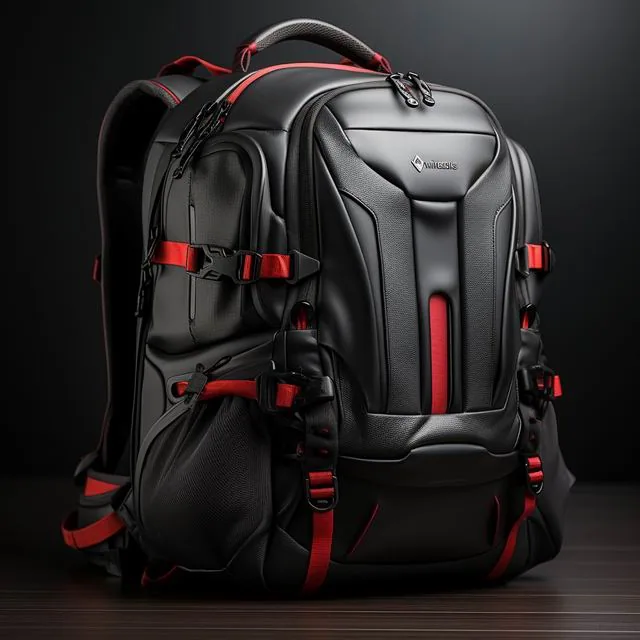
Wholesale Backpacks UK: The Direct Answer
A wholesale backpack programme for the British market runs on four numbers: a MOQ 500 pcs per colourway, sampling 6-10 working days from tech-pack sign-off, bulk production 35-50 days after sample approval, and inspection to AQL 2.5 (ISO 2859-1). Landed cost into a UK warehouse is the ex-works unit price plus freight, duty and clearance: a 25-litre pack quoted at GBP 14.80 ex-works typically lands at GBP 21.40-24.90 once sea freight at GBP 0.85-1.60 per unit, duty at 0-4.7% depending on classification, VAT accounting and a 3-6% inspection and shrinkage allowance are added. The programme is 95-135 days from first enquiry to goods on a British pallet, and the calendar is the most common cause of failure. Ten working days of sampling, seven to ten days of courier transit and approval, 35-50 days of bulk production, 28-35 days of sea freight and 2-5 days of customs clearance is 82-110 working days, or 16-22 calendar weeks. A buyer who starts in July for a September back-to-school delivery is already late. Start in March. The buyers who get this right specify the product before they ask for the price.
A tech pack with fabric denier, coating rating, zipper gauge, seam treatment, sleeve dimensions and print method lets a factory quote within 3-5% on the first pass; a request for 'a 25-litre backpack' produces quotes that vary by 60-120% because every bidder is pricing a different product. Begin with the custom backpack specification, then compare prices on identical specifications.
Cost Structure: From Ex-Works to a British Warehouse
Wholesale pricing has five layers, and only the first is negotiable at the factory. Ex-works covers materials, labour, factory overhead and margin. Freight and insurance move the goods to a British port. Duty is set by commodity classification. Clearance, handling and inland delivery move them to your warehouse. Finally, inspection, shrinkage and payment costs sit on top. A buyer who negotiates 8% off ex-works and ignores the other four layers saves 5.5% of landed cost, not 8%.
| Cost layer | Typical range | Negotiable | Notes for UK buyers |
|---|---|---|---|
| Ex-works unit price | GBP 12-38 | Yes, 6-14% | Volume, fabric and trim drive it |
| Sea freight (per unit, 25 L pack) | GBP 0.85-1.60 | Yes, 10-25% | 28-35 days to Felixstowe / Southampton |
| Air freight (per kg) | GBP 4.20-6.80 | Yes, 8-20% | 5-8 days, 6-9x sea cost |
| Import duty | 0-4.7% | No | Depends on commodity code and origin |
| Customs clearance + handling | GBP 180-420 per shipment | Yes, 10-20% | Fixed per entry, not per unit |
| Inland delivery (port to warehouse) | GBP 120-380 per pallet | Yes, 10-25% | About 220-320 units per pallet |
| Inspection and shrinkage allowance | 3-6% | Partly | Budget it; do not hope |
Work the arithmetic on a real order. Five hundred 25-litre packs at GBP 16.40 ex-works is GBP 8,200. Sea freight at GBP 1.15 per unit is GBP 575; duty at 4.7% on the invoiced value is GBP 412; clearance and handling is GBP 280; inland delivery on two pallets is GBP 340; inspection and shrinkage at 4% is GBP 351. Total landed cost is GBP 10,158, or GBP 20.32 per unit - a 24% uplift on the ex-works price. That is the number to take to your margin meeting, not the ex-works quote.
Choosing a Supply Model: Custom, Semi-Custom or Stock
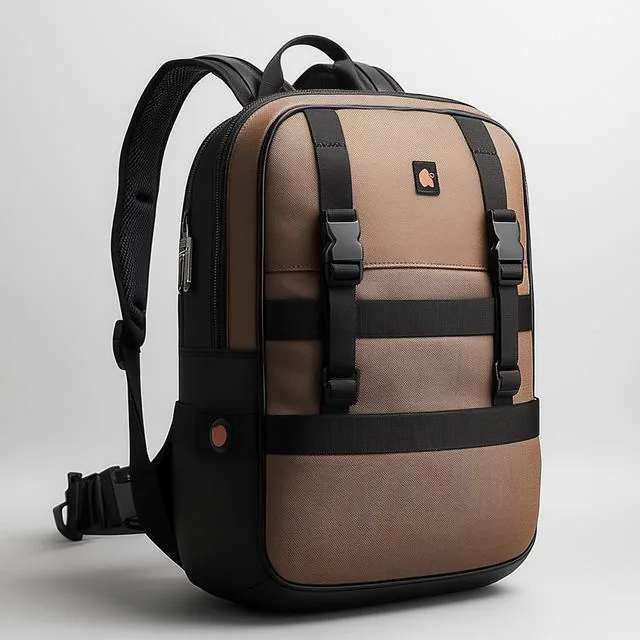
Three models exist and the choice is driven by volume, differentiation and time. Fully custom means your own fabric, tooling, moulded fittings and print: MOQ 500 pcs per colourway, sampling 6-10 working days, bulk production 35-50 days, GBP 21-46 per unit landed, and eight to ten weeks longer than the other two. Semi-custom takes an existing platform and changes fabric, colour, lining, logo and trim: MOQ 300-500 pcs, sampling 4-7 working days, bulk 28-40 days, GBP 16-32 landed.
Stock wholesale is the third model: an existing product bought in case quantities, usually 50-200 units, delivered in 2-5 days from a British warehouse at GBP 18-42 per unit. It is the right choice for a first order of under 300 pieces, for testing a market, or for a promotional run needed in three weeks. The cost per unit is 25-45% higher than semi-custom at 500 pieces, which is the price of speed and of not committing capital.
| Model | MOQ | Sampling | Bulk production | Landed unit cost (GBP) | Best for |
|---|---|---|---|---|---|
| Fully custom | 500 pcs / colourway | 6-10 working days | 35-50 days | 21-46 | Own brand, retail launch |
| Semi-custom | 300-500 pcs | 4-7 working days | 28-40 days | 16-32 | Corporate, clubs, schemes |
| Stock wholesale | 50-200 pcs | None | 2-5 days delivery | 18-42 | Trials, urgent promotions |
| Private label on stock | 100-300 pcs | 2-4 working days | 7-14 days | 20-46 | Fast branded gifting |
| Framework call-off | 500 pcs annual, released in lots | 6-10 working days once | 21-30 days per lot | 19-38 | Recurring corporate demand |
Most British buyers should start semi-custom and move to fully custom at the third reorder. The first 500-piece semi-custom run teaches you the real defect rate, the real landed cost and the real demand curve at a committed cost of GBP 8,000-16,000. A fully custom first run commits GBP 10,500-23,000 and 16-22 weeks on assumptions. Take the semi-custom route once, then commit.
Writing a Tech Pack That Gets an Accurate Quote
A tech pack is a manufacturing instruction, not a wish list. It must specify fabric (composition, denier, coating, hydrostatic head with test method), lining, webbing widths and breaking strain, zipper brand and gauge, buckle material, foam density and thickness, sleeve internal dimensions, thread specification, stitch density, seam treatment and print or embroidery method with placement in millimetres. Each unspecified line is a 3-8% price variance between bidders, and a pack with twelve unspecified lines can quote anywhere from GBP 12 to GBP 27.
Tolerances matter as much as specifications. State the dimensional tolerance as plus or minus 5 mm on a 25-litre pack, the colour tolerance as Delta E 1.5 or less under D65 lighting, and the weight tolerance as plus or minus 4%. Without them, a factory will meet your specification with the cheapest compliant material, which is how a 600-denier shell becomes a 580-denier one and a 1,800 mm coating becomes a 1,400 mm one. With them, you have a contractual basis for rejection.
Include the compliance requirements in the tech pack, not in a later email. The UK market requires a UKCA declaration of conformity, a REACH statement covering azo dyes, nickel release, phthalates and, where relevant, SVHC screening, and general product safety documentation. Guidance on the UKCA marking is published at gov.uk, and the UK REACH regime is administered under regulations also documented on gov.uk. Ask for both documents with the quote, not with the shipment.
Sampling: The Six-to-Ten Working Day Cycle
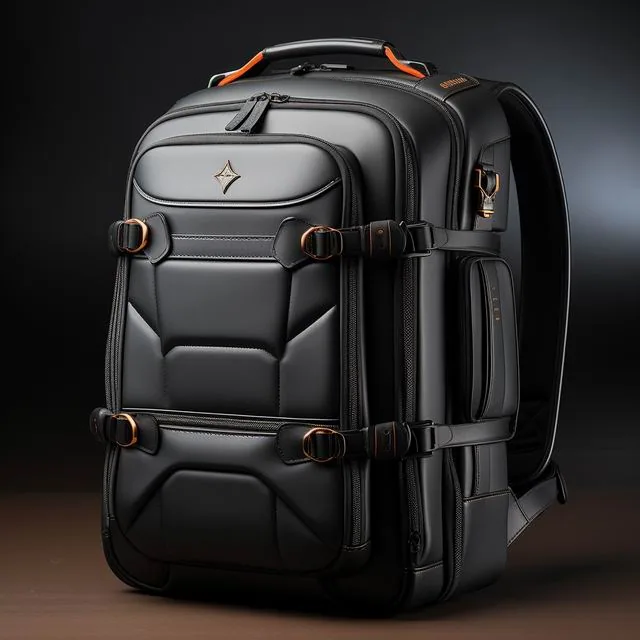
Sampling is where a programme succeeds or fails. The standard cycle is sampling 6-10 working days from tech-pack sign-off, then 5-9 days of courier transit to a British address, then 2-4 days for your review, then a revision round if needed. Budget two rounds: the first sample is correct on fabric, colour and construction in roughly 60-70% of cases, and the second is correct in 90-95%. Two rounds is 20-30 working days, or four to six calendar weeks, before bulk can start.
Evaluate the sample against a written checklist, not by eye. Weigh it to the gram and compare with the tech pack; measure every external dimension loaded and empty; test the zippers for 200 cycles; fill the base with 40 mm of water for 30 minutes and check for a damp ring; stretch the webbing and check the bar-tack stitch count; and open the pack in a shower at 8-12 mm an hour for 20 minutes if a water rating is claimed. Each test takes under 30 minutes and each one catches a defect class that shows up in bulk at 500 times the cost.
Approve a golden sample and keep two. One goes to the factory floor as the reference, one stays with your inspector, and the third stays with you. Reference the golden sample number in the purchase order, because 'as approved sample' with a sample number is enforceable, while 'as discussed' is not. Our production team issues a sample record with photographs, measurements and test results for every custom backpack sample, and bulk is inspected against that record.
Bulk Production, Inspection and AQL 2.5
Bulk production runs 35-50 days after sample approval for a 500-piece order, depending on fabric availability and trim lead times. Fabric is usually the constraint: a standard 600-denier polyester in a stock colour is available in 3-7 days, a custom-dyed colour takes 18-28 days, and a branded or recycled certified fabric takes 25-40 days. Specify stock colours for the first run and custom colours for the second; that single decision removes 15-25 days from the first delivery.
Inspection to AQL 2.5 (ISO 2859-1) is the industry standard for soft goods. The sampling plan is set by lot size: for 500 pieces under general inspection level II, the code letter is H, the sample size is 50 pieces, and the accept/reject numbers are 3 and 4 for major defects and 5 and 6 for minor defects. That means a lot with three major defects passes and a lot with four fails. The standard and its tables are published by the International Organization for Standardization.
Define the defect classes before inspection, in writing. Critical defects are safety or compliance failures - a sharp point, a failed nickel-release test, a missing UKCA declaration - and the accept number is zero. Major defects are functional: a zipper that fails at 200 cycles, a strap attachment below 180 kg, a seam leakage in the 30-minute test, a colour deviation above Delta E 2.5. Minor defects are cosmetic: a 3 mm print misregistration, a loose thread of 8 mm, a 2 mm dimensional deviation. A written defect dictionary removes the argument at the final inspection.
Compliance: UKCA, REACH and British Market Entry
Great Britain requires the UKCA marking for products within its scope, and Northern Ireland follows different rules under the Northern Ireland Protocol. For soft goods such as backpacks, the practical obligations are the General Product Safety Regulations, the REACH chemicals regime and, where a claim is made, the relevant textile labelling rules. The UKCA guidance is published at gov.uk, and the UK REACH regime is documented at gov.uk.
REACH is the substantive test for a backpack. Restricted substances that matter are azo dyes releasing certain aromatic amines at more than 30 mg/kg, nickel release above 0.5 micrograms per square centimetre per week on metal fittings in prolonged skin contact, phthalates above 0.1% by weight in plasticised components, and, for the current candidate list, SVHC declaration above 0.1% w/w. Testing a full material set costs GBP 380-1,200 per colourway and takes 7-15 working days.
Plan testing into the calendar, not after production. Restricted-substance testing on the approved materials should be commissioned during the sampling window, so results arrive before bulk starts. If a restricted substance is found at bulk stage, the options are rework at GBP 2.50-7.00 per unit, replacement at full unit cost, or a recall. Budget GBP 380-1,200 for initial screening and GBP 220-600 per reorder, and require the test report number on every bulk backpack shipment into Great Britain.
Logistics, Duty and Getting Goods to a UK Warehouse
Sea freight is the default for a wholesale order. A 20-foot container holds roughly 3,600-4,800 backpacks depending on packing, and a 500-piece order ships as groupage, or less-than-container load. Transit from the main Asian manufacturing ports to Felixstowe or Southampton is 28-35 days, plus 2-5 days for clearance and 1-3 days for inland delivery. Freight on a 25-litre pack runs GBP 0.85-1.60 per unit by sea and GBP 4.20-6.80 per kilogram by air, which is 5-8 times more for a 1.1 kg pack.
Duty depends on the commodity code and the origin. Backpacks of man-made textile materials generally fall in a heading with a duty rate in the 0-4.7% band for most origins, and British buyers should confirm the code with their broker before the first shipment rather than after. Get the code wrong and you are liable for the difference plus a penalty; HMRC can assess back duty for up to three years on a misclassified entry.
Packing density drives freight cost more than most buyers realise. A 25-litre pack compressed into a 340 x 260 x 90 mm polybag takes 7.96 litres, or 0.008 cubic metres; 500 packs is 4.0 cubic metres before cartons, and roughly 5.2-5.8 cubic metres packed. At a groupage rate of GBP 110-190 per cubic metre, that is GBP 570-1,100 per shipment, or GBP 1.14-2.20 per unit. Ask the factory for vacuum-packed or flat-packed options, which cut volume by 18-30% on a bulk backpack order.
Negotiation, Payment Terms and Contract Structure
Payment terms are the biggest working-capital lever in a wholesale programme. The market standard is 30% deposit on order and 70% before shipment, or an irrevocable letter of credit at sight. Buyers who place repeat orders of 500 pieces or more can usually negotiate to 30/70 on the first order and 20/80 or net 30 days from the third. Each 10% moved from deposit to post-shipment releases roughly GBP 800-2,300 of working capital on a GBP 8,000-23,000 order.
Price is negotiated on volume, fabric and trim, not on goodwill. Moving from 500 to 1,000 pieces typically buys 6-11% on ex-works; specifying a stock colour rather than a custom dye buys 3-6% and removes 15-25 days; simplifying from three print colours to one buys 2-4%; and consolidating from two colourways of 250 to one of 500 buys 4-8%. Combined, those four moves cut ex-works by 13-24%, which is GBP 1,100-2,000 on a GBP 8,200 first order.
Put the commercial terms in a single document. The purchase order should state the specification, the golden sample number, the quantity and colour split, the ex-works price and Incoterm, the MOQ 500 pcs basis, the sampling 6-10 working days and bulk production 35-50 days milestones, the AQL 2.5 (ISO 2859-1) inspection standard with its defect dictionary, the late-delivery penalty at 0.5-1.5% per week capped at 5-10%, and the compliance documents required. A one-page purchase order with those eleven lines prevents most disputes.
First-Order Checklist for British Buyers
Work through eight steps before you send the first enquiry. One: define the product in a tech pack with fabric, trim, dimensions and tolerances. Two: decide fully custom, semi-custom or stock. Three: fix the budget on landed cost, not ex-works. Four: confirm the compliance requirement with your broker or a notified body. Five: build the calendar backwards from the needed delivery date, allowing 16-22 weeks. Six: commission restricted-substance screening during sampling.
Seven: approve a golden sample and reference it in the purchase order. Eight: book inspection before shipment, not after. Buyers who skip step five are late; buyers who skip step six risk a compliance failure at UK customs; buyers who skip step seven have no contractual basis for rejection. Each step costs hours, and skipping any one of them typically costs weeks and 4-12% of the order value.
Then run the first order as a test. Order 500 pieces rather than 2,000, accept a 6-14% higher unit cost, and measure the real defect rate, the real landed cost and the real sell-through. A first order of 500 at GBP 20.32 landed that teaches you the true economics is worth more than a first order of 2,000 at GBP 17.80 that commits GBP 35,600 on assumptions. Our production team supports first orders at the standard MOQ 500 pcs with sampling 6-10 working days, bulk production 35-50 days and inspection to AQL 2.5 (ISO 2859-1) on every custom backpack programme.
Frequently Asked Questions
What is the minimum order for wholesale backpacks in the UK?
500 pieces per colourway for a custom or semi-custom specification, which is where the ex-works price typically drops by 12-22% against a 200-piece run. Stock wholesale programmes start at 50-200 pieces delivered in 2-5 days from a British warehouse, at a unit cost 25-45% higher. Private label applied to stock runs from 100-300 pieces with sampling of 2-4 working days and branding in 7-14 days.
How much does a wholesale backpack cost landed in the UK?
A 25-litre pack quoted at GBP 16.40 ex-works typically lands at GBP 20.32: unit GBP 16.40, sea freight GBP 1.15, duty at 4.7% about GBP 0.82, clearance and handling about GBP 0.56, inland delivery about GBP 0.68 and inspection allowance at 4% about GBP 0.71. That is a 24% uplift over ex-works. Air freight substitutes GBP 4.20-6.80 per kilogram for the GBP 1.15 sea cost and roughly doubles it.
How long does a wholesale backpack order take?
Sixteen to twenty-two calendar weeks from first enquiry to a British warehouse. The components are sampling 6-10 working days, courier transit 5-9 days, review 2-4 days, bulk production 35-50 days, sea freight 28-35 days, clearance 2-5 days and inland delivery 1-3 days. Two sampling rounds rather than one adds 10-15 working days. Air freight removes 20-27 days at 5-8 times the freight cost.
What does AQL 2.5 mean for a 500-piece order?
Under ISO 2859-1 general inspection level II, a 500-piece lot has code letter H, a sample size of 50 pieces and accept/reject numbers of 3 and 4 for major defects and 5 and 6 for minor defects. Three majors pass, four fail. Critical defects such as a compliance failure or a sharp point have an accept number of zero regardless of the AQL. Always specify the defect dictionary in writing before inspection.
Is UKCA marking required on backpacks sold in Great Britain?
Products within the scope of UKCA must carry the marking for the Great Britain market, and the guidance is published on gov.uk. Northern Ireland follows different rules. For soft goods the practical obligations are the General Product Safety Regulations, the UK REACH chemicals regime and textile labelling where a claim is made. Ask your supplier for the UKCA declaration and the REACH statement with the quote, not with the shipment. Screening a full material set costs GBP 380-1,200 per colourway and takes 7-15 working days.
Which REACH substances matter most for backpacks sold in Britain?
Azo dyes releasing listed aromatic amines above 30 mg/kg, nickel release above 0.5 micrograms per square centimetre per week on metal fittings in prolonged skin contact, phthalates above 0.1% by weight in plasticised parts and SVHC declaration above 0.1% w/w. Screening a full material set costs GBP 380-1,200 per colourway and takes 7-15 working days, so commission it during the sampling window rather than after bulk production.
Should I choose sea or air freight for a first order?
Sea, unless the delivery date cannot be met. Sea freight on a 25-litre pack costs GBP 0.85-1.60 per unit over 28-35 days; air costs GBP 4.20-6.80 per kilogram over 5-8 days, which on a 1.1 kg pack is GBP 4.60-7.50 per unit, or 5-8 times more. Air freight is justified when the margin on a delayed sale exceeds GBP 3-6 per unit, which is rare on a GBP 20 landed cost and common on a GBP 60 retailed gift item.
How do I avoid a 60% price spread between factory quotes?
Specify the product completely before you ask for a price. Every unspecified line - fabric denier, coating rating, zipper gauge, foam density, seam treatment, print method - adds 3-8% of variance between bidders, and a pack with twelve gaps quotes anywhere from GBP 12 to GBP 27. Add tolerances: plus or minus 5 mm on dimensions, Delta E 1.5 or less on colour and plus or minus 4% on weight.
What payment terms are standard for wholesale backpacks?
30% deposit on order and 70% before shipment, or an irrevocable letter of credit at sight. Repeat buyers at 500 pieces or more usually negotiate to 20/80 or net 30 days from the third order. Each 10% moved from deposit to post-shipment releases GBP 800-2,300 of working capital on an GBP 8,000-23,000 order. Always tie the final payment to a passed AQL inspection rather than to a shipment date.
How many defects should I expect in a 500-piece run?
At AQL 2.5 a lot passes with up to three major defects in a 50-piece sample, which implies an underlying rate of roughly 2-4% majors in a well-run line. Real-world first runs from a vetted facility typically show 0.6-2.2% majors and 2.5-6% minors. Budget a 3-6% inspection and shrinkage allowance into the landed cost rather than assuming a perfect run.
Can I order two colourways in one 500-piece order?
It depends on the MOQ basis. Most factories set MOQ 500 pcs per colourway, so two colourways means 1,000 pieces. Alternatively, 250 per colourway usually carries a 4-8% surcharge and may require a fabric dye-lot minimum of 300-500 metres. Consolidating to one colourway of 500 is the cheapest first run; split into two from the second order once demand is proven.
What is a golden sample and why does it matter?
A golden sample is the approved physical reference that bulk production is measured against, with its photographs, measurements and test results recorded. Reference its number in the purchase order, because 'as approved sample number X' is enforceable while 'as discussed' is not. Keep three: one on the factory floor, one with the inspector and one with you. Re-approve a new golden sample whenever fabric, trim or print changes. Bulk production then runs 35-50 days against that reference.
How do I calculate how many units fit in a container?
A 25-litre pack compressed to 340 x 260 x 90 mm is 7.96 litres, or 0.008 cubic metres. Five hundred packs is about 4.0 cubic metres before cartons and 5.2-5.8 packed, at GBP 110-190 per cubic metre groupage, or GBP 570-1,100 per shipment. A 20-foot container holds roughly 3,600-4,800 packs. Vacuum or flat packing cuts volume by 18-30% and freight by the same proportion.
What is the difference between semi-custom and fully custom?
Semi-custom modifies an existing platform: fabric, colour, lining, trim and logo change, at MOQ 300-500 pieces, sampling of 4-7 working days, bulk 28-40 days and GBP 16-32 landed. Fully custom develops new tooling, fabrics and moulded fittings at MOQ 500 per colourway, sampling 6-10 working days, bulk 35-50 days and GBP 21-46 landed. Start semi-custom and move to full custom at the third reorder.
How do I check a supplier is legitimate before ordering?
Ask for the business licence, the audit report from a recognised third party and the test reports, then verify the audit report number with the issuing body. Our SGS-verified production base carries a current audit on file and can supply the report reference with the quotation. Request a video walk-through of the line, a golden sample before deposit and a third-party inspection before the final payment. Never pay 100% up front.
What late-delivery penalty should be in the contract?
0.5-1.5% of the order value per week of delay, capped at 5-10%, with a right to cancel and recover the deposit above a 21-28 day delay. Tie the milestone dates to the purchase order: sampling 6-10 working days from tech-pack sign-off and bulk production 35-50 days from sample approval. Air-freight upgrade at the supplier's cost above a 14-day delay is a useful addition that gets goods moving rather than arguing.
Get a Free Quote for Custom Wholesale Backpacks UK
Planning a branded programme? Our production team works to MOQ 500 pcs, 6-10 working day sampling and 35-50 day bulk lead times, with AQL 2.5 inspection to ISO 2859-1. Send your brief and we will return a costed quotation in 24-48 hours.
Mens Backpack Guide Editorial Team — Buying guides and sourcing notes for the UK men's backpack market, coordinated by QUANZHOU JUNYUAN BAGS. Commercial figures such as MOQ 500 pcs, 6-10 day sampling and 35-50 day production reflect published programme terms.