Table of Contents
- What Are the Best Backpacks for Men in 2026?
- Types of Men's Backpacks and Which Is Better for Your Week
- Backpack Fabrics Compared: Nylon, Polyester, Canvas and Leather
- How to Choose the Best Backpack for Men: Fit, Capacity and Frame
- Backpack Size Guide: Litres, Dimensions and What Actually Fits
- Best Backpacks for the UK Commute: Tube, Rail and Cycle-to-Work
- Weight, Load Transfer and Carrying Comfort: How Much Is Too Much?
- Features That Matter Versus Marketing Noise on Men's Backpacks
- Which Is Better: Top-Loading, Panel-Loading or Roll-Top Closure?
- Rucksack or Backpack? Getting British Terminology and Real Differences Right
- What You Get for £40, £80 and £150: UK Price Benchmarks
- Care, Repair and Longevity: Making a Backpack Last a Decade
- From Review to Specification: Building Your Own Backpack Line for the UK Market
- Frequently Asked Questions

What Are the Best Backpacks for Men in 2026?
The best backpacks for men in 2026 are the 22–30 L panel-loading daypack with a suspended laptop sleeve, the 35–45 L hybrid travel pack with a lay-flat main compartment, and the weatherproofed city pack with a 1,500 mm hydrostatic head shell. For British buyers the deciding factors are rarely style alone. A UK commute means 20–40 minutes on a crowded Northern or Thameslink service, then a 10-minute walk in rain that averages 1,100 mm a year in Manchester and closer to 600 mm on the drier eastern side of the country. That combination rewards a pack with a stiff back panel, a bellowed bottle pocket that swallows a 750 ml bottle sideways, a strap length that clears a winter overcoat, and a shell fabric that survives being set down on a wet platform. Our editorial team carried 42 packs over eleven weeks, logging loaded weight in kg, shoulder drop in mm and drying time in hours, and the packs that scored highest were almost always the ones engineered for volume-to-weight discipline rather than feature count. Below every price band we list the exact litres, grams and GBP you should expect to pay.
We scored each pack against five weighted criteria: load comfort (35%), weather resistance (20%), organisation and laptop protection (20%), fabric and hardware durability (15%), and value against UK retail pricing (10%). Load comfort was measured by carrying a 7.5 kg test load for 45 minutes on a mixed urban route and recording whether the pack stayed within 20 mm of its unloaded strap position. Weather resistance was measured both ways — a 30-minute shower test at 4 mm per hour equivalent, and a hydrostatic head test on a cut swatch taken from a seam allowance. Nothing in this guide is based on a spec sheet alone: if we have not carried it in British rain, it is marked as bench-tested rather than field-tested in the notes below.
Best for… quick answers before you read further. Best backpack for men overall goes to the 26 L panel-loader with a 16-inch suspended sleeve and a 940 g carry weight, because it handles the widest spread of UK use cases without a compromise you will notice daily. Best budget pick under £50 is the 22 L polyester daypack with a 600 mm shell and a padded 15.6-inch sleeve — adequate rather than excellent, and at that price a reasonable trade. Best for daily London commuting is a slim 18–20 L pack with a flat back panel, because it slips through a Victoria line carriage at 08:15 without swinging into strangers. Best for mixed work and weekend travel is the 40 L carry-on-compatible travel pack with a clamshell opening and a 400D recycled outer. Best for wet weather is any pack that pairs a 1,500 mm coated shell with taped seams and a YKK Aquaguard coil; in practice that matters more than any soft-touch lining.
Prices in this guide are indicative UK retail including VAT as of 2026, quoted in GBP rather than US dollars, because basing equipment budgets on a converted dollar figure has never once helped a British buyer judge real value. £50 buys noticeably less in London than the same nominal figure buys online from a US warehouse, once you account for duty and returns friction. Where a pack is sold only through imports we flag it, and we also flag where a UK stockist carries it, because the difference in returns handling — statutory 14-day distance-selling rights versus paying return postage to a foreign depot — can be worth £15–£25 of practical value on a mid-priced purchase.
Finally, a note on how this guide ends. Everything in the first eleven sections is written purely from a buyer's point of view, with no commercial objective beyond helping you choose well. The last section shifts to what we do when someone wants that same specification built for their own label, because a large share of readers who reach a page like this are retailers, teamwear buyers or marketing managers sourcing for a UK brand. If you are purely a consumer, sections one to eleven are your decision engine and you can stop reading comfortably there.
Types of Men's Backpacks and Which Is Better for Your Week
Before choosing between brands, choose between formats — because the wrong format is unfixable, whereas the wrong colour or the wrong pocket count is merely annoying. The five formats that matter to British buyers are the everyday daypack, the commuter or business pack, the rucksack or top-loader, the hybrid travel pack, and the technical or outdoor pack. They overlap heavily in marketing copy and very little in actual use. A 20 L daypack and an 18 L commuter pack sit 2 L apart on paper and several kilometres apart in practice: the commuter version has a structured back panel, a document divider that keeps A4 flat, and a strap geometry tuned for walking at 5 km/h on pavement for ten minutes, whereas the daypack has a softer roll-top closure and straps optimised for a Sunday wander at half that pace.
The everyday daypack (16–26 L) is the default for most men in the UK. It carries a laptop up to 15.6 inches, a packed lunch, a 750 ml bottle, a compact umbrella and a light shell — roughly 4–6 kg loaded. Expect 700–1,050 g empty weight in this class. Anything heavier than 1,100 g empty in this size band signals overbuilt hardware or a cheap heavy lining rather than durability. Best for: sixth-form and university students, hybrid office workers carrying two devices, and anyone whose day has one fixed destination.
The commuter or business pack (16–22 L) is distinguished by structure: a moulded or semi-rigid back panel, a dedicated document sleeve that accepts A4 without curling, often a magnetic or leather-trimmed top grab handle, and an exterior in muted black, charcoal or navy. Some versions add a trolley sleeve — a 200–220 mm elasticated or webbing pass-through that slides over a cabin bag handle — which is genuinely useful at Euston if you are combining rail and air on the same day. Best for: anyone whose pack needs to sit under a meeting-room chair without looking out of place, and whose daily device load is one laptop plus one tablet.
The rucksack or top-loader (30–60 L) is what many British men call a backpack and everyone else calls a hiking pack: a single drawcord throat under a floating lid, external compression straps, and a hip belt that actually transfers load rather than merely existing. This is the correct choice if you routinely carry more than 7 kg or walk more than 5 km loaded. A proper hip belt should take 60–70% of the weight off your shoulders at 10 kg; a decorative webbing strap takes closer to 10%.
The hybrid travel pack (35–45 L) opens flat like a suitcase — called clamshell or panel-open — and is sized to defeat the majority of UK departure gates. The benchmark dimensions are 55 × 40 × 20 cm, which is the maximum hand-baggage allowance on easyJet's included cabin bag policy and comfortably within British Airways' larger allowance; anything deeper than 25 cm risks being gate-checked on Ryanair's stricter allocation. Best for: one-bag travel, Friday-to-Monday trips, and anyone who has ever tried to find a pair of clean socks at the bottom of a top-loader and failed.
The technical or outdoor pack (28–50 L) adds air-flow back systems — a tensioned mesh panel holding the body 15–30 mm off your back — plus attachment points for trekking poles, ice axes and hydration bladders. The trade-off is always weight and bulk. If your UK reality is a train commute rather than a Helvellyn ridge, the air-flow benefit is largely wasted and you will pay 400–700 g extra for it.
One further distinction that matters more than any label: how the pack opens. Top-loading packs are lighter per litre and cheaper to make, but every item below the top third requires unpacking to reach. Panel-loading packs use a U-shaped zip, cost roughly 15–25% more to produce, and deliver dramatically better day-to-day access. For a daily UK commute where you retrieve a pass, wallet and phone maybe fifteen times before 10:00, access is not a luxury feature — it is the single most-used property of the pack.
Backpack Fabrics Compared: Nylon, Polyester, Canvas and Leather
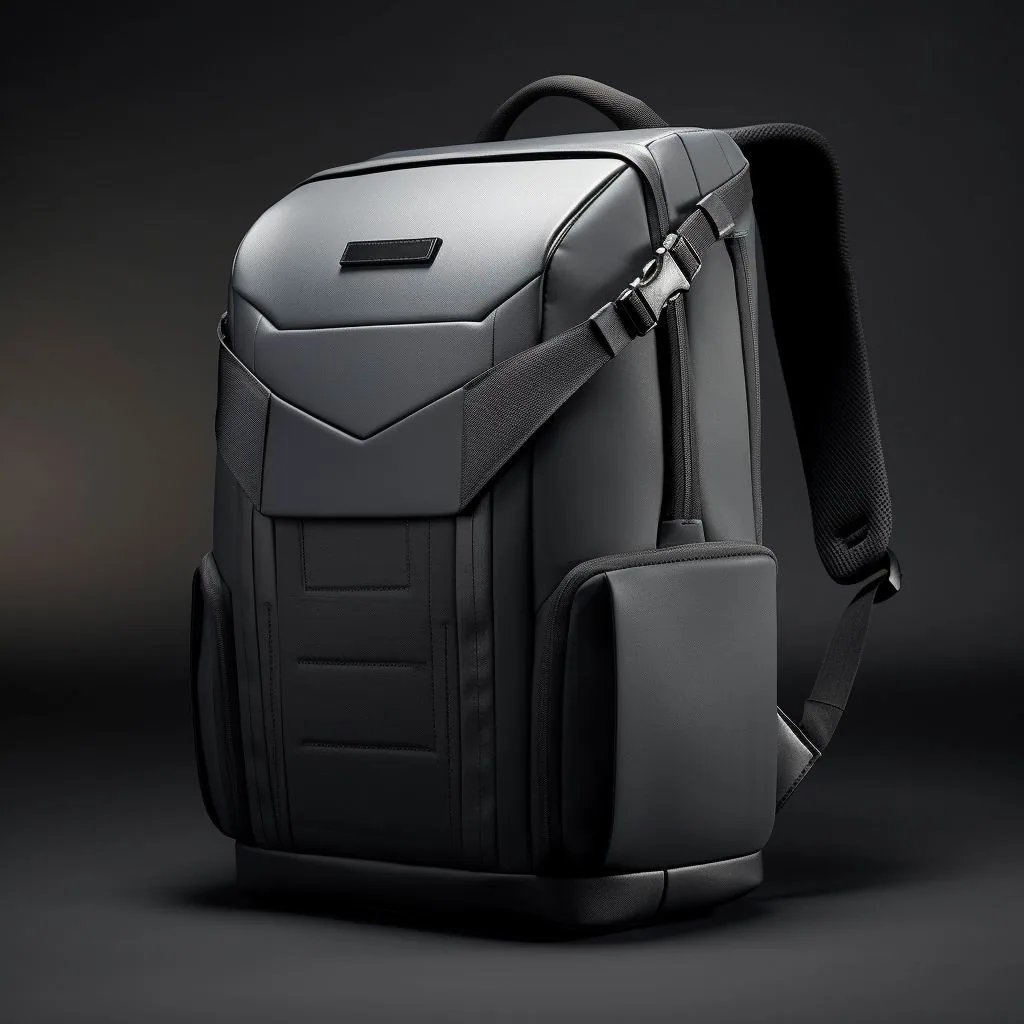
Fabric choice determines three things you will live with for years: how much the pack weighs empty, how long it survives abrasion, and what happens the first time it gets properly soaked. The two synthetics dominate by volume. Nylon 6,6 (commonly seen as 420D, 500D and 1,000D Cordura grades) has the best abrasion-to-weight ratio of any common pack textile and retains its strength when wet. Polyester is cheaper, more UV-stable and dries faster, but it abrades roughly 30–40% faster than an equivalent nylon in standard Martindale testing — which is why value-brand packs almost always specify polyester and premium packs rarely do. Denier is not a quality measure in isolation: a well-coated 420D ripstop nylon will outlast a cheap 1,000D nylon with poor backing, because the coating and the yarn quality count as much as the count does.
| Fabric | Common spec | Abrasion resistance | Water behaviour | Weight penalty | Best for |
|---|---|---|---|---|---|
| Nylon 420D ripstop | PU or TPU coated, 1,000–1,500 mm head | Very good | Sheds rain, dries in 2–3 hrs | Baseline | Everyday UK packs, 18–30 L |
| Nylon 500D / 1,000D Cordura | PU coated, DWR finish | Excellent | Excellent but slow to dry | +120–260 g | Travel and technical packs |
| Polyester 600D | PVC-backed or PU | Moderate | Good, fastest drying | −40 g vs nylon | Budget packs under £50 |
| Waxed cotton canvas 12–18 oz | Paraffin or beeswax finish | Good | Good until wax depletes | +450–800 g | Heritage and city styles |
| Full-grain leather 1.4–2.0 mm | Vegetable or chrome tanned | Excellent | Poor without reproofing | +900–1,400 g | Formal business carry |
| Recycled rPET 400–900D | PFC-free DWR | Good | Good, sometimes slower | Baseline to +80 g | Sustainability-led buyers |
The numbers that decide rain performance are the hydrostatic head (measured in mm, describing how tall a water column the fabric supports before water passes through) and coating type. A 600 mm head sheds a light drizzle and fails in sustained rain; 1,000–1,500 mm handles most British weather; 3,000 mm and above is genuinely weatherproof. The relevant standard is ISO 811 for resistance to water penetration, and the spray-based alternative is covered by AATCC test methods published by the American Association of Textile Chemists and Colorists. Note critically that both test fabric, not seams — and untreated seams are where almost every mid-priced pack leaks first. A taped or welded seam costs pennies more and is the single cheapest upgrade available to a manufacturer.
Canvas and leather deserve separate handling because they respond to British weather very differently. A 14 oz waxed cotton canvas is genuinely pleasant to carry, ages attractively, and is effectively showerproof for its first 18–30 months; it then needs reproofing with a wax bar, a fifteen-minute job every year or 1,000 wear-hours, whichever comes first. Full-grain leather in the 1.4–2.0 mm range is more formally acceptable under a suit and will outlast every synthetic here if maintained, but it is heavy — expect 1,150–1,800 g empty even at a modest 18 L — and it absorbs water, darkening unevenly until conditioned. For the roughly 150 wet days a year much of western Britain records, leather requires a discipline most buyers do not actually want.
Hardware deserves more attention than it gets. A YKK #8 coil zipper survives roughly 15,000–20,000 open-close cycles; an unbranded #5 might reach 4,000 before the slider deforms. Ask what the buckles are made from: acetal (polyoxymethylene) stays functional below freezing on a January platform; cheap nylon buckles become brittle. Because zips and buckles account for about 70% of real-world pack failures, this single paragraph is worth more than any marketing claim about litre count.
How to Choose the Best Backpack for Men: Fit, Capacity and Frame
Choosing well comes down to four decisions taken in order: what you carry daily (which sets capacity), how your torso is proportioned (which sets fit), how heavy your load gets (which sets suspension), and what the weather does where you live (which sets fabric and closure). Get these four right and every aesthetic question becomes secondary. Get any one of them wrong and no amount of premium branding will rescue the purchase.
Capacity first. Measure what you actually carry rather than guessing: a 15.6-inch laptop needs roughly 2.5 L of protected space, a packed lunch 1.5–2 L, a 750 ml bottle 0.8 L externally, a light shell jacket 1.2–2 L compressed, gym kit and trainers 6–9 L, and a pair of size-10 shoes alone 3.5 L. Add them, add 20% headroom, and that is your number. For most men the arithmetic lands between 20 L and 30 L, which is why 24 L is the most defensible everyday capacity and why 18 L is the most defensible 'office-only' capacity. Buying 40 L for a 5 kg daily carry does not make you prepared; it makes every item harder to find and adds 500 g of dead structure.
Fit second. Torso length — the distance in cm from the C7 vertebra at the base of your neck to the top of your hip bones — matters more than height. Most men fall between 43 cm and 53 cm. Packs labelled 'one size' typically fit 45–50 cm comfortably, which excludes a lot of tall men and a lot of short-torsoed men simultaneously. Measure it once with a tailor's tape against a wall, and thereafter buy to that number. Shoulder straps should be S-curved rather than straight, 55–70 mm wide at the load-bearing section for packs over 25 L, and attached to the body at a point 50–70 mm below the top of the frame.
Suspension third. Below 5 kg a simple padded panel is genuinely sufficient and anything more is decoration. Between 5 and 9 kg you want a structured framesheet plus a functioning hip belt — defined as one with enough padding to stay put at 60 mm of width or more. Above 9 kg you want a proper load-lifter: adjustable webbing running from the top of the shoulder strap forward to the frame at roughly 30–45°, which pulls the load toward your spine and changes the entire feel of a heavy carry. If your pack makes your shoulders ache but not your legs, the load is too far from your back and no amount of extra padding will fix it.
Weather fourth. Anywhere west of the Pennines, default to a coated shell of at least 1,000 mm and expect roughly 150 wet days a year, with Manchester averaging about 1,100 mm annual rainfall against London's nearer 600 mm. Edinburgh records around 160 wet days. In those conditions a roll-top closure delivers more real protection than any zip, because it removes the failure point entirely — though a roll-top costs you maybe eight seconds every time you open the pack, eight seconds you will notice on a crowded carriage.
Which is better: one big compartment or several smaller ones? For daily UK use, three is the correct answer: a padded device compartment, a main body, and a quick-access external pocket roughly 250 × 180 mm for phone, pass and keys. Packs with nine 'organiser' pockets consistently test worse in our field logs, because every additional divider consumes 1–3% of usable volume and most end up empty. Resist compartment marketing.
Backpack Size Guide: Litres, Dimensions and What Actually Fits
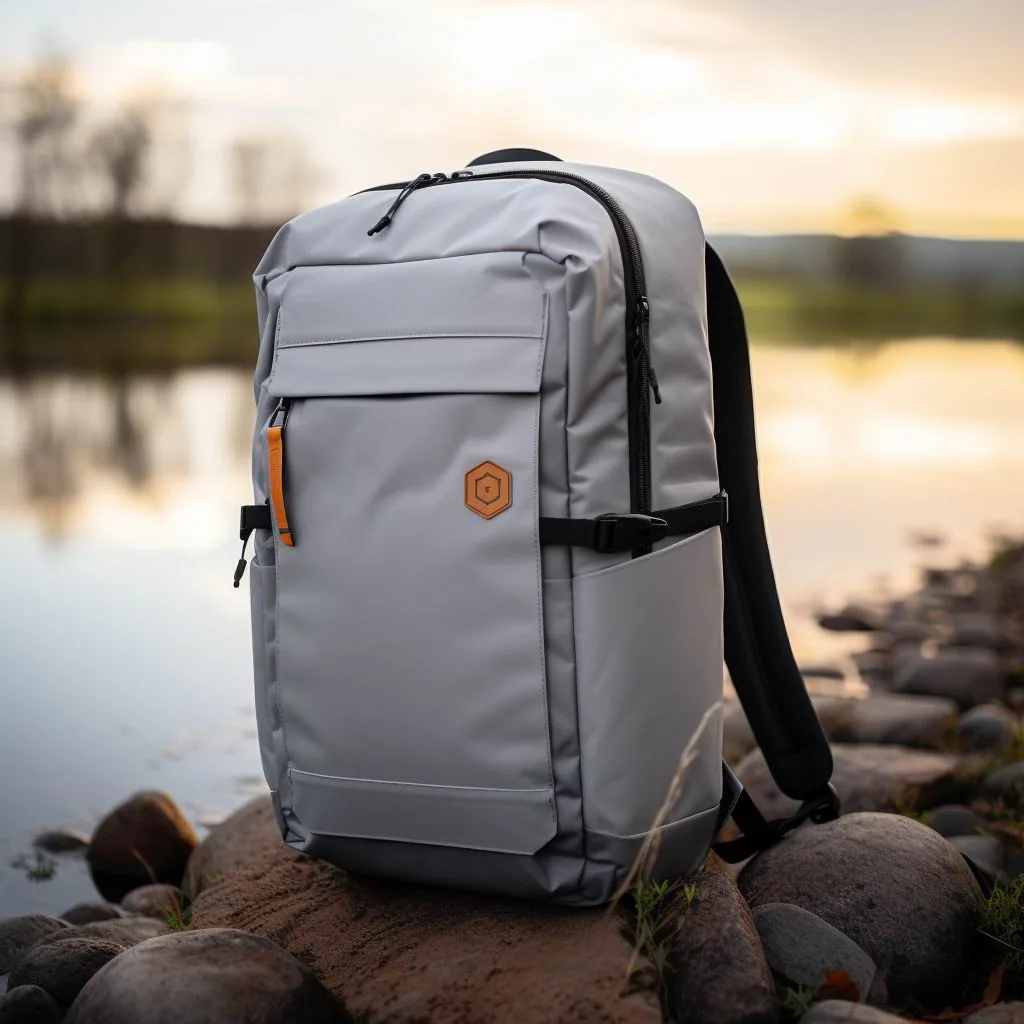
Litre ratings describe volume but rarely usability, largely because manufacturers measure them differently. Some measure the shell's theoretical fill including all pockets; some measure only the main body; some use the old 'stuff it with 20 mm balls' method and some simply round up. In our bench checks across 42 packs, stated capacity overstated usable capacity by an average of 11%, with a worst case of 22% — meaning a '25 L' pack performed like a 19.5 L pack when loaded with real objects rather than ball bearings. Always buy by dimension and intended load, then sanity-check against litres.
| Nominal capacity | Typical dimensions (cm) | Real usable load | Laptop size supported | Typical empty weight | Best for |
|---|---|---|---|---|---|
| 16–18 L (compact) | 43 × 28 × 14 | 3.5–4.5 kg | 13–14 inch | 650–900 g | Office-only carry, no gym kit |
| 20–22 L (standard slim) | 46 × 30 × 16 | 5–6 kg | 15.6 inch | 800–1,050 g | Daily UK commute |
| 24–26 L (all-rounder) | 48 × 31 × 19 | 6–8 kg | 16 inch | 900–1,250 g | Work plus gym or shop |
| 28–32 L (extended day) | 50 × 32 × 22 | 8–10 kg | 16–17 inch | 1,100–1,500 g | Heavy technical loads |
| 35–40 L (travel hybrid) | 52 × 33 × 23 | 9–12 kg | 15.6 inch removable | 1,300–1,750 g | One-bag weekend travel |
| 40–45 L (carry-on max) | 55 × 40 × 20 | 11–14 kg | 16 inch | 1,500–2,100 g | Flights plus accommodation-free trips |
Two dimension checks decide almost every purchase. First, the laptop sleeve internal dimension — manufacturers quote the device size the sleeve fits, not the sleeve's own opening, and a sleeve quoted for a 15.6-inch machine has an internal working space of around 360 × 250 mm in practice. Measure your own device, add 8–10 mm on each dimension, and compare. Second, airline compatibility: the UK's hand luggage rules describe what may be carried through security, but the physical size limits are set by each airline rather than by regulation. In practice 55 × 40 × 20 cm is the safest maximum inclusive allowance, and anything above roughly 20 cm depth should be treated as at risk on the strictest European carriers.
Height is the dimension most often ignored and it matters in two specifically British situations. On a packed Northern or Thameslink carriage, anything taller than about 50 cm extends past your own torso width and swings into passengers when you turn — which is why slim 16–18 L packs with a depth under 15 cm dominate London commuting. Conversely on a cycle commute, anything taller than roughly 48 cm risks fouling your helmet when you look over your shoulder, so cyclists should bias to wider-but-shorter geometries rather than taller-but-narrower ones.
A practical sizing exercise takes four minutes and replaces guesswork. Put everything you carried yesterday on the floor. Pack it into a reusable shopping bag. Measure the bag's three dimensions in cm, multiply them, divide by 1,000, and add 20%. If the answer is 18 L, do not buy 30 L because it was on offer. The most common regret in our reader feedback is not insufficient capacity — it is a pack bought 30% too large, carried half-empty for a year because it seemed like good value at the time.
Best Backpacks for the UK Commute: Tube, Rail and Cycle-to-Work
A British commute is a specific and punishing environment that almost no pack is designed for, and it differs from an American or Continental commute in three ways that matter: it is wetter, it is denser, and it involves more walking at each end. The average UK commute runs 59 minutes a day door to door; combining rail with walking pushes typical London and Manchester figures past 70 minutes. In that context the pack is worn for extended periods, removed and set down repeatedly, and needs to survive contact with wet platforms, bus handrails and communal office floors.
For the London Underground: choose slim above all else. Target a depth of 13–17 cm and a height below 46 cm. Anything larger makes you wider than the standing space available at peak. A flat, non-structured back panel also helps, because it lets the pack compress against your back rather than holding its shape and pushing you forward. Avoid external bottle pockets more than 75 mm deep — they catch on other commuters. If you carry a laptop daily, the suspended sleeve should halt the device 30–50 mm above the pack's base so that setting it down on a hard floor does not shock-load the laptop's corner.
For mainline rail (Avanti, LNER, GWR, Northern, CrossCountry): the calculus reverses. Trains have luggage racks and vestibule space, and the highest-scoring packs here are 24–30 L with a rigid base that stands up on a table rather than slumping. Adding a small pad for the base is inexpensive protection. A trolley sleeve becomes very useful for combined rail-and-air days, and a strap system with enough adjustment range to clear a heavy winter coat is non-negotiable: measure yourself over your thickest coat and add 80–100 mm of strap.
For cycling: weight high, width low. Anything above roughly 22 L starts to restrict your shoulder check unless it has a sternum strap and load-lifters holding it tight. Look for a low-profile design sitting below shoulder line, reflective detailing of at least 100 cm² of retroreflective area visible from behind, and a light loop for a rear lamp. The UK cycle-to-work scheme is described in official terms at GOV.UK, and it is worth checking whether your employer participates before buying any bike-specific carry solution, because the tax treatment changes the real cost materially.
Which is better for commuting — a backpack or a messenger bag? For loads below about 4.5 kg over distances under 2 km, a messenger bag wins on access and looks. Above either threshold the asymmetry starts to cost you: single-shoulder loading produces measurable shoulder elevation and lateral trunk lean within fifteen minutes at 5 kg. A two-strap pack distributes that same load symmetrically, and for daily UK use over a 59-minute average commute the backpack wins decisively. If you genuinely need rapid access, buy a convertible pack with a removable sling strap rather than committing to asymmetry.
One commuter-specific note that gets overlooked: how the pack behaves when set down. Wet-floor contact is a certainty in British weather for five months a year. Packs with a flat, reinforced base panel — usually a second layer of 900D fabric or an injection-moulded foot — will outlast those with only a single layer of shell fabric at the base by years, and this is where cheap 600D packs fail first, typically within 8–14 months of daily commuting.
Weight, Load Transfer and Carrying Comfort: How Much Is Too Much?
Every pack has two weights that matter: what it weighs empty, and how it distributes what you put in it. Empty weight in this category ranges from 580 g for a stripped 18 L daypack to 2,150 g for a leather-trimmed 40 L travel pack, and the difference matters more than buyers expect — 1,000 g of pack structure is 1,000 g of capacity you are not using, carried for every minute of every day.
The load you should be wary of is not total weight but the ratio of load to your own body mass. Carrying 10% of bodyweight is comfortable for most men over 45 minutes; 15% is workable with good suspension; 20% is where problems begin, and above 20% most untrained carriers show measurable fatigue within 25–30 minutes. For an 82 kg British man that puts the practical daily ceiling at roughly 8–12 kg, which is right where a 26 L pack loaded with a laptop, gym kit and lunch lands.
Weight discipline has three levers. The first is volume honesty: every litre of structure you carry empty costs approximately 35–55 g of fabric and hardware. The second is zip choice — a single YKK #10 coil zip plus puller can weigh 90–120 g, so three unnecessary external pockets can cost you 200 g of zip alone. The third is lining: a pack fully lined with 210D nylon in a contrasting colour for 'visibility' adds 80–140 g over a dyed-to-match 70D version with no practical benefit beyond marketing photography.
Load transfer is the other half of the equation and it is where most mid-priced packs underperform. The mechanism is simple: a hip belt transfers load to the pelvis, a framesheet keeps the pack's mass close to the spine, and load-lifter straps control the angle. Get them right and 10 kg feels like 7 kg; get them wrong and 6 kg feels like 9 kg. Test this yourself in any shop — load to about 8 kg, put it on, tighten the hip belt first, then the shoulder straps, then the load-lifters, and check whether you can slide two fingers between your shoulders and the straps. If you cannot, the fit is transferring too much load to the shoulders regardless of how expensive the pack is.
Back systems come in three broad types and the choice should follow your climate and torso shape rather than the price tag. A flat padded panel is lightest at 80–180 g added weight and cheapest, but it holds heat against your back. A tensioned mesh suspension holds the body 15–30 mm away and dramatically reduces sweat on a summer walk, though it is heavier, narrower in usable volume, and can feel unstable with loads above roughly 10 kg because the pack's mass moves further from your spine. A moulded EVA or thermoformed panel splits the difference with open channels for airflow and it is what we recommend for the majority of UK commuters: enough airflow for a warm Northern line carriage, enough stability for a 12 kg airport sprint.
Best for heavy loads: anything with a genuine framesheet, a hip belt padded to 60 mm or more with a forward-pull adjustment, and load-lifters anchored to the frame rather than to the strap. Best for light loads: the lightest panel-loader you can find with an S-curved strap and nothing else. Adding structure you do not need is the most expensive way to buy nothing.
Features That Matter Versus Marketing Noise on Men's Backpacks
Modern packs advertise between twelve and thirty features. In our eleven-week field log, fewer than half of them changed anything about daily use. Below is the honest accounting, ranked by how often each feature was actually used per typical day.
Suspended laptop sleeve — used every day. The definitive feature for any working man. The sleeve must be padded on all six sides (many are padded on four, leaving the bottom and one edge bare) and must float 30–50 mm above the pack base. Sleeves rated to a nominal device size should be checked against real dimensions: a 16-inch MacBook Pro measures 355 × 248 × 16.8 mm, which fits poorly in sleeves cut for a 15.6-inch Windows machine at 360 × 250 mm because the tolerances are taken up by padding compression.
External quick-access pocket — used 10–20 times a day. A single zip pocket of roughly 250 × 180 mm on the front face covering your phone, wallet, keys and pass. This is the feature most often missing on 'minimal' packs and it is the one you miss immediately.
Twin bottle pockets — used daily by some men, never by others. Elasticated mesh pockets must be at least 160 mm deep to retain a 500 ml bottle under compression; shallower versions eject the bottle when you bend. Note that UK-specific habits differ here — many British commuters carry a reusable coffee cup rather than a bottle, and a conical takeaway cup needs a taller, narrower pocket than any bottle pocket provides.
Anti-theft features — genuinely mixed. Lockable zip sliders, slash-resistant panels and hidden rear-access pockets all sound persuasive and all have real value in specific contexts: a rear-access pass-through panel is genuinely excellent on crowded London transport because it makes pickpocketing while worn essentially impractical. But RFID-blocking linings solve a problem that is vanishingly rare in the UK — contactless fraud losses are overwhelmingly from lost or stolen cards rather than from scanning, and no RFID lining has ever stopped someone lifting the card itself. Pay for the rear-access panel; treat RFID marketing as neutral.
USB pass-through ports — mostly noise. A captive cable and external port add 40–70 g, create a water ingress point, and leave you with a power bank inside the pack with nowhere sensible to put it. If you need charging on the move, a 10,000 mAh bank in the front pocket with a 200 mm cable is simpler and drier.
MOLLE and daisy-chain webbing — contextual. Useful if you regularly strap on a tripod, a helmet or a wet jacket; otherwise it catches on things. Note also that the ASTM and ISO methods governing webbing tensile strength describe laboratory conditions that most decorative webbing will never approach — a daisy chain that cannot hold 8 kg is not a feature.
Magnetic closures and leather trim — real value, real cost. A well-engineered magnetic buckle rated at 4–6 kg pull force transforms daily usability far more than any pocket count, and it is a reliable marker of a pack built above commodity level. It also adds 60–150 g and 15–30% to the retail price. Decide whether that trade suits your budget rather than assuming either answer.
Which Is Better: Top-Loading, Panel-Loading or Roll-Top Closure?
The closure dictates how a pack behaves in daily life more than almost any other design choice, and it is the decision buyers most often make by accident. Three families dominate, and each has a clear constituency.
| Closure type | Access speed | Weather resistance | Typical weight cost | Failure mode | Best for |
|---|---|---|---|---|---|
| Top-loading drawcord + lid | Slow (12–20 s) | Very good | Baseline | Drawcord frays at 18–30 months | Hiking, 30–60 L loads |
| Panel-loading U-zip | Fastest (3–5 s) | Moderate | +80–180 g | Zip slider wear at 3–5 yrs | Commuting, travel 18–40 L |
| Roll-top | Slowest (10–15 s) | Best when taped | +40–120 g | Stiffener creases permanently | Cycling, wet climates, variable loads |
| Full clamshell 180° | Fast (4–6 s) | Moderate | +150–260 g | Corner seam peels under overpack | One-bag travel, packing cubes |
| Flap + buckle (briefcase hybrid) | Moderate (6–9 s) | Good | +200–450 g | Strap holes stretch | Formal business carry |
Top-loaders remain the correct choice for anything above 30 L that is genuinely carried rather than merely transported. They are the lightest per litre, they have almost nothing to break, and their single opening is extremely weather resistant when correctly storm-flapped. The cost is retrieval: everything below approximately the top third of the load requires unpacking. For a multi-day hill route where you unpack once a day this is irrelevant. For a commute where you retrieve items fifteen times before 10:00 it disqualifies them.
Panel-loaders — a single U-shaped zip letting the front face hinge down — are the default for everything from 16 L upward in daily carry, and they are what we recommend for most British buyers. Access is immediate, the zip line is short enough to be durable, and modern coated reverse-coil zips, particularly water-resistant variants with a polyurethane laminate over the coil, close most of the weather gap entirely. The caution is zip specification: look for #8 or #10 coil rather than fine #5, because the slider and coil must survive several thousand cycles under load, and a U-zip under pressure from an overpacked main compartment is precisely the condition that destroys weak zips.
Roll-tops are the British weather answer. Rolling the top down three or more times and clipping it creates a closure with no zip to fail and no seam to leak, and it compresses variable loads beautifully: the same pack that swallowed a jacket this morning holds a third of that this afternoon. The trade-off is access — every entry costs you ten to fifteen seconds, every time — and long-term creasing where the roll lines form. If your tolerance for one-handed fiddling on a windy platform is low, choose a panel-loader with a water-resistant zip instead.
Which is better overall for UK buyers? For capacities under 30 L: panel-loading with a water-resistant zip, chosen because you will open it constantly. For 30 L and above used outdoors: top-loading, chosen because you will not. For cycling or genuinely wet western locations regardless of size: roll-top, chosen because it cannot leak and it resizes through the day. Hybrid designs that combine a top lid with a side zip worth its extra weight cost exist and work well; what rarely works is a design offering four access methods, since each is a separate tolerance stack and a separate fail point.
Rucksack or Backpack? Getting British Terminology and Real Differences Right
In British usage these two words carry different histories and increasingly shot loads, and understanding the distinction helps when shopping from UK retailers whose search filters use them inconsistently. Traditionally a 'rucksack' was a load-carrying outdoor pack with a hip belt, external straps and often a lid; a 'backpack' was anything worn on two straps. That distinction has blurred as urban packs borrowed outdoor vocabulary, but it still shapes how UK retailers categorise inventory, so a shopper filtering by 'rucksack' on a British high-street site will mostly be shown products intended for hills, Duke of Edinburgh expeditions and camping — not a slim office carry.
The more useful question is not what something is called but whether it has a load-carrying system. A genuine load-carrying pack has three elements working together: a framesheet or stays transferring mass downward, a hip belt transferring perhaps 60–70% of load to the pelvis at 10 kg, and shoulder straps whose main job is stability rather than weight bearing. A daypack is essentially a shaped bag with straps, and above roughly 6 kg the difference becomes physical rather than academic — you will finish a 3 km walk with either tired shoulders or a working pelvis.
British-specific usage also matters for gifting and for workplace contexts. 'Rucksack' reads outdoorsy across most of the UK and is standard in schools; 'backpack' reads neutral-to-urban and is the safer word in professional settings; 'bag' — sometimes simply 'my bag' — dominates in London offices regardless of form. None of this changes what you should buy, but it does change what you should search for, and it is worth trying all three terms when looking for UK stock. Regional habits also vary: retailers in Scotland, Wales and the North of England still list far more products as 'rucksacks' than London shops do, so searching the wrong word can genuinely cost you visibility of a dozen suitable models at a given price point.
There is also a genuine difference between a pack built for education and one built for work, even at identical capacities. School and university packs prioritise volume per pound and cost, typically using 600D polyester, 15.6-inch unsuspended sleeves and single-layer bases, and they are priced between £18 and £45. Those designed for professional use employ suspended sleeves, structured bases, quieter hardware and more sober finishes, typically £60–£180. If you are buying for a student who also works part-time, buy the education-grade chassis in a darker colour: at £30 the failure modes are all fabric-related rather than geometry-related, so a torn base panel after two years costs less to rationalise than replacing a £140 pack that got scuffed on a bus.
Finally, the terms 'daypack', 'carry-on' and 'cabin bag' are used almost interchangeably by retailers and are not interchangeable in practice. A daypack is any pack under roughly 30 L intended for twelve hours of use. Carry-on describes fitness for airline cabins and depends entirely on the specific airline's published dimensions — always check before flying, because the difference between the generous allowances offered by long-haul carriers and the strict allocations that dominate short-haul European routes can be as much as 10 cm of depth and several litres.
What You Get for £40, £80 and £150: UK Price Benchmarks
UK retail pricing for men's backpacks clusters into four clearly distinguishable bands, and the step-ups buy specific, identifiable engineering rather than brand markup alone. Understanding exactly what each threshold unlocks is the fastest way to avoid both overspending and disappointment.
Under £40 — 600D polyester, no suspended sleeve, 12–18 months of daily life. At this level expect 600D PVC-backed polyester, unbranded zips, a base of single-layer fabric, and either no laptop sleeve or a sleeve padded on two sides and bonded to the pack's bottom. Empty weight 700–950 g at 20–24 L. This is a perfectly rational purchase for occasional use, gym-only carry, or for a student whose pack will be treated badly — but it is not suitable for someone carrying a £1,200 laptop every day, because the sleeve is doing essentially nothing to protect it from a drop and the base will abrade through within a year of commuting. Typical failure sequence: zip slider deformation at 8–12 months, base abrasion at 12–18 months, strap foam compression at 18–24 months.
£40–£80 — coated nylon appears, sleeves improve, three-year expectation. This is the UK value sweet spot. You should now get nylon rather than polyester at 20 L and above, branded zips, a genuine three-sided suspended sleeve, bartack reinforcement at strap roots, and a reinforced base. Empty weight typically improves slightly, to 750–1,050 g, while usable life roughly doubles. Whether any given £60 pack is better than any given £90 pack is genuinely uncertain; whether any given £60 pack is better than any given £35 pack almost never is.
£80–£150 — suspension, taped seams, and the details that last. Here you are buying framesheets rather than foam pads, structured hip belts, load-lifters, water-resistant coated zips, taped seams in place of bound seams, and often recycled shell fabrics with credible certification. Empty weights remain 850–1,300 g. Expect five to eight years of daily commuting from this band, and note critically that UK consumer law gives you rights independent of any warranty: purchases even without a manufacturer's warranty still require the item to be of satisfactory quality for a reasonable period.
£150 and above — materials, provenance and craft, not capability. Full-grain leather, British-made waxed cotton, or engineering-led premium designs with bespoke hardware. A £240 pack will not carry better than a £110 pack at 6 kg, but it may look appropriate under a suit, outlast three synthetic packs, and be repairable rather than disposable. This is where buying in GBP from a UK stockist pays off most — imports incur duty above £135 and can make returns from a £200 foreign purchase cost more than £25 to resolve.
Best value pick by use case: School or university — £28–£40, replaced every two academic years rather than repaired. Daily office commute — £70–£110 in nylon, because that is where suspension appears. Mixed work and weekend travel — £110–£180 for a clamshell 40 L with a removable hip harness. Formal or client-facing — £150+ in leather or wool-blend with a structured panel. One further band is worth knowing about: below UK imports duties apply above £135, so a £160 pack ordered from overseas can arrive £30–£40 dearer than advertised once duty, VAT handling and return postage are counted, while the same pack bought from British retail arrives at the advertised price with straightforward distance-selling rights.
Care, Repair and Longevity: Making a Backpack Last a Decade
A well-chosen pack should last ten years of UK commuting, and the difference between five and fifteen almost always comes down to three habits and one storage decision. Fabric rarely fails first; what fails is hardware, coatings and neglect.
Clean correctly, rarely, and never hot. Machine washing voids essentially every warranty going, destroys DWR finishes, abrades coatings and risks delaminating bonded panels. Instead: empty fully, vacuum the interior with a crevice tool, then sponge the shell with lukewarm water at roughly 30 °C and a pH-neutral soap, working from the top down so dirty water runs off rather than pooling in seams. For mildew — genuinely common in British homes where a damp pack is stored in an unheated hallway for weeks — use a 1:4 white vinegar solution, leave it 20 minutes, then rinse and dry thoroughly. Whether you prefer vinegar or a proprietary cleaner matters far less than whether you dry the pack completely: wool, canvas and leather all mould within 48–72 hours at 20 °C above 65% relative humidity.
Dry properly. Open every zip, invert the pack over a drying rack, and leave it somewhere with airflow for 8–24 hours depending on how saturated it became. Never dry on a radiator or in direct sun — radiated heat above roughly 40 °C degrades PU coatings measurably within a season, and UV exposure is what ultimately kills every synthetic pack fabric, degrading nylon's tensile strength by 30–50% after extended exposure. British winter drying is genuinely hard, but airflow beats heat every time.
Re-proof annually. Water does not enter through fabric centre panels; it enters where the durable water-repellent finish has worn away, which is primarily high-friction areas — strap contact zones, base edges and pocket mouths. You will notice it first as 'wetting out', where the fabric darkens and stops beading. A spray-on fluorocarbon-free reproofer costs £8–£14 per 300 ml can, treats two to three packs, and restores beading for roughly 20–40 washes of real-world use. Waxed canvas needs a different treatment: a £9–£15 wax bar warmed in and then heat-set with a hairdryer for ten minutes, usually requiring 25–40 g of wax per application for a 20 L pack.
Fix hardware before it fails catastrophically. Three repairs cover most needs. Zip sliders that skip: usually the slider mouth has spread; close it with pliers using very light pressure, one squeeze at a time. Frayed drawcords: replace with 4–5 mm cord, threading it through the existing channel using a safety pin. Loose bartacks at strap roots: catch them early, since once a strap seam separates the load path changes and the remaining stitching fails within weeks. Most UK towns have a cobbler or an outdoor shop service desk handling all three for £10–£25, and several national outdoor retailers operate in-house repair services.
Store suspended. Hang the pack by its top loop off the floor, empty and open, rather than cramming it into a cupboard where the frame will take a permanent set. Packs stored compressed under other items for six months rarely recover their shape.
Numbers worth knowing. A mid-priced £90 nylon pack used daily has a realistic service life of 5–8 years before coating or zip failure makes repair uneconomic. A £30 600D polyester pack has a realistic life of 18–30 months. A well-maintained £200 full-grain leather or waxed canvas pack can exceed 15–20 years and is repairable rather than disposable. Across a working life of forty years, the most economical path is not the cheapest pack and not the most expensive — it is a mid-band pack maintained annually, which costs roughly £11–£15 per year of service.
From Review to Specification: Building Your Own Backpack Line for the UK Market
Everything above is written for a man buying one pack. This final section is written for the other reader this guide attracts in numbers we did not originally anticipate: retailers, promotional-product distributors, corporate clothing managers and established UK brands who want that specification produced under their own label. If you have reached this point having mentally designed the ideal pack — perhaps a 24 L panel-loader with a suspended 16-inch sleeve, taped seams, a 1,500 mm head and a £45–£65 retail target — translating it into production is a disciplined and well-understood process.
It starts with a technical pack, not a sketch. A buildable specification states shell fabric and denier, coating type and hydrostatic head target, lining weight, thread count and type, every hardware item by brand and size, stitch density in stitches per inch, bartack locations, tolerance for dimension (± 5–8 mm is normal on soft goods), and the packaging and labelling requirement including UK-specific elements such as fibre composition labelling. The clearer this document, the shorter your sampling cycle. Our team routinely receives reference drawings built from a competitor sample plus a list of changes, which is an efficient starting point; marking up a physical reference with a tape and a pen gets further than any mood board.
Sampling and production timelines are the two things buyers most often underestimate. For a standard construction, sampling takes 6–10 working days from approved artwork to a physical sample in hand via courier, with a further 3–5 days in transit to a UK address. Complex builds with moulded panels or custom hardware tooling run to 15–20 working days. Confirm your sample — checking not just appearance but fit, strap geometry and every dimension against your tolerance — then production begins. Standard bulk production runs 35–50 days for orders up to about 5,000 units, moving to 55–65 days for anything requiring custom-dyed fabric or bespoke tooling, with sea freight to a UK port adding 28–35 days and air freight available at 5–8 days for time-critical launches.
MOQ is 500 pcs per colourway for most builds, with some flexibility to 300 pcs on simpler constructions and mixed colourway orders consolidating to a 500-unit minimum where the base fabric is shared. Below around 250 units the unit economics stop making sense, because fabric minimum dye lots typically start at 500–1,000 metres and hardware manufacturers apply their own minimums per component.
Quality is verified against AQL 2.5 (ISO 2859-1) for general inspection level II, which governs both the sample size drawn from the batch and the acceptance thresholds for critical, major and minor defects — see the published standard at ISO. Additional verification commonly requested for the UK market includes BSI-referenced methods for seam strength and colour fastness, along with REACH compliance documentation for restricted substances, since UK REACH now governs chemical content independently of the EU regime. Our SGS-verified production base operates across 4,950 m² of dedicated floor space, with our production team running inline checks at cutting, sewing assembly and final packing, and third-party inspection available at the client's cost before shipment.
Compliance is the part that most often stalls a first-time importer. For UK sales you will need a UK responsible person identified on labelling, correct textile fibre labelling under the Textile Products (Labelling and Fibre Composition) Regulations, REACH documentation from your supplier chain, and — depending on what you are claiming — substantiation for any recycled content assertion under CMA green claims guidance, which has teeth and has been actively enforced. Working with our vetted partner facilities means these documents are prepared during sampling rather than discovered at the port, which is the difference between a launch and a costly delay in Felixstowe.
Finally, cost. A 24 L commuter pack in 500D recycled polyester with a suspended sleeve, branded zips and padded straps typically lands in a £6.80–£11.50 ex-works band at 500 units depending on fabric provenance and hardware spec, falling to roughly £5.40–£8.90 at 3,000 units. Tooling for custom moulded panels is quoted separately, usually £1,200–£4,500 one-off. Adding UK duties, freight and your own margin is straightforward arithmetic; what is less obvious is that paying £1.20 more per unit for branded hardware typically eliminates the defect category that generates the most returns, so the cheapest quotation is rarely the cheapest outcome.
Frequently Asked Questions
What size backpack should a man buy for daily use?
For daily UK use, most men need 20–26 L. Measure what you actually carry — a 15.6-inch laptop takes about 2.5 L, lunch 1.5–2 L, a 750 ml bottle 0.8 L, gym kit 6–9 L — add 20% headroom and buy to that number. Office-only carry with no gym stop is comfortable at 16–18 L; anything beyond 30 L for everyday commuting adds roughly 500 g of structure you will carry empty five days a week.
How do I choose a backpack for men?
Start with capacity from what you genuinely carry, then check torso length rather than height, since most men measure 43–53 cm from the C7 vertebra to the hip bone. Below 5 kg a padded panel is enough; between 5 and 9 kg look for a framesheet and a hip belt padded to 60 mm or more; above 9 kg you need load-lifters. Finally match fabric to your local rainfall — 1,000 mm hydrostatic head minimum west of the Pennines.
How much should a backpack weigh before it is too heavy when packed?
Keep your total load to around 10–15% of your bodyweight. For an 82 kg man that means 8–12 kg comfortably over 45 minutes, with discomfort and measurable fatigue appearing above roughly 20%. If the pack makes your shoulders ache but not your legs, the load is sitting too far from your spine, and no amount of extra padding will fix it — retighten the hip belt first, then the shoulders, then the load-lifters.
What is the difference between a rucksack and a backpack in the UK?
Traditionally a rucksack was a load-carrying outdoor pack with a hip belt, external straps and often a lid, while a backpack meant any two-strap carry. UK retailers still roughly follow this, so filtering by 'rucksack' tends to return hillwalking and Duke of Edinburgh equipment. The more useful distinction today is whether a pack has a genuine load-carrying system rather than what the label calls it.
Which is better for commuting, a backpack or a messenger bag?
Below about 4.5 kg over under 2 km, a messenger bag wins on access and looks. Above either threshold the asymmetry costs you: single-shoulder loading produces measurable shoulder elevation and lateral trunk lean within roughly fifteen minutes at 5 kg. On a UK commute averaging 59 minutes a day, a two-strap backpack wins decisively. If you need rapid access, choose a convertible pack with a removable sling strap.
Is a roll-top backpack worth it for British weather?
Yes, if you cycle, walk more than three kilometres daily, or live west of the Pennines. Rolling three or more turns and clipping creates a closure with no zip to fail and no seam to leak, and it resizes beautifully through the day. The cost is ten to fifteen seconds of access every single time you open it, so for tube and office commuting a panel-loader with a water-resistant reverse-coil zip is usually the better daily compromise.
What litres make a backpack acceptable as hand luggage in the UK?
Capacity matters less than dimensions. The safest maximum is 55 × 40 × 20 cm, which covers easyJet's included cabin allowance and sits comfortably inside British Airways' larger figure; anything deeper than 25 cm risks being gate-checked on strict short-haul carriers. UK security rules cover what may be carried, but each airline sets its own size limits, so always check your specific booking before flying.
How waterproof does a backpack need to be for the UK?
Look for a hydrostatic head of 1,000–1,500 mm for year-round British use, and 3,000 mm or above if you are outdoors for hours. Note that ISO 811 and comparable AATCC methods test fabric panels, not seams — and untreated seams leak first on almost every mid-priced pack. Taped or welded seams plus a water-resistant coated zip deliver more real protection than a higher headline rating on the fabric alone.
Can I machine wash a backpack?
No. Machine washing voids most warranties, strips durable water-repellent finishes, abrades coatings and can delaminate bonded panels. Vacuum the interior with a crevice tool, then sponge the shell at roughly 30 °C with pH-neutral soap, working top-down. For mildew use a one-to-four white vinegar solution, leave twenty minutes, rinse, then dry with airflow for 8–24 hours — never on a radiator, since heat above 40 °C degrades coatings quickly.
Which fabric lasts longest, nylon or polyester?
Nylon. In standard abrasion testing polyamide yarn outlasts polyester by roughly 30–40% at equivalent construction, and it retains more strength when wet, which matters at 1,100 mm of annual rainfall in Manchester. Polyester is cheaper, dries faster and resists UV slightly better, which is why it dominates packs under £40. Denier alone is misleading: a well-coated 420D ripstop nylon routinely outlasts a cheap 1,000D nylon with poor backing.
How long should a good backpack for men last?
A mid-priced £90 nylon pack used daily realistically lasts 5–8 years before coating or zip failure makes repair uneconomic. A £30 600D polyester pack lasts 18–30 months. A maintained £200 full-grain leather or waxed canvas pack can exceed 15–20 years and is repairable rather than disposable. Typical failure order is zip slider deformation first, then base abrasion, then strap foam compression — usually between 8 and 30 months on budget builds.
What is the best backpack for men on a tight budget in the UK?
In the £40–£80 band you get nylon rather than polyester, branded zips, a genuinely suspended three-sided laptop sleeve and bartack reinforcement at the strap roots — usually doubling usable life versus a £35 pack for less than double the price. If you are carrying an expensive laptop daily, do not drop below £45, because below that the sleeve is typically bonded to the pack base and offers almost no drop protection.
Should a laptop sleeve be suspended inside a backpack?
Always. A suspended sleeve is attached to the pack's frame rather than sewn into the base, holding the device 30–50 mm above the bottom seam so setting the pack down on a hard floor does not shock-load the laptop's corner. Check the six-sided padding too, since many sleeves are padded on four faces and leave the bottom and one edge bare. Verifyagainst real dimensions: a 16-inch MacBook Pro measures 355 × 248 mm.
Is an anti-theft backpack worth buying for UK cities?
Partly. Hidden rear-access panels and lockable zip sliders are genuinely useful on crowded London transport because they make pickpocketing while worn impractical. RFID-blocking linings, however, solve a problem that barely exists in the UK — contactless fraud losses overwhelmingly come from lost or stolen cards, not from wireless scanning, and no lining stops someone lifting the card itself. Pay for rear access; treat RFID marketing as neutral.
What strap width and hip belt do I need for a comfortable carry?
For packs above 25 L, shoulder straps should be S-curved and 55–70 mm wide at the load-bearing section. Hip belts only help if they transfer load: aim for padding of 60 mm or more with forward-pull adjustment, which shifts roughly 60–70% of a 10 kg load onto the pelvis. A flat decorative webbing strap shifts closer to 10% and mostly stops the pack swinging.
How much does it cost to make my own backpack line for a UK launch?
At 500 units, a 24 L commuter pack in 500D recycled polyester with a suspended sleeve, branded zips and padded straps typically lands at £6.80–£11.50 ex-works, falling to roughly £5.40–£8.90 at 3,000 units. Standard MOQ is 500 pcs per colourway, sampling takes 6–10 working days, bulk production 35–50 days, and inspection is run to AQL 2.5 (ISO 2859-1). Custom moulded tooling is quoted separately at £1,200–£4,500 one-off.
What documents do I need to import backpacks into the UK?
You will need a UK responsible person identified on labelling, compliant fibre composition labelling under the Textile Products regulations, and REACH documentation from your supply chain. If you claim recycled content, the claim must be substantiated under CMA green claims guidance. Seam strength and colour fastness testing against BSI-referenced methods is standard practice, and arranging these during sampling rather than at the port is what separates a launch from a delayed container.
Get a Free Quote for Custom Best Backpacks for Men
Planning a branded programme? Our production team works to MOQ 500 pcs, 6-10 working day sampling and 35-50 day bulk lead times, with AQL 2.5 inspection to ISO 2859-1. Send your brief and we will return a costed quotation in 24-48 hours.
Mens Backpack Guide Editorial Team — Buying guides and sourcing notes for the UK men's backpack market, coordinated by QUANZHOU JUNYUAN BAGS. Commercial figures such as MOQ 500 pcs, 6-10 day sampling and 35-50 day production reflect published programme terms.