Table of Contents
- Nylon vs Polyester Backpacks: Which Fabric Wins?: The Direct Answer
- Key Differences at a Glance
- Capacity, Dimensions and Packing Efficiency
- Comfort, Weight and Carry Dynamics
- Materials, Weather Resistance and Durability
- Access, Organisation and Security
- UK Price, Value and Cost per Use
- Which Works Better in Real British Scenarios?
- Testing Standards and Bulk Custom Orders
- Common Buying Mistakes to Avoid
- Final Verdict: Who Should Choose Each?
- Frequently Asked Questions
Nylon vs Polyester Backpacks: Which Fabric Wins?: The Direct Answer
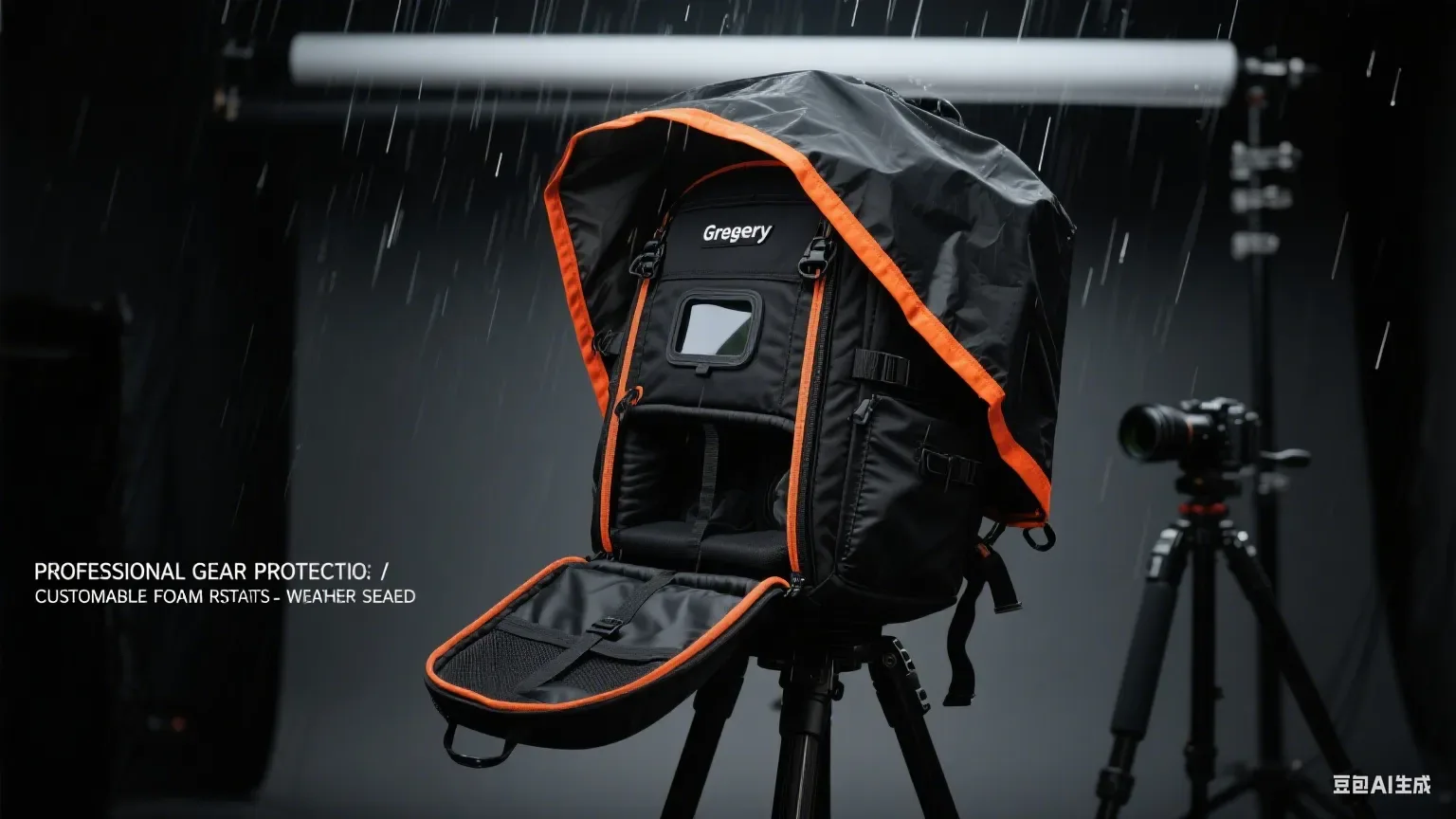
Neither wins outright, and the honest answer is that the coating matters more than the fibre. Nylon - a polyamide, usually PA6 or PA6.6 - is tougher against abrasion and tearing and is the better choice for a bag that gets dragged over rock, concrete and bike racks. Polyester - polyethylene terephthalate - resists ultraviolet light better, absorbs almost no water, holds its shape when wet and costs less, which makes it the better choice for a daily British commuting bag that spends half the year damp.
The numbers that separate them are measurable. Nylon 6.6 filament runs at roughly 8 to 9.5 centinewtons per decitex in tensile strength and its wet abrasion resistance is the best in the category; polyester filament runs at about 7 to 8.5 and loses less than 10 per cent of its strength after 500 hours of accelerated weathering, where a comparable nylon loses nearer 40 per cent. Polyester absorbs about 0.4 per cent of its weight in water; nylon 6 absorbs up to 8 per cent and nylon 6.6 up to about 4.5 per cent. That last figure is the one that changes how a bag behaves in a British winter.
- Choose nylon for abrasion: hill walking, bike courier work, a bag set down on grit daily.
- Choose polyester for weather and UV: daily commuting, a bag left near a window, a summer festival season.
- Choose by coating, not fibre, for water resistance: the hydrostatic head comes from the PU or TPU layer, not from the base fabric.
- Choose recycled polyester if a certified recycled content claim matters to your tender: it is cheaper and more available than recycled nylon.
A simple way to hold it: a nylon shell is a tougher skin on a frame that moves; a polyester shell is a more stable skin that degrades more slowly in sunlight. If your bag's enemy is friction, buy nylon. If its enemy is weather and time, buy polyester.
At the same denier and the same coating, nylon costs about 15 to 25 per cent more per metre. On a 28 L commuting pack at 500 pieces that translates to roughly £4 to £9 per unit, which is real money on a tender and trivial money on a bag you will own for six years.
Key Differences at a Glance
The comparison below holds denier constant at 420D, because comparing a 420D nylon with a 900D polyester tells you nothing about the fibre. All figures are typical production values for coated woven fabric intended for bags.
| Property | 420D nylon (PA6.6) | 420D polyester (PET) | What it means for the bag |
|---|---|---|---|
| Tensile strength | 8-9.5 cN/dtex | 7-8.5 cN/dtex | Nylon resists tearing at stitch holes |
| Wet abrasion, Martindale | 20,000-30,000 cycles | 12,000-20,000 cycles | Nylon survives being dragged |
| Water absorption | Up to 4.5 per cent at PA6.6 | About 0.4 per cent | A nylon shell sags and dries slower when wet |
| Strength retained after 500 h weathering | Around 60 per cent | Around 90 per cent | Polyester is the better summer and windowsill fabric |
| Fabric weight, uncoated | 165-190 g per square metre | 185-215 g per square metre | Nylon is lighter at equal denier |
| Dyeing | Acid dyes, bright shades | Disperse dyes, sublimation printing | Polyester takes sharper printed panels |
| Typical UK retail band | £60-£140 | £35-£95 | Fibre is part of the price, not all of it |
Read the water absorption row twice. Four and a half per cent does not sound like much, but on a bag with about 2.2 square metres of fabric weighing 400 g, a saturated shell takes up 18 grams of water into the fibre itself and, more importantly, the yarn swells. A wet nylon pack goes slack, the panel loses tension and the load shifts; a wet polyester pack keeps its shape and dries in about half the time.
Capacity, Dimensions and Packing Efficiency
Fabric choice changes usable capacity in two ways that have nothing to do with the litre figure on the label. The first is drape: a supple 420D nylon ripstop conforms around the contents and effectively finds 3 to 5 per cent more usable space than a stiff, heavily coated 600D polyester of identical nominal volume, because it lets soft items occupy the corners. The second is wet growth: a nylon shell carrying absorbed moisture relaxes, and a pack that measured 46 x 30 x 18 cm dry can sit 10-15 mm deeper after an hour of heavy rain.
- Dry 28 L nylon shell: about 24.5 L usable, 46 x 30 x 18 cm.
- The same shell after an hour of sustained rain: roughly 25 L usable but 10-15 mm deeper, which is when it stops clearing a gauge.
- Dry 28 L coated polyester shell: about 24.0 L usable, 46 x 30 x 18 cm, and it stays there.
- Compression: a supple nylon shell recovers 40-60 mm of depth under side straps; a stiff polyester shell recovers 20-30 mm.
Lining fabric is a separate decision and it is where nylon quietly earns its place inside a polyester bag. A 210D nylon lining is smoother and more abrasion-resistant against a laptop lid sliding in and out twice a day; a polyester lining is cheaper and slightly stiffer, which helps internal pockets hold their shape. Pale linings on either fibre improve visibility in a dark compartment, and that is worth more than 30 grams of lining weight.
One practical consequence for buyers: if you size a bag to a strict gauge, buy the polyester shell or allow 15 mm of margin on the nylon one. The gauge does not care that the extra depth is water in a yarn rather than your kit.
Comfort, Weight and Carry Dynamics
Fabric weight is a meaningful share of empty weight on a commuting pack. A 28 L shell uses about 2.2 square metres of body fabric plus lining and reinforcement; at 165-190 grams per square metre uncoated, nylon body fabric contributes 360-420 grams before coating, where 420D polyester at 185-215 grams contributes 410-470 grams. Add a PU coating of 30-50 grams per square metre and the gap widens slightly in nylon's favour, because nylon grabs coating adhesion more readily and can run a thinner film for the same hydrostatic head.
- Below 5 kg of load: fabric choice is invisible; strap geometry governs comfort.
- 5-8 kg: every 100 grams of shell is 100 grams less of real contents within a sensible safe-load ceiling, so a lighter nylon shell buys margin.
- Above 8 kg: nylon's advantage in tear strength at the strap roots becomes relevant, because that is where a loaded shell fails.
- Wet carry: a saturated nylon shell adds 15-25 grams of absorbed water and goes slack, which is felt as sway rather than as weight.
There is a comfort point specific to straps. Webbing is almost always polyester, but the fabric wrapped over the foam is usually nylon for abrasion against clothing. If the strap fabric is a stiff coated polyester, it will rub a shirt collar on a warm day; a softer nylon face or a brushed tricot is the better specification on any strap that touches the neck.
One more dynamic: a slack wet shell moves the load away from the spine. With 7 kg aboard, a nylon pack that has absorbed water will sway 10-15 mm more than the same pack dry, and that sway is what produces lower-back fatigue on a long walk from a station.
Materials, Weather Resistance and Durability
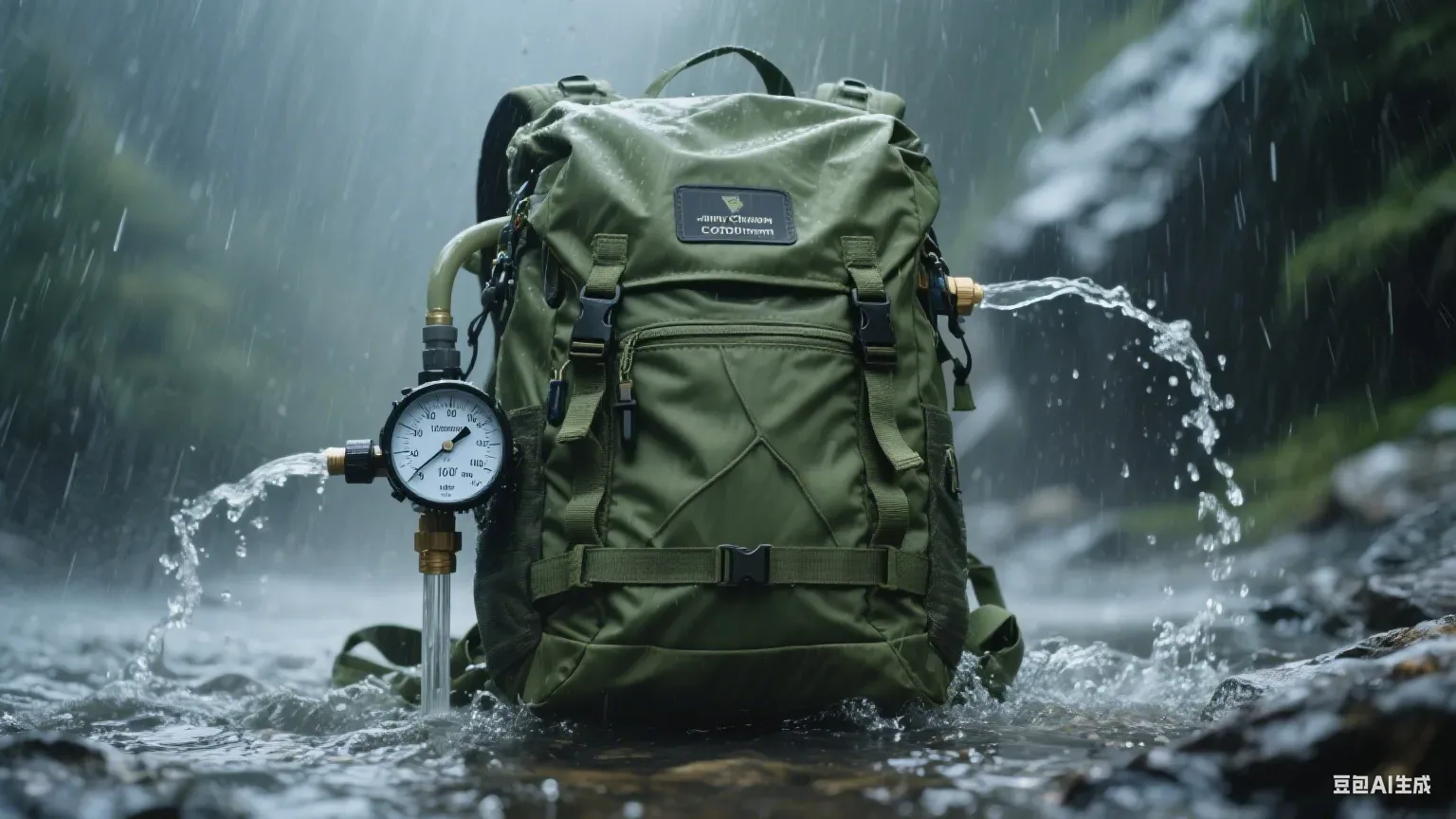
Water resistance is a coating property and buyers are routinely misled by fibre language. A 420D nylon with no coating wets through in seconds; the same fabric with a 40 gram per square metre polyurethane coating reaches 1,500 mm of hydrostatic head, and with taped seams and a 3,000 mm film it handles a British working day. Polyester behaves the same way: the fibre is hydrophobic, which helps the face fabric shed water and dry quickly, but the coating does the actual work.
- PU at 30-40 g per square metre: light, about 1,500 mm, and three to five years before hydrolysis sets in. It goes tacky and eventually flakes; this is the industry default.
- TPU at 45-70 g per square metre: moderate weight, 3,000-5,000 mm, and seven to ten years of service. Worth the premium on a bag used every day.
- PVC at 90-140 g per square metre: heavy, 5,000 mm or more, five to eight years, and it stiffens in the cold. Cheap and effective, with plasticiser questions attached.
- Silicone at 20-35 g per square metre: very light, 1,200-2,000 mm, five to eight years, used mainly on ultralight ripstop nylon where seams are sewn rather than taped.
Hydrolysis is the failure mode British owners meet first. Polyurethane coatings break down in warm, humid conditions, and a bag stored damp in a hallway cupboard will develop a tacky, flaking inner face within three to five years regardless of which fibre it sits on. Dry the bag open for 24 hours after any soaking, store it dry, and the same coating will last most of a decade.
Colour fastness is where polyester wins decisively. Disperse dyes on PET give better light fastness and sharper sublimation-printed panels; acid-dyed nylon gives brighter, richer shades but some reds and blues fade noticeably after a summer near a window. If branding is printed rather than woven, polyester is the safer substrate - check a 60 mm logo after repeated cleaning and after a season of daylight.
Chemical compliance is now part of material selection, not an afterthought. Azo dyes, plasticisers and durable water-repellent finishes are all restricted: the applicable framework is REACH, and per- and polyfluoroalkyl substances in water-repellent finishes are under active restriction in the UK and EU. Ask for a PFAS-free declaration if the bag is going into a public-sector tender. Abrasion and coating test methods are published by ASTM International, and the relevant ISO methods are listed in the ISO catalogue.
Access, Organisation and Security
Fibre choice affects access more than most buyers expect, through stiffness. A stiff coated polyester pocket holds its mouth open, which makes a side bottle pocket usable one-handed, and it keeps an internal divider standing so a compartment does not collapse when empty. A supple nylon pocket collapses flat when empty - better for a bag that has to compress, worse for a pocket you reach into while walking.
- Bottle pockets: stiff polyester holds shape; soft nylon needs an elasticated mouth.
- Internal dividers: nylon ripstop is lighter and lets dividers fold; polyester keeps them upright.
- Zip garages and storm flaps: a coated polyester flap stays put; a nylon flap needs a stiffener or it curls.
- Lining visibility: a pale 210D lining on either fibre beats a dark one by a wide margin in a 24 L compartment.
Security features interact with fabric in one specific way. Slash-resistant builds use a laminate or an embedded grid, and the bond between a thermoplastic film and the base fabric is stronger on nylon than on polyester, which usually needs a primer or a tie-layer. If a cut-resistant claim is part of the brief, specify nylon with a documented laminate bond strength, and require a cut-resistance level rather than a marketing word.
Organisation should still be modular rather than built in, whatever the fibre: one cube, one wet pouch and a flat document sleeve beat ten fixed pockets. What the fabric should do is keep those pouches from moving - and a slightly stiffer polyester shell does that better than a slinky one.
UK Price, Value and Cost per Use
British pricing tracks fibre less than buyers assume, because hardware, foam and labour dominate the unit cost of a commuting pack. What fibre does is shift the entry point: polyester builds appear from about £35, and nylon builds rarely appear below £55 for a credible specification.
| Band | Typical fabric specification | Expected service life | Cost per use over 240 days a year |
|---|---|---|---|
| £35-£60 | 600D polyester, PU coating, basic hardware | 2-4 years | 15p-25p in year one |
| £60-£120 | 420D nylon ripstop or 600D polyester, TPU coating, brass fittings | 4-7 years | 25p-50p |
| £120-£220 | Solution-dyed or recycled nylon, TPU or laminate, branded hardware | 6-10 years | 50p-92p |
Cost per use is the fair comparison and it usually favours spending more. A £75 bag that lasts five years costs about 6p per commute; a £40 bag replaced after two years costs about 8p and gives you two shopping trips and a warranty claim. Add £9 for a zip lubricant and £14 for a reproofing treatment across the ownership period and the gap widens.
Recycled content deserves a note on value. Recycled polyester from bottle flake costs about 5 to 10 per cent more than virgin and performs within about 5 per cent of it, which is a cheap way to meet a sustainability requirement. Recycled nylon from post-industrial waste or recovered nets costs 20 to 40 per cent more and comes in a narrower colour range; specify it only when the claim is worth the premium and ask for the transaction certificate, not a logo.
Which Works Better in Real British Scenarios?
Five British uses, with the fibre decision attached.
- A daily rail commute from a suburb into a city centre, eleven months a year, bag set down on platforms and in puddles. Polyester: it dries in about half the time, holds its shape when wet and resists the ultraviolet load from a desk by a window. Specify 600D with a 1,500 mm TPU coating.
- Weekend hill walking in the Peak District or Snowdonia, bag scraped against gritstone and set down on wet rock. Nylon: the wet abrasion resistance is the whole argument. Specify 420D ripstop with a 3,000 mm coating and taped seams.
- A bicycle courier or a daily cycle commute of 8 km each way. Nylon, because the base panel and the shoulder straps abrade against clothing, racks and walls every single day, and nylon's tear strength at the strap roots buys years.
- A summer of festivals and a bag left in a sunny garden or a car. Polyester: after one season of strong light, a nylon shell will have visibly faded and lost measurable strength, while polyester will largely hold.
- An office bag that also does a fortnight of European travel each year. Either, but specify polyester for printed branding and a pale lining, and spend the saving on a better zip.
The pattern is that friction favours nylon and exposure favours polyester. Most British buyers face more exposure than friction, which is why polyester dominates the commuting market and nylon dominates the outdoor one.
Testing Standards and Bulk Custom Orders
QUANZHOU JUNYUAN BAGS is a sourcing and programme-management company founded in 2014, with a founder in the bag trade since 2004. Fabric and component sourcing, cutting and sewing sit with our production partners, whose 4,950 square metre SGS-verified site holds 7 production lines and 149 machines worked by 137 colleagues at 200,000 pieces a month. We define the material specification, run the sample round and inspect the result.
Commercial terms do not vary: MOQ 500 pcs per style and colourway, sampling in 6-10 working days (12-15 where a custom laminate or a solution-dyed colour is developed), bulk production 35-50 days after sample sign-off, inspection at AQL 2.5 under ISO 2859-1, payment T/T 30/70, shipment FOB Xiamen.
Fabric specifications must be written numerically, or you will receive something different on the repeat order. State fibre and variant, denier, weave type, finished weight in grams per square metre including coating, coating type and film weight, hydrostatic head, and the minimum acceptable results for abrasion, tear strength, and colour fastness to light and rubbing. Require a lab report on the first bulk fabric lot, not just on the submission sample.
- Abrasion: Martindale to ISO 12947, with a stated cycle count and a pass criterion, not a single number.
- Tear and tensile: ISO 13937 and ISO 13934, warp and weft separately.
- Colour fastness: ISO 105-B02 for light and ISO 105-X12 for rubbing, with minimum grades.
- Chemistry: REACH declarations, an azo dye statement, and a PFAS-free declaration for any durable water-repellent finish.
We record fabric weight, coating weight, hydrostatic head and abrasion result for every approved sample and keep two sealed reference units per style, so a repeat order can be checked against the fabric you signed off rather than against a description.
Common Buying Mistakes to Avoid
Nine errors account for most of the disappointment, and six of them are about reading a specification rather than a label.
- Buying on denier alone. A 900D polyester with a thin coating will abrade worse than a 420D nylon with a good one.
- Assuming nylon means waterproof. Water resistance comes from the coating and the seam construction.
- Ignoring the coating type. PU hydrolyses in three to five years in a damp British hallway; TPU lasts seven to ten.
- Leaving a nylon bag where it will see strong sunlight all summer; it fades and loses strength faster than polyester.
- Comparing a 420D nylon price with a 900D polyester price and concluding that nylon is overpriced.
- Accepting a recycled claim without a transaction certificate.
- Forgetting seam tape. A 3,000 mm fabric with unsealed seams leaks at the stitch holes within minutes.
- Specifying a stiff shell for a bag that has to compress into a gauge.
- Skipping the drying routine, which is what actually kills a coating.
The third and the last are the ones that shorten ownership most. A coating is a consumable in slow motion: dry the bag open for 24 hours after a soaking, store it dry, and re-proof annually, and either fibre will serve you for the better part of a decade.
Final Verdict: Who Should Choose Each?
Choose nylon if the bag will be abraded: hill walking, cycling, courier work, site visits, a bag that gets set down on gritstone and dragged across concrete. Specify 420D or 500D ripstop, a 3,000 mm TPU coating, taped seams and brass hardware, and expect to pay £60-£140 and to dry it carefully.
Choose polyester if the bag will be exposed: daily commuting in British weather, a desk by a window, a summer of festivals, printed branding, a recycled-content requirement. Specify 600D with a 1,500 mm coating for urban use or 900D with 3,000 mm for wet hill days, and expect to pay £35-£95.
If you cannot decide, decide on the coating instead: a TPU-coated polyester at 3,000 mm with taped seams will outperform a PU-coated nylon at 1,500 mm in every weather condition that matters to a British commuter, and it will cost less. Fibre is the second decision, not the first.
Fibre decides how long the bag resists friction and sunlight. Coating decides whether your laptop stays dry. Specify the coating first.
For help choosing a fabric, for samples or for a price, email service@junyuanbags.com or message wa.me/8617750020688 on WhatsApp. Send the use case, the target capacity, the coating requirement and the colourway count, and we will answer within the parameters above.
Frequently Asked Questions
Which is better, a nylon pack or polyester pack, for daily use?
Polyester, for most British daily use. It absorbs about 0.4 per cent of its weight in water against up to 4.5 per cent for nylon 6.6, so it dries in roughly half the time and keeps its shape when wet. Nylon is the better choice if the bag is abraded daily, as it is for cyclists and hill walkers.
How much capacity do I need when comparing these two options?
Fabric changes usable capacity by 3 to 5 per cent rather than by litres: a supple nylon shell conforms around soft contents and finds a little more space, while a stiff coated polyester shell holds its shape and keeps pockets open. Buy the capacity for your load and let the fabric be a secondary consideration.
What empty weight is reasonable for this type of backpack?
A 28 L commuting shell should weigh 750 g to 1.15 kg in either fibre. Body fabric contributes 360-470 grams before coating, and coating adds 30-70 grams per square metre depending on type. Below 700 grams in a 28 L bag usually means the coating film has been thinned.
Is a nylon pack more durable than a polyester pack?
Against abrasion and tearing, yes: 420D nylon manages roughly 20,000-30,000 Martindale cycles against 12,000-20,000 for equivalent polyester. Against sunlight and damp storage, no: polyester retains about 90 per cent of its strength after 500 hours of accelerated weathering where nylon retains around 60 per cent.
Can a polyester pack protect a laptop during British commuting?
Yes. Device protection comes from the sleeve - 6-8 mm of closed-cell foam and 10-25 mm of base clearance - not from the shell fibre. What polyester adds is dimensional stability when wet, so the compartment keeps its geometry and the device stays suspended in a February downpour.
Which option handles persistent UK rain more reliably?
Polyester, because the fibre itself is hydrophobic and the shell keeps its shape when soaked. Water resistance still comes from the coating, so specify 1,500 mm for urban use and 3,000 mm with taped seams for hill days, on either fibre. A wet nylon shell sags, goes 10-15 mm deeper and dries slowly.
How much should British buyers pay for good quality?
£35-£60 buys a credible 600D polyester commuting pack; £60-£120 buys 420D nylon ripstop or a TPU-coated polyester with brass fittings. Over 240 uses a year, a £75 bag lasting five years costs about 6p per commute, which beats a £40 bag replaced after two years.
What dimensions work best on trains and short flights?
Keep the body at 46 x 30 x 18 cm or smaller for a 28 L commuting pack, which clears a 300 mm locker and a 20 cm rail rack. Allow an extra 10-15 mm of margin if you buy a nylon shell, because it grows slightly when saturated.
Should I choose a nylon pack for loads above eight kilograms?
Yes, if the load is carried daily. Nylon's tear strength at stitch holes and strap roots is the relevant property above 8 kg, and strap roots are where a loaded shell fails first. Pair it with 70 mm straps, 10 mm foam and a hip belt doing real work.
Is a polyester pack practical for mixed work and weekend use?
It is the most practical single-bag answer. Polyester holds pocket shape, takes printed branding well, shrugs off a wet weekend and dries overnight for Monday. Choose 600D with a 1,500 mm coating for office-plus-weekend use and step up to 900D with 3,000 mm if the weekends involve hills.
How should bulk buyers specify these backpack designs?
State fibre and variant, denier, weave, finished weight in grams per square metre including coating, coating type and film weight, hydrostatic head, and minimum abrasion, tear and colour-fastness grades. Our programmes run at MOQ 500 pcs per style and colourway, sampling in 6-10 working days, bulk in 35-50 days, inspection at AQL 2.5 under ISO 2859-1, T/T 30/70, FOB Xiamen.
Can both options pass useful durability and quality checks?
Yes. Both should meet an ISO 12947 abrasion result, ISO 13937 tear strength, ISO 105-B02 light fastness and ISO 105-X12 rubbing fastness, plus a documented hydrostatic head. Require reports on the first bulk fabric lot, not just on the submission sample, and add REACH and PFAS-free declarations for the British market.
Does recycled polyester perform as well as virgin polyester?
Within about 5 per cent on tensile and abrasion, which is close enough for any bag application. It costs 5-10 per cent more than virgin and is far more available than recycled nylon, which costs 20-40 per cent more and comes in a narrower colour range. Ask for the transaction certificate rather than a logo on the swing tag.