Table of Contents
- Ripstop vs Oxford Fabric for Backpacks: The Direct Answer
- Key Differences at a Glance
- Capacity, Dimensions and Packing Efficiency
- Comfort, Weight and Carry Dynamics
- Materials, Weather Resistance and Durability
- Access, Organisation and Security
- UK Price, Value and Cost per Use
- Which Works Better in Real British Scenarios?
- Testing Standards and Bulk Custom Orders
- Common Buying Mistakes to Avoid
- Final Verdict: Who Should Choose Each?
- Frequently Asked Questions
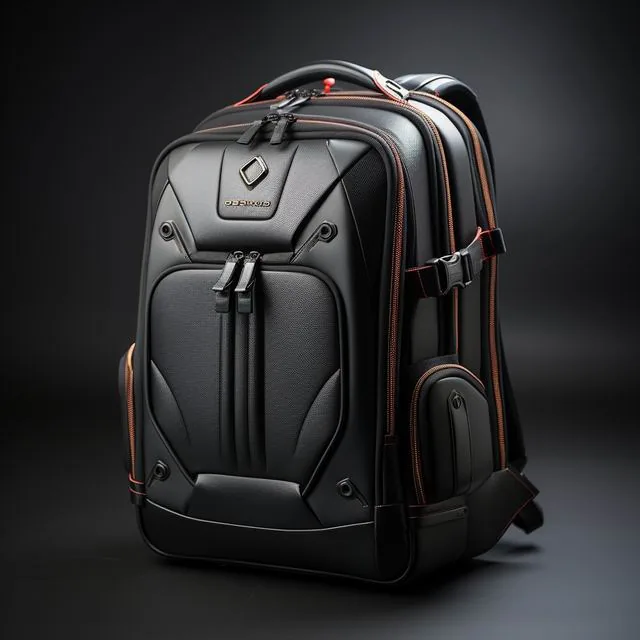
Ripstop vs Oxford Fabric for Backpacks: The Direct Answer
Ripstop is a plain weave interrupted by thicker reinforcement yarns running in both directions on a grid, typically at 5, 8 or 10 mm spacing, so a puncture or a tear stops at the next grid line instead of running across the panel. Oxford is a basket weave, usually two warp yarns crossing two weft yarns, which produces a flatter, heavier, more abrasion-tolerant cloth with no directional reinforcement. One is engineered to stop tears; the other is engineered to survive rubbing.
That difference decides which failure you get. A 210D ripstop daypack snagged on a fence post loses a 5 mm triangle and nothing else. The same snag in 210D Oxford runs 40-60 mm before you notice it. Conversely, a 210D ripstop pack dragged across a school playground six times a week abrades through at the base corners in roughly one academic year, where 600D Oxford on the same pattern lasts three to four.
The practical rule for British buyers is this. Choose ripstop when the bag is under about 30 L, when snagging and weight matter more than rubbing, and when the bag is carried rather than dragged: day walks, cycling, travel packables, gym. Choose Oxford when the bag meets pavements, playgrounds, station floors and the inside of a car boot on a daily basis, when you need a flat face for printing or embroidery, or when the base takes the abuse.
- Ripstop wins on weight per square metre, tear containment and packed size.
- Oxford wins on abrasion life, coating adhesion, print quality and the way it holds the shape of a pocket.
- The strongest commercial builds mix them: a ripstop body for weight with an Oxford base and Oxford abrasion panels.
- Denier alone tells you almost nothing without the weave, the coating and the seam construction alongside it.
Everything below quantifies that trade-off: the numbers on weight and abrasion, what each fabric does to usable volume, how they behave in British weather, what they cost on the high street, and how to specify them on a 500-piece run.
Key Differences at a Glance
The table compares the fabrics actually used in UK backpack programmes, measured rather than quoted from a swatch book. Martindale counts are cycles to two-thread breakdown under a standard abradant, and tear figures are tongue-tear results in newtons.
| Fabric | Weave and grid | Weight | Martindale | Tear | Typical use |
|---|---|---|---|---|---|
| 70D nylon ripstop | Plain, 5 mm grid, silicone finish | 55 g/m2 | 6,000 | 12 N | Packable daypacks, linings, stuff sacks |
| 210D nylon ripstop | Plain, 8 mm grid, PU | 68 g/m2 | 9,000 | 28 N | 15-25 L daypacks, cycling |
| 420D nylon ripstop | Plain, 10 mm grid, PU or TPU | 130 g/m2 | 16,000 | 55 N | Travel packs, lightweight hiking |
| 210D polyester Oxford | Basket 2 x 2, PU | 105 g/m2 | 12,000 | 45 N | Promotional and light promo bags |
| 420D nylon Oxford | Basket 2 x 2, PU | 205 g/m2 | 22,000 | 95 N | 20-30 L daily commuters |
| 600D polyester Oxford | Basket 2 x 2, PU 2-pass | 290 g/m2 | 32,000 | 130 N | School, work, base panels |
| 1680D polyester Oxford | Basket 2 x 2, PU or PVC | 520 g/m2 | 50,000+ | 220 N | Base wraps, tool panels, abrasion zones |
Read the weight column against the abrasion column and the trade becomes obvious. Going from 210D ripstop to 600D Oxford multiplies abrasion life by roughly three and a half, and multiplies fabric weight by roughly four. There is no free lunch in this table, only a choice about which failure you prefer.
The grid-spacing column is the one most buyers never see quoted, and it matters more than denier within the ripstop family. A 5 mm grid on 70D fabric contains a puncture almost immediately but adds 8-10 per cent to fabric weight and creates more coating ridges. A 10 mm grid on 420D fabric lets a tear run 10 mm before it stops, which is still dramatically better than an Oxford basket weave.
Capacity, Dimensions and Packing Efficiency
Fabric choice changes how much you can actually get into a bag of a stated size, and the mechanism is seam bulk and fold radius rather than anything to do with litres. A bound internal seam in 600D Oxford puts four layers of 290 g/m2 cloth plus tape into a join about 8 mm thick; the same seam in 70D ripstop is about 3 mm. Across eight seams in a 24 L shell that is worth roughly 0.8-1.2 L of usable space.
Fold radius works the same way. Thin ripstop conforms around a packed lunch, a shoe or a camera cube, so the contents define the silhouette and the bag uses nearly all of its nominal volume. Heavy Oxford resists folding, so a 24 L Oxford shell behaves like a box: excellent for A4 folders and a laptop, wasteful for odd shapes, and about 1.0-1.5 L less forgiving in practice.
There is a second-order effect on the empty bag. A ripstop pack compresses under its own compression straps by 15-25 mm of depth and rolls to roughly a third of its packed size for storage, which matters on a train rack or in a locker. An Oxford pack holds its shape, which is better on a desk or a hallway floor, because it stands up instead of slumping and spilling.
- Usable share of nominal volume: 92-95 per cent for a ripstop shell against 84-89 per cent for Oxford, a gap of roughly 1.0-1.5 L on a 24 L bag.
- Depth recovered by compression straps: 15-25 mm on ripstop, 5-10 mm on Oxford.
- Stands upright when empty: no for ripstop, yes for Oxford from 600D upwards.
- Packed size stored rolled or folded: about a third of its volume for ripstop, about half for Oxford.
- Geometry for A4 folders and devices: ripstop needs a stiffener or it slumps; Oxford holds the shape unaided.
If you want the ripstop weight saving without the slump, the answer is a hybrid: a 210D or 420D ripstop body with a 600D Oxford base wrap extending 60-80 mm up the sides, plus a removable 1.5 mm HDPE stiffener behind the back panel. That combination keeps a 24 L commuter under 950 g and still stands up on an office floor.
Comfort, Weight and Carry Dynamics
Shell weight is the first thing you feel and the easiest to quantify. Expressed as grams per litre of nominal capacity, a ripstop build runs 22-30 g/L while an Oxford build runs 45-65 g/L. On a 24 L commuter pack that is the difference between roughly 700 g and roughly 1,300 g empty, before the harness, and it comes straight out of whatever load ceiling you are working to.
Put differently: a 600 g lighter shell buys you 600 g more of real contents. For a 70 kg commuter working to a ceiling near 7 kg, that is a packed lunch, a 750 ml bottle and a paperback, or it is the difference between finishing the day comfortable and finishing it with tight shoulders. This is why lightweight ripstop shells dominate cycling, trail and travel use and why Oxford dominates school and site use, where the bag is rarely carried for more than twenty minutes at a time.
Stiffness cuts both ways. A coated 600D panel is rigid enough to protect what is inside and to stop a laptop corner pressing into your back, but below about 5 degrees Celsius PU-coated heavy Oxford goes boardy and crackles on every shoulder movement, which is noticeable on a January walk to the station. Thin ripstop is quiet and supple in the cold, but it transmits the shape of the contents: a keyring, a phone or a bottle rim prints itself against your back unless there is a stiffener or a frame sheet behind the panel.
Breathability and drape follow the same pattern. A silicone-finished 70D ripstop slides over a wool coat without catching; a PVC-backed 1680D panel grabs at knitwear and feels clammy against a shirt on a humid 22 degree platform. If the bag is worn over formal clothing five days a week, favour a smooth lighter face on the back panel and put the heavy Oxford only where abrasion happens.
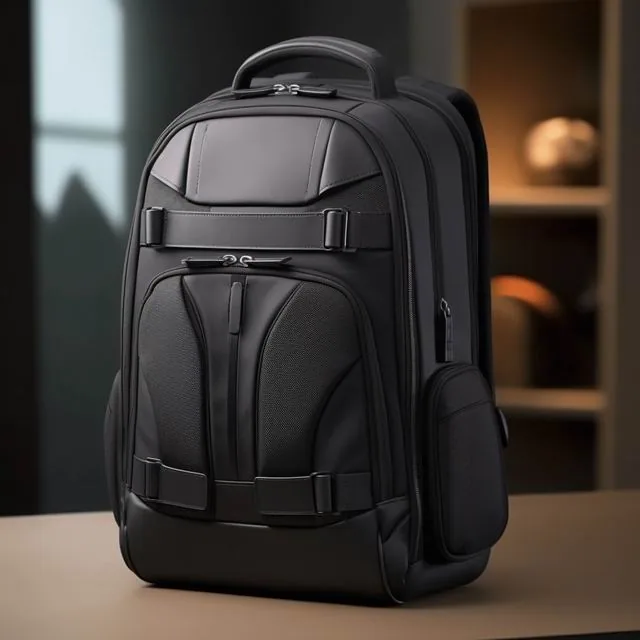
Materials, Weather Resistance and Durability
Water resistance is a coating property, not a weave property, but the weave decides how long the coating lasts. A basket weave presents a flatter, more open surface with more mechanical key for a polyurethane film, so PU on 600D Oxford typically survives three to five British winters. Ripstop grid yarns stand 0.1-0.3 mm proud of the plain weave, so abrasion concentrates on those ridges and the coating there fails first, generally in year two or three of daily use.
Ratings follow the denier in practice. A 210D ripstop with a single-pass PU finish usually tests at 1,500-2,000 mm of hydrostatic head, which is a shower for about 40 minutes. A 600D Oxford with a two-pass PU finish tests at 3,000-5,000 mm, which with taped seams covers a full British working day. If weather performance is the priority, the fabric table above is really a coating table, and the heavier Oxford is the more reliable substrate.
Two coating chemistries are worth naming in a specification. Polyurethane is cheaper, softer and quieter, but it hydrolyses: in humid British storage a PU-coated bag can go sticky and start delaminating after two to four years, which is the familiar tacky-back syndrome. Thermoplastic polyurethane costs 30-40 per cent more, flexes better below freezing and resists hydrolysis, which is why it is specified on roll-top and dry-bag constructions. Both are affected by the current restriction programme on fluorinated finishes; see the position published by the European Chemicals Agency before committing to a durable water-repellent finish.
Ultraviolet behaviour separates nylon from polyester more than it separates weaves. Nylon loses roughly a quarter to a third of its tensile strength after 500 hours of strong light; polyester loses around 10-15 per cent over the same exposure. For a bag left in a conservatory, a car window or a classroom windowsill, polyester Oxford is the safer long-term choice; for a bag that lives in a hallway cupboard, nylon ripstop gives better tear performance per gram.
Whatever the fabric, the failure points are the same four: base corners, strap roots, zip tape and seam tape. Check a base wrap of at least 25 mm turned up the side walls, box-tacked strap roots, and bound or taped internal seams. A 420D ripstop body with those details will outlast a 900D Oxford shell whose strap roots are single-stitched into a single layer of cloth.
Access, Organisation and Security
Fabric stiffness governs how a pocket behaves, and this is where buyers who chose on weight often regret it. A slip pocket cut from 70D ripstop collapses flat, so inserting a phone one-handed takes two hands in practice: one to hold the mouth open, one to insert. The same pocket in 420D Oxford holds its mouth open by itself and can be used with a glove on, which is why work and site bags specify heavier cloth for the front organisation panel even when the body is light.
Closure hardware has to be matched to the shell. A #10 coil zip on a 70D ripstop body is unbalanced: the tape is stiffer than the fabric around it, so the panel puckers along the zip line and the slider drags. The workable pairing is a #5 zip on fabrics up to about 210D, a #8 on 420D, and a #10 on 600D and above. Reverse that and you get either puckering or a zip that is too weak for the load the fabric can carry.
Cut resistance is worth a sentence for anyone carrying a laptop through a city. In a simple blade test, a fresh utility blade opened 70D ripstop under about 2 N of downward pressure and 210D ripstop under about 5 N, while 600D Oxford needed roughly 25 N and 1680D Oxford closer to 60 N. No fabric in this table is knife-proof, but the heavier basket weave converts a two-second slash into something that takes long enough to be noticed on a crowded platform.
| Detail | Ripstop | Oxford |
|---|---|---|
| Slip pocket holds its mouth open | No, in 70-210D | Yes, from 420D up |
| Zip gauge that pairs well | #5 up to 210D | #8 at 420D, #10 at 600D and above |
| Blade resistance, approximate | 2-6 N | 25-60 N |
| Screen print and heat transfer | Good, but the grid shows through on light colours | Excellent, flat face |
| Embroidery without puckering | Needs a cut-away backing and a hoop under 100 mm | Accepts designs up to 160 mm unaided |
Branding is the last practical difference and it affects lead time as much as appearance. A flat Oxford face takes a 60 mm logo cleanly at two metres and survives ten cleaning cycles. On ripstop, the grid telegraphs through light-coloured inks, and embroidery above about 100 mm pulls the panel into a visible pucker unless a backing is specified. Say which decoration method you intend before the fabric is booked, not after.
UK Price, Value and Cost per Use
British retail pricing tracks fabric more closely than brand in this category. A 210D ripstop daypack sits between GBP 35 and GBP 70. A 420D Oxford commuter runs GBP 60 to GBP 110. A 600D Oxford school or work pack, usually with a heavier base, runs GBP 55 to GBP 95. A hybrid build with a ripstop body, an Oxford base and a moulded back panel runs GBP 90 to GBP 150.
Judged over 240 working days a year and a three-year service life, that is between roughly 5p and 21p per use, and the spread is not where most buyers assume. The cheap ripstop pack at GBP 45 that abrades through at the base in fourteen months costs about 9p per use before replacement. The GBP 95 Oxford pack that lasts five years costs about 8p. On a straight cost-per-use basis the heavier fabric frequently wins, provided the bag is used daily and provided the harness remains comfortable.
The exception is genuinely occasional use. A packable 70D ripstop daypack that lives in a suitcase and is used eight times a year will never abrade out, and paying for 600D in that role buys weight and bulk for nothing. Match the fabric to the frequency, not to the price tag: heavy cloth pays for itself above about 100 uses a year and is dead weight below that.
Repairability is the final value consideration and it favours Oxford. A ripstop panel that has torn along a grid line can be patched, but the repair film adheres poorly to the silicone finish and usually peels within a few months. Oxford accepts a bonded patch, a sewn patch or a glued patch, and a GBP 12 repair at a local cobbler or a GBP 6 iron-on patch adds a season to a bag whose zip and harness are still sound.
Which Works Better in Real British Scenarios?
Four British use cases, four clear answers, and in each one the deciding question is whether the bag is carried or dragged.
Scenario one: a Peak District day walk on a 22 L pack
Eleven kilometres, 600 m of ascent, the bag on your back for six hours and set down on rock and grass. Ripstop wins decisively: a 210D shell saves 500-600 g over the Oxford equivalent, snags on heather and gate wire are contained by the grid, and the only abrasion is occasional. Take a 3,000 mm finish and accept a shorter coating life in exchange for the weight.
Scenario two: a Birmingham commute on bus and rail
Twenty-two litres, forty minutes a day, the bag on a bus floor, a station concourse and under a desk. Oxford wins: 420D takes the rubbing, stands upright at your feet, and keeps the front pocket shape for a phone and a travel card. A hybrid with a ripstop body and an Oxford base is the sensible compromise if you walk more than twenty minutes at either end.
Scenario three: a Year 9 school bag
Thirty litres, dragged across a playground, dropped on a corridor floor, kicked under a desk and carried for fifteen minutes at a time. 600D Oxford with a 900D or 1680D base wrap is the only sensible answer. A ripstop shell in this role will be through at the base corners inside one academic year, and the resulting GBP 50 replacement wipes out the weight saving several times over.
Scenario four: a London cycle courier
Thirty litres, four hours a day on the bike, rain, abrasion against a rack and a jacket, and a need for the bag not to gain weight when soaked. Take 420D ripstop with a TPU laminate rather than PU: it stays flexible in the cold, it does not absorb water, and the heavier denier handles the rack rubbing that would destroy a 70D shell.
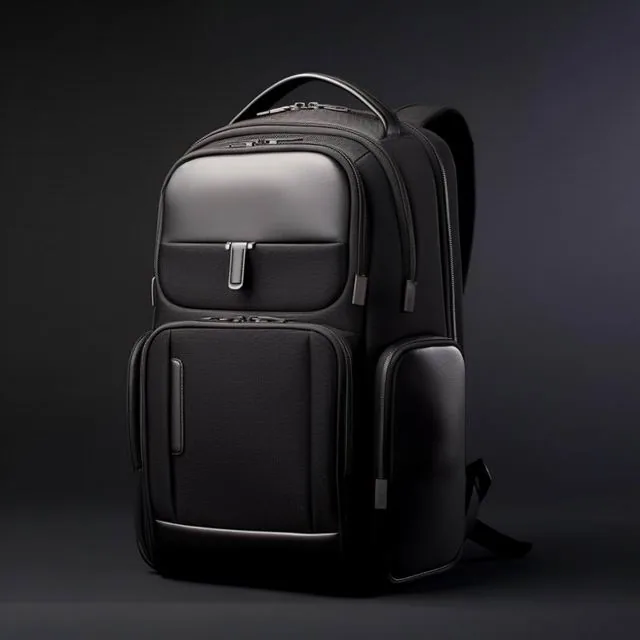
Testing Standards and Bulk Custom Orders
Fabric claims are only useful if the method is named. Abrasion resistance is measured on a Martindale machine under ASTM test methods for textiles, tear resistance by the tongue-tear procedure in the same family of standards, and water resistance by the hydrostatic head method published by ISO. Ask a supplier to state the method and the cycle count, not just the denier, because denier is a yarn count and says nothing about the finish.
On a bulk programme we verify four things per fabric lot: mass per square metre within plus or minus 5 per cent of the approved swatch, Martindale count, hydrostatic head, and coating adhesion after twenty fold cycles at minus 5 degrees Celsius. These are acceptance criteria rather than preferences, because each one maps to a specific complaint that appears within the first year: sag, shine-through at the base, wetting out, and cracking along a fold line.
Commercial terms are the same on every programme we run. MOQ 500 pcs per style and colourway. Sampling takes 6-10 working days from approved artwork, or 12-15 where a welded seam, a moulded back panel or a TPU laminate is involved. Bulk production runs 35-50 days after sample sign-off. Goods are released only after an AQL 2.5 inspection under ISO 2859-1. Payment is T/T 30/70 and shipment is FOB Xiamen.
The company behind this comparison, QUANZHOU JUNYUAN BAGS, has run sourcing and programme management since 2014, and its founder entered the trade in 2004. Fabric programmes are executed with our production partners: 137 colleagues, 149 machines and 7 lines on a 4,950 square metre SGS-verified floor producing 200,000 pieces monthly. We write the specification around the use case, cut an approval sample and seal two references per colourway. Reach the team at service@junyuanbags.com or through WhatsApp on wa.me/8617750020688.
Common Buying Mistakes to Avoid
Six mistakes account for most of the dissatisfaction in this comparison, and none of them needs a laboratory to avoid.
- Buying on denier alone. A coated 210D Oxford outperforms an uncoated 420D ripstop in almost every real test; the finish and the weave matter more than the yarn count.
- Assuming ripstop means waterproof. Ripstop is a weave, not a coating; without a rated finish a 210D ripstop shell wets out in about three minutes of steady rain.
- Specifying heavy Oxford on a pack that is carried all day. At 45-65 grams per litre it can add 600 g to a 24 L shell, which is a tenth of an adult load ceiling spent on the bag itself.
- Embroidering light ripstop without a backing. Designs above about 100 mm pucker the panel visibly and the grid shows through pale inks.
- Pairing a heavy zip with a light shell. A #10 coil on 70D fabric puckers the panel and drags the slider.
- Machine washing a PU-coated shell. Agitation and heat above 60 degrees strip the finish; wipe with pH-neutral soap below 30 degrees and air dry open for 24 hours.
One check catches most of them in ninety seconds in a shop: fold a corner of the fabric sharply twenty times and look for white stress marks, then press a damp cloth against the face and see how quickly the colour darkens. Stress marks mean a brittle coating; rapid darkening means a thin or absent finish. Neither is visible on a product page.
Final Verdict: Who Should Choose Each?
Choose ripstop if the bag is under 30 L, carried rather than dragged, used where snags are more likely than scuffs, and where every gram counts against a load ceiling: day walks, cycling, packable travel bags, gym kits, and the body panels of any large pack where weight is the constraint. Accept a shorter coating life and a softer shell as the price.
Choose Oxford if the bag meets pavement, playground, station floors or a van footwell daily, if you need a flat face for print or embroidery, if pockets must hold their shape, or if the bag has to stand up on its own. Accept 400-600 g of extra shell weight and a stiffer, noisier cold-weather feel as the price.
If you cannot decide, stop choosing between them and combine them. A 210D or 420D ripstop body with a 600D Oxford base wrap turned 60-80 mm up the side walls, a #8 zip on the main opening and a 1.5 mm stiffener behind the back panel delivers about 80 per cent of the weight saving and about 80 per cent of the abrasion life. That hybrid is what most of the better British commuter and travel packs have quietly used for years.
Frequently Asked Questions
Which is better, a ripstop pack or Oxford pack, for daily use?
For a daily commute where the bag sits on floors and under desks, Oxford is better: it resists abrasion, stands upright and keeps pocket shape. For a daily walk or cycle where the bag is on your back for long stretches, ripstop is better, because 400-600 g of saved shell weight buys real contents instead.
How much capacity do I need when comparing these two options?
Allow about 1 L more if you choose Oxford. A heavy basket weave and its bound seams consume roughly 8-16 per cent of nominal volume against 5-8 per cent for a light ripstop shell, so a 24 L ripstop pack and a 25-26 L Oxford pack carry about the same.
What empty weight is reasonable for this type of backpack?
Judge in grams per litre: 22-30 g/L for a ripstop build and 45-65 g/L for Oxford. That puts a 24 L ripstop commuter near 700 g and the same pack in 600D Oxford near 1,300 g before harness and hardware.
Is a ripstop pack more durable than a Oxford pack?
It is more tear-resistant per gram, because the grid stops a puncture within 5-10 mm, but it is less abrasion-resistant. A 210D ripstop shell abrades through at the base corners in roughly a year of daily dragging, where 600D Oxford on the same pattern lasts three to four years.
Can a Oxford pack protect a laptop during British commuting?
Yes, and better than a light shell, because the stiffer cloth resists folding around a corner strike. Pair it with 8-10 mm of closed-cell foam, 15-25 mm of clearance above the base and a storm flap over the sleeve mouth, and check the sleeve clear opening rather than the advertised inch figure.
Which option handles persistent UK rain more reliably?
Oxford, because the flatter basket weave holds a PU coating for three to five winters against two to three for ripstop, and heavier fabrics usually carry a two-pass 3,000-5,000 mm finish. Whichever you choose, taped seams matter more than the fabric rating.
How much should British buyers pay for good quality?
GBP 60 to GBP 110 buys a 420D Oxford commuter with a documented abrasion and hydrostatic figure, which is the sensible target for daily use. Ripstop daypacks run GBP 35 to GBP 70, and hybrid builds with an Oxford base run GBP 90 to GBP 150.
What dimensions work best on trains and short flights?
Keep the packed width under about 33 cm and depth under 22 cm so the bag clears British train aisles. Oxford holds those dimensions more predictably, while a soft ripstop shell bulges by 15-25 mm unless the compression straps are used.
Should I choose a ripstop pack for loads above eight kilograms?
Only if the shell is at least 420D and the pack has a frame sheet and a hip belt. Light ripstop transmits the shape of the contents against your back and offers no structure, so above 8 kg the harness, not the fabric, becomes the limiting factor.
Is a Oxford pack practical for mixed work and weekend use?
Yes. It is the better mixed-use choice, because it stands upright when packed, takes A4 folders squarely and survives being put down on rough ground at the weekend. The penalty is 400-600 g of shell weight on Monday morning.
How should bulk buyers specify these backpack designs?
Specify mass per square metre with a tolerance, weave and grid spacing, coating type and hydrostatic rating, abrasion cycle count, and which panels use which fabric. Then fix the terms: MOQ 500 pcs per style and colourway, sampling 6-10 working days, bulk 35-50 days, AQL 2.5 under ISO 2859-1, T/T 30/70, FOB Xiamen.
Can both options pass useful durability and quality checks?
Yes, against appropriate thresholds. Ripstop should clear a tongue-tear test and a 500 mm base drop without tear propagation; Oxford should clear 20,000 Martindale cycles and a 3,000 mm hydrostatic head with taped seams. Failures come from specifying the wrong test for the wrong fabric.
Which fabric takes embroidery and screen printing better for a branded order?
Oxford, clearly. Its flat face accepts screen print and heat transfer cleanly and takes embroidery up to about 160 mm without puckering. On ripstop the grid telegraphs through pale inks and embroidery above 100 mm needs a cut-away backing, so confirm the decoration method before the fabric is booked.