Table of Contents
- Backpack Size Chart in CM: The Direct Answer
- Key Figures at a Glance
- How to Read a Size Chart Properly
- Volume, Shape and Real Dimensions
- How to Measure and Check These Numbers
- Fit, Comfort and Load Implications
- UK Scenarios: Putting the Numbers to Work
- Testing Standards and Bulk Custom Orders
- UK Price and Value by Size Band
- Common Buying Mistakes to Avoid
- Final Verdict: Choosing the Right Band
- Frequently Asked Questions
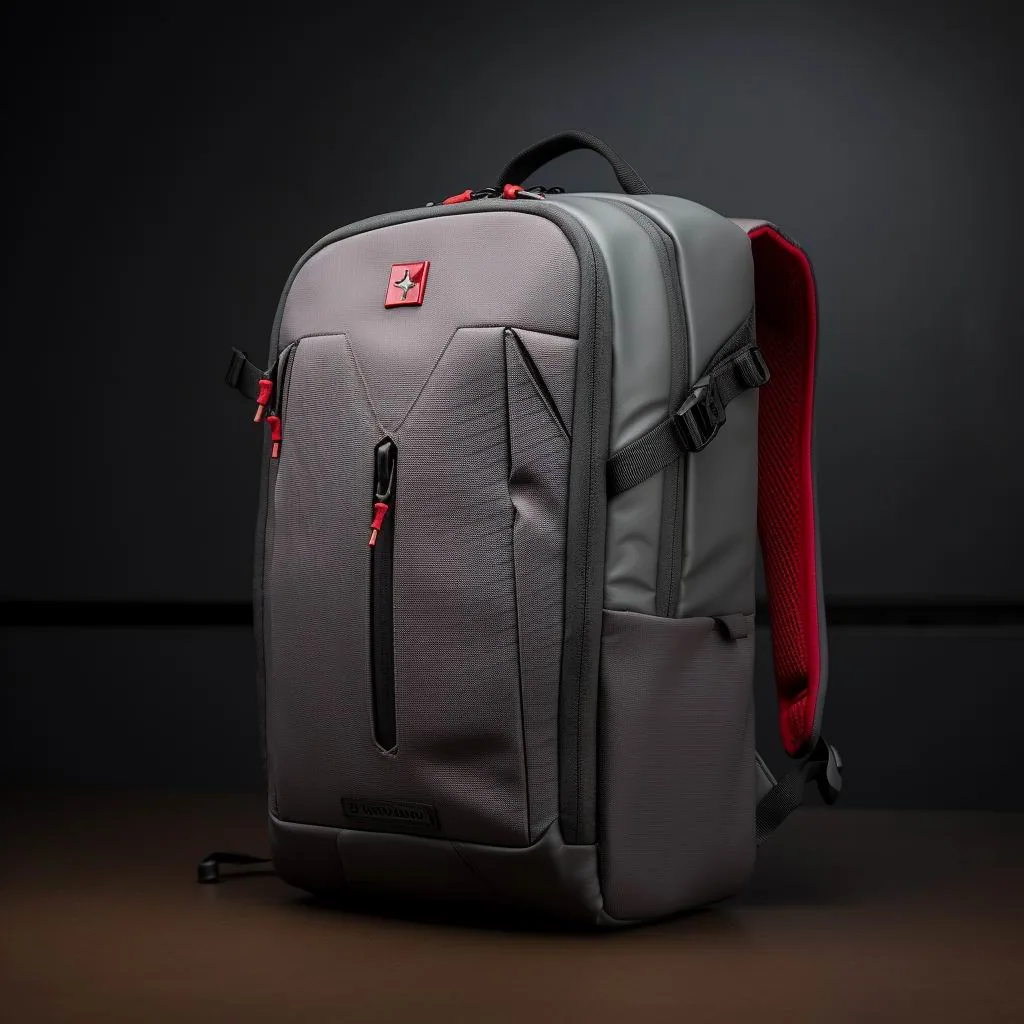
Backpack Size Chart in CM: The Direct Answer
A useful size chart does two things: it gives you the packed centimetre dimensions that belong with each litre figure, and it tells you which torso and which load that combination suits. Most charts stop at the first job, which is why buyers end up with a bag that is the right volume and the wrong shape. The three dimensions matter more than the litre figure, because every real constraint in Britain is a dimension: a 300 mm locker, a 200 mm rack, a 55 cm airline gauge, a 50 cm back.
The single most useful fact on this page is the conversion. A backpack is not a box, so its stated volume is smaller than the box that contains it. Empirically, the bounding box of a mainstream soft pack runs about 18 per cent larger than the measured internal volume, because corners are rounded, panels curve and padding occupies space. That gives a working rule: multiply litres by 1,000, multiply again by 1.18, and you have the bounding box in cubic centimetres. Split that using a shape ratio and you have three dimensions within about 10 mm of reality.
For a 20 L daypack the arithmetic gives roughly 45 x 29 x 18 cm, which is exactly what a real 20 L daypack measures. For a 25 L travel pack it gives about 49 x 30 x 20 cm, and for a 40 L hiking pack about 59 x 34 x 24 cm. Those three results are the backbone of the chart below, and they are why a chart built from real measurements looks different from one built by dividing a number by three.
- 10 to 14 L: a child's school bag or a minimal city pouch, about 38 x 25 x 14 cm
- 15 to 24 L: the everyday working range for British commuters and sixth-formers
- 25 to 34 L: short trips, gym-plus-work days and one-bag travel
- 35 to 50 L: overnight hill trips and four-night travel
- 50 L and above: expedition and long-trail use, where the harness rather than the volume governs
Key Figures at a Glance
The chart below is built from measured packs rather than from category averages. Dimensions are packed external figures in centimetres, weights are empty weights in grammes or kilogrammes, and the torso column gives the back length each band is normally built to suit.
| Volume band | Packed dimensions (cm) | Empty weight | Torso range | Best use |
|---|---|---|---|---|
| 10 to 14 L | 38 x 25 x 14 | 550 to 800 g | 38 to 44 cm | Primary school, minimal city carry |
| 15 to 19 L | 43 x 27 x 16 | 780 g to 1.05 kg | 44 to 48 cm | Light commute, 13-inch laptop only |
| 20 to 24 L | 46 x 29 x 18 | 950 g to 1.30 kg | 46 to 50 cm | Everyday work, sixth form, one-night trips |
| 25 to 29 L | 49 x 30 x 20 | 1.10 to 1.45 kg | 46 to 52 cm | Short trips, gym plus work |
| 30 to 34 L | 52 x 32 x 21 | 1.25 to 1.60 kg | 47 to 52 cm | Two-night travel, day hiking |
| 35 to 40 L | 55 x 33 x 23 | 1.40 to 1.85 kg | 48 to 54 cm | Three to four nights, summer camping |
| 45 to 50 L | 60 x 34 x 25 | 1.60 to 2.05 kg | 48 to 56 cm | Multi-day trails, winter hill trips |
| 55 to 65 L | 66 x 36 x 28 | 1.90 to 2.50 kg | 50 to 58 cm | Expedition and long-distance trails |
Read down the table if you know the volume you want, and read up it if you know the dimension you have to fit. The two directions give different answers surprisingly often, which is the point: a buyer who needs 30 L and a buyer who needs a 30 cm wide bag are frequently looking at different rows, and the dimension should win.
The torso column is the one most often ignored and it is the one that decides comfort. A 50 cm tall pack on a 46 cm torso overhangs by 40 mm, which pulls the shoulders backwards on stairs and puts the hip belt on the waist rather than the hip bones. Measure once from the seventh cervical vertebra to the top of the hip bones, then buy the row whose torso range contains your figure.
How to Read a Size Chart Properly
Four conventions separate a chart you can use from one you cannot. The first is whether the dimensions are empty or packed. A soft pack grows by 15 to 25 mm in width and 25 to 30 mm in depth when filled, and height barely changes, so a chart that quotes empty figures will always suggest one band too large. Assume packed unless the chart says otherwise, and if it does not say, add 20 mm to width and 25 mm to depth.
The second convention is whether external pockets count. A side bottle pocket can add 20 to 30 mm to the stated width and is frequently excluded from the figure. For a locker or a desk gap, the pocket counts; for an airline sizer it also counts. Ask, and if the seller cannot answer, measure the widest point yourself rather than trusting the middle of the pack.
The third convention is which dimension is which. Height is unambiguous, width is the horizontal measurement across the widest point, and depth is the front-to-back measurement at the deepest point, which is usually near the base rather than at the top. Charts that list depth but mean the flat panel width are common in this trade, and the error is typically 30 to 50 mm.
The fourth convention is the weight basis. Empty weight should include the shoulder straps and any included rain cover, and should exclude removable packing cubes. A 1.4 kg pack with a 180 g cover inside it is a 1.22 kg pack, and that difference matters when you are comparing two rows. Weigh the bag yourself on a 20 kg luggage scale; it takes thirty seconds and it settles the question.
Volume, Shape and Real Dimensions
Volume and dimensions are linked through shape, and shape is a design decision rather than a consequence of capacity. Three ratios describe almost every pack on the market. A daypack runs about 1.55 : 1 : 0.62 for height, width and depth. A travel pack runs about 1.65 : 1 : 0.68, being taller and deeper because it is carried through airports rather than through crowds. A hiking pack runs about 1.75 : 1 : 0.72, being tallest and narrowest of the three so it clears rock and turnstiles.
Because the ratios differ, the same litres produce very different rectangles. Thirty litres in a daypack ratio gives roughly 48 x 31 x 19 cm; thirty litres in a hiking ratio gives about 51 x 29 x 21 cm. The hiking bag is 30 mm narrower and 30 mm taller, and it will fit a locker the travel bag will not. This is the whole argument for reading dimensions rather than litres, and it is the reason two charts can both be correct and still disagree.
Padding and structure consume the difference between the bounding box and the usable volume. A suspended laptop sleeve with foam on both faces can take 1.5 L. A moulded back panel with an air channel takes another 1 to 2 L and adds 20 mm of depth. A structured base takes 0.5 to 1 L. Together, those three features routinely remove 3 to 4 L from a 30 L bag, which is why a lightly featured 28 L can out-pack a heavily featured 32 L.
- Convert litres to a bounding box: litres x 1,000 x 1.18
- Split by shape ratio: daypack 1.55 : 1 : 0.62, travel 1.65 : 1 : 0.68, hiking 1.75 : 1 : 0.72
- Expect the result to land within about 10 mm of a real pack in the same category
- Treat any bag with a moulded back panel as 20 mm deeper than the formula suggests
How to Measure and Check These Numbers
Three tools and ten minutes are enough. A rigid steel rule or a builder's square, a 20 kg luggage scale, and the contents you actually carry. Pack the bag as you would on an ordinary day, stand it upright on a flat floor against a wall, and measure height to the highest point, width across the widest point and depth at the deepest point, which is normally near the base.
Record all three to the nearest 5 mm, rounding up. Then empty the bag, measure again and note the difference; that difference is your compression margin and it tells you how much you can recover when a gap is tight. On a bag whose contents are soft it is 25 to 40 mm of width; on one holding a laptop in a hard sleeve and a lunch box it is under 10 mm.
To check a chart against a real bag, work the arithmetic backwards. Multiply the three packed dimensions together to get the bounding box in cubic centimetres, divide by 1.18, and divide by 1,000. If the answer is close to the stated volume, the chart is honest. If the answer is 20 per cent higher than the stated volume, the seller is quoting a bounding-box figure as if it were measured capacity, and every litre claim on that listing should be treated with suspicion.
- Measure packed, never empty, and round every figure up to the nearest 5 mm
- Weigh on a luggage scale with the straps attached and removable cubes out
- Check the widest point including bottle pockets, not the width of the main panel
- Write the three numbers down before you read another review
Fit, Comfort and Load Implications
Dimensions decide comfort through two mechanisms: how far the load sits from the spine, and whether the pack fits the torso. Depth is the first mechanism. A pack 25 cm deep with a moulded back panel places its contents further from the spine than a 20 cm pack with a flat panel, and at 8 kg that difference is felt as a steady backward pull. Tall and narrow, close to the back, is the comfortable shape; short and deep is the uncomfortable one.
Height is the second mechanism and it is bounded by the torso. Most British men measure 46 to 52 cm from the seventh cervical vertebra to the top of the hip bones, and the pack should sit inside that range. A pack taller than the torso overhangs and pulls backward; one much shorter than the torso leaves the hip belt unable to reach the iliac crest, so the shoulders carry everything.
Load weight interacts with volume through density. A 24 L bag filled with a laptop, a bottle and a lunch box weighs about 4.3 kg, while the same bag filled with clothing weighs under 2 kg. The comfortable ceiling is 10 to 15 per cent of body weight, which is 7.5 kg for a 75 kg adult and about 4.5 kg for a 45 kg pupil, and that ceiling arrives long before the volume runs out in most everyday bands.
Harness specification should follow the band. Under 5 kg, 45 to 55 mm straps are fine. From 5 to 8 kg you want 55 to 65 mm with 8 to 10 mm of closed-cell foam and a sternum strap. Above 8 kg a padded hip belt becomes necessary, and above 12 kg load lifters are required. Buying a bigger band without upgrading the harness is the most common way to end up with a bag that is technically large enough and physically uncomfortable.
UK Scenarios: Putting the Numbers to Work
Scenario one: a sixth-former needing two A4 folders, a 13-inch laptop and a PE kit twice a week, with a locker at 300 mm. The folders are 320 x 250 x 50 mm each and the trainers add 3.7 L, so the real requirement is about 26 L with a width under 28 cm. The chart offers 25 to 29 L at 49 x 30 x 20 cm, which is 20 mm too wide; the answer is a 24 L at 46 x 29 x 18 cm plus a separate small kit bag on PE days.
Scenario two: a commuter on the Elizabeth line carrying a 14-inch laptop, a packed lunch and a 750 ml bottle, about 4.4 kg, needing the bag to sit on a table and to clear a crowded aisle. The chart points to 20 to 24 L at 46 x 29 x 18 cm. That is 20 mm narrower than the next band and clears a carriage aisle without catching, and it is still large enough for lunch.
Scenario three: a buyer flying easyJet to Barcelona for three nights in September with hand luggage only. The cabin allowance is 45 x 36 x 20 cm for the small bag and 56 x 45 x 25 cm for the cabin bag. The chart gives 30 to 34 L at 52 x 32 x 21 cm, which fits the larger allowance with 30 mm to spare, and is the largest band that does. A 35 to 40 L bag at 55 x 33 x 23 cm also fits but is 40 mm closer to the limit and more likely to be measured.
Scenario four: a hill walker doing a June weekend in the Lakes with a down bag and a one-person tent, needing about 31 L of kit and a 47 cm torso. The chart gives 30 to 34 L at 52 x 32 x 21 cm in a daypack ratio, but a hiking ratio at the same volume gives about 51 x 29 x 21 cm, which is 30 mm narrower and clears scrambling ground better. Same litres, different rectangle, better outcome.
Testing Standards and Bulk Custom Orders
For a bulk buyer the chart becomes a specification. State capacity by 20 mm block fill with a tolerance of plus or minus 5 per cent, state packed external dimensions in millimetres with a tolerance of plus or minus 10 mm, and state whether external pockets are included in the width. Those three clauses remove most of the disputes that follow a first shipment.
Four checks enforce it. Measure ten units drawn from at least two cartons and plot the spread against the target. Load each unit to the agreed weight and re-measure, because a pattern that measures correctly empty can bulge when full. Weigh ten units and permit plus or minus 8 per cent variance against the approved sample. And check the anchor positions of straps and buckles against the approved pattern within 3 mm, since a strap root 15 mm out of place changes how the bag sits regardless of its dimensions.
Inspection is set at AQL 2.5 under ISO 2859-1, with the attribute plan defined in ISO 2859-1. Dimensional and furniture references are published through BSI, and where an airline gauge forms part of the brief, cabin baggage guidance from IATA is the reference operators nominally align to.
Wholesale and private-label terms do not move between programmes: MOQ 500 pcs per style and colourway, samples in 6–10 working days (12–15 for moulded panels, welded seams or custom hardware), production in 35–50 days once the sample is signed off, inspection at AQL 2.5 under ISO 2859-1, payment T/T 30/70, delivery FOB Xiamen. We work as a sourcing and programme-management company: we develop and specify, our production partners build, and inspection stays with us.
Behind those figures sit partner facilities holding 4,950 m² of SGS-verified production floor, 7 production lines, 149 machines and 137 colleagues, producing around 200,000 pieces a month. QUANZHOU JUNYUAN BAGS was founded in 2014 by a team that has been in the trade since 2004. Write to service@junyuanbags.com or message wa.me/8617750020688.
One regulatory point applies to packs sold in Britain. Textile goods must carry fibre-composition labelling, and any integrated electrical component needs UKCA marking before sale; the requirements are published on gov.uk. Where a capacity figure is used in advertising, UK trading standards expects the claim to be substantiable, so the measurement method should be documented rather than assumed.
UK Price and Value by Size Band
Price rises with volume but not in proportion to it, because material is a modest part of the cost. Moving from a 20 L to a 40 L pattern adds roughly 40 to 50 per cent to material cost, so a larger bag is often better value per litre and worse value per journey if it is never filled.
Three retail bands describe the market. From £35 to £60 you get a small or mid-size bag with basic coil zips, minimal back structure and no documented tolerances. From £65 to £130 you get controlled patterns, a stated packed dimension and usually a one-year warranty. From £135 to £220 you get tolerances near plus or minus 8 mm, a measurement report and two to five years of cover.
Cost per use favours the middle band for anything used daily. A £95 bag used across three years of working days costs around 13p per use; add £12 for a repair and £10 for care products and it is about 16p. A £45 bag replaced twice over the same period costs more in money and much more in inconvenience, because each replacement restarts the sizing problem.
Common Buying Mistakes to Avoid
The first is buying to litres when a dimension governs the decision. A locker, a rack, a desk gap and an airline sizer are all measured in millimetres, and none of them cares about capacity. Read across the chart for the dimensions at your volume, then check the binding one.
The second is treating empty dimensions as packed ones. Width grows by 15 to 25 mm and depth by 25 to 30 mm once a bag is filled. A chart row that looks comfortable empty can be 20 mm over the limit packed, and you will find out on the first morning.
The third is ignoring torso length. A 55 cm pack on a 47 cm torso overhangs by 80 mm and pulls the shoulders backwards on stairs. Measure from the seventh cervical vertebra to the top of the hip bones and buy the row whose torso range contains the figure.
The fourth is assuming the chart describes your bag. Charts describe averages; individual designs vary by 8 to 14 per cent on dimensions. Use the chart to find the band, then read the listing for the specific bag, and then measure it yourself when it arrives within the returns window.
The fifth is sizing up for a trip that happens once a year. A bag bought for a five-night holiday and used for a commute the rest of the time is wrong for 240 days to be right for five. Buy the everyday band and hire, borrow or use a hold bag for the exception.
Final Verdict: Choosing the Right Band
The right band is the smallest one that holds your ordinary load with about 20 per cent spare and passes the tightest dimension in your week. Everything else is refinement.
- 15 to 19 L: light commuting and primary carriers, laptop only, no lunch
- 20 to 24 L: the British default for work, sixth form and one-night trips
- 25 to 29 L: gym plus work, and two-night travel under a cabin allowance
- 30 to 34 L: three-night travel and summer day hiking
- 35 to 50 L and above: trails and multi-day trips, where the harness governs rather than the chart
If two adjacent rows both satisfy your needs, take the smaller one. The smaller bag is lighter, narrower, less likely to be overfilled and more likely to fit a locker, a table and an overhead rack. The occasional overflow is manageable with a compression strap or a packable daypack; a bag that is too large is wrong every single day of the year.
Frequently Asked Questions
What backpack size chart should I use as a starting point?
Start from 20 to 24 L at about 46 x 29 x 18 cm packed, which suits everyday British work, sixth form and one-night trips.
Adjust up for gym kit or overnight travel and down if a 300 mm locker or a crowded commute governs the decision.
How do I measure these figures accurately at home?
Pack the bag as you normally would, stand it against a wall on a flat floor, and measure height, width and depth with a rigid steel rule, rounding each up to the nearest 5 mm.
Weigh it on a 20 kg luggage scale with the straps attached and removable cubes removed.
Which of these figures suits a 173 cm British man?
A 173 cm man usually measures 47 to 50 cm from the seventh cervical vertebra to the top of the hip bones, so a pack of 46 to 50 cm tall with a torso range covering his measurement is correct.
That typically means 20 to 29 L, and a width no greater than 30 to 31 cm.
How much does the figure change when the bag is packed?
Width typically grows by 15 to 25 mm, depth by 25 to 30 mm, and height barely changes at all.
Compression straps recover most of that on a soft bag, but a laptop in a hard sleeve or a rigid lunch box will not compress.
What tolerance should I allow when buying to a limit?
Allow 20 mm under any aperture you have measured, plus the normal production tolerance of plus or minus 10 mm on quoted dimensions.
So a 300 mm locker calls for a pack quoted at no more than 28 cm packed.
How does this relate to comfort and safe load?
Depth places the load away from the spine and height must fit the torso, so a tall, narrow, shallow pack is more comfortable than a short, wide, deep one at the same volume.
Keep total load at 10 to 15 per cent of body weight, which is 7.5 kg for a 75 kg adult.
What does this specification usually cost in the UK?
From £65 to £130 buys controlled patterns, a stated packed dimension and a one-year warranty; from £135 to £220 buys tighter tolerances and a measurement report.
Below £60 there is rarely any documented tolerance, so the quoted dimensions may vary by 15 mm or more.
Can I convert litres into centimetres reliably at home?
Yes, to within about 10 mm: multiply litres by 1,000, multiply by 1.18 to get the bounding box, then split by shape ratio.
Use 1.55 : 1 : 0.62 for a daypack, 1.65 : 1 : 0.68 for a travel pack and 1.75 : 1 : 0.72 for a hiking pack, and add 20 mm of depth for a moulded back panel.
Do these figures differ between UK and EU suppliers?
The measurements themselves do not differ, but the discipline of quoting them does: some EU suppliers still use dimensional multiplication, which runs 10 to 14 per cent higher than block fill.
Ask which method produced the figure and treat a bare litre claim as incomplete.
How do I check the figure before ordering online?
Ask for packed external dimensions in millimetres, the capacity measurement method and whether external pockets are counted in the width.
When it arrives, measure it again inside the returns period; using a British 30-day return right beats arguing a warranty claim.
Can I specify a custom backpack size chart for a bulk order?
Yes. State capacity by 20 mm block fill at plus or minus 5 per cent, packed dimensions at plus or minus 10 mm, and whether pockets are counted, then approve a sealed sample before production.
Terms are MOQ 500 pcs per style and colourway, sampling 6–10 working days, bulk production 35–50 days, AQL 2.5 under ISO 2859-1, T/T 30/70, FOB Xiamen.
What is the most common mistake with this backpack size chart?
Reading the litre column and ignoring the dimensions, or reading empty dimensions and treating them as packed ones.
Both errors push the buyer one band too large, which is the most common cause of returns in this category.
How do I convert litres into centimetres for a backpack?
Multiply litres by 1,000 and then by 1.18 to get the bounding-box volume in cubic centimetres, because a soft pack's box runs about 18 per cent larger than its measured volume.
Split that volume using a shape ratio: a daypack at 1.55 : 1 : 0.62 makes 20 L roughly 45 x 29 x 18 cm.