Table of Contents
- Backpack vs Sling Bag for City Carry: The Direct Answer
- Key Differences at a Glance
- Capacity, Dimensions and Packing Efficiency
- Comfort, Weight and Carry Dynamics
- Materials, Weather Resistance and Durability
- Access, Organisation and Security
- UK Price, Value and Cost per Use
- Which Works Better in Real British Scenarios?
- Testing Standards and Bulk Custom Orders
- Common Buying Mistakes to Avoid
- Final Verdict: Who Should Choose Each?
- Frequently Asked Questions
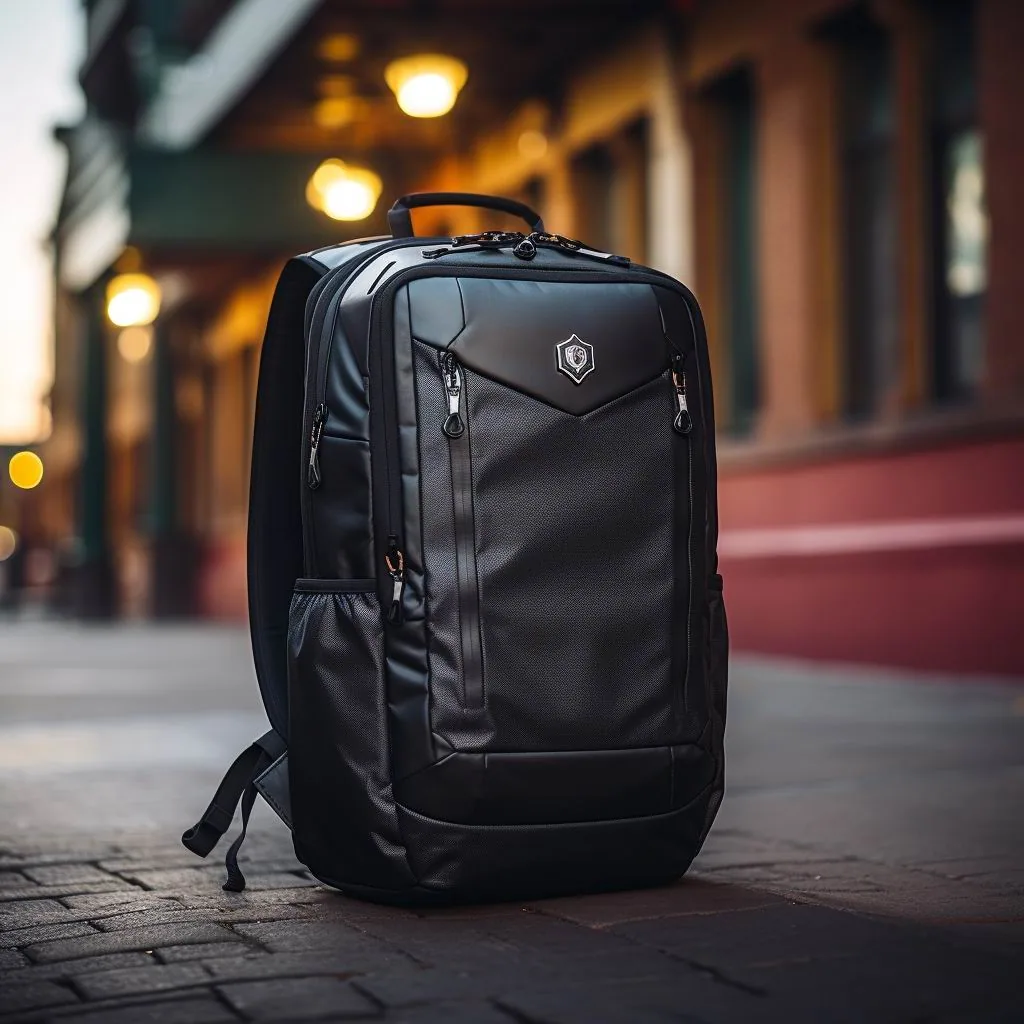
Backpack vs Sling Bag for City Carry: The Direct Answer
A sling is one strap running diagonally across the chest with the body of the bag sitting somewhere between your shoulder blades and your hip, depending on how tightly you have adjusted it. That single design decision buys you the fastest access of any carry format and costs you every gram of load tolerance you had. Used within its limits it is the best possible companion for a short urban day; used outside them it is a one-shoulder injury waiting to appear at the end of a fortnight.
The honest dividing line is two kilograms and ninety minutes. Keep the contents near two kilograms and sling it for a morning, an errand run or an evening out, and nothing improves on it: one motion brings every pocket into view without the bag touching the ground. Push towards four kilograms or wear it for a full working day and the physics turn against you, because all of that mass sits on one trapezius while the muscles down the other side of your torso brace against it, and the reaction force through the loaded shoulder ends up noticeably above the weight of the bag itself.
- Access: rotating the body to the front takes roughly one and a half seconds with the bag never leaving your body, against something like eight to twelve seconds to take off a two-strap pack, find a place to put it and open it.
- Ceiling: three kilograms is the practical maximum for continuous wear, and above that the strap digs, the body swings with your gait and your shoulder lifts involuntarily on that side.
- Capacity: usable slings run from about 4 L to 9 L, which comfortably swallows a tablet, a 500 ml bottle, a compact camera and a light layer but not a lever-arch file, a pair of trainers or a full 14-inch laptop.
- Failure point: almost every sling that fails, fails at the two points where the strap webbing meets the body panels, because those anchors take the whole load rather than a share of it.
- Best day: a twelve-hour city day with three café stops, two ticket barriers and no commute longer than twenty minutes.
There is also a second-order difference that British buyers notice within days. A sling is worn over your coat, and in a climate where an outer layer is in play from October to April, a bag that lives outside the coat is a bag you can open without unzipping anything, while a backpack worn under a coat hides its pockets behind two layers of fabric and a hood. Conversely, a sling over a winter coat tends to slide off a smooth shell shoulder, and the friction pads that solve this make a visible mark on wool.
If you are trying to decide between them in a shop, do not weigh the decision in litres. Put two kilograms in the sling, rotate it to the front five times, then walk up one flight of stairs with it loaded. If your shoulder lifts or your elbow wings outwards to hold the strap on, the format is wrong for you regardless of how good it looks.
Key Differences at a Glance
Both columns below describe what a British high-street buyer can actually walk out with today. The figures are mid-range rather than best-case, and the load ceiling row in particular is deliberately conservative, because it is the row that determines whether you still find the bag comfortable in month three.
| Attribute | Two-strap city backpack (20–28 L) | Single-strap sling (5–9 L) |
|---|---|---|
| Typical body size | 44–48 cm tall, 30–33 cm wide, 16–21 cm deep | 36–45 cm tall, 18–25 cm wide, 8–14 cm deep |
| Empty weight | 850–1,200 g | 350–750 g |
| Working load ceiling | 6–8 kg | 2.5–3.5 kg |
| Time to reach a phone | 8–12 s including removal | 1.2–2.5 s with one rotation |
| Largest device carried | 16-inch laptop in a suspended sleeve | 11-inch tablet, occasionally a 13-inch ultrabook |
| Load path | symmetrical across both shoulders | one trapezius plus bracing through the contralateral torso |
| Typical British price | £55–£150 | £28–£95 |
| Safe continuous wear | several hours | 60–90 minutes before switching shoulders |
Read down the table and one thing becomes obvious: the sling wins decisively on access and mass, and loses just as decisively on everything that involves sustained weight. That is not a flaw in the design so much as the direct consequence of carrying six kilograms on one strap instead of two.
Capacity, Dimensions and Packing Efficiency
Sling capacities are quoted honestly more often than backpack capacities, largely because there is nothing to hide: 5 L really is 5 L of soft goods, and the bag cannot be sold on aspirational volume because the shape will not take anything rigid. What those litres actually hold is the interesting part. A well-designed 7 L sling takes a compact mirrorless camera body with a lens attached, a 500 ml bottle upright in a gusseted side pocket, a packable shell compressed into a 1.2 L sack, a cap, a phone, a card holder, sunglasses in a lined top pocket and a small notebook.
The items that break a sling are specific and worth naming, because every one of them is common in British working life. A lever-arch file will not go in. A pair of size 9 trainers will technically go in and will destroy the bag's shape and your shoulder. A Tupperware lunch box needs 1.4 L and a flat floor to sit on, neither of which a curved sling body provides. A 750 ml bottle will fit lengthways but pulls the bag off your back every time you lean forward. And a 14-inch laptop, at roughly 32 by 22 cm, needs a diagonal dimension that no comfortable sling body offers; several brands claim 13-inch compatibility, which is true for a 30 by 20 cm ultrabook and completely untrue for a 13-inch laptop with a bezel.
Depth is the dimension that governs whether a sling works on the street. Bodies deeper than about 14 cm start projecting behind you when worn on the back, which means you knock people in queues and catch door frames, and that is also the depth at which the rotating motion stops being a flick of the strap and becomes a two-handed manoeuvre. Deeper than that and you have bought a small backpack with one strap, which is the worst of both designs.
- A 5 L sling is the right size for a wallet, phone, keys, sunglasses and one small extra layer; it disappears under a coat and or at venues where bag checks apply.
- 7 L is the sweet spot for camera days and city weekends, comfortably taking a compact camera, kit for the commute home and a bottle.
- 9 L slings exist and are pushing the format beyond what one shoulder should carry; buyers usually regret them unless every item inside is genuinely soft and light.
- Below 4 L you are in utility-pouch territory: fine for a festival or a dog walk, useless for any working day.
Comfort, Weight and Carry Dynamics
Comfort with a single strap is not a question of padding quantity; it is a question of whether the load can be kept still. Backpacks tolerate movement because two contact points brace each other. Slings have one, and everything the bag does in response to your stride has to be resisted by your own muscles. The three variables that matter are strap width, pad position and how tight you can wear it without cutting your circulation.
Strap width is the first of these and the easiest to specify. Anything below 38 mm webbing concentrates pressure into the trapezius and produces that familiar burning line across the top of the shoulder within thirty minutes. Around 45 to 50 mm is comfortable up to three kilograms, and anything wider looks increasingly like a courier bag. The pad itself should be at least 150 mm long and 70 mm wide, and critically it should sit where the strap crosses the top of the shoulder rather than being free to slide, because a pad that migrates is a pad that is not working. Look for a keeper loop or a slightly higher-friction backing fabric.
Beyond that there are two hardware details that separate good slings from cheap ones. The first is the slider: a polished metal or acetal adjuster holds position under load, while a moulded plastic one creeps steadily, and a bag you have to re-tighten every five minutes is a bag you will stop wearing. Test this by loading 3 kg and walking ten minutes; if the strap has lengthened by more than about 15 mm of apparent travel, reject it. The second is the rotation anchor, usually a single pivot point or a webbing loop at the bottom corner of the body. A ball-and-socket or swivel fitting rotates cleanly; a fixed webbing loop twists the strap, and that twist propagates up to your shoulder within twenty minutes.
Anyone carrying repeatedly would do well to read the structure the Health and Safety Executive applies to upper-limb and back risk. Its manual handling assessment approach is built for workplaces, but the same three factors of load, frequency and posture apply precisely to putting every kilogram of your day through one shoulder five days a week. The Health and Safety Executive guidance on musculoskeletal risk supports exactly this approach: rotate shoulders deliberately every hour, or better still, own both formats and choose by the day's weight.
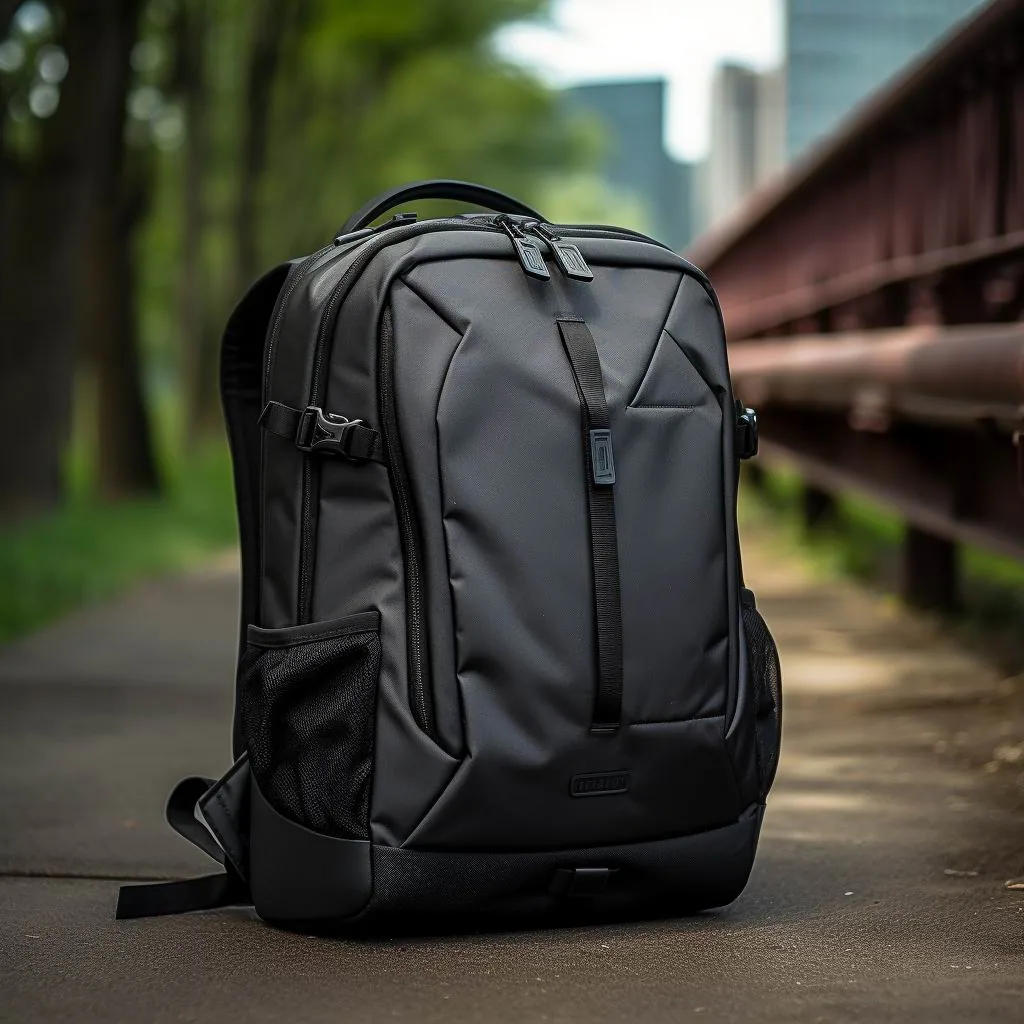
Materials, Weather Resistance and Durability
Sling construction differs from backpack construction in one important respect: the structural load goes through far fewer components, so those components are heavier-duty than you would expect at the price. Where a 26 L backpack spreads its load across two 25 mm strap webs and four anchor points, a sling puts everything into one strap and two anchors, and the fabric and thread around those anchors is therefore the whole story.
Body fabrics are typically 420D to 630D nylon or polyester on mid-priced slings, with 500D or 1000D Cordura-branded nylon on anything aimed at photographers or cyclists. Coated fabrics are graded by water column, and for this format the realistic targets are modest: 1,200 to 1,500 mm handles a ten-minute shower in a Manchester drizzle, and 3,000 mm with taped seams is ample for a day outdoors. Anything higher is being bought for marketing reasons, because the bag will never see prolonged load against wet ground in the way a hiking pack does.
The failure hierarchy in this category is unusually predictable. First to go is the strap webbing itself, usually where it passes through the slider, since that is where abrasion and compression coincide; the published method for checking it is the webbing breaking-strength test maintained by ASTM. Second is the stitching at the two anchors, which should be a box-X or bartacked pattern covering at least 30 by 30 mm on both faces. Third are the buckles, which should survive a static pull comfortably above the heaviest load the bag will carry. Fourth is the lining, which on a sling gets abraded by keys and coins far more than on a backpack, because everything in an undivided body rubs together.
- Prefer a welded or taped base panel to a sewn one; the base of a sling is dragged across bar tops and pavements more often than any other surface.
- Ask whether the water-resistant coating sits on the inside face, where it is protected from abrasion, rather than on the outside where it wears off within two winters.
- Check the lining colour: a pale interior is genuinely useful in a 6 L undivided compartment because black keys vanish against black fabric.
- Metal hardware costs a few pounds more per unit and eliminates the single most common warranty claim in the category, cracked acetal buckles.
Access, Organisation and Security
This is where the sling earns its existence. The rotation motion brings the entire front face of the bag to your hands, all your pockets stay in view, and critically the bag never touches anything — not a pavement, not a pub floor, not a train toilet floor. Compare that with the backpack ritual on a Central line platform: strap off one shoulder, swing round, find a surface, unzip, locate the item, rezip, swing back, locate the strap. Twelve seconds minimum, and genuinely unpleasant in the rain.
The security maths are less obvious than most buyers assume. Worn on the back, a sling is more vulnerable than a backpack, because a single quick tug on the strap or a slash through one piece of webbing removes the whole bag, and you have no second contact point pulling back against the thief. Worn on the front with a hand resting on the body, it is considerably safer than a backpack, because a pickpocket has to work against your own arm and everything is visible. The practical rule is therefore to wear it where your context demands: front in crowds, ticket queues and stations; back while walking open streets or riding.
Organisation should be minimal and deliberate. Because the contents of a sling rotate through ninety degrees several times a day, anything loose ends up at the bottom, so internal dividers earn their keep far more here than in a backpack. What works is three zones: one lined slip pocket against the body face for a phone and cards, one padded divider for the tablet or camera body, and one dump zone. What does not work is eight elastic loops, four slip pockets and a key clip, because in a 7 L body they overlap and steal each other's volume.
One urban detail deserves a mention because it affects the daily experience more than any specification. Magnetic or magnetic-assisted closures are quick and pleasing, but a strong magnet held within 30 mm of a contactless card will eventually corrupt it, so keep any magnetic flap closure away from card slots. Zipped closures with a locking slider are the alternative and are better on a night out, slower by perhaps half a second per opening.
UK Price, Value and Cost per Use
British pricing splits fairly cleanly. Below £30 you get fashion shapes with a single thin webbing strap, no padding to speak of and hardware that will fail within a season; these are gifts and impulse buys, not equipment. From £35 to £70 you get the serious entry level: 45 mm webbing, a decent pad, coated fabric, a reasonable swivel anchor and zips that will last. From £70 to £95 you get photography-grade construction, weather-sealed zips, structured dividers and usually a longer warranty.
Value here should be measured against the third usage model rather than either of the obvious two. A sling is rarely a primary bag; it is either the light-day alternative that stops you carrying 26 L to a coffee shop, or the secondary bag that rides alongside a roller case on a city break. Judged the first way it looks expensive at £65 for something used twice a week. Judged the second way it is buying back the forty minutes you would otherwise spend emptying pockets into a security tray, and on that basis a good sling pays for itself inside three trips.
- £28–£45: adequate for occasional and warm-weather use; check the slider for creep before you commit, since this is where the savings show up.
- £45–£75: the right band for most buyers, covering tablet protection, weather sealed zips and hardware with a published breaking strength.
- £75–£110: photographer and commuter-cyclist territory, with genuine load-rated anchors and usually a five-year warranty from a brand with a UK distributor.
- Above £110: leather or technical shells bought for appearance; fine, but rarely a comfort or durability improvement over the £75 band.
Repairability is worth checking at the point of sale, because slings are repairable in a way few other bags are not: replacing webbing or stitching an anchor is straightforward for any cobbler with an industrial machine. Ask whether the strap is sewn in or riveted; riveted anchors at this size invite failure and are far harder to put right than a seam.
Which Works Better in Real British Scenarios?
Five situations cover most of what British city dwellers actually do with either format. Each is written with the real load and the real friction points rather than with a general impression.
Scenario one: the fifteen-minute walk and a single meeting
Contents: an iPad at 480 g, a notebook, a pen, a phone, a power bank at 220 g, an umbrella — about 1.6 kg total. The sling wins outright. Nothing in that load needs two straps, and being able to reach your pass at the barrier without stopping is worth more than capacity you are not using.
Scenario two: the full office day with a laptop
Contents: a 14-inch laptop, charger, lunch, bottle, documents — 4.5 to 5.5 kg. The backpack wins and it is not close. Taking five and a half kilograms on one shoulder for a twenty-minute walk each way produces elevated shoulder posture on one side by the end of week one, and physiotherapists in this country see a steady stream of exactly this complaint every September and January.
Scenario three: a photography day in a city centre
Contents: mirrorless body and lens at 900 g, a second small prime at 200 g, spare batteries, filters, water — around 2 kg, but needed every ninety seconds. This is the sling's home ground. The rotation access is genuinely faster than any backpack, and the bag goes through the pinch point at the front of a crowd much more politely than a second strap.
Scenario four: riding a bike across town
Below about 2 kg the sling works well and rotates forward neatly at lights. Above that it starts swinging with pedal strokes, and the strap crosses diagonally over the shoulder you are constantly checking over. Here a low-profile backpack designed for riding beats both alternatives, and it is worth being clear that neither format is the correct answer for the cycling portion of a mixed commute.
Scenario five: a city break with hand luggage only
The sling is the correct secondary bag and a poor primary one. It carries the documents, the tablet, the medication and the charging kit you need at 30,000 feet, while the main backpack goes into the overhead locker. Trying to do the whole trip in a 9 L sling means leaving things behind, and the compromise usually involves carrying a laptop loose in a sleeve under your arm.
| Situation | Load | Winner | Why |
|---|---|---|---|
| Short errand or café working session | 1.2–1.8 kg | Sling | Everything is reachable in under two seconds without putting it down |
| Standard office commute | 4.5–6 kg | Backpack | Load must be shared across both shoulders for twenty minutes at a time |
| Photography or camera day | 1.8–2.4 kg | Sling | Rotation access beats any two-strap layout for gear used constantly |
| Cycling leg of a commute | 1.5–2.5 kg | Neither | A riding-specific low-profile pack sits better under both |
| Weekend city break | 3–4 kg plus a main bag | Sling as a secondary | Keeps documents and devices with you at all times |
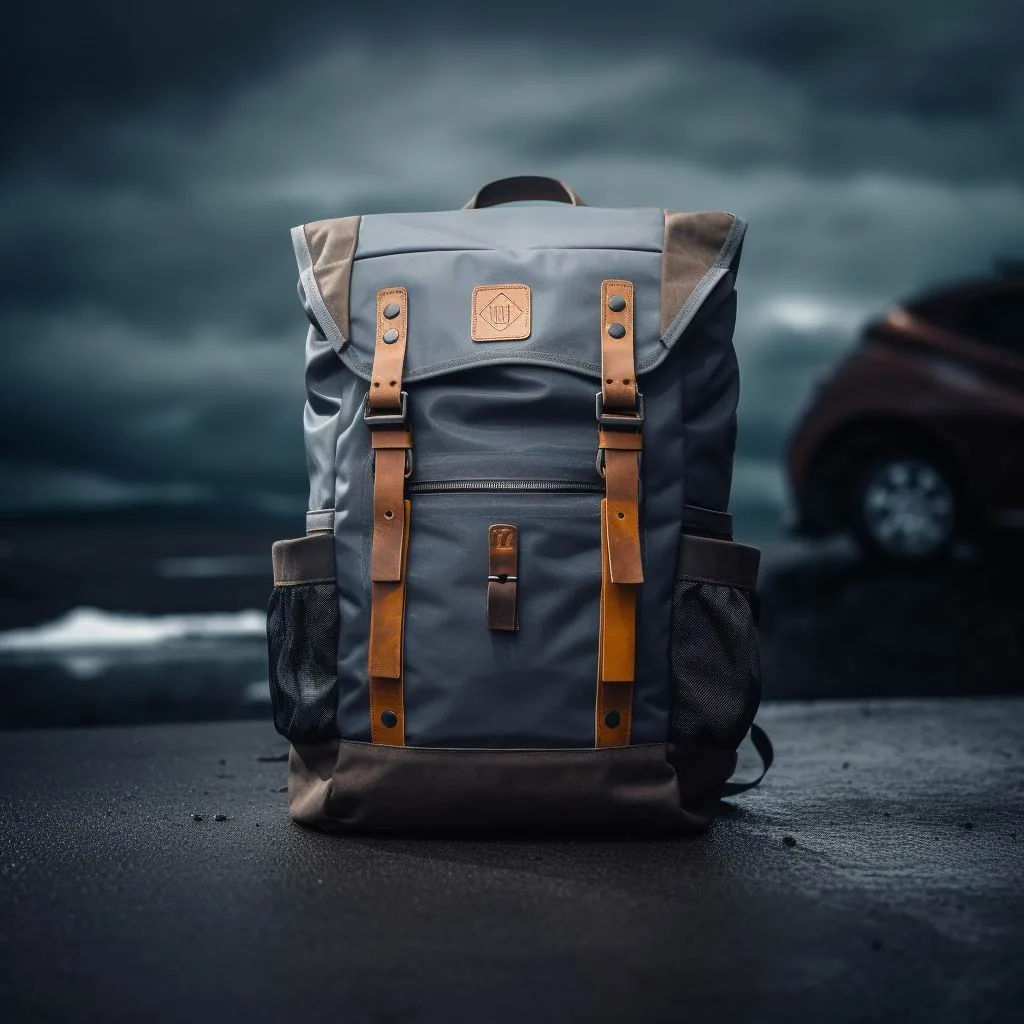
Testing Standards and Bulk Custom Orders
Sling-specific acceptance testing is unusual in this industry and it should not be, because the failure modes are single-point. Four checks will find almost everything. First, a static pull: load the body to three times its stated working load and hold for sixty seconds while suspended by the strap; unacceptable outcomes are any stitch popping, any audible crack from webbing, or webbing elongation beyond about 4 per cent. Second, a swing cycle: rotate a loaded bag from back to front two thousand times and inspect the swivel or webbing loop for fraying, since this is the motion that no other format imposes. Third, slider creep: load 3 kg, mark the strap, walk for ten minutes, and reject anything that has slipped more than 15 mm. Fourth, the drop: 300 mm onto a hard floor with 3 kg inside, then inspect the bag from the inside rather than the outside.
Where documentation matters, ask for the specific test methods. Breaking strength of the strap webbing should be evidenced against the relevant ASTM textile standard, and any generic reference to heavy-duty hardware without a Newton figure should be treated as decoration. For larger programmes, attribute sampling is set at AQL 2.5 under ISO 2859-1, and the plan itself is defined in the published ISO 2859-1 procedures; insisting that inspection sample from more than one carton position avoids the common problem of a defect hidden within a single production batch area.
Commercial terms for private-label slings follow the same template as everything else we run: MOQ 500 pcs per style and colourway, sampling in 6–10 working days (12–15 where a moulded component or a welded seam is involved), bulk production 35–50 days after sample sign-off, inspection at AQL 2.5 under ISO 2859-1, payment T/T 30/70, shipment FOB Xiamen. As a sourcing and programme-management partner, QUANZHOU JUNYUAN BAGS was founded in 2014 and has worked this market since 2004. Development, specification and inspection belong to our team; our production partners carry out the physical runs.
Those partners work across a 4,950 m² SGS-verified production floor with 7 production lines, 149 machines and 137 colleagues, at roughly 200,000 pieces monthly. Write to service@junyuanbags.com for specifications or reach us on WhatsApp at wa.me/8617750020688.
One compliance point applies specifically here: any sling supplied with an integrated power bank, solar panel or USB lead brings that component within scope of electrical product rules, and UKCA marking is required before placing it on the British market, with further detail in the government's UKCA marking guidance, and the importer named as UK responsible person on the packaging. Fibre-composition labelling applies to the textile element as it does to any other bag.
Common Buying Mistakes to Avoid
The mistakes below are peculiar to this comparison, and every one of them is visible in the first ten minutes of ownership if you know to look for it.
- Judging a sling empty. Its whole character changes once two kilograms goes in; always test loaded, and rotate it five times rather than once.
- Buying a 9 L body for a 5 L life. Larger slings encourage loads that no single strap should carry, and the extra depth projects behind you in queues.
- Ignoring the strap pad. Anything shorter than 150 mm will not stay over the top of your shoulder, and once it migrates the strap becomes a cord.
- Putting contactless cards next to a magnetic closure. Card failures of this kind are slow, intermittent and exasperating to diagnose.
- Wearing it on the back through a crowd. Until you rotate it to the front, you have made yourself the easiest target in the queue.
There is a sixth mistake that costs money rather than comfort: assuming a sling can replace a backpack entirely. Almost every buyer who tries ends up owning both, and starting with the sling means you will buy a backpack later for exactly the loads it cannot handle.
Final Verdict: Who Should Choose Each?
The sling is the right tool for people whose city day is light, frequent-stop and short. Photographers, surveyors doing site visits with a tablet, parents on school-run duty, urban cyclists under 2 kg, and anyone who has ever sworn at a backpack while trying to find a train pass at a barrier should own one.
The backpack remains the correct answer for everything involving more than about three kilograms, any walk longer than twenty minutes at each end, any laptop above 13 inches, and any single bag solution that has to work all week rather than just today.
- Choose the sling if your daily kit is under 2 kg and you value access above all other properties.
- Choose the backpack if a laptop, lunch or paperwork is involved, or if you care about your shoulders in five years' time.
- Own both and change by the day: rotating between two straps and one is better for your back than either format used exclusively.
- Avoid either if your commute includes fifteen minutes on a bike with more than 2.5 kg, where a riding-specific low-profile pack is the genuinely correct answer.
The least appreciated point in this whole comparison: the cheapest path to a better carry experience is not a £200 upgrade but a £55 sling bought alongside the backpack you already own, used three days a week, and emptied every Friday so nothing accumulates in it.
Frequently Asked Questions
Which is better, a backpack or sling bag, for daily use?
For most British weekdays the backpack, because most weekdays involve a laptop or lunch and therefore more than three kilograms. The sling is better only for genuinely light days.
A great many people end up owning both and choosing between them each morning on the basis of what that day holds.
How much capacity do I need when comparing these two options?
Slings work between 4 and 7 L; beyond about 7 L the depth starts projecting behind you and the load exceeds what one strap should carry.
Anything you would put in a bag larger than 9 L belongs on two shoulders.
What empty weight is reasonable for this type of backpack?
Between 350 and 750 g for a sling, which is lighter than a backpack simply because there is one strap instead of two and no back panel structure.
Spend any saving on strap width rather than on extra pockets.
Is a backpack more durable than a sling bag?
Broadly yes, because the load path is shared. A sling asks two webbing anchors to do everything, so those anchors and the webbing through the slider wear faster than equivalents on a two-strap bag.
Construction quality narrows the gap considerably, and any sling with bartacked anchors covering 30 by 30 mm will outlive a cheap backpack.
Can a sling bag protect a laptop during British commuting?
Only up to about 13 inches, and only in a padded divider rather than in the main compartment where it can twist. Anything larger than that will not fit through the body of a bag that sits comfortably on one strap.
If a 14-inch or 16-inch machine is part of your day, this format is not for you.
Which option handles persistent UK rain more reliably?
The sling has a small advantage because there is only one seam line across the top and the body usually sits against your torso, which acts as a second barrier. That said, the lining behind the strap anchors tends to wet through first.
At 1,200–1,500 mm of coating you get through a shower; add a cover if your day involves being outside for hours.
How much should British buyers pay for good quality?
Somewhere between £45 and £75 buys the serious version: 45 mm webbing, real padding, coated fabric, a swivel anchor and zips that last.
Below £30 the strap and hardware are decorative, and below that the bag will last a season of regular use at best.
What dimensions work best on trains and short flights?
A sling under 45 cm tall and 14 cm deep will not interfere with anybody on a train and fits inside or around every personal-item gauge used by UK carriers.
This is one of few categories where almost every product on the market passes the test, which is why regular wearers appreciate it.
Should I choose a backpack for loads above eight kilograms?
Yes, and well before eight kilograms. A sling should not carry more than roughly three kilograms continuously; a backpack handles six to eight comfortably with a good harness.
Above eight you want a hip belt as well, which neither of these formats normally offers.
Is a sling bag practical for mixed work and weekend use?
It is practical for the weekend and for light working days, but it cannot bridge both if your working day contains a laptop larger than 13 inches or any documents larger than A5.
Treat it as the supplement rather than the substitute.
How should bulk buyers specify these backpack designs?
Specify strap webbing width and breaking strength, pad length and position, anchor reinforcement size, swivel type, coated-fabric water column and body depth, and require a load test written into the specification rather than a sample photograph.
Insist on two sealed approval samples, one of which you destroy during testing.
Can both options pass useful durability and quality checks?
Yes, provided the checks are different. Slings need a swing-cycle and a slider-creep test that no backpack requires; backpacks need harness-level testing that slings do not.
Applying the wrong set is how weak products pass review.
Why does one shoulder ache after thirty minutes in a sling when the same weight feels fine in a backpack?
Because the load is not shared. One shoulder takes the full vertical force and the muscles down the opposite side of your torso brace against it, so the reaction force through the loaded trapezius exceeds the weight of the bag.
Switching shoulders on the hour, keeping the load under three kilograms and tightening the strap so the bag does not swing will all reduce it, but they will not eliminate the basic asymmetry.