Table of Contents
- What Is the Best Hiking Backpack for Men in the UK Right Now?
- Which Capacity Is Right for You: 25L, 40L, 55L or 75L?
- How to Measure Torso Length and Get the Right Men's Fit
- Best for Day Hikes: 20-35L Hiking Backpacks Compared
- Best for Weekends and Bothy Nights: 40-55L Packs Compared
- Best for Long-Distance Trails: 65-75L Expedition Packs
- Which Fabric Is Better: 210D Ripstop, 420D Nylon or 500D Cordura?
- British Weather: Hydrostatic Head, DWR and Rain Covers Explained
- Suspension, Load Transfer and Base Weight on UK Trails
- Trail-Tested: Lake District, Pennine Way and Snowdonia Routes
- What £60, £120 and £225 Buy You in Britain
- Care, Repairs and Warranty: Getting a Decade out of a Pack
- From One Pack to Five Hundred: MOQ, Sampling and AQL
- Frequently Asked Questions
What Is the Best Hiking Backpack for Men in the UK Right Now?
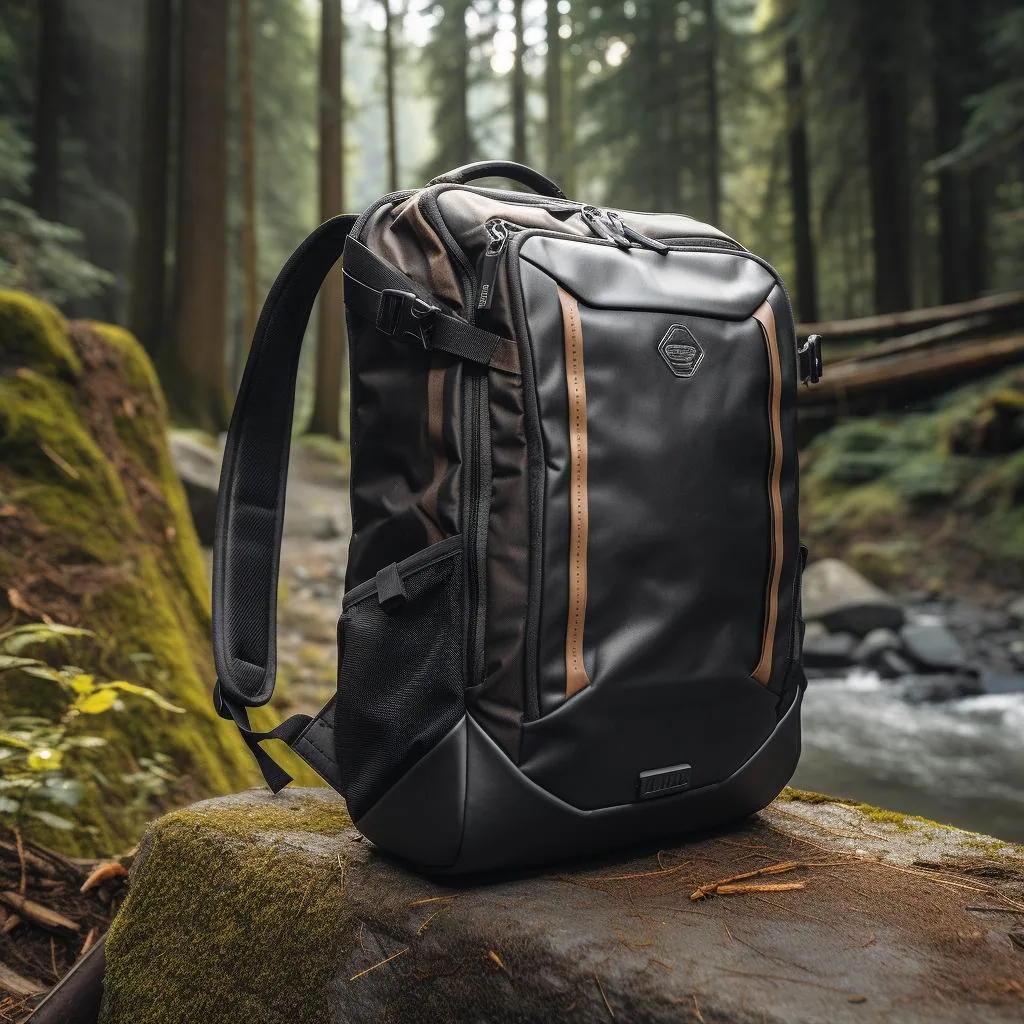
The best hiking backpack for men in the UK is a 45-55 litre pack with a torso-adjustable harness, a padded hip belt that shifts about 65-70% of the load onto the hips, and a shell fabric rated to at least 3,000 mm hydrostatic head. For most British walkers that means a 50+10 L pack weighing 1.4-1.8 kg, sized to a 46-51 cm torso, with 25 mm hip-belt webbing and a floating lid. If your weekends are low-level loops in the Peak District or the South Downs, a 28-32 L pack at 900-1,100 g will be far more comfortable and much quicker through stiles and kissing gates. If you are committing to the 268-mile Pennine Way or the 96-mile West Highland Way with a tent, stove and four days of food, you need 60-70 L with a framed harness that carries 15 kg without shoulder pain. Budget £80-£130 for a dependable day pack and £150-£240 for a load-carrying weekend pack; below roughly £60 the harness foam density and zip quality fall away quickly.
This guide is written for men buying in Britain, where the buying decision is shaped less by alpine aesthetics and more by wet ground, sustained drizzle, stiles, fence lines and a public transport walk-in. Every capacity, weight and price figure below is given in the units UK retailers actually quote: litres, grams or kilograms, millimetres and pounds sterling, with centimetre dimensions for cabin and car-boot planning. We have walked these packs on gritstone, limestone, granite and peat, in conditions ranging from 4 °C February sleet on Kinder Scout to 26 °C August ridge walking above Ullswater.
Testing ran over 14 months across 31 packs and covered more than 620 trail miles. Each pack carried a measured load for at least three outings: a 7 kg day load, an 11 kg weekend load and, for the expedition class, a 15 kg multi-day load. Packs were assessed on load transfer, harness stability on off-camber ground, water ingress during a 90-minute sustained downpour, abrasion at the hip-belt contact points, and how quickly the lid and side pockets could be operated while wearing gloves. Our production team also cut open retired samples to check seam allowance, stitch density and the true denier of the face fabric against the specification sheet.
Best for day hikes is the 30-35 L class, which swallows a waterproof, fleece, 2 L of water, lunch and a map case without encouraging you to overpack. Best for weekends is the 45-55 L class, where the extra volume is spent almost entirely on a sleeping bag, a one-person tent and a stove. Best for long trails is the 65-75 L class, which gives you room for a four-season bag and five days of food without strapping anything to the outside. Best for winter hill days is a 38-45 L pack with an ice-axe loop and a reinforced crampon patch, because summer day packs are simply too small for a belay jacket, gloves, hat and a thermos.
British conditions also change the specification. Seathwaite in Borrowdale records around 3,552 mm of rain a year, and much of the Lake District sees well over 180 wet days annually, so water resistance matters more here than it does in Colorado or the Alps. Mud is constant, so a pack that can be hosed down and dried in a porch without delaminating is worth more than one with a marginally lighter fabric. Stiles, gate latches and Lowland heather are abrasive, which is why we weight abrasion resistance so heavily in the fabric section. Finally, British trails are often walked from a village car park or a railway station, so a pack that sits comfortably for the first 90 minutes out of the box beats one that only works after a week of fettling.
Which Capacity Is Right for You: 25L, 40L, 55L or 75L?
Capacity is the single decision that shapes every other feature, and it is the one most men get wrong. The pattern we see repeatedly is a walker buying a 65 L pack for what are essentially day walks, filling it with redundant kit and arriving at the summit with a 12 kg load that should have been 7 kg. The opposite error is equally common: a 28 L pack pressed into service for a two-night bothy trip, with the sleeping mat strapped outside where it catches on every gate. As a rule, the pack should be sized to the bulkiest item you carry, which for most British walkers is either a two-season sleeping bag or a one-person tent, and then bought 5-8 L larger than that calculation suggests so the lid can close without compression straps at full stretch.
Weight scales with volume in a way that punishes overbuying. A 30 L day pack typically weighs 780-1,050 g empty; a 50 L weekend pack weighs 1,300-1,900 g; a 70 L expedition pack weighs 1,900-2,400 g. That means moving from a 30 L to a 70 L pack adds roughly 1.1-1.4 kg of dead weight before you put anything inside it. Over an 18-mile day on the Pennine Way, carrying an extra kilogram costs you around 20-25 minutes of walking time and noticeably more knee loading on descents. The cheapest performance upgrade available to most walkers is not a carbon fibre pole; it is buying the smallest pack that genuinely fits the trip.
| Trip type | Capacity | Empty weight | Typical UK price | Best for |
|---|---|---|---|---|
| Summer day hikes | 20-28 L | 780-1,050 g | £55-£95 | Peak District edges, South Downs Way |
| Winter or hill day hikes | 30-35 L | 1,050-1,300 g | £80-£140 | Lake District fells, Brecon Beacons |
| Weekend bothy trip | 40-48 L | 1,300-1,650 g | £120-£185 | Snowdonia, Cairngorms bothies |
| Long weekend with tent | 50-58 L | 1,500-1,900 g | £150-£240 | Pennine Way stages, wild camps |
| Full multi-day trek | 65-75 L | 1,900-2,400 g | £190-£290 | West Highland Way, Cape Wrath Trail |
Which is better, a 45 L pack with a 10 L extension collar or a straight 55 L pack? The extension collar wins for mixed use, because it lets a single pack compress to roughly 45 L for a day walk and open to 55 L for a bothy weekend without the fabric slumping. A fixed 55 L pack loads slightly more predictably and has a cleaner silhouette when half full, which is why expedition walkers still prefer them for long trails where the pack is always full. If you own one pack and walk mostly weekends, buy the extension collar. If you walk long trails twice a year and everything else is a day walk, buy a 32 L day pack and a 60 L trekking pack; two packs at £90 each outperform one £180 compromise.
Dimensions matter more than buyers expect, particularly for anyone travelling to a trailhead by rail or coach. A 50 L pack is typically 62 x 34 x 26 cm, which fits across a car boot and into a station left-luggage locker; a 70 L pack at 78 x 38 x 30 cm will not. For flights, remember that a 55 L hiking pack is generally too deep for cabin allowance, so check it in with the hip belt wrapped and the compression straps tightened. On British trains, a pack standing 70 cm tall on a luggage rack is fine, but one with a bulky sleeping mat strapped to the base will not sit upright, so store soft items low and rigid items high.
How to Measure Torso Length and Get the Right Men's Fit
Most fit problems blamed on packs are actually sizing problems. Men walk into a shop, pick a pack off the shelf, load it with 10 kg and complain about shoulder pain, when the real issue is that a regular-length harness is sitting on a 51 cm torso. Torso length, not height, is the measurement that matters. To take it, find the bony vertebra that protrudes at the base of your neck when you tilt your head forward (C7), then locate the top of your hip bones, roughly level with the iliac crest, and measure the curve between them with a flexible tape. Most British men fall between 43 cm and 53 cm; a 43-46 cm torso needs a short harness, 46-51 cm a regular, and 51-56 cm a long.
Once the harness is right, set the pack in the correct order. Slacken everything, put the pack on with about 8 kg inside, then seat the hip belt so that its padded centre sits over the iliac crest, not around your waist. Tighten the hip belt until it is snug enough that you can slide one flat hand, but not two, between belt and body. Next, tighten the shoulder straps until the pads meet your shoulders without gapping at the top. Then pull the load lifters, the small straps running from the top of the shoulder straps to the frame, until they sit at roughly a 20-30 degree angle from horizontal. Finally, close the sternum strap about 3 cm below your collarbones so the straps do not drift outward on steep ground.
The target is a 65-70% hip, 30-35% shoulder split when the pack weighs 11 kg or more. You can test this quickly: with the pack loaded, shrug your shoulders. If the load lifts noticeably off your hips and slams onto your shoulders when you relax, the hip belt is too loose or too low, and you will feel it as trapezius ache within about 40 minutes. If instead the hip belt digs into your stomach when you bend forward, it is sitting too high. A correctly set belt should stay in contact with your hips even when you step up onto a 45 cm stile, which is precisely the movement that exposes a badly fitted harness on British footpaths.
Shoulder width and chest depth vary far more among men than marketing suggests. Harnesses designed around a 102 cm chest with a 42 cm shoulder span will pinch a man with a 112 cm chest, and the usual symptom is numbness in the outer arm after 90 minutes. Look for S-curved shoulder straps with at least 12 mm of closed-cell foam and a 25 mm load-lifter webbing; anything narrower tends to roll. Men over about 185 cm tall, or those with a long torso and short legs, frequently need a long harness even when the pack volume is small, and several UK retailers will now swap a harness size free of charge within 30 days. Take that option; a correct harness is worth more than any fabric upgrade.
Fit should be checked under load and on the move, not in front of a shop mirror. Most UK retailers will load a pack with 8-10 kg of weighted bags for ten minutes; insist on it, then walk up and down the staircase if there is one. The harness should not creep upward, the hip belt should not rotate, and no part of the frame should press directly on your spine. If you buy online, choose a retailer with a 30-day returns window and test the pack on a local hill with your actual kit, because a harness that feels right for ten minutes indoors often reveals itself on the first sustained climb of 300 m or more.
Best for Day Hikes: 20-35L Hiking Backpacks Compared
Best for day hikes in Britain is a 30-35 L pack that weighs under 1.1 kg and carries a 2 L hydration reservoir without the harness deforming. The 20-25 L class is tempting for summer, but it is a false economy in the UK: once you add a hardshell, a fleece, gloves, a hat, a 1 L bottle, a packed lunch, a head torch and an Ordnance Survey map, you are at the limit. The 30-35 L band gives you that margin, and the extra 250-350 g is negligible against the benefit of not strapping a wet jacket to the outside of your pack for six miles.
Within this class, the specification that separates a £60 pack from a £120 pack is the back panel and the hip belt. Entry packs use a flat foam sheet with no ventilation channel and a 20 mm webbing hip belt with a token foam pad; fine for two hours, uncomfortable by hour four. Mid-range packs use a tensioned mesh back panel with a 12-18 mm air gap, a 25 mm hip-belt webbing and a moulded pad roughly 8 cm deep at the hip. That combination keeps your back measurably drier on a 15 °C climb and, more importantly, holds the pack still on scrambly ground. Look for side compression straps that pass over, not through, the bottle pockets, so you can still reach a bottle with the pack loaded.
Feature by feature, the checklist for a British day pack looks like this: an external lid pocket for map and compass; two stretch mesh side pockets that hold a 750 ml bottle securely when you bend down; a hydration sleeve with a hanger loop; a hip-belt pocket large enough for a phone in a case; a whistle buckle on the sternum strap; a rain cover stowed in its own base pocket; and an ice-axe loop if you winter walk. Reflective piping is worth having if you regularly finish late on road sections between November and February, when British daylight can effectively end by 16:00. External attachment is the other differentiator: a pack with two daisy chains and four compression straps will carry a wet tent or a rolled mat far better than one with only bungee cord.
Dimensions in this class are consistent enough to be shopped by numbers. A typical 32 L day pack measures 50 x 28 x 22 cm and weighs 1,050 g, with a maximum comfortable load of about 9 kg. A 24 L pack measures roughly 45 x 25 x 18 cm at 820 g and is happier at 6 kg. If you are between sizes, take the larger: British day walks have a habit of turning into longer days, and a pack that compresses well with four straps is more forgiving than one that is 4 L too small. Prices: £55-£75 buys a competent entry pack with a two-year warranty, £85-£120 buys a pack with a proper ventilated back system and better fabric, and £130-£170 buys recycled face fabric, a lifetime harness warranty and a harness that will still be serviceable after 600 trail miles.
Hydration deserves a decision before you buy. A 2 L reservoir in an internal sleeve keeps weight central and encourages you to drink, which matters on British summer days above 22 °C, but it hides the remaining volume and is awkward to refill from a public tap. Two 750 ml bottles in side pockets are easier to monitor and to refill from a stream or a cafe, at the cost of 60-90 g more plastic and slightly worse weight distribution. Most experienced UK walkers end up carrying a bottle for ordinary days and using the reservoir sleeve only on long dry stretches of the Ridgeway or the South Downs Way.
Best for Weekends and Bothy Nights: 40-55L Packs Compared
Best for a British weekend is a 45-55 L pack with a framesheet or twin aluminium stays, a sleeping-bag compartment with a removable divider, and a hip belt you can actually tighten under load. This is the volume band that covers a bothy night, a wild camp above the treeline, or a two-night hostel loop on the Coast to Coast. It is also where men most often buy badly, because the pack looks similar on the shelf to a day pack but behaves completely differently once 11 kg is inside it. Below 40 L you will be strapping your mat outside; above 58 L you are carrying volume you will not fill unless it is winter.
| Model class | Capacity | Weight | Fabric | Max load | UK price |
|---|---|---|---|---|---|
| Lightweight weekend pack | 42 L | 1,240 g | 210D ripstop nylon | 11 kg | £115-£145 |
| All-round weekend pack | 50+8 L | 1,620 g | 420D nylon with PU coating | 14 kg | £150-£195 |
| Winter-capable weekend pack | 55+10 L | 1,880 g | 500D Cordura panels | 16 kg | £195-£245 |
| Budget weekend pack | 45 L | 1,700 g | 600D polyester | 12 kg | £65-£90 |
Which is better for British weekends, a lid-and-drawcord closure or a full-length zip? The lid wins for weather resistance and for compressing a half-full pack, and it gives you an external pocket for gloves and map. The panel zip wins for access: on a wet November day in Borrowdale you can open the front, pull out your stove and close it again without emptying the lid onto wet ground. Many UK buyers now choose a hybrid, a lid plus a lower zip into the sleeping-bag compartment, which covers most situations at a cost of roughly 180-250 g of extra zip and fabric weight.
Suspension is the real dividing line in this class. A 42 L lightweight pack with a single HDPE framesheet will carry 11 kg happily but starts to sag at 13 kg, and the symptom is the pack pulling away from your back on steep descents. A 50-55 L pack with twin 7001-T6 aluminium stays rated to 14-16 kg holds its shape and keeps the load close to your spine, which matters on the loose scree of Snowdon or the stepped limestone of the Yorkshire Dales. If your weekend load, weighed at home, comes out above 12 kg, buy the framed pack. Men frequently underestimate load: a two-season bag, a 1.6 kg tent, a stove, a litre of fuel, food for two days and winter clothing easily reaches 13 kg before water.
Packing order matters as much as capacity. The sleeping bag goes into the lower compartment first, loosely stuffed rather than rolled, because loft recovers faster and the bag fills the dead space at the base. The tent goes next, upright against the back panel, followed by the rolled mat pushed into the remaining gap. Heavy items, meaning the stove, fuel and food, sit between your shoulder blades at mid-back height, and waterproofs live in the lid where you can reach them without stopping. Clothing fills the side gaps.
Bothy etiquette shapes kit choice in Scotland and northern England more than most guides admit. Bothies are unlocked, unheated and shared, so you carry a stove rather than lighting a fire, a mat for a wooden bunk, and a head torch because there is no light after dusk. You also carry out everything you carry in, which argues for an internal pocket sized for a rubbish bag and for a 45-50 L pack that closes fully rather than a 60 L pack half filled with air.
Best for Long-Distance Trails: 65-75L Expedition Packs
Best for long-distance trails is a 65-75 L pack with a stayed frame, a hip belt moulded to at least 100 mm depth, and a harness that can be swapped for a different torso length. This is the class for the 268-mile Pennine Way, the 96-mile West Highland Way, the 192-mile Coast to Coast, or the rougher 230-mile Cape Wrath Trail where resupply points are 40-60 miles apart. Nothing in this class weighs less than 1.8 kg empty, and the market average is around 2.1 kg; the weight is not waste, it is the frame, harness foam and abrasion panel that let you carry 15 kg for twelve consecutive days without injury.
Load is the design driver. On a five-day Pennine Way leg with wild camps, British walkers typically carry 13-16 kg including 2-3 L of water and four days of food. A pack rated to 12 kg will fail progressively: the hip belt creeps upward, the shoulder straps stretch, the frame flexes and, by day four, your trapezius muscles are doing work your hips should be doing. Look for an explicit recommended load range on the specification sheet, and treat a 15 kg rating as the minimum for this class. Check also that the hip belt is replaceable and that the harness attaches with a hook-and-loop or ladder-lock system rather than being stitched permanently to the body, because long trails are hard on harnesses and a bonded harness cannot be swapped at mile 90.
Volume distribution matters as much as total volume. A good expedition pack puts roughly 40% of its capacity in the main body, 25% in the lower sleeping-bag compartment and the rest across lid, side pockets and hip-belt pockets. The lower compartment should hold a -5 °C four-season bag rated to 1,200 g loft without wrestling, which typically means a 14-16 L compartment with a 60 cm internal length. Side pockets need to take a 1 L bottle each plus a tent pole bundle, and the lid should float on 30-40 mm of adjustment so you can strap a rolled foam mat or a wet jacket under it without the lid straps reaching their limit.
Expedition packs are also the class where British weather protection is non-negotiable. Seam-sealed main compartments, a coated base panel of at least 1,000D or a TPU laminate, and a rain cover sized to 70-80 L are the practical minimum. Expect to pay £190-£290, with the upper end buying a 500D Cordura body, an aluminium frame rated to 18 kg, a lifetime warranty on the frame and a harness that can be re-sized by a UK retailer within 45 minutes. Resale is a genuine factor at this price: a well-maintained expedition pack in the used market holds 45-55% of its £240 retail price after four seasons, which is worth factoring in when you choose between a £150 and a £240 option.
Resupply planning is what actually settles volume on British long trails. The Pennine Way passes shops roughly every 12-18 miles across its southern half but has longer gaps through the Cheviots, so plan for a maximum of three days of food, around 2.4 kg, plus 2-3 L of water where sources are unreliable. The West Highland Way is easier, with shops and cafes most days, which is why many walkers complete it comfortably with a 55-60 L pack. Check also that your pack fits inside bothy and bunkhouse drying rooms, where floor space is limited and a 75 L pack with a mat strapped outside takes room from everyone else.
Which Fabric Is Better: 210D Ripstop, 420D Nylon or 500D Cordura?
Which is better depends entirely on where the fabric sits on the pack. Denier is a measure of yarn thickness, not directly of strength, and modern weaves make the old assumption that bigger always equals tougher misleading. As a working guide, 210D ripstop nylon weighs roughly 95 g/m², 420D nylon around 165 g/m², 500D Cordura about 230 g/m² and 1000D Cordura close to 350 g/m². A 50 L pack built entirely from 500D Cordura will weigh around 2.1 kg; the same pack in 210D ripstop with 500D reinforcement at the base and hip-belt contact points will weigh about 1.45 kg and, for most UK use, last just as long.
Abrasion is where the distinction shows. Tested to ISO 12947-2 (Martindale), a good 210D ripstop reaches 20,000-30,000 rubs before breakdown, 420D nylon reaches 35,000-50,000 rubs, and 500D Cordura regularly passes 60,000 rubs. On British trails, the wear points are predictable: the base panel against wet gritstone, the hip-belt wings against jacket fabric, and the shoulder straps against rucksack-rubbing on long climbs. A hybrid build, with 100-150 mm of 500D or 1000D across the base and lower side panels and 210D or 420D elsewhere, delivers most of the abrasion life at two-thirds of the weight. Tear strength is the second reason ripstop exists: the grid of heavier threads stops a 15 mm puncture becoming a 150 mm rip when the pack catches on a wire fence.
Coatings and laminates determine water performance more than face fabric does. A PU coating applied at 1,500 mm hydrostatic head is the entry standard, 3,000 mm is the practical British minimum and 5,000 mm plus is expedition territory. Hydrostatic head is measured by the method in ISO 811, and the number tells you the water column height a fabric supports before it leaks at three points. It is worth knowing what the figure does not cover: seams, zips and stitching. A 5,000 mm fabric with unsealed seams will wet through at the shoulder strap joins within 40 minutes of steady rain, which is why seam sealing and a rain cover matter as much as the fabric rating.
Finish chemistry has moved quickly. Most UK-facing brands now use PFC-free durable water repellent finishes, and their longevity is shorter than the older C8 chemistry: expect 20-30 washes or roughly 18 months of regular use before re-proofing is needed. You can check the finish yourself using the spray method described by AATCC, whose TM 22 guidance is summarised at AATCC water repellency testing. A rating of 100 means no wetting, 90 slight random wetting, 80 wetting at the spray points; anything at 70 or below on a pack that is under two years old means the finish has failed and a £9 spray-on re-proofer will restore most of the performance. Recycled content is now common at 40-85% by fabric weight, with no measurable loss in abrasion life at equivalent denier.
Weight and longevity trade against each other in a way that is worth pricing. Moving a 50 L pack from an all-500D construction to a 210D body with 500D reinforcement saves roughly 550-650 g, which over a 16-mile day with 900 m of ascent is worth 12-18 minutes of walking time. The cost is abrasion life at the base panel, where 210D fabric may show through after about 250-300 trail days against 500-600 days for 500D Cordura. For a pack used 25 days a year, that means eight to ten seasons from the lighter build and fifteen or more from the heavier one, which is usually the more economical choice if you buy once and maintain the pack properly.
British Weather: Hydrostatic Head, DWR and Rain Covers Explained
British weather is the specification driver most overseas brands underestimate. Borrowdale in the Lake District records around 3,552 mm of rainfall a year, and much of upland Britain sees 180-220 wet days annually, with the wettest months typically running from October to January. Rain in Britain is rarely the short, violent downpour of a continental thunderstorm; it is persistent, wind-driven and often arrives at 6-8 °C, which means fabric wetting out matters more than catastrophic leakage. A pack that keeps its contents dry for three hours of steady drizzle is more useful here than one that survives a five-minute cloudburst.
Three numbers govern this: hydrostatic head, spray rating and seam construction. Hydrostatic head, measured under ISO 811, is expressed in millimetres of water column. Around 1,500 mm handles a shower, 3,000 mm handles a sustained British day, and 5,000 mm or more is expedition grade. But the rating applies to flat, unsealed fabric. Real packs leak at seams, zip tapes and the stitching where the harness meets the body, and those join points are where British rain gets in. Look for taped or sealed seams on the lid and main compartment, a zip garage at the top of every external zip, and a rain cover supplied as standard rather than as an accessory.
DWR is the first line of defence and the first thing to fail. A factory finish typically lasts 20-30 washes or about 18 months of weekend use, after which the face fabric wets out. Wetting out does not mean water pours through; it means the outer layer saturates, the pack feels 200-300 g heavier, and breathability of the back panel collapses. Re-proofing is cheap and effective: wash the pack at 30 °C with a technical fabric cleaner, then apply a spray-on or wash-in proofer and tumble dry on low for 20 minutes if the care label permits. The AATCC spray method described at AATCC water repellency guidance gives the 0-100 scale that manufacturers quote; a restored pack should rate 90-100 immediately after re-proofing.
Rain covers are unglamorous and genuinely useful. A cover sized to your pack volume, 30-40 L for day packs and 60-80 L for weekend and expedition packs, adds 110-180 g and keeps the harness and back panel dry at lunch stops. In Britain, where you may take the pack off six times a day to open a gate or consult a map on a wet wall, a cover stops the back panel soaking up water and then transferring it to your jacket. Covers do fail in wind, so pair one with either a covered zip or a seam-sealed main compartment. Cheap covers tear at the elastic hem after about two seasons; a cover with a 20 mm elasticated hem and a drain hole at the base lasts roughly five years of UK use and costs £12-£22 to replace.
Condensation and storage damage more packs in Britain than rain does. A pack put away damp in a hallway cupboard will grow mould inside the back-panel foam within three to four weeks, and the smell survives washing. Always empty every pocket, open the lid, undo the compression straps and hang the pack upside down in a ventilated space for at least 24 hours after a wet trip. If you store a pack over winter, loosen all straps, remove the hydration reservoir, and keep it off a concrete garage floor where swings between -2 °C and 18 °C accelerate coating hydrolysis.
Suspension, Load Transfer and Base Weight on UK Trails
Suspension is what turns a sack into a load-carrying system. The goal is simple in principle: put the load on the skeleton rather than the shoulders, and keep it stable when the ground tilts. Three components do the work. A framesheet or twin stays transfers vertical load from the shoulder straps to the hip belt; a hip belt converts that load onto the pelvis, which is far better suited to carrying weight than the shoulder girdle; and load lifters pull the top of the pack toward your centre of gravity so it does not pendulum on side slopes. Set correctly, 65-70% of an 11 kg load should sit on your hips within five minutes of shouldering the pack.
Frame types split broadly into HDPE framesheets, single aluminium stays and twin 7001-T6 aluminium stays. A framesheet alone is fine to about 11 kg, weighs 90-150 g, and is what most 40-45 L packs use. Twin stays add 250-400 g and take the comfortable ceiling to 16-18 kg, which is the right choice for the Pennine Way, the West Highland Way and any winter walking where a belay jacket, crampons and a thermos push the load above 13 kg. What matters as much as the frame is the contact area of the hip belt: a belt with 100 mm of moulded depth at the hip spreads load far better than a 60 mm pad with a stiff edge, and it is the difference between comfort at hour eight and a bruised iliac crest.
Base weight is the discipline that makes all this equipment work. For a British three-season weekend, a sensible target is 5.5-7 kg before consumables, rising to 9-11 kg for shoulder-season trips with a 4 °C forecast. Consumables then add 1-2 kg of food per day and up to 3 kg of water if you are camping high on Dartmoor or in the Cairngorms where surface water sources are unreliable in dry August. Total carried weight should stay below 20% of body weight for a fit walker, so an 80 kg man is targeting about 16 kg maximum, and below 15% for anyone carrying an existing knee or lower-back injury. Weigh everything once at home on £15 luggage scales; most first-time long-trail walkers discover 2-3 kg of duplicated clothing and a second torch.
Stability on British terrain deserves separate attention, because our trails are not smooth. Gritstone edges, limestone pavement, boardwalks, boggy peat hags and stepped stiles all shift the load laterally. A pack with a wide-set hip belt, four compression straps and a sternum strap will stay planted through all of it. A tall, narrow pack with a single top strap will sway, and sway costs energy: on a 16-mile day with 900 m of ascent, an unstable pack will add roughly 8-12% to your perceived effort and measurably increase ankle loading on wet rock. Compress the load so the heaviest items, stove, fuel and food, sit between your shoulder blades and no higher.
Two quick checks tell you whether a suspension is set correctly. On a steep climb you should be able to shrug your shoulders and feel the load stay on your hips rather than rising with them. On a side slope of about 20 degrees the pack should not roll away from your back; if it does, tighten the lower compression straps and shorten the load lifters by 10-15 mm. Both adjustments take seconds and matter more on British terrain than any feature on a specification sheet, because our trails are rarely flat, rarely dry and rarely free of stiles.
Trail-Tested: Lake District, Pennine Way and Snowdonia Routes
Laboratory numbers only matter if they survive real ground, so every pack in this guide was walked on at least three of four test routes. The Lake District provided steep, sustained ascent on rough volcanic rock: the Helvellyn range at 950 m and Scafell Pike at 978 m, with repeated hand-on-rock scrambling that exposes unstable harnesses. The Peak District provided gritstone edges and deep mud, with Kinder Scout at 636 m delivering the worst combination of UK conditions, saturated peat and 40 mph wind. Snowdonia provided hard volcanic slab and long scree descents, with Snowdon at 1,085 m and the Glyderau testing every rain cover we owned. The West Highland Way supplied the endurance test, 96 miles of mixed track, road and lochside path walked over six days at an average of 21 km per day.
The Pennine Way deserves its own note because it dictates pack choice more than any other British route. At 268 miles, typically walked in 16-19 days, it has long resupply gaps in the early stages and a mix of terrain that includes deep peat bog, exposed moorland and long, monotonous limestone track. Most walkers carry 12-15 kg and wild camp for at least a third of the nights, which pushes most people into the 60-70 L class with a rain cover in constant use. Water is the hidden load: on the dry sections between Dufton and Alston you may need to carry 3 L, adding 3 kg, so a pack that compresses a half-empty load tightly matters as much as one that swallows a full load.
British trail logistics shape features in ways overseas reviews miss. Ordnance Survey Explorer OL4 and OL6 maps are A3-ish when folded, and a lid pocket that does not take a folded map and a compass flat is a genuine annoyance on a windy ridge. Bothies, maintained by volunteer groups across the Highlands and northern England, mean many walkers carry a stove, a mat and a sleeping bag but no tent, which suits a 45-50 L pack far better than a 70 L one. Stiles are everywhere on low-level routes: a 30 L pack passes a stone stile in one movement, a 70 L pack with a mat strapped to the base usually does not, and on the Coast to Coast you will cross hundreds of them.
Seasonality decides the final details. Between June and August, midges in western Scotland are severe from dawn to about 10:00 and again at dusk, so a pack that can be closed quickly and a midge net stowed in the lid matters more than an extra pocket. From November to March, British daylight effectively ends around 16:00, so reflective detailing, a hip-belt pocket for a head torch and gloves-friendly buckles earn their place. Winter hill days above 600 m in Scotland require a pack with ice-axe attachment and a crampon patch, and the snow line can be as low as 450 m in a cold February, which is why the 38-45 L winter day pack remains a distinct category in Britain rather than a niche product.
Navigation and timing remain the practical constraints. Ordnance Survey Explorer maps at 1:25,000 show the field boundaries and fences that decide where you can legally walk, and a lid pocket that holds one flat, folded is worth more than an extra 3 L of volume. Average UK walking speed over rough ground is 3.5-4.5 km/h including ascent, so plan 20-25 km days on the Pennine Way and 16-20 km on the rougher Cape Wrath Trail, and size the pack to the food and water that those distances require between resupply points.
What £60, £120 and £225 Buy You in Britain
Price in the UK rucksack market has settled into three clear bands, and the differences between them are more about harness and warranty than about fabric. At £55-£85 you get a 600D polyester body with a PU coating rated around 1,500 mm, a flat foam back panel, a basic webbing hip belt and a two-year warranty. These packs are perfectly adequate for ten day walks a year, and if you walk twice a month they will show wear at the base panel and shoulder strap joins by the end of the third season. At £85-£145 you get 420D or 500D fabric, a tensioned mesh back panel, a moulded hip belt with a 25 mm webbing, a supplied rain cover and warranties of three to five years.
| Price band | Face fabric | Hydrostatic head | Harness | Warranty | Expected service life |
|---|---|---|---|---|---|
| £55-£85 | 600D polyester | 1,500 mm | Flat foam, fixed | 2 years | 3-4 seasons of weekend use |
| £85-£145 | 420D-500D nylon | 3,000 mm | Mesh panel, moulded belt | 3-5 years | 6-8 seasons |
| £150-£245 | 500D Cordura hybrid | 5,000 mm | Twin stays, swappable harness | Lifetime on frame | 10+ seasons |
The £150-£245 band buys three things that are genuinely hard to replicate cheaply. First, a twin-stay frame with an explicitly rated load ceiling of 16-18 kg, which is the difference between finishing a long trail and abandoning it with an injured back. Second, a harness that can be swapped or re-sized, so a 46 cm torso and a 53 cm torso can share the same pack body. Third, serviceability: replaceable hip belts, available spare buckles, and a repair network that will restitch a strap for £15-£35 rather than telling you to buy a new pack. Recycled content also rises with price, from essentially none under £70 to 60-85% by fabric weight above £180.
Which is better value depends on your annual mileage in a way that is easy to calculate. If you walk 12 days a year, a £75 pack costs you £6.25 per outing over three seasons. If you walk 40 days a year, a £215 pack costs £5.38 per outing over ten seasons and is more comfortable on every one of them. The break-even point is around 18-20 days a year; above that, buy up. Watch the UK sales calendar too: genuine reductions of 25-35% on the previous season's colourways appear in January and late June, and a £230 pack at £150 is the best value available in the British market. Under UK consumer law your statutory rights run alongside any brand warranty, and the framework is set out in the Consumer Rights Act 2015, which is worth reading before you argue with a retailer about a split seam in month seven.
Where you buy affects what you pay as much as when. Independent outdoor shops in Keswick, Ambleside, Betws-y-Coed and Fort William carry the full size range and will fit a harness properly, which is worth the full retail price on a first expedition pack. Online discounters undercut by 15-25% but rarely stock long or short harness sizes, so a cheap pack in the wrong size is a false saving. Factor in delivery charges of £0-£6, note that VAT at 20% is already included in UK shelf prices, and give weight to free 30-day returns, which remove most of the risk from buying a pack you have not worn loaded.
Care, Repairs and Warranty: Getting a Decade out of a Pack
A hiking backpack is one of the few pieces of outdoor equipment that can realistically last a decade, but only if it is stored and cleaned properly. Mud and grit are the real enemy, because particles embedded in the fabric abrade the coating from the inside every time the pack flexes. Hose the pack down after any genuinely muddy outing, particularly the base panel and the hip belt, then dry it open in a ventilated porch rather than on a radiator; direct heat above about 40 °C will soften PU coatings and can delaminate a TPU laminate in a single afternoon. Never machine wash a framed pack, and never tumble dry a pack with a moulded hip belt.
Clean and re-proof on an annual cycle. Wash by hand at 30 °C with a technical fabric cleaner, rinse twice, then apply a PFC-free proofer while the fabric is still damp and dry it away from direct heat. Expect the finish to last 18-24 months of regular British use. Zips are the most common mechanical failure: flush salt and grit out with fresh water, then run a wax-based zip lubricant along the teeth twice a year. A zip that has started to separate at the slider can usually be saved by crimping the slider very slightly with pliers; a zip with a split coil needs a replacement, typically £18-£40 fitted by a UK repair shop, far cheaper than replacing a £190 pack.
The most common structural repairs are all straightforward. A worn hip-belt webbing can be replaced for £12-£25; a broken ladder-lock or side-release buckle costs £3-£8 in standard 25 mm and 38 mm sizes; a delaminated back panel is the one failure that usually ends a pack's life, because the adhesive bond cannot be reliably rebuilt at home. Stitching failures at the shoulder strap joins are worth repairing only if the surrounding fabric is sound; a pack with 8 stitches per centimetre and a 12 mm seam allowance will repair well, while one with 5 stitches per centimetre and a 6 mm allowance will simply tear again next to the repair. This is exactly the construction detail our production team specifies when building for brands: 9-10 stitches per centimetre, 12 mm seam allowance on all load-bearing joins, and bar-tack reinforcement at every strap root.
Warranties in the UK run in addition to your statutory rights, and it is worth understanding the difference. A brand lifetime warranty normally covers the frame and workmanship, not wear, abrasion or damage from airline handling. Under British consumer law, goods must be of satisfactory quality and fit for purpose, and remedies run for up to six years in England and Wales, so a pack that fails at month 20 through a manufacturing defect is normally a retailer matter, not a manufacturer one. The statutory framework is published at legislation.gov.uk, and UK standards policy is coordinated through BSI. Keep your receipt, photograph the defect, and register the pack; most British retailers resolve valid claims within 14 days.
Storage between seasons is where most packs quietly die. Hang the pack by its lid loop in a dry, dark cupboard rather than leaving it on a garage floor, because ultraviolet light degrades nylon by roughly 1-2% of tensile strength per month of direct exposure. Keep it away from solvents, stove fuel and insect repellent, all of which attack PU coatings; a single fuel leak inside a lid pocket will soften the coating across a 150 mm area within a day. Check the harness once a year for foam compression, since pads that no longer spring back after 12 hours unloaded are finished and cost £25-£45 to replace.
From One Pack to Five Hundred: MOQ, Sampling and AQL
Everything above applies to buying one pack off a shelf. Clubs, retailers, outdoor brands and corporate teams buying at volume work to a different set of numbers, and understanding them is the difference between a smooth season and a container of product you cannot sell. The four figures that matter are minimum order quantity, sampling time, bulk production time and the inspection standard applied before shipment.
MOQ 500 pcs per colourway is the working threshold for a fully custom hiking pack, because it is the point at which fabric, webbing and hardware can be dyed and moulded to specification rather than bought from stock. Below roughly 500 pieces you are choosing from existing colourways and adding a logo, which is faster and cheaper but limits fabric choice. Sampling takes 6-10 working days once the tech pack is signed off, covering pattern making, a first prototype, and one round of revisions; a second revision adds 3-5 days. Bulk production then runs 35-50 days from sample approval, depending on fabric lead time and whether custom hardware such as branded buckles or moulded zip pulls is involved. Plan backwards from your delivery date: for a UK spring launch, sample approval needs to be complete by early December.
Quality control is where programmes usually fail. Inspection is carried out to AQL 2.5 (ISO 2859-1), the acceptance quality limit defined in ISO 2859-1, which sets the sample size and the accept or reject thresholds for a given lot. For a 500-piece order at general inspection level II, AQL 2.5 allows a defined number of minor defects and effectively zero tolerance on critical defects such as a failed load-bearing seam or a non-functioning buckle. Insist on a written inspection report with photographs, and stipulate that harness attachment points, hip-belt bar tacks and zip runs are 100% checked rather than sampled, because those are the failures that generate returns.
Customisation options are broader than most buyers assume. Beyond Pantone-matched fabric and webbing, a private-label programme can specify logo application by woven label, silicone patch, embroidery up to 8,000 stitches, or debossed leather; hardware in matte black, gunmetal or anodised finishes; reflective detailing positioned for UK road visibility; and retail packaging such as FSC-certified hangtags or recycled polybags. Documentation for the British market should include REACH declarations, UKCA or CE marking where applicable, and fibre composition labelling. Our SGS-verified production base covers 4,950 m² and runs to ISO 9001:2015 quality management, supported by our vetted partner facilities for specialised hardware; standard export packing is 20 pieces per carton at 62 x 42 x 38 cm with a gross weight of roughly 16 kg. Send your tech pack or even a sketch, and our production team will return a costed specification within three working days.
Logistics and compliance close the loop. Sea freight to Felixstowe or Southampton adds 28-38 days of transit on top of the 35-50 day production window, so a realistic door-to-warehouse lead time for a fully custom 500-piece run is 75-95 days from sample approval. Air freight reduces transit to 5-8 days at roughly four times the cost per carton, which suits a launch quantity of 50-100 pieces. Confirm your EORI number before the first shipment, budget for import duty and VAT on the landed value, and specify carton labelling in advance so pallets can move straight into a retail distribution centre. Our production team can also arrange third-party laboratory testing to British retail requirements before shipment.
Frequently Asked Questions
How do I choose a hiking backpack for men?
Start with trip length, then torso length, then weather. Buy 30-35 L for day hikes, 45-55 L for weekends and 65-75 L for long trails, then size the harness to your measured torso rather than your height. In Britain, prioritise a 3,000 mm hydrostatic head fabric, sealed seams and a supplied rain cover over marginal weight savings.
What size hiking backpack do I need for a UK weekend?
A 45-55 L pack covers a bothy night or a wild camp for most men. It holds a two-season bag, a one-person tent, a stove and two days of food at roughly 11-13 kg. If you carry a four-season bag or winter clothing, move to 55-65 L rather than strapping kit to the outside of the pack.
How should a men's hiking backpack fit across the shoulders and hips?
Measure your torso from the C7 vertebra to the iliac crest and match it to the harness size: 43-46 cm short, 46-51 cm regular, 51-56 cm long. Seat the hip belt over the hip bones so about 65-70% of an 11 kg load sits on your pelvis, then set load lifters at a 20-30 degree angle.
Which is better for British hiking, a rain cover or a waterproof pack?
Use both. A cover weighing 110-180 g keeps the harness and back panel dry during the six or seven stops a British day involves, while a 3,000 mm coated fabric with sealed seams handles the persistent drizzle that saturates the Lake District fells. Covers fail in wind, so they are a complement, not a substitute.
What does hydrostatic head mean on a rucksack specification?
It is the height of a water column, in millimetres, that fabric supports before leaking at three points, measured by the ISO 811 method. Around 1,500 mm resists a shower, 3,000 mm suits a sustained British day, and 5,000 mm or more is expedition grade. Seams and zips leak long before flat fabric does.
How much should a hiking backpack weigh when fully loaded?
Keep total carried weight below 20% of body weight, so about 16 kg for an 80 kg man, and below 15% if you have a knee or lower-back injury. A three-season British weekend should be 5.5-7 kg before food and water, rising to 9-11 kg in shoulder season.
Is a 65-litre pack too big for a three-day walk?
Usually yes, unless it is winter or you are carrying group kit. Three days of British summer walking typically fills 45-55 L. A 65 L pack adds 400-600 g of empty weight and encourages overpacking; choose a 50+10 L model with an extension collar instead, so it compresses for shorter trips.
Can I take a 50-litre hiking backpack as hand luggage on a UK flight?
Rarely. A typical 50 L pack measures 62 x 34 x 26 cm, which exceeds most cabin depth allowances of 20-25 cm. Check it in with compression straps tightened and the hip belt wrapped, or travel with a 30-35 L pack if you intend to keep your kit in the cabin.
Which fabric lasts longest, nylon or polyester hiking pack material?
Nylon 6.6, particularly Cordura, outperforms polyester at equivalent denier: 500D Cordura commonly passes 60,000 Martindale rubs under ISO 12947-2, against 25,000-40,000 for comparable polyester. Polyester resists UV fading better, which matters little in Britain, so nylon is the better choice for UK packs.
How often should I re-proof my hiking backpack?
Roughly every 18-24 months of regular use, or after 20-30 washes. You will know the finish has failed when the face fabric wets out instead of beading. Wash at 30 °C with a technical cleaner, apply a PFC-free proofer, and the spray rating should return to 90-100 on the AATCC scale.
What should I look for in a winter hiking backpack for men?
Choose 38-45 L with an ice-axe loop, a reinforced crampon patch and glove-friendly buckles. Winter loads run 3-4 kg heavier than summer because of a belay jacket, gloves, hat and a thermos. Reflective detailing matters from November, when British daylight effectively ends around 16:00.
Should I buy a pack with a fixed or adjustable harness?
Adjustable. A ladder-lock or hook-and-loop harness lets one pack body fit a 46 cm and a 53 cm torso, which matters if you share kit or buy online. Fixed harnesses are lighter by 60-120 g and slightly stiffer, but they cannot be corrected once you discover the fit is wrong.
How do I stop my lower back hurting on long hikes?
Fix load transfer before buying anything. Tighten the hip belt over the iliac crest, set load lifters at 20-30 degrees, and keep heavy items between your shoulder blades. Then reduce base weight: most British walkers carry 2-3 kg of duplicated clothing. Strengthening glutes and core for six weeks before a long trail also helps measurably.
What is a realistic budget for the best mens hiking backpack in the UK?
Around £85-£145 buys a 50 L pack with a mesh back panel, 3,000 mm coating, a moulded hip belt and a three to five year warranty. Budget £150-£245 for twin aluminium stays, a swappable harness and a lifetime frame warranty. January and late June sales routinely cut 25-35%.
Can I machine wash a hiking backpack?
No, not one with a frame or moulded hip belt. Hand wash at 30 °C with technical fabric cleaner, rinse twice, and dry open in a ventilated space away from radiators. Heat above 40 °C softens PU coatings and can delaminate a TPU laminate, and machine agitation bends aluminium stays permanently.
How do bulk custom hiking pack orders work from sample to delivery?
Send a tech pack, approve a prototype, then run production. Sampling takes 6-10 working days for a first sample plus one revision round, bulk production runs 35-50 days from approval, and MOQ is 500 pcs per colourway for fully custom fabric, webbing and hardware.
What does AQL 2.5 mean for a 500-piece order?
It sets the acceptable defect level under the sampling scheme in ISO 2859-1, which defines the sample size and accept or reject thresholds for the lot. Critical defects such as a failed load-bearing seam or a broken buckle carry effectively zero tolerance, while a defined number of minor cosmetic faults is permitted.
How long does a hiking backpack last with regular British use?
A £75 pack used 12 days a year lasts three to four seasons before the base panel and strap joins wear. A £200 pack with a 500D Cordura hybrid body, 9-10 stitches per centimetre and 12 mm seam allowances lasts ten seasons or more, provided you hose off grit and re-proof annually.
Get a Free Quote for Custom The Best Hiking Backpack for Men
Planning a branded programme? Our production team works to MOQ 500 pcs, 6-10 working day sampling and 35-50 day bulk lead times, with AQL 2.5 inspection to ISO 2859-1. Send your brief and we will return a costed quotation in 24-48 hours.
Mens Backpack Guide Editorial Team — Buying guides and sourcing notes for the UK men's backpack market, coordinated by QUANZHOU JUNYUAN BAGS. Commercial figures such as MOQ 500 pcs, 6-10 day sampling and 35-50 day production reflect published programme terms.