Table of Contents
- Hydration Packs: The Direct Answer
- Key Specifications at a Glance
- Anatomy and Structural Features
- Capacity Range and Typical Dimensions
- Who It Suits and Who Should Skip It
- Comfort, Fit and Load Behaviour
- Materials, Weather Resistance and Durability
- UK Price, Value and Cost per Use
- Testing Standards and Bulk Custom Orders
- Common Buying Mistakes to Avoid
- Final Verdict: Who Should Choose This?
- Frequently Asked Questions

Hydration Packs: The Direct Answer
A hydration pack is a backpack with a dedicated sleeve holding a flexible water reservoir, a drink tube running over one shoulder and a bite valve clipped within reach of your mouth. The point is not capacity; it is that you can drink 30 ml without breaking stride, without taking a hand off a handlebar or a trekking pole, and without stopping to find a bottle.
Sizing follows consumption, not the size of the bag. A moderately paced British rider on a trail centre loop drinks 400-600 ml an hour at 15 degrees and 700-900 ml an hour at 25 degrees; a loaded hill walker in the Peak District drinks 500-750 ml an hour. A 2 L reservoir therefore covers roughly three hours of summer riding or four hours of cool-weather walking, which is why 2 L is the default and 1.5 L is the choice for a two-hour session.
- 1.5 L: up to two hours, or a running vest where every gram is counted.
- 2 L: three to four hours; the default for mountain biking, trail running days and summer hill walking.
- 3 L: five hours or more, desert heat, or a rider who does not want to refill; note it adds 1 kg at the top of the panel.
- Above 3 L: specialist only. The slosh and the weight penalty outweigh the convenience on anything short of a long expedition day.
The honest caveat is that a hydration system is a maintenance commitment. A reservoir left with 200 ml of electrolyte drink in it at 20 degrees grows a visible biofilm within two to three days, and a drink tube that is not dried will be mouldy inside a week in a British cupboard. If you will not clean it, buy bottles instead and use the sleeve for a jacket.
For commuting, the answer is usually no. A 2 L reservoir puts 2 kg of water at the top of the panel, displaces the space a laptop sleeve would occupy, and turns a leak into a claim on your employer's device. Riders, runners, hill walkers and site workers get real benefit; desk-bound commuters generally do not.
Key Specifications at a Glance
Four numbers decide whether a hydration pack works: reservoir volume, empty pack weight, dry reservoir weight and tube length. Everything else - pocket count, colour, reflector trim - is secondary.
| Specification | Entry build | Mid build | Premium build |
|---|---|---|---|
| Reservoir volume | 1.5 L | 2 L | 2-3 L with baffle |
| Reservoir material | PEVA, 120-150 g dry | TPU, 140-180 g dry | Welded TPU, 165-210 g dry, taste-free |
| Pack empty weight | 480-620 g | 620-900 g | 900 g-1.35 kg |
| Drink tube | 1,000 mm, 6.4 mm bore, no insulation | 1,000 mm with shut-off valve | Insulated sleeve plus magnetic clip |
| Opening | Screw cap, 40 mm | Slide-top, 70 mm | Wide slide-top, 90 mm, takes ice |
| Bite valve | Push-pull, no shut-off | Silicone bite valve with 90-degree bend | Bite valve with twist shut-off and cover |
| UK price | £35-£60 | £60-£110 | £110-£180 |
Two rows deserve explanation. The shut-off valve, a quarter-turn tap where the tube meets the reservoir, is the difference between a pack you can lay flat in a car boot and one that empties itself; it costs about 90 pence at the manufacturing level and is the single most valuable fitting on the list. The wide slide-top opening matters for cleaning: below 70 mm you cannot get a bottle brush inside, and a reservoir you cannot brush is a reservoir you will replace.
Tube length should suit your torso, not the drawing. A 1,000 mm tube on a rider with a 52 cm torso leaves a loop that flaps; on a 46 cm torso the same tube is taut and pulls the valve away from the mouth. Most systems can be cut to length with a hot knife, and spare tube costs £6-£10 a metre.
Anatomy and Structural Features
Six parts make up the system and each has a failure mode that a buyer can check in a shop in about two minutes.
- The reservoir sleeve: a hanging pocket against the back panel, usually with a hook, a loop or a magnetic clip at the top. It must hold the reservoir vertically, because a reservoir lying flat puts its weight low and makes the tube kink. Check that the sleeve is at least 20 mm deeper than the reservoir you intend to use.
- The reservoir itself: welded TPU or PEVA with a welded seam around the perimeter. Weld failure is the common manufacturing defect; flex the empty reservoir along the seam and listen for a crackle.
- The drink tube: 6.4 mm bore, silicone or polyurethane. Silicone is softer and resists kinking; polyurethane is lighter and stiffer in cold weather. Insulated tube sleeves matter below about 5 degrees, because the tube freezes before the reservoir does.
- The bite valve: silicone, replaceable, delivering roughly 40-60 ml per second of suction and about 30 ml per sip. A valve that drips when inverted is a valve that will empty your pack in a car.
- The shut-off valve: quarter-turn or twist at the reservoir end. Test it by filling the reservoir, closing the tap and inverting the pack over a sink for ten minutes.
- The hanger and routing: tube should route over the shoulder you prefer and clip at the sternum, not dangle. A tube longer than about 120 mm past the clip catches on branches, gates and stiles.
Baffles are worth a mention because they are oversold. An internal baffle - a welded line across the reservoir - reduces lateral water movement by roughly a third and makes a full 3 L reservoir feel less like a waterbed. It also makes cleaning harder and adds 15-25 g. For a 2 L reservoir on smooth trail the benefit is marginal; for 3 L off-road it is genuinely useful.
Magnetic tube clips, now common on packs above £80, hold the valve on the sternum strap. They work well and they fail in one specific way: the magnet is usually a 15-20 mm disc sewn behind the strap, and if the stitch fails the magnet slides down the webbing. Press along the strap before buying; if you can feel a hard disc moving, the stitching is not bar-tacked.
Capacity Range and Typical Dimensions
Hydration packs are sold in three broad shapes and the reservoir does not consume volume in a linear way across them. A 2 L reservoir occupies 2 L plus the sleeve, but in a small pack it also displaces the main compartment, so the usable figure drops by more than 2 L.
- Running or riding vest: 5-8 L nominal, 3-5 L usable after a 2 L reservoir, about 38 x 26 x 10 cm and 380-620 g empty.
- Mountain biking or trail pack: 10-16 L nominal, 7-13 L usable, about 44 x 27 x 14 cm and 620-900 g empty.
- Hiking daypack with a sleeve: 20-30 L nominal, 17-26 L usable, about 50 x 30 x 19 cm and 900 g to 1.35 kg empty.
- Commuter pack with a sleeve: 22-28 L nominal, 18-24 L usable, about 46 x 30 x 18 cm and 1.0-1.3 kg empty.
Note the pattern: the reservoir costs proportionally more in a small pack. In a 6 L vest, 2 L of water plus the sleeve consumes well over half the available space, which is why vests usually carry 1.5 L soft flasks up front instead. In a 24 L hiking daypack the same 2 L is a fifth of the bag and hardly noticed.
Dimensions matter in one specific way for British buyers: a 10-16 L trail pack at 44 x 27 x 14 cm fits a bike rack, a car boot shelf and a 300 mm locker, and passes as a personal item on most short-haul flights. A 30 L hiking model does none of those things. If the pack has a second life as a travel bag, stay at or below 16 L.
Laptop compatibility is limited and buyers should assume no. Packs under 16 L rarely have a padded sleeve; 20-30 L hiking models with a reservoir sleeve often take a 15-inch machine in a separate compartment, and a few take a 16-inch at 381 x 266 mm. If the device travels with you, check the sleeve is in a different compartment from the reservoir, because a leaking coupling and a laptop should never share a wall.

Who It Suits and Who Should Skip It
The buyer who benefits most is someone whose hands are occupied and whose mouth is dry: a mountain biker on a two-hour red-grade loop, a trail runner on a 20 km fell route, a hill walker crossing the Kinder plateau in July, a site worker without a canteen, or a cyclist doing a 40 km each-way commute who does not want to stop at lights to reach for a bottle.
- Ideal: rides or runs of 1.5 to 5 hours with no reliable refill point.
- Ideal: any activity where stopping costs momentum - singletrack, scrambling, cycling in traffic.
- Good: festival and event days where bottles are not permitted.
- Marginal: a 30-minute commute on a bus or train, where a 500 ml bottle is simpler and lighter.
- Skip: office commuting with a laptop, where the leak risk and the displaced sleeve space are both real.
- Skip: anyone who will not clean the system. A neglected reservoir is a health problem, not a convenience.
Two groups are routinely sold the wrong product. Parents buying a first bike pack for a teenager are offered a 3 L reservoir when a 1.5 L would do; that is 1.5 kg of unnecessary water at the top of a small back. And office workers are sold hydration packs for commuting, where the honest answer is a bottle cage on the bike and a normal rucksack for the laptop.
For UK mountain bikers specifically, the decision often resolves into a 10-14 L pack with a 2 L reservoir, a tool roll, a pump strap and a hip-belt pocket for a phone. That specification carries a spare tube, a multi-tool, a windproof and a 2 L drink at about 4.5 kg total, which is a sensible figure for a rider weighing 70 kg or more.
Comfort, Fit and Load Behaviour
Water is dense, and a hydration pack puts the densest item in the load right against the spine, which is correct, but high up, which is not. A full 2 L reservoir sits roughly 150-200 mm above the ideal centre of mass, and on a technical descent that 2 kg moves. The fix is compression: run the side straps over the reservoir sleeve so the water cannot shift laterally, and check the sleeve has a hanger so it cannot slump.
- Below 4 kg total: a simple harness with 45-55 mm straps and a sternum strap is enough.
- 4-7 kg total: 55-65 mm straps, 8-10 mm foam, sternum strap and functional hip fins.
- Above 7 kg: look for a real hip belt; 2 L of water plus tools plus a shell passes that threshold quickly.
- Slosh: fill to 90 per cent and squeeze the air out before closing; a partly air-filled reservoir moves more than a full one.
Fit is governed by the same torso measurement as any pack: 46-52 cm from the seventh cervical vertebra to the iliac crest covers most British men. On a cycling pack, posture changes the calculation - a rider leaning forward wants a shorter back panel, because a pack designed for upright walking will lift off the shoulders and bounce on the lower back when you are on the drops.
Bounce is the specific comfort failure of this category, and it is measurable. Load a candidate to 4 kg, run down a flight of stairs and watch the pack in a mirror: if the top of the bag moves more than about 25 mm relative to your shoulders, the harness is not stabilising the load, and no amount of strap tightening will fix a pack whose panel is 50 mm longer than your torso.
Materials, Weather Resistance and Durability
Reservoir material is the first decision and it has three options with real differences. Welded thermoplastic polyurethane is taste-free, flexible down to about minus 20 degrees and survives three to five years of regular use; it costs £20-£35 as a spare part. PEVA is cheaper at £12-£20, imparts a plastic taste for the first few fills and stiffens noticeably in cold weather, which matters on a February ride. EVA sits in between and is increasingly rare.
Pack fabric follows the usual rules with one addition: the back panel gets wet from the inside. A reservoir sweating against the panel, or a tube leaking at the coupling, puts moisture where a coated face fabric will not shed it. Look for a panel with a hydrophobic lining and a sleeve that is cut away at the base so any leak drains out of the bottom of the pack rather than pooling.
- Shell: 210D-420D ripstop with a 1,500 mm coating for trail use; 3,000 mm with taped seams if the bag meets a Lake District day in October.
- Base: a 420D or 900D panel is worth 40 g, because hydration packs are set down on wet rock and grit more often than commuting packs.
- Zips: number 5 reverse coil on the main compartment, 5,000 cycle rating; a hydration pack gets opened on the move, often one-handed.
- Hardware: bite valves and couplings are consumables. Budget £4-£7 for a valve and £6-£10 for a metre of tube, replaced annually.
Cold is the underrated enemy. The reservoir, insulated by your back and by the pack, stays liquid well below freezing; the 6.4 mm tube does not, and it is the first thing to freeze, typically after 30-40 minutes at minus 3 degrees with a wet north wind. Two habits fix it: blow the tube clear back into the reservoir after every drink, and in winter run the tube inside your jacket rather than over it. An insulated tube sleeve, £8-£14, adds a further 30-45 minutes of protection.
Food-contact compliance is not optional. A reservoir is a food-contact material and should be declared as such; chemical restrictions on plastics and coatings are administered under REACH, and hygiene guidance for anything that has held a sweetened drink is set out by the Centers for Disease Control and Prevention.
UK Price, Value and Cost per Use
British pricing splits into three clear bands, and the reservoir quality is what separates them. Entry packs at £35-£60 bundle a PEVA reservoir that most owners replace within eighteen months. Mid packs at £60-£110 include a welded TPU reservoir with a wide opening and a shut-off valve, which is the specification worth paying for. Premium vests and packs at £110-£180 buy lighter fabric, better harnesses and magnetic routing, and above that you are paying for racing weight.
| Band | What you get | Running cost per year | Cost per use at 60 sessions a year |
|---|---|---|---|
| £35-£60 | PEVA reservoir, basic harness, no shut-off | £6 valve, £20 reservoir replacement in year two | 58p-£1.00 |
| £60-£110 | Welded TPU, wide opening, shut-off, better harness | £4-£7 valve, £6 tube | £1.00-£1.83 |
| £110-£180 | Light shell, magnetic clip, insulated tube | £4-£7 valve | £1.83-£3.00 |
Add the cleaning consumables honestly: a brush and tube kit at £9-£16 bought once, and cleaning tablets at roughly 30 pence a dose. Cleaned monthly that is under £4 a year, and it is the difference between a system that lasts four years and one that is binned after one summer of mould.
Spares availability should be part of the price calculation. A reservoir system whose valve and tube can be bought in a British bike shop for £10 is cheaper over four years than an imported system whose spare parts cost £18 and take three weeks. Ask which consumables are stocked in the UK before paying a premium for a brand with no local distribution.
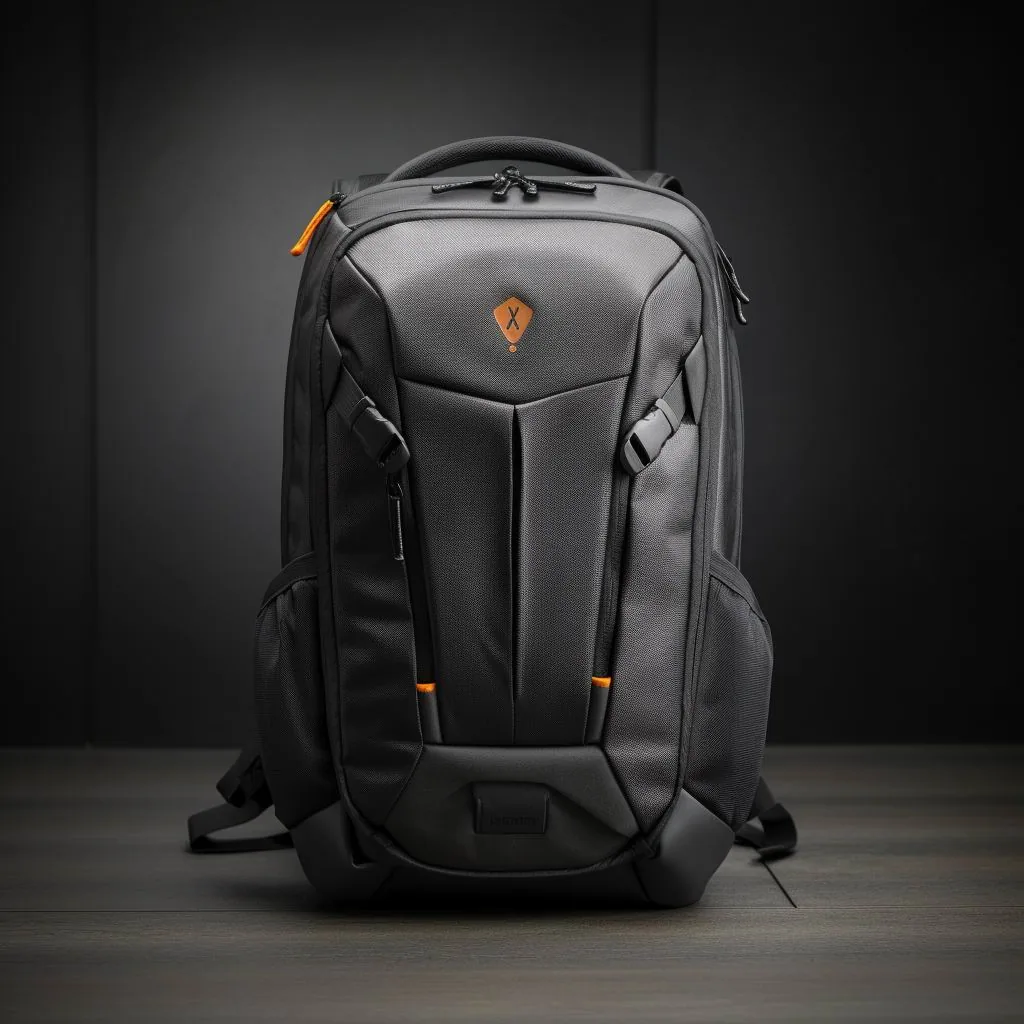
Testing Standards and Bulk Custom Orders
QUANZHOU JUNYUAN BAGS has worked as a sourcing and programme-management company since 2014, and the founder has been in the trade since 2004. Sewing and welding are done by our production partners in a 4,950 square metre SGS-verified building equipped with 7 production lines and 149 machines, staffed by 137 colleagues and turning out 200,000 pieces each month. What our team contributes is the written specification, the sample round and the inspection plan.
Programme terms: MOQ 500 pcs per style and colourway, sampling in 6-10 working days (12-15 where a custom reservoir sleeve or a moulded coupling is specified), bulk production 35-50 days after sample sign-off, inspection at AQL 2.5 under ISO 2859-1, payment T/T 30/70 and shipment FOB Xiamen.
Reservoirs add tests that ordinary backpack programmes do not need. Hold the filled reservoir at 0.3 bar for 60 seconds and check for weld creep; drop it filled from 1 m onto concrete twice; invert it with the valve closed for ten minutes and record any loss in millilitres; pull the tube-to-reservoir joint to 80 N; and run a peel test on the welded perimeter seam. On the pack itself, require 5,000 loaded zip cycles and a 180 N pull on every buckle.
- Specify reservoir volume, material, dry weight, opening width in millimetres and whether a shut-off valve is fitted.
- Specify the valve and tube as replaceable parts with a stated bore and length, and order 3 per cent spares with the first shipment.
- Require written food-contact declarations for every component that touches water, including the tube and the valve.
- Any electrical element, such as a pump or an LED, needs UKCA marking and the UK responsible-person details on the packaging.
Sampling vocabulary is drawn from the ISO catalogue; we record empty weight, usable volume, packed dimensions and safe working load for every approved sample and hold two sealed reference units per style so that a repeat order matches the one you signed off.
Common Buying Mistakes to Avoid
Nine mistakes account for most of the frustration with hydration systems, and eight of them are about maintenance rather than the bag.
- Buying 3 L for a 90-minute ride. That is 1 kg of water you carry up every climb and slosh down every descent.
- Putting the reservoir in the dishwasher. Heat above 60 degrees deforms welded TPU seams.
- Leaving electrolyte drink in the reservoir. Biofilm is visible within two to three days at 20 degrees.
- Storing the system wet. Mould appears inside 72 hours in a closed British cupboard.
- Skipping the shut-off valve, then laying the pack flat in a car boot.
- Routing the tube over the wrong shoulder, or leaving more than 120 mm of slack past the clip.
- Assuming the sleeve fits any reservoir. Check it is 20 mm deeper than the reservoir you intend to use.
- Using bleach at too high a concentration. One teaspoon of bicarbonate per 500 ml is enough; aggressive bleach shortens the life of welded seams.
- Putting the reservoir in the same compartment as a laptop.
The drying habit is the one that changes ownership economics. Hang the reservoir open, with the tube disconnected and both ends exposed, for at least eight hours after every use; in a British winter, put it near a dehumidifier or in an airing cupboard rather than in a cold garage. A system dried properly needs deep cleaning monthly; one stored wet needs replacing.
Final Verdict: Who Should Choose This?
Choose a hydration pack if your activity keeps both hands busy for more than ninety minutes and you cannot rely on a refill. The specification we recommend for a British rider or hill walker is a 10-16 L pack with a welded 2 L TPU reservoir, a 70 mm or wider slide-top opening, a quarter-turn shut-off valve, a replaceable silicone bite valve, an insulated tube sleeve and a 420D base panel, landing at 620-900 g empty and £60-£110.
Choose a 1.5 L running vest if the activity is under two hours and you are counting grams, and choose a 3 L reservoir only for long summer days with no water source. Choose a 20-30 L hiking daypack with a reservoir sleeve if the pack also has to carry a shell, food, a map and a first-aid kit; that is the only configuration where a hydration system and a full day's kit coexist comfortably.
Skip it for office commuting, for school, and for anyone who has never cleaned a water bottle properly. In those roles a 750 ml bottle in a side pocket does the job for 90 pence and cannot leak into a laptop.
Buy the reservoir you will actually clean, at the volume you will actually drink. Everything else in a hydration pack is a bag.
For a hydration brief, a sample round or a price, email service@junyuanbags.com or reach us on WhatsApp at wa.me/8617750020688. Tell us the activity, the reservoir volume and how many colourways you need, and we will answer inside the terms set out above.
Frequently Asked Questions
What is a hydration pack and how does it differ from a standard backpack?
A hydration pack has a dedicated sleeve for a flexible water reservoir, a drink tube routed over the shoulder and a bite valve clipped at the chest, so you can drink without stopping or using your hands. A standard backpack relies on a bottle in a side pocket. The hydration version costs capacity, adds maintenance and buys uninterrupted momentum.
How much capacity does a hydration pack usually offer?
Packs run from 5-8 L running vests through 10-16 L trail packs to 20-30 L hiking daypacks with a reservoir sleeve. A 2 L reservoir typically removes 2-4 L of usable space depending on the pack, because the sleeve and the displaced main compartment both count. For a three-hour summer ride, 10-16 L with 2 L of water is the practical answer.
How heavy should a hydration pack be when empty?
Expect 380-620 g for a running vest, 620-900 g for a 10-16 L trail pack and 900 g to 1.35 kg for a hiking model with a sleeve. Add 140-210 g for the dry reservoir and 2 kg for a full 2 L of water. Below about 500 g in a trail pack usually means the base panel and the harness have been cut.
Is a hydration pack waterproof or only water-resistant?
Water-resistant, and that is the correct answer for both the shell and the system. Shells are typically 1,500 mm coated, rising to 3,000 mm with taped seams for hill use. The reservoir is sealed but the tube, valve and coupling are not, so expect drips rather than floods, and never share a compartment with electronics.
Which UK buyer should choose a hydration pack?
Mountain bikers, trail runners, hill walkers, event and festival-goers, and site or field staff without access to a canteen all benefit. The common factor is two occupied hands and more than ninety minutes between refills. Office commuters with a laptop generally do not benefit and carry the leak risk for nothing.
Can I use a hydration pack for the daily commute?
It works but it is rarely the right tool. The reservoir displaces laptop space, puts 2 kg high on the panel and introduces a leak path next to your device. If you cycle to work, fit a bottle cage to the bike and use an ordinary commuter pack; reserve the hydration system for weekend rides.
How long does a hydration pack last in regular use?
A welded TPU reservoir lasts three to five years with proper drying; a PEVA one is usually replaced within eighteen months. Valves and tubes are annual consumables at £4-£10 each. The pack shell itself should survive four to six years of weekend use provided the base panel is at least 420D and the zips are rated for 5,000 cycles.
What should I pay for a hydration pack in the UK?
£60-£110 buys the specification worth having: welded TPU reservoir, opening of 70 mm or more, a shut-off valve and a decent harness. Entry packs at £35-£60 bundle a reservoir most owners replace in year two. Above £110 you are buying lighter fabric and magnetic routing rather than durability.
Does a hydration pack fit a 15-inch or 16-inch laptop?
Usually not below 16 L. A few 20-30 L hiking models with a reservoir sleeve take a 15-inch machine at 358 x 247 mm, and a smaller number take a 16-inch at 381 x 266 mm. If a laptop must travel, insist the sleeve is in a separate compartment from the reservoir.
What are the main disadvantages of a hydration pack?
Four: it needs cleaning after every use or it grows biofilm and mould; the tube freezes before the reservoir in cold weather; you cannot see how much water is left; and a leak empties the pack silently. Each is manageable, but each is a reason to think twice for low-intensity use.
How do I clean and maintain a hydration pack?
Rinse and hang it open to dry for at least eight hours after every use. Monthly, brush the interior through a 70 mm or wider opening, clean the tube with a draw-through brush and use one teaspoon of bicarbonate per 500 ml or a cleaning tablet, then rinse twice. Never machine wash above 30 degrees and never put a reservoir in a dishwasher.
Can I order custom hydration packs in bulk for a UK team?
Yes. Standard terms are MOQ 500 pcs per style and colourway, 6-10 working days for sampling, 35-50 days for bulk after sign-off, inspection at AQL 2.5 under ISO 2859-1, payment T/T 30/70 and shipment FOB Xiamen. Specify reservoir material, volume, opening width and valve type, and order 3 per cent spare valves and tubes with the first shipment.
How often should a hydration reservoir be cleaned in the UK?
Rinse and dry after every outing, because mould appears within about 72 hours in a closed British cupboard. Deep clean monthly in normal use, and immediately after any sweetened or electrolyte drink, which produces visible biofilm in two to three days at 20 degrees.