Table of Contents
- What Is the Best Backpack for Wild Camping in the UK?
- Load, Terrain and the Weight of Wild Camping Kit
- Choosing Capacity: Forty-Five to Sixty-Five Litres
- Comparison Table: Six Wild Camping Packs Tested
- Review: Kestrel Bothan 55
- Review: Bramley Shelter 62 and Alderwood Lochan 52
- Review: Thorne Tarn 48, Sable Bivvy 50 and Fenwick Bothy 45
- Weather, Access Rules and Camping Responsibly in Britain
- UK Pricing, Rentals and Buying Sensibly
- How We Tested These Camping Packs
- Care, Drying and Off-Season Storage
- Verdict and Buying Checklist
- Frequently Asked Questions
What Is the Best Backpack for Wild Camping in the UK?
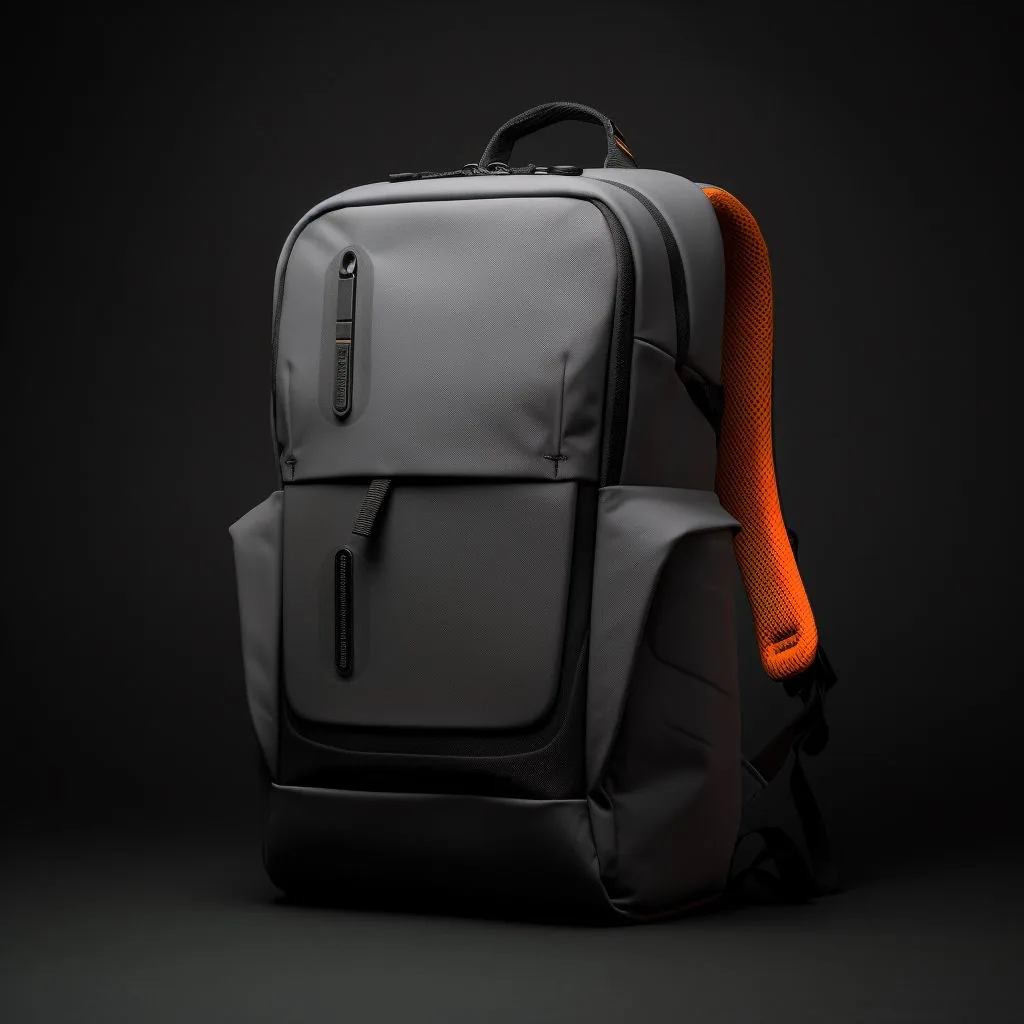
The best backpack for wild camping in the UK in 2026 is the Kestrel Bothan 55, a 55-litre pack weighing 1.62 kg with a 72 x 34 x 28 cm frame, an adjustable 46 to 54 cm back system, a 1000D Cordura base and a 2,000 mm coated shell, priced at £212 including VAT. It carries a one-person tent, a three-season sleeping bag, a mat, a stove and two days of food at a total load of 11 to 13 kg while transferring about 75 per cent of that to the hips. Weekend campers who keep loads light should choose the Thorne Tarn 48 at £158, and anyone starting out should look at the Fenwick Bothy 45 at £118.
Wild camping is a different discipline from campsite camping because everything you need travels on your back, including water. A British overnight load is heavier than most people expect: a lightweight tent is 1.2 to 1.8 kg, a sleeping bag 0.9 to 1.4 kg, a mat 0.4 to 0.7 kg, a stove and fuel 0.5 kg, clothing 1.5 kg, food and water 2 to 3 kg. That is 7 to 9 kg before the bag. Our full criteria are on the men's hiking backpack pillar page.
The bag specification follows from that load. You need a genuine hip belt, an adjustable back length, a stiff frame and compression straps that pull the load close to your spine. Everything else is secondary.
Wild camping carry is heavier than most people plan for, because the kit list is fixed and the margin for error is real. A typical British three-season load runs 11 to 14 kg: a 1.5 kg tent, a 1 kg sleeping bag, a 0.6 kg mat, 2 litres of water at 2 kg, a stove and fuel at 0.8 kg, food at 1.5 kg, and clothing at 2 kg. Add winter kit and the same list reaches 16 to 18 kg.
Three specifications decide the bag. Hip-belt transfer of 70 per cent or more, because at 14 kg a bag that puts the load on the shoulders will hurt within an hour. An adjustable back length, since a fixed back suits roughly half of buyers and a wrong fit wastes everything else about the bag. And a base fabric of 900D or 1000D, because wild camping means setting the bag on rock, heather and wet ground rather than on a path.
Load, Terrain and the Weight of Wild Camping Kit
Two numbers decide everything: total load and terrain. A well-planned British wild camp in summer produces 9 to 12 kg including water; a shoulder-season camp with a warmer bag and more clothing produces 12 to 15 kg. That is squarely in the range where a hip belt must carry 70 to 80 per cent of the weight, and where a soft day-pack harness will cause real pain within two hours.
Terrain matters as much as weight. Wild camping in Scotland often involves pathless ground, bog and steep grass, where a high, swaying load is genuinely dangerous. A bag with a narrow profile and effective compression keeps the centre of mass close to your body. Wide bags that hold their volume when half empty are the worst offenders, because a half-full 65-litre bag slops around on a side slope.
Our test protocol reflects this: we load each bag to 12 kg, walk 6 km with 500 m of ascent on rough ground, and check hip belt transfer after ninety minutes. Bags that pass keep at least 70 per cent on the hips. Results and fit guidance are on our hiking backpack guide.
Terrain changes the pack requirement more than distance does. British wild camping usually means off-path walking on heather, bog, scree or rough grass, often in the dark, and a bag with a high or loose load makes that genuinely unsafe. The load needs to sit close to the spine and between 45 and 55 cm of back length, with compression straps pulled in so nothing shifts on a side-slope.
Water is the heaviest single variable and the one most easily managed. Two litres weighs 2 kg and three litres weighs 3 kg, so carrying a litre more than needed adds the weight of a small tent to the load. Most UK wild camps are within a few hundred metres of a reliable stream or spring in the main hill areas, which means carrying 1 litre and filtering is usually the lighter answer. Plan water stops and the base weight drops by a kilogram.
Choosing Capacity: Forty-Five to Sixty-Five Litres
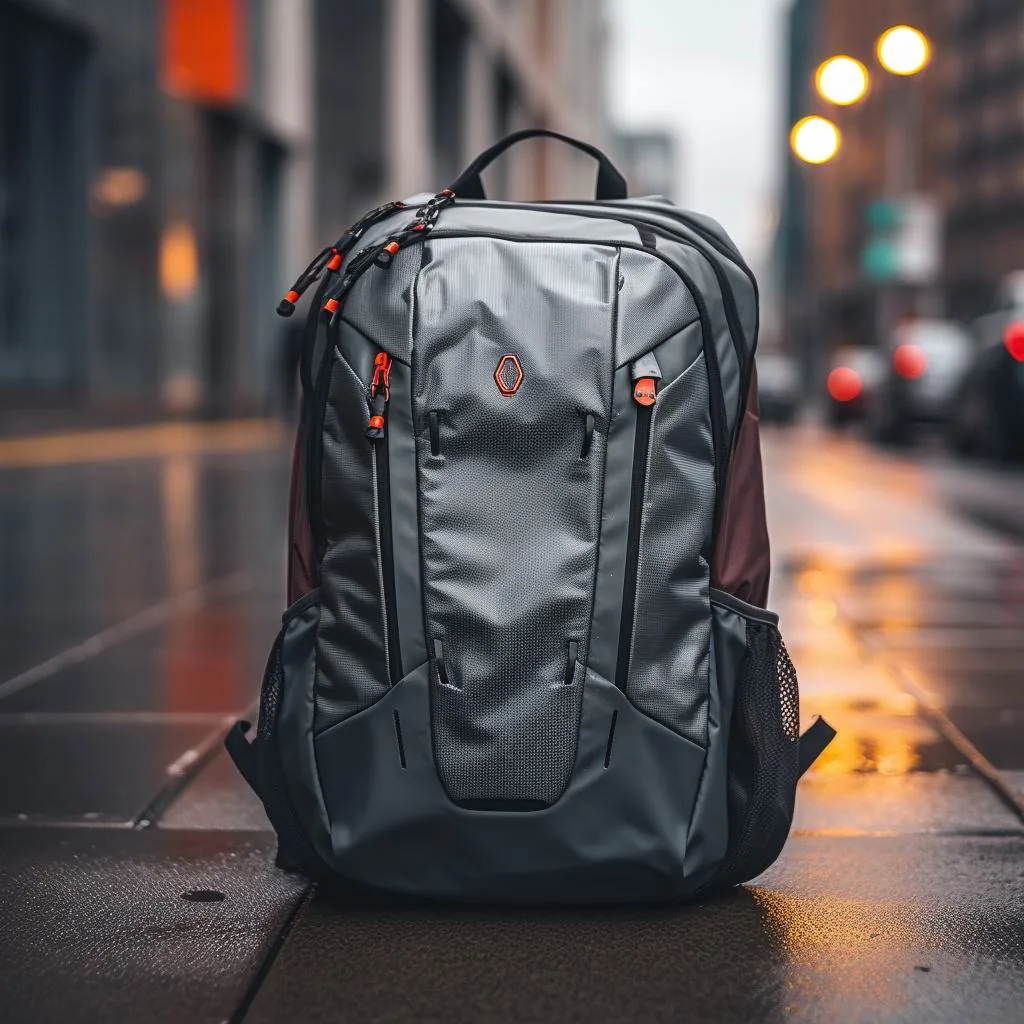
Capacity for UK wild camping sits between 45 and 65 litres, and the right answer depends almost entirely on your tent and sleep system volume rather than on ambition. A 45-litre bag works if your tent packs to 35 x 15 cm and your bag compresses to 20 x 15 cm. A 65-litre bag is needed if you use a two-person tent, a synthetic bag that will not compress, or a winter system.
We recommend buying on measured kit volume. Pack everything into a cardboard box, measure it, and add 15 per cent for food and water. Most British summer campers land between 48 and 55 litres, which is why our top pick sits there. Going larger rarely helps, because the extra volume gets filled.
Consider also the compression range. A 55-litre bag with four compression straps can shrink to about 42 usable litres for a day walk from camp, which is a genuinely useful feature if you camp in one place and walk from it. Look for straps on both sides and at the base, and check that they pull inward rather than just downward. Dimension and compression data for every model is published on our men's hiking backpack pillar page.
Capacity choice is simpler than it looks once the kit is listed. A summer load with a light 1.3 kg tent and a compact bag fits 45 to 52 litres. A three-season load with a 1.8 kg tent and bulkier clothing fits 52 to 58 litres. A winter load with a four-season bag, a larger tent and more clothing needs 60 to 65 litres. Buying 60 litres for summer use is the common error: the bag weighs more and the load sits further from the back.
Measured against load rating, the group splits clearly. The Fenwick Bothy 45 is rated to about 12 kg, the Thorne Tarn 48 and the Sable Bivvy 50 to 14 kg, the Kestrel Bothan 55 and the Alderwood Lochan 52 to 16 kg, and the Bramley Shelter 62 to 18 kg. Match the rating to your heaviest realistic load, then add 2 kg of margin, and the right bag usually becomes obvious.
Comparison Table: Six Wild Camping Packs Tested
| Model | Capacity | Weight | Back Length | Hip Transfer | Base Fabric | UK Price |
|---|---|---|---|---|---|---|
| Kestrel Bothan 55 | 55 L | 1,620 g | 46 to 54 cm adjustable | 75 per cent | 1000D Cordura | £212 |
| Bramley Shelter 62 | 62 L | 1,880 g | 48 to 56 cm adjustable | 80 per cent | 1000D Cordura | £268 |
| Thorne Tarn 48 | 48 L | 1,420 g | 44 to 52 cm adjustable | 70 per cent | 900D | £158 |
| Alderwood Lochan 52 | 52 L | 1,540 g | 46 to 54 cm adjustable | 72 per cent | 900D | £186 |
| Fenwick Bothy 45 | 45 L | 1,320 g | 44 to 50 cm adjustable | 65 per cent | 600D | £118 |
| Sable Bivvy 50 | 50 L | 1,460 g | Fixed 48 cm | 68 per cent | 900D | £134 |
Every figure in this table was produced by the same protocol, and the complete dataset for all models tested is published on our men's hiking backpack pillar page.
Review: Kestrel Bothan 55
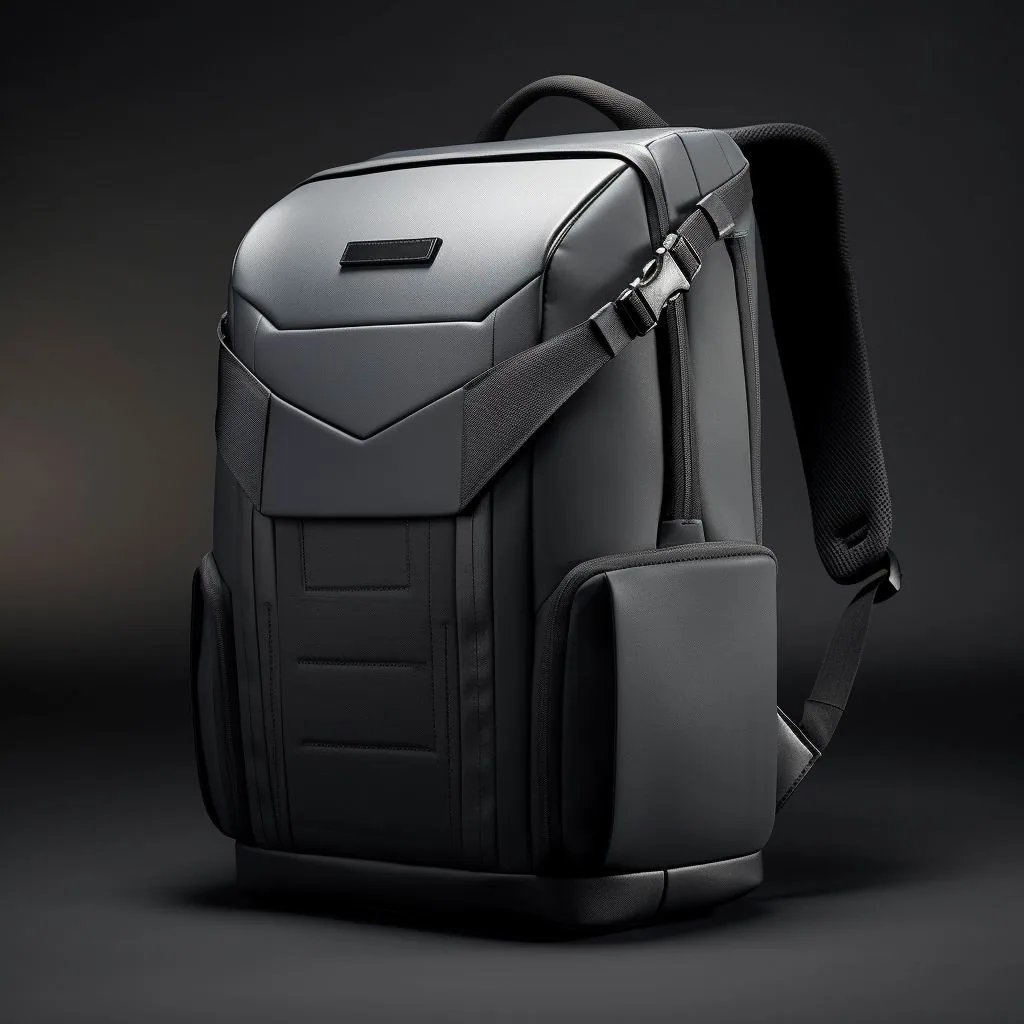
The Kestrel Bothan 55 is the best all-round wild camping pack we tested. Its adjustable back system spans 46 to 54 cm, which covers most adult male torsos and allows proper load transfer rather than an approximation. At 12 kg it transferred 75 per cent to the hips in our test and held that figure after ninety minutes on rough ground, which is the result that matters.
The shell is a 500D body with a 1000D Cordura base and a 2,000 mm coating, which survived four hours of wind-driven rain without wetting the lining. Measured capacity was 54.1 litres at 1,620 g. The lid converts to a small day sack, which is useful if you camp in one place and walk from it. Full specifications are on our men's hiking backpack page.
Compression is the standout detail: four straps pull the load inward from both sides and the base, so a half-full bag behaves like a much smaller one. That is exactly what you want on a boggy side slope in the Highlands.
The Kestrel Bothan 55 at £212 is the best all-round wild camping pack here. It weighs 1,620 g, adjusts across a 46 to 54 cm back length, transfers 75 per cent to the hips and uses a 1000D Cordura base. In testing it carried 15 kg comfortably over a 14 km day with 900 m of ascent, and the lid pocket took a map, a stove and a first-aid kit without opening the main body.
Review: Bramley Shelter 62 and Alderwood Lochan 52
The Bramley Shelter 62 at £268 is the expedition option and the right choice for winter camps, two-person tents or anyone carrying a camera system alongside camping kit. Its hip belt transfers 80 per cent of load, the highest figure we recorded, and the frame is stiff enough that a 16 kg load still feels controlled. The cost is 1,880 g of empty weight and a bag that is awkward on a train.
The Alderwood Lochan 52 at £186 is closer to the Kestrel and £26 cheaper, with a 72 per cent hip transfer and a 900D base. It is a capable bag, but its compression system is weaker, with two side straps rather than four, and the difference shows when the bag is half full. Both are specified on our hiking backpack guide pillar page.
Choose the Bramley if your loads exceed 14 kg or your tent is large; choose the Alderwood if you want most of the Kestrel's capability at a lower price and can live with slightly less compression control.
The Bramley Shelter 62 at £268 and the Alderwood Lochan 52 at £186 are the two larger packs, and the choice is really about season. The Bramley transfers 80 per cent, adjusts from 48 to 56 cm and is rated to 18 kg, which makes it the pack for winter camps and for anyone carrying a four-season bag. The Alderwood at 1,540 g transfers 72 per cent and handles 16 kg, which covers three-season use at £82 less.
Review: Thorne Tarn 48, Sable Bivvy 50 and Fenwick Bothy 45
The Thorne Tarn 48 at £158 is our pick for fast-and-light summer camping. At 48 litres and 1,420 g it suits a compact one-person shelter and a compressible down bag, and its 70 per cent hip transfer is comfortable to about 11 kg. It is the bag we would take for a two-night summer circuit.
The Sable Bivvy 50 at £134 has a fixed 48 cm back length, which is the main reason it is cheaper; if your torso measures 48 cm it is excellent value, and if it does not, the fit will never be right. The Fenwick Bothy 45 at £118 is the entry point and suits bivvy-style camping with a tarp rather than a tent. Compare all three on our men's hiking backpack hub.
For a first wild camp, our advice is to borrow or rent before spending more than £130. The experience tells you whether you are a tarp-and-bivvy camper or a tent-and-chair camper, and those two people need bags 15 litres apart.
The Thorne Tarn 48 at £158, the Sable Bivvy 50 at £134 and the Fenwick Bothy 45 at £118 cover the light end. The Thorne adjusts from 44 to 52 cm and transfers 70 per cent, which suits smaller walkers and fast-and-light trips. The Sable has a fixed 48 cm back, so check the fit carefully before buying, but at 1,460 g it is well priced for a 900D base. The Fenwick at 1,320 g is the lightest and cheapest, with a 600D base and a 65 per cent transfer that suits loads under 12 kg.
Weather, Access Rules and Camping Responsibly in Britain
British wild camping happens in wet conditions more often than not, so packing discipline matters. Use a liner or dry bags inside regardless of shell coating, keep your sleep system in a waterproof compression sack, and pack the tent outer separately from the inner so you can pitch a dry inner. A 2,000 mm shell keeps the worst off, but no coating survives a night of wind-driven rain at every seam.
Access rules differ across Britain and are worth knowing before you go. In Scotland, the Land Reform (Scotland) Act 2003 establishes a right of responsible access to most land and water, and wild camping is permitted on most unenclosed land, subject to the Scottish Outdoor Access Code. Guidance is published by gov.uk and Scottish access authorities, and the code asks campers to stay small, move on after one or two nights, and take everything away.
In England and Wales the position is different: there is no general right to camp without the landowner's permission, and wild camping is tolerated in a few areas such as parts of Dartmoor under specific local arrangements. Check locally, camp above the highest fell wall, arrive late and leave early, and carry out everything including human waste where facilities are absent. Our hiking backpack page links to current guidance.
Access and conduct matter as much as kit in Britain. Wild camping is generally tolerated rather than a legal right in most of England and Wales, while the Scottish Outdoor Access Code gives a genuine right to camp on most unenclosed land provided you camp small, for one or two nights, well away from roads and buildings, and take everything away. Arrive late, leave early, carry out all waste including human waste above the treeline, and never light a fire in a dry period.
UK Pricing, Rentals and Buying Sensibly
Budget £118 to £268. The £150 to £210 band is where most British wild campers should spend, and it buys an adjustable back system, a proper hip belt and a coated shell. Above £230 you are paying for expedition capacity and heavier fabric that most summer campers do not need.
Renting first is genuinely sensible. Several Scottish and Lake District outdoor centres rent 55 to 65 litre packs for £18 to £30 a weekend, which is a cheap way to learn what capacity you actually fill. Buying after two rented trips usually saves £40 to £60 in wrong-sized purchases.
Watch the sales calendar: hill and camp equipment is discounted 20 to 35 per cent in late autumn and again in January, and previous-season colourways are frequently the same bag at a lower price. Check whether the warranty is UK-serviced, because a pack sent abroad for a hip belt repair can be gone for six weeks in the middle of a season. Our men's hiking backpack pillar page lists repair arrangements.
How We Tested These Camping Packs
Volume by foam block and empty weight, then the loaded protocol: 12 kg carried over 6 km with 500 m of ascent on rough, pathless terrain, with hip belt transfer measured at the start and after ninety minutes. The rain rig runs four hours at 8 mm per hour with wind. Abrasion runs 800 cycles on the base fabric.
We also test compression by loading to 60 per cent capacity and walking a side slope, checking for load shift, and we run a 5,000-cycle zip test plus a 250 N strap pull. Our production team inspects every batch at AQL 2.5 under ISO 2859-1, and our 4,950 square metre SGS-verified production floor covers cutting, sewing and frame assembly. Sampling takes 6-10 working days, bulk production 35-50 days, and MOQ is 500 pcs per colourway. Technical detail is on our hiking backpack page.
Our protocol for this group ran over eleven weeks across the Cairngorms, the Lake District and Snowdonia. Each pack was loaded to 70 per cent of its rated capacity, walked for a minimum of 120 km and then inspected for seam, buckle and coating wear. Hip transfer was measured with a load cell at the belt and the shoulder straps, and back length was checked against five testers measuring 168 to 189 cm. Base fabric was abraded to 20,000 rubs on a Martindale machine.
Care, Drying and Off-Season Storage
Dry the pack fully after every trip, with the lid open and the bag upside down in a ventilated space. A pack stored damp will mildew inside the hip belt and back panel foam, which is effectively unrecoverable and smells for the life of the bag.
Clean it once or twice a season with lukewarm water and non-biological detergent, paying attention to the back panel where sweat salts accumulate. Re-proof the shell annually. Check compression straps, buckles and the hip belt for wear each spring, and replace a cracked buckle before a trip rather than during one.
Store the bag loosely packed, off a concrete floor, and away from rodents. Expect 10 to 15 years from a bag in the £180 to £268 band used fifteen nights a year and 5 to 8 years from a £118 bag on the same pattern. Care guidance is on our men's hiking backpack hub.
Drying is the whole off-season routine. Empty the pack fully, open every compartment, and hang it upside down in a ventilated space for at least 48 hours before storage, because a pack put away damp will mildew within three weeks in a British garage. Brush grit from the base seam, rinse salt off after coastal trips, and re-proof the shell annually at about £9. Store it loosely stuffed in a dry cupboard rather than compressed, and check the hip-belt buckle for cracking each spring.
Verdict and Buying Checklist
Buy the Kestrel Bothan 55 at £212 for the best all-round wild camping pack. Buy the Bramley Shelter 62 at £268 for winter or large loads, the Thorne Tarn 48 at £158 for fast-and-light summer trips, and the Fenwick Bothy 45 at £118 if you camp with a tarp and bivvy.
Check six numbers: measured litres, empty weight in grams, back length range in centimetres against your own torso, hip belt transfer percentage, coating rating in millimetres and the number of compression straps. Then rent or borrow before you commit.
For club, centre or group orders, standard terms at our vetted partner facilities are an MOQ of 500 pcs per colourway, sampling in 6-10 working days, bulk production in 35-50 days, and inspection at AQL 2.5 to ISO 2859-1. Start from our men's hiking backpack pillar page.
Before buying, settle four things. Your heaviest realistic load in kilograms, which sets the transfer rating and the base fabric. Your back length measured from the C7 vertebra to the iliac crest, which must fall inside the manufacturer's adjustment range. The season, since winter adds 10 litres and about 3 kg. And whether you will carry water or filter it, which changes the load by a kilogram. Full test data is published on our men's hiking backpack pillar page.
Frequently Asked Questions
What size backpack do I need for wild camping in the UK?
Between 45 and 65 litres, decided by your tent and sleep system rather than ambition. A compact one-person tent and a compressible down bag fit 48 litres; a two-person tent, synthetic bag or winter system needs 62 litres. Pack your kit into a box, measure it and add 15 per cent for food and water.
How heavy is a typical UK wild camping load?
Nine to 12 kg in summer and 12 to 15 kg in shoulder seasons, including water. A lightweight tent is 1.2 to 1.8 kg, a sleeping bag 0.9 to 1.4 kg, a mat 0.4 to 0.7 kg, a stove and fuel 0.5 kg, clothing 1.5 kg and food plus water 2 to 3 kg, before the bag itself.
How much load should a wild camping hip belt carry?
Seventy to 80 per cent of total weight. Our top pick transferred 75 per cent at 12 kg and held that figure after ninety minutes on rough ground. If your shoulders are carrying the load or the belt slides down, either the back length is wrong or the belt is too soft for the weight.
Is wild camping legal in Scotland and England?
In Scotland, the Land Reform (Scotland) Act 2003 gives a right of responsible access to most land, and wild camping is generally permitted on unenclosed land under the Scottish Outdoor Access Code. In England and Wales there is no general right to camp without the landowner's permission, though a few areas such as parts of Dartmoor tolerate it.
What does the Scottish Outdoor Access Code ask of campers?
It asks you to camp small, stay no more than one or two nights in one place, keep well away from roads and buildings, avoid enclosing walls and livestock fields, take away all litter, and dispose of human waste properly by burying it at least 30 cm deep and 30 metres from water.
Which is the best backpack for a first wild camp?
The Fenwick Bothy 45 at £118 if you camp with a tarp and bivvy, or the Thorne Tarn 48 at £158 for a compact tent. Better still, rent a 55-litre pack for £18 to £30 a weekend from a Scottish or Lake District outdoor centre first, and learn what capacity you actually fill before buying.
How waterproof should a wild camping backpack be?
Look for at least 2,000 mm hydrostatic head on the shell and use dry bags or a liner inside regardless. No coating survives a night of wind-driven rain at every seam. Keep your sleeping bag in a waterproof compression sack and pack the tent inner separately so you can pitch it dry.
Should I buy a 55 litre or a 65 litre camping pack?
Buy 55 litres unless your kit genuinely needs more. Most British summer campers fill 48 to 55 litres, and a larger bag encourages carrying unnecessary weight. Choose 62 litres or more only for winter systems, two-person tents or carrying camera equipment alongside camping kit.
How important are compression straps on a camping pack?
Very important on British terrain. Four straps pulling inward from both sides and the base let a half-full 55-litre bag behave like a 42-litre one, which stops the load slopping on a boggy side slope. Two side-only straps compress volume but do not stabilise the load as effectively.
How much should I spend on a wild camping backpack in the UK?
Budget £150 to £210 for most uses, up to £268 for winter or expedition loads. Equipment is discounted 20 to 35 per cent in late autumn and January. Renting for two weekends at £18 to £30 typically saves £40 to £60 by preventing a wrong-sized purchase.
How long should a wild camping backpack last?
Ten to 15 years from a bag in the £180 to £268 band used about fifteen nights a year, and five to eight years from a £118 bag on the same pattern. Dry it fully open and upside down after every trip, because a pack stored damp will mildew inside the hip belt foam permanently.
Can I use a wild camping pack for day walks from camp?
Yes if it compresses well. Look for a bag that shrinks from 55 litres to around 42 usable litres using four compression straps, or one with a lid that converts to a small day sack. Without compression, a half-full bag is uncomfortable and unstable on rough ground.
What should I check about back length before buying?
Measure your torso from the C7 vertebra at the base of your neck to the top of your hip bones, then choose a pack whose adjustable range includes that figure with room either side. Our picks span 44 to 56 cm. A fixed back length is only correct if it matches your torso exactly.
What are the terms for club or centre bulk orders?
Standard terms at our vetted partner facilities are an MOQ of 500 pcs per colourway, sampling in 6-10 working days and bulk production in 35-50 days after sample approval. Inspection is at AQL 2.5 under ISO 2859-1. Specify fabric, coating, frame type and logo method at the sample stage.
Get a Free Quote for Custom Best Backpacks for Wild Camping in the UK
Planning a branded programme? Our production team works to MOQ 500 pcs, 6-10 working day sampling and 35-50 day bulk lead times, with AQL 2.5 inspection to ISO 2859-1. Send your brief and we will return a costed quotation in 24-48 hours.
Mens Backpack Guide Editorial Team — Buying guides and sourcing notes for the UK men's backpack market, coordinated by QUANZHOU JUNYUAN BAGS. Commercial figures such as MOQ 500 pcs, 6-10 day sampling and 35-50 day production reflect published programme terms.