Table of Contents
- Ripstop Denier Guide: The Direct Answer
- How a Ripstop Grid Actually Stops a Tear
- The Denier Ladder: 20D Through 210D Compared
- Grid Spacing: 5 mm, 10 mm and 20 mm in Practice
- Coatings: Silicone, PU and Sil-Poly Hybrids
- Which Denier for Which British Hill Pack
- UV, Mildew and Why Light Fabrics Fail First
- Cost: What Each Denier Tier Adds in the UK
- Specifying Ripstop on a Custom Hill Pack Order
- Failure Modes and Field Repair
- Verdict: Choosing Your Ripstop Denier
- Frequently Asked Questions
Ripstop Denier Guide: The Direct Answer
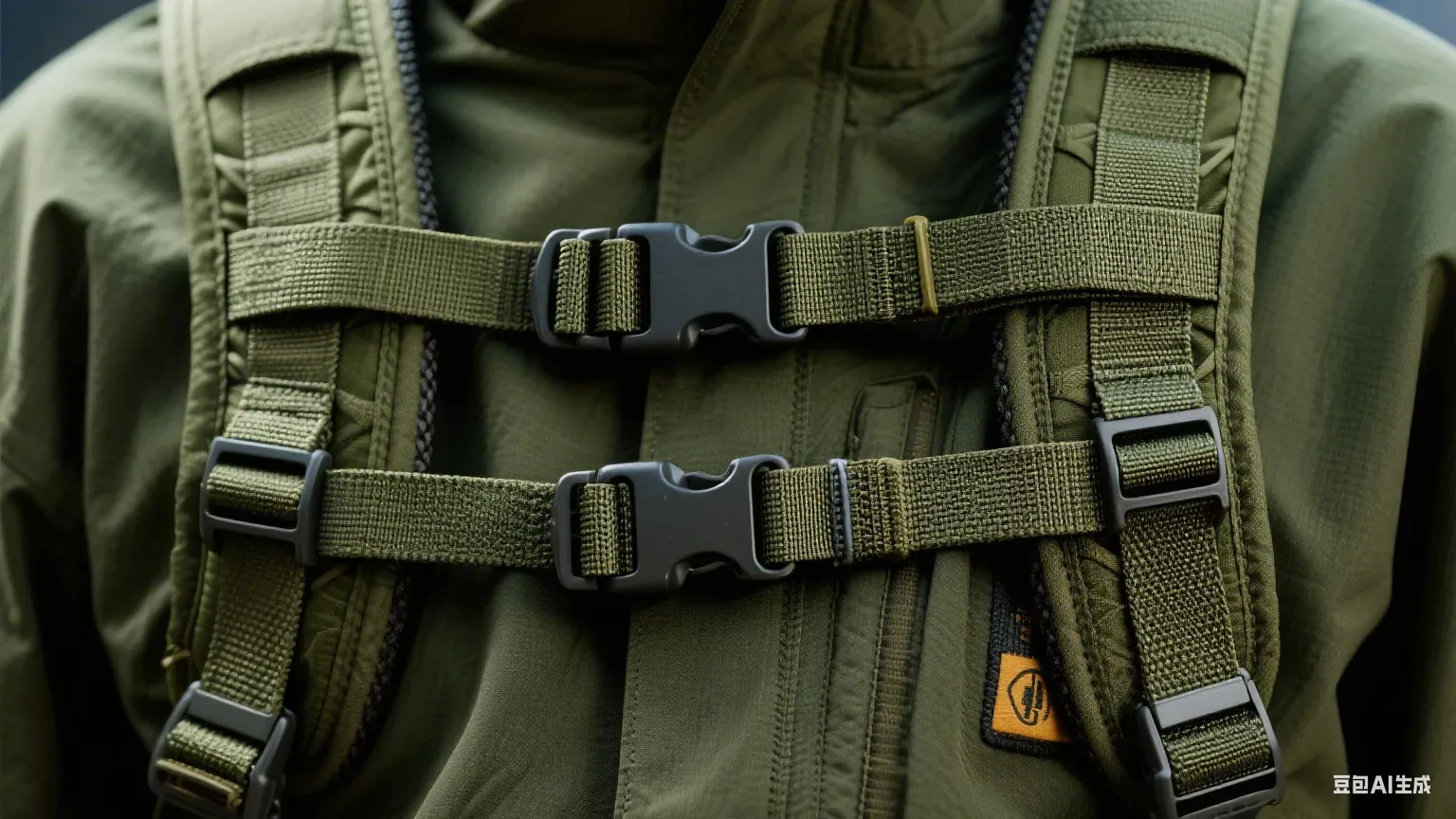
Ripstop fabric stops a tear by weaving a heavier reinforcement thread into a grid, typically at 5 mm, 10 mm or 20 mm spacing, so that any rip reaching the grid is stopped within one cell. The denier of the base cloth sets the weight and abrasion life; the denier of the grid thread sets how much punishment the fabric takes before a tear propagates. For British hill use, 70D ripstop at 90-110 g/m² is the sweet spot: it tears at 90-140 N, weighs a third of a 210D oxford and survives 6-9 seasons of Lake District weekends. Lightweight 20D and 30D silnylon shells suit summer fastpacking but tear at only 40-70 N and puncture on grit. Above 210D the ripstop grid adds little, because the base cloth is already strong enough that the grid is redundant. UK prices run from £55 for a 20D packable daypack to £240 for a 210D expedition shell.
The grid is visible if you hold the fabric up to a window: a regular lattice of thicker threads running warp and weft. Cheap imitations print the grid instead of weaving it, and a printed grid provides no tear resistance whatsoever.
This guide gives the full denier ladder with weights, tear figures and coating specifications, then maps each grade onto the pack types British walkers actually buy. Our hiking backpack guide links the fabric choice back to capacity and load.
How a Ripstop Grid Actually Stops a Tear
A rip is a stress concentration. Once a filament breaks, the load it was carrying transfers to its neighbours, they break in turn, and the failure runs across the fabric. A ripstop grid interrupts that chain: at every grid intersection a heavier thread, usually 200D-400D against a 20D-70D base, absorbs the transferred load and holds. The tear stops within one grid cell, which is 5-20 mm depending on spacing.
Two variables govern performance. Grid spacing sets the maximum length of any single tear: a 5 mm grid limits a rip to roughly 6-8 mm before it is arrested, while a 20 mm grid allows 22-28 mm. Spacing also drives cost, because a tighter grid consumes more reinforcement yarn. Grid thread denier sets the arresting force: a 200D grid on a 30D base typically raises tear strength by 40-60% over the ungridded cloth, and a 400D grid by 70-95%.
The trade-off is that the grid creates stiffness lines and slightly reduces abrasion uniformity. Where the reinforcement crosses, the fabric sits proud and abrades first, which is why heavily used ripstop develops a faint checkerboard sheen long before it fails. That is cosmetic, not structural. Measurement of tear propagation is standardised in ISO 13937-2, and the same figure is cited for every shell reviewed in our hill pack buying guide.

The Denier Ladder: 20D Through 210D Compared
The table sets out the full ripstop range with typical production values. Weight is uncoated; coating adds 20-45 g/m² depending on whether the finish is a PU back-coat, a silicone impregnation or a TPU laminate.
| Base denier | Weight uncoated | Tear ISO 13937-2 | Martindale | Best use |
|---|---|---|---|---|
| 20D silnylon | 38-48 g/m² | 40-70 N | 6,000-10,000 | Packable daypack, summer |
| 30D silnylon | 48-60 g/m² | 55-85 N | 8,000-13,000 | Fastpack lid, stuff sack |
| 40D silpoly | 60-75 g/m² | 70-100 N | 10,000-16,000 | Lightweight 35-45 L shell |
| 70D nylon | 90-110 g/m² | 90-140 N | 14,000-22,000 | General hill pack, 3-season |
| 100D nylon | 120-150 g/m² | 130-190 N | 18,000-28,000 | 45-60 L expedition body |
| 140D nylon | 160-195 g/m² | 180-250 N | 22,000-34,000 | Winter hill pack body |
| 210D nylon | 230-280 g/m² | 240-340 N | 28,000-42,000 | Base panel, expedition |
| 420D nylon | 330-400 g/m² | 380-520 N | 35,000-50,000 | Haul bag, alpine base |
Note the diminishing return above 210D. Moving from 70D to 210D triples the tear strength from 90-140 N to 240-340 N but also triples the weight from 90-110 g/m² to 230-280 g/m². Beyond that the ripstop grid stops being the limiting factor and the base cloth takes over, which is why you rarely see genuine ripstop above 420D. Full denier-to-capacity mapping is in our hill pack shell guide.
Grid Spacing: 5 mm, 10 mm and 20 mm in Practice
Spacing is the most under-specified number in ripstop buying, and it changes behaviour more than most buyers expect. A 5 mm grid, common on 20D and 30D silnylon, gives the tightest tear arrest at 6-8 mm but adds 12-18% to fabric weight and produces a distinctly crisp hand. A 10 mm grid is the general-purpose standard for 40D to 100D hill packs. A 20 mm grid appears on heavy 210D and 420D cloth, where the reinforcement is there to stop catastrophic rips rather than small snags.
There is a British-specific argument for the tighter grid. Gorse, bracken and dry-stone walls are the three things that puncture hill packs in the UK, and all three produce short, sharp, localised damage. A 5-10 mm grid turns a gorse puncture into a 6-8 mm slit; a 20 mm grid lets it open to 22-28 mm, which is enough to start admitting rain and shedding gear from a side pocket.
Manufacturers rarely publish spacing because it is expensive. Tightening from 10 mm to 5 mm raises the reinforcement yarn consumption by roughly 40% and adds £1.50-3.00 per metre. If a product page does not state it, assume 10 mm on cloth up to 100D and 20 mm above. Our production team specifies 5 mm on any shell under 50D going into our UK hill pack range.

Coatings: Silicone, PU and Sil-Poly Hybrids
Lightweight ripstop is almost always silicone-impregnated rather than PU-coated. Silicone adds 15-25 g/m², gives a hydrostatic head of 1,200-2,000 mm and, crucially, raises tear strength by 15-25% because the finish lubricates the yarns and lets them slide and redistribute load. PU adds 25-45 g/m², gives 1,500-3,000 mm and actually reduces tear strength slightly because it locks the yarns in place.
Hydrostatic head is measured by clamping fabric under a rising column of water under AATCC 127. For a British hill day, 1,500 mm handles drizzle and 3,000 mm handles sustained rain; 10,000 mm is reserved for dry-bag liners. Do not confuse a 1,500 mm shell with a waterproof pack, because the seams, the zip and the lid geometry all leak long before the fabric does.
Sil-poly hybrids are the emerging middle ground: a polyester base with a silicone finish, giving 1,000-1,800 mm, tear strength 20-30% above a comparable nylon and, importantly, almost no water absorption. Polyester takes up under 0.4% of its weight in water against 3.5-4.5% for nylon 6,6, which means a sil-poly shell does not sag or stretch when it gets wet. That matters on the West Highland Way, where a pack can gain 200-400 g of absorbed water in a single wet day. See our wet-weather hill pack notes for the full comparison.
Which Denier for Which British Hill Pack
A 20-30 L summer daypack used on the South Downs carries 3-5 kg and meets grass, chalk and the occasional stile. A 40D sil-poly shell at 60-75 g/m² is more than sufficient and keeps the empty weight at 480-620 g. Stepping up to 70D would add 90-130 g for abrasion resistance the route never demands.
A 45-60 L backpacking pack for the Lake District or Snowdonia carries 11-16 kg and meets rock, scree and wet heather. Specify 100D on the body at 120-150 g/m², 210D on the base at 230-280 g/m² and 70D on the lid. That mix typically lands the pack at 1,350-1,750 g empty and survives 6-9 seasons of fortnightly use before the base needs patching.
Winter hill packs above 60 L take a different pattern again, because ice axes and crampon points puncture light cloth instantly. Specification is 210D body, 420D base at 330-400 g/m², and a reinforced crampon patch. Expect 1,900-2,400 g empty and a UK price of £150-280. Our hiking backpack guide gives the corresponding capacity and torso figures for each of these builds.
UV, Mildew and Why Light Fabrics Fail First
Ultraviolet degradation is the dominant failure mode for lightweight ripstop, and it attacks the coating before the cloth. A 20D silnylon shell left on a Welsh hillside for a full summer day loses roughly 8-12% of its tear strength; over 300-400 hours of cumulative exposure, that compounds to 30-45% and the fabric starts to tear under loads it shrugged off when new. Light fastness is graded on ISO 105-B02.
Mildew is the British-specific companion problem. A pack stored damp at 15-20 °C in a hallway cupboard grows mould within 10-21 days, and mould on a silicone finish is easy to remove while mould inside a PU coating is not. The practical rule is to dry a hill pack fully within 24 hours, hanging it open and inverted, and never to store it compressed.
Our vetted partner facilities run a 300-hour xenon-arc exposure on every lightweight shell before it goes into production, and reject anything losing more than 25% of its original tear strength. That single test eliminates most of the cheap 20D cloth on the market, and it is one reason the packs recommended in our UK hiking guide cost £15-40 more than marketplace equivalents.
Cost: What Each Denier Tier Adds in the UK
Fabric is 15-24% of landed cost on a lightweight hill pack, lower than on a commuter pack because the labour content is higher relative to material. The table shows British street prices by shell specification.
| Shell specification | Pack capacity | UK price | Projected seasons |
|---|---|---|---|
| 20D silnylon packable | 16-22 L | £55-90 | 3-5 |
| 30D silnylon summer lid | 24-32 L | £70-120 | 4-6 |
| 40D sil-poly 3-season | 32-42 L | £95-165 | 5-8 |
| 70D nylon general hill | 38-50 L | £110-190 | 6-9 |
| 100D body, 210D base | 50-62 L | £140-230 | 7-11 |
| 210D winter shell, 420D base | 60-75 L | £150-280 | 9-14 |
Repair economics favour the middle of the table. Patching a 210D base costs £6-14 in materials and about 40 minutes, and restores 70-85% of original strength. Patching 20D silnylon is possible but rarely worthwhile, because the surrounding cloth is usually UV-degraded by the time the hole appears. The same cost logic drives the recommendations in our UK hill pack guide.
Specifying Ripstop on a Custom Hill Pack Order
Write the shell specification as four numbers: base denier, grid spacing, grid thread denier and finished g/m² including coating. Our production team works to ±4% on g/m² for lightweight cloth, tighter than the ±5% used on heavier shells, because a 20D fabric that arrives at 26% over weight is a different product altogether.
Commercial terms follow the standard structure. MOQ 500 pcs per colourway applies to stock ripstop in black, olive and coyote; a bespoke shade or a non-standard grid spacing becomes a mill order at 1,500-2,500 m. Sampling takes 6-10 working days for stock cloth and up to 18 working days for a mill order, and bulk production 35-50 days from sample approval. Incoming fabric is inspected to ISO 2859-1 at AQL 2.5.
One specification note prevents most field failures: require a minimum 8 mm seam allowance and a 9-10 stitch per cm density on any shell under 70D. Light ripstop tears at the stitch line rather than in the cloth, and a factory used to 600D school bags will produce a hill pack that splits at the shoulder seam within a season. The tech packs issued from our 4,950 m² SGS-verified production floor carry this note as standard, and the reasoning is set out in our hill pack construction guide.
Failure Modes and Field Repair
Puncture is the number one failure, and it concentrates where the pack meets the ground: the lower back panel and the two base corners. On a 70D shell used fortnightly in the Peak District, expect the first puncture at 36-54 months. A 10 mm grid limits it to a short slit that a £4 peel-and-stick patch will hold for another two seasons.
Coating flaking comes second. Silicone finishes abrade off the grid intersections first, producing the characteristic checkerboard sheen at 18-30 months, and the exposed cloth then absorbs water. Hydrostatic head drops from 1,500 mm to 300-600 mm at that point, which is when a pack that never leaked starts leaking. Re-proofing with a £8-12 spray restores 800-1,200 mm for another season.
Seam failure is third and is almost always a manufacturing rather than a fabric issue. On light ripstop, a stitch hole is a stress riser; if the seam allowance is under 6 mm the thread pulls through the cloth rather than breaking. Look for the split running parallel to and 3-5 mm inside the stitch line, which is diagnostic. Packs that fail this way typically do so at 12-24 months regardless of denier, and no amount of fabric upgrade fixes it. Our trail repair guide covers the field fix.
Verdict: Choosing Your Ripstop Denier
For most British walkers, 70D ripstop at 90-110 g/m² is the answer. It tears at 90-140 N, weighs a third of a 210D oxford, survives 6-9 seasons of fortnightly hill use and keeps a 45 L pack under 1,500 g. Prices sit at £110-190, which is the value peak of the range.
Go lighter only if you are counting grams on a summer fastpack and accept that a 20D shell will need replacing in 3-5 seasons. Go heavier only if you are carrying sharp metal, in which case 210D body with a 420D base is the minimum sensible specification.
Whichever tier you choose, specify the grid spacing explicitly and insist on a silicone or sil-poly finish rather than a cheap PU back-coat. Those two decisions change field performance more than any denier change, and they are the first things our production team checks when a UK brand submits a hill pack specification for our British hill pack programme.
Frequently Asked Questions
What is the best ripstop denier for a UK hill walking backpack?
For most British walkers 70D ripstop at 90-110 g/m² is the best all-round choice. It tears at 90-140 N under ISO 13937-2, survives 14,000-22,000 Martindale cycles and keeps a 45 L pack under 1,500 g empty. Expect 6-9 seasons of fortnightly Lake District or Peak District use at a UK price of £110-190, which is the value peak of the range.
How does a ripstop grid stop a tear from spreading across fabric?
A rip transfers load to neighbouring filaments, which break in turn. The ripstop grid places a 200D-400D reinforcement thread at regular intervals, and that thread absorbs the transferred load and arrests the tear within one cell. A 5 mm grid limits damage to 6-8 mm, a 10 mm grid to 12-15 mm and a 20 mm grid to 22-28 mm before the rip stops.
What is the difference between 5 mm, 10 mm and 20 mm grid spacing?
Spacing sets the maximum length of a single tear and the stiffness of the hand. A 5 mm grid gives the tightest arrest at 6-8 mm but adds 12-18% to fabric weight and £1.50-3.00 per metre. A 10 mm grid is the general standard for 40D to 100D cloth, and a 20 mm grid is used on 210D and above, where only catastrophic rips matter.
Does a printed ripstop grid provide the same tear resistance?
No. A printed grid is purely cosmetic and provides no tear arrest at all, because the reinforcement must be woven in to carry load. Hold the fabric up to a window: a genuine grid shows a raised lattice of thicker threads you can feel with a fingernail, while a printed one is perfectly flat. Genuine 70D tears at 90-140 N against 55-80 N for printed.
Should I choose silicone or polyurethane coating on ripstop fabric?
Silicone for lightweight shells. It adds 15-25 g/m², gives 1,200-2,000 mm hydrostatic head and raises tear strength by 15-25% because it lets yarns slide and redistribute load. PU adds 25-45 g/m², gives 1,500-3,000 mm but slightly reduces tear strength by locking yarns. Sil-poly hybrids suit British rain best, absorbing under 0.4% water. Sil-poly adds roughly £4-9 per pack but cuts absorbed water from 200-400 g to under 30 g.
How much water does a wet nylon hill pack absorb in British rain?
Nylon 6,6 absorbs 3.5-4.5% of its weight in water, so a pack with 1.2 m² of shell fabric can gain 200-400 g in a single wet day on the West Highland Way. Polyester absorbs under 0.4%, which is why sil-poly shells do not sag or stretch when soaked. That weight is carried on your back for the rest of the day.
Which denier should a winter hill pack use for crampon protection?
Use 210D body at 230-280 g/m² with a 420D base at 330-400 g/m² and a reinforced crampon patch. Crampon points and ice-axe tips puncture anything lighter instantly, and 420D gives 380-520 N tear strength against 90-140 N for 70D. Expect 1,900-2,400 g empty and a UK price of £150-280 for that specification. Add a dedicated crampon patch of 420D or heavier where the points rest against the back panel.
How long does UV exposure take to damage lightweight ripstop fabric?
A full summer day on an exposed Welsh ridge costs roughly 8-12% of tear strength, and 300-400 hours of cumulative exposure compounds to 30-45% loss. The coating degrades before the cloth. Our vetted partner facilities run a 300-hour xenon-arc test and reject any shell losing more than 25% of original tear strength under ISO 105-B02. Redeploy a faded shell to summer use, where the lower tear strength of 55-80 N is still adequate.
What hydrostatic head rating do I need for a British hill pack?
Aim for 1,500 mm minimum for drizzle and 3,000 mm for sustained rain, measured under AATCC 127. Remember that seams, zips and lid geometry leak long before the fabric does, so a 1,500 mm shell is not a waterproof pack. Dry-bag liners and roll-top closures rated at 10,000 mm are the reliable answer for prolonged downpours. Re-proofing a worn shell with an £8-12 spray restores 800-1,200 mm for a further season of use.
What is the minimum order quantity for custom ripstop backpacks?
MOQ 500 pcs per colourway for stock ripstop in black, olive and coyote. A bespoke shade or non-standard grid spacing becomes a mill order at 1,500-2,500 m of fabric. Sampling takes 6-10 working days for stock cloth, up to 18 for a mill order, and bulk production runs 35-50 days from approval, inspected to ISO 2859-1 at AQL 2.5. Add 5-7 days for sea freight to a UK warehouse, or 2-3 days for air freight if a launch date is fixed.
Why do lightweight ripstop packs split at the shoulder seams?
On cloth under 70D a stitch hole acts as a stress riser, so with a seam allowance under 6 mm the thread pulls through the fabric rather than breaking. The split runs parallel to and 3-5 mm inside the stitch line, which is diagnostic. Specify 8 mm minimum allowance and 9-10 stitches per cm, and the failure disappears. A diagnostic pull test before despatch catches this at the factory rather than on a wet hillside.
How much does it cost to repair a punctured ripstop backpack in the UK?
A peel-and-stick repair patch costs £4-8 and a sewn reinforcement £6-14 in materials, taking about 40 minutes. Repairs restore 70-85% of original strength on 70D to 210D cloth. On 20D silnylon, repair is rarely worthwhile because the surrounding fabric is usually UV-degraded by the time a hole appears, typically after 3-5 seasons. Silicone-treated patches adhere best, and a 10 mm grid limits the damage to a 12-15 mm slit beforehand.
Is 210D ripstop worth the extra weight over 70D for general use?
Only for sharp or heavy loads. Moving from 70D to 210D triples tear strength from 90-140 N to 240-340 N but also triples weight from 90-110 g/m² to 230-280 g/m², adding 300-450 g to a 50 L pack. For general British hill use that is a poor trade; above 210D the ripstop grid stops being the limiting factor entirely. Spend the money on a 420D base panel only, which captures most of the benefit for around 60 g.
Get a Free Quote for Custom Ripstop Denier Guide
Planning a branded programme? Our production team works to MOQ 500 pcs, 6-10 working day sampling and 35-50 day bulk lead times, with AQL 2.5 inspection to ISO 2859-1. Send your brief and we will return a costed quotation in 24-48 hours.
Mens Backpack Guide Editorial Team — Buying guides and sourcing notes for the UK men's backpack market, coordinated by QUANZHOU JUNYUAN BAGS. Commercial figures such as MOQ 500 pcs, 6-10 day sampling and 35-50 day production reflect published programme terms.