Table of Contents
- 40L vs 50L Hiking Backpacks for UK Trails: The Direct Answer
- Key Differences at a Glance
- Capacity, Dimensions and Packing Efficiency
- Comfort, Weight and Carry Dynamics
- Materials, Weather Resistance and Durability
- Access, Organisation and Security
- UK Price, Value and Cost per Use
- Which Works Better in Real British Scenarios?
- Testing Standards and Bulk Custom Orders
- Common Buying Mistakes to Avoid
- Final Verdict: Who Should Choose Each?
- Frequently Asked Questions
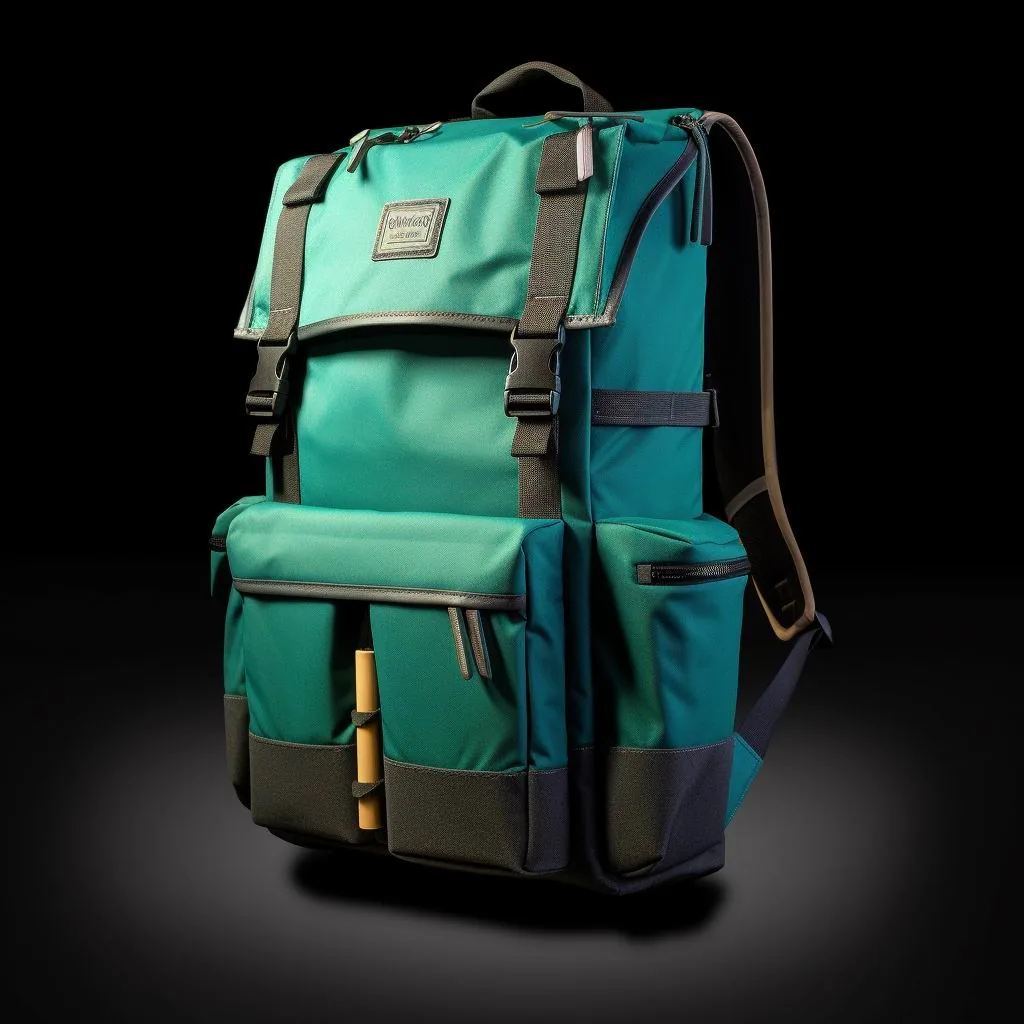
40L vs 50L Hiking Backpacks for UK Trails: The Direct Answer
Take the 40 L if your sleeping bag is a three-season down bag that compresses to around 6 L and your trips run one or two nights between May and September. Take the 50 L if you carry a synthetic bag, if you walk in Scotland or Wales outside summer, if your trip involves three or more nights of food, or if a winter sleeping system is in the plan. The ten litres between them is almost entirely sleeping bag and clothing loft, which is why the decision is really a decision about season and fill type rather than about how much you like packing.
British conditions push the choice upward compared with the same trip in the Alps or the Pyrenees. A two-night wild camp in the Lake District in July can be done comfortably in 40 L with a down bag, a one-person tent and two days of food, at around 9.5 kg. The identical trip in March in the Cairngorms needs a warmer bag, a heavier shell, insulated gloves, a hat and possibly a second mid-layer; the volume rises by roughly 8 to 10 L and the weight by 2.5 to 3.5 kg. That is a 50 L trip, and no packing technique will make it a 40 L one.
The counter-argument is real though. A 50 L bag that is never filled is a penalty on every hill day: it is heavier empty, it projects further behind you on steep ground, and its larger lid encourages carrying things you will not use. If your walking is day routes with an occasional bothy night, the 40 L is the better single-bag answer and will be more pleasant on 90 per cent of your days.
- 40 L suits: one to two nights, May to September, down sleeping bag, one-person shelter, food for up to three days
- 50 L suits: three to five nights, synthetic or winter bag, four-season clothing, any trip feeding from a bothy or a village shop four days away
- 40 L suits: hill walkers who do most of their miles on day routes and camp twice a year
- 50 L suits: long-distance trail walkers carrying four to six days of food between resupply points
Key Differences at a Glance
Figures below are measured on loaded packs, because hiking packs are the category where empty and packed dimensions diverge most: a soft 40 L bag with compression straps drawn in is a very different object from the same bag with a tent strapped on.
| Measure | 40 L hiking pack | 50 L hiking pack |
|---|---|---|
| Measured volume | 40 L (38.4 to 41.2 L by block fill) | 50 L (47.6 to 51.4 L by block fill) |
| Packed external dimensions | 60 x 33 x 24 cm | 66 x 35 x 27 cm |
| Empty weight | 1.25 kg to 1.58 kg | 1.55 kg to 1.98 kg |
| Grammes per litre | 31 to 40 g/L | 31 to 40 g/L |
| Nights supported, summer | two to three | four to six |
| Nights supported, winter | one | two to three |
| Typical load range | 8 to 11 kg | 10 to 14 kg |
| Hip belt supplied | 38 to 50 mm padded | 45 to 70 mm padded, load-bearing |
| Typical UK retail band | £90 to £155 | £130 to £235 |
Notice that grammes per litre is essentially identical across the two sizes. Hiking packs are efficient by design, so the extra litre costs you relatively little in shell weight; what it costs you is the temptation to fill it. Empty-weight difference of 300 to 400 g is meaningful on a long climb, but it is secondary to what you put inside.
The load row is the one to respect. Both sizes can be overloaded, and an overloaded 40 L is more dangerous on steep ground than a 50 L carrying the same weight, because the centre of mass sits further from the spine when items are strapped outside. Keep total load at 10 to 15 per cent of body weight, which is 7.5 kg to 11 kg for a 75 kg man, and treat 14 kg as the point at which you should be carrying a proper expedition harness rather than a weekend one.
Capacity, Dimensions and Packing Efficiency
Hiking volume is consumed by five bulky systems: sleep system, shelter, cooking, clothing and food. Everything else is small. A three-season down bag rated to about 0°C weighs around 900 g and compresses to roughly 6 L. The synthetic equivalent is nearer 1.4 kg and 11 L. A winter bag rated to -10°C is around 1.8 kg and 16 L. That single choice moves the required volume by up to 10 L, which is precisely the gap between these two packs.
Shelter adds 4 to 8 L depending on whether you carry a one-person or two-person tent and whether the poles are strapped. A sleeping mat adds 2 to 4 L. Cooking kit adds 1.5 to 2.5 L. Clothing, packed in a dry bag rather than a cube so it can be compressed, runs 6 to 10 L in summer and 12 to 16 L in winter. Food is roughly 1.2 L and 700 g per day, and water is 1 L per kilogramme carried.
| Trip profile | Kit volume required | 40 L outcome | 50 L outcome |
|---|---|---|---|
| Two nights, summer, down bag, solo tent | about 31 L | Comfortable, 20 per cent spare | Comfortable, some slack |
| Two nights, spring, synthetic bag | about 36 L | Full; tent may go outside | Comfortable |
| Four nights, summer, resupply on day three | about 40 L | At the ceiling | Comfortable with food bag low |
| Five nights, West Highland Way, tent | about 47 L | Will not close cleanly | Comfortable |
| Two nights, Cairngorms, March, winter bag | about 46 L | Not viable | Comfortable, spare for wet layers |
Where packs lose usable space is the lid and the external attachment system. A floating lid on a 50 L can hold 5 to 7 L of its own, and if it is a non-removable design that volume is awkward: it sits high and far from the spine. Removable lids that convert to a small summit daypack are the better pattern for long trails. Side pockets hold another 3 to 5 L but only if they are tall enough to take a 1 L bottle without it falling out when you bend.
Plan around 80 per cent of nominal volume for a comfortable pack-up and 90 per cent as the ceiling. That makes the 40 L a 32 to 36 L working bag and the 50 L a 40 to 45 L working bag. If your kit list consistently exceeds 36 L, buy the 50 L and use the compression straps; strapping a tent and a mat to the outside of a 40 L shifts the load backwards, and on a scramble or a steep descent that is exactly when balance matters.
Comfort, Weight and Carry Dynamics
On hill ground the harness matters more than the volume, because the load is heavier and the surface is uneven. Below 8 kg almost any padded harness works. From 8 to 11 kg you need shoulder straps of 65 to 75 mm with 10 to 12 mm of resilient foam, a sternum strap and a hip belt that genuinely sits on the iliac crest. Above 11 kg, load lifters stop being optional: they pull the top of the pack to within about 25 mm of the shoulders and remove the sway that causes lower-back fatigue on a long descent.
Hip belt geometry is where the two sizes diverge most. A 40 L typically ships with a 38 to 50 mm belt intended to stabilise; a 50 L should ship with a 45 to 70 mm padded belt that transfers 60 to 80 per cent of the load away from the shoulders. Check that the belt can be positioned so its centre sits on the top of the hip bones, not on the soft waist above them, and that it closes with the padding meeting rather than the webbing alone.
Torso measurement decides the size you buy, and most British men fall between 46 cm and 52 cm from the seventh cervical vertebra to the top of the hip bones. Hiking packs are sold in back-length ranges rather than in volumes for this reason: a 50 L in a short back length can fit a 168 cm walker better than a 40 L in a regular length. Measure once with a tape and buy to the number, not to how the pack looks on a shop assistant.
Packing order matters more here than in any other category. Heavy items, tent and food, go low and central against the spine. The sleeping bag goes in the bottom compartment or the lower third. Clothing fills the middle. The shell, water and snacks go where they can be reached without unpacking, ideally in the lid or a tall side pocket. Waterproofs on top, never at the bottom, because British weather changes several times in a day and you will not want to unpack on a ridge to reach them.
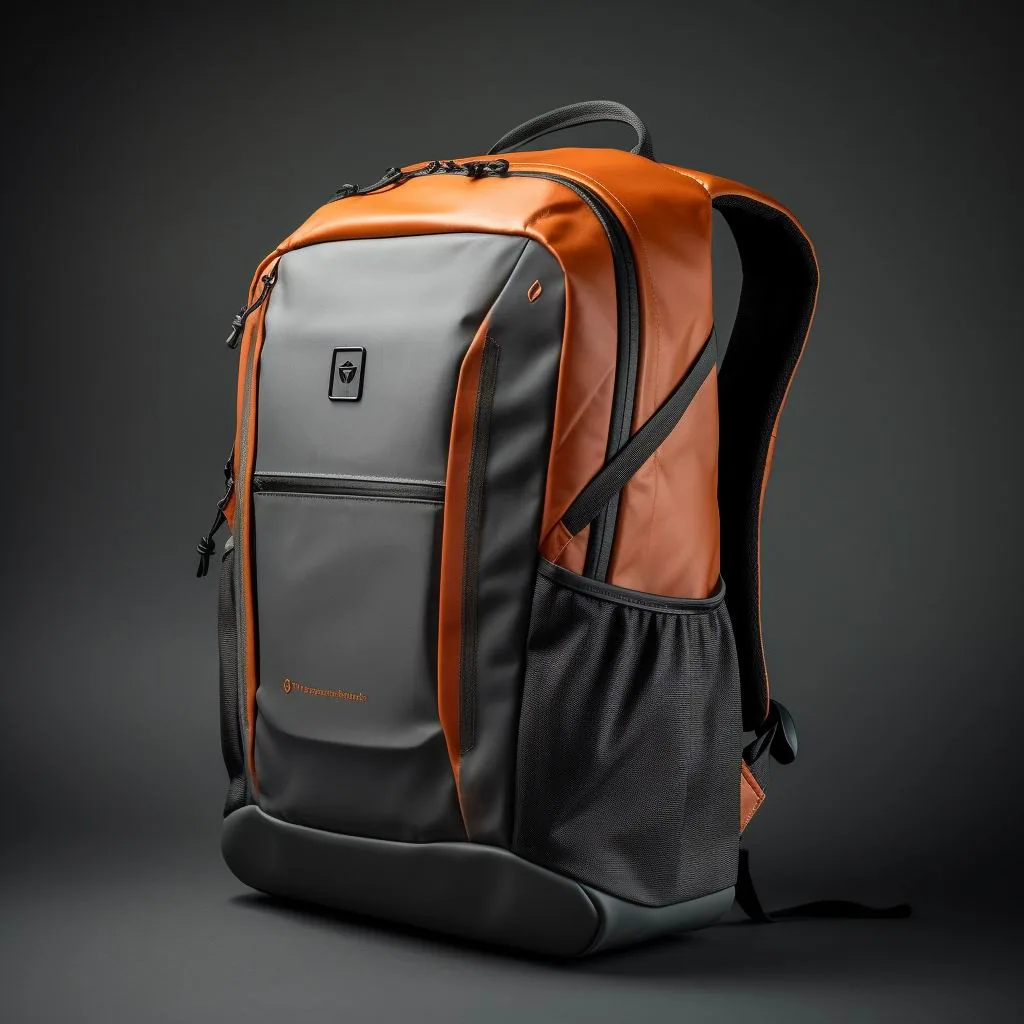
Materials, Weather Resistance and Durability
Hiking packs in this size range run from 210D ripstop nylon on lightweight models to 600D or 1000D on workhorse designs, with a polyurethane or silicone face. Abrasion behaviour is roughly: 210D around 8,000 Martindale rubs, 420D around 15,000, 600D near 20,000 and 1000D around 28,000 to 30,000. On British hill ground the enemy is not abrasion so much as grit: grit in a zip track and grit working into a seam, both of which are accelerated by wet conditions.
Water resistance targets should be higher here than for a city bag. A body fabric rated at 2,000 mm handles showers; 5,000 mm with sealed seams is the right target for western Scotland, Snowdonia and the Pennines, where rain can persist for six hours. In practice, a separate rain cover rated to 3,000 mm or 5,000 mm costs £14 to £22, weighs 110 to 180 g, and is more reliable than any coating, because it also shields the zip line and the lid seam. Most British hill walkers carry one and use it several times a day.
Durability on the hill is decided by the base, the compression straps and the buckles. A 600D or 1000D base panel survives being put down on gritstone and granite; a 210D body on the same ground will not. Compression strap buckles should survive a 150 N pull, and the main webbing anchors 400 N. Stitching at the strap roots should be bar-tacked over at least 1,000 square millimetres, because that is where a loaded pack fails first.
One material question is worth asking of any supplier for the UK market: what is the coating chemistry. Long-chain fluorocarbon repellents have been progressively restricted in Europe, and a responsible programme should be able to state the finish and evidence compliance against the framework described by ECHA. Silicone and paraffin finishes are now common and perform acceptably if maintained.
Access, Organisation and Security
Hiking access is about three moments: getting the waterproofs out without stopping, getting water out without unpacking, and getting the stove out at camp. Design for those. A lid pocket holding 2 to 3 L is the correct home for shell, map and snacks. Tall side pockets holding a 1 L bottle each are the correct home for water. A lower compartment or a long side zip is the correct home for the sleeping bag, which should be reachable without emptying the top.
Front-panel zips are increasingly common on both sizes and are genuinely useful on a trail: they turn a top-loader into something you can open like a suitcase in a bothy or a tent porch. The trade-off is weight, around 80 to 150 g, and a long zip that is a water path if it is not covered. On a 50 L used for multi-day trips, the front zip usually earns its weight; on a 40 L used for overnighters, a top-loader with a good lid is lighter and drier.
Security on British trails is mostly about unattended bags at a campsite or a café rather than theft while walking. Two habits help: keep the lid closed and the compression straps done up, and do not leave a wallet or car keys in an external pocket. If you are wild camping, hang food or use a dry bag rather than leaving it in the pack, because midges and rodents both find open pockets.
- Lid pocket of at least 2 L for shell, map and snacks
- Two side pockets tall enough for a 1 L bottle with a 70 mm diameter
- Lower access to the sleeping bag compartment without unpacking the top
- Ice-axe loops and at least four external lash points on a 50 L intended for winter use
UK Price, Value and Cost per Use
British retail bands for hiking packs run as follows. From £90 to £130 you get a 40 L with a fixed or adjustable back system, unbranded hardware and no published test data. From £135 to £190 you get named fabrics, a load-bearing hip belt, a rain cover included and two to three years of cover. From £195 to £260 you get a refined suspension, controlled tolerances, better fabric and a longer warranty. A 50 L typically costs £35 to £60 more than the equivalent 40 L in the same range.
Cost per hill day is the honest measure. A £165 pack used on twenty hill days a year over eight years is 160 days and £1.03 each. Add £18 for a cover, £14 for re-proofing and £25 for one buckle and strap repair and the figure is about £1.39 per day. Set against a £95 pack that splits a seam in year three, the mid band is the cheaper purchase by year five.
The premium is worth paying for in three places and only three: the suspension system, the base fabric, and the warranty. It is not worth paying for in extra pockets, hydration sleeves that leak, or lid designs that cannot be removed. If you have to choose, spend on the harness, because a comfortable 40 L will be used more often than an uncomfortable 50 L that lives in a cupboard.
Which Works Better in Real British Scenarios?
Scenario one: a July weekend in the Lake District, two nights, wild camping above 500 m, one-person tent, down bag, food for two days, water carried at 1.5 L. Kit volume around 31 L, load around 9.4 kg. The 40 L is the right bag. It sits close to the spine on the scramble out of Grasmere, the compression straps work because the bag is properly filled, and the lid holds the shell for the afternoon shower.
Scenario two: the West Highland Way over six days in May, carrying a tent and cooking kit, resupplying at Tyndrum and Kinlochleven, synthetic bag because the budget does not stretch to down. Kit volume around 47 L, load around 12.6 kg including two days of food. This needs the 50 L, and it needs the hip belt transferring load, because 12 kg carried for eight hours a day over six days will find every weakness in a 40 L harness.
Scenario three: a March day on the Carneddau with winter kit, spare insulation, gloves, hat, emergency shelter and a warm flask. Kit volume around 28 L, load around 8.8 kg. Both sizes work; the 40 L is better balanced because a 50 L at half fill has a loose load that moves on scrambling ground. Take the 40 L and use the compression straps.
Scenario four: a Cairngorms bothy trip in February, two nights, winter bag rated to -10°C, insulated jacket, two mid-layers, stove and four days of emergency food. Kit volume around 46 L, load around 13.8 kg. The 50 L is the only sensible answer, and it should have ice-axe loops, a reinforced base for crampons and a lid that closes over a full load. This is the case that argues for owning both sizes.
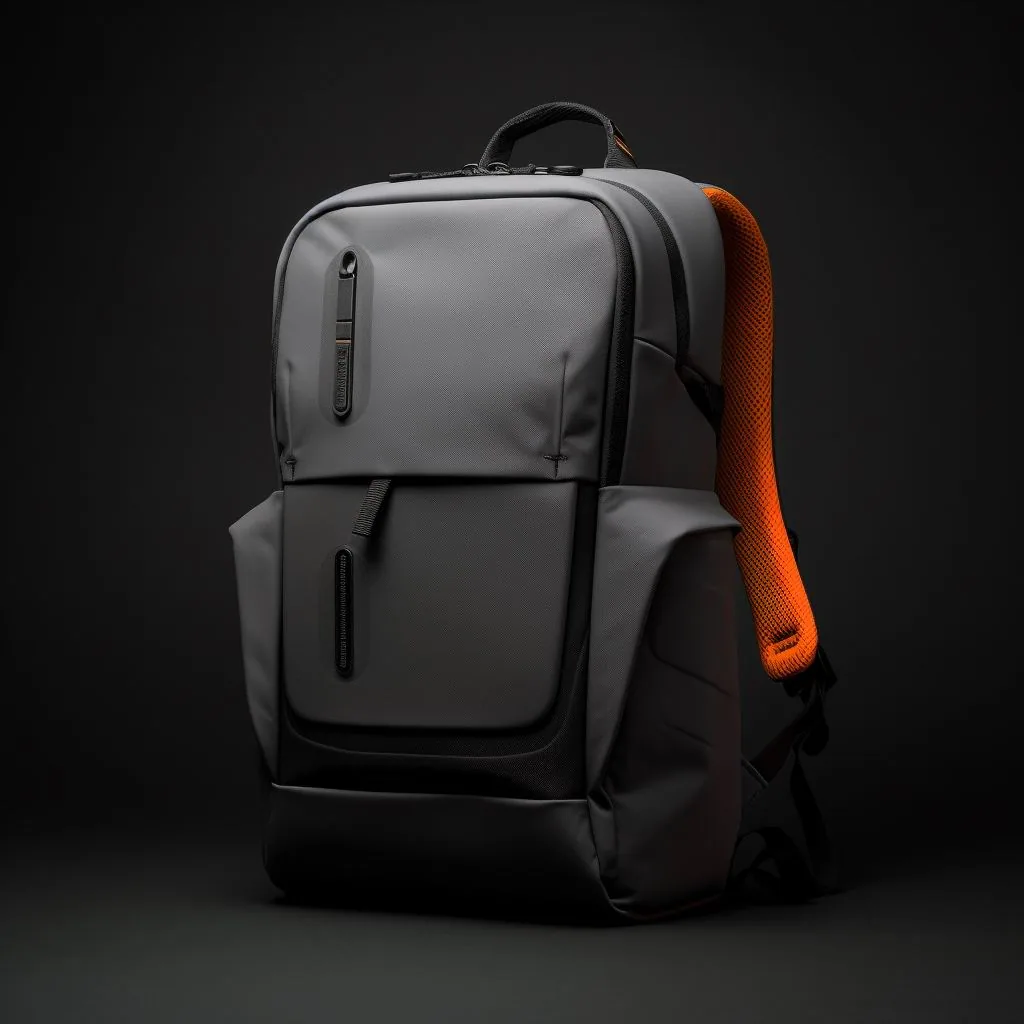
Testing Standards and Bulk Custom Orders
Five checks are worth writing into a specification for this category. Drop the loaded pack 450 mm onto a hard surface at 12 kg and inspect the base seam and the hip-belt attachment. Cycle the main zip and the lid zip 2,500 times loaded. Hang 12 kg from the shoulder straps for sixty minutes and record adjuster creep. Pull compression buckles to 150 N, hip-belt buckles to 400 N and ice-axe loop anchors to 200 N. Spray the shell for thirty minutes and check the lid seam and the front zip, not the centre panel.
Inspection is set at AQL 2.5 under ISO 2859-1, and the attribute plan is defined in ISO 2859-1. Abrasion claims are normally evidenced against methods published by ASTM, and any ingress rating quoted should be traceable to the IEC 60529 code rather than to an internal spray test.
For outdoor-brand and club programmes the commercial terms do not vary: MOQ 500 pcs per style and colourway, sampling in 6–10 working days (12–15 where the build includes moulded back panels, welded seams or custom hardware), bulk production 35–50 days after sample sign-off, inspection at AQL 2.5 under ISO 2859-1, payment T/T 30/70, delivery FOB Xiamen. We are a sourcing and programme-management company: development, specification and inspection are ours, and the build runs through our production partners.
Those partners operate a 4,950 m² SGS-verified production floor across 7 production lines with 149 machines and 137 colleagues, at approximately 200,000 pieces a month. The business was founded in 2014, with the founding team in the trade since 2004, trading as QUANZHOU JUNYUAN BAGS. Write to service@junyuanbags.com or message wa.me/8617750020688.
Two regulatory notes apply. Textile goods sold in Britain must carry fibre-composition labelling, and any integrated electronic component needs UKCA marking; the current position is published on gov.uk. For club or volunteer-group purchases, load-carrying guidance for manual handling published by the Health and Safety Executive is a sensible reference when setting kit weight limits for walkers.
Common Buying Mistakes to Avoid
The first is buying the 50 L for a summer overnighter because it looks like better value per litre. It is not: on a June trip you will fill it with things you do not use, the load sits higher and further back, and the pack swings on scrambles. Volume above what your sleep system needs is dead weight carried uphill.
The second is ignoring back length. A pack whose back system is 60 mm longer than your torso places the hip belt on the waist rather than the hips, so the shoulders take the load that the belt was designed to carry. Most returns in this category are fit returns, not quality returns.
The third is packing the sleeping bag at the top. The bag is the lightest bulky item and belongs low; the tent and food are dense and belong against the spine and low. Packed the other way round, the pack becomes top-heavy and unstable on steep ground.
The fourth is relying on the coating instead of a cover. A 5,000 mm fabric still lets water through the lid seam and the zip in six hours of rain. A £16 cover solves that and can be removed in seconds when the sun comes out, which it will, several times, because this is Britain.
The fifth is neglecting grit. Wash the pack out at the end of a trip, brush the zip tracks, dry it open for a full day and store it loose with the straps undone. Grit left in a zip track is the most common cause of slider failure in this category, and it is entirely preventable in five minutes.
Final Verdict: Who Should Choose Each?
Both sizes are legitimate hill bags; the deciding variable is your sleep system and your season, not your enthusiasm. If you own a down bag that compresses to 6 L and you walk between May and September, the 40 L will do everything you ask of it and will be more pleasant doing it.
- Choose 40 L if: trips run one to two nights in the warmer months and your bag is down
- Choose 40 L if: most of your walking is day routes and you camp two or three times a year
- Choose 50 L if: you carry a synthetic bag, or a winter bag rated below about -5°C
- Choose 50 L if: trips run four nights or more, or require four to six days of food
- Choose both if: you walk year-round and your summer and winter kit differ by more than 8 L
If you can only own one, buy the 50 L and learn to use the compression straps properly, because the penalty for a bag that is slightly too large is smaller than the penalty for one that forces a tent to be strapped outside. A well-packed 50 L on a summer overnighter is still comfortable; an overloaded 40 L on a March trip in the Cairngorms is not, and the failure mode there is cold and wet rather than merely inconvenient.
Frequently Asked Questions
Which is better, a 40L pack or 50L pack, for daily use?
Neither is a daily-use format; both are overnight hill packs and are too tall and too deep for a commute or a desk.
If one bag must serve, a 40 L with compression straps is less intrusive in daily life, but a dedicated daypack is a better buy.
How much capacity do I need when comparing these two options?
A summer two-night trip with a down bag needs about 31 L of kit; the same trip with a synthetic bag needs about 36 L; a five-night trail with tent and food needs about 47 L.
Work to 80 per cent of nominal volume, so 40 L is a 32 to 36 L working bag and 50 L is a 40 to 45 L working bag.
What empty weight is reasonable for this type of backpack?
Expect 1.25 to 1.58 kg for a 40 L and 1.55 to 1.98 kg for a 50 L in mainstream hiking fabrics.
Above about 2 kg empty on a 50 L, the shell is competing with your kit allowance, so check the grammes-per-litre figure rather than the headline weight.
Is a 40L pack more durable than a 50L pack?
No. Durability follows base fabric, seam construction and hardware; a 50 L is usually built to a higher load rating and therefore often has a heavier base and stronger buckles.
Look for a 600D or 1000D base, bar-tacked strap roots and buckles rated to 150 N or better.
Can a 50L pack protect a laptop during British commuting?
Not really; hiking packs of this size rarely have a suspended laptop sleeve, and the load they are designed for bears no relation to commuting.
If you must carry a device, use a padded 15-inch sleeve with 8 to 12 mm of foam inside the main body and keep it against the back panel.
Which option handles persistent UK rain more reliably?
Neither reliably on coating alone; both need a rain cover rated to 3,000 mm or 5,000 mm for western Scotland, Snowdonia and the Pennines.
Sealed seams on the lid and a covered front zip matter more than the fabric rating, because those are where six hours of rain gets in.
How much should British buyers pay for good quality?
Between £135 and £190 buys named fabrics, a load-bearing hip belt, an included cover and two to three years of warranty, which is the sensible band.
Around £1.03 per hill day over eight years at twenty days a year, rising to about £1.39 once cover, re-proofing and one repair are counted.
What dimensions work best on trains and short flights?
A 60 x 33 x 24 cm pack fits a British rail overhead rack and most coach hold gauges; a 66 x 35 x 27 cm pack usually needs the luggage rack or the hold.
For flights, a 50 L will be checked rather than carried on; if you fly to a trail head, use a 40 L and pack the tent in hold luggage.
Should I choose a 40L pack for loads above eight kilograms?
Yes up to about 11 kg, provided the hip belt is padded and sits on the hip bones rather than the waist.
Above 11 kg choose the 50 L with load lifters and a 45 to 70 mm belt, and keep total load at 10 to 15 per cent of body weight.
Is a 50L pack practical for mixed work and weekend use?
It is a poor work bag: too tall for commuter trains and too deep for under-desk storage, and the harness looks out of place in an office.
Keep it for weekends and buy a separate 20 to 24 L daypack for the working week; the two-bag approach costs less than one compromised bag.
How should bulk buyers specify these backpack designs?
Specify capacity by 20 mm block fill at plus or minus 5 per cent, dimensions at plus or minus 10 mm, base fabric denier, coating in millimetres, zip gauge, hip-belt width and back-length range, then freeze after a three-day field trial.
Terms are MOQ 500 pcs per style and colourway, sampling 6–10 working days, bulk production 35–50 days, AQL 2.5 under ISO 2859-1, T/T 30/70, FOB Xiamen.
Can both options pass useful durability and quality checks?
Yes, if the checks are in the specification before production rather than the complaint after delivery.
A 450 mm drop at 12 kg, 2,500 loaded zip cycles, sixty minutes at 12 kg on the straps, 150 N on compression buckles and 400 N on the hip belt will expose weak builds quickly.
Do I need a 40 L and a 50 L, or will one pack do?
One pack will do if your season is April to October and your bag is down; take the 40 L for day routes and a 50 L only if you add multi-day trails.
Buy both if you walk year-round, because a winter sleep system needs roughly 8 to 10 L more than a summer one and no compression trick removes that.