Table of Contents
- Hiking Backpack vs Travel Backpack for Europe: The Direct Answer
- Key Differences at a Glance
- Capacity, Dimensions and Packing Efficiency
- Comfort, Weight and Carry Dynamics
- Materials, Weather Resistance and Durability
- Access, Organisation and Security
- UK Price, Value and Cost per Use
- Which Works Better in Real British Scenarios?
- Testing Standards and Bulk Custom Orders
- Common Buying Mistakes to Avoid
- Final Verdict: Who Should Choose Each?
- Frequently Asked Questions
Hiking Backpack vs Travel Backpack for Europe: The Direct Answer
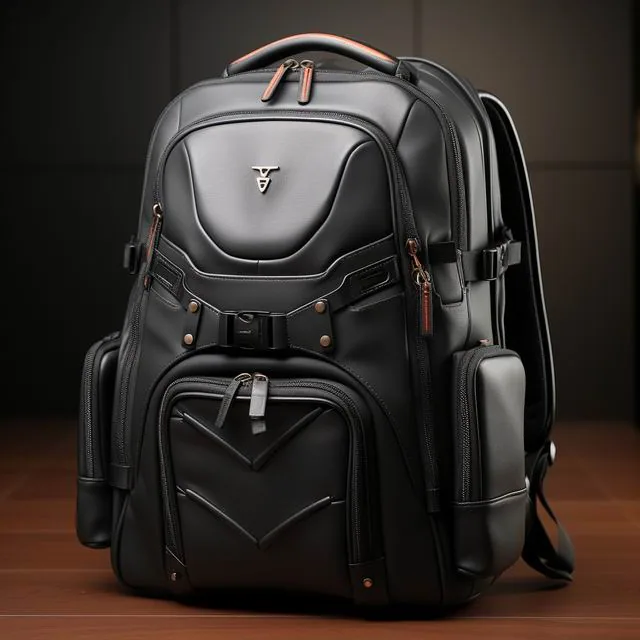
For a European trip built around trains, hostels and city streets, a 40-45 L travel pack beats a 55-70 L hiking pack almost every time. The reason is not comfort in the abstract; it is that a hiking pack is shaped like a chimney and a travel pack is shaped like a suitcase, and Europe rewards the suitcase. A 65 L trekking pack measures roughly 72 x 34 x 30 cm, which will not pass a single cabin gauge used by any carrier flying out of a British airport, and will not fit a hostel locker or a Ryanair sizer.
A 40 L travel pack measures about 55 x 35 x 23 cm loaded and sits inside the 55 x 40 x 20 cm priority allowance that Ryanair sells, the 45 x 36 x 20 cm that easyJet allows in the cabin, and the smaller 40 x 20 x 25 cm free personal-item box when it is only half full. It opens like a clamshell so you can find a shirt without unpacking the lid, and its harness stows behind a zip panel so it does not snag on a luggage belt or in a coach hold.
The hiking pack wins in three specific cases. First, if the trip includes a hut-to-hut section or a multi-day trek where you carry food, water and a sleeping bag: a framed harness and a genuine hip belt move 70-80 per cent of the load off your shoulders, and no travel pack does that as well. Second, if you are walking 15 km or more a day on uneven ground with 10 kg aboard. Third, if you need to lash a mat, poles or a wet tent to the outside, which a travel pack has no facility for.
- Two-week Interrail, cities and hostels: travel pack, 40-45 L.
- Three-day city break by air: travel pack, 30-38 L, or a cabin-sized wheeled alternative if your back objects.
- Five-day Alta Via or Tour du Mont Blanc section: hiking pack, 45-55 L.
- Mixed trip with one trek: travel pack of 40 L plus a 16 L packable daypack, or a hiking pack and a cheap duffel for the city days.
Weight is the deciding number most buyers skip. A 65 L trekking pack weighs 1.8-2.4 kg empty; a 40 L travel pack weighs 1.3-1.9 kg. On a Ryanair 10 kg cabin allowance that 700 g difference is 700 g of clothing you cannot take, and on a 12 km walk from a station to a hostel in Seville it is 700 g you carry for nothing. Buy for the trip you are taking, not the trip in the marketing photograph.
Key Differences at a Glance
The two categories are not variations of one product; they solve opposite problems. One manages a heavy load over rough ground for many hours. The other manages a moderate load through airports, metro stations and hostel corridors, and has to be opened several times a day.
| Attribute | Hiking pack (55-65 L) | Travel pack (40-45 L) | Why it matters in Europe |
|---|---|---|---|
| Opening | Top lid with a drawcord, sometimes a front U-zip | 180-degree clamshell with a suitcase-style panel | Hostel floors and 6 am departures punish top-loaders |
| Empty weight | 1.8-2.4 kg | 1.3-1.9 kg | 700 g is a measurable share of a 10 kg cabin allowance |
| Loaded dimensions | 72 x 34 x 30 cm | 55 x 35 x 23 cm | Only the travel pack passes common cabin gauges |
| Harness | Fixed padded hip belt, load lifters, frame | Stowable straps, minimal hip fins | Above 9 kg the framed harness is clearly better |
| Security | No lockable opening as standard | Lockable main zip plus a cable loop | Dormitories and station left-luggage need a lock |
| Weather | Rain cover included on most models | Water-resistant shell, cover often optional | Central European thunderstorms arrive fast |
| Best terrain | Trails, scree, long ascents | Cobblestones, metro stairs, airport floors | Most of a European trip is the second list |
One row in that grid is worth expanding: the hip belt. On a hiking pack the belt is a load-transfer device, wide, stiff and shaped to sit on the iliac crest. On a travel pack the belt is usually a pair of padded fins that stabilise but do not transfer much. If you will carry more than 9 kg for more than two hours at a stretch, the distinction is the whole decision.
Capacity, Dimensions and Packing Efficiency
Nominal litres describe the shell; usable litres describe the trip. A 65 L trekking pack typically has a tapered top, a sleeping-bag compartment separated by a divider and a floating lid, so the practical figure for general packing is nearer 58 L and the practical figure for finding anything is worse. A 40 L travel pack is a rectangular box with a flat back, and nearly all 40 L is reachable without unpacking.
Here is what the arithmetic looks like on a real two-week Interrail itinerary with laundry every seventh day: 4.5 L of rolled clothing per three days, 1.2 L of wash kit, 3.5 L of trainers worn rather than packed, 2.0 L of electronics and cables, 1.8 L of documents, medication and a first-aid roll, and 2.5 L reserved for a waterproof shell and a mid-layer. That is 15.5 L of contents before the bag itself, comfortably inside 40 L with room for a day's shopping and a baguette.
- 30-38 L: two to four nights, one pair of shoes worn, laundry at day three.
- 40-45 L: one to three weeks, laundry weekly, room for a 16 L daypack folded inside.
- 50-55 L: three weeks including a short trek, or a winter trip with a bulkier jacket.
- 65 L and above: multi-day self-supported trekking, or a trip where you carry a sleeping bag and a tent.
Dimensions decide whether the bag flies. Ryanair's free personal item is 40 x 20 x 25 cm and its paid priority cabin bag is 55 x 40 x 20 cm at 10 kg; easyJet allows 45 x 36 x 20 cm at 15 kg; Eurostar permits two larger bags plus hand luggage with no published weight limit, provided you can lift them yourself. A travel pack at 55 x 35 x 23 will pass the Ryanair gauge when it is not overfilled, and will usually squeeze into the smaller box if you compress it with the internal straps first.
For flight days, measure the bag loaded and compare it with the carrier's published gauge before every trip, because allowances change and a gate check at £45 per leg is the most expensive packing mistake in this category. Reference material on cabin baggage practice is published by IATA.
Comfort, Weight and Carry Dynamics
Both packs carry 7 kg acceptably. They diverge at 9 kg and again at four hours. A hiking pack's frame sheet and stiff hip belt put 70-80 per cent of the weight onto the pelvis when the belt is correctly positioned on the iliac crest, which is why a 12 kg load feels tolerable on a trail and intolerable in a travel pack with soft fins.
The trade is that a framed harness is bulky, hot and awkward in a city. It projects about 60-80 mm further off your back than a flat travel panel, which matters in a packed metro carriage, and it will catch on turnstiles, café chair backs and the armrests of a Fiat-sized hire car. A travel pack's flatter profile and stowable straps are the reason couriers, au pairs and long-stay travellers keep choosing them despite the inferior harness.
Torso length is the measurement that actually governs comfort, and most British men fall between 46 and 52 cm from the seventh cervical vertebra to the top of the iliac crest. Measure it with a tape against a wall, then buy a pack whose harness adjustment covers that number. A 6 cm mismatch cannot be corrected with strap tension, and it shows up as shoulder pressure after about forty minutes rather than as an obvious fault in a shop.
- Up to 6 kg: a hiking pack is over-built but stable, a travel pack is comfortable and compact. Take the travel pack, because airports decide most European trips.
- 6-9 kg: a hiking pack is good provided the belt is used properly; a travel pack is acceptable on flat ground. Travel pack if the daily walking is under 5 km.
- 9-12 kg: the hiking pack is clearly better and the travel pack produces shoulder pressure after about forty minutes. Hiking pack if you walk more than three hours.
- Above 12 kg: only the hiking pack is sensible, and the real answer is to reduce the load.
Two harness details are worth checking on either design. Strap roots should be bar-tacked over at least 1,200 square millimetres, because that is where a loaded pack fails first. And load lifters, the small straps running from the top of the shoulder straps to the frame, should pull the top of the pack to within about 20 mm of your shoulders; without them, a heavy load sways and the lower back pays for it on pavements.
Materials, Weather Resistance and Durability
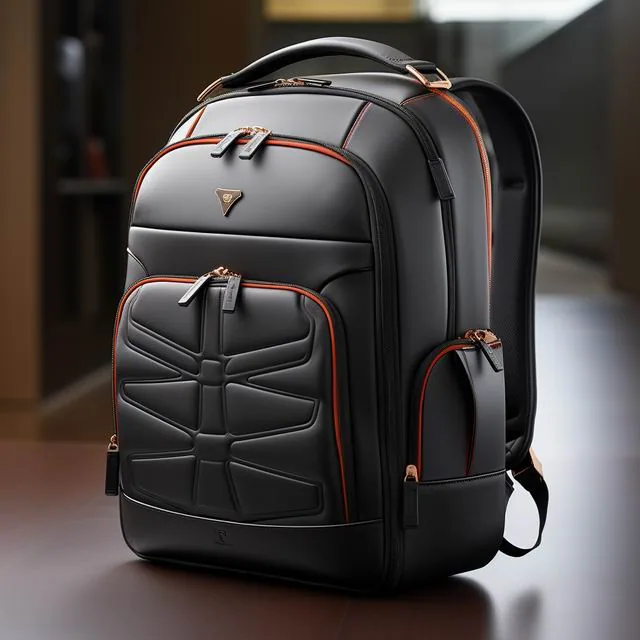
Hiking packs are built light and protected by a cover; travel packs are built tougher and expected to get wet and dry on their own. A trekking shell in 210D nylon ripstop weighs around 130-165 grams per square metre and relies on a separate rain cover rated at 3,000 mm or more. A travel shell in 600D polyester with a 900D base weighs 240-300 grams per square metre and usually carries a 1,500 mm coating with a DWR finish.
Both approaches work; they fail differently. A light trekking shell abrades quickly on airport conveyor belts, hostel concrete and the granite kerbs of a Dalmatian old town, so expect scuffing within two trips and a hole at the base after four. A travel shell resists that but absorbs water into the face fabric over a long downpour, which is why a 3,000 mm cover is still worth carrying even on a city trip between May and September.
- Abrasion: ask for a Martindale result; 420D nylon ripstop manages around 20,000 cycles, 600D polyester around 15,000-25,000 with coating, and a 900D base panel is cheap insurance.
- Coating: 1,500 mm resists a shower, 3,000 mm with taped seams handles a Central European thunderstorm, 5,000 mm is the target for a wet week in the Julian Alps.
- Hardware: side-release buckles should hold a 180 N pull and hip-belt buckles about 450 N; aluminium ladder-lock buckles on a hiking pack bend rather than break, which is usually preferable.
- Zips: a travel pack wants a number 10 lockable main zip; a hiking pack can use a number 8 coil under a lid, because the lid covers it.
Sun matters more than British buyers expect. A fortnight on the Camino or the Cinque Terre gives a shell several hundred hours of strong ultraviolet exposure, and polyester holds its strength better than polyamide under that load. If the trip is a southern European summer, polyester with a documented light-fastness result is the more durable choice; for a wet Scottish or Norwegian trip, nylon's better wet abrasion is worth more.
Test methods for abrasion and coating are published by ASTM International, and inspection language for shipments is drawn from the ISO catalogue.
Access, Organisation and Security
Access is where a travel pack wins by a distance, and it wins on the specific task that defines European travel: finding one item, four times a day, in a space that is not yours. A clamshell opening lays the contents out flat on a hostel bunk. A top-loader makes you pull the lid, loosen a drawcord, remove three items to reach a fourth, and repack before the 07:04 to Milan.
Security follows the same logic. A travel pack's main zip can be locked through interlocking sliders, and most have a small cable or a loop for anchoring to a bunk frame or a locker shelf. A hiking pack's lid buckles are not lockable in any meaningful sense and its side pockets are open mesh, which is where water bottles and maps go missing on overnight trains.
- Keep passport, card and cash behind one deliberate barrier, ideally an internal pocket on the panel side rather than an external one.
- Use a 3 mm cable, 55 g, to anchor the bag to a bunk or a locker shelf; a lock that only closes the zip does not stop the bag being carried off.
- Put the rain cover in an external pocket you can reach with the bag on, because the first ten minutes of a storm are the ones that matter.
- Compression straps on either design buy back 40-60 mm of depth when you need to force the bag into a sizer or a full overhead rack.
Organisation inside the pack should be modular rather than fixed. One 8 L cube for clothing, one 2 L pouch for wash kit and a flat document sleeve give you more options than ten built-in pockets that fit none of your chargers. On a hiking pack, keep the heaviest items - food, water, stove - within 60 mm of the spine and between the shoulder blades; on a travel pack, keep dense items low, because the harness will not compensate for a top-heavy load.
UK Price, Value and Cost per Use
British retail prices in this category are unusually honest: you generally get what you pay for, because the two product types are made by different supply chains with different tolerances. A decent 40 L travel pack lands between £70 and £135. A competent 55-65 L trekking pack lands between £95 and £220, and above £180 you are buying a suspension system and a warranty rather than fabric.
| Band | Travel pack example spec | Hiking pack example spec | Cost per trip over 18 trips |
|---|---|---|---|
| £70-£100 | 600D shell, number 8 zip, minimal harness | 210D shell, basic frame, no rain cover | £3.90-£5.60 |
| £100-£150 | 900D base, lockable number 10 zip, stowable harness | Adjustable harness, rain cover, 3,000 mm | £5.60-£8.30 |
| £150-£220 | Premium hardware, five-year warranty | Full suspension, load lifters, transfer belt | £8.30-£12.20 |
Eighteen trips is a fair denominator for a British traveller taking two or three European trips a year over six years, and it changes the argument. On that basis a £130 travel pack costs about £7.20 per trip, which is less than one checked-bag fee each way. A £190 trekking pack used twice a year for walking holidays costs about the same per outing and is the better value if you actually walk.
Add running costs: £12-£20 for a replacement rain cover, £18 for a zip repair, £25 for a replacement hip-belt buckle if it is not a stocked part. Check whether UK spares are held before paying a premium for a brand with no British distributor, because a three-week international warranty return is worse than a £20 local repair.
Which Works Better in Real British Scenarios?
Four itineraries cover most of what British travellers actually book, and in each the answer is set by transport and terrain rather than by capacity.
- Twenty-one days of Interrail in July: Berlin, Prague, Vienna, Ljubljana, split by night trains and one hostel change every two days. Travel pack, 40 L, with laundry at day seven and day fourteen. A trekking pack would be 700 g heavier, would not fit the lockers at most of those hostels, and would have to be unpacked from the top every morning.
- A long weekend in Paris by Eurostar: two nights, one dinner that matters, a 15-minute walk from Gare du Nord. Either pack is oversized; take a 30 L travel pack or a 38 L cabin bag. A 65 L pack on a two-night trip is 1 kg of empty shell and a look that marks you as a target in the métro.
- Ten days in the Dolomites with four hut nights: food carried for two days at a time, 9 kg aboard, 6-hour days. Hiking pack, 50-55 L, with a rain cover and a hip belt that genuinely transfers load. A travel pack would be miserable on the ascents and its flat panel would bruise your back on the descents.
- A mixed three weeks: Rome, Florence, then five days walking the Alta Via 1. Take a 40 L travel pack and a 16 L packable daypack, or leave the city bag in a station left-luggage locker for the walking section. Buying one 65 L pack to cover both halves gives you the worst possible tool for fourteen of the twenty-one days.
The pattern that emerges is that Europeans rarely need more than 45 L, and when they do, it is because of terrain rather than duration. If your itinerary includes a section where you carry food and water for more than a day, plan for a hiking pack or a second bag. If it does not, the travel pack wins on weight, access, security and every airport you pass through.
Testing Standards and Bulk Custom Orders
QUANZHOU JUNYUAN BAGS is a sourcing and programme-management company established in 2014, with a founder who has worked in the bag trade since 2004. Our production partners operate a 4,950 square metre SGS-verified floor with 7 production lines, 149 machines and 137 colleagues, producing 200,000 pieces a month. We develop specifications, manage sampling and inspection, and coordinate the build with those partner facilities.
Commercial parameters do not vary: MOQ 500 pcs per style and colourway, sampling in 6-10 working days (12-15 where a moulded hip-belt buckle or a custom frame sheet is specified), bulk production 35-50 days after sample sign-off, inspection at AQL 2.5 under ISO 2859-1, payment T/T 30/70 and shipment FOB Xiamen.
Acceptance testing for travel and trekking shells should cover four areas. Abrasion to ISO 12947 on the base panel and shoulder strap face; buckle pull of 180 N for side-release fittings and about 450 N for hip-belt buckles; a 60-second hold at 1.5 times the rated load with the pack filled; and a strap-root inspection requiring bar-tacked stitching over at least 1,200 square millimetres. Add a 30-minute spray exposure for any bag sold with a water-resistance claim, and record the result in writing.
- Specify fabric by denier, weave and grams per square metre, not by brand name; a 420D nylon ripstop at 165 grams per square metre is a definable purchase.
- Specify the frame sheet separately: thickness in millimetres, material and where it terminates, because that single part governs how the pack carries 10 kg.
- Decide whether the rain cover is included, and if so its hydrostatic head and its packed weight.
- Textile labelling must state fibre composition, and any electrical component needs UKCA marking before sale in Britain.
Manual handling is a genuine consideration for anyone specifying packs for a team: lifting and carrying limits are explained by the Health and Safety Executive. We record empty weight, usable volume, packed external dimensions and safe working load for every approved sample and keep two sealed reference units per style so that a repeat order can be checked against what you signed off.
Common Buying Mistakes to Avoid
Eight mistakes cost British travellers money and comfort every season, and all of them are avoidable with a tape measure and a set of bathroom scales.
- Buying 65 L for a city trip because it looked like better value per litre. Oversized bags invite loads that breach sensible weight guidance and get gate-checked at £45 a leg.
- Ignoring the torso measurement. A 6 cm mismatch between your back length and the harness produces shoulder pain at forty minutes and no shop return will fix it.
- Assuming the rain cover is included. On trekking packs it usually is; on travel packs it often is not, and a cover is £12-£20.
- Packing to the cabin gauge rather than under it. Buy 20 mm under any published dimension, because a soft bag bulges when it is full.
- Choosing a hiking pack for a trip with four flights. The harness snags on belts, the lid buckles are not lockable and the shell scuffs on conveyors.
- Choosing a travel pack for a hut-to-hut week. Above 9 kg, soft hip fins do nothing and your shoulders pay.
- Skipping a laundry plan. Washing every seventh day takes a 21-day trip from 55 L down to 40 L.
- Forgetting that a lock on the zip does not stop the bag being carried away. Anchor it with a 3 mm cable.
The two that cost the most are the first and the fourth. A bag bought one size too large is wrong on all 240 days of a working year or all twenty-one days of a holiday; a bag bought 20 mm under the gauge is right on all of them and still fits.
Final Verdict: Who Should Choose Each?
Choose the travel pack if your itinerary is cities, trains, hostels and flights, if your load stays under 9 kg, and if you open the bag more than three times a day. A 40-45 L shell with a clamshell opening, a lockable number 10 zip, a stowable harness and a 900D base will handle a fortnight of Interrail and a decade of city breaks, and it will pass the cabin gauges that a trekking pack cannot.
Choose the hiking pack if you carry food and water for more than a day, if the daily walking exceeds four hours on uneven ground, or if the load passes 9 kg. Look for an adjustable harness covering a 46-52 cm torso, a stiff hip belt that sits on the iliac crest, load lifters, a frame sheet and a 3,000 mm rain cover in the lid.
If you do both, own two bags rather than compromising on one. A 40 L travel pack and a 50 L trekking pack together cost less than one premium 65 L model and each does its own job properly. That is the advice we give to walking clubs and small tour operators who kit out mixed groups.
Buy for the terrain, then check the gauge. Duration is the least important number in this decision, and capacity follows the other two.
For specification development, sampling or a quotation, email service@junyuanbags.com or message us on WhatsApp at wa.me/8617750020688. Tell us the trip pattern, target capacity and colourway count and we will respond within the parameters set out above.
Frequently Asked Questions
Which is better, a hiking pack or travel pack, for daily use?
Neither is designed for daily commuting, but the travel pack is the better compromise: it opens flat, holds a laptop sleeve and passes cabin gauges. A hiking pack's tall narrow shape projects too far off the back for a crowded British train and its open mesh pockets shed small items. If you want one bag for commuting and holidays, buy a 30-38 L travel pack.
How much capacity do I need when comparing these two options?
Match capacity to the trip, not to the bag type. Two to four nights needs 30-38 L, one to three weeks with weekly laundry needs 40-45 L, and a trip carrying food, water and a sleeping bag needs 50-65 L. A 65 L pack for a city fortnight is roughly 20 L of unused shell and about 700 g of unnecessary weight.
What empty weight is reasonable for this type of backpack?
A 40 L travel pack should weigh 1.3-1.9 kg empty and a 55-65 L trekking pack 1.8-2.4 kg. Above those figures you are carrying structure you will not use on the trip you have booked. Divide empty weight by litres: 30-45 grams per litre is efficient, and above 55 grams per litre the design is over-built for European travel.
Is a hiking pack more durable than a travel pack?
Not in general use. A hiking pack's light 210D shell scuffs and abrades faster on airport floors, hostel concrete and city kerbs than a travel pack's 600D shell with a 900D base. The hiking pack's advantage is in its harness and frame, which last longer than a travel pack's stowable straps. Choose by fabric for city trips and by harness for walking trips.
Can a travel pack protect a laptop during British commuting?
Yes, provided the sleeve is specified properly: at least 6 mm of closed-cell foam, 10-25 mm of clearance above the base and less than 15 mm of lateral movement around the device. Most 40 L travel packs include a sleeve sized for a 15-inch machine. Check that the sleeve is on the panel side and does not share a wall with the base seam.
Which option handles persistent UK rain more reliably?
For British and northern European rain the hiking pack is better prepared, because a rain cover rated at 3,000 mm is standard in the lid. Travel packs rely on a 1,500 mm coating and a DWR finish, which resists a shower for around 40 minutes and then wets through at the zip. Carry a cover either way; it costs £12-£20 and weighs 90-140 g.
How much should British buyers pay for good quality?
£70-£135 buys a durable 40 L travel pack with a lockable number 10 zip and a documented coating. £95-£220 buys a competent trekking pack with adjustable harness and rain cover. Over roughly six years and eighteen trips, a £130 travel pack works out at about £7.20 per trip, which is less than one checked-bag fee.
What dimensions work best on trains and short flights?
55 x 35 x 23 cm loaded clears the common 55 x 40 x 20 cm priority cabin gauge and most overhead racks; 40 x 20 x 25 cm passes the free personal-item box used by several carriers. A 65 L trekking pack at 72 x 34 x 30 cm passes neither and will be gate-checked. Always measure packed and allow 20 mm of margin.
Should I choose a hiking pack for loads above eight kilograms?
Yes if you walk more than two hours at a stretch. Above 8-9 kg a framed harness with a stiff hip belt moves 70-80 per cent of the load onto the pelvis, while a travel pack's soft fins mostly stabilise. Below that threshold, and on flat ground, the travel pack is fine and much easier to live with at stations and airports.
Is a travel pack practical for mixed work and weekend use?
It is the best single-bag answer for that pattern. A 38-42 L travel pack takes a 15-inch laptop, a change of clothes and a wash kit, opens flat for security, and still flies as cabin baggage on Friday evening. Keep it under 1.8 kg empty so that a 6 kg working load stays inside a comfortable total.
How should bulk buyers specify these backpack designs?
Specify fabric by denier and grams per square metre, zip gauge and cycle rating, frame sheet thickness, buckle pull values, rain cover rating and whether the harness stows. Standard terms are MOQ 500 pcs per style and colourway, 6-10 working days for sampling, 35-50 days for bulk after sign-off, AQL 2.5 under ISO 2859-1, T/T 30/70 and FOB Xiamen.
Can both options pass useful durability and quality checks?
Yes. Both should meet an abrasion result on the base panel, a 180 N side-release and roughly 450 N hip-belt buckle pull, a 60-second hold at 1.5 times rated load, and bar-tacked strap roots over at least 1,200 square millimetres. Require written reports and re-check against a sealed approval sample when the shipment lands.
Do I need to check cabin baggage rules before every trip?
Yes. Allowances change frequently, and the free personal-item size, the paid cabin size and the weight ceiling differ between carriers even on the same route. Measure the loaded bag, compare it with the gauge published for your booking, and keep 20 mm of margin; a gate check at £45 per leg is the most expensive packing error in European travel.