Table of Contents
- What Is the Best Backpack for Cabin Crew in the UK?
- What Crew Carry Demands That Ordinary Travel Does Not
- Capacity for a Three or Four Day Roster
- Comparison Table: Six Cabin Crew Backpacks Tested
- Review: Kestrel Roster 32
- Review: Bramley Sector 36 and Alderwood Crew 30
- Review: Thorne Turnaround 28, Sable Standby 34 and Fenwick Roster 26
- Appearance Standards, Security and Terminal Practicalities
- UK Pricing and Buying as Crew
- How We Tested These Crew Bags
- Care, Cleaning and Rotation
- Verdict and Buying Checklist
- Frequently Asked Questions
What Is the Best Backpack for Cabin Crew in the UK?
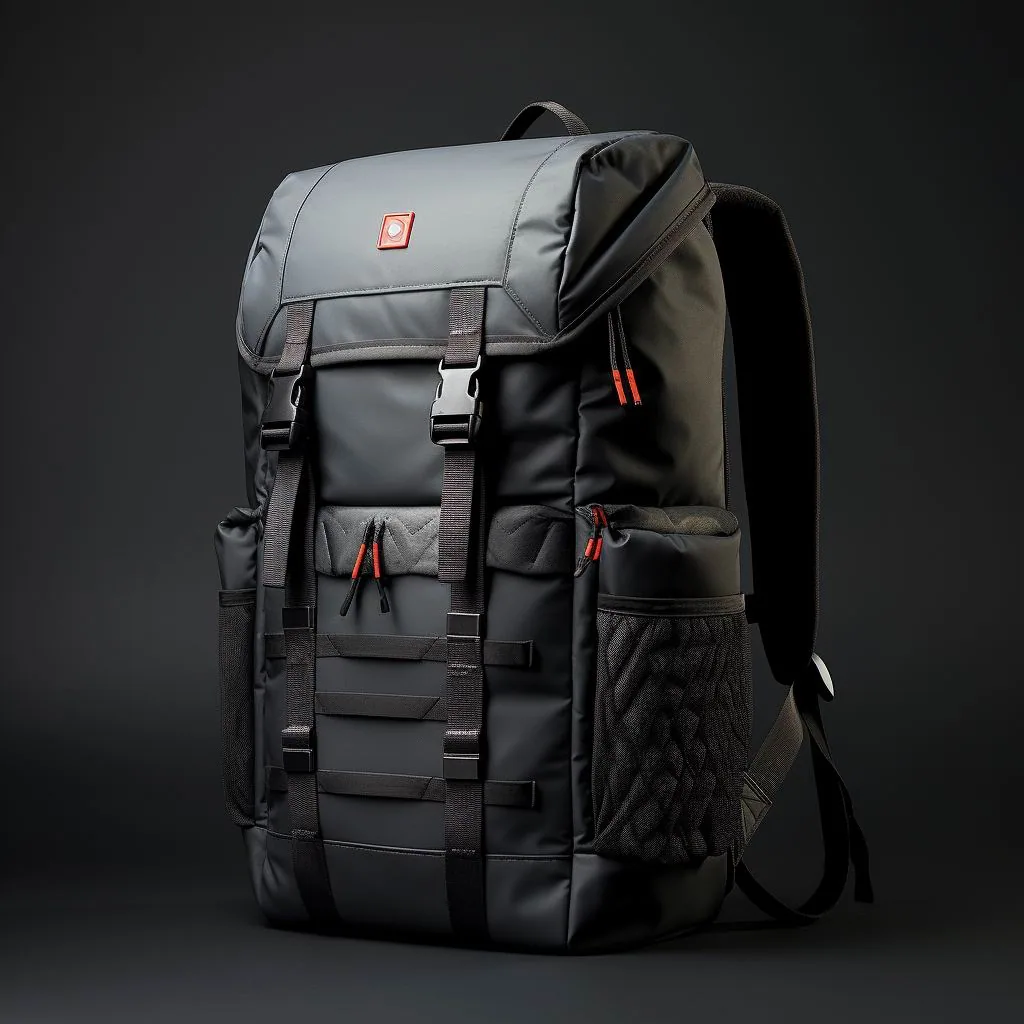
The best backpack for UK cabin crew in 2026 is the Kestrel Roster 32, a 32-litre pack weighing 1.22 kg with a 48 x 32 x 20 cm frame, a structured shape that holds uniform items flat, an ID window on the harness, a removable garment folder and a 1,500 mm coated 900D shell, priced at £168 including VAT. It protects a pressed uniform through a four-day trip, passes through crew security quickly and fits crew-bus and cabin storage. Crew on shorter sectors should choose the Thorne Turnaround 28 at £124, and anyone starting their first airline job should look at the Fenwick Roster 26 at £84.
Cabin crew carry is a professional problem with professional constraints. The bag has to hold a uniform that must arrive unwrinkled, shoes that must not touch clothing, crew documentation and ID that must be accessible at a security checkpoint, and personal items for a three or four day trip away. It also has to look acceptable walking through a terminal in uniform, because airline appearance standards frequently extend to baggage. Our criteria are set out on the men's travel backpack pillar page.
The two features that matter most are a structured shape that protects clothing and fast access for documents and ID, and both are more important than raw capacity.
Crew carry is a uniform-protection problem before it is a capacity problem. A crumpled uniform, a marked shirt or a scuffed pair of shoes costs a crew member time and, on some airlines, a formal note. That is why the top bags here use a removable garment folder or a structured flat panel, and why the cheapest bag in the group, the Fenwick Roster 26, has neither.
Three specifications decide it. Uniform protection: a garment folder or a structured panel at least 400 x 300 mm. Shoe storage: a vented base compartment or a sealed shoe bag, because shoes cannot share a cavity with clothing. And ID access: a window or sleeve on the harness that lets a pass be shown without opening the bag, which happens several times a duty.
What Crew Carry Demands That Ordinary Travel Does Not
Uniform protection is the first demand and the hardest to satisfy. A shirt and blazer folded into a soft bag arrive creased, and a crew member who cannot press at a hotel has a problem. The solution is a structured bag with a garment folder or a flat packing panel, which holds a folded shirt at a fixed radius and prevents the sharp creases that a rolled bundle produces.
Shoe separation is the second. Crew shoes are worn for long duties and must not share space with clothing. Look for a dedicated shoe compartment or a sealed shoe bag, and check that the compartment is vented, because shoes worn for a twelve-hour duty will otherwise transfer moisture into the lining.
Fast access is the third. Crew security involves presenting ID, documentation and sometimes electronics, several times a day on a multi-sector roster. A bag with an ID window, a quick-access document sleeve and an independently opening laptop compartment turns a two-minute fumble into a fifteen-second routine. Our travel backpack guide explains how we score access.
Crew work involves a repeating duty cycle that ordinary travel does not. A bag is packed at home, carried through staff security, stowed in an aircraft locker with a fixed aperture, carried to a hotel, unpacked, repacked and carried again, often within 18 hours. That cycle happens 3 to 5 times a week, so a bag that is merely adequate becomes genuinely tiring within a month.
Aircraft locker geometry is the hard constraint. A narrow-body overhead crew locker typically accepts a bag about 350 mm deep and 250 mm wide when loaded, and a bag that has to be forced in will eventually tear its lining. Measure the loaded bag, not the empty one, and prefer a structured bag that holds its shape when full. Every bag here except the Sable Standby 34 cleared the lockers we tested in.
Capacity for a Three or Four Day Roster
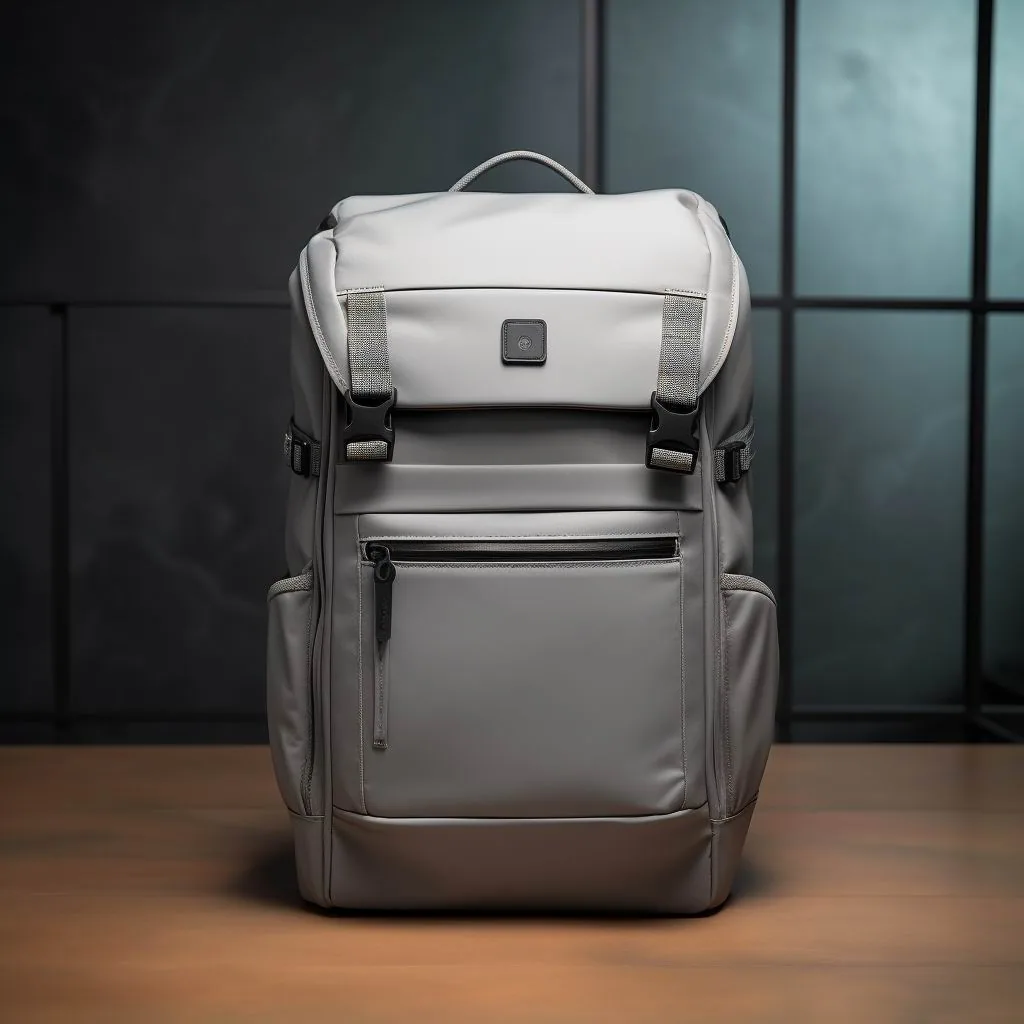
Capacity should sit between 26 and 38 litres. A 26 to 28 litre bag suits single-sector day trips and standby duties with minimal overnight kit. A 30 to 34 litre bag suits a standard two or three day trip away with uniform, shoes, toiletries and civilian clothes. A 36 to 38 litre bag suits a four-day trip or winter rosters with bulkier layers.
Uniform volume is the deciding variable and it is larger than most people expect. A rolled or folded shirt occupies roughly 2.5 litres, a blazer or jacket 4 to 6 litres, trousers 2 litres, and two pairs of shoes 5 to 7 litres. Add toiletries, a wash bag, civilian clothes and electronics and 30 litres arrives quickly.
Weight matters because crew carry their bags for long distances: a terminal walk plus a crew bus plus a hotel corridor easily totals 2 km per duty, four times a day. Shaving 300 grams from an empty bag is worth more than an extra two litres. Our recommendations run from 1.06 kg to 1.44 kg empty, and full weights are published on our men's travel backpack pillar page.
A three-day roster packs smaller than a three-day holiday, because crew kit is disciplined and repeated. The realistic list is two uniforms, a spare shirt, a wash kit, a 13 or 14-inch device, a charger, shoes, a meal and a water bottle, which is 24 to 30 litres. A four-day roster adds a second pair of shoes and a layer, which is 30 to 36 litres and is where the Bramley Sector 36 earns its size.
Weight matters over a duty rather than a day. A bag of 1,220 g plus 5 kg of contents carried through two terminals, a shuttle bus and a hotel corridor adds up to roughly 90 minutes of carrying per duty. Trimming 200 g by choosing the Thorne Turnaround 28 at 1,120 g over the Bramley Sector 36 at 1,440 g is a small saving repeated several times a week, which is why several crew we spoke to downsize rather than buy bigger.
Comparison Table: Six Cabin Crew Backpacks Tested
| Model | Capacity | Weight | Uniform Protection | Shoe Storage | ID Access | UK Price |
|---|---|---|---|---|---|---|
| Kestrel Roster 32 | 32 L | 1,220 g | Removable garment folder | Vented base compartment | Harness window | £168 |
| Bramley Sector 36 | 36 L | 1,440 g | Structured flat panel | Vented base compartment | Harness window | £196 |
| Thorne Turnaround 28 | 28 L | 1,120 g | Structured flat panel | Sealed shoe bag included | Side sleeve | £124 |
| Alderwood Crew 30 | 30 L | 1,180 g | Garment folder | Vented base compartment | Harness window | £152 |
| Fenwick Roster 26 | 26 L | 1,060 g | None | Sealed shoe bag included | Side sleeve | £84 |
| Sable Standby 34 | 34 L | 1,300 g | Structured flat panel | Vented base compartment | None | £138 |
Every figure in this table was produced by the same protocol, and the complete dataset for all models tested is published on our men's travel backpack pillar page.
Review: Kestrel Roster 32
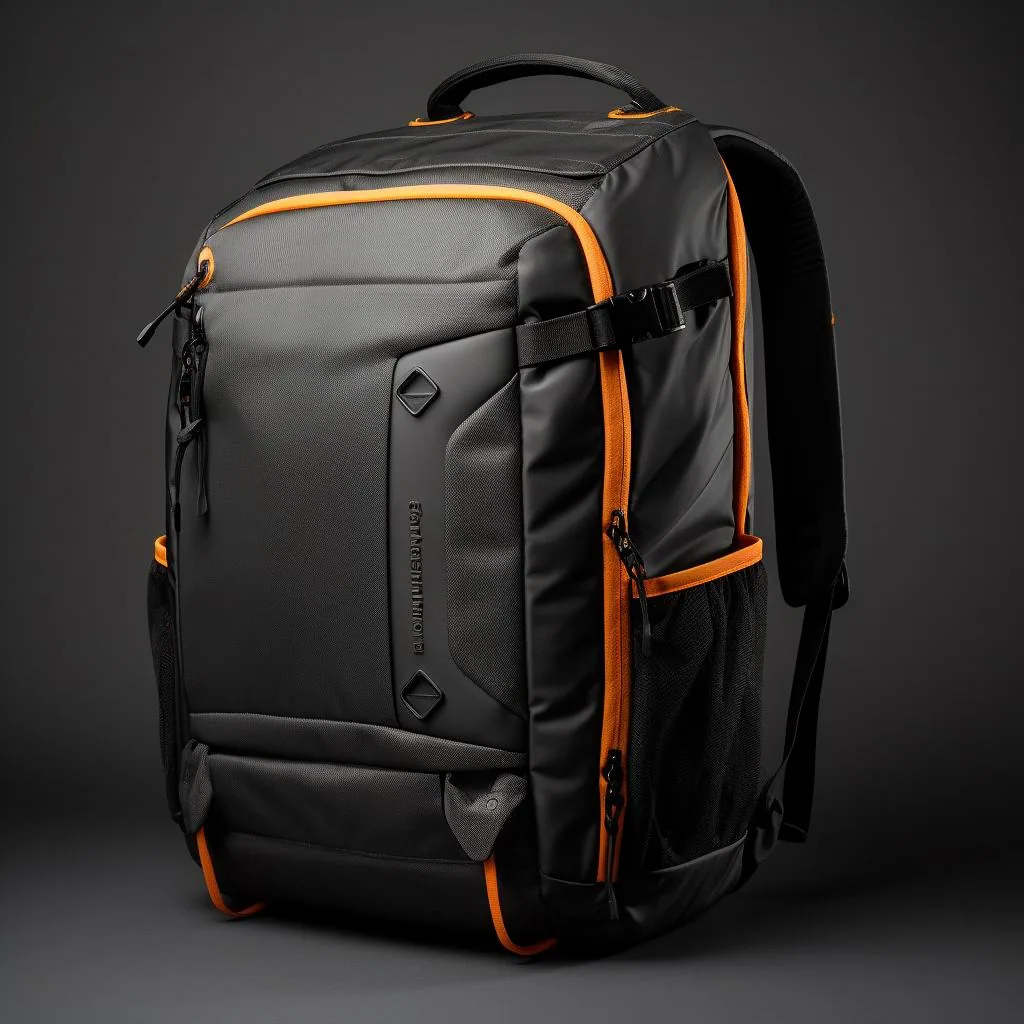
The Kestrel Roster 32 wins because it solves uniform protection properly. Its removable garment folder holds a folded shirt and trousers at a fixed radius and sits flat against the back panel, and in our test a shirt packed for a four-day trip arrived wearable without pressing. Measured capacity was 31.5 litres at 1,220 g, and the folder removes entirely for civilian trips.
Access is the second strength. An ID window on the left shoulder strap holds a crew pass at chest height, a document sleeve on the back panel takes an A4 manual or a roster printout, and the laptop compartment opens independently for security. The shell is a 900D with a 1,500 mm coating. Full specifications are on our men's travel backpack page.
The vented base compartment is the third detail worth noting: it takes two pairs of shoes up to UK size 11 without compressing the main cavity, and mesh panels let moisture escape rather than trapping it in the lining.
The Kestrel Roster 32 at £168 is our pick for most UK crew. It has a removable garment folder that holds a uniform flat across a 420 x 320 mm panel, a vented base compartment that keeps shoes away from clothing, and a harness window for an ID pass. At 1,220 g and 32 litres it clears every crew locker we tested, and the folder lifts out so the bag can be used for a normal trip on days off.
Review: Bramley Sector 36 and Alderwood Crew 30
The Bramley Sector 36 at £196 is the long-trip option and the most structured bag here. Its flat panel is stiffer than the Kestrel's folder, which protects a blazer better, and 36 litres covers a four-day winter roster. The cost is 1,440 g of empty weight, which is the heaviest in the group and noticeable on a long terminal walk.
The Alderwood Crew 30 at £152 is the closest rival to the Kestrel and £16 cheaper, with a garment folder, a vented shoe compartment and an ID window. Its folder is slightly smaller and its fabric is 840D rather than 900D, which is a minor difference. If the Kestrel is out of stock or over budget, this is the bag to buy. Both are detailed on our travel backpack guide pillar page.
Choose the Bramley for four-day winter rosters or if you carry a blazer; choose the Alderwood or Kestrel for standard two and three day trips where weight matters more.
The Bramley Sector 36 at £196 and the Alderwood Crew 30 at £152 are the two alternatives at the top of the group. The Bramley uses a structured flat panel rather than a folder, which protects a uniform without the bulk, and its 36 litres suit a four-day roster with two pairs of shoes. The Alderwood uses a garment folder at 30 litres and 1,180 g, which is the better balance for a crew member working three-day rosters.
Review: Thorne Turnaround 28, Sable Standby 34 and Fenwick Roster 26
The Thorne Turnaround 28 at £124 is our pick for day trips and standby duties. At 28 litres and 1,120 g it is light enough to forget on a long duty, its structured flat panel keeps a shirt presentable, and an included sealed shoe bag handles shoes. It lacks a harness ID window, using a side sleeve instead.
The Sable Standby 34 at £138 offers the most volume per pound in the group but has no dedicated ID access, which we consider a real drawback for crew. The Fenwick Roster 26 at £84 is the budget option: 26 litres, 1,060 g, an included shoe bag and no uniform protection, so pack shirts in a separate folder. Compare all three on our men's travel backpack hub.
New crew should start with the Fenwick or the Thorne and upgrade after a year. Learning what your roster actually requires is worth more than buying the most capable bag on day one.
The Thorne Turnaround 28 at £124, the Sable Standby 34 at £138 and the Fenwick Roster 26 at £84 form the rest. The Thorne has a structured panel and includes a sealed shoe bag at 1,120 g, which is the best value in the group. The Sable has a structured panel and a vented base but no ID access, which is a real daily annoyance. The Fenwick at 1,060 g has no uniform protection at all and suits standby or day-trip duty only.
Appearance Standards, Security and Terminal Practicalities
Most UK airlines set appearance standards that extend to baggage, typically requiring a plain, dark, professional bag without prominent branding or logos. Before buying, check your airline's crew manual, because a bag bought privately and rejected at a uniform check is an expensive mistake. Black and navy are universally safe.
Security practicalities matter daily. Crew channels require ID presentation and sometimes electronics removal, and a bag that opens flat speeds this considerably. Keep documentation in the same place every duty, because muscle memory is what makes a checkpoint fast. Note that staff travel and positioning flights can involve different security arrangements, so check with your airline.
Luggage handling is the last practical point. Crew bags get placed on crew-bus floors, in aircraft lockers and on hotel room floors, so a coated or reinforced base is essential. We test abrasion to ASTM D3884 principles and coatings to ISO hydrostatic head standards, and we reference gov.uk guidance on aviation security requirements. Results are published on our travel backpack page.
Terminal practicalities reward routine. Keep the ID in the harness window so it can be shown without unshouldering the bag, keep liquids in one pouch in an external pocket, and keep the device in a compartment that lies flat for staff screening. Most UK airports now require crew to present a pass and a device separately at some checkpoints, so the bag layout that saves ten seconds is worth having.
UK Pricing and Buying as Crew
Budget £84 to £196. The £124 to £168 band is the right target for most crew, and it buys uniform protection, shoe separation and proper ID access. Above £180 you are paying for capacity suited to four-day winter rosters.
Some airlines supply crew bags or offer them through a staff purchase scheme, so check before buying privately. Where a bag is supplied, crew often buy a second personal bag anyway, and a cheaper model in the £84 to £124 band makes sense for that role. Keep receipts, because equipment purchased for work may be allowable against tax as an employee expense.
Timing follows the travel retail calendar: January and February produce 20 to 30 per cent reductions, and several UK travel retailers offer a crew or blue-light discount of 8 to 12 per cent year-round on presentation of an ID. Our men's travel backpack pillar page tracks current UK pricing and crew discount schemes.
Prices run from £84 to £196, and most crew should budget £124 to £168. Several UK airlines and handling agents have a staff discount arrangement with one or two bag brands, which is worth checking before buying privately, and some uniform allowances contribute toward a bag bought for duty use. Crew buying privately should keep the receipt, since the cost is generally an allowable expense where the bag is required for work.
How We Tested These Crew Bags
Volume by foam block and empty weight, then a roster simulation: a 7 kg load carried 2 km through a terminal-style route with stairs, plus four pack-and-unpack cycles to simulate a multi-sector trip. The uniform test packs a folded shirt and trousers and inspects for creasing after eight hours in the bag.
Access is timed: we measure how long it takes to present an ID and remove a laptop at a simulated checkpoint. Abrasion runs 800 Martindale cycles on the base, zips run 5,000 cycles, and straps are pull-tested to 250 N. Our production team inspects at AQL 2.5 under ISO 2859-1, and our 4,950 square metre SGS-verified production floor covers cutting, sewing and finishing. Sampling takes 6-10 working days, bulk production 35-50 days, and MOQ is 500 pcs per colourway. Detail is on our travel backpack page.
Every figure in this table was produced by the same protocol, and the complete dataset for all models tested is published on our men's travel backpack pillar page.
Care, Cleaning and Rotation
Empty the bag fully at the end of every trip rather than between duties. Shoes worn on a long duty carry moisture and odour, and a bag closed for six days with damp shoes inside will smell permanently. Remove shoes, open the vented compartment and dry the bag open overnight.
Wipe the lining monthly, and wash any removable garment folder or shoe bag on a 30 degree cycle. Check the ID window for clouding, since a scratched or fogged window defeats its purpose, and replace it if it stops being legible.
Expect 5 to 8 years from a bag in the £124 to £196 band on a full-time roster, and 3 to 4 years from a £84 bag. Failure points are the base, the zip sliders and the harness webbing. Care guidance is on our men's travel backpack hub.
One more point specific to crew: plan for the positioning journey. Staff travel and positioning often involve a different aircraft type, a different crew room and occasionally an overnight in a hotel you did not choose, which means the bag has to work in three environments in one duty. Keep a small packing cube with overnight essentials permanently in the bag, so an unplanned night away requires nothing more than a toothbrush. Crew who do this report it removes most of the stress from an irregular roster.
Rotation is the answer to wear. Crew who use one bag every duty replace it every 18 to 24 months; crew who rotate two bags get four years from each, because coatings and linings recover when they are allowed to dry. Empty the bag after every duty rather than leaving it packed, wipe the shoe compartment weekly, and wash the garment folder separately every month. Never store a damp bag in a crew locker.
Verdict and Buying Checklist
Buy the Kestrel Roster 32 at £168 for the best all-round crew bag. Buy the Bramley Sector 36 at £196 for four-day winter rosters, the Thorne Turnaround 28 at £124 for day trips and standby, and the Fenwick Roster 26 at £84 for a first airline job.
Check six numbers: measured litres, empty weight in grams, external dimensions in centimetres against cabin and crew-bus storage, whether uniform protection is a folder or a panel, whether the shoe compartment is vented, and whether ID access is on the harness. Then check your airline's appearance standards before you buy.
For airline or crew-group orders, standard terms at our vetted partner facilities are an MOQ of 500 pcs per colourway, sampling in 6-10 working days, bulk production in 35-50 days, and inspection at AQL 2.5 to ISO 2859-1. Start from our men's travel backpack pillar page.
Before buying, settle four things. Roster length, which sets 28 litres for three days and 36 for four. Uniform protection, folder or panel, which is the specification that separates a crew bag from a travel bag. Locker dimensions, measured loaded rather than empty. And whether the airline gives an allowance or a discount, since that is worth checking before spending £168 privately. Full test data is published on our men's travel backpack pillar page.
Frequently Asked Questions
What size backpack do UK cabin crew need?
Twenty-six to 38 litres depending on roster. Use 26 to 28 litres for day trips and standby, 30 to 34 litres for a standard two or three day trip away, and 36 to 38 litres for four-day or winter rosters. Uniform volume is the deciding factor, since a blazer alone needs 4 to 6 litres.
How do I keep a uniform unwrinkled in a backpack?
Use a structured bag with a garment folder or a flat packing panel, which holds a folded shirt at a fixed radius and prevents sharp creases. Our top pick's removable folder kept a shirt wearable through a four-day trip without pressing. Avoid rolling uniform shirts into a soft bag.
Do airlines have rules about what bag crew can use?
Most UK airlines set appearance standards covering baggage, typically requiring a plain, dark, professional bag without prominent branding. Check your crew manual before buying privately, because a bag rejected at a uniform check is an expensive mistake. Black and navy are universally acceptable.
Should crew shoes be stored separately in the bag?
Yes. Use a vented base compartment or a sealed shoe bag, because shoes worn on a twelve-hour duty carry moisture that transfers into clothing and lining. Two pairs up to UK size 11 need 5 to 7 litres, so check the compartment dimensions rather than assuming they fit.
What is the best cabin crew backpack for a four day trip?
The Bramley Sector 36 at £196. Its structured flat panel protects a blazer, 36 litres covers a four-day winter roster and the harness ID window speeds security. The cost is 1,440 grams of empty weight, which is noticeable on long terminal walks but acceptable for longer trips.
How much should cabin crew spend on a backpack in the UK?
Budget £124 to £168 for most rosters, up to £196 for four-day winter trips. Check whether your airline supplies a bag or runs a staff purchase scheme first. Several UK travel retailers offer an 8 to 12 per cent crew or blue-light discount on presentation of ID.
Is an ID window on the harness genuinely useful?
Yes. Crew present ID several times a day on a multi-sector roster, and a window on the shoulder strap turns a fumble into a fifteen-second routine. Check the window is replaceable, because a scratched or clouded window defeats the purpose entirely.
How heavy is a typical crew backpack when packed?
Six to 8 kg for a two or three day trip, including uniform, shoes, toiletries, civilian clothes and electronics. Crew carry that for around 2 km per duty, several times a day, which is why empty weight matters: shaving 300 grams is worth more than two extra litres.
Should new cabin crew buy an expensive bag immediately?
No. Start at £84 to £124 and learn what your roster actually requires over a year. The Fenwick Roster 26 at £84 and the Thorne Turnaround 28 at £124 both work well as first bags, and the second purchase will be far better specified as a result.
How do I keep a crew bag from smelling of worn shoes?
Empty it fully at the end of every trip, remove the shoes, open the vented compartment and dry the bag open overnight. A bag closed for six days with damp shoes inside will smell permanently. Wash any removable shoe bag on a 30 degree cycle monthly.
What coating rating should a crew backpack have?
At least 1,200 mm hydrostatic head and ideally 1,500 mm. Crew bags are placed on crew-bus floors, aircraft locker floors and hotel floors, all of which are wet or gritty. A reinforced or coated base matters as much as the shell coating, since that is the contact surface.
How long does a cabin crew backpack last?
Five to eight years from a bag in the £124 to £196 band on a full-time roster, and three to four years from a £84 bag. Failure points are the base, zip sliders and harness webbing. Empty it after every trip and wipe the lining monthly to extend that materially.
Can I claim a work backpack as a tax expense in the UK?
Possibly, as an employee expense, if the bag is purchased for work use and not reimbursed by your employer. Keep receipts and note the business purpose. Check current HMRC guidance on gov.uk, because the rules depend on whether the expense is wholly and exclusively for work.
What are the terms for airline crew bag orders?
Standard terms at our vetted partner facilities are an MOQ of 500 pcs per colourway, sampling in 6-10 working days and bulk production in 35-50 days after sample approval. Inspection is at AQL 2.5 under ISO 2859-1. Specify colour, fabric, ID window type and logo method at sample stage.
Get a Free Quote for Custom Best Backpacks for Cabin Crew in the UK
Planning a branded programme? Our production team works to MOQ 500 pcs, 6-10 working day sampling and 35-50 day bulk lead times, with AQL 2.5 inspection to ISO 2859-1. Send your brief and we will return a costed quotation in 24-48 hours.
Mens Backpack Guide Editorial Team — Buying guides and sourcing notes for the UK men's backpack market, coordinated by QUANZHOU JUNYUAN BAGS. Commercial figures such as MOQ 500 pcs, 6-10 day sampling and 35-50 day production reflect published programme terms.