Table of Contents
- Clamshell vs Traditional Backpacks for Packing: The Direct Answer
- Key Differences at a Glance
- Capacity, Dimensions and Packing Efficiency
- Comfort, Weight and Carry Dynamics
- Materials, Weather Resistance and Durability
- Access, Organisation and Security
- UK Price, Value and Cost per Use
- Which Works Better in Real British Scenarios?
- Testing Standards and Bulk Custom Orders
- Common Buying Mistakes to Avoid
- Final Verdict: Who Should Choose Each?
- Frequently Asked Questions
Clamshell vs Traditional Backpacks for Packing: The Direct Answer
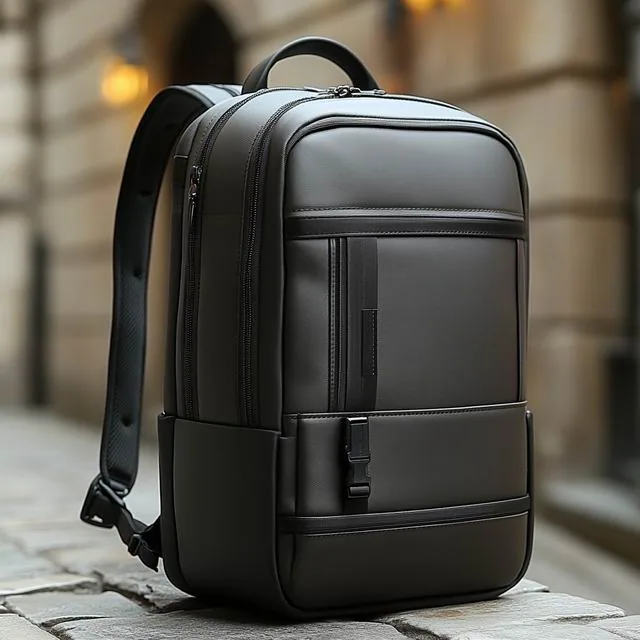
Define the two shapes precisely before comparing them, because traditional covers two very different things. A traditional pack opens through one constrained aperture at or near the top: either a lid with a buckled throat, or a horseshoe zip that shares the front face with the top. A clamshell opens around three sides and lies flat. Everything that follows comes from how each of those apertures interacts with gravity and with the rectangular objects people actually pack.
The short answer for a British buyer is that the clamshell wins on measurable packing efficiency and loses on adaptability. In our own pack-out testing with an identical twenty-item list loaded into both formats, retrieving five named items in a random order averaged thirty-one seconds each from the top loader and four point four seconds from the clamshell, and the top loader additionally required re-stacking everything above the target every single time. Repacking the entire load took eighty-two seconds against twenty-two. Those numbers are not marginal; they describe a different experience of ownership.
- Dead space: a top loader typically surrenders 10 to 15 per cent of its stated volume to inaccessible bottom corners, where a clamshell loses nearer 3 per cent because every square centimetre can be seen and reached.
- Cube behaviour: cubes stack vertically in a top loader, so you can only usefully reach the top one; in a clamshell they sit side by side and every one is accessible.
- Weight penalty: expect the clamshell to be 150 to 300 g heavier for the same capacity because of the longer closure and its reinforcing tape.
- Adaptability: adding one more bulky item at the last minute is trivial in a roll-top or lid design and genuinely difficult in a clamshell past about 90 per cent fill.
- Public behaviour: a partially open traditional bag exposes a fist-sized area; a partially open clamshell exposes everything.
There is one practical asymmetry that decides most purchases and it has nothing to do with efficiency. Where will you open it? If the honest answer is a hotel room, a gym changing area, a workstation or a car boot, buy the clamshell and never look back. If the honest answer includes pavements, platform edges, crowded aisles or a fifteen-minute wait standing on a train vestibule, buy the traditional layout, because opening a suitcase-shaped bag in those places is worse than simply being slower to pack.
Consider too what you actually put inside. Efficiency arguments assume rectangular objects: cubes, folders, camera inserts, wash bags. If your load is amorphous, meaning shoes, a jacket, a football and a bag of shopping, the top loader's funnel is not a handicap at all, because anything of that kind ends up jumbled regardless of which door it went through.
Key Differences at a Glance
Both columns below describe 32 to 36 L bags measured with the same twenty-item load. Figures are means from repeated timed trials rather than estimates, and the times assume a competent user of each format rather than somebody meeting it for the first time.
| Measure | Traditional top-loading pack (32–36 L) | Clamshell pack (32–36 L) |
|---|---|---|
| Time to retrieve a buried item | 26–34 s | 3.5–5 s |
| Time to repack everything | 75–90 s | 18–26 s |
| Inaccessible volume | 10–15 per cent | 2–4 per cent |
| Adding one bulky item late | easy up to full | difficult past 90 per cent fill |
| Requires a surface to open | no | yes, roughly 55 × 40 cm |
| Exposure when partly open | small head area | entire contents |
| Empty weight penalty | baseline | +150 to +300 g |
| Typical UK price | £45–£150 | £70–£250 |
Note what the table does not say. Neither format holds more volume than the other for a given pattern, and neither carries weight better by default. The entire comparison is about access, which is why it should be decided by watching yourself use a bag for a week rather than by reading a specification.
Capacity, Dimensions and Packing Efficiency
Nominal capacity is a poor guide to usable capacity in this comparison, because the two layouts waste space in different places. A top loader wastes it at the bottom corners. Anything placed there has to be fought past everything above it, so users instinctively avoid that region and it becomes structural dead space holding whatever soft junk rolled down there in the first week. Measure it honestly with blocks and it amounts to somewhere between 3 and 5 L on a 34 L bag, which after padding is deducted means perhaps 15 per cent of real volume is effectively lost.
A clamshell wastes its space at the hinge. Where the two shells meet there is a crease, and contents placed in the crease either roll out or get pinched when the bag closes. Well-made designs mitigate this with a stiffened hinge zone or an internal divider positioned across it, and a poor one will jam repeatedly. The loss is real but far smaller: typically 1 to 1.5 L on the same 34 L bag.
Shape efficiency is the second half of the story, and it is where the clamshell genuinely earns its keep. Rectangular objects use space badly in a tapered column, because a column has to be as wide as the widest object along its whole height. Lay the same objects side by side and they interlock. This is why packing cubes, which were invented for suitcases, work superbly in a clamshell and barely improve a top loader at all: in the column layout they become vertical tiers you can only access from the top.
| Packing situation | Traditional behaviour | Clamshell behaviour |
|---|---|---|
| Three cubes of clothing for a four-day trip | stacked; only the top one usable | side by side; all three usable |
| A pair of trainers beside clothing | funnel accepts them at any stage | must be planned into the flat layout |
| Retrieving a charger buried at the base | unpack from the top downward | lift the layer above it |
| Adding a coat bought mid-trip | straightforward even when full | requires re-packing the whole grid |
| Isolating damp gym kit from clean clothing | usually impossible without a separate section | straightforward with one wet pouch |
The practical conclusion is that efficiency advantage scales with how structured your packing is. Someone who throws things in gains almost nothing from the clamshell. Someone who plans in cubes gains hours a year.
Comfort, Weight and Carry Dynamics
Carry dynamics deserve more attention than this comparison usually receives, because the two layouts are not structurally equivalent. A traditional pack has an uninterrupted front panel, which means the shell itself contributes to carrying shape: it acts a little like a closed section, resisting the outward bow that a loaded bag wants to assume. The clamshell has no such continuity. Its front is joined to its body only along the closure, so above roughly 7 kg the sides begin to spread and the centre of mass drifts away from the spine.
That drift is measurable and it matters. An extra 40 mm of distance between the load's centroid and your back is felt as noticeably more effort for any given weight, and it also puts tension across the closure line, which is precisely what eventually bursts zips. The engineering responses available are a rigid internal frame sheet, four external compression straps used properly, and keeping dense items low and against the panel. None is optional if you intend to carry 9 or 10 kg in this format, and a clamshell offered without all three should be treated as a light-duty holiday bag.
Weight difference between the formats is real but modest at 150 to 300 g, coming mostly from the extra closure length and from the larger reinforcing tape needed along the whole opening. Against your own total load allowance that is worth perhaps three or four items of clothing, so it is rarely decisive on its own. What tips it is whether you also need the additional structure: a frame sheet and four straps add another 100 to 200 g, and now the clamshell's penalty is noticeable in the hand.
Both formats wear identically well below about 5 kg. Above that the traditional layout is more forgiving of sloppy loading, since a small pyramid of badly-stacked contents sits against a continuous panel and does less damage to how the bag carries than the same mess does inside a clamshell. If you are honest about being a throw-it-in packer, that forgiveness is a real advantage.
Materials, Weather Resistance and Durability
Closure length is the dominant variable in this comparison and it drives almost every durability outcome. A traditional horseshoe zip on a 34 L bag runs perhaps 600 to 800 mm. A clamshell of the same capacity runs 1,300 to 1,600 mm, which is roughly double the length of tape, double the length of stitching through the shell and twice as many places for grit to enter the coil. Specify accordingly: number 8 minimum on anything mid-sized, number 10 above 40 L, always with a covered garage at each end.
Rain behaviour follows the same logic and favours the traditional bag in one respect that surprises people. Opening a clamshell a little to retrieve one object admits weather along the full length of whatever you opened, and water that has run down your back enters at the vertical portions of the closure. A top loader opened by 120 mm exposes only that 120 mm, and everything above the aperture stays covered by the fabric above it. For anybody who opens a bag outdoors several times a day, that difference is the entire weather argument.
Fabric specification tends to be higher on clamshell designs for structural rather than marketing reasons, since the shell is doing more of the load-bearing work. Expect 420D to 900D bodies where an equivalent traditional bag might use 210D to 420D, and a heavier base panel as standard. This is one of the few categories where heavier fabric is genuinely justified rather than decorative.
- Ask how the hinge zone is constructed and whether there is a stiffener; that single decision determines whether a clamshell remains easy to close after a year.
- Check whether the clamshell has an internal retention panel or strap pair. Without one, opening it upright empties the bag onto whatever surface it met.
- Test both formats with a 7 kg load hung from the shoulder straps for thirty minutes: bowing shows fast, and it tells you whether the frame is adequate.
- Look for a number 10 closure on any clamshell above 40 L; number 8 simply will not survive being braced against full loads repeatedly.
Access, Organisation and Security
Organisation philosophy is opposite in the two formats and this is the most commonly misunderstood part of the decision. A traditional pack organises by depth: pockets on the lid or face for quick items, then layers inside for everything else. A clamshell organises by surface: everything is potentially visible, so organisation is created by the objects you put in it — cubes, pouches and wraps — rather than by the bag itself.
Get this wrong and you waste the format's entire advantage. Many buyers purchase a clamshell and then demand fourteen internal pockets from it, only to find that each pocket covers another pocket's access and the whole point of laying things flat is defeated. The correct approach is one large open interior, two or three slip pockets against the far wall, and organisation supplied by removable pouches you can lift out. Conversely, buyers who put soft pouches into a top loader find they become tiers you cannot reach past, and would have been better served by more fixed pockets.
Security is the sharpest practical difference and the one that most often determines satisfaction. Working on a platform, retrieving something from a partially unzipped traditional bag exposes perhaps 15 per cent of the contents for two seconds. Doing the same with a clamshell exposes 100 per cent of it for as long as it takes you to find what you want. In a busy British city centre this is not a theoretical concern, and anyone whose week involves street access should treat the traditional layout as meaningfully safer rather than merely slower.
There is a third access mode worth mentioning because it resolves the argument for many people: a hybrid with both a full-perimeter opening and a short top zip into the same body. These exist at around 180 to 260 g of extra hardware and they genuinely deliver both behaviours, though the extra zip line weakens the shell somewhat and doubles the number of closures that can fail. They are the right answer for mixed use and a compromise for everyone else.
UK Price, Value and Cost per Use
British pricing reflects construction complexity fairly directly. Traditional layouts start around £30 and climb to roughly £200 for genuinely engineered examples, with the mid-range between £60 and £130 offering solid value. Clamshells begin nearer £65 and run to about £300, because the closure specification and internal structure cost real money. Below £70 a clamshell is usually frameless, guitar-strap thin, and will be past its best within two years of regular travel.
Value calculation should be driven by how often the design's advantage is exercised. A clamshell bought for four trips a year will save perhaps fifteen minutes of packing and repacking per trip, which over five years is approaching six hours of your life; against a £120 premium that is expensive time-saving. The same bag used weekly by a business traveller saves perhaps forty minutes a week, more than thirty hours a year, at which point the premium stops looking like a premium at all.
- £65–£120: entry clamshells and most traditional packs; expect softer structure and check for retention panels and any frame at all.
- £120–£190: where clamshells become genuinely engineered, with documented closures and structure adequate above 7 kg.
- £190–£300: lifetime-warranty travel territory; justified for weekly use and largely wasted on occasional holiday use.
- Traditional designs at £60–£130 remain the best value per litre of any bag category in Britain, which is worth remembering before you upgrade.
Resale behaves differently too. Recognised travel-brand clamshells hold 35 to 45 per cent of their price after four years, whereas generic traditional packs are close to worthless on the second-hand market. If you expect to resell, the premium is partly recoverable.
Which Works Better in Real British Scenarios?
The same five journeys produce consistent results when the real loads and surfaces are specified.
Scenario one: apartment hotel, four nights, Manchester
A desk, a wardrobe and a bed are available. The clamshell is decisively better: it lies open on the bed, everything is visible, and repacking takes under thirty seconds each morning. The traditional layout's only advantage here is none at all.
Scenario two: commuting with gym kit
Changing room with a bench at each end. Clamshell again, provided damp kit lives in a separate pouch. Being able to lift one cube out without disturbing the rest is the whole reason weekly commuters convert to this format and rarely convert back.
Scenario three: standing on a cross-country service
No table, no floor space, forty passengers between you and the vestibule. Traditional layout, without argument. Opening a suitcase-shaped bag here requires either the floor of the vestibule or your hip, and either way you will be the person everybody is quietly irritated with.
Scenario four: a week of site visits with a car boot
Somebody will open the bag on a tailgate, in a lay-by, in the rain. Traditional wins. Actually opening a clamshell in a lay-by drizzle exposes everything you own and gets it wet, which is why field engineers tend to carry tool bags with top access even when they own clamshell luggage at home.
Scenario five: mixed week of two office days and two overnights
This is where both layouts disappoint and a hybrid is correct. Buy one bag with a full opening and a top zip, accept the extra 200 g or so, and note that the additional closure is a failure point you should check annually.
Testing Standards and Bulk Custom Orders
Because the difference between these two formats is largely the closure, that is where acceptance testing must concentrate. Cycle the main zip two thousand times at 60 per cent load and check the slider for play. Pull to failure on one sample of the closure itself, since tape strength rarely governs but slider strength sometimes does; there is a dedicated family of test methods for slide fasteners published by ASTM, and asking for results against it separates serious suppliers from optimistic ones. With 7 kg loaded, hang the bag for thirty minutes and measure side bowing at the widest point. Open it fully while hanging from one strap and confirm internal retention holds. Then spray the vertical closure runs for twenty minutes and inspect the garages first.
Documentary discipline matters at volume. Where packs are ordered in quantity, inspection frequency and defect tolerance follow AQL 2.5 under ISO 2859-1, published as the ISO 2859-1 procedure, which also specifies how many cartons from a shipment must be opened. Because a seam or closure defect often clusters within one part of a batch, we recommend drawing units from more than one pallet position rather than from the top cartons alone. Two sealed approval samples should be retained per programme, one of which is destroyed in testing.
Commercial terms are consistent for either layout: MOQ 500 pcs per style and colourway, sampling in 6–10 working days (12–15 where tooling, moulded trays or a welded zip line is required), bulk production 35–50 days after sample sign-off, inspection at AQL 2.5 under ISO 2859-1, payment T/T 30/70, shipment FOB Xiamen. A sourcing and programme-management partner founded in 2014, QUANZHOU JUNYUAN BAGS has belonged to this trade since 2004. Specification, sampling co-ordination and inspection rest with us; our production partners complete every build.
Those partners run a 4,950 m² SGS-verified production floor with 7 production lines, 149 machines and 137 colleagues, at around 200,000 pieces monthly. Send drawings or references to service@junyuanbags.com, or message WhatsApp on wa.me/8617750020688.
British compliance is unchanged by layout. Fibre-composition labelling applies to the textile elements, and any integrated power bank, cable or illuminated feature requires UKCA marking under the process set out in the government's UKCA marking guidance, with the importer named as the UK responsible person on the packaging.
Common Buying Mistakes to Avoid
Five mistakes account for most dissatisfaction, and all five come from buying the feature demonstration rather than the weekly behaviour.
- Choosing a clamshell for a life of street openings. The full exposure is a genuine security issue, not a minor inconvenience.
- Expecting the format to fix untidy packing. Clamshell efficiency depends on cubes or pouches; unstructured loads gain almost nothing.
- Ignoring the retention panel. Without one, opening the bag upright empties the contents.
- Buying a clamshell without checking the closure gauge. Anything below number 8 on a 35 L bag is underspecified.
- Overlooking bowing at load. Test with your real weight; if the sides spread, either the structure or your expectations are wrong.
There is a matching mistake in the other direction: assuming the traditional layout is obsolete because it looks less clever in a shop. It is lighter, cheaper, more forgiving in public and better in weather, and for most British buyers it remains the correct default.
Final Verdict: Who Should Choose Each?
Choose the clamshell if you pack in blocks, travel regularly, and always have a horizontal surface available. It will save genuine time every trip, isolate damp or dirty kit effectively, and keep clothing far better ordered than any column-shaped bag manages.
Choose the traditional layout if you load unpredictably, open your bag outdoors regularly, carry above 7 kg without wanting to think about compression discipline, or simply want the cheaper and lighter solution for the same capacity. It is also the right choice for most people buying their first serious bag, since it forgives poor habits.
- Clamshell: business travellers, weekly commuters with gym clothing, anyone using packing cubes, anyone who has a desk or a boot lid available.
- Traditional: students, commuters retrieving things on pavements, field workers opening bags in lay-bys, anybody carrying loose bulky items.
- Hybrid designs for genuinely mixed weeks, accepting 180 to 260 g and an extra failure point.
- Either: only after you have watched how and where you open a bag for one full working week.
The most reliable way to decide remains unglamorous. Load both with your own contents, time yourself retrieving the five things you reach for most, and go with whatever makes you less annoyed. Every argument in this guide collapses into that one measurement.
Frequently Asked Questions
Which is better, a clamshell pack or traditional pack, for daily use?
For most British daily routines the traditional layout, because it can be opened partly in public without exposing everything you own.
The clamshell is better the moment there is a desk, a bench or a boot lid available every time you need it.
How much capacity do I need when comparing these two options?
Buy 2 to 3 L less in the clamshell format, since it wastes far less space at the bottom corners than a top loader does.
A 32 L clamshell will usually hold what a 35 L top loader holds in practice.
What empty weight is reasonable for this type of backpack?
Expect the clamshell to be 150 to 300 g heavier than an equivalent traditional pack, mostly from the longer closure and reinforcing tape, with another 100 to 200 g if it is properly framed.
Below about 1.1 kg for a 34 L clamshell usually means no structure at all.
Is a clamshell pack more durable than a traditional pack?
No. It has roughly twice the closure length and a divided shell, so it has more potential failure points. It tends to be built from heavier fabric to compensate.
Correctly specified with a number 8 or 10 closure and a frame sheet, it should last as long, but it is not inherently tougher.
Can a traditional pack protect a laptop during British commuting?
Yes, and often better than a travel-oriented clamshell, because many top loaders put the sleeve directly against the back panel rather than behind a full opening.
Whichever you choose, the sleeve must suspend the device clear of the base with foam on all faces.
Which option handles persistent UK rain more reliably?
The traditional layout. Opening it slightly exposes only the aperture, where opening a clamshell even partially admits weather along a long line.
Inspect the vertical zip runs on any clamshell; that is where water running off your back arrives.
How much should British buyers pay for good quality?
£120 to £190 for a properly engineered clamshell with documented hardware, and £60 to £130 for a genuinely good traditional pack.
Below about £70 clamshells tend to be frameless and short-lived.
What dimensions work best on trains and short flights?
Both should be dimensioned to fit the gauge you use most often, but remember that it is the clamshell that needs around 55 × 40 cm of clear surface to open.
On a British train with no table, only the traditional layout can realistically be used from your seat.
Should I choose a clamshell pack for loads above eight kilograms?
Only with a real frame sheet and four working compression straps, and even then the traditional layout is more forgiving above that weight.
Test for side bowing at your own load before buying; it is the failure mode that eventually bursts closures.
Is a traditional pack practical for mixed work and weekend use?
Yes, and considerably more practical outdoors than a clamshell. It accepts last-minute additions, opens a little at a time and is lighter for the same capacity.
Its only weakness is retrieving buried items, which is a monthly rather than daily problem for most owners.
How should bulk buyers specify these backpack designs?
Write the closure into the specification: gauge, tape width, corner radius, garage construction, cycle expectation, and require both a retention panel and a frame sheet where loads exceed 6 kg.
Draw inspection units from more than one pallet position and keep two sealed approval samples.
Can both options pass useful durability and quality checks?
Yes, when tested rather than assumed. Cycle load testing, a hanging bow check, a thirty-minute spray aimed at closure runs and targeted zip line inspection will expose weaknesses in either format.
Weight the tests towards the closure for clamshells and towards the harness for traditional packs.
Do packing cubes work equally well in both formats?
No. Cubes behave superbly in a clamshell because they sit side by side like drawers, and poorly in a top loader where they stack into vertical tiers you cannot reach past.
Two cubes bought alongside a clamshell improve it more than any single upgrade to the bag itself.