Table of Contents
- Clamshell Backpacks: The Direct Answer
- Key Specifications at a Glance
- Anatomy and Structural Features
- Capacity Range and Typical Dimensions
- Who It Suits and Who Should Skip It
- Comfort, Fit and Load Behaviour
- Materials, Weather Resistance and Durability
- UK Price, Value and Cost per Use
- Testing Standards and Bulk Custom Orders
- Common Buying Mistakes to Avoid
- Final Verdict: Who Should Choose This?
- Frequently Asked Questions
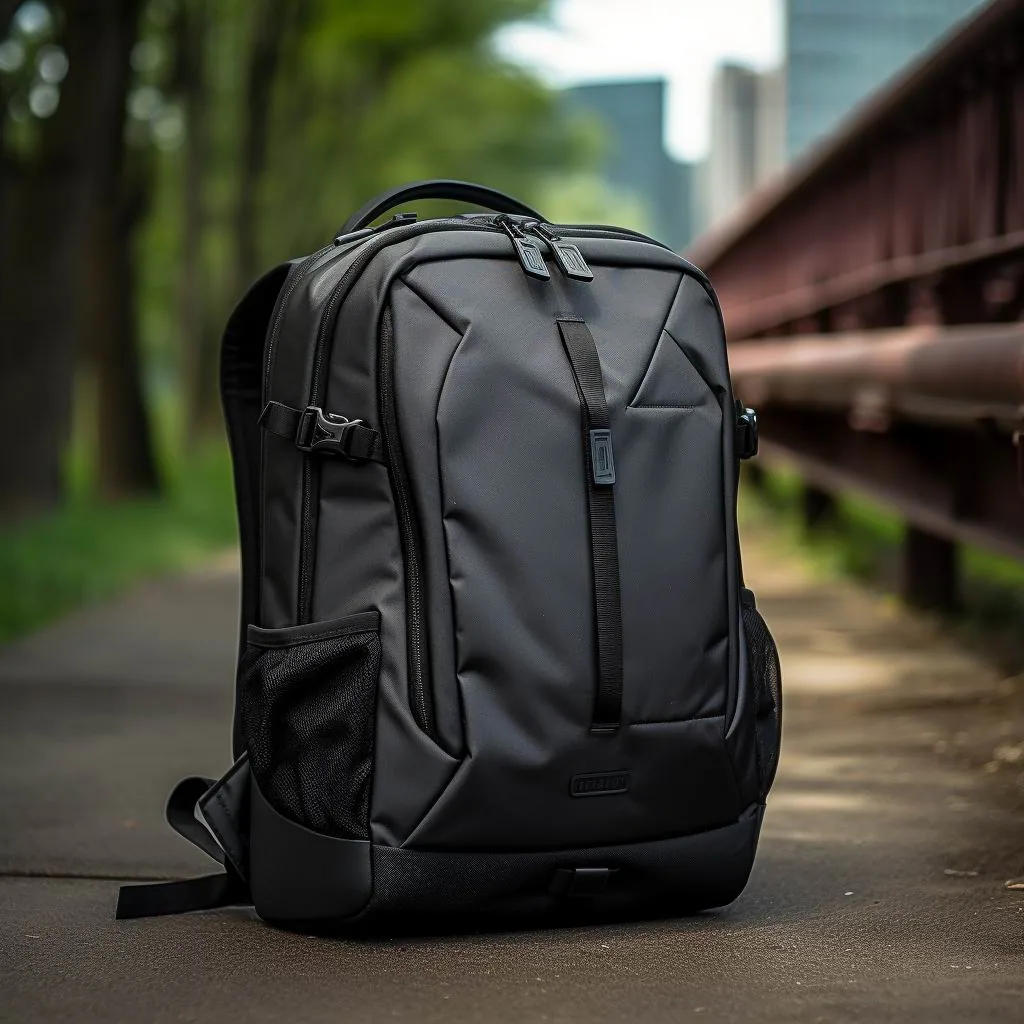
Clamshell Backpacks: The Direct Answer
A clamshell backpack opens like a suitcase. Instead of a lid at the top or a horseshoe panel at the front, its main zip runs most of the way around three sides of the body so that the front shell swings away and the interior lies flat in front of you. Every practical consequence of owning one flows from that single change: you pack in layers rather than filling a funnel, you see the whole contents at once, and you need somewhere to put the bag down every time you open it.
For a British traveller doing two or three nights away, or for anyone whose working week involves carrying clothing rather than files, nothing else comes close. The format turns rectangular volume into genuinely usable volume, because a packing cube grid sits in it the way it sits in a case, and because you can lay it flat on a hotel bed and treat it exactly like one. Against that, it punishes street use: opening it fully on a pavement to find a travel pass exposes everything you own, and a long three-sided zip is a longer seam to fail and a longer line for rain to enter.
- Zip run: expect somewhere between 1,100 and 1,700 mm of main closure on a hard-wearing travel pack, usually in a number 8 or number 10 gauge.
- Opening time: laying the bag flat and reaching anything takes about four to six seconds, against roughly forty seconds of digging through a top loader of the same size.
- Surface requirement: you need roughly 55 by 40 cm of reasonably clean horizontal space to open one properly, which is a bed, a table or the floor of a train vestibule.
- Typical sizes: 28 to 32 L for weekend use, 34 to 40 L for the common one-bag travel target, 45 L and above for longer or winter trips.
- Best companions: two packing cubes of 8 and 4 L and one flat wet pouch, which do more for this format than any internal organiser ever will.
It is worth being blunt about who this is not for. Anyone who opens their bag six times an hour on a street should buy a panel loader, and should probably stop reading here: this format will make them miserable by the second week. Similarly, anyone whose working day is documents and laptop rather than clothes would be paying for a capability they never use, and would be better served by a flat-opening office pack with a proper sleeve.
But if your week contains a two-night trip, a gym kit that needs isolating, a photographic assignment with gear that must be seen before it is lifted, or a long commute with a change of clothes, this is possibly the single most useful design decision available to you. The rest of this guide is about specifying it properly, because the difference between a good clamshell and a poor one is unusually large.
Key Specifications at a Glance
The three columns below cover the size bands on sale in Britain at present. Volume figures are stated capacity as listed, and dimensions are external measurements taken packed, which is the only form in which they are useful.
| Specification | Weekend clamshell (28–32 L) | One-bag travel clamshell (34–40 L) | Extended clamshell (45 L and above) |
|---|---|---|---|
| External packed size | 48–52 × 32–34 × 20–23 cm | 52–56 × 34–36 × 22–25 cm | 57–62 × 36–40 × 25–30 cm |
| Empty weight | 1.05–1.45 kg | 1.35–1.85 kg | 1.7–2.4 kg |
| Main zip gauge | number 8 | number 8 or 10 | number 10 |
| Zip length approximately | 1,100–1,300 mm | 1,300–1,550 mm | 1,500–1,750 mm |
| Typical load | 4.5–6 kg | 6–8.5 kg | 8–12 kg |
| Fits a 56 × 45 × 25 cm gauge | yes | yes, usually | check before flying |
| Typical UK price | £65–£140 | £110–£230 | £150–£300 |
Two features cut across every band and should be non-negotiable. Compression straps, ideally four, which stop clothes migrating into the lower third when the bag is half full, since a half-empty clamshell is otherwise a sack. And a double slider on the main closure, which lets you open a corner rather than the whole perimeter when you only need one thing, and lets you park both pulls at the top where they are easy to lock.
Anatomy and Structural Features
Five elements distinguish a well-executed clamshell from a mediocre one, and you can identify all five in a shop without tools.
- The zip line and its corners. Look at how the closure turns each corner at the base of the bag. A tight radius with the tape twisted is where failures begin, so look for a generous radius of at least 25 mm and a bound seam rather than a raw cut behind the coil.
- Zip garages or storm lips. Each end of the run should terminate under a fabric garage or behind a raised lip, since a slider left proud at the end is both a snag hazard and the point where rain enters.
- Internal retention. Because everything lies flat, something must hold the load in when the bag is upright. Retention is usually either a mesh zip panel or a pair of compression straps across the interior; without either, opening the bag upright on a train deposits the contents on the floor.
- Base structure. A clamshell with a soft base cannot be stood up while open, and worse, it will not hold a cube grid in place. Look for a moulded tray or a stiffened panel at least 3 mm thick.
- Back panel access. Most quality designs hide a laptop compartment with a separate short zip against the back, so the device can be removed without opening the main body. If yours lacks that, you will unpack the whole bag at every airport checkpoint.
A sixth detail is less structural but matters enormously in daily use: whether the two halves stay connected when open. Some designs open to 180 degrees and lie fully flat, which is excellent for packing and terrible in a confined space because the bag occupies twice its footprint. Others hinge at roughly 150 degrees, keeping the halves together as a trough that contents cannot roll out of. Think about where you will actually open this. A hotel bed suits the flat version; a narrow train table suits the trough.
Finally, ask about the lock. A clamshell's usefulness at an airport depends partly on being able to secure both sliders together; look for interlocking loops or eyelets rather than a single pull, and remember that in the UK a padlock through the zip is a deterrent rather than a security measure. It keeps a casual hand out of your bag in a hostel dorm and nothing more.
Capacity Range and Typical Dimensions
Sizing a clamshell is a different exercise from sizing any other pack, because the constraint is rarely how much you can carry and almost always how large a box you can put in an overhead locker or a car boot without it dominating. Practical capacity divides into three real bands. Twenty-six to 32 L handles a weekend for a light packer and a weekday change of clothes for someone who commutes with gym kit. Thirty-four to 40 L is the one-bag travel sweet spot, taking four or five days of clothing when packed in cubes. Forty-five litres and above tends to be bought by people who travel for work in winter or who carry sports equipment, and it frequently exceeds cabin allowances.
The table below shows how the volumes are actually consumed, using a real four-night trip rather than a theoretical one. It is the clearest way to size without guessing, and it explains why the 36 to 40 L band dominates serious travel use.
| Contents | Volume consumed | Mass | Notes |
|---|---|---|---|
| One 8 L packing cube of clothing | 8 L | 1.9 kg | trousers, shirts, knitwear rolled |
| One 4 L cube of base layers and socks | 4 L | 0.8 kg | compressed |
| Wash bag with liquids | 2 L | 0.7 kg | keep in the wet pouch during UK travel |
| 15-inch laptop and charger | 2.6 L | 2.2 kg | separate back compartment |
| Shoes (size 9) in a shoe bag | 3.7 L | 0.95 kg | base layer of the main body |
| Packed rain shell | 1.6 L | 0.45 kg | top access pocket |
| Camera, cables, documents, snapshots | 3.5 L | 1.1 kg | admin panel |
| Reserve for a coat or impulse purchase | 4–6 L | — | the difference between comfort and regret |
That sums to somewhere between 29 and 31 L of packed contents with a sensible reserve, which puts the honest recommendation at 36 to 40 L rather than at either extreme. Buyers who size to 45 L with this load will carry 14 L of air, and air is what allows contents to shift, corners to collapse and the bag to look permanently rumpled.
Who It Suits and Who Should Skip It
The buyers who get most out of this format share one habit: they pack deliberately rather than dumping things in. Weekly business travellers doing Tuesday-to-Thursday runs, field engineers and surveyors carrying instruments and parts, performers and production crew carrying costume changes, and the growing community of people who travel for a week with hand luggage only all fall into this group, and for them nothing else competes.
It also suits a specific and very British commuting pattern: someone who does not drive, walks to a station, and goes to an office where there is a gym, a shower and a locker. For that person a 30 L clamshell with two cubes is transformative, because clean clothes stay clean, damp kit stays isolated, and the whole thing repacks in ninety seconds rather than five minutes of shoving.
Three groups should skip it. People who need frequent street access: opening this bag on a pavement to reach a pass or a wallet means displaying the entire contents to everybody nearby, which is both a security issue in any city centre and a genuine social irritability in a queue. People who habitually carry loose small items without pouches will find that everything tips out sideways the moment it lies flat. And anyone whose physical storage is a narrow under-desk gap should note that open-flat behaviour needs space, and that this bag will not be opened in such a place.
There is also a group for whom a hybrid is better: anyone who wants clamshell access but also needs the option of reaching in from the top. Several designs now offer both a full front opening and a short top zip, which costs perhaps 120 to 200 g and provides a genuinely different daily experience. If you cannot decide between the two access types, that hybrid exists precisely for you and is worth hunting down.
Comfort, Fit and Load Behaviour
A clamshell has one structural handicap compared with every other layout, and it is worth understanding before you buy. Because the front shell is held to the body only by the zip, the bag loses the triangulating effect that a continuous front panel provides. Loads above about 7 kg tend to make the pack bow outward at the sides, which pushes the centre of mass away from your spine and puts diagonal tension across the zip line. Good designs counter this with an internal frame sheet, four external compression straps and sometimes a light aluminium stay; poor ones simply use heavier fabric and sag anyway.
The practical test is simple and takes two minutes. Load the bag to your real travelling weight, put it on, and walk briskly for three minutes. Then feel the zip line with your hand: if you can sense the two halves of the closure being pulled apart at the mid-point, the structure is not adequate for that load. Reduce the load or buy differently constructed pack, because a zip under that tension will eventually burst, and when it does there is no temporary fix.
- Keep dense contents low and against the spine; a shoe bag at the base and electronics in the back compartment makes an immediate difference to how stable the bag feels.
- Tighten all four compression straps before you set off rather than once you notice the bag swinging, since compression works by pre-loading the structure, not merely by squeezing the contents.
- Choose a torso length that puts the hip belt, where fitted, on the iliac crest; most travel clamshells above 35 L should have one, and it should be removable rather than decorative.
- Expect to carry slightly heavier than a top loader of the same capacity: the additional zip, garages and reinforcing tape realistically add 150 to 300 g.
There is one comfort advantage worth naming, because it is the reason frequent travellers keep buying these despite the weight penalty. Repacking takes seconds. A top loader requires you to dig and re-stack every time clothing or kit comes out; a clamshell lets you lift one cube out, extract what you need and put the cube back, with the rest of the load untouched. Over a ten-day trip that saves real effort and, more importantly, stops contents migrating into a jumble by day three.
Materials, Weather Resistance and Durability
Fabric specification tends to be higher in this category than in ordinary daypacks, because the layout puts more stress on its own structure. Body fabrics commonly run 420D to 900D polyester or nylon, sometimes with a 1000D base panel, and anything lighter than 420D is a warning sign on a bag that relies on its shell for shape. Coated finishes are typically rated around 1,500 mm minimum, with travel-oriented designs reaching 3,000 mm and their better zips being water-resistant coils rather than the more common bulkier alternatives.
Water behaviour deserves particular attention here and it is not the same as in any other layout. The clamshell's weakness is that the closure runs down both sides, so rain running off your back enters at the vertical portions of the zip line long before the front panel is compromised. Look for a design where those vertical runs are covered by a raised lip or sit under a flap, and understand that even then the slider position at the bottom corners is the weak point. A rain cover solves most of this, costs around 90 to 150 g packed, and should be regarded as standard equipment rather than an accessory for anybody doing a British winter.
Durability in this format is largely a question of the zip. A number 10 coil in good tape with well-executed garages will outlast the fabric around it; a number 8 of uncertain origin is the single most likely thing to fail. Beyond that, look at what happens at the four corners of the closure, where two zip tapes meet the binding; untidy finishing there precedes separation. Everything else — abrasion at the base, strap wear, lining failure — follows the same patterns as any other travel pack.
- Dry the bag open after any soaking rather than folded, since the interior stays damp longest where two lined panels meet.
- Clean the closure every few months with a soft brush and mildly lubricated cloth; grit in the coil is how sliders wear out prematurely.
- Do not machine wash a coated travel pack; sponge it below 30 degrees and expect twenty-four hours of drying time.
- Store it uncompressed with the zip open so the tape retains its set and the hook and loop does not take a permanent fold.
UK Price, Value and Cost per Use
British retail divides into three tiers with real differences between them. Below £70 you will find soft, frameless clamshells of dubious durability, generally aimed at occasional holiday use and generally failing within two years of real travel. Between £75 and £150 you get framed structures, proper #8 closure and a degree of weather management, which covers the needs of most buyers travelling a handful of times a year. From £150 to £300 you get genuine engineering: moulded trays, load-rated structure, documented zip cycles and often a warranty measured in decades rather than months.
What the price buys most directly is how many cycles the closure survives. A cheap clamshell may manage perhaps 3,000 openings before the slider wears; a good number 10 specification should exceed 15,000, which across ten years of weekly use is the difference between this being your bag and this being the bag you replaced. On that basis the premium appears better value the more often you travel, and it is why weekly business travellers should be buying in the top band while twice-a-year holidaymakers are wasting their money there.
- £70–£110: acceptable for two trips a year; check for any internal retention panel before buying, since frameless bags without one are unusable when upright.
- £110–£175: the right place for a regular traveller, where a frame sheet and a documented zip appear.
- £175–£300: engineered options for weekly use, usually with lifetime long-stop warranty and replaceable parts.
- Above £300: you are buying a brand, occasionally a better frame material, and rarely any measurable performance.
The category also retains value unusually well on the second-hand market, particularly for widely recognised travel brands. A £200 bag four years old will often bring £70 to £90 through UK resale channels, which materially improves the arithmetic and is a reasonable argument for buying better than you strictly need.
Testing Standards and Bulk Custom Orders
Acceptance testing for this format should lead with the closure, because that is what distinguishes it. Cycle the main zip two thousand times with the bag loaded to 60 per cent of its volume and confirm the slider has not developed play. Run a pull test on the sliders themselves rather than the tape. Check whether the two halves stay aligned by loading 7 kg and hanging the bag from its own shoulder straps for thirty minutes, since that is when bowing shows up. Spray the vertical sections of the zip for twenty minutes and inspect the garages first, not the front panel. And open the bag fully while it is suspended by one strap, checking that internal retention does its job.
Evidence matters more than enthusiasm when specifying these at scale. Ask for zip cycle data from the supplier's component source, plus either a Martindale or Wyzenbeek abrasion figure for the body fabric against the test references maintained by ASTM. Where bags are destined for air travel, cabin allowances are not fixed by law and vary between carriers; the airline industry body maintains current guidance on cabin baggage dimensions, which is a better reference than any individual airline's marketing. And where volume runs are planned, inspection frequency follows AQL 2.5 under ISO 2859-1, published as the ISO 2859-1 procedure, which also dictates how many cartons must be sampled.
Commercial terms match the rest of our programmes: MOQ 500 pcs per style and colourway, sampling in 6–10 working days (12–15 where there is tooling, moulded trays or a welded zip line), bulk production 35–50 days after sample sign-off, inspection at AQL 2.5 under ISO 2859-1, payment T/T 30/70, shipment FOB Xiamen. QUANZHOU JUNYUAN BAGS works as a sourcing and programme-management partner and was founded in 2014, with our team active in this trade since 2004; development and inspection sit with us, and the construction is handled by our production partners.
Those partners occupy a 4,950 m² SGS-verified production floor operating 7 production lines with 149 machines and 137 colleagues, at roughly 200,000 pieces a month. Specifications should go to service@junyuanbags.com, or WhatsApp is available on wa.me/8617750020688.
One regulatory point applies here as everywhere else. Fibre-composition labelling is required for textile products sold in Britain, and any integrated power bank, cable or lighting element requires UKCA marking under the process described in the government's UKCA marking guidance, with the importer named as the UK responsible person. Pack electrically with evidence rather than assumption; retro-fitting compliance after a shipment arrives is expensive.
Common Buying Mistakes to Avoid
Mistakes in this category cluster around the fact that the open-flat behaviour is both its advantage and its liability. Buyers tend to fall for the demonstration in the shop and discover the consequence later.
- Buying too large because the open pack looks impressive. Forty-five litres packed for a two-night trip mostly means fourteen litres of shifting air.
- Ignoring internal retention. Without it, opening the bag upright deposits the contents; check for a mesh panel or an internal strap pair.
- Choosing the bag without checking the closure gauge. Anything below a number 8 coil on a 35 L+ bag will not last.
- Assuming the format is weatherproof because the zip is hidden. The vertical runs are exposed to the rain running off your back.
- Expecting quick street access from a full-perimeter design. If you open your bag on pavements several times a day, this is the wrong layout.
A final error worth catching before purchase rather than after a first trip: failing to check whether the bag fits your most-used airline's gauge when packed rather than empty. Compression buys depth but never length, and a one-bag traveller's entire plan collapses at the gate.
Final Verdict: Who Should Choose This?
Choose a clamshell if you travel regularly with clothing rather than documents, if you are willing to pack in cubes or pouches, and if the places you open your bag are predictable rooms rather than pavements. It will make every trip quicker to pack, easier to live out of and considerably less rumpled, and a single well-chosen 38 L bag can replace a wheeled cabin case entirely for most of the year.
Skip it if your day involves constant small retrievals in public, if you carry documents more than clothing, or if you have nowhere to lay the bag open. In those situations a well-organised panel loader with a laptop sleeve remains the better tool, whatever its lower packing efficiency.
- 28–32 L for a UK weekend or a weekly commute that includes gym clothing.
- 34–40 L for genuine one-bag travel of four to six days with cubes.
- 45 L and above only when you have checked both your airline's gauge and your own willingness to carry it.
- Consider a hybrid with both a full opening and a top zip if your use pattern genuinely straddles the two.
And buy the cubes before you buy the bag. Two cubes costing £18 each will improve this format more than £60 spent upgrading the fabric, because the format only delivers its advantage when contents are held in blocks.
Frequently Asked Questions
What is a clamshell backpack and how does it differ from a standard backpack?
Its main zip runs around three sides so the front shell swings away and the interior lies flat, where a standard pack opens at the top or through a horseshoe panel.
Everything else follows from that: you pack in layers rather than down a funnel.
How much capacity does a clamshell backpack usually offer?
Twenty-six to 32 L covers weekends, 34 to 40 L is the one-bag travel norm, and 45 L and above suits winter or equipment-heavy trips.
Most buyers aiming at four or five days away are best served at 36 to 40 L.
How heavy should a clamshell backpack be when empty?
Between 1.05 and 1.45 kg for a 30 L pack and 1.35 to 1.85 kg at 36 to 40 L, which is 150 to 300 g heavier than an equivalent top loader because of the closure and reinforcing tape.
Treat any claimed weight much below that band with suspicion.
Is a clamshell backpack waterproof or only water-resistant?
Water-resistant at best. The vertical runs of the zip take rain running off your back, and the garages at the ends are the first place water appears.
Carry a cover for British winter travel and put electronics in a separate dry pouch.
Which UK buyer should choose a clamshell backpack?
Weekly business travellers, field engineers, crew and performers carrying kit changes, and anyone doing hand-luggage-only travel who packs deliberately rather than dumping things in. It also suits commuters whose workplace has a gym and a locker.
Anyone opening their bag repeatedly on pavements should not buy one.
Can I use a clamshell backpack for the daily commute?
Yes for journeys to a desk or locker room, and no for anything requiring frequent street access. Packing gym clothing and lunch in cubes works extremely well with a 30 L model.
If you reach for your pass, wallet and phone several times an hour outdoors, choose a panel loader instead.
How long does a clamshell backpack last in regular use?
Five to eight years of regular travel for a well specified one, and very largely determined by the zip rather than the fabric. Good number 10 coil closure should exceed 15,000 cycles.
Clean the coil every few months, since grit is what kills sliders prematurely.
What should I pay for a clamshell backpack in the UK?
Expect £110 to £175 for the model most regular travellers should buy, where a frame sheet and documented hardware appear. Below £70 they tend to be frameless and short-lived.
Weekly travellers are better justified in spending £175 to £300 than occasional holidaymakers.
Does a clamshell backpack fit a 15-inch or 16-inch laptop?
Most do, and importantly they usually provide a separate back-panel compartment so the machine can be removed without opening the main body. Look for that feature explicitly.
Check the sleeve dimensions rather than relying on the advertised inch figure.
What are the main disadvantages of a clamshell backpack?
It needs a horizontal surface to open, it exposes everything when opened in public, the long zip is both a failure point and a rain entry point, and it weighs more than an equivalent top loader.
It also encourages over-packing, since empty space feels harmless until contents start shifting.
How do I clean and maintain a clamshell backpack?
Empty it, brush the coil clean, sponge with pH-neutral soap below 30 degrees, then dry it open for twenty-four hours with the zip in its natural position.
Never machine wash coated fabric, and store the bag uncompressed with the closure open.
Can I order custom clamshell backpacks in bulk for a UK team?
Yes, with the closure written into the specification: gauge, tape width, corner radius, garage construction and cycle life, plus a loaded bow check at your real weight.
Terms are MOQ 500 pcs per style and colourway with sampling in 6–10 working days; keep two sealed approval samples and cycle-test one.
Can a clamshell backpack replace a small suitcase on UK trips?
For four or five nights, yes, and often better, since it goes on your back across awkward platforms and cobbles where wheels struggle. Add two cubes and a wet pouch and it behaves like a case with straps.
Beyond that, or with formal clothing that must stay flat, a small case still wins.