Table of Contents
- 48-Hour Weekend Trip Backpack: The Direct Answer
- Capacity Planning: What 48 Hours Actually Needs
- Rail, Coach and Car: Three Different Carry Problems
- British Weather and the 48-Hour Forecast Window
- Tech, Charging and the Sunday Night Problem
- Toiletries, Liquids and the Wash-Kit System
- What a British Weekend Costs and How to Carry Cash and Kit
- Specification Checklist for a Weekend Pack
- Buying Weekend Packs for Groups and Clubs
- Food, Drink and the Picnic Decision
- Frequently Asked Questions
48-Hour Weekend Trip Backpack: The Direct Answer
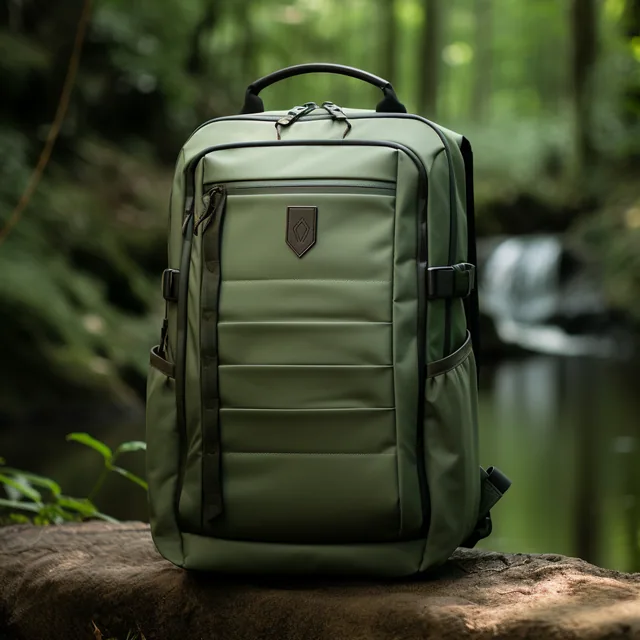
A British 48-hour weekend fits a 30-36 litre pack at 6.5-9.5 kg, and 32 litres is the sweet spot. The arithmetic: two changes of clothing at 1.4-2.2 kg, a wash kit at 0.6-1.1 kg, a tech pouch at 0.9-1.6 kg, shoes or trainers at 0.7-1.2 kg, a waterproof shell at 0.6-0.95 kg and a 500 ml bottle at 0.5 kg. That is 4.7-7.6 kg of kit plus a 1.05-1.55 kg pack, which is 8-12% of an 80 kg traveller's bodyweight and comfortable for a 20-40 minute walk from a station. Two nights is the shortest trip that justifies a proper pack, and the reason is the change-of-clothes rule. One night needs one outfit; two nights needs two plus a spare layer, because a British weekend in weather that turns means a soaked shirt and a 6-12 hour drying window that a hotel room may not provide. Packing a third layer at 300-450 g is cheaper than a GBP 45-90 emergency purchase in a Cotswold market town. Choose the pack for the journey, not the destination. A rail or coach weekend wants a 300 mm deep pack that fits the overhead rack and the seat-back pocket; a driving weekend wants a pack that fits a boot alongside a 24-litre cooler and a 1.8 kg overnight bag for a partner.
Either way, get a travel backpack that opens flat like a suitcase, because a top-loader makes you unpack the whole bag to find a 60 g toothbrush on a Sunday morning.
Capacity Planning: What 48 Hours Actually Needs
Capacity follows the laundry cycle, not the calendar. A 48-hour trip is two days and two nights, which is two outfits, two sets of underwear, two pairs of socks, one spare mid-layer, one waterproof shell, a wash kit, a tech pouch and a pair of shoes. Rolled rather than folded, that is 18-24 litres of clothing and 6-10 litres of everything else, so 28-34 litres with 4-8 litres of compression headroom.
Packing method changes the answer by 20-30%. Rolled clothing removes roughly 30% of trapped air against folded, and three compression cubes at 240 g total add order without adding mass. A 32-litre pack packed rolled and cubed swallows what a 42-litre pack packed loosely holds. Vacuum bags save more volume still - a 2-piece set at 180 g compresses a 1.8 kg clothing load to 40% of its rolled volume - but they crease a shirt in a way that needs 8-12 minutes of ironing.
| Item | Mass (g) | Rolled volume (L) | Folded volume (L) | Compartment |
|---|---|---|---|---|
| 2 x outfit (trousers, shirt, underwear) | 1,400-2,200 | 6.5-9.0 | 9.0-13.0 | Main |
| Spare mid-layer | 300-450 | 1.6-2.4 | 2.4-3.4 | Main |
| Waterproof shell | 600-950 | 2.4-3.8 | 3.4-5.2 | Outer or lid |
| Wash kit | 600-1,100 | 1.8-3.0 | 2.4-3.8 | Wet compartment |
| Tech pouch | 900-1,600 | 1.6-2.6 | 2.0-3.0 | Sleeve or front |
| Trainers or shoes | 700-1,200 | 3.0-4.5 | 4.0-6.0 | Ventilated base |
| Bottle, 500 ml | 500 | 0.6 | 0.6 | Side pocket |
| Book or Kindle | 200-420 | 0.4-0.8 | 0.5-1.0 | Front organiser |
| Total kit | 5,200-8,420 | 17.9-26.7 | 24.1-36.0 | n/a |
Read the last row and pick the pack from the rolled column: 18-27 litres of kit plus 1.05-1.55 kg of pack means a 30-36 litre weekend travel backpack. Anything above 40 litres will not compress to stability and will invite you to pack 4-6 kg you do not need.
Rail, Coach and Car: Three Different Carry Problems
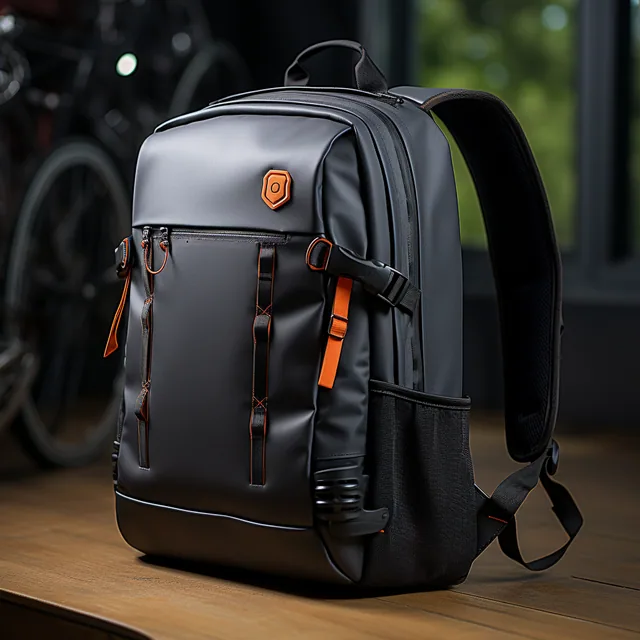
Rail is the most common British weekend mode and it has the tightest constraints. An overhead rack on an Azuma or a Class 800 accepts a bag up to roughly 450 x 350 x 250 mm, and a seat-back pocket accepts 300 x 400 x 80 mm. A 32-litre pack at 480 x 300 x 240 mm fits the rack with 20-30 mm to spare and fits under the seat in front if the train is quiet. Aim for a loaded depth under 250 mm on a rail-friendly pack.
Coach travel is more generous: National Express allows one 20 kg hold item plus a small cabin bag, and Megabus allows one bag up to 15 kg in the hold. A 32-litre pack at 8 kg is well inside both and fits the overhead shelf, which is roughly 400 x 300 x 220 mm. The real constraint is the 10-20 minute stop: a pack that opens flat lets you find a ticket in 10 seconds against 60-90 seconds for a top-loader, which matters when the driver is loading.
Driving removes the dimensional constraint and adds a different one: the boot has to take your pack, a partner's bag, a 24-litre cooler at 4-8 kg and possibly a 12 kg dog crate. A 32-litre pack at 480 x 300 x 240 mm is 34.6 litres of boot space; a suitcase of the same capacity is 48-60 litres because of the rigid corners. Soft packs win on boot Tetris, and the Highway Code guidance on securing loads applies if you end up putting anything on a rear shelf - see gov.uk.
British Weather and the 48-Hour Forecast Window
A British weekend is planned against a forecast with a 3-5 day useful horizon, and the packing decision is made 24-48 hours before departure. England averages 150-180 wet days a year and the west 190-220, so the probability of at least one wet hour across a 48-hour weekend is 35-55% in autumn and winter and 20-30% in summer. Pack for the wet case; the cost is 600-950 g and the benefit is not spending GBP 45-90 on a replacement coat.
The waterproof layer is the highest-value item in the pack. A packable shell at 600-950 g with a 10,000 mm hydrostatic head and taped seams costs GBP 45-160 and packs to 1.6-2.6 litres. A cheap poncho at GBP 8-18 weighs 180-320 g but tears at 25-40 km/h of wind, which is a British coastal breeze. Carry the shell, wear it if it is raining, and stow it in a lid pocket rather than the main compartment for the 6-10 times a weekend you will take it on and off.
Temperature swing is the second weather factor. A British spring or autumn weekend can run 4 degrees at 07:00 and 18 degrees at 15:00, a 14-degree range that needs a layer system rather than a single coat: a 220-320 g base layer, a 300-450 g mid-layer and the 600-950 g shell. Three layers weigh 1.12-1.72 kg and cover 2-20 degrees, against a single 1.4 kg winter coat that covers 0-10 and is useless above it on a weekend away.
Tech, Charging and the Sunday Night Problem
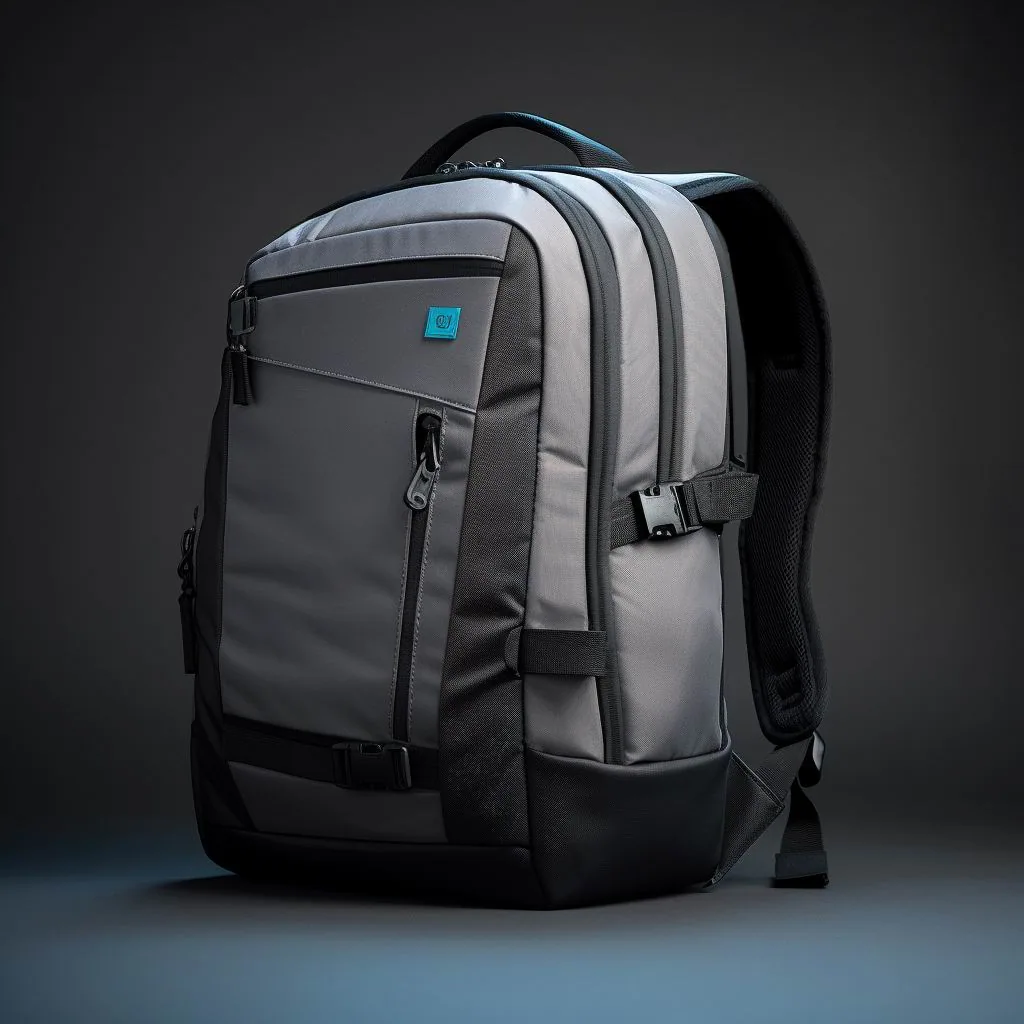
The tech pouch is the most underestimated item. A phone at 190 g, a 65 W charger at 200-260 g, a 2 m USB-C cable at 90 g, earbuds at 60 g, a power bank at 220-450 g and a watch charger at 40 g totals 800-1,090 g and 1.6-2.6 litres. Half of British travellers forget the cable and pay GBP 12-28 at a service station, and a third forget the power bank and arrive at 19:00 on a Sunday with 4% battery.
Power planning is simple arithmetic. A phone with a 4,000-5,000 mAh battery used for navigation, photos and messages over 48 hours needs 1.5-2.2 full charges, or 6,000-11,000 mAh from a power bank. A 10,000 mAh bank at 220 g delivers roughly 6,500-7,400 mAh at the device after conversion losses of 20-30%, so a 20,000 mAh bank at 380-450 g is the safer choice for a weekend. Both are under the 100 Wh aviation limit; a 20,000 mAh cell is 74 Wh.
The Sunday night problem is the return journey with a flat phone and a damp pack. Solve both before you leave the accommodation: charge everything during Sunday breakfast in 45-60 minutes, and dry the pack for 20-30 minutes open in the room rather than packing it damp. A pack packed damp at 15:00 on Sunday and opened at 22:00 has 7 hours of bacterial growth in it, which is how a weekend bag acquires a permanent smell on a British weekend trip.
Toiletries, Liquids and the Wash-Kit System
Wash kit is where most travellers overpack. A 48-hour trip needs 60 ml of toothpaste or tablets, a 90 g toothbrush, 50 ml of deodorant, 30 ml of shampoo, a 25 g razor and 20 ml of aftershave or balm - roughly 600-1,100 g including the bag. Decanting into 50-100 ml bottles at GBP 3-9 for a set of four saves 400-700 g against full-size containers and removes the risk of a 200 ml bottle bursting in a pack.
Liquids rules apply on air travel and not on rail or coach in Britain, but the 100 ml discipline is worth keeping anyway because it forces the decant that saves the weight. A hanging wash bag with a 180-degree hook takes 30-60 seconds to deploy in a small British hotel bathroom with no counter space, and a welded or TPU-lined base stops a leaking 50 ml bottle from soaking a 1.4 kg shirt.
Medication and documents close the list. A 48-hour trip needs any regular medication plus a small first-aid set at 120-240 g: six plasters, two blister plasters, four painkillers and a 20 ml antiseptic wipe pack. Blisters are the most common British weekend injury on a 12-18 km coastal walk, and a blister plaster applied within 30 minutes prevents a 2-3 day problem. Keep documents in a 200 x 130 mm pocket, not loose in the main compartment on a weekend pack.
What a British Weekend Costs and How to Carry Cash and Kit
Budget the weekend before you pack it. A British weekend for one is GBP 180-420: GBP 90-180 for two nights of accommodation, GBP 45-90 for food across six meals, GBP 25-70 for travel, GBP 20-60 for activities and GBP 15-40 for incidentals. A rail-borne weekend in the Lake District runs GBP 240-460; a driving weekend in the Cotswolds GBP 190-380; a city break by coach GBP 150-320.
Carry money and documents in a way that survives a lost pack. A 200 x 130 mm hidden pocket behind the back panel holds a passport card, a bank card and GBP 40-80 of cash; a phone wallet holds two cards. Keep one card in the pack and one on your person, because a pack left on a train at 21:00 on a Friday is recovered in 24-72 hours and you will need a card in the meantime.
Then decide what stays home. The four items most British weekenders overpack are a second pair of shoes at 700-1,200 g, a hardback book at 400-700 g, a full-size hair dryer at 600-900 g that the hotel provides, and a third outfit at 700-1,100 g. Removing all four saves 2.4-3.9 kg, which is 25-45% of the total pack weight and the difference between a comfortable 30-minute walk and an uncomfortable one on a weekend away.
Specification Checklist for a Weekend Pack
Specify eight things. Capacity 30-36 litres. Empty weight 1,050-1,550 g. Loaded depth under 250 mm for rail racks. A clamshell or flat-opening main compartment. A wet compartment or a hanging wash bag at 1-3 litres. A padded sleeve that clears a 355 x 250 mm device if you carry a laptop. Two external side pockets for a 500-750 ml bottle and a compact umbrella. And four compression straps to bring a half-full pack down to a stable 200 mm.
Fabric and hardware follow the journey. A 420-600-denier shell at 1,500-2,500 mm hydrostatic head handles a British weekend; a branded #8 zipper survives 8,000-12,000 cycles against the 60-100 openings a weekend generates; and acetal buckles resist the salt and damp that pit plated zinc in 18-24 months. Those three specifications add GBP 8-16 to the unit cost and roughly 3-5 years to the service life of a weekend backpack.
Test before you commit. Load the pack with 8 kg and walk 800 m; if the shoulder straps dig or the load swings more than 20 mm, the harness is wrong. Open it flat and time how long it takes to find a 60 g toothbrush; over 30 seconds means the compartment layout is wrong. And set it down in 10 mm of water for 30 minutes; any damp ring means the base construction is wrong. Three tests, 15 minutes.
Buying Weekend Packs for Groups and Clubs
Walking clubs, stag and hen organisers, sports teams and corporate retreat planners buy weekend packs in volume, and the specification logic changes. Our production team works to a MOQ 500 pcs per colourway, with sampling 6-10 working days from tech-pack sign-off and bulk production 35-50 days after approval, inspected to AQL 2.5 (ISO 2859-1) under the sampling system published by the International Organization for Standardization.
For a group order, the specifications that matter are compartment layout, wet-compartment volume and print placement. Our SGS-verified production base holds the flat-opening geometry and the 2-litre wet compartment across a 500-piece run and verifies zipper cycles on 32 pieces per batch against the golden sample. A group crest screen-prints at GBP 0.35-0.85 per unit or embroiders at GBP 1.20-2.60 for 4,000-9,000 stitches.
Budget GBP 19-34 ex-works and GBP 27-47 landed per 32-litre pack at 500 pieces, against GBP 70-160 retail for the same specification. A walking club ordering 500 packs for its members saves GBP 21,500-56,500 against retail, and the group crest turns a commodity purchase into a membership benefit. Every bulk weekend backpack order ships with the UKCA declaration and REACH statement required for the Great Britain market. Compare the wider travel backpack range for capacities beyond the cabin limit.
Food, Drink and the Picnic Decision
Food is the most variable line in a British weekend and the easiest to get wrong. A self-catered cottage weekend needs 6 meals at GBP 25-60 of shopping, plus a 400-700 g lunch on the Saturday and 300-500 g of snacks. A hotel weekend with breakfast included needs 4 meals at GBP 45-90 and a 400-700 g lunch. A pub-lunch weekend needs 2 evening meals at GBP 40-80 and nothing carried. Decide which it is before you pack, because the difference is 1.2-2.4 kg of carried food.
Carrying food changes the pack layout. A 400-700 g lunch needs 1-2 litres and a flat, rigid container at 90-160 g and GBP 4-12, because a squashed sandwich is the most common British walking lunch failure. A 500 ml bottle of water at 500 g plus a 330 ml can or bottle at 350 g is 850 g and 0.9 litres. Keep both in the main compartment rather than a side pocket, because a 750 ml bottle in an external pocket adds 80-95 mm of width and will not fit a train overhead rack.
Insulation matters for a summer weekend. An insulated pocket with 4-6 mm of closed-cell foam and a 200 g ice pack keeps a dairy lunch at 4-8 degrees for 3-5 hours; without it, a 20-degree British summer day puts the lunch in the danger zone in 90-150 minutes. Alternatively buy at the destination: a village shop or a bakery at GBP 4-9 for a pasty or a sandwich removes 400-700 g from the carry and supports the local economy on a weekend away.
Then plan the drinks. A British weekend walk of 12-18 km uses 1.5-2.5 litres of water, and a pub stop adds 500-1,000 ml of beer or soft drink. Carry 1.5 litres minimum, refill at a café or a pub for GBP 0-2.50, and note that a 500 ml bottle bought at a station costs GBP 1.20-2.50 against GBP 0.00 filled at the accommodation. Over 24 weekends a year that is GBP 58-120 saved on a weekend backpack.
Frequently Asked Questions
What size backpack do I need for a weekend trip?
30-36 litres, and 32 is the sweet spot for a British 48-hour trip. Rolled clothing, a wash kit, a tech pouch, trainers and a waterproof shell total 18-27 litres and 4.7-7.6 kg. Add a 1.05-1.55 kg pack and you are at 6.5-9.5 kg, or 8-12% of an 80 kg traveller's bodyweight. Above 40 litres the pack will not compress to stability and invites 4-6 kg of overpacking.
How much should a weekend backpack weigh for a 48-hour trip?
6.5-9.5 kg loaded for a 48-hour British trip, which is 8-12% of bodyweight for an 80 kg traveller. The kit is 5.2-8.4 kg: two outfits at 1.4-2.2 kg, a wash kit at 0.6-1.1 kg, a tech pouch at 0.9-1.6 kg, trainers at 0.7-1.2 kg, a shell at 0.6-0.95 kg and a 500 ml bottle at 0.5 kg. Add a 1.05-1.55 kg pack.
Is 40 litres too big for a weekend away?
Yes for most British weekends. A 40-litre pack holds 10-14 litres you do not need and will not compress below about 280 mm of depth, which is too deep for a train overhead rack at 250 mm. A 32-litre pack at 480 x 300 x 240 mm fits the rack with 20-30 mm to spare and slides under the seat in front when the train is quiet.
Should I take a backpack or a suitcase for a weekend?
A backpack for rail, coach or any trip involving stairs, cobbles or a 15-minute walk from a station. A 32-litre soft pack is 34.6 litres of boot space against 48-60 for a rigid case of the same capacity, and it compresses 3-5 cm at a pinch. A suitcase wins for a car-only weekend with a smooth hotel floor and a heavy 12 kg load, and for anyone who needs a shirt to arrive uncreased.
How do I pack a backpack for two nights?
Roll rather than fold, use three compression cubes at 240 g total, and load by frequency of use: the waterproof shell in the lid, the wash kit in a wet compartment, the tech pouch in the sleeve or front pocket, clothing rolled in the main compartment and trainers in a ventilated base. A pack that opens flat lets you find a 60 g toothbrush in under 30 seconds rather than 90.
What clothes do I need for a British weekend?
Two outfits, two sets of underwear and socks, one 300-450 g mid-layer and a 600-950 g waterproof shell. A British spring or autumn weekend can run 4 degrees at 07:00 and 18 degrees at 15:00, so a three-layer system covering 2-20 degrees beats a single 1.4 kg coat covering 0-10. Pack a third layer rather than risk a GBP 45-90 emergency purchase.
Is a rain cover needed for a 32-litre weekend backpack?
Carry one, at 180-260 g and GBP 18-32. Britain averages 150-180 wet days a year in England and 190-220 in the west, so the probability of at least one wet hour across a 48-hour weekend is 35-55% in autumn and winter. A cover stops the shell absorbing 300-700 g of water and keeps the lid pocket usable between the 6-10 showers a wet weekend produces.
What power bank size is right for a weekend?
20,000 mAh at 380-450 g. A phone used for navigation, photos and messages over 48 hours needs 1.5-2.2 full charges, or 6,000-11,000 mAh at the device. Conversion losses of 20-30% mean a 10,000 mAh bank delivers only 6,500-7,400 mAh. A 20,000 mAh cell is 74 Wh, comfortably under the 100 Wh aviation limit that applies if you fly. A 10,000 mAh bank delivers only 6,500-7,400 mAh after conversion losses of 20-30%.
How much does a British weekend trip cost?
GBP 180-420 for one person: GBP 90-180 for two nights, GBP 45-90 for six meals, GBP 25-70 for travel, GBP 20-60 for activities and GBP 15-40 for incidentals. A rail weekend in the Lake District runs GBP 240-460, a driving weekend in the Cotswolds GBP 190-380 and a coach city break GBP 150-320. Budget before you pack rather than after.
What should I leave at home for a weekend trip?
A second pair of shoes at 700-1,200 g, a hardback book at 400-700 g, a hair dryer at 600-900 g that the hotel provides and a third outfit at 700-1,100 g. Together that is 2.4-3.9 kg, or 25-45% of the total pack weight - the difference between a comfortable 30-minute station walk and an uncomfortable one. A 200 g Kindle replaces the book.
How do I keep a wet coat out of my weekend pack?
Use a wet compartment of 1-3 litres with a welded or TPU liner and an 8 mm drainage grommet, or a 12-18 litre dry bag at 60-90 g. A soaked British shell absorbs 300-700 g of water and raises internal humidity to 85-95% within 30 minutes, which is 2-8 g of condensation landing on the coldest surface in the pack, usually a phone or a laptop.
Can I take a 32-litre pack as cabin baggage?
Yes on British Airways, whose 56 x 45 x 25 cm cabin allowance absorbs it, and on easyJet and Jet2 with a paid cabin bag. On a Ryanair or Wizz free fare the 40 x 20 x 25 cm personal item limit does not fit it, so you pay GBP 21.99-69.00 at the gate. A 32-litre pack measures roughly 480 x 300 x 240 mm, which is 8 cm too long for the free sizer.
How do I stop my weekend pack smelling?
Dry it before you pack it for the journey home. A pack closed damp at 15:00 on Sunday and opened at 22:00 has seven hours of bacterial growth in it. Open every compartment for 20-30 minutes in the room, empty the wet compartment, and wash the interior at 30 degrees when you get home. A 50 ml white-vinegar wipe at GBP 0.30 removes residual odour.
What is the best compartment layout for a weekend pack?
Four openings: a clamshell main compartment for clothing, a 1-3 litre wet compartment or hanging wash-bag loop for the wash kit, a front organiser of 40-60 mm depth for documents and a passport, and two elasticated side pockets for a bottle and a compact umbrella. Add a padded sleeve only if you carry a laptop, and check the internal clearance at 355 x 250 mm.
What should a club or group order specify?
500 pieces per colourway, sampling 6-10 working days, bulk production 35-50 days and inspection to AQL 2.5 (ISO 2859-1). Fix the flat-opening geometry, the 2-litre wet compartment and the print placement, and budget GBP 19-34 ex-works and GBP 27-47 landed per 32-litre unit. A group crest screen-prints at GBP 0.35-0.85 or embroiders at GBP 1.20-2.60 per unit. Sampling runs 6-10 working days and bulk production 35-50 days from approval.
How long does a weekend backpack last with regular British use?
Six to twelve years at 24-30 weekends a year, if the zipper is a branded #8 rated to 8,000-12,000 cycles and the shell is 420-600 denier at 1,500-2,500 mm. A weekend generates 60-100 zipper openings, so the zipper sees 1,800-3,000 cycles a year and reaches its rated life in 3-6 years. Budget a GBP 6-12 slider replacement at year five rather than a new pack.
Get a Free Quote for Custom 48-Hour Weekend Trip Backpack
Planning a branded programme? Our production team works to MOQ 500 pcs, 6-10 working day sampling and 35-50 day bulk lead times, with AQL 2.5 inspection to ISO 2859-1. Send your brief and we will return a costed quotation in 24-48 hours.
Mens Backpack Guide Editorial Team — Buying guides and sourcing notes for the UK men's backpack market, coordinated by QUANZHOU JUNYUAN BAGS. Commercial figures such as MOQ 500 pcs, 6-10 day sampling and 35-50 day production reflect published programme terms.