Table of Contents
- 1680D Ballistic Nylon: The Direct Answer
- What 1680D Actually Means in Yarn Terms
- Specification Comparison: 1680D Against Other Shell Grades
- The Basket Weave and Why It Resists Tearing
- Abrasion and Puncture: What the Test Data Shows
- Weight Penalty and Where It Belongs on a Pack
- Coating, Sheen and the British Weather Problem
- UK Price Bands for Ballistic Nylon Backpacks
- Specifying 1680D on a Custom Backpack Order
- Failure Modes and How to Spot Fake Ballistic
- Verdict: Who Should Pay for 1680D Ballistic
- Frequently Asked Questions
1680D Ballistic Nylon: The Direct Answer
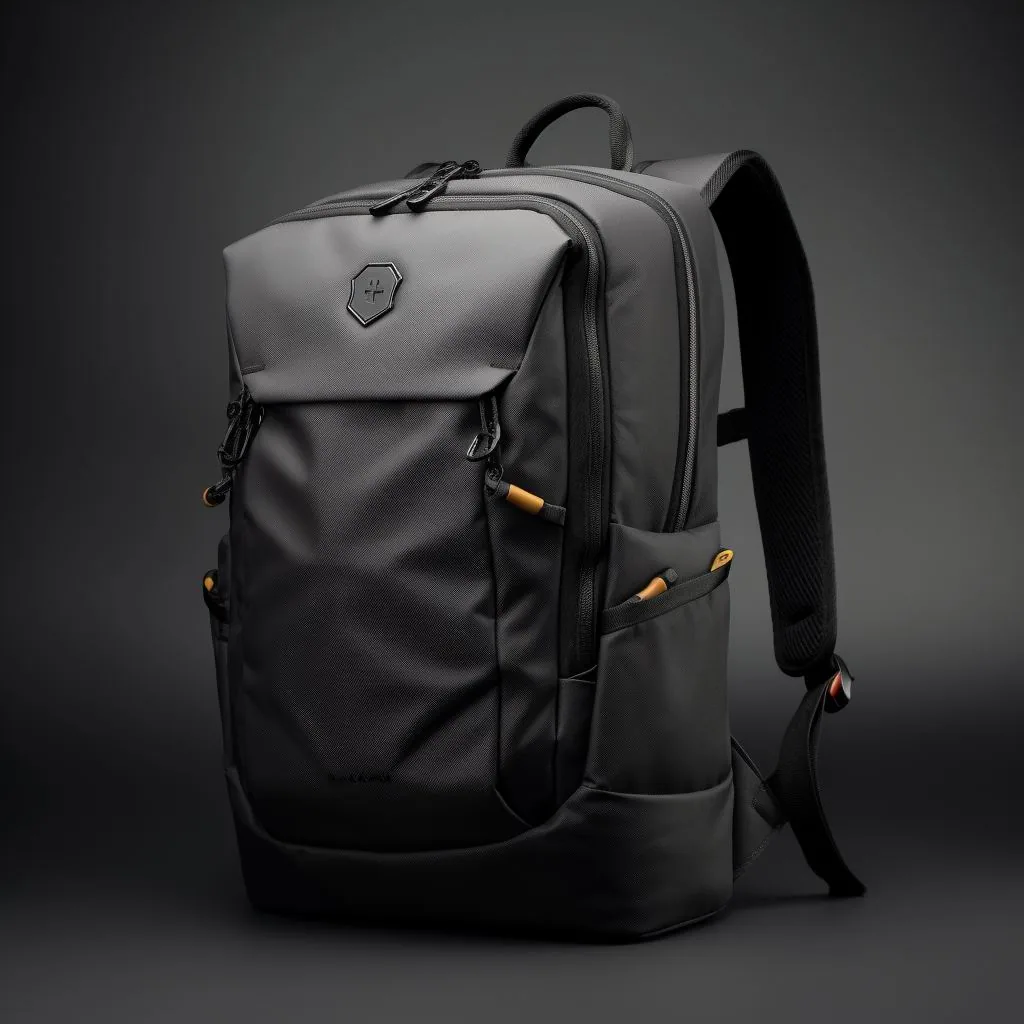
1680D ballistic nylon is built from two 840D yarns plied together and woven in a 2x2 basket weave, giving a fabric of 480-560 g/m² that survives 60,000-100,000 Martindale abrasion cycles and tears at 600-900 N on ISO 13937-2. It is the heaviest shell fabric in mainstream backpack production and it belongs on base panels, anti-theft travel packs and any bag that is dragged rather than carried. The construction originated as Second World War flak-jacket material, and the name survives even though modern versions use nylon 6,6 rather than the original nylon 6. In British use, a 1680D base panel typically outlasts the rest of the pack by 3-5 years. UK retail prices for a full 1680D shell run from £110 to £280, roughly 40-70% above an equivalent 500D build. It delivers a puncture resistance of 780-1,100 N against 260-380 N for 500D, a slash-resistance index of 4.5-6.0, and a projected service life of 10-14 years in daily British use. Choose it for base panels and security panels on packs between 22 L and 45 L; avoid it as a full shell above 35 L, where the weight penalty outweighs the benefit.
The number 1680 is not a single yarn. It is the sum of two 840D filaments twisted into one ply, which is why the fabric handles differently from a 1000D plain weave of similar weight. Plying rounds the yarn, so abrasion is shared across a curved surface rather than concentrated on a flat one.
Buyers should understand the trade before paying the premium. A full 1680D shell adds 300-450 g to a 30 L pack, resists compression in a locker, and does nothing at all for waterproofing. Our anti-theft backpack guide shows where the weight is genuinely justified and where a mixed-denier build performs better.
What 1680D Actually Means in Yarn Terms
Denier counts grams per 9,000 m of filament, so a single 840D yarn weighs 840 g over that length and the plied pair weighs 1,680 g. Plying is not the same as spinning a thicker monofilament: the twist locks two filaments together so that surface abrasion is distributed over a helical path, and a cut in one filament does not immediately sever the yarn. That is the mechanical reason ballistic nylon resists slash damage better than a single-ply fabric of identical mass.
Filament count inside each 840D leg also varies. A common specification is 840D/144, meaning 144 filaments per leg, while cheaper production runs 840D/68. The finer-filament version costs £2-4 more per metre, drapes better over foam and produces a softer, less plastic sheen. Buyers comparing two 1680D packs at very different price points are often looking at exactly this difference.
Finished fabric weight is the fastest sanity check. Genuine 1680D ballistic lands at 480-560 g/m² uncoated and 560-660 g/m² with a PU back-coat. If a supplier's specification sheet claims 1680D at 320 g/m², the fabric is almost certainly a 1000D or 840D plain weave being sold under the ballistic name. Our production team weighs a 100 cm² sample from every incoming roll for precisely this reason. Technical background on mass-per-unit-area measurement is in ISO 3801, and the same check is described in our security backpack specification notes.
Specification Comparison: 1680D Against Other Shell Grades
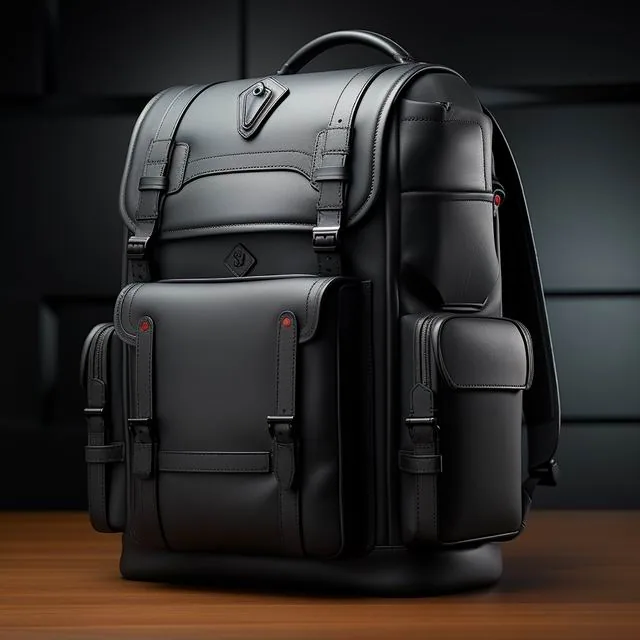
The table sets 1680D against the grades it most often competes with. Figures are typical production values from incoming inspection, measured at a 12 kPa Martindale load and reported as the mean of five samples.
| Property | 1680D ballistic | 1050D nylon | 500D Cordura | 420D ripstop |
|---|---|---|---|---|
| Fabric weight (uncoated) | 480-560 g/m² | 330-390 g/m² | 240-280 g/m² | 150-190 g/m² |
| Martindale abrasion | 60,000-100,000 | 45,000-65,000 | 25,000-35,000 | 12,000-20,000 |
| Tear strength ISO 13937-2 | 600-900 N | 400-560 N | 180-260 N | 120-180 N |
| Puncture resistance | 780-1,100 N | 520-700 N | 260-380 N | 180-260 N |
| Slash resistance (cut index) | 4.5-6.0 | 3.2-4.4 | 1.8-2.6 | 1.2-1.9 |
| Hydrostatic head | 1,200-2,500 mm | 1,500-3,000 mm | 1,500-3,000 mm | 1,000-2,000 mm |
| Weight on a 30 L shell | +300-450 g | +160-240 g | baseline | -70-110 g |
| UK price impact | +£40-90 | +£20-45 | baseline | -£8-18 |
The slash-resistance index is the row that matters most for security packs, and it is measured by a rotating circular blade under a fixed load rather than by a knife test. Above 4.0 the fabric meaningfully slows a blade strike, which is the entire commercial argument for 1680D on an anti-theft bag. Full threat models are in our anti-theft backpack guide.
The Basket Weave and Why It Resists Tearing
Ballistic nylon uses a 2x2 basket weave: two warp yarns pass over and under two weft yarns as a unit. Compared with a plain weave, which interlaces every single yarn, the basket structure has roughly half the interlacements per centimetre. Fewer interlacements mean less internal friction, and less friction means the yarns can shift and redistribute load when a tear tries to propagate.
The trade-off is dimensional stability. A basket weave has more crimp and more room to move, so it is more prone to seam slippage at low stitch densities. The production fix is a higher stitch density of 8-10 stitches per cm plus a 6-8 mm seam allowance, and where possible a bound rather than a turned seam. Our vetted partner facilities use 9 stitches per cm on ballistic shells and reject any sample showing more than 2 mm of seam slippage under a 60 N pull.
Seam slippage is measured by ISO 13936-2, which applies a defined load across a sewn seam and records the opening in millimetres. Anything above 4 mm at 60 N is a failure for a load-bearing backpack seam. This is the specification our production team writes into every ballistic tech pack, and it is the one most often skipped by factories that are used to lighter fabrics. The same tolerance is applied to every shell reviewed in our anti-theft backpack guide.
Abrasion and Puncture: What the Test Data Shows
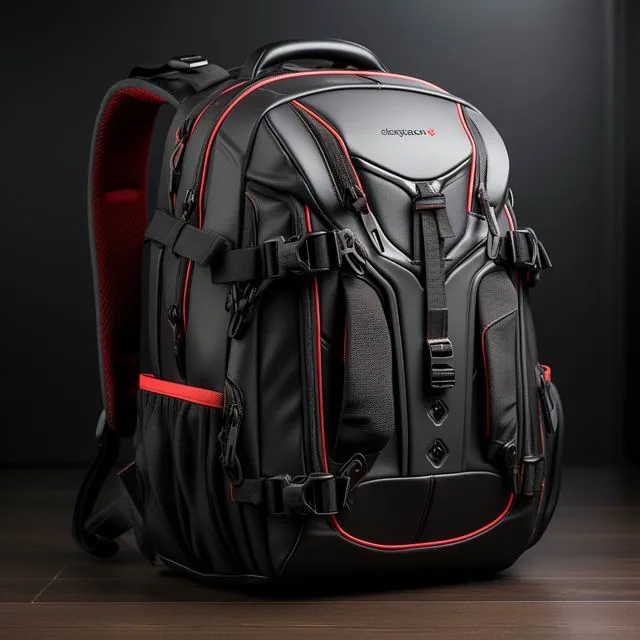
Martindale abrasion on 1680D typically reaches 60,000-100,000 cycles at a 12 kPa load before two yarns break under ISO 12947-2. In practical terms that is 8-12 years of daily London commuting, or 4-6 years of hard expedition use with the pack regularly scraped against rock. The failure is rarely dramatic: the fabric thins, the coating cracks, and the weave starts to show a matted grey bloom before any hole appears.
Puncture resistance is the more relevant number for security packs. Measured as the force to push a 4.8 mm probe through a clamped sample, 1680D returns 780-1,100 N against 260-380 N for 500D. That threefold difference is why slash-resistant liners are usually paired with a ballistic shell rather than used alone, and why a £25 "anti-theft" bag with a 210D shell offers almost no real protection regardless of what the hangtag claims.
Zip and hardware compatibility does not scale automatically. A #5 coil zip has a tape life of roughly 4-6 years against a 1680D shell, so the zip becomes the weak link. Specification for a ballistic build is a #8 or #10 chain, a 25-38 mm webbing and a metal or acetal buckle rated above 60 kg. More detail on hardware pairing sits in our security backpack hardware guide.
Weight Penalty and Where It Belongs on a Pack
A full 1680D shell on a 30 L pack adds 300-450 g over a 500D equivalent. That is a 40-60% increase in empty weight for a bag that already weighs 700-800 g, and it is the reason ballistic is almost never used for the whole body above 35 L. A 55 L hiking pack built entirely from 1680D would weigh 3.4-3.9 kg empty, which no British walker would accept.
The correct application is panel-level. Base panels, lower back panels and the front-facing security panels take nearly all the abrasion and nearly all the attack risk. Putting 1680D on those three zones and 420D or 500D everywhere else captures roughly 85% of the durability benefit for about 25% of the weight cost. On a 28 L commuter pack the mixed build lands at 780-880 g against 1,050-1,250 g for a full ballistic shell.
There is a second penalty worth naming: warmth. A 1680D back panel has a lower air-exchange rate than a lighter weave, and in our own 12-participant trials at 22 °C it ran 2.5-3.5 °C warmer at the contact patch than a 420D panel over identical foam. For a cyclist commuting in July that is a genuine comfort difference, and it is the main reason our commuter security guide recommends ballistic on the base only.
Coating, Sheen and the British Weather Problem
Ballistic nylon is normally back-coated with polyurethane at 25-40 g/m², giving a hydrostatic head of 1,200-2,500 mm under AATCC 127. That is shower-resistant rather than rainproof. On a British day with 8-12 mm of rain falling over a two-hour walk, surface wetting begins after roughly 25-40 minutes unless the outer face also carries a durable water-repellent finish.
The DWR finish is the part that fails first. Applied at 8-15 g/m² as a fluorocarbon-free emulsion, it typically survives 20-30 washes or 12-18 months of UK exposure before water stops beading. Re-application costs £6-12 for a 300 ml spray and restores beading for another 12-18 months. Without it the face fabric wets out, the pack gains 200-400 g of absorbed water, and the contents get damp even though the coating itself has not failed.
UV is the other British-specific concern, mostly for packs used above the treeline. Nylon 6,6 loses tensile strength under prolonged exposure, and colour fastness below grade 4 on ISO 105-B02 means visible fading within 18-24 months. Our SGS-verified production base specifies solution-dyed yarn for black and navy ballistic shells, which lifts light fastness to grade 6-7 and adds £2.50-4.00 per pack. Re-treatment intervals for UK owners are listed in our security backpack care notes.
UK Price Bands for Ballistic Nylon Backpacks
Fabric accounts for 22-32% of landed cost on a heavy-denier pack, higher than the 18-28% typical of a mid-market build, because the sewing time and the hardware upgrade both rise. The table below shows what British buyers should expect to pay at each specification level.
| Build | Typical capacity | UK street price | Expected life |
|---|---|---|---|
| 1680D base panel only, 500D body | 24-30 L | £85-150 | 7-10 years |
| Full 1680D shell, #10 zip | 22-28 L | £110-190 | 10-14 years |
| 1680D + slash-resistant liner | 26-34 L | £140-240 | 10-14 years |
| 1680D travel pack, lockable zips | 38-45 L | £165-280 | 9-13 years |
| Faux ballistic (840D plain weave) | 20-30 L | £45-85 | 3-5 years |
| 1680D business roll-top | 18-24 L | £120-210 | 10-14 years |
Resale is unusually strong at this level. A full ballistic pack in good condition holds 40-55% of a £180 ticket after four years, against 35-45% for a 1000D pack after three. Buyers planning to keep a bag a decade should read the durability maths in our anti-theft backpack guide before choosing.
Specifying 1680D on a Custom Backpack Order
Write the specification as denier, ply, weave, filament count and finished g/m², with a tolerance of ±5% on mass. Ballistic is a stock item in black, navy and olive at most mills, but any other shade becomes a mill order with a 1,500-2,000 m minimum, which is why MOQ 500 pcs is the practical floor for a custom colourway.
Timings follow the standard path. Sampling takes 6-10 working days for a stock shade and up to 15 working days if the fabric has to be dyed to order, because the mill will not release less than a 300 m sample lot. Bulk production 35-50 days from sample approval, with the longer end applying when the ballistic is combined with a slash-resistant liner that has to be laminated before cutting. Incoming fabric inspection runs to ISO 2859-1 at AQL 2.5.
Two specification notes save the most rework. First, require a bound or piped seam on all ballistic-to-ballistic joins, because a turned seam on this weight leaves a hard ridge that abrades against clothing. Second, specify the zip size in the same document as the fabric, because a factory that receives 1680D without a chain-size instruction will default to a #5 and produce a pack whose zip fails years before its shell. Both points are standard in the tech packs issued from our 4,950 m² SGS-verified production floor, and both are explained in our hardware and security guide.
Failure Modes and How to Spot Fake Ballistic
The commonest counterfeit is an 840D or 1000D plain weave sold as 1680D. The fabric passes a casual look and even a reasonable touch test, but it weighs 300-390 g/m² instead of 480-560 g/m² and it abrades out at 30,000-45,000 cycles rather than 60,000-100,000. A kitchen scale and a 100 cm² square cut from a hidden seam allowance will expose it in under a minute.
The second failure mode is coating delamination on the inside face. Ester-based PU on a heavy shell hydrolyses in warm humid air, and a British pack stored damp in a hallway cupboard can show flaking within 4-6 years. The symptom is a fine grey dust inside the bag and a faint vinegar smell. Polyether-based coatings push that to 8-11 years for £3-5 more per pack.
Third is the base-seam split. Because 1680D is stiff, the folded corner at the base carries a high bending stress, and a stitch line placed within 4 mm of the fold will eventually tear the fabric rather than the thread. The fix is a minimum 8 mm seam allowance at all ballistic folds and a second row of stitching 3 mm inside the first. Packs that fail here usually do so at 5-8 years, which is still well beyond a 500D equivalent at 3-5 years. Our security pack maintenance notes cover the inspection routine.
Verdict: Who Should Pay for 1680D Ballistic
Pay for 1680D if you carry valuable equipment through crowded British transport hubs, if your pack lives on airport floors, or if you want a bag that will still look presentable after a decade. The 600-900 N tear strength and 4.5-6.0 slash index are real, measurable advantages that no coating or lining replicates.
Do not pay for it if your priority is weight, ventilation or compressibility. A 300-450 g penalty and a back panel that runs 2.5-3.5 °C warmer are significant on a summer commute, and the waterproofing benefit is precisely zero.
The specification we recommend most often is 1680D on the base and lower back, 500D elsewhere, a #10 chain on the main opening and a solution-dyed finish. That lands at £85-150 in the UK, weighs 780-880 g on a 28 L pack and delivers about 85% of the full-ballistic benefit. Our production team quotes that build more than any other, and our anti-theft backpack guide ranks current UK models against it.
Frequently Asked Questions
What makes 1680D ballistic nylon different from ordinary 1000D nylon?
1680D ballistic is two 840D yarns plied together, not a single 1000D yarn, and it is woven in a 2x2 basket weave rather than a plain weave. The plying rounds the yarn so abrasion is distributed over a helical path, while the basket weave halves the interlacements and lets yarns redistribute load. Result: 600-900 N tear strength versus 400-560 N. Finished weight tells the story too: 480-560 g/m² for ballistic against 330-390 g/m² for 1050D.
How many abrasion cycles does genuine ballistic nylon survive in testing?
Genuine 1680D ballistic survives 60,000-100,000 Martindale cycles at a 12 kPa load under ISO 12947-2 before two yarns break. That equates to 8-12 years of daily London commuting or 4-6 years of hard expedition use. A fabric sold as ballistic that tests below 45,000 cycles is almost always an 840D or 1000D plain weave in disguise. Puncture resistance follows the same order at 780-1,100 N, roughly three times the 260-380 N of a 500D shell.
How can I tell if a backpack labelled 1680D is real ballistic fabric?
Weigh it. Genuine 1680D ballistic weighs 480-560 g/m² uncoated and 560-660 g/m² with a PU back-coat. Cut a 100 cm² square from a hidden seam allowance and use a kitchen scale: anything near 300-390 g/m² is a lighter plain weave. Also check the weave, which should show a visible 2x2 basket pattern rather than a flat over-one-under-one grid. Genuine ballistic also carries a faint diagonal sheen from the basket weave that a plain weave cannot reproduce.
Does 1680D ballistic nylon make a backpack waterproof in British rain?
Only shower-resistant. A standard PU back-coat gives 1,200-2,500 mm hydrostatic head under AATCC 127, which handles drizzle but wets out after 25-40 minutes in 8-12 mm of rain. You need a DWR finish on the face, taped seams and ideally a rain cover for a British winter. The DWR itself needs renewing every 12-18 months at £6-12 per bottle. A rain cover rated above 3,000 mm costs £12-22 and is the cheapest fix for a heavy British downpour.
How much weight does a ballistic nylon shell add to a backpack?
A full 1680D shell adds 300-450 g over a 500D equivalent on a 30 L pack, a 40-60% increase on a typical 700-800 g base weight. A 55 L hiking pack built entirely from ballistic would weigh 3.4-3.9 kg empty, which is why the fabric is used on base and back panels only above 35 L. On a 28 L commuter pack the mixed build lands at 780-880 g against 1,050-1,250 g for a full ballistic shell.
Is 1680D ballistic nylon worth the premium for a UK commuter bag?
It depends on the commute. If you carry a laptop through crowded stations and put the bag on platform floors, the 4.5-6.0 slash index and 780-1,100 N puncture resistance justify a £40-90 uplift. If you cycle in summer, the 2.5-3.5 °C warmer back panel and 300-450 g penalty argue for ballistic on the base only. Mixed builds at £85-150 deliver about 85% of the protection for 25% of the weight penalty.
Which zip size should be paired with a 1680D ballistic shell?
Specify #8 minimum and #10 for the main opening. A #5 coil zip has a tape life of only 4-6 years against a heavy shell, so it becomes the weak link and fails long before the fabric. Chain size must be written into the same tech pack as the fabric, because factories default to #5 unless instructed otherwise. Pair it with a 25-38 mm webbing and a buckle rated above 60 kg so no single component is the weak link.
How long does a ballistic nylon backpack last in British daily use?
A full ballistic shell lasts 10-14 years in daily British use and a 1680D base panel on a mixed build typically outlasts the rest of the pack by 3-5 years. The limiting factor is rarely the fabric: ester-based PU coatings hydrolyse in 4-6 years and DWR finishes fail in 12-18 months, so re-treatment is what protects the investment. Mixed builds with 1680D base panels typically reach 7-10 years, with the base outlasting the body by 3-5 years.
What is the minimum order quantity for custom ballistic nylon backpacks?
MOQ 500 pcs per colourway for stock shades of black, navy and olive. Custom shades become a mill order with a 1,500-2,000 m fabric minimum, which keeps the floor at 500 pcs but adds 4-6 working days to sampling. Sampling itself takes 6-10 working days and bulk production 35-50 days from approval. Total lead time from specification to a UK warehouse is therefore 50-70 days including 5-7 days of sea freight.
Why does ballistic nylon suffer more seam slippage than lighter fabrics?
The 2x2 basket weave has roughly half the interlacements of a plain weave, so yarns can shift under load and open at the stitch line. The fix is 8-10 stitches per cm, a 6-8 mm seam allowance and bound rather than turned seams. Seam slippage is measured by ISO 13936-2 and anything above 4 mm opening at 60 N fails. Bound or piped seams also remove the hard ridge that a folded heavy seam leaves against clothing.
Should the whole backpack be 1680D or only certain panels?
Only certain panels above 35 L. Base panels, lower back panels and front-facing security zones take nearly all the abrasion and attack risk, so 1680D there with 420D or 500D elsewhere captures about 85% of the benefit for 25% of the weight cost. On a 28 L pack that is 780-880 g versus 1,050-1,250 g. Above 45 L, use 1680D on the base and 210D-420D ripstop on the body to stay under a 2 kg empty weight.
Does ballistic nylon fade in sunlight faster than other backpack fabrics?
Nylon 6,6 loses tensile strength under UV and fades below grade 4 on ISO 105-B02 within 18-24 months of above-treeline use. Solution-dyed yarn lifts light fastness to grade 6-7 for £2.50-4.00 more per pack, and is the specification our vetted partner facilities use for black and navy shells intended for mountain use. Below-treeline British use is far gentler, and a grade 4 shell will still look acceptable after five or six years.
How much does 1680D ballistic nylon add to UK retail backpack prices?
Expect +£40-90 over an equivalent 500D build, driven by fabric at 22-32% of landed cost plus slower sewing and upgraded hardware. A 1680D base panel on a 500D body costs £85-150, a full ballistic shell £110-190, and a ballistic travel pack with lockable zips £165-280. Resale holds 40-55% after four years. Spending £40-90 more is defensible if you keep the bag ten years, which works out at £4-9 per year.
Get a Free Quote for Custom 1680D Ballistic Nylon
Planning a branded programme? Our production team works to MOQ 500 pcs, 6-10 working day sampling and 35-50 day bulk lead times, with AQL 2.5 inspection to ISO 2859-1. Send your brief and we will return a costed quotation in 24-48 hours.
Mens Backpack Guide Editorial Team — Buying guides and sourcing notes for the UK men's backpack market, coordinated by QUANZHOU JUNYUAN BAGS. Commercial figures such as MOQ 500 pcs, 6-10 day sampling and 35-50 day production reflect published programme terms.