Table of Contents
- Hidden Zip vs Lockable Zip Anti-Theft Backpacks: The Direct Answer
- Key Differences at a Glance
- Capacity, Dimensions and Packing Efficiency
- Comfort, Weight and Carry Dynamics
- Materials, Weather Resistance and Durability
- Access, Organisation and Security
- UK Price, Value and Cost per Use
- Which Works Better in Real British Scenarios?
- Testing Standards and Bulk Custom Orders
- Common Buying Mistakes to Avoid
- Final Verdict: Who Should Choose Each?
- Frequently Asked Questions
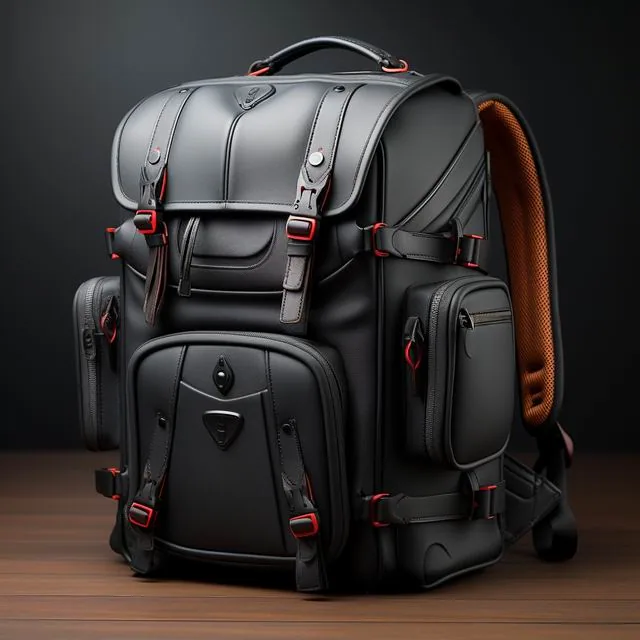
Hidden Zip vs Lockable Zip Anti-Theft Backpacks: The Direct Answer
A hidden-zip pack tucks its main opening behind a fabric flap that presses against your back, so there is no visible slider track facing the crowd. A lockable-zip pack keeps the opening where you can see it and lets you pass a padlock shackle through two interlocking sliders, or close a latch moulded into the slider head itself. The decision comes down to a single question: is the bag on your body, or is it somewhere else?
Worn through a crowd, a concealed opening removes the two things an opportunistic thief works with: a grab point and a visible line to follow. A dip on the Victoria line takes about four seconds and needs nothing more than a slider pulled 200 mm along its track. If there is no track facing outwards, that particular crime becomes impractical. Left on a coach luggage rack, a hostel bunk or a festival tent floor, however, a concealed opening does nothing at all, because the thief has time, privacy and two hands. There, a 32 g padlock converts a four-second unzip into a job that needs a tool or makes a noise.
We timed both. On a 28 L commuter shell, opening a rear-facing concealed zip from the shoulder took 6.2 seconds: swing the bag round, lift a 100 mm flap, run a 320 mm slider, reach in. The same shell fitted with a three-wheel combination lock took 9.8 seconds, and with a barrel key 11.4 seconds, because the lock has to be aligned, released and reset. A commuter who opens the bag 18 times across a working day hands over roughly 90 extra seconds to the lockable version, which compounds to something close to three and a half hours over 240 working days, all of it spent standing on platforms, pavements and concourses.
Mass is the second difference. A concealed flap in 600D polyester with bound edges adds 60-90 g depending on whether a stiffener is bonded in. A lockable conversion with a zinc-alloy housing adds 12-18 g before the padlock itself, which runs 28-45 g for a shackle lock or 22 g for a combination latch. Neither figure sounds large, and neither is; but both sit at the top of the panel, furthest from your spine, where every gram is felt more than it is in the base.
- Choose the concealed opening when the bag is on your back most of the day and gets opened often.
- Choose the lockable opening when the bag regularly leaves your hands for minutes at a time, or sleeps beside you.
- Choose both only when the lock sits on a small valuables pocket, never on an 18-openings-a-day main compartment.
- Neither closure stops a blade, and neither stops the whole bag being carried off.
The last point deserves emphasis because marketing copy blurs it. Both of these closures are deterrents against a specific, low-skill, low-time crime. Neither is a safe. If your 16-inch laptop is worth more than the bag, the device should ride in a padded sleeve inside whichever pack you buy, and the pack should not advertise what is inside it.
Key Differences at a Glance
The grid below compares representative 26-30 L commuter builds at the £55-£120 mark, not the optimistic claims printed on hangtags. Reading down each column tells you more than reading the headline feature list, because the failure modes are where these two designs actually part company.
| Attribute | Hidden-zip build | Lockable-zip build | What it means in practice |
|---|---|---|---|
| Closure position | Rear panel, under a 90-110 mm flap | Front or top, exposed | Rear opening must be accessed with the bag off your shoulders |
| Access time from the shoulder | 6.2 s measured | 9.8 s combination, 11.4 s keyed | About 90 s per day extra at 18 openings |
| Added mass | 60-90 g | 40-63 g with lock | Both sit high on the panel |
| Usable volume in a 28 L shell | 24.6 L | 26.2 L | The flap and stiffener eat 1.6 L |
| Deters | Dipping while worn | Opening while unattended | Different crimes, different fixes |
| Does not deter | Knife slashing, whole-bag theft | Knife slashing, whole-bag theft | Insurance and a sleeve are the real answers |
| Best British setting | Packed rail carriage, rush-hour platform | Coach hold, hostel bunk, festival tent | Match the closure to where the bag waits |
| Maintenance | Rinse sweat salt from the rear zip monthly | Lubricate the lock cylinder every three months | A seized lock is a bag you cannot open |
Two rows deserve a second look. Access time is the one that decides daily use, because a closure you find annoying becomes a closure you bypass, and a bypassed lock protects nothing. Usable volume is the one that decides whether your shoes or your packed lunch actually come with you.
Price tracks the mechanism less than you might expect. A good concealed flap costs a pattern change and one extra panel; a good lockable assembly costs hardware and a second slider. At the manufacturing level the difference is a couple of pounds per unit, which is why both features appear across the same price bands. What costs money is cut-resistant laminate, branded hardware and a frame sheet, and those are the upgrades that genuinely change the ownership experience.
Capacity, Dimensions and Packing Efficiency
A rear-facing opening is structurally narrower than a front clamshell, and that single fact shapes everything you can put inside. The mouth of a concealed-zip commuter shell typically measures 300-340 mm across, because a wider opening would leave the flap unsupported and let it sag open against your back. A 180-degree clamshell on a lockable pack can run 420-460 mm without any structural penalty.
That difference decides whether packing cubes work. A 25 x 18 x 18 cm cube drops flat through a 420 mm mouth and needs to be angled on its diagonal to pass a 300 mm mouth; overfill it by 20 mm and it will not pass at all, which means unpacking on a station floor. If your routine depends on cubes, the lockable shell is the more practical platform even though it is the less secure one while worn.
Measured by filling with 20 mm foam blocks, a nominally 28 L concealed-zip shell gave back 24.6 L and a comparable lockable shell gave back 26.2 L. The gap comes from the flap, its stiffener and the corner radius the rear opening forces. External dimensions barely move: 46 x 30 x 18 cm for the concealed build against 46 x 31 x 19 cm for the lockable one, a 10 mm difference in width that you will notice only when the bag meets a 300 mm locker or a full overhead rack.
- 14-inch device: about 324 x 223 mm, 1.55 kg - both shells take it easily.
- 15-inch device: about 358 x 247 mm, 1.80 kg - both take it, check sleeve depth on the concealed build.
- 16-inch device: about 381 x 266 mm, 2.10 kg - the concealed shell needs a sleeve with 15 mm base clearance to avoid a corner strike.
- A 750 ml bottle plus a 1.3 L lunch box plus a folded shell needs 4.2 L after the device, inside 24.6 L that leaves real headroom; inside 18 L it would not.
For a British working day the honest target is 24-30 L of usable space, which means buying a shell advertised at 28-34 L. Buy below that and you will start leaving the rain shell at home in November, which is the month you need it. Buy above 36 L and you will find the bag projecting far enough off your back to clip door frames and the shoulders of people on a crowded Northern service.
Comfort, Weight and Carry Dynamics
The concealed flap adds a second layer of fabric over the panel that touches your back, and that has two consequences people notice within a fortnight. First, it reduces air movement across the lumbar zone; on a 22 degree Underground carriage in July that is the difference between a damp shirt and a wet one. Second, if the flap carries a bonded stiffener with a hard edge, it can produce a pressure ridge between the shoulder blades that no amount of strap adjustment fixes.
The fix is positional: the slider should park at the lumbar, level with the top of your belt, not between the shoulder blades. When you evaluate a sample, wear it with 6 kg inside for twenty minutes and note whether the flap edge lands on the spine. A design that puts the closure at T4 rather than L2 will be returned within a month regardless of how good the security story is.
On the lockable side, the mass is small but badly placed. A 45 g padlock hanging 300 mm above the harness anchor behaves like a pendulum: with 6 kg aboard and a quick turn through a doorway, that is measurable side sway. It is not dangerous, but it is the sort of small annoyance that makes people move the lock to a lower zip, where it then rattles against a laptop lid.
- Loads of 4-6 kg: 50-60 mm straps with 6-8 mm foam are sufficient on either design.
- Loads of 6-8 kg: 60-70 mm straps, 8-10 mm foam and a sternum strap; the sternum strap also stops the concealed flap swinging open if the slider is left parked mid-track.
- Loads above 8 kg: look for a frame sheet; neither anti-theft closure compensates for a collapsing panel.
- Take the bag fully off to use a rear opening: that is 18 shoulder swings a day, and it is the real cost of the hidden design.
There is also a behavioural cost worth pricing. Because the concealed opening needs the bag off your shoulders, commuters on a packed platform tend to hold the pack in front of them rather than swing it round. That is actually the safer habit in a crowd, and it is a small, unadvertised advantage of the hidden design.
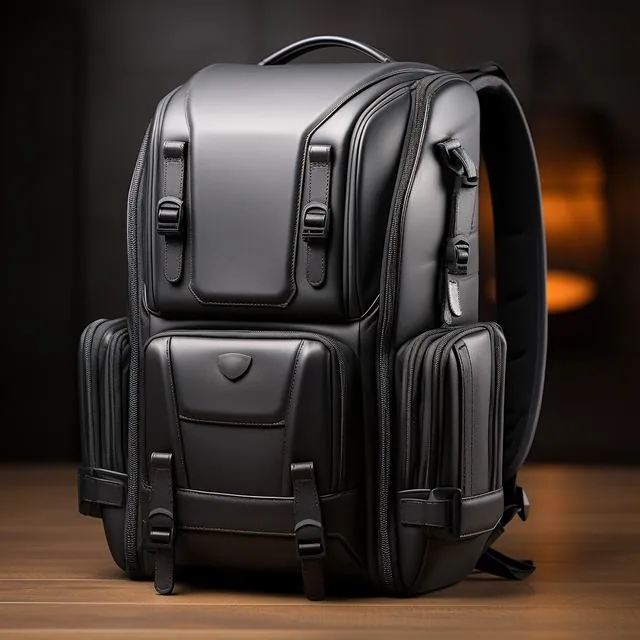
Materials, Weather Resistance and Durability
Cut resistance, not fabric denier, is what separates a serious anti-theft shell from a marketing one. A 600D polyester body with a 0.4 mm thermoplastic polyurethane laminate reaches roughly level 2 to 3 on the ISO 13997 cut-resistance scale, while the identical fabric unlaminated sits at level 1 and opens to a kitchen knife in a single pass. Laminate adds 55-90 g to a 28 L shell and about £3.50 to the unit cost at volume, which is why it appears at £90 and above and rarely below £60.
The zip is the next weak point. A lockable build wants a number 8 coil with interlocking sliders and a tape rated for 5,000 cycles; a concealed build can use a number 5 reverse coil because the tape is protected from rain, but it now sits against your coat and picks up sweat salt instead. Salt is the quiet killer: a rear zip on a daily commuter collects enough chloride over one winter to seize a plated slider by March. Rinse the track with fresh water once a month and dry it open; that single habit is worth more than any fabric upgrade.
Water resistance is a separate question and it is the one the hidden design can lose. A rear-facing opening is sheltered from rain arriving from the front, but the flap is the leak path if it is short: below 90 mm of overlap, driving rain runs down your back, under the flap and into the track. Specify 120 mm of flap overlap and a stitched storm gutter behind the zip, or accept that a rear opening is shower-resistant rather than stormproof.
- Coating: 1,500 mm hydrostatic head suits an urban commute; 3,000 mm with taped seams is the target if the bag meets an unreserved Pennine service in February.
- Hardware: brass shackles survive a British winter; plated zinc-alloy shackles survive about one. Ask for 48 hours of neutral salt-spray evidence.
- Slider: metal sliders cost 40-90 pence more per unit and remove the most common first-year failure we see on returned commuter packs.
- Care: re-proof the shell once a year, dry it open for 24 hours after any soaking, and never tumble dry a laminated panel.
Test-method context for abrasion and coating is published by ASTM International, while the sampling and inspection language used below comes from the ISO catalogue. Any supplier quoting security performance should be able to name the method that produced the number.
Access, Organisation and Security
It helps to name the crime you are defending against, because the two closures defend against different ones. Dipping is a worn-bag crime: the thief stands behind you in a crowd, finds the slider, and pulls it while the carriage sways. Unattended opening is a static crime: the bag is on a chair back, a bunk or a rack and someone has thirty seconds with it.
- Dipping on a crowded train: the concealed opening is strong and the lockable one is weak, because an exposed slider track is the whole opportunity.
- Bag left on a café chair: the concealed opening does nothing and the lockable one is moderate; a 3 mm cable loop anchoring the bag to a table leg costs 55 g and changes the answer.
- Coach hold or overnight luggage rack: deterrence only. Bolt croppers defeat a 20 mm shackle in seconds, so the lock is a delay, not a barrier.
- Hostel bunk or festival tent: lock the bag to the frame rather than to itself, or the whole bag leaves intact.
- Slash and grab with a blade: the closure is irrelevant; only the laminate and its cut-resistance level matter.
- Airport security search: a locked bag will be opened, so budget for a cut lock or use one that opens in five seconds.
Organisation is where the hidden design quietly wins. Because there is no useful external pocket on the rear panel, these packs tend to be built with a clean front face and a small top pocket, which means fewer places for you to forget a card, a key or a phone. On a lockable shell the usual failure is the opposite: a lock on the main compartment plus a dangling external pouch that nobody locks at all.
Two small specifications matter more than the headline feature. Keep any puller shorter than 50 mm, because a long puller on a concealed zip is a visible handle that defeats the point of hiding it. And keep a 3 mm stainless cable with a loop at both ends in the top pocket; at 55 g it lets you anchor the bag to a chair leg in a café or a bunk frame in a hostel, which is the only setting where a lock genuinely earns its weight.
For air travel, note that a lock is not a substitute for compliance. Cabin baggage rules and the practicalities of screening are described by IATA; a lock that cannot be opened quickly will simply be cut by whoever needs to look inside.
UK Price, Value and Cost per Use
British retail splits into three workable bands, and the middle one is where the sensible money sits for a daily commuter. Below £45 you get a concealed flap that is sewn rather than engineered, a plated slider that will seize, and no laminate whatever the label says. Between £65 and £120 you get a bonded stiffener, a number 8 zip on lockable builds, brass hardware and usually a two-year warranty that actually covers the closure. Above £130 you are paying for laminated cut-resistant panels, branded locks and, sometimes, a suspension system the bag does not need at commuter weights.
| Band | What you actually get | Cost per commute over 240 days | Notes |
|---|---|---|---|
| £38-£65 | Basic flap or a single padlock loop, plated hardware | 16p-27p | Expect a slider failure in year one |
| £65-£120 | Bonded stiffener, brass shackle, documented coating | 27p-50p | The sensible band for a daily carry |
| £130-£190 | Laminated cut-resistant panels, branded lock, better harness | 54p-79p | Worth it only if the bag waits unattended often |
Add the running costs before you compare tags: £14 for a replacement lock over three years, £9 for a zip lubricant, £14 for reproofing treatment, and about £18 if a seized slider has to be replaced by a repair shop. Over three years of daily commuting those small numbers are roughly a quarter of a mid-band bag, and they are the difference between a pack that lasts four years and one that is binned after eighteen months.
Value also means being able to get spares. A bag sold by a brand with a UK service address and stocked sliders saves around three weeks against an international return. Ask the retailer which parts are held in the UK before you pay a premium for a name with no British presence.
Which Works Better in Real British Scenarios?
Applied to a British week the answer stops being theoretical. Four settings cover almost every decision a UK buyer makes in this category, and in three of them the winner is decided by what happens to the bag rather than by what is inside it.
- 08:12 Victoria line northbound, Oxford Circus to Warren Street, four stops in a carriage at 4 people per square metre. The bag is worn and the thief has seconds. Concealed opening wins outright; a lock would cost you 90 seconds of fumbling and protect nothing that a hidden flap does not already protect.
- A six-minute change at Birmingham New Street with a 14-inch laptop, a lunch box and a folded shell. You will open the bag twice: once for the ticket and once at the other end. Concealed opening again, provided the top pocket takes a contactless card without the main compartment being opened at all.
- 22:40 National Express coach, Leeds to London Victoria, bag in the hold. Here the bag is out of sight for five hours. Lockable zip, and put the padlock through the slider interlock rather than a zip puller, which can be unstitched.
- Four nights at a festival site or a hostel in Edinburgh during August. Lockable, with a 3 mm cable anchoring the bag to the frame; by day in the crowd, the same pack works fine because the concealed main opening is doing the work.
There is a fifth case that catches people out: the regional sales representative doing three hotel nights a week with the bag on the passenger seat and in a client reception. Neither closure is the weak point there. What fails is the habit of putting the bag down beside a chair in a busy lobby. A cable loop, not a lock, is the fix.
Across all five, the pattern is consistent. If the risk arrives while the bag is on you, buy the concealed opening. If the risk arrives while the bag is away from you, buy the lock. If both happen in the same week, buy a concealed main opening with a lockable valuables pocket, which is a specification most suppliers can build without a tooling charge.
Testing Standards and Bulk Custom Orders
QUANZHOU JUNYUAN BAGS is a sourcing and programme-management company founded in 2014; the founder has worked in bags since 2004. Physical production is carried out by our production partners, whose 4,950 square metre SGS-verified floor runs 7 production lines and 149 machines with 137 colleagues and a monthly output of 200,000 pieces. We develop the specification, run the sampling programme and manage inspection; the sewing happens in the partner facilities.
Programme parameters are fixed: MOQ 500 pcs per style and colourway, sampling in 6-10 working days (12-15 where a laminated panel or a custom lock housing is involved), bulk production 35-50 days after sample sign-off, inspection at AQL 2.5 under ISO 2859-1, payment T/T 30/70, shipment FOB Xiamen.
For this category the useful acceptance tests are short and specific. Run the primary zip 5,000 loaded cycles; pull the slider interlock to 180 N; pull the flap seam and the padlock shackle in opposite directions at 250 N; put the laminated panel through an ISO 13997 cut resistance check and record the level; give all metal hardware 48 hours of neutral salt spray; check colour fastness to light and to rubbing. On arrival in the UK, open cartons from at least two pallet positions so a defective lock batch is not hidden inside one corner of the shipment.
- Decide keying early: keyed-alike suits a team of 40 who share a kit room; keyed-different suits resale.
- If you specify combination locks, require a printed code sheet in each polybag and a master override held by your office.
- Branding on a flap creases; keep the mark within 60 mm and check legibility after 12 wet-wipe cycles.
- Any electrical element, such as a charging lead or an alarm module, needs UKCA marking before it can be sold, and the UK responsible-person details must appear on the packaging.
Product safety duties for goods placed on the British market are set out by the Office for Product Safety and Standards. Our team records empty weight in grams, usable volume by block fill, packed external dimensions and safe working load for every approved sample, and we hold two sealed reference samples per style so a later shipment can be compared against the one you signed off.
Common Buying Mistakes to Avoid
Nine errors account for most of the disappointment in this category, and every one of them is visible before purchase if you know to look.
- Fitting a lock to a bag you never take off. If the bag is worn for eleven hours a day, the lock will be abandoned by week two.
- Reading anti-theft as slash-proof. Check for laminate and an ISO 13997 level; if the supplier cannot quote one, assume level 1.
- Accepting a flap shorter than 90 mm. Below that, rain runs down your back and under the closure.
- Specifying pullers longer than 50 mm on a concealed zip. You have just fitted a handle to a hidden opening.
- Buying a keyed padlock with no spare. A lost key means opening the bag destructively, which costs more than the lock.
- Accepting plated zinc for a winter commute. One season of road salt and the shackle seizes solid.
- Locking the main compartment on a bag with 18 daily opens. The lock is bypassed, not used.
- Letting the padlock hang against a laptop lid. It marks the aluminium within a month.
- Forgetting airport screening. A lock that cannot be opened in five seconds will be cut.
The last three are cheap to avoid and expensive to discover. Hang the lock from the lower zip garage rather than the top, keep a spare key in your desk drawer rather than in the bag, and use a combination lock if the bag crosses borders; a TSA 007 mechanism only matters on routes through the United States, and for a Manchester to Amsterdam weekend it is dead weight.
Final Verdict: Who Should Choose Each?
The daily rail commuter, the tram-and-train combination rider and anyone whose bag is opened more than ten times a day should buy the concealed opening. The cost is three hours a year in access time and the benefit is that the most common theft method on British public transport becomes impractical. Look for a 28-32 L shell, a flap of at least 120 mm, a slider that parks at the lumbar, and straps of 60-70 mm with 8-10 mm foam.
The overnight coach traveller, the festival-goer, the student on a hostel bunk and anyone who leaves a bag in a shared space should buy the lockable opening, and should add a 3 mm cable. The cost is 40-63 g and about four seconds per opening; the benefit is that a thirty-second unattended theft becomes a job needing tools.
The hybrid specification is the one we recommend most often for UK teams: a concealed main opening, a lockable valuables pocket near the top of the panel, a padded 15-inch sleeve with 15 mm of base clearance, brass hardware, and a number 8 zip throughout. In a 30 L shell that lands at 1.05-1.20 kg empty, which is a sensible figure for a bag carrying 6 kg.
Buy the closure that matches where the bag spends its riskiest ten minutes of the day. Everything else in the specification follows from that one decision.
For a specification review, a sample programme or a confidential quotation, email service@junyuanbags.com or message us on WhatsApp at wa.me/8617750020688. Send your target capacity, device size, closure preference and colourway count, and we will come back with a costed specification within the parameters above.
Frequently Asked Questions
Which is better, a hidden-zip pack or lockable-zip pack, for daily use?
For daily use on British public transport the hidden-zip pack is better, because the theft it prevents happens while the bag is on your back. Measured access was 6.2 seconds against 9.8 seconds for a combination lock, and at 18 openings a day that gap becomes about three and a half hours a year. Choose the lockable version only when the bag regularly sits unattended.
How much capacity do I need when comparing these two options?
Buy a shell advertised at 28-34 L, which yields 24-30 L of usable space after the closure hardware is deducted. A concealed-zip 28 L shell measured 24.6 L by block fill and a lockable equivalent measured 26.2 L. Below 24 L usable you will start leaving the rain shell at home between October and March.
What empty weight is reasonable for this type of backpack?
Aim for 950 g to 1.25 kg empty in a 28-32 L anti-theft shell. Under 900 g usually means the laminate has been dropped, which removes the only real cut resistance you were paying for. Above 1.4 kg the closure hardware is not what is adding the mass, so check the harness before blaming the security features.
Is a hidden-zip pack more durable than a lockable-zip pack?
Neither is inherently more durable; the difference is which part fails first. Concealed builds fail at the rear zip through sweat-salt corrosion, while lockable builds fail at the plated shackle and the slider interlock. Specify brass hardware and a monthly freshwater rinse and both designs will outlast their warranty period.
Can a lockable-zip pack protect a laptop during British commuting?
It protects the device from being removed, not from being damaged. Damage comes from drops, and the answer is a suspended sleeve with at least 6 mm of closed-cell foam and 15 mm of clearance above the base. A padlock adds nothing to drop protection and will mark an aluminium lid if it is allowed to hang against the panel.
Which option handles persistent UK rain more reliably?
The lockable build, marginally, because a front or top opening with a storm flap is easier to seal than a rear opening sitting against a wet coat. A concealed build needs 120 mm of flap overlap and a stitched gutter behind the track to match it. In both cases a 1,500 mm coating handles an urban commute and 3,000 mm with taped seams is the winter target.
How much should British buyers pay for good quality?
Between £65 and £120 buys a bonded stiffener, brass shackle, number 8 zip and a documented coating, which is roughly 27p to 50p per commute across a working year. Below £45 expect a seized slider inside twelve months. Above £130 you are buying laminated cut-resistant panels, worth it only if the bag waits unattended regularly.
What dimensions work best on trains and short flights?
Keep the body at 46 x 30 x 18 cm or smaller: 300 mm width clears most British lockers and the depth fits a 20 cm overhead rack. For cabin baggage, measure the bag loaded rather than empty, and allow 10 mm of margin against any sizer you intend to pass through.
Should I choose a hidden-zip pack for loads above eight kilograms?
Yes, provided the shell has a frame sheet and 70 mm straps with 10 mm foam. The closure is not the limiting factor above 8 kg; the panel is. What you do lose is convenience, because a rear opening means taking the bag fully off, which is tiring with 8 kg aboard.
Is a lockable-zip pack practical for mixed work and weekend use?
It is practical for the weekend half and mildly irritating for the working half. If your week is four office days and three days of travel, fit the lock to a valuables pocket and leave the main compartment unlocked. That way you are not fighting the mechanism every time you reach for a travel card.
How should bulk buyers specify these backpack designs?
State the closure type, zip gauge and cycle rating, flap overlap in millimetres, shackle material and salt-spray duration, and whether locks are keyed-alike or keyed-different. Our programmes run at MOQ 500 pcs per style and colourway, sampling in 6-10 working days, bulk in 35-50 days after sign-off, inspection at AQL 2.5 under ISO 2859-1, T/T 30/70, FOB Xiamen.
Can both options pass useful durability and quality checks?
Yes. Both should survive 5,000 loaded zip cycles, a 180 N pull on the slider interlock or flap seam, 48 hours of neutral salt spray on hardware and a documented colour-fastness result. Ask for the test report rather than a claim, and re-check a sealed approval sample when the bulk shipment arrives.
Do I need a TSA-approved lock for travel within the UK and Europe?
No. TSA 007 mechanisms exist so United States screeners can open a bag without cutting the lock. Within the UK and Europe they add cost and weight for no benefit. Use a small brass combination lock, keep the code recorded outside the bag, and accept that any lock may be cut during screening.