Table of Contents
- RFID Blocking Backpacks: The Direct Answer
- How Contactless and NFC Work at 13.56 MHz
- What a Shielding Layer Actually Does
- Where the Real Risk Actually Sits
- Shielded Pockets vs Sleeves vs Phone Wallets
- Other Things Worth Shielding: Passports, Keys and Phones
- How to Test a Shielded Pocket in 60 Seconds
- Buying Checklist for an Anti-Theft Pack
- Specifying Shielded Pockets at Volume
- Travel Cards, Taps and the Daily Journey
- Frequently Asked Questions
RFID Blocking Backpacks: The Direct Answer
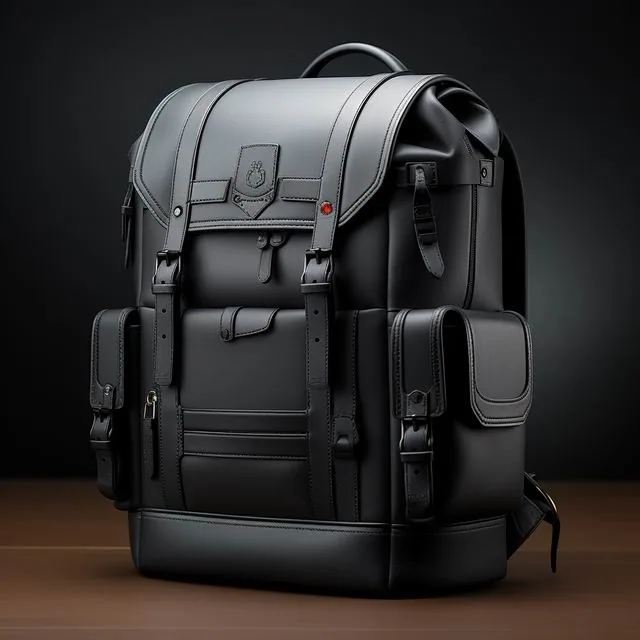
For most British cardholders, an RFID-blocking layer is optional rather than essential. UK contactless cards work at 13.56 MHz under ISO/IEC 14443 and are limited to GBP 100 per transaction, with banks required to refund unauthorised contactless payments; the practical risk of a relay or skimming attack is low and the financial exposure is capped. An RFID-blocking sleeve adds 20-60 g and GBP 4-16 and is cheap insurance, but it should not be the reason you choose a pack. What shielding genuinely prevents is a close-range read of an unencrypted card identifier. A 13.56 MHz reader can interrogate a card at 20-60 mm through a fabric shell, and a hostile reader held against a backpack could read a card number and, on older implementations, an expiry date. It cannot read the 3-4 digit CVV stored on the chip, and it cannot complete a card-not-present transaction with the number alone in most British systems. The realistic threat is data collection, not a drained account. The specification to look for, if you want it, is a continuous conductive layer - a 20-40 micron aluminium foil laminate or a copper-nickel mesh at 60-90 meshes per inch - covering a closed pocket on all six faces.
A single panel in the back of one pocket is not a Faraday cage: an open-sided shield attenuates 6-12 dB while a fully enclosed one attenuates 40-70 dB. Choose the anti-theft backpack on its harness and layout first, and treat shielding as a GBP 4-16 accessory you can add later.
How Contactless and NFC Work at 13.56 MHz
Contactless payment uses near-field communication at 13.56 MHz, defined under the ISO/IEC 14443 and ISO/IEC 18092 standards published by the International Organization for Standardization and the International Electrotechnical Commission. The reader generates a magnetic field and the card's antenna, a 3-6 turn coil of 40-80 mm diameter, draws power from it and modulates its response at 106-848 kbit/s.
Range is the physical limit that makes skimming hard. A compliant reader and card couple at 0-40 mm, and a purpose-built reader with a larger antenna can reach 60-120 mm under ideal conditions. Through a backpack shell, a lining and a wallet, the practical read distance is 20-50 mm, which means an attacker must place a reader within 50 mm of the card - against your back, on a crowded train, for 1-3 seconds.
The GBP 100 limit is the second protection. British contactless transactions are capped at GBP 100 per transaction, and most banks apply a cumulative limit of GBP 300-500 or a transaction count of 5-10 before requiring a PIN. A stolen card read at a distance is therefore limited to a few transactions of GBP 100 or less before a PIN is demanded, and UK rules require banks to refund unauthorised payments unless the cardholder has been grossly negligent. See the anti-theft backpack range for security layouts.
What a Shielding Layer Actually Does
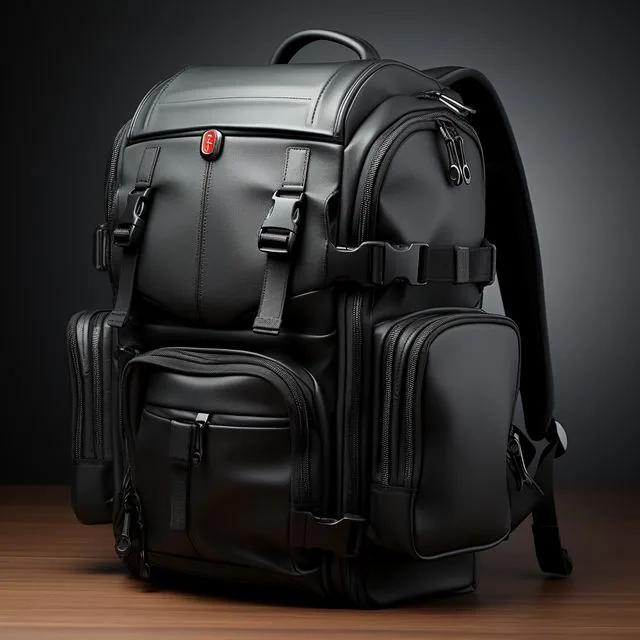
A shielding layer works by eddy-current cancellation: a conductive sheet in a changing magnetic field generates currents that oppose the field, reducing the flux reaching the card below the coupling threshold. The attenuation depends on conductivity, thickness, continuity and whether the enclosure is closed. A 20-40 micron aluminium laminate gives 40-70 dB of attenuation in a closed pocket; a copper-nickel mesh at 60-90 meshes per inch gives 30-55 dB.
Continuity is the variable that decides whether it works at all. A conductive panel sewn into one face of a pocket leaves five faces open, and a reader placed against the open face couples normally: measured attenuation for a five-sided shield is 6-12 dB against 40-70 dB for a six-sided one. Check that the shielded pocket is a closed pouch with a conductive layer on both faces and a conductive overlap of 10-20 mm at the closure.
| Shield type | Material | Attenuation (closed) | Mass (g) | Cost (GBP) | Durability |
|---|---|---|---|---|---|
| Aluminium foil laminate | 20-40 micron foil on PET | 40-70 dB | 25-60 | 4-16 | Cracks after 8-18 months |
| Copper-nickel mesh | 60-90 mesh/inch | 30-55 dB | 40-90 | 8-22 | Flexes, 3-5 years |
| Conductive non-woven | Metallised fibre | 25-45 dB | 30-70 | 6-18 | 2-4 years |
| Single panel in pocket | Foil, one face only | 6-12 dB | 15-35 | 2-9 | Cosmetic only |
| Carbon-fibre look fabric | No conductive layer | 0 dB | 20-50 | 3-12 | No shielding at all |
Read the last row carefully: a 'RFID-blocking' pocket with a carbon-look or metallised-look fabric and no conductive layer shields nothing. Test it at home - put a card in the pocket, hold it against a contactless reader and see whether it is detected. A genuine six-sided shield blocks the read completely; a decorative one does not on a RFID-blocking backpack.
Where the Real Risk Actually Sits
Ranked by frequency, the threats to a British cardholder are: card theft and use at GBP 100 per transaction until a PIN is required; online card-not-present fraud from a data breach; a stolen phone with a mobile wallet; and finally contactless skimming. Contactless skimming is the smallest of the four by a wide margin, and the two largest are unaffected by a shielded pocket in a backpack.
The numbers bear this out. Card-not-present fraud accounts for the majority of British card fraud losses by value, while contactless-specific fraud is a small fraction, and banks refund the overwhelming majority of reported unauthorised contactless transactions. A shielded pocket addresses the smallest category. A phone with a screen lock, two-factor authentication and a PIN-protected card addresses the largest on a security-conscious carry.
Where shielding does earn its 20-60 g is on specific journeys: a crowded commuter train into London, a festival, a tourist-heavy city centre, or any situation where a reader can be held within 50 mm of your back for 1-3 seconds without you noticing. On those days, put the two cards you need most in a shielded pocket or a GBP 4-16 sleeve and use a phone wallet for the rest, which requires biometric authentication per transaction.
Shielded Pockets vs Sleeves vs Phone Wallets
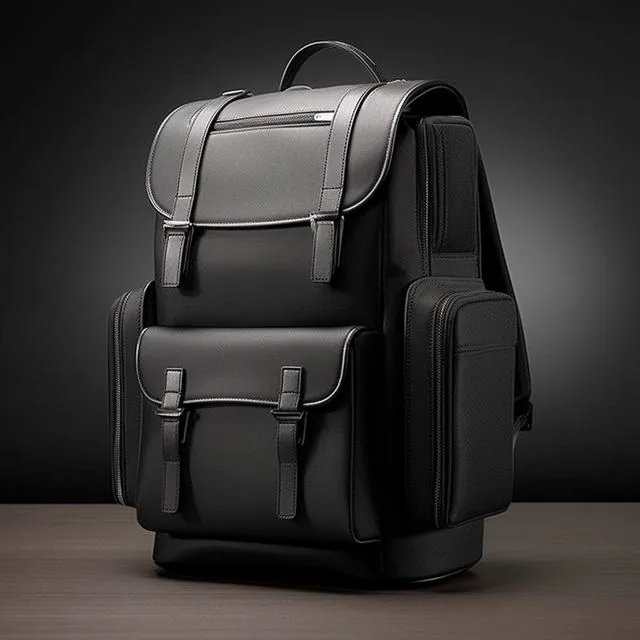
Three delivery methods exist and they differ in convenience more than in protection. A shielded pocket built into the pack protects whatever you put in it, costs GBP 6-22 of unit cost and 30-90 g, and works only when you remember to use it. A card sleeve at GBP 4-16 and 8-20 g protects one or two cards, is transferable between bags and is the cheapest route. A phone wallet requires biometric authentication per transaction, which is the strongest of the three because the card token is useless without your face or fingerprint.
Capacity is the practical difference. A shielded pocket in a pack is typically 100 x 70 mm and holds two to four cards plus a passport card; a sleeve holds one to two; a phone wallet holds four to eight as tokens. For a British commuter carrying an Oyster or a contactless travel card, a bank card and a work card, the sleeve is the tidiest answer at GBP 4-16, and it can move from a backpack to a jacket to a wallet without rethinking.
Note one interaction: shielding blocks all 13.56 MHz reads, including legitimate ones. A contactless travel card left in a shielded pocket will not work at a gate, which costs 20-40 seconds at a barrier and a GBP 2.40-8.60 penalty fare in some British stations if you walk through without a valid tap. Keep travel cards outside the shield and bank cards inside, or accept the 4-8 seconds of moving the card each time.
Other Things Worth Shielding: Passports, Keys and Phones
Passports are the more defensible case. A British e-passport contains an RFID chip at 13.56 MHz with a machine-readable zone, and the basic access control on the chip is derived from the passport number, the date of birth and the expiry date - all printed on the data page. Reading a passport chip requires close proximity, but the data is more sensitive than a card number, and a shielded 130 x 95 mm passport pocket costs GBP 8-22 and 40-90 g.
Car keys are a different frequency and a different threat. A keyless entry fob transmits at 433 MHz in Europe or 315 MHz in some markets, and a relay attack extends the fob's 1-5 m range to the car using two devices. A 13.56 MHz shield does nothing against this; a 433 MHz Faraday pouch at GBP 6-18 does. Neither belongs in a backpack, because the fob is in your pocket; keep a Faraday pouch by the front door instead.
Phones are the highest-value item and the least protected by shielding. A phone with a mobile wallet requires biometric authentication per transaction, which is stronger than a card's GBP 100 no-PIN limit, but a stolen unlocked phone is a far larger loss at GBP 600-1,400. Spend the effort on a 6-digit or longer passcode, biometric lock, remote wipe and a hidden 200 x 130 mm pocket rather than on a shielded card slot on a commuter pack.
How to Test a Shielded Pocket in 60 Seconds
Test at home before you trust a claim. Put a contactless card in the shielded pocket, close it fully, and hold it against a contactless reader at a shop checkout or a ticket gate. If the reader beeps or the terminal responds, the shield is decorative. Repeat with the card in a normal pocket of the same pack to confirm the card works, so you are testing the pocket rather than a dead card. Sixty seconds, and it settles the question.
A more precise version uses a phone with NFC and a free NFC-reading app: with NFC on, hold the phone against the card inside the shielded pocket and see whether the app detects a tag. Detection within 20-40 mm means the shield is not closed on all six faces. Test all six orientations, because a shield with a gap at the closure fails from one side and passes from the others.
Then test durability, which is the part nobody checks. A 20-40 micron aluminium laminate flexes at the pocket corners and cracks after 8-18 months of daily card insertion, and a cracked shield drops from 40-70 dB to 10-20 dB. A copper-nickel mesh flexes and lasts 3-5 years. Re-test the pocket every 6-12 months, and replace a GBP 4-16 sleeve rather than accepting a degraded built-in layer on a backpack pocket.
Buying Checklist for an Anti-Theft Pack
Rank the features by value. One: a rear-facing laptop sleeve with the zip on the back-panel side, which defeats the most common opportunistic theft at no cost. Two: a lockable main zip at 40-70 g and GBP 4-9. Three: a hidden 200 x 130 mm document pocket behind the back foam. Four: a slash-resistant lining or a 4-6 mm wire-reinforced strap at 60-140 g. Five: a shielded pocket at 30-90 g and GBP 6-22. Six: a reflective panel of 200-300 square centimetres.
The ordering matters because the top three address the thefts that actually happen in Britain - an unzipped pocket on a crowded train, a bag out of sight at a café table, a laptop lifted from an outward-facing sleeve - while the shielded pocket addresses a threat that is real but rare. Spend on the harness, the layout and the zipper gauge first, and add a GBP 4-16 sleeve for the shielding on a security backpack.
Then check the basics that a security feature cannot compensate for: a branded #8 zipper rated to 8,000-12,000 cycles, bar-tacked strap attachments at 180-220 kg, bound internal seams and a shell at 1,500-2,500 mm hydrostatic head. A pack with a shielded pocket and a generic #5 zipper will fail at the zipper long before anyone tries to skim a card.
Specifying Shielded Pockets at Volume
Corporate buyers, travel companies and retailers ordering packs with a shielded pocket should specify the material, the coverage and the test method rather than a marketing term. Our production team works to a MOQ 500 pcs per colourway, with sampling 6-10 working days from tech-pack sign-off and bulk production 35-50 days after approval, inspected to AQL 2.5 (ISO 2859-1) under the sampling system published by the International Organization for Standardization.
The specification to write is a six-sided enclosure in a 25-40 micron aluminium laminate or a 60-90 mesh copper-nickel fabric, with a 10-20 mm conductive overlap at the closure, verified by a read test at 20-40 mm on 32 pieces per 500-piece batch. Our SGS-verified production base runs that test against the golden sample and records the pass rate, because a shield that fails on one face is a shield that fails.
Budget GBP 2.50-7.00 per unit for a genuine six-sided shielded pocket at 500 pieces, against GBP 0.60-2.20 for a decorative single panel. Landed cost of a 26-litre pack with a shielded pocket, a lockable zip and a rear-facing sleeve runs GBP 26-46, against GBP 65-150 retail. Every bulk anti-theft backpack order ships with the UKCA declaration and the REACH statement required for the Great Britain market. The anti-theft backpack range compares lockable zips and hidden pockets.
Travel Cards, Taps and the Daily Journey
A British commuter taps more than anyone else in Europe, and that changes the shielding calculus. A London commute involves 2-6 taps a day on the Underground, buses and trams, and a contactless or Oyster card is capped daily at roughly GBP 8.50-9.50 in zones 1-2. Those taps are the reason a travel card should never live in a shielded pocket: an untapped entry is a GBP 2.40-8.60 penalty fare and 20-40 seconds at the barrier.
Keep the travel card in an external quick-access pocket of 90 x 60 mm with a 40-60 mm opening, reachable without removing the pack. A shoulder-strap pouch or a hip-belt pocket works; a main-compartment wallet does not. On a 6-tap day that saves 4-8 seconds per tap and 24-48 seconds of gate friction, which is 2-4 minutes a week and a measurable share of the reason people end up pushing through a barrier on a crowded morning.
Bank cards go the other way. Keep the two you use least - a backup card and a work card - in a GBP 4-16 shielded sleeve inside a closed inner pocket, and use a phone wallet for daily spending, which requires biometric authentication per transaction and stores a token rather than a number. That combination removes the shielded-pocket-versus-tap conflict entirely on a British commute, and it costs GBP 4-16 rather than GBP 6-22 for a built-in pocket.
Finally, check what the pack already does. Many 2024-2026 commuter packs include a small shielded pocket as standard, at 30-90 g and GBP 6-22 of unit cost, and the buyer rarely uses it because it is in the wrong place. Relocate the sleeve to whichever pocket you actually open at the gate, or accept that the built-in pocket protects the cards you use least and the phone protects the rest on a commuter backpack.
Frequently Asked Questions
Is RFID blocking needed for UK contactless cards in practice?
Not strictly. British contactless cards are capped at GBP 100 per transaction with a cumulative limit of GBP 300-500 or 5-10 transactions before a PIN is required, and banks must refund unauthorised payments. A shielded pocket is cheap insurance at GBP 4-16 and 20-60 g, but it should not be the deciding factor when you choose a pack. A six-sided pocket costs GBP 2.50-7.00 per unit at 500 pieces.
Which radio frequency do UK contactless cards use for payments?
13.56 MHz, under ISO/IEC 14443 and ISO/IEC 18092, published by ISO and IEC. The reader generates a magnetic field and the card's 3-6 turn antenna coil of 40-80 mm diameter draws power from it and modulates a response at 106-848 kbit/s. Compliant read range is 0-40 mm and a purpose-built reader reaches 60-120 mm under ideal conditions. The card antenna is a 3-6 turn coil of 40-80 mm diameter.
How close does a skimmer have to be?
Within 20-60 mm through a backpack shell, lining and wallet, which means holding a reader against your back for 1-3 seconds. That is possible on a crowded train or at a festival and impractical almost everywhere else. A reader at that range can capture a card number and sometimes an expiry date, but not the 3-4 digit CVV stored on the chip.
How effective is a single shielding panel in a pocket?
No. A conductive panel on one face leaves five faces open and attenuates only 6-12 dB, against 40-70 dB for a six-sided enclosure. A reader placed against the open face couples normally. Look for a closed pouch with a conductive layer on both faces and a 10-20 mm conductive overlap at the closure, and test it with a contactless reader in 60 seconds.
How can I test if my backpack blocks RFID?
Put a contactless card in the shielded pocket, close it fully and hold it against a contactless reader at a checkout or gate. If the reader responds, the shield is decorative. Confirm the card works outside the pocket first so you are testing the pocket, and repeat in all six orientations. A phone with NFC and a free NFC-reading app works too at 20-40 mm.
Which materials actually block RFID signals in a backpack?
A 20-40 micron aluminium foil laminate at 40-70 dB, a copper-nickel mesh at 60-90 meshes per inch at 30-55 dB, or a metallised conductive non-woven at 25-45 dB. A carbon-fibre-look or metallised-look fabric with no conductive layer blocks nothing. Foil laminates crack after 8-18 months of flexing; mesh flexes and lasts 3-5 years. Test at 20-40 mm with a contactless reader before trusting any claim.
Is card skimming or online fraud the bigger risk in the UK?
Online card-not-present fraud, by a wide margin. Contactless-specific fraud is a small fraction of British card fraud losses, and banks refund the overwhelming majority of reported unauthorised contactless transactions. Shielding addresses the smaller category; a phone with a screen lock, two-factor authentication and a PIN-protected card addresses the larger one. Contactless is capped at GBP 100 per transaction with a GBP 300-500 cumulative limit.
Should I shield my passport in a backpack?
It is the more defensible case. A British e-passport has a 13.56 MHz chip whose basic access control is derived from the passport number, date of birth and expiry date - all printed on the data page. A shielded 130 x 95 mm passport pocket costs GBP 8-22 and 40-90 g and protects more sensitive data than a card number.
Can RFID blocking stop relay theft from a car key fob?
No. Keyless entry fobs transmit at 433 MHz in Europe, and a 13.56 MHz shield does nothing at that frequency. A 433 MHz Faraday pouch at GBP 6-18 does, but the fob is in your pocket rather than your backpack, so keep the pouch by the front door. Relay attacks extend a fob's 1-5 m range to the car using two devices.
How does shielding affect a travel card at a station gate?
Yes, if the travel card is inside a shielded pocket. A 13.56 MHz shield blocks all reads at that frequency, including legitimate ones, so a contactless travel card left inside will not tap at a barrier. That costs 20-40 seconds at the gate and can mean a GBP 2.40-8.60 penalty fare in some British stations. Keep travel cards outside the shield and bank cards inside.
Is a shielded card sleeve better than a built-in pocket?
Usually. A sleeve at GBP 4-16 and 8-20 g protects one or two cards, moves between a backpack, a jacket and a wallet, and can be replaced when the foil cracks after 8-18 months. A built-in pocket costs GBP 6-22 and 30-90 g, protects whatever you remember to put in it, and cannot be replaced. Buy the sleeve and spend the difference on a better zipper.
How long does RFID shielding last in a backpack?
A 20-40 micron aluminium foil laminate flexes at the pocket corners and cracks after 8-18 months of daily card insertion, dropping attenuation from 40-70 dB to 10-20 dB. A copper-nickel mesh flexes and lasts 3-5 years. Re-test the pocket every 6-12 months with a contactless reader, and replace a GBP 4-16 sleeve rather than living with a degraded built-in layer.
What should I look for in an anti-theft backpack instead?
Rank by real risk: a rear-facing laptop sleeve with the zip on the back-panel side first, then a lockable main zip at GBP 4-9 and 40-70 g, then a hidden 200 x 130 mm document pocket, then a slash-resistant lining, then the shielded pocket. The top three address thefts that actually happen in Britain; the shielded pocket addresses a threat that is real but rare.
How much weight does RFID blocking add to a backpack?
20-90 g, depending on the method. A six-sided pocket in a 25-40 micron aluminium laminate is 30-90 g, a copper-nickel mesh pocket 40-90 g and a single card sleeve 8-20 g. Against a pack of 1,050-1,550 g that is 1.3-8.6% of empty weight, which is immaterial for carrying and worth specifying only because it is cheap rather than because it is light.
What does a shielded pocket cost at volume?
GBP 2.50-7.00 per unit for a genuine six-sided enclosure at 500 pieces, against GBP 0.60-2.20 for a decorative single panel. Verify it by a read test at 20-40 mm on 32 pieces per batch rather than by a material claim. A 26-litre pack with a shielded pocket, a lockable zip and a rear-facing sleeve lands at GBP 26-46 against GBP 65-150 retail.
Can a phone replace the cards I would shield?
Mostly, and more securely. A phone wallet requires biometric authentication per transaction, which is stronger than a card's GBP 100 no-PIN limit, and stores the card as a token rather than a number. The residual risk is a stolen unlocked phone at GBP 600-1,400, so use a 6-digit or longer passcode, biometric lock and remote wipe. Keep one physical card in a GBP 4-16 sleeve as a backup.
Get a Free Quote for Custom RFID Blocking Backpacks
Planning a branded programme? Our production team works to MOQ 500 pcs, 6-10 working day sampling and 35-50 day bulk lead times, with AQL 2.5 inspection to ISO 2859-1. Send your brief and we will return a costed quotation in 24-48 hours.
Mens Backpack Guide Editorial Team — Buying guides and sourcing notes for the UK men's backpack market, coordinated by QUANZHOU JUNYUAN BAGS. Commercial figures such as MOQ 500 pcs, 6-10 day sampling and 35-50 day production reflect published programme terms.