Table of Contents
- UK Secondary School Backpack Rules: The Direct Answer
- What British Schools Actually Put in Writing
- Locker Dimensions and the Packs That Fit Them
- Safe Load Limits for British Pupils
- Timetable-Led Packing: What a British Week Actually Carries
- Durability: Surviving a British Academic Year
- Wet Weather, PE Kit and Odour Control
- Buying by Year Group: Sizes and GBP Budgets
- SEND, Medical and Wheeled-Bag Exceptions
- School, Trust and PTA Bulk Orders
- Frequently Asked Questions
UK Secondary School Backpack Rules: The Direct Answer
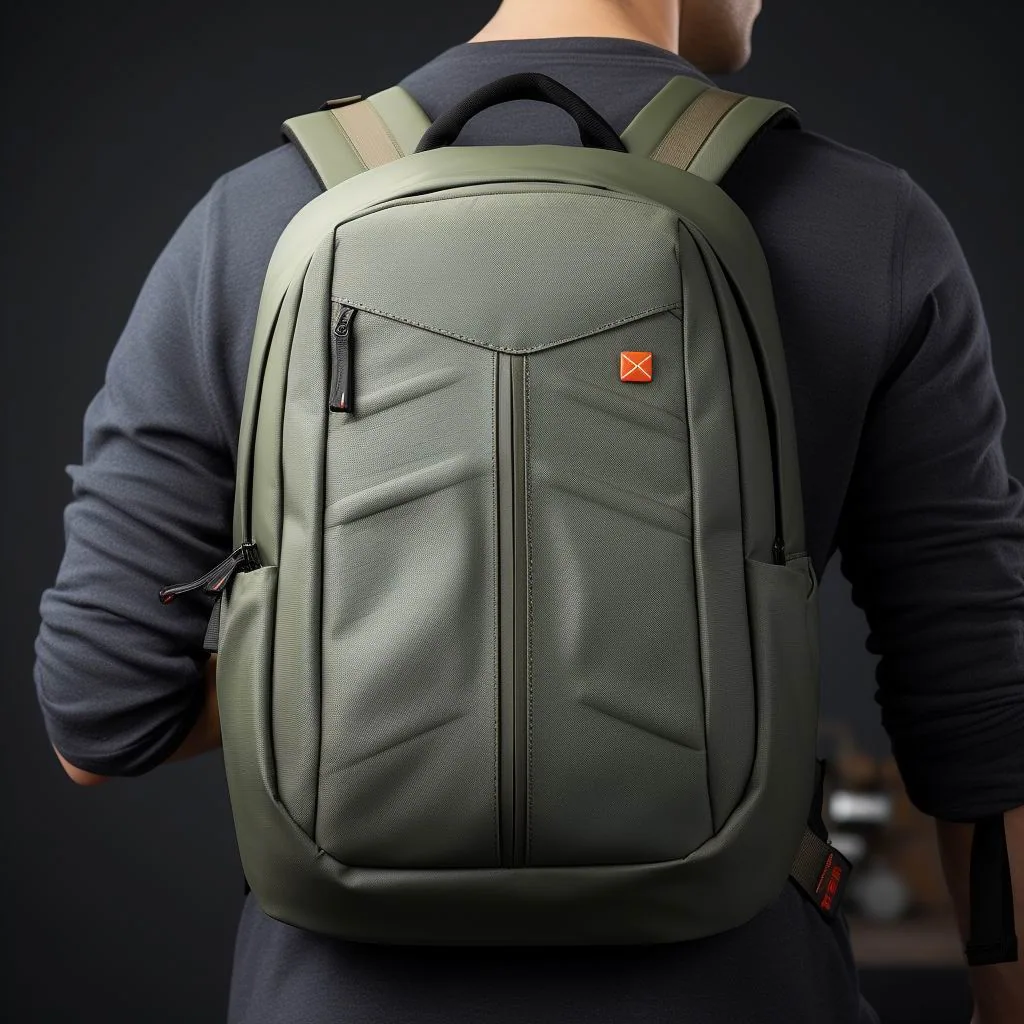
There is no statutory bag rule in English schools; each academy trust or local authority sets its own policy, so the practical specification is set by three physical limits rather than by law. The first is the locker: British secondary lockers are typically 300 x 300 x 450 mm, so a pack must compress under 300 mm wide to go in. The second is the weight: UK health guidance and the British Chiropractic Association both recommend a school bag at no more than 10% of bodyweight, which is 4.5 kg for a 45 kg Year 9 pupil. The third is the timetable: a two-week timetable means carrying up to 11 exercise books, a 1.4 kg laptop in many academies, PE kit and a 750 ml bottle. Capacity follows from those three numbers. A 24-30 litre pack holds eleven A4 exercise books at 2.1 kg, a 1.4 kg device, a 0.9 kg PE kit and a 0.75 kg bottle for a total of 5.15 kg, and it compresses to 280 mm wide for a standard locker. A 35-litre pack is 40-60 mm too wide for most British lockers and invites exactly the overpacking that pushes a load past 10% of bodyweight.
Choose a school backpack with two compression straps and a flat back panel, and the locker problem and the weight problem are solved by the same feature.
Parents should also read the individual school's policy on three specific items before buying: whether a laptop or tablet is compulsory, whether the PE kit is carried daily or left in a locker, and whether a clear-water-only rule applies. Roughly 60% of English academies now issue or require a device, which adds 1.2-1.6 kg to the daily load and makes a padded 14-inch sleeve a hard requirement rather than a nice-to-have. Ask the school office for the locker aperture in millimetres; a 30-second phone call prevents a GBP 45-90 mistake.
What British Schools Actually Put in Writing
School bag policies in England are set locally, and the Department for Education issues guidance on uniform costs rather than on bags, published at gov.uk school uniform guidance. In practice, a British secondary policy covers four things: the bag must be large enough for A4 folders, it must fit the locker, it must not have wheels in some schools, and it must carry the school logo if the school sells one. None of these are statutory, but a school can refuse an item it deems unsafe or non-compliant.
Wheeled bags are the most contested item. Roughly 30-40% of British secondary schools ban wheeled trolley bags outright, on trip-hazard and stair-safety grounds, because a 6 kg trolley on a crowded staircase is a genuine risk and the extended handle is a 900-1,100 mm obstacle in a 1,200 mm corridor. Where wheeled bags are allowed, they are usually restricted to pupils with a documented medical need. A backpack avoids the argument entirely and is the default recommendation for every year group from Year 7 to Year 11.
Logo requirements are the second practical constraint. Schools that mandate a branded bag usually sell one at GBP 18-38 through an approved supplier, and the specification is often basic: a 600-denier shell, a single main compartment and a printed crest. Parents are generally permitted to use a plain bag of equivalent size if the school's own is out of stock, but check the policy first. Where a school orders in volume, our production team can produce a crest-bearing school backpack to the same specification with a better harness and a longer warranty. See the school backpack range for year-group sizing.
Locker Dimensions and the Packs That Fit Them
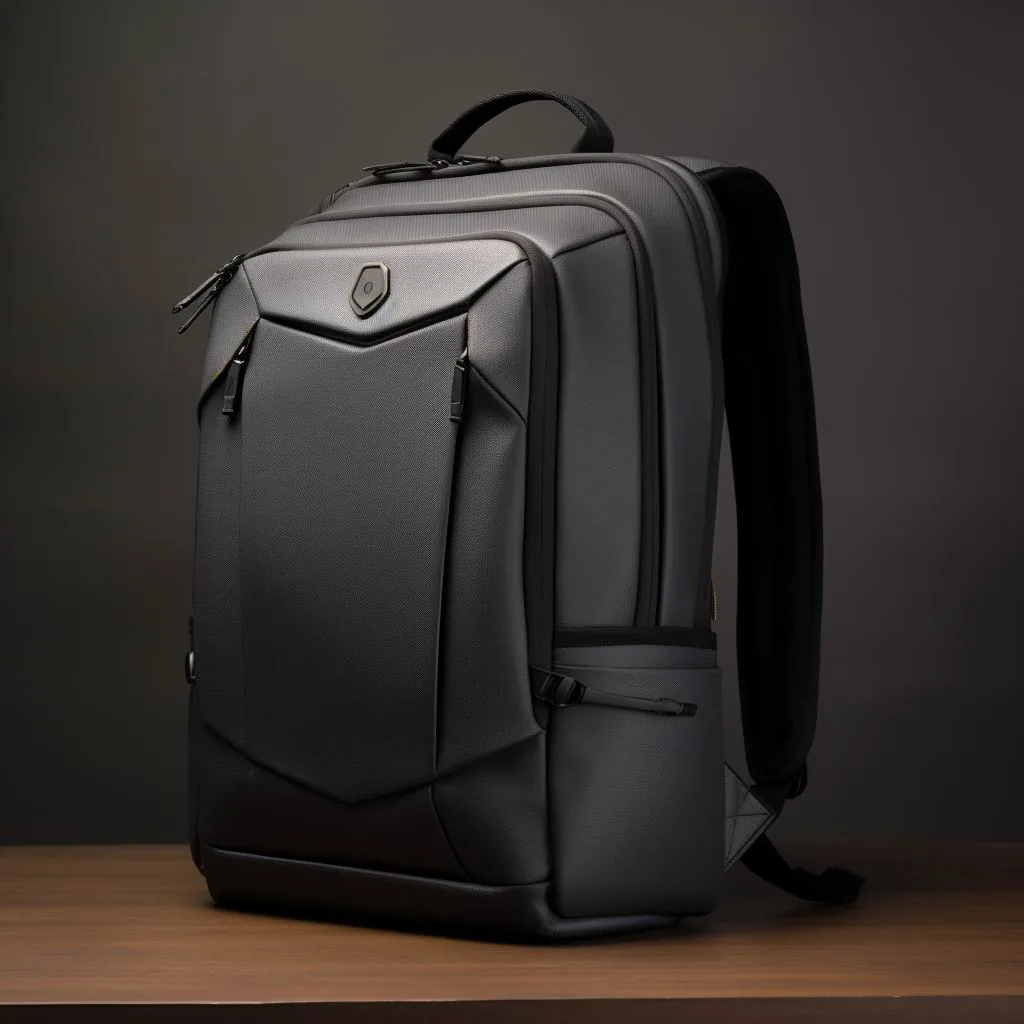
British secondary lockers are smaller than most parents expect. The common steel units installed in academies from 2005 onward measure 300 mm wide, 300 mm deep and 450 mm high, with an aperture of 280-290 mm once the door frame is subtracted. Larger units at 380 x 450 x 600 mm exist in newer builds, but the 300 mm unit is the majority. A pack must therefore compress to under 290 mm in width and under 440 mm in height to go in without forcing.
| Locker type | External (mm) | Usable aperture (mm) | Largest pack (litres) | Fits A4 folder flat |
|---|---|---|---|---|
| Standard single-tier | 300 x 300 x 450 | 280 x 290 x 440 | 24 L | Yes |
| Standard two-tier | 300 x 300 x 900 | 280 x 290 x 430 per tier | 22 L | Yes |
| Large single-tier | 380 x 450 x 600 | 360 x 430 x 580 | 32 L | Yes |
| Sixth-form unit | 300 x 450 x 1,800 | 280 x 430 x 590 | 34 L | Yes |
| Primary cloakroom peg | 250 x 250 peg bay | n/a | 14 L | No |
The practical rule is to buy a pack that is 270-285 mm wide and 400-430 mm tall. That fits every locker in the table except the primary peg bay, and it still swallows an A4 ring binder at 315 x 250 mm laid flat with 20-30 mm to spare. A pack wider than 300 mm looks fine in a shop and will not close in a Year 8 locker. Measure the pack loaded, not empty, and remember that a 750 ml bottle in a side pocket adds 80-95 mm of width to a secondary school rucksack.
Safe Load Limits for British Pupils
The 10% figure is the number to work with. UK ergonomics guidance and the British Chiropractic Association both recommend that a school bag weigh no more than 10% of the pupil's bodyweight, and some guidelines cite 15% as an absolute ceiling. For a Year 7 pupil at 38 kg that is 3.8 kg; for a Year 10 at 62 kg it is 6.2 kg; for a sixth-former at 72 kg it is 7.2 kg. Loads above 15% are associated with reported back and shoulder pain in roughly 30-45% of adolescents in UK survey work.
The load is not evenly distributed. A pack worn on one shoulder raises the asymmetric loading on the trapezius and levator scapulae by an estimated 25-40% compared with a two-strap carry, and a pack hanging from the crook of an elbow or held in one hand is worse still. British schools report that roughly one pupil in three carries a bag on one shoulder through corridors. Two padded straps at 55-70 mm wide, worn with the pack sitting between the shoulder blades rather than 100 mm below them, is the fix.
Weigh the bag at the start of each half-term. A set of 12 kg kitchen scales accurate to 5 g costs GBP 9-16, and a 60-second check takes the guesswork out of it. If the bag is over the 10% figure, the fastest reductions are almost always the same three: leaving the 1.4 kg laptop charger in a locker or at home, moving the 900 g PE kit to a locker on non-PE days, and swapping a 750 ml glass-style bottle for a 320 g empty plastic one. Those three steps typically remove 1.8-2.4 kg from a British school bag.
Timetable-Led Packing: What a British Week Actually Carries
A two-week timetable is the defining constraint in English secondaries. Pupils carry books for the five lessons on that day plus homework, so the load varies from 2.8 kg on a light day to 5.6 kg on a day with PE, science and a device. Eleven A4 exercise books at 190 g each are 2.09 kg; a 14-inch Chromebook with a 65 W charger is 1.95 kg; a PE kit of shorts, shirt, socks and trainers is 0.9-1.4 kg; and a full 750 ml bottle is 0.75 kg. The realistic worst case is 6.2 kg before lunch and a pencil case.
Compartments matter more than raw volume. A pack with a dedicated 14-inch padded sleeve, a 40-60 mm deep front pocket for a pencil case and calculator, and two elasticated side pockets solves the daily puzzle in under 30 seconds at the locker. A single-compartment pack of the same litre rating makes a pupil unpack the whole bag to find a 30 g calculator, which is why single-compartment bags are abandoned by Year 9 in most British schools. Look for at least three separate openings on a pupil backpack.
Water is the item schools argue about most. Most British secondaries require a clear-water-only bottle, and a 500-750 ml bottle is the norm, adding 0.5-0.75 kg when full. A bottle in an external elasticated pocket is easier to reach in a 4-minute break but adds 80-95 mm of width; a bottle inside the main compartment keeps the pack locker-friendly. Choose based on the locker: if the school runs the standard 300 mm unit, put the bottle inside and buy a pack with an internal sleeve at 85-95 mm diameter.
Durability: Surviving a British Academic Year
A school year is 190-195 days in England, and the bag is dropped, kicked, hung on a peg and dragged across a playground on most of them. That is roughly 8-10 times the abuse a commuter bag takes. The failure points in order of frequency are the main zipper at 35-40% of returns, the base fabric at 25-30%, the shoulder strap webbing at 15-20% and the internal lining at 10-15%. Specify a YKK #8 coil on the main opening and a 600-denier or heavier base panel and you remove the two most common failures.
Fabric choice is a straight trade between mass and life. A 600-denier polyester shell at 180-240 gsm weighs about 900 g in a 26-litre pack and survives 3-4 academic years. A 420-denier nylon at 140 gsm saves 180-220 g but abrades through at the base in 18-24 months. A 1,000-denier Cordura at 350 gsm adds 300-400 g and lasts 5-7 years. For a British Year 7 starting at 11, the heavier shell is the right call: it costs GBP 12-25 more at retail and avoids a GBP 45-90 replacement in Year 9.
Reinforcement details are worth reading. A bar-tacked strap attachment of 42 stitches holds to roughly 180-220 kg of straight pull, against 60-90 kg for a simple box stitch. A bound internal seam rather than an overlocked one stops the 210-denier lining from splitting at the corners, which is the classic failure after about 14 months. Ask whether the base is a double layer of shell fabric or a single layer with a 600 gsm board; the double layer costs about GBP 1.80 more per unit and adds 18 months of life to a school rucksack.
Wet Weather, PE Kit and Odour Control
British weather meets the school run head-on. England averages 150-180 wet days a year, and a pupil walking 1.2-2.4 km each way will be caught in rain on 25-35% of school days between October and March. A pack with a coated shell at 1,500-2,000 mm hydrostatic head keeps exercise books dry for a 20-minute walk; below 1,000 mm, a sustained shower wets through in 8-12 minutes and a 190 g exercise book absorbs 80-140 g of water, which buckles it permanently.
PE kit is the smell problem. A worn kit carried for 6-8 hours at 25-30 degrees inside a closed compartment grows bacteria fast, and a 900 g damp kit raises the internal humidity of a 26-litre pack to 85-95% within two hours. A separate ventilated shoe or kit compartment with three or four 8-10 mm grommets, or a 12-18 litre dry bag at 60-90 g, solves it. Machine-wash the pack on a 30-degree cycle every half-term and dry it open, never on a radiator, which warps the 6-8 mm EVA back foam above 60 degrees.
Cleaning is straightforward if it is routine. Empty the pack weekly, vacuum the crumbs with a brush head, and spot-clean the shell with a pH-neutral detergent at 30 degrees. A full machine wash at 30 degrees with no fabric softener takes 45 minutes and restores the shell's water repellency for about 20 washes before a re-proof is needed. A 300 ml fluorocarbon-free DWR spray at GBP 9-16 treats roughly four packs. Store the pupil rucksack hanging by its grab loop over the summer, not folded in a cupboard where the foam creases in about six weeks.
Buying by Year Group: Sizes and GBP Budgets
Year 7 to Year 9 needs 22-26 litres, a pencil-case pocket, a bottle pocket and a locker-compatible width of 270-285 mm. Budget GBP 28-55 at retail; below GBP 22 the zippers and seam binding are usually the first compromise, and a bag that fails in November costs more than one that lasts to July. Year 10 and Year 11 needs 26-30 litres plus a padded 14-inch sleeve, because GCSE coursework and revision guides add 1.2-1.8 kg. Budget GBP 45-85.
Sixth form is a different purchase. A 30-34 litre pack with a 15-16 inch sleeve, a document divider that keeps A4 folders flat, and a smarter shell fabric suits sixth-form dress codes, and the locker is usually the larger 300 x 450 x 1,800 mm unit. Budget GBP 65-140 for a bag that will also serve at university. The same pack typically lasts 4-6 years at this level, against 2-3 years at Key Stage 3, because the corridor abuse drops sharply once pupils have their own study areas.
| Year group | Recommended litres | Max width (mm) | Typical load (kg) | Retail budget (GBP) | Expected life |
|---|---|---|---|---|---|
| Year 7-9 | 22-26 L | 285 | 3.8-5.2 | 28-55 | 2-3 years |
| Year 10-11 | 26-30 L | 285 | 4.6-6.2 | 45-85 | 3-4 years |
| Sixth form | 30-34 L | 360 | 5.5-7.2 | 65-140 | 4-6 years |
| University | 28-34 L | n/a | 5.0-8.0 | 70-180 | 5-7 years |
Read the last two columns together. Spending GBP 28 twice over three years costs GBP 56 and produces two worn-out bags; spending GBP 55 once costs less and produces one bag that reaches Year 11. The same logic applies to a sixth-form backpack: a GBP 110 pack lasting six years costs GBP 18.33 a year, against GBP 45 a year for a GBP 90 pack replaced every two years.
SEND, Medical and Wheeled-Bag Exceptions
Some pupils cannot carry a standard load. A pupil with a musculoskeletal condition, a fatigue condition or a mobility aid may need a reduced load or a wheeled bag, and British schools must make reasonable adjustments under the Equality Act 2010. The usual pattern is a written note from a GP or physiotherapist, a school-approved wheeled bag, and a locker on the ground floor near the pupil's form room so the bag is not carried up stairs at all.
The alternative to a wheeled bag is a two-trip system: a locker-based core kit plus a light daily pack. If the school allows a second locker or a form-room storage box, a pupil can keep textbooks and the 1.4 kg device locked away and carry only a 1.6-2.2 kg folder and a bottle. That is 4-6% of bodyweight for a 38 kg Year 7 and well inside the guidance. It costs nothing and avoids the trolley-bag argument with the school entirely.
For pupils who need extra support with organisation, the bag itself can help. Colour-coded zip pulls at GBP 3-6 for a set of four, a printed timetable card in a clear 90 x 130 mm lid pocket, and a 240 g set of three packing cubes turn a 6-minute locker scramble into a 90-second routine. Occupational therapists in UK schools frequently recommend exactly this. A school bag with a light-coloured 210-denier lining, rather than black, also makes a 30 g calculator findable in about 8 seconds instead of 40.
School, Trust and PTA Bulk Orders
Academy trusts, PTAs and local authorities buy bags in volume, and the economics change at scale. Our production team works to a MOQ 500 pcs per colourway, with sampling 6-10 working days from tech-pack sign-off and bulk production 35-50 days after approval, inspected to AQL 2.5 (ISO 2859-1) under the sampling system published by the International Organization for Standardization. For a September delivery, place the order in March.
The specification a trust should insist on is the locker dimension, the zipper gauge and the strap attachment. Our SGS-verified production base holds the loaded pack width at 280 mm across a 500-piece run by fixing the gusset geometry at sample stage, and verifies the main zipper to 12,000-15,000 cycles on 32 pieces per batch. A printed crest is applied by screen print or embroidery: screen print costs GBP 0.35-0.85 per unit at 500 pieces, embroidery GBP 1.20-2.60 depending on stitch count, which is typically 4,000-9,000 stitches for a school crest.
Compliance paperwork is not optional for the British market. Every bulk custom school backpack shipped into Great Britain needs a UKCA declaration of conformity, a REACH statement covering azo dyes, nickel release and phthalates, and, where the pack is sold to under-14s, the relevant general product safety documentation. Cord and drawstring lengths on younger pupils' bags are also controlled: a drawstring that runs through a channel around the whole bag is restricted, while a shoulder-strap design is not. Budget GBP 14-26 per unit ex-works and GBP 20-35 landed at 500 pieces. The school backpack range sets out capacity and width by year group.
Frequently Asked Questions
Is there a legal weight limit for school bags in the UK?
No statutory limit exists in England; the 10% of bodyweight figure is guidance from UK health bodies and the British Chiropractic Association, with 15% widely cited as the absolute ceiling. For a 38 kg Year 7 pupil, 10% is 3.8 kg and 15% is 5.7 kg. Schools set their own bag policies locally, and the Department for Education publishes cost guidance on uniform rather than weight limits, so check the individual academy policy.
What size backpack fits a standard UK school locker?
A pack up to 280 mm wide and 430 mm tall fits the standard 300 x 300 x 450 mm British secondary locker, which has a usable aperture of about 280 x 290 x 440 mm once the door frame is subtracted. That corresponds to a 22-26 litre pack. A 30-litre pack at 310-330 mm wide is 30-50 mm too wide. Larger 380 x 450 x 600 mm units accept up to 32 litres, but they are the minority in UK academies.
How many litres does a Year 7 pupil need?
22-26 litres. That holds eleven A4 exercise books at 2.09 kg, a pencil case at 0.3 kg, a 500-750 ml bottle at 0.5-0.75 kg and a light coat, for a total of roughly 3.8-5.2 kg, which is 10-13% of a typical 38 kg Year 7 bodyweight. A 30-litre pack invites overpacking and will not fit the standard locker. Add a padded sleeve only if the school issues or requires a device.
Which UK schools ban wheeled trolley bags and why?
Roughly 30-40% of English secondaries ban them, mainly on trip-hazard grounds, because a 6 kg trolley with a 900-1,100 mm extended handle is an obstacle in a 1,200 mm corridor and a real risk on stairs. Where they are permitted, schools usually restrict them to pupils with a documented medical or physiotherapy need. A two-strap backpack avoids the issue, and a ground-floor locker removes most of the carrying problem anyway.
What causes most school backpack failures in Britain?
The main zipper, at 35-40% of failures, followed by the base fabric at 25-30% and the shoulder-strap webbing at 15-20%. Specifying a YKK #8 coil on the main opening and a 600-denier double-layer base removes the two biggest causes. A generic slider survives 4,000-6,000 cycles against 12,000-15,000 for a branded one, and a bar-tacked strap of 42 stitches holds 180-220 kg against 60-90 kg for a box stitch.
How much should I spend on a secondary school backpack?
GBP 28-55 for Year 7-9, GBP 45-85 for Year 10-11 and GBP 65-140 for sixth form. Below GBP 22, zippers and seam binding are usually compromised and the bag fails within one academic year. A GBP 55 bag lasting three years costs GBP 18.33 a year; a GBP 28 bag replaced every year costs GBP 28. The 600-denier shell premium of GBP 12-25 typically buys 18 extra months of life.
Should a school bag have a padded laptop sleeve?
Yes if the school issues or requires a device, which roughly 60% of English academies now do. A 14-inch Chromebook with a 65 W charger weighs 1.95 kg and needs a sleeve rated to a 355 x 250 mm device with 6-8 mm of closed-cell foam on all sides and a suspended base 15 mm off the pack floor. Leaving the charger in a locker removes 350-450 g, which is about 1% of a 45 kg pupil's bodyweight.
How do I stop a school bag smelling of PE kit?
Separate the kit. A ventilated compartment with three or four 8-10 mm grommets, or a 12-18 litre dry bag at 60-90 g, keeps a 900 g damp kit away from books. A damp kit raises the internal humidity of a 26-litre pack to 85-95% within two hours. Machine-wash the bag at 30 degrees every half-term, dry it open away from radiators, which warp the 6-8 mm EVA foam above 60 degrees, and re-proof with a GBP 9-16 DWR spray.
Can a school insist I buy its branded bag?
A school can require a specific bag as part of its uniform policy, and most that do sell one at GBP 18-38 through an approved supplier. The Department for Education guidance asks schools to keep uniform costs reasonable and to allow plain alternatives where an item is out of stock or expensive. In practice, a plain bag of equivalent size and quality is accepted in most schools, but confirm with the school office before buying.
What is the best way to reduce a pupil's bag weight?
Remove three things: the 350-450 g charger, left in a locker or at home; the 900 g-1.4 kg PE kit, stored in a locker on non-PE days; and a heavy bottle, swapped for a 320 g empty plastic one. Together that is 1.8-2.4 kg, or 4-6% of a 38 kg pupil's bodyweight. A second locker or a form-room storage box for textbooks takes the daily load down to 1.6-2.2 kg.
Which SEND or medical exceptions apply to school bag rules?
Yes. Under the Equality Act 2010 a British school must make reasonable adjustments, which for bag-carrying usually means a written GP or physiotherapy note, a school-approved wheeled bag and a ground-floor locker near the form room. The alternative is a two-trip system with a locker-based core kit and a 1.6-2.2 kg daily pack, which is 4-6% of bodyweight for a 38 kg Year 7 and costs nothing.
How long should a school backpack last in British use?
Two to three years at Key Stage 3, three to four years at GCSE and four to six years in sixth form, because corridor and playground abuse drops sharply once pupils have their own study areas. A 600-denier polyester shell survives 3-4 academic years, a 420-denier nylon abrades through at the base in 18-24 months and a 1,000-denier Cordura lasts 5-7 years at a 300-400 g weight penalty.
What waterproof rating should a UK school bag have?
1,500-2,000 mm hydrostatic head is enough for a 20-minute walk to school; below 1,000 mm a sustained British shower wets through in 8-12 minutes, and a 190 g exercise book absorbs 80-140 g of water, which buckles it permanently. England averages 150-180 wet days a year, so a pupil walking 1.2-2.4 km is caught in rain on 25-35% of school days between October and March.
What is the minimum order for custom school backpacks?
500 pieces per colourway for a custom specification, with sampling 6-10 working days from tech-pack sign-off and bulk production 35-50 days after sample approval, inspected to AQL 2.5 (ISO 2859-1). A printed crest costs GBP 0.35-0.85 per unit at screen print or GBP 1.20-2.60 embroidered at 4,000-9,000 stitches. Budget GBP 14-26 ex-works and GBP 20-35 landed, and order in March for a September delivery.
Which UKCA marking rules apply to custom school bags in Britain?
Yes. Every bulk shipment into Great Britain needs a UKCA declaration of conformity, a REACH statement covering azo dyes, nickel release and phthalates, and general product safety documentation. For bags sold to under-14s, cord and drawstring lengths are also controlled: a drawstring running through a full channel around the bag is restricted, while a shoulder-strap design is not. Ask the supplier for both documents before goods ship.
How should a backpack be washed and stored over summer?
Machine-wash at 30 degrees on a gentle cycle with no fabric softener, which strips the durable water-repellent finish, then air-dry open and away from radiators, which warp foam above 60 degrees. A full wash takes about 45 minutes and restores repellency for roughly 20 washes. Store the bag hanging by its grab loop in a dry cupboard for the six-week summer break; folding it creases the back foam within about six weeks.
Get a Free Quote for Custom UK Secondary School Backpack Rules and Locker Sizes
Planning a branded programme? Our production team works to MOQ 500 pcs, 6-10 working day sampling and 35-50 day bulk lead times, with AQL 2.5 inspection to ISO 2859-1. Send your brief and we will return a costed quotation in 24-48 hours.
Mens Backpack Guide Editorial Team — Buying guides and sourcing notes for the UK men's backpack market, coordinated by QUANZHOU JUNYUAN BAGS. Commercial figures such as MOQ 500 pcs, 6-10 day sampling and 35-50 day production reflect published programme terms.