Table of Contents
- How Do You Choose the Right Sixth Form Backpack Size?
- What Actually Goes Into a Sixth Form Bag?
- How Does Body Size Change the Calculation?
- Should the Bag Be Bigger Than the Weekly Peak?
- Which Features Actually Matter for School Use?
- How Should the Load Be Distributed?
- How Should a Sixth Form Bag Be Set Up Each Morning?
- What Budget Makes Sense for Sixth Form?
- How Do Parents Check a Bag Is Still Safe?
- What Should Schools and Bulk Buyers Specify?
- Frequently Asked Questions
How Do You Choose the Right Sixth Form Backpack Size?
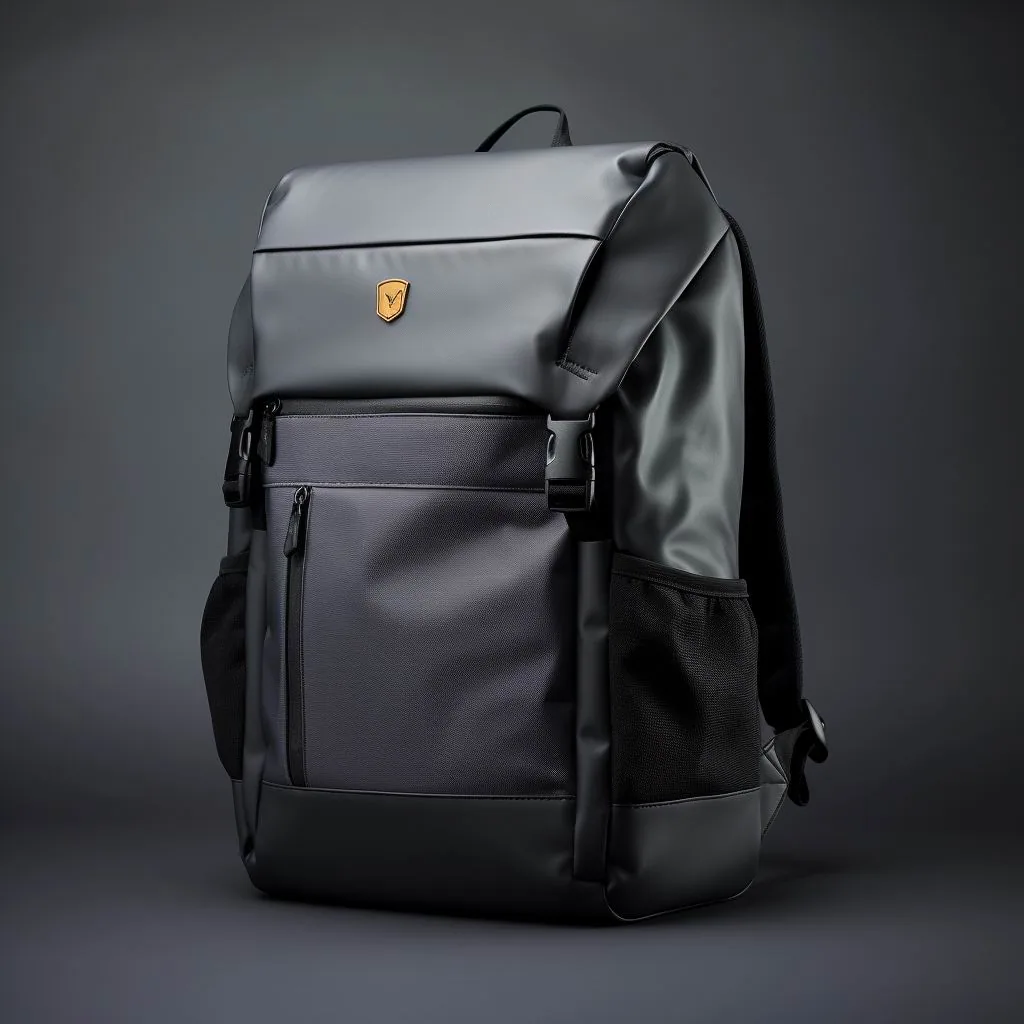
Choose by load, not by looks: measure the heaviest realistic day, then buy a bag whose internal volume handles it at around 80% fill with the shoulder straps still able to sit flat. For most sixth formers that is 25 to 32 litres — enough for A4 folders at 320 x 240 mm, a 13 or 14-inch laptop, a 750 ml bottle and a PE kit, without the slack that lets heavy items swing. Check three dimensions before buying: internal width above 300 mm for folders, a suspended laptop sleeve, and a harness with at least 70 mm straps. Take five minutes to load the bag properly the evening before, checking the next day's timetable rather than guessing, because a bag packed in a hurry is heavier, disorganised and far more likely to leave something important on the kitchen table. Check the timetable first and pack only what the next day actually requires, because unnecessary textbooks are the single largest source of avoidable weight in any school bag.
Weight matters more than capacity for this age group. A realistic A-level day carries 5 to 8 kg: two ring binders at around 900 g each, a laptop at 1.4 kg, textbooks up to 1.5 kg, PE kit 1.2 kg and a full bottle at 750 g. Many students are still growing, and the widely used guideline is 10% of body weight, which for a 65 kg seventeen-year-old is 6.5 kg — a figure most full days exceed.
That is why geometry beats volume. A 30-litre bag with poor load transfer causes more problems than a well-designed 26-litre one, because everything depends on where the weight sits relative to the spine. Look for a padded hip belt, load lifters and a frame sheet at least 3 mm thick, all of which are noted for each model in sixth form backpack reviews.
What Actually Goes Into a Sixth Form Bag?
Start with paper. A4 ring binders measure roughly 320 x 240 x 60 mm and weigh 700 g to 1.1 kg each when full; most students carry two or three. Add exercise books at about 200 g each, a pencil case at 300 g, a calculator, and a revision folder that grows steadily between January and May. Anything smaller than 300 mm internal width will bend every corner.
Technology adds up fast. A 13-inch laptop weighs 1.2 to 1.5 kg, chargers add 350 g, and a scientific calculator, headphones and a power bank add another 400 g between them. Most sixth forms now expect students to bring a device daily, which means a suspended sleeve is not optional — it is the difference between a laptop lasting three years and two terms.
Then there is everything else. PE kit twice a week at around 1.2 kg, a packed lunch at 800 g, a water bottle at 750 g when full, and a coat in autumn because nobody checks the forecast at 07:40. On days with sport, loads routinely reach 9 kg, which is precisely why a slightly larger bag with proper support beats a smaller one that cannot cope with the weekly peak. The load lists used by school backpack guides assume exactly that pattern.
| Carry pattern | Recommended volume | Typical daily load | Key feature needed |
|---|---|---|---|
| Light day, no laptop, no PE | 20 to 24 litres | 3 to 4 kg | Basic padding, one folder slot |
| Standard A-level day with laptop | 25 to 30 litres | 5 to 7 kg | Suspended sleeve, hip belt |
| PE or sports day plus laptop | 30 to 34 litres | 7 to 9 kg | Separate base compartment |
| Art or design subjects with portfolio | 32 to 38 litres | 6 to 9 kg | Flat panel above 450 x 350 mm |
| Commute over 30 minutes on foot | 28 to 32 litres | 6 to 8 kg | Load lifters, sternum strap |
| Tall students above 185 cm | 30 to 36 litres | 6 to 9 kg | Adjustable torso harness |
How Does Body Size Change the Calculation?
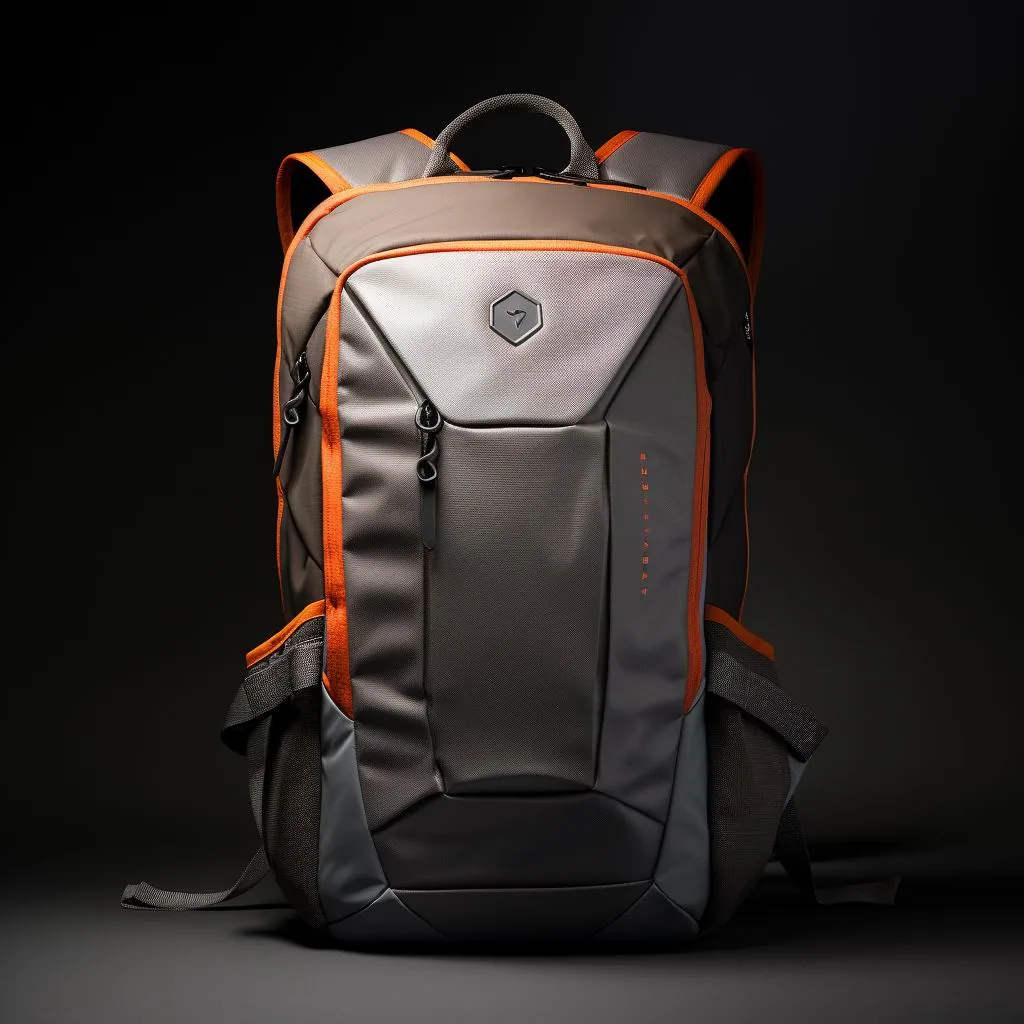
Torso length, not height, determines fit. Measure from the C7 vertebra — the bump at the base of the neck — down to the top of the hip bones: most seventeen-year-old boys measure 430 to 480 mm, which corresponds to a standard adult harness rather than a junior one. Anything outside that range needs an adjustable suspension or a different size entirely.
Strap geometry follows from there. A 65 kg student carrying 6.5 kg needs straps at least 70 mm wide with 10 mm of foam, because narrower webbing concentrates pressure over roughly 8,000 mm² instead of 16,000 mm² and produces numbness within about forty minutes. Padded hip belts transferring 30% to 40% of the load make a measurable difference on walks longer than fifteen minutes.
Growth is the complication. Sixth formers may add 30 to 60 mm of torso length in two years, so buying a bag with adjustable shoulder anchor points rather than a fixed harness is genuinely worth the extra £10 to £18. Bags with 80 mm of harness travel suit almost everyone from 160 cm to 190 cm, and they are the models flagged as adjustable across student backpack sizing.
Should the Bag Be Bigger Than the Weekly Peak?
Slightly, but not hugely. A bag that fits the heaviest day at around 80% fill is ideal: full enough that contents support each other without compressing, with 20% of slack for a coat or an unexpected textbook. Going much larger encourages carrying things nobody needs, which is how loads creep from 6 kg to 9 kg without anybody deciding to.
Oversizing has a second cost. Empty space lets contents move, and a 1.4 kg laptop sliding 100 mm with every stride applies repeated impact loads to the sleeve and to your back. Compression straps help, but they work best when there is something to compress against, which is why a correctly sized bag with modest slack outperforms a large bag cinched tight.
There is one exception. Students carrying art portfolios or design work need genuinely larger bags, typically 32 to 38 litres with a flat panel above 450 x 350 mm, because A1 and A2 work cannot be folded. If that applies, choose a larger volume but insist on load lifters and a hip belt, since the extra size brings extra temptation to overfill. Oversizing by more than about 20% lets contents swing, which is why volume bands exist across student backpack ranges.
Which Features Actually Matter for School Use?
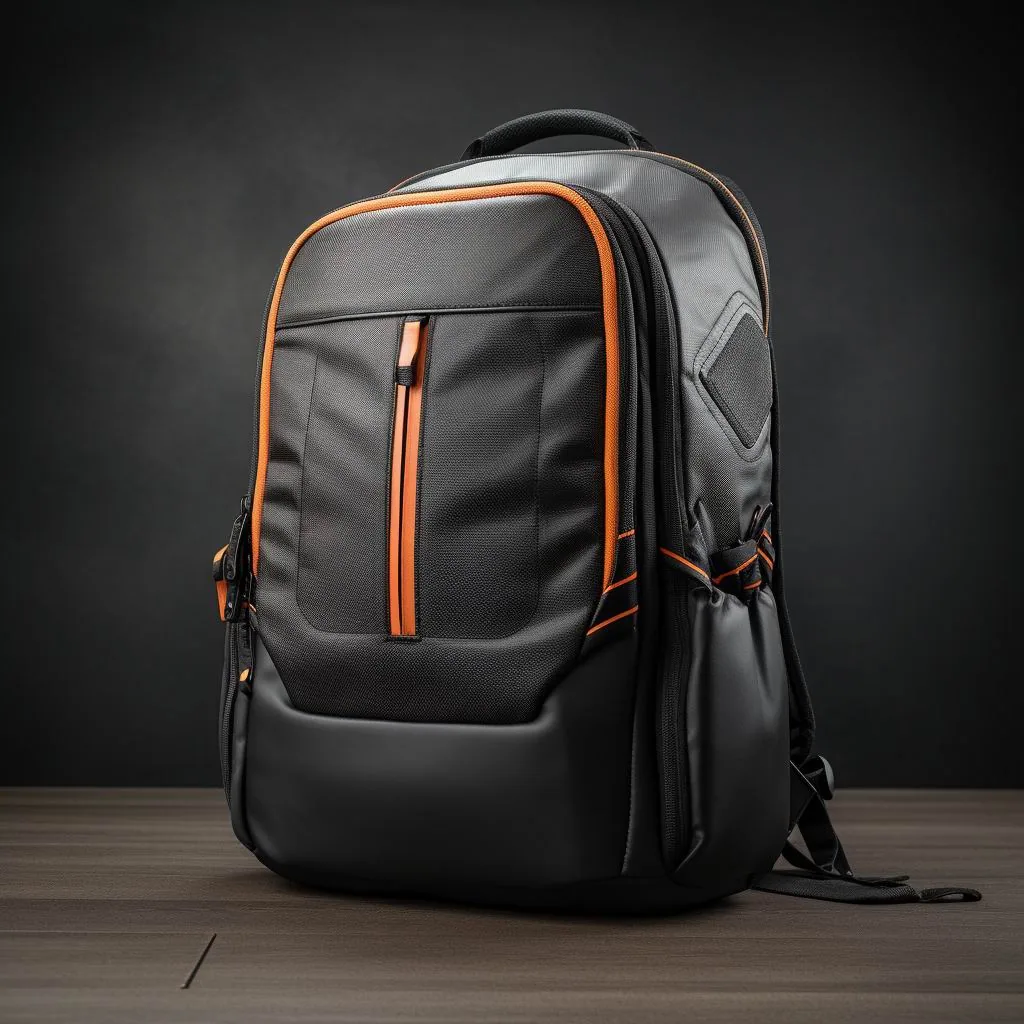
Ranked by value, four features matter most. A suspended laptop sleeve floating 10 mm above the base, which protects a device that costs more than the bag. A separate base or side compartment for PE kit, because wet kit and paper do not mix. A rigid A4 panel that keeps folders flat. And a genuinely waterproof shell or a rain cover rated to 1,500 mm, since sixth formers walk in whatever the British sky provides.
Pocket organisation comes next, and it is more useful than it looks. A dedicated slot for a water bottle prevents the single most common leak; a small zipped pocket for keys, bus pass and headphones saves five minutes of hunting every morning; and an internal mesh divider stops chargers migrating to the bottom where they grind against folders.
Then there is durability. Look for 600D polyester or 420D nylon rather than 210D linings, bar-tacked strap anchors rather than straight stitching, and zips from recognised makers. Sixth form bags get dragged along corridors and dropped on concrete daily, and the difference between a bag lasting two years and five is usually these three details, all of which appear in the specification tables for durable school backpacks. Reflective panels on three sides are the cheapest safety feature any school backpack can carry.
How Should the Load Be Distributed?
Heavy items low and close to the spine, light items high and outer. Textbooks and binders sit nearest your back at the base of the main compartment, laptop in the sleeve above them, lunch and bottle in side pockets, and PE kit in the base compartment where it belongs. Nothing heavy should ever sit more than 100 mm from your back.
Then set the harness properly each morning: hip belt on the iliac crest, shoulder straps pulled until the top of the pack sits 40 to 50 mm below C7, sternum strap 25 to 40 mm below the collarbone, load lifters last at 30 to 45 degrees. Ninety seconds of adjustment reduces perceived load by roughly 10% on a twenty-minute walk, which is the difference between arriving fine and arriving sore.
Carry it on both shoulders, always. One-shouldered carrying is the single most damaging habit in this age group, producing measurable lateral spinal curvature over a school year when repeated daily with 6 kg or more. It looks casual and costs posture, and no amount of ergonomic design compensates for it — a point repeated in every guide inside school backpack posture advice. Both shoulders, every time, regardless of what anyone else at school does.
How Should a Sixth Form Bag Be Set Up Each Morning?
Ninety seconds of setup removes most discomfort. Put the bag on, fasten the hip belt on the iliac crest first, pull the shoulder straps until the top of the pack sits 40 to 50 mm below the C7 vertebra, clip the sternum strap 25 to 40 mm below the collarbone, then take up the load lifters to a 30 to 45 degree angle. Repeat it daily and it becomes automatic within about a fortnight.
Load order comes next and rarely changes. Binders and textbooks flat against the back at the base, laptop in its suspended sleeve above them, pencil case and calculator in an internal slip pocket, water bottle upright in a side pocket, and PE kit sealed in the base compartment. Anything above 100 mm from the spine effectively increases perceived weight, so resist filling external pockets with dense objects.
Finish with a weekly reset, ideally on Sunday evening. Empty every pocket, shake out crumbs, wipe the lining with a pH-neutral solution at 5 g per litre, check strap stitching at the anchors and confirm the laptop sleeve still holds its shape. Fifteen minutes weekly prevents the slow descent into chaos that afflicts most school bags by November, and it is the routine recommended inside school backpack organisation. Print the routine and stick it inside a locker door for the first month.
What Budget Makes Sense for Sixth Form?
Expect to pay £45 to £90 for something that lasts three years, or £25 to £40 if you accept replacing it in two. The jump matters mainly in three components: harness foam density, zip quality and fabric denier. Below roughly £35, manufacturers save money on exactly those three, and the bag usually fails at a strap anchor or a zip within eighteen months.
Buy once, properly. A £70 bag lasting five years costs £14 a year, against £35 replaced twice at roughly £17.50 a year — and the cheaper option also spends two mornings being repaired or replaced mid-term. Ask about warranties too: several UK brands offer ten-year coverage on construction, which is worth more than any feature list.
Consider second-hand only with care. Used bags are fine if the harness has not taken a permanent set and the coating is not chalky, but check for hydrolysed linings, which smell faintly sweet and flake within months. Inspect strap stitching at the anchors under good light, and avoid anything whose frame sheet has cracked, because that damage is not repairable economically. Compare cost per year rather than sticker price, using figures listed for value school backpacks.
How Do Parents Check a Bag Is Still Safe?
Inspect monthly rather than waiting for failure. Look at four points: strap anchor stitching where webbing meets the shell, the base panel where abrasion concentrates, every zip along its full length, and the frame sheet inside the back panel for cracking. Any of those four failing means the load path is compromised, and continuing to carry 7 kg on it risks a failure at the worst possible moment on a staircase.
Watch for the quieter warning signs too. A lining that smells faintly sweet indicates coating hydrolysis, which spreads; webbing that has gone shiny and polished under buckles has lost section; and foam that no longer springs back when pressed has compressed beyond recovery. Each is progressive rather than sudden, which is exactly why monthly inspection catches them while they are still cheap to address.
Finally, replace on schedule rather than on sentiment. School bags working five days a week under 6 to 9 kg loads typically last three to five years at mid-range quality. Anything beyond that should be assessed against the model notes in replacement school backpack guidance before another September begins, because a bag that fails in week two costs twice as much as one replaced deliberately in August.
What Should Schools and Bulk Buyers Specify?
School procurement usually fails on sizing rather than quality. Specify three volume bands — 22, 28 and 34 litres — rather than one size for everyone, because a 160 cm year-twelve student and a 190 cm rugby player genuinely need different harnesses. Require adjustable torso travel of at least 80 mm, 70 mm straps with 10 mm foam and a suspended laptop sleeve as standard.
Then write down the commercial terms before sampling. Our standard position is MOQ 500 pcs per colourway, sampling in 6-10 working days including a loaded 8 kg carry test, bulk production 35-50 days, and inspection to AQL 2.5 (ISO 2859-1) using the tables published by ISO 2859-1. Fabric and trim durability should additionally be verified against methods in the ASTM standards library, because corridor abrasion is relentless.
Finish with the details that reduce complaints. Require wipe-clean linings in any compartment intended for PE kit, reflective panels visible from three sides for winter walking home, and printed care cards stating maximum load in kilograms rather than vague guidance. Our 4,950 m² SGS-verified production floor ships school orders with spare strap sets at 2% of volume, and our vetted partner facilities retain dye lots for eighteen months so replacement batches match existing stock, which matters to any institution ordering through school backpack supply.
Frequently Asked Questions
What size backpack is best for sixth form?
Usually 25 to 32 litres, chosen against the heaviest day rather than the average one. That covers two A4 binders at about 900 g each, a 13 or 14-inch laptop, a 750 ml bottle and PE kit. Aim for roughly 80% fill on the busiest day, and ensure internal width exceeds 300 mm so folders stay flat. Choose 25 to 32 litres against the heaviest day of the week. Internal width above 300 mm keeps A4 folders completely flat.
How much weight should a sixth former carry to school?
Around 10% of body weight is the standard guideline, so about 6.5 kg for a 65 kg student. Realistic A-level days run 5 to 8 kg and reach 9 kg with PE kit. Above that threshold, use a hip belt, wear both straps and redistribute rather than accepting it as normal. Loads reach about 9 kg on days with PE kit included. Split loads into two bags when the total exceeds about 9 kg.
Is a 20-litre backpack big enough for A-levels?
Only on light days without laptops or PE kit. A4 binders measure about 320 x 240 x 60 mm, so internal width must exceed 300 mm, and two binders plus a device quickly fill 20 litres to the point where folders bend. Most students need 25 to 30 litres for a standard week. Two binders plus a device fill 20 litres very quickly indeed. Art and design students need 32 to 38 litres with flat panels.
What size laptop sleeve should a sixth form bag have?
A suspended sleeve for a 13 or 14-inch machine, floating about 10 mm above the bag's base so impacts transfer slowly rather than instantly. Check internal dimensions against your device: 13-inch models measure roughly 300 x 210 mm and 14-inch around 320 x 220 mm, both needing a little clearance. Sleeves should float about 10 mm above the bag's base.
Should sixth formers use a hip belt on a school bag?
Yes, for loads above roughly 5 kg. A padded belt transferring 30% to 40% of weight onto the pelvis noticeably reduces shoulder pressure on walks beyond fifteen minutes. Even a slim 25 mm webbing stabiliser reduces lateral sway by about 40% on stairs and corridors. Padded belts transfer between 30% and 40% of the load. Slim webbing belts still cut lateral sway by roughly 40%.
How do I measure torso length for a school backpack?
Measure from the C7 vertebra at the base of the neck down to the top of the hip bones. Most seventeen-year-old boys measure 430 to 480 mm, which corresponds to an adult harness. Choose adjustable suspension with at least 80 mm of travel if you expect further growth over two years. Most seventeen-year-old boys measure between 430 and 480 mm.
Can carrying a backpack on one shoulder cause lasting damage?
Yes. Repeated one-shouldered carrying of 6 kg or more produces measurable lateral spinal curvature over a school year, and no ergonomic design compensates for it. Carry on both shoulders, tighten the sternum strap to 25 to 40 mm below the collarbone and adjust load lifters to 30 to 45 degrees. Lateral curvature appears over roughly one school year of daily use.
What fabric denier suits daily school backpack use?
At least 600D polyester or 420D nylon for the shell, with 210D minimum for linings. Anything lighter abrades through at the base within a year of being dragged along corridors. Check for bar-tacked strap anchors too, since straight stitching at load points fails within about eighteen months of daily use. Base panels take the most punishment on British school corridors.
How much should parents spend on a sixth form backpack?
Around £45 to £90 for something lasting three to five years, which works out at £14 to £18 annually. Below roughly £35, manufacturers economise on harness foam, zips and fabric, and those bags typically fail at strap anchors within eighteen months. Prioritise warranty length over features. Around £14 to £18 annually is the realistic cost of ownership. Ten-year warranties are offered by several UK brands at this level.
Is a waterproof bag needed for British winter school runs?
Yes, or a rain cover rated to 1,500 mm hydrostatic head costing £12 to £28. Water-resistant coatings handle about fifteen minutes of drizzle before wetting out, which is less than most walks home from a bus stop. Keep electronics in a separate dry bag on the wettest days. Covers rated to 1,500 mm cost between £12 and £28 in Britain.
How should PE kit be carried with school books?
In a separate base or side compartment, never sharing space with paper or electronics. Wet kit holds 300 to 400 ml of moisture and develops odour within twelve hours, and damp migrates into folders surprisingly quickly. Use a sealed wet bag costing £9 if the backpack has no dedicated space. Wet kit holds 300 to 400 ml and smells within about 12 hours.
What is the biggest sizing mistake for school bags?
Buying for the average day rather than the peak. Loads vary by 3 kg between a normal Thursday and a PE-plus-laptop Tuesday, so choose a bag that handles the heaviest day at about 80% fill. Oversizing by more than that lets contents swing, which is equally uncomfortable. Loads vary by roughly 3 kg between the lightest and heaviest days. Measure the heaviest day once and buy against that figure.
Should sixth formers pay extra for an adjustable harness?
Usually yes for this age group, since torso length can change 30 to 60 mm across two years. Bags with 80 mm of harness travel fit everyone from 160 cm to 190 cm and cost about £10 to £18 more than fixed versions, which is cheap insurance against a bag that no longer fits. Around £10 to £18 buys 80 mm of harness travel for growth.
What should schools specify when ordering backpacks in bulk?
Three volume bands rather than one — 22, 28 and 34 litres — plus adjustable torso travel of 80 mm, 70 mm straps with 10 mm foam and suspended laptop sleeves. Terms include MOQ 500 pcs, sampling in 6-10 working days, bulk production 35-50 days and AQL 2.5 inspection. Require reflective panels too. Three volume bands — 22, 28 and 34 litres — cover every student.
Get a Free Quote for Custom How to Choose a Sixth Form Backpack Size
Planning a branded programme? Our production team works to MOQ 500 pcs, 6-10 working day sampling and 35-50 day bulk lead times, with AQL 2.5 inspection to ISO 2859-1. Send your brief and we will return a costed quotation in 24-48 hours.
Mens Backpack Guide Editorial Team — Buying guides and sourcing notes for the UK men's backpack market, coordinated by QUANZHOU JUNYUAN BAGS. Commercial figures such as MOQ 500 pcs, 6-10 day sampling and 35-50 day production reflect published programme terms.