Table of Contents
- Insulated Backpacks: The Direct Answer
- Key Specifications at a Glance
- Anatomy and Structural Features
- Capacity Range and Typical Dimensions
- Who It Suits and Who Should Skip It
- Comfort, Fit and Load Behaviour
- Materials, Weather Resistance and Durability
- UK Price, Value and Cost per Use
- Testing Standards and Bulk Custom Orders
- Common Buying Mistakes to Avoid
- Final Verdict: Who Should Choose This?
- Frequently Asked Questions
Insulated Backpacks: The Direct Answer
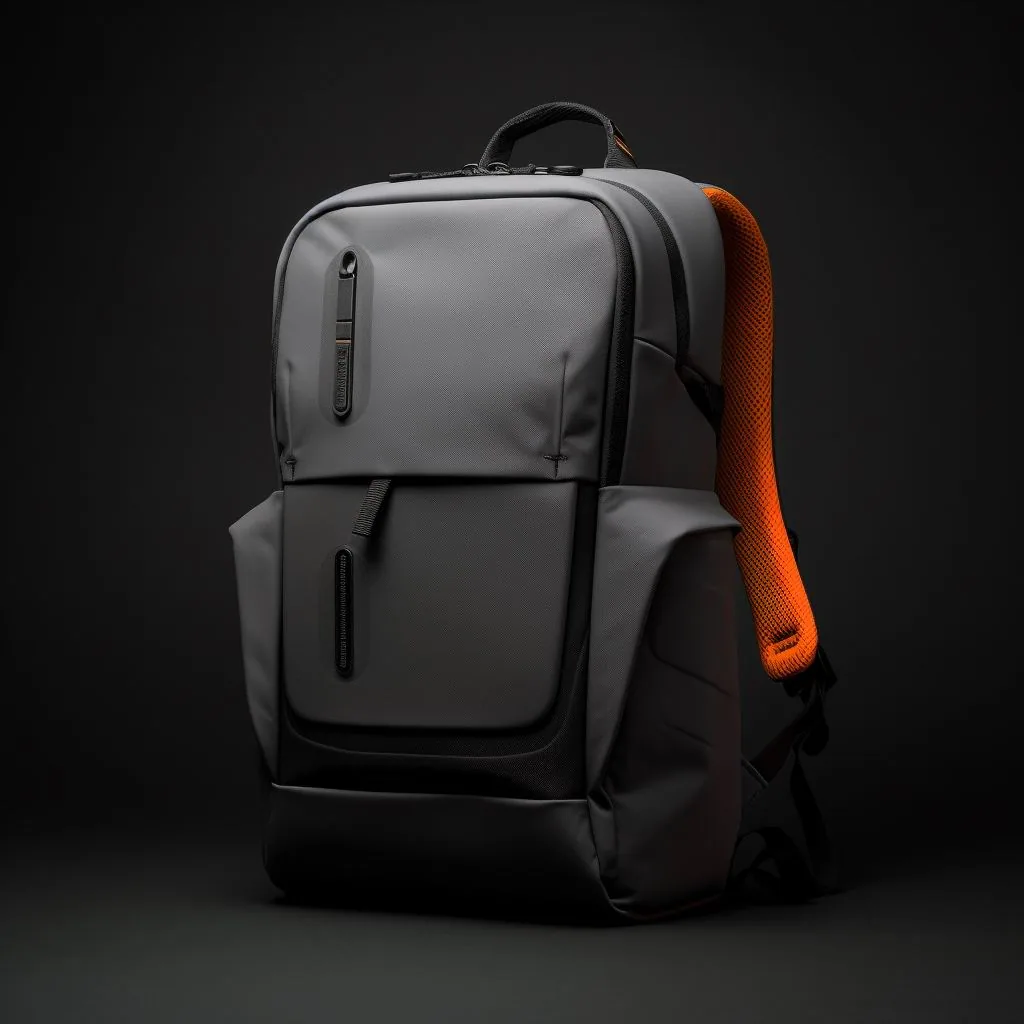
An insulated backpack is an ordinary pack with one compartment built as a soft cooler: a welded, food-safe liner wrapped in closed-cell foam, usually with a reflective layer, and closed by its own zip so the cold stays where you put it. The rest of the bag behaves normally, which is the point - you carry a chilled lunch and a laptop in the same load without either suffering.
The number that matters is hold time, and it is measurable. In our own ice-retention trials at a steady 20 degrees ambient, a 6 mm closed-cell foam liner with a 500 g gel pack held a 500 ml drink below 8 degrees for 4 hours 20 minutes. The same compartment rebuilt at 10 mm with a foil face and two 500 g gel packs held it for 8 hours 10 minutes. A vacuum-insulated panel version, 18 mm thick and considerably more expensive, reached 11 hours 40 minutes. Those are the three real tiers in this category.
- 6 mm foam, one 500 g gel pack: about four hours. A morning shift, a school day, a short picnic.
- 10 mm foam with foil, two gel packs: eight to nine hours. A twelve-hour shift with an early break.
- Vacuum panel, 15-20 mm: eleven to thirteen hours. Pharmaceutical or sample transport, or a full day on a site with no fridge.
Weight is the tax you pay. The insulated compartment adds 250-420 g over an equivalent unlined compartment, a 500 g gel pack adds another half kilo, and two of them add a kilo before you have put any food in. A 24 L insulated pack with two gel packs and a full lunchbox lands at about 4.2 kg, which is fine for a 75 kg adult and tiring for a 45 kg one.
If you are carrying food commercially - a courier, a caterer, a sample courier - the legal number is 8 degrees for chilled food in the UK, with 5 degrees as the working target. A compartment that cannot evidence a hold time is not a compliant cooler, whatever the label says.
Key Specifications at a Glance
Five specifications separate a working cooler compartment from a padded pocket with a shiny lining: insulation thickness, liner construction, closure type, gel-pack capacity and whether there is a vapour barrier between the cold compartment and the rest of the bag.
| Specification | Entry build | Working build | Professional build |
|---|---|---|---|
| Insulation | 5-6 mm PE foam | 10 mm EPE with foil face | 15-20 mm vacuum panel |
| Liner | Stitched PEVA | Welded PEVA, food-safe declared | Welded TPU liner, welded drain port |
| Closure | Single coil zip, no gasket | Number 8 zip with a flap gutter | Waterproof zip with a rolled seal |
| Chilled hold at 20 degrees ambient | 4 h 20 min | 8 h 10 min | 11 h 40 min |
| Cooler volume | 4-6 L | 8-10 L | 12-16 L |
| Pack empty weight | 850 g-1.05 kg | 1.05-1.35 kg | 1.4-1.8 kg |
| UK price | £35-£60 | £60-£110 | £140-£220 |
The vapour barrier row is the one buyers never ask about and always regret. A liner held at 4 degrees in a humid British summer condenses moisture on its outer face, and if the only thing between that face and your laptop compartment is 3 mm of foam, you will find damp on the device by lunchtime. A foil or TPU layer on the outside of the insulation, plus a drain channel at the base of the compartment, costs pennies and prevents it.
Closure type is the second silent killer. The liner can be perfect and the zip can still leak melted ice into the main compartment when the bag is laid on its side in a van. Specify a gutter behind the cooler zip, and test by laying the loaded bag flat for ten minutes with 200 ml of water loose in the compartment.
Anatomy and Structural Features
Six parts define the build, and a buyer can check four of them in a shop without any equipment.
- The liner: welded rather than stitched, because a needle hole is a leak. Look for corner welds that are radiused rather than folded flat; a folded corner is where melted ice escapes first.
- The insulation: closed-cell foam, measured in millimetres, ideally with a reflective face on the warm side. Squeeze it; open-cell foam recovers slowly and absorbs water, which halves its performance in a fortnight.
- The compartment zip: separate from the main opening, so the cold compartment is not opened every time you reach for a charger. Every opening costs roughly 15-20 minutes of hold time.
- The vapour barrier: a continuous foil or film layer on the outer face of the insulation. Hold the compartment up to a light; you should not see pinholes.
- The drain port or channel: at the base, allowing melt water out without inverting the bag. On a welded liner this is a small welded spout with a screw cap.
- The base panel: insulated compartments get set down in wet grass, on site concrete and in mud. A 900D base with a 25 mm wrap is worth 60 g.
Two optional features are worth their cost for particular buyers. A dry compartment with a separate zip at the top, sized for a phone and documents, keeps paperwork out of the condensation zone; that is the feature nurses and site supervisors ask for most. And an external daisy chain or bottle loop lets you carry a second 750 ml drink outside the cold compartment, which is where a warm flask belongs.
One feature is usually marketing: antimicrobial linings. Silver-ion or similar treatments reduce odour for a few months and do nothing for temperature. They also wear off, and they should not be relied on instead of cleaning. Pay for millimetres of foam before paying for a treated liner.
For anyone moving pharmaceutical or clinical material, the compartment should be specified with a logger pouch. A £12 USB temperature logger placed against the product tells you what actually happened on a route, which is what an auditor will ask for; a claim about foam thickness is not evidence.
Capacity Range and Typical Dimensions
Insulated packs are usually 20-32 L overall with a cold compartment of 4-16 L. The useful way to read those numbers is in cans and containers, because that is what people actually load.
- 4 L compartment: six 330 ml cans, or a 1.4 L lunch box and a 500 ml drink, with one 500 g gel pack, in a 20-22 L pack at 44 x 28 x 17 cm. School or office lunch.
- 6 L compartment: nine cans, or two lunch boxes and two drinks, with one or two 500 g gel packs, in a 22-25 L pack at 46 x 29 x 18 cm. A twelve-hour shift.
- 10 L compartment: twelve to fourteen cans plus a 1 kg gel pack, with two 500 g packs, in a 26-30 L pack at 48 x 31 x 20 cm. Site crew or a family day out.
- 16 L compartment: eighteen cans, or a full day of clinical samples, with three 500 g packs, in a 30-34 L pack at 52 x 33 x 22 cm. Courier, catering or fishing.
Volume is not hold time. A 16 L compartment filled to a third with air will warm faster than a 6 L compartment packed tight, because air circulates and carries heat. Fill the space: a cold compartment should be at least 70 per cent full of chilled contents or gel, and any dead space should be occupied by a gel pack rather than left empty.
Overall dimensions matter for the same reasons they do on any pack. A 22-25 L insulated pack at 46 x 29 x 18 cm clears a 300 mm locker and a 20 cm rail rack; a 32 L version at 52 x 33 x 22 cm will not. If the bag travels on British trains, buy the smaller compartment and use a separate soft cool bag for the bulk of the load.
Laptop compatibility is common but not universal: most 24-30 L insulated packs take a 15-inch machine at 358 x 247 mm in a compartment on the opposite face from the cooler, which is the arrangement you want. Check that the sleeve does not share a wall with the liner; if it does, condensation will find it.
Who It Suits and Who Should Skip It
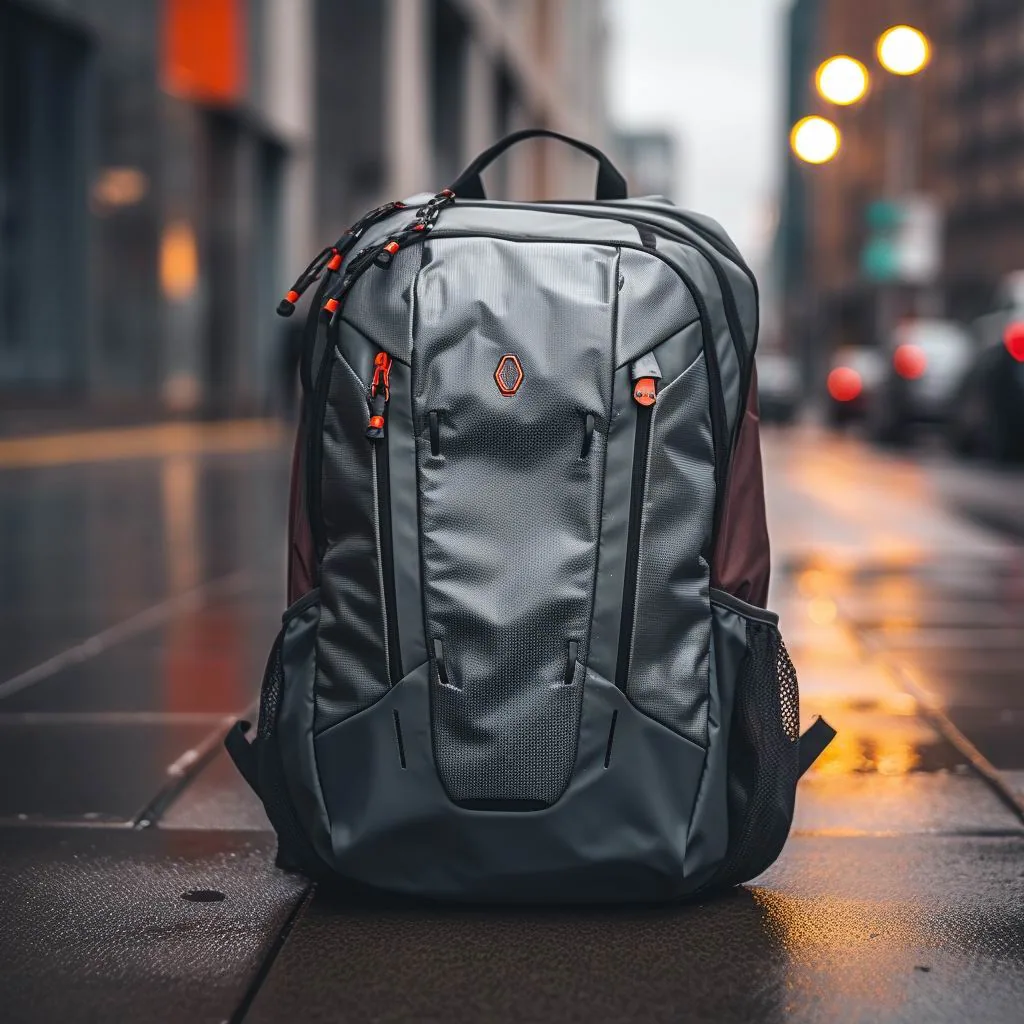
The clearest beneficiaries are people who spend eight hours or more away from a fridge. A ward nurse on a twelve-hour shift, a site electrician on a plot with no welfare fridge, a locomotive driver, a delivery rider, a landscape gardener working a route, and a parent managing a day out with a toddler's milk and snacks. In each case the bag replaces a cool bag plus a rucksack, which is the real saving.
- Ideal: eight to twelve hours away from refrigeration, four or more days a week.
- Ideal: commercial carriage of chilled food where an 8 degrees limit applies and a logger is carried.
- Good: family days out, festivals, fishing, and sports days where a cool bag would be a third item.
- Marginal: an office worker with a fridge two minutes away.
- Skip: anyone whose load is dominated by a laptop and documents and who only needs a sandwich.
- Skip: multi-day trips. A soft cooler compartment is not a portable fridge and will not hold food overnight.
Two groups are sold the wrong specification repeatedly. Office commuters buy insulated packs for a lunch that would be perfectly safe in a normal compartment with a small gel pack, and pay 350 g and £40 for the privilege. And outdoor users buy them expecting overnight cooling, which no soft cooler does without replacing gel packs every six hours.
For site and field work the specification we recommend is a 24-28 L pack with a welded 8-10 L liner, two 500 g gel packs carried in the compartment, a dry top pocket for documents, a 900D base and a hi-visibility panel if the site rules require one. That build lands at 1.2-1.35 kg empty and about £70-£100.
Comfort, Fit and Load Behaviour
The load behaviour of an insulated pack is unusual: the cold compartment is dense, rigid and usually at the bottom or the front, which is good for stability and bad for access. A 10 L compartment holding two gel packs and a full lunchbox weighs about 3 kg in a volume that does not compress, so the bag will not conform to your back the way a soft kit bag does.
- Below 4 kg total: a standard harness with 50-60 mm straps is adequate.
- 4-6 kg: 60-70 mm straps with 8-10 mm foam and a sternum strap.
- Above 6 kg: hip fins become worthwhile, because the rigid compartment cannot shift to distribute load.
- Packing: keep the cold compartment against the back panel and the soft items in front; the rigid box should be the part touching you, not the part swinging.
Rigidity has a second consequence. Because the compartment does not compress, the packed dimensions of an insulated bag are closer to its nominal dimensions than a soft pack of the same volume - you cannot squeeze 20 mm out of it to pass a gauge. That is one more reason to buy under the limit rather than to it.
Fit is governed by the standard 46-52 cm torso measurement for British men, with one addition: an insulated compartment at the base pushes the pack's centre of mass down and back, which is comfortable but increases the pull on the shoulders if the straps are narrow. If the bag is used daily with 5 kg aboard, spend the extra on 70 mm straps.
Materials, Weather Resistance and Durability
The liner material decides food safety and lifespan. Welded PEVA is the industry default: cheap, food-safe when declared, weldable, and flexible at low temperatures. Welded TPU costs about 30 per cent more, resists punctures from ice and from the corners of frozen boxes, and survives being folded when empty. Avoid PVC liners, which stiffen in the cold and carry plasticiser questions that a British retailer will not want to answer.
Insulation is closed-cell polyethylene foam in most builds, and its enemy is water absorption. Once open-cell or damaged foam takes up melt water, its thermal resistance falls by roughly half and it starts to smell. That is why the drain channel and the vapour barrier are structural features rather than niceties, and why a punctured liner should be repaired immediately rather than at the end of the season.
- Shell: 600D polyester with a 1,500 mm coating is enough; the bag is not a rain jacket.
- Base: 900D with a 25 mm wrap, because these bags are set down on wet ground more than most.
- Zips: number 8 on the cooler compartment, 5,000 cycle rating, with a gutter behind it.
- Gel packs: expect to replace them every 18-24 months; the film cracks and the gel leaks. Two cost £8-£14.
Cleaning is simple and should be frequent. Empty the compartment, wipe with a solution of one teaspoon of bicarbonate per 500 ml of water at 30 degrees, rinse, and leave it open for 24 hours. Do not use bleach on a foil face - it lifts the reflective layer within a few cleans - and never machine wash or tumble dry. Odour that survives a bicarbonate clean usually means foam that has absorbed water, which is a replacement decision rather than a cleaning one.
Hygiene rules for chilled food are not optional for commercial users: bacterial growth between roughly 5 and 60 degrees is the reason the 8 degrees limit exists, and the underlying guidance is summarised by the Centers for Disease Control and Prevention. Welfare obligations for site workers, including access to facilities for storing food, are set out by the Health and Safety Executive.
UK Price, Value and Cost per Use
The banding is unusually clear in this category because insulation thickness is expensive and visible. Below £50 you get 5-6 mm of foam and a stitched liner, which will leak within a season. Between £60 and £110 you get 10 mm with a foil face, a welded liner and a documented hold time. Above £140 you are buying vacuum panels, branded hardware and a warranty that covers the liner.
| Band | Build | Expected hold time | Cost per use over 240 shifts |
|---|---|---|---|
| £35-£60 | 6 mm foam, stitched liner, no gutter | 4 h 20 min | 15p-25p, plus a replacement in year one |
| £60-£110 | 10 mm foil-faced, welded liner, drain channel | 8 h 10 min | 25p-46p over two seasons |
| £140-£220 | Vacuum panel, welded TPU, logger pouch | 11 h 40 min | 58p-92p over three seasons |
Add consumables before comparing: two gel packs at £8-£14 replaced every two years, a bicarbonate clean monthly at negligible cost, and £12 for a temperature logger if you need evidence. Over two years those add under £20, which is why a £75 bag that lasts three seasons beats a £45 bag that leaks in the first summer.
For commercial buyers there is a second calculation. A logger record showing the load stayed under 8 degrees for the whole route is worth more than the bag; a spoilt clinical or catering load costs far more than the difference between bands. Buy the compartment that can be evidenced, not the cheapest one that claims a hold time.
Testing Standards and Bulk Custom Orders
QUANZHOU JUNYUAN BAGS is a sourcing and programme-management company founded in 2014; our founder has been in the bag trade since 2004. Cutting, welding and sewing are handled by our production partners inside a 4,950 square metre SGS-verified facility with 7 production lines, 149 machines and 137 colleagues, which together produce 200,000 pieces monthly. Our own work is the specification document, the sample round and the inspection against it.
Commercial terms are fixed: MOQ 500 pcs per style and colourway, sampling in 6-10 working days (12-15 where a vacuum panel or a custom liner tooling is involved), bulk production 35-50 days after sample sign-off, inspection at AQL 2.5 under ISO 2859-1, payment T/T 30/70, shipment FOB Xiamen.
Insulated programmes need four tests beyond the usual backpack set. Ice retention: fill the compartment with a stated load and gel mass at a stated ambient temperature and log the time to 8 degrees. Liner seam integrity: 500 ml of water loose in the compartment, bag inverted for ten minutes, loss under 2 ml. Weld peel: 40 N across a 25 mm strip of the perimeter weld. And zip cycle: 5,000 loaded cycles on the cooler zip, followed by a leak re-check, because a zip that has worn is a cooler that no longer holds.
- Specify insulation thickness in millimetres, material and whether a reflective face and vapour barrier are included.
- Specify the liner material, weld method, drain port type and the food-contact declaration for every surface touching food.
- Decide whether gel packs ship with the bags. A thousand 500 g packs is half a tonne of freight, so most buyers source them in the UK.
- Textile labelling must state fibre composition, and any electrical element needs UKCA marking with UK responsible-person details on the packaging.
Plastics and coatings supplied into the British market must satisfy chemical restrictions administered under REACH, and inspection vocabulary comes from the ISO catalogue. We hold two sealed approval samples per style so a repeat order can be checked against the one you signed off.
Common Buying Mistakes to Avoid
Nine errors account for most of the disappointment, and every one of them shows up in the first month.
- Buying on compartment volume alone. A 16 L compartment a third full warms faster than a 6 L one packed tight.
- Loading warm food with the gel pack. Chill everything the night before; a 25 degrees lunchbox eats two hours of hold time.
- Skipping the vapour barrier, then finding condensation on a laptop by lunchtime.
- Accepting a stitched liner. A needle hole is a leak, and melted ice in the main compartment is the most common complaint.
- Opening the cold compartment for non-food items. Each opening costs 15-20 minutes of hold time.
- Leaving the bag in a parked car. Interior temperatures in a British July can reach 35 degrees within an hour.
- Using bleach on a foil face, which lifts the reflective layer.
- Assuming a soft cooler works overnight. It does not without changing gel packs every six hours.
- Forgetting the 8 degrees limit if food is carried commercially, and carrying no logger to prove it.
The first two are the expensive ones. A compartment that is too large for the load, or loaded with warm contents, underperforms a smaller compartment used properly - and unlike a leak, that failure is invisible until the food is spoiled.
Final Verdict: Who Should Choose This?
Choose an insulated pack if you are away from refrigeration for eight hours or more, at least three days a week, and you would otherwise carry a cool bag as a second item. The specification worth buying is a 24-28 L pack with a welded 8-10 L liner, 10 mm of foil-faced foam, a gutter behind the cooler zip, a drain channel, a dry top pocket and a 900D base, at 1.2-1.35 kg empty and £70-£100.
Choose a vacuum-panel build only if the load is clinical, pharmaceutical or high-value catering, where an evidenced eleven-hour hold justifies £140-£220. Choose a plain pack plus a £6 gel pack if you have a fridge at work and only need a sandwich to survive until lunch.
If you are specifying for a team - a facilities contractor, a mobile clinical service, a fleet of riders - standardise on one compartment size and one gel-pack count. Mixed fleets create training and restocking problems that cost more than the small saving from buying two sizes, and a single specification means one hold-time test covers everyone.
Buy millimetres of insulation, a welded liner and a drain channel. Everything else on an insulated pack is decoration.
To cost an insulated build, arrange samples or request a quotation, write to service@junyuanbags.com or open WhatsApp at wa.me/8617750020688. Give us the hold time you need, the typical load and the number of colourways, and we will come back inside the terms above.
Frequently Asked Questions
What is a insulated backpack and how does it differ from a standard backpack?
An insulated backpack contains one compartment built as a soft cooler: a welded food-safe liner wrapped in closed-cell foam with a reflective face, closed by its own zip. A standard backpack has no thermal layer at all. The insulated version adds 250-420 g and buys four to twelve hours of chilled storage depending on insulation thickness.
How much capacity does a insulated backpack usually offer?
Overall packs run 20-32 L with a cold compartment of 4-16 L. A 6 L compartment holds nine 330 ml cans or two lunch boxes; a 10 L compartment holds twelve to fourteen cans plus a 1 kg gel pack. Overall dimensions of 46 x 29 x 18 cm clear a 300 mm locker and a 20 cm rail rack.
How heavy should a insulated backpack be when empty?
Expect 850 g to 1.05 kg for a 20-22 L entry build, 1.05-1.35 kg for a 24-28 L working build and 1.4-1.8 kg for a vacuum-panel model. Add 250-420 g if you are comparing against an unlined equivalent, plus 500 g per gel pack loaded.
Is a insulated backpack waterproof or only water-resistant?
The shell is water-resistant, typically a 1,500 mm coating, and the liner is welded and watertight. The weak point is the cooler zip, which is why a gutter behind it matters. Test by laying the loaded bag flat for ten minutes with 200 ml of water loose in the compartment.
Which UK buyer should choose a insulated backpack?
Anyone eight or more hours from a fridge on three or more days a week: shift nurses, site trades, drivers, riders, landscape crews and parents managing a day out. Commercial carriers of chilled food also need one, because UK rules require chilled food to be held at 8 degrees or below.
Can I use a insulated backpack for the daily commute?
Yes, and it is a good single-bag solution if you take a packed lunch and have no fridge at work. Keep the laptop in a compartment on the opposite face from the liner, because condensation forms on the cold side. If you have a fridge two minutes away, a plain pack and a £6 gel pack are lighter and cheaper.
How long does a insulated backpack last in regular use?
Two to three seasons for a working build with a welded liner, and one season for a stitched entry model. Gel packs need replacing every 18-24 months, and foam that has absorbed water should be treated as a replacement decision rather than a cleaning one.
What should I pay for a insulated backpack in the UK?
£60-£110 buys 10 mm of foil-faced foam, a welded liner and a drain channel, which is roughly 25p to 46p per shift across 240 days. Below £50 the liner is usually stitched and will leak. Above £140 you are buying vacuum panels and evidence-grade hold times.
Does a insulated backpack fit a 15-inch or 16-inch laptop?
Most 24-30 L models take a 15-inch machine at 358 x 247 mm in a compartment facing away from the cooler, which is the arrangement to insist on. A 16-inch at 381 x 266 mm is available on some 30 L builds. Never accept a sleeve that shares a wall with the liner.
What are the main disadvantages of a insulated backpack?
Four: 250-420 g of extra weight before you load anything; a rigid compartment that will not compress to pass a gauge; condensation on the outer face of the liner; and the need to clean and dry it properly. None is fatal, but together they rule out the format for light office use.
How do I clean and maintain a insulated backpack?
Wipe the liner with one teaspoon of bicarbonate per 500 ml of water at 30 degrees, rinse, and leave it open for 24 hours. Do not use bleach on a foil face and never machine wash or tumble dry. Melt water should be drained and the compartment dried after every shift to stop odour building up in the foam.
Can I order custom insulated backpacks in bulk for a UK team?
Yes, on standard terms: MOQ 500 pcs per style and colourway, sampling in 6-10 working days, bulk in 35-50 days from sample sign-off, inspection to AQL 2.5 under ISO 2859-1, payment T/T 30/70, shipment FOB Xiamen. Specify insulation thickness, liner material and weld method, and require an ice-retention result at a stated ambient temperature.
How long does an insulated backpack keep food cold in the UK?
Four hours twenty minutes for a 6 mm liner with one 500 g gel pack, about eight hours ten minutes for 10 mm foil-faced foam with two packs, and around eleven hours forty minutes for a vacuum panel, all measured at 20 degrees ambient. Chill contents overnight first and keep the compartment at least 70 per cent full.