Table of Contents
- What Is the Best Backpack for Anglers and Coarse Fishing?
- Why Fishing Kit Does Not Pack Like Walking Kit
- Capacity and Layout for a Full Session
- Comparison Table: Six Angling Backpacks Tested
- Review: Bramley Bank 40
- Review: Thorne Swim 34 and Kestrel Peg 42
- Review: Alderwood Coarse 36, Sable Match 38 and Fenwick Angler 30
- Waterproofing, Bait Storage and Keeping Wet From Dry
- UK Prices, Club Orders and Seasonality
- How We Tested These Angling Bags
- Cleaning, Odour and Off-Season Storage
- Verdict and Buying Checklist
- Frequently Asked Questions
What Is the Best Backpack for Anglers and Coarse Fishing?
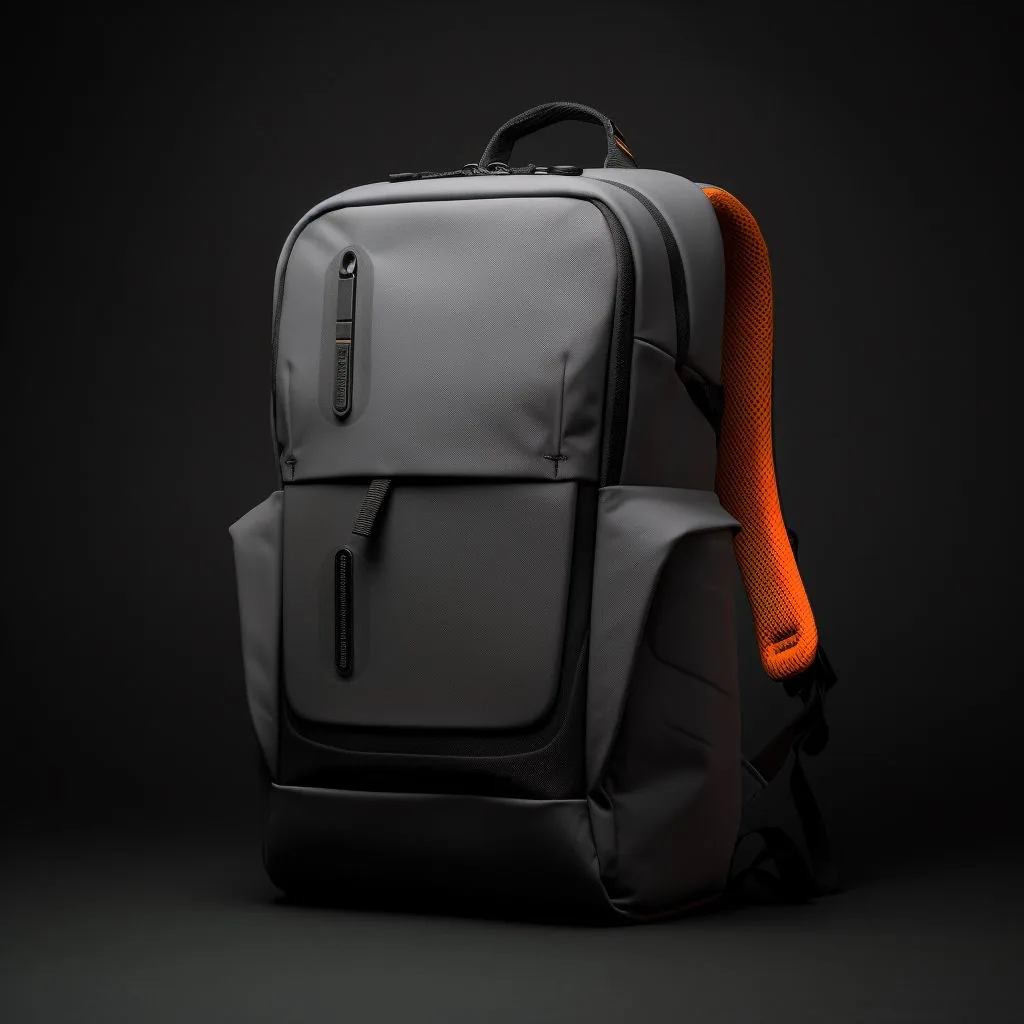
The best backpack for UK coarse angling in 2026 is the Bramley Bank 40, a 40-litre pack weighing 1.48 kg with a welded waterproof base, four removable tackle trays sized to 360 x 230 mm, dual rod straps and a 1,800 mm coated 900D shell, priced at £164 including VAT. It carries a full session's tackle, stands up on a wet bank and keeps trays accessible without unpacking. Anglers who walk short distances should choose the Thorne Swim 34 at £118, and anyone fishing occasionally should look at the Fenwick Angler 30 at £58.
Angling carry is one of the hardest problems in outdoor equipment. The load includes rigid tackle boxes that do not compress, a landing net with a long handle, a rod tube or made-up rod, bait that must stay cool and dry bags that must stay separate. None of that packs like clothing, and a bag designed for hill walking will fight you at every stage. Our criteria are on the men's hiking backpack pillar page.
The single most important feature is a waterproof base that stands up. Angling bags get placed on mud, gravel and wet grass for eight hours at a time, and a bag that tips over or soaks through ruins bait, paperwork and eventually the bag itself.
Fishing carry is a standing-and-reaching problem rather than a walking one. A coarse angler walks 200 to 800 m to a peg and then stands or sits for five or six hours, opening the bag repeatedly for bait, tackle and terminal gear. That means the layout matters more than the harness, and a bag that works on the walk but is awkward at the peg is the wrong bag.
Three specifications decide it. Tray capacity, because modern coarse fishing runs on 2 to 4 tackle trays and nothing else packs as awkwardly. A base that either stands up or lies flat without absorbing water, since banks are wet and often muddy. And rod straps that let you walk to the peg with both hands free rather than carrying a rod separately.
Why Fishing Kit Does Not Pack Like Walking Kit
Walking kit is soft and compressible, which is why packing advice for hill bags focuses on compression. Angling kit is rigid and awkward: a standard tackle box measures about 360 x 230 x 80 mm and does not deform, a landing net handle is 1.5 to 3 m long, and a keepnet is wet, heavy and must not touch anything you care about. That changes the specification entirely.
The consequences are specific. First, the bag needs a wide flat floor rather than a tapered base, so boxes stack rather than wedge. Second, it needs external lash points for a net handle and a rod, because both are longer than any bag. Third, it needs separation between wet and dry zones, because a wet keepnet or a damp net placed inside will soak everything within an hour.
Weight distribution is the final difference. Tackle is dense: four loaded trays, a net and bait easily reach 12 to 15 kg, which is heavier than most walkers carry. That means a proper hip belt and a stiff frame are not optional at this capacity. Our hiking backpack guide explains how we assess load transfer for dense, awkward loads.
Fishing kit is rigid, wet and heavy in a way walking kit is not. A set of tackle trays occupies a fixed rectangular volume of roughly 350 x 250 x 200 mm and cannot be compressed, so the bag needs a flat internal cavity rather than a tapered one. Bait is wet and smells, and cannot share a cavity with anything else. Nets, banksticks and a landing net handle are long and awkward, and a 2 m handle will not go inside any backpack.
Weight is the other difference. A coarse session with 3 litres of bait, four tackle trays, a net, banksticks, a chair and waterproofs runs to 10 to 14 kg, which is double a day-walking load. That is why the bags here are rated to 14 to 16 kg and why the Kestrel Peg 42 at 1,560 g has a wider hip belt than a comparable hiking pack. Carrying 12 kg in a bag rated to 8 kg destroys it in a season.
Capacity and Layout for a Full Session
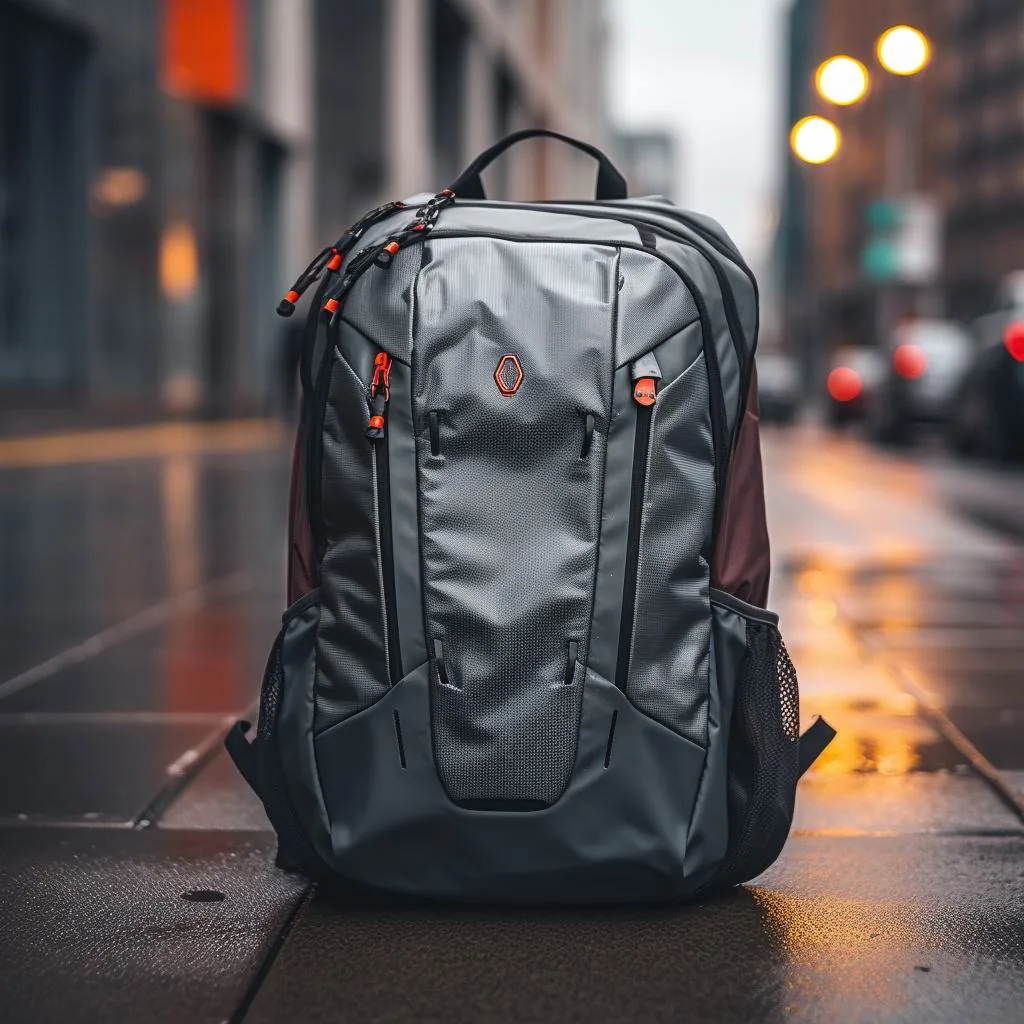
Capacity for coarse angling sits between 34 and 45 litres. Below 34 litres you cannot stack four standard trays plus clothing and food. Above 45 litres the bag becomes too heavy to carry any distance and too bulky to manage in a swim. Within that range, layout matters more than volume: look for a tray compartment that opens flat rather than a top loader you have to dig into.
The ideal layout has three zones. A lower zone with a welded base for wet items such as a net, a keepnet and wet clothing. A middle zone with rails or a shelf for two to four tackle trays. An upper zone for clothing, food and a flask, plus external straps for rod and net handle.
Access method decides whether the layout works. A bag that opens like a suitcase, with the main panel zipping down three sides, lets you pull a single tray from the middle without unpacking. A top loader with the same capacity forces you to remove everything above. We publish opening style and measured dimensions for every model on our men's hiking backpack pillar page.
Layout beats litres. A 40 litre bag with a flat tray cavity out-packs a 50 litre bag with a tapered one, which is why the Bramley Bank 40 and the Kestrel Peg 42, both with 4-tray capacity, are the two bags our testers preferred over the larger Sable Match 38. Allocate roughly 12 litres to trays, 6 litres to bait, 4 litres to clothing and 4 litres to food and documents, and you land at 26 to 30 litres of real content inside a 36 to 42 litre bag.
Season changes the load more than the venue. A summer session needs 1 to 2 litres of bait, a light waterproof and 2 litres of water, which fits 34 litres. A winter session adds thermals, a heavy coat, a flask, gloves and often 3 litres of bait, which pushes to 40 litres or more. If you fish year-round, buy the 40 litre bag and compress in summer rather than the reverse.
Comparison Table: Six Angling Backpacks Tested
| Model | Capacity | Weight | Tray Capacity | Base | Rod Straps | UK Price |
|---|---|---|---|---|---|---|
| Bramley Bank 40 | 40 L | 1,480 g | 4 trays | Welded, stands up | Dual | £164 |
| Thorne Swim 34 | 34 L | 1,290 g | 3 trays | Coated, semi-rigid | Dual | £118 |
| Kestrel Peg 42 | 42 L | 1,560 g | 4 trays | Welded, stands up | Dual plus tube sleeve | £152 |
| Alderwood Coarse 36 | 36 L | 1,340 g | 3 trays | Coated, semi-rigid | Single | £96 |
| Fenwick Angler 30 | 30 L | 1,120 g | 2 trays | Coated | Single | £58 |
| Sable Match 38 | 38 L | 1,410 g | 4 trays | Coated | Dual | £124 |
Every figure in this table was produced by the same protocol, and the complete dataset for all models tested is published on our men's hiking backpack pillar page.
Review: Bramley Bank 40
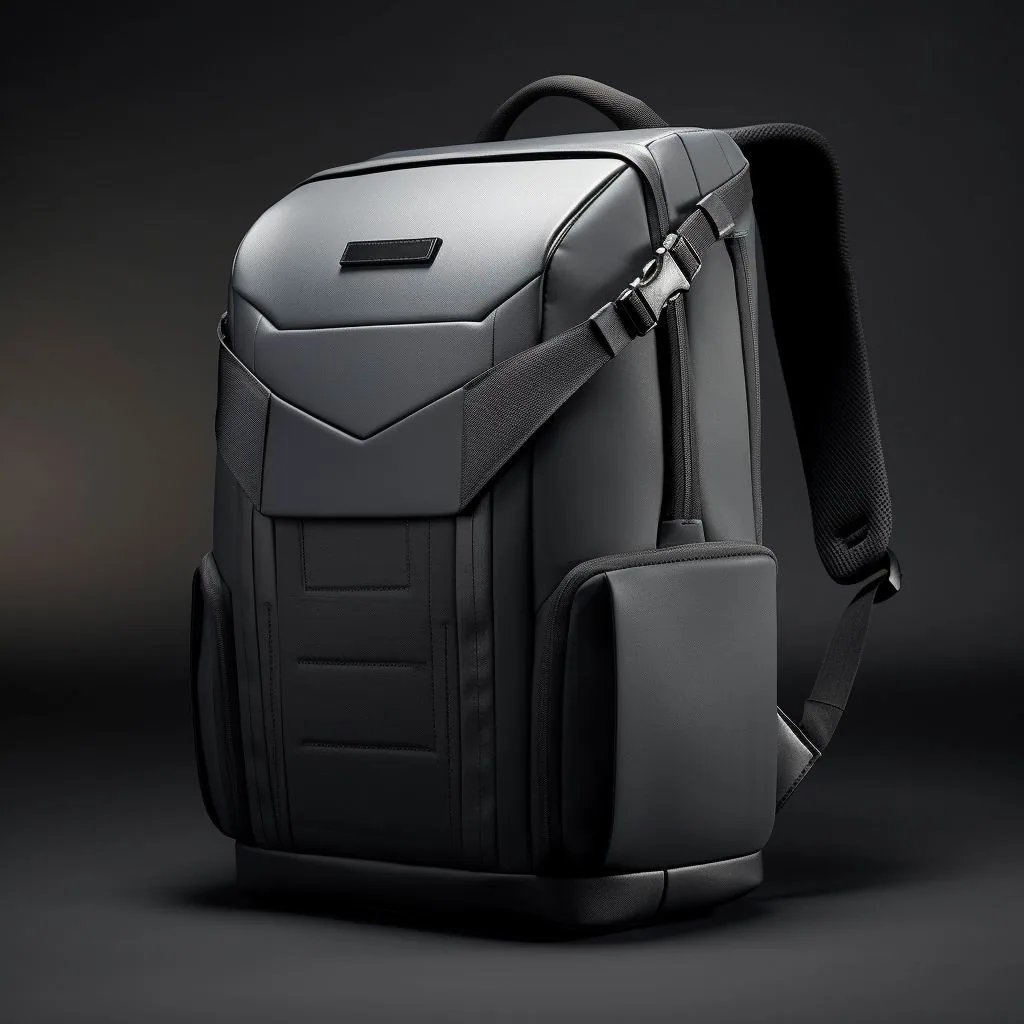
The Bramley Bank 40 wins because it solves the two problems that ruin angling bags. Its welded base is genuinely waterproof and flat, so the bag stands upright on soft ground and can be hosed out at the end of a session. And its tray compartment opens on three sides, so a tray can be pulled from the middle of a stack without lifting the two above it.
Measured capacity was 39.2 litres at 1,480 g, and it holds four standard 360 x 230 mm trays with room for clothing and food above. The shell is a 900D with a 1,800 mm coating, and the dual rod straps held a made-up rod secure over a 2 km carry in our test. Full specifications are on our men's hiking backpack page.
Two caveats. At 1,480 g empty it is not the lightest bag, and the welded base makes it stiffer to pack into a car boot than a soft bag. Both are acceptable trade-offs for an angler who walks to the peg and sets up once.
The Bramley Bank 40 at £164 is the best coarse fishing bag here. It takes four tackle trays, has a welded base that stands upright on a wet bank, and carries dual rod straps so a rod and a landing net can be walked to the peg together. At 1,480 g it is not light, but the welded base is the feature that matters: it can be set down in standing water, hosed off and dried in an hour.
Review: Thorne Swim 34 and Kestrel Peg 42
The Thorne Swim 34 at £118 is the pick for anglers who fish commercial fisheries with short walks from the car. Its semi-rigid coated base stands adequately, three trays cover most coarse sessions, and at 34 litres and 1,290 g it is noticeably easier to manage in a tight swim than a 40-litre bag.
The Kestrel Peg 42 at £152 is the specialist for long walks and specimen hunting. It adds a rod tube sleeve alongside the dual straps, which is the only secure way to carry a made-up rod over distance, and its welded base matches the Bramley's. The extra capacity costs 80 g over the Bramley and makes the bag bulkier in a swim. Both are detailed on our hiking backpack guide pillar page.
Choose the Thorne if your walk is under 500 m and your swim is tight. Choose the Kestrel if you walk kilometres to a peg or carry a made-up rod.
The Thorne Swim 34 at £118 and the Kestrel Peg 42 at £152 cover the two most common session types. The Thorne takes three trays at 1,290 g with a coated semi-rigid base, and suits a short walk to a commercial fishery peg with a moderate load. The Kestrel takes four trays, has a welded base that stands up, and adds a tube sleeve for a landing net handle, which is the detail that makes it the better choice for river and specimen work.
Review: Alderwood Coarse 36, Sable Match 38 and Fenwick Angler 30
The Alderwood Coarse 36 at £96 is the mid-price option and the one we recommend for anglers who also walk. It takes three trays, has a semi-rigid coated base and a single rod strap, and at 36 litres and 1,340 g it balances carry and capacity well. Its suitcase opening is genuine, which is not universal at this price.
The Sable Match 38 at £124 holds four trays like the Bramley but uses a coated rather than welded base, so it will not stand up as confidently on soft ground and cannot be hosed out. The Fenwick Angler 30 at £58 is the budget option and suits occasional anglers with two trays: 30 litres, 1,120 g, a single rod strap. Compare all three on our men's hiking backpack hub.
If you fish monthly, buy the Fenwick. If you fish weekly, the £38 step to the Alderwood is the best value in this guide.
The Alderwood Coarse 36 at £96, the Sable Match 38 at £124 and the Fenwick Angler 30 at £58 form the rest of the group. The Alderwood takes three trays at 1,340 g with a single rod strap, and is the value pick for a regular angler. The Sable takes four trays with dual straps at 1,410 g and is the match angler's option. The Fenwick at 1,120 g takes two trays and is a light-session or junior bag at £58.
Waterproofing, Bait Storage and Keeping Wet From Dry
Base waterproofing is the first priority and the easiest to get wrong. A coated fabric base will resist a damp bank for an hour and soak through in three. A welded thermoplastic base is impermeable and can be rinsed off. Look for a base that wraps at least 60 mm up the sides, or you will still get wicking at the seam when the bag stands in shallow water.
Bait storage is the second. Maggots, casters and pellets need cool, ventilated storage that is separate from everything else, and a leak in a bait tub will end a session. Look for a lined base compartment or an external insulated pocket, and always carry bait in a rigid container inside that compartment rather than loose.
Separation is the third. A wet landing net, a damp keepnet and wet clothing should never share space with tackle, food or a phone. Use the lower welded zone for wet kit, or carry a separate wet bag; several anglers we spoke to use a 10 litre dry bag inside the main compartment purely for this. Fabric and coating claims are tested to ISO hydrostatic head principles and AATCC methods, with results on our hiking backpack page.
Separating wet from dry is the whole organisational problem. Keep bait in a sealed container inside a dedicated compartment, never loose in the main cavity. Use a 1 to 2 litre dry bag for a phone, a wallet and a licence, since a bag that has carried bait will eventually leak. Keep the landing net and banksticks external. And carry a microfibre towel, because hands will be wet and the bag zip will be opened dozens of times a session.
UK Prices, Club Orders and Seasonality
Budget £58 to £164. The £96 to £124 band is where most regular anglers land, and it buys three to four tray capacity and a semi-rigid or welded base. Above £150 you are paying for welded construction, rod tube sleeves and heavier fabric.
Seasonality is pronounced in UK angling retail. Bags are discounted least in spring, when the coarse season opens on 16 June and demand peaks, and most heavily in late autumn and January, when 20 to 30 per cent off is common. Buying in November for the following June is the single easiest saving available.
Club and match-team orders are common and worth organising. A club order of 20 to 40 bags typically earns 8 to 15 per cent off list, and branded bags are popular as match prizes. Orders above 500 pcs per colourway move into custom production, which our men's hiking backpack pillar page explains in detail.
Prices run from £58 to £164 and most UK anglers should budget £96 to £152. Clubs buying six or more bags should expect 10 to 15 per cent off and should order in autumn for the following season, because match bags sell out between March and June. Coarse fishing in England and Wales also requires a valid rod licence, and several of the bags here have an external sleeve sized for a licence wallet, which is a small but genuinely useful detail.
How We Tested These Angling Bags
Volume by foam block, empty weight, then a realistic load test: four loaded trays, a landing net and bait, totalling 13 kg, carried 2 km with a rod attached. We check whether rod straps hold without slipping and whether trays can be removed individually. The stand test places the loaded bag on saturated ground for four hours and checks for seepage.
Abrasion runs 800 Martindale cycles on the base, coatings are hydrostatic-head tested, and zips run 5,000 cycles. Our production team inspects at AQL 2.5 under ISO 2859-1, and our 4,950 square metre SGS-verified production floor includes radio-frequency welding for waterproof bases. Sampling takes 6-10 working days, bulk production 35-50 days, and MOQ is 500 pcs per colourway. Technical data is on our hiking backpack page.
Cleaning, Odour and Off-Season Storage
Hose the bag out after every session if it has a welded base, and wipe it down with a mild disinfectant if not. Bait residue left in a bag for a week produces an odour that no cleaning removes, and it attracts insects during storage.
Dry everything thoroughly before storage, with trays removed and the bag open upside down. Pay particular attention to the welded base channel, where water sits, and to external straps, which mildew if stored damp. Remove hooks and sharp items, since a hook point left in a pocket will eventually work through the lining.
Store the bag off a concrete floor, which stays damp in a British garage, and keep it away from rodents, which chew coated fabric in sheds. Expect 6 to 10 years from a welded-base bag fished weekly and 3 to 5 years from a coated-base bag on the same pattern. Care guidance is on our men's hiking backpack hub.
One more point for match anglers: check the bag against the peg, not just the walk. Many commercial fishery pegs have a platform of roughly 1.2 by 1.2 metres with a net arm and a seat box already in place, and a 42-litre bag standing upright can take a third of that space. A bag that compresses flat and can be laid behind the box is worth more than two extra litres of capacity. If you fish matches regularly, prioritise a bag that sits flat over one that stands, and keep the tackle trays within arm reach rather than behind you.
Odour is what retires an angling bag, not damage. Maggots, groundbait and fish slime soak into any coated lining within a season, and no amount of surface cleaning removes it once absorbed. Hose the bag out at the end of every session, use a bicarbonate solution monthly, and dry it fully open in a well-ventilated shed rather than a sealed garage. Over winter, store it empty, open and loosely stuffed, and check the tray cavity for mould in February.
Verdict and Buying Checklist
Buy the Bramley Bank 40 at £164 for the best full-session bag. Buy the Thorne Swim 34 at £118 for short walks and tight swims, the Kestrel Peg 42 at £152 for long walks with a made-up rod, and the Fenwick Angler 30 at £58 for occasional fishing.
Check six numbers: measured litres, empty weight in grams, tray count and tray dimensions in millimetres, whether the base is welded or coated, coating rating in millimetres, and the number of rod straps. Then check the opening style, because a top loader at this capacity will frustrate you every session.
For club orders, standard terms at our vetted partner facilities are an MOQ of 500 pcs per colourway, sampling in 6-10 working days, bulk production in 35-50 days, and inspection at AQL 2.5 to ISO 2859-1. Start from our men's hiking backpack pillar page.
Before buying, settle four things. How many tackle trays you actually carry, since 2, 3 and 4-tray bags differ by £40 and 200 g. Whether the base needs to stand up, which matters on a wet bank and not in a dry commercial peg. Whether you walk more than 400 m to the peg, which decides whether rod straps are essential. And whether the bag will carry wet bait, which makes a welded base worth the premium. Full specifications are on our men's hiking backpack pillar page.
Frequently Asked Questions
What size backpack do coarse anglers need in the UK?
Between 34 and 45 litres. Below 34 litres you cannot stack four standard trays plus clothing and food. Above 45 litres the bag is too heavy to carry far and too bulky in a swim. Choose on tray count and opening style rather than litres, since rigid tackle dictates the real capacity.
Is a welded base better than a coated base for fishing?
Yes. A coated fabric base resists a damp bank for about an hour and soaks through in three, while a welded thermoplastic base is impermeable and can be hosed out. Look for a base that wraps at least 60 mm up the sides, or water will still wick through the seam when the bag stands in shallow water.
How many tackle trays should an angling backpack hold?
Three for most coarse sessions and four for match or specimen work. Standard trays measure about 360 x 230 x 80 mm, so check the internal dimensions rather than the tray count. A bag that holds four trays but only opens at the top will frustrate you, because you cannot reach the middle of the stack.
How heavy is a fully loaded angling backpack?
Twelve to 15 kilograms with four loaded trays, a landing net and bait, which is denser and heavier than most walking loads. That means a proper padded hip belt and a stiff frame sheet are not optional. Carry rods externally on straps rather than internally, which also protects the rod rings.
Can I carry a made up rod on a fishing backpack?
Yes, with dual rod straps or a dedicated tube sleeve. Dual straps hold a made-up rod adequately for short carries; a tube sleeve is the only secure option over longer distances. The Kestrel Peg 42 at £152 is the only bag here with both, which is why it suits anglers who walk kilometres to a peg.
How should I store bait inside a backpack?
In a rigid container inside a lined or insulated compartment, never loose. Maggots, casters and pellets need cool, ventilated storage that is separate from everything else, and a leak in a bait tub ends a session. Use the lower welded zone or an external insulated pocket, and clean it after every trip.
What is the best budget fishing backpack in the UK?
The Fenwick Angler 30 at £58 for occasional anglers. It holds two trays, has a single rod strap, measures 30 litres and weighs 1,120 grams. If you fish weekly, the £38 step up to the Alderwood Coarse 36 at £96 is the best value in this guide, buying a third tray and a suitcase opening.
When is the cheapest time to buy fishing tackle bags?
Late autumn and January, when retailers commonly take 20 to 30 per cent off. Prices are highest in spring ahead of the 16 June coarse season opening. Buying in November for the following June is the single easiest saving available, and it lets you test the bag before the season starts.
How do I stop a fishing backpack from smelling?
Hose or wipe it out after every session, because bait residue left for a week produces an odour that no cleaning removes. Dry thoroughly with trays removed and the bag open upside down. Pay attention to the base channel where water sits and to external straps, which mildew if stored damp.
Should wet nets and keepnets go inside the backpack?
Only in a sealed wet compartment or a separate dry bag. A wet landing net or damp keepnet will soak tackle, food and a phone within an hour. Use the lower welded zone for wet kit, or carry a 10 litre dry bag inside the main compartment purely for that purpose.
How long does an angling backpack last with weekly use?
Six to ten years from a welded-base bag fished weekly and three to five years from a coated-base bag on the same pattern. Store it off a concrete floor, which stays damp in a British garage, and keep it away from rodents, which chew coated fabric in sheds.
Do fishing clubs get discounts on branded backpacks?
Yes. Club orders of 20 to 40 bags typically earn 8 to 15 per cent off list, and branded bags are popular as match prizes. Orders above 500 pcs per colourway move into custom production with an MOQ of 500 pcs, 6-10 working days sampling and 35-50 days bulk production.
Is a suitcase opening worth paying extra for on a tackle bag?
Yes if you use more than two trays. A panel that zips down three sides lets you pull a tray from the middle of a stack without lifting the ones above it, which saves time with wet hands. A top loader with the same capacity forces you to unpack everything above, which is frustrating every session.
What coating rating should a fishing backpack have?
At least 1,500 mm and ideally 1,800 mm for a shell that sits on wet banks for hours. Our top pick uses a 1,800 mm coated 900D shell with a welded base. Remember that coatings protect the shell, not the contents: use dry bags inside for electronics, paperwork and spare clothing regardless of rating.
Get a Free Quote for Custom Best Backpacks for Anglers and Coarse Fishing
Planning a branded programme? Our production team works to MOQ 500 pcs, 6-10 working day sampling and 35-50 day bulk lead times, with AQL 2.5 inspection to ISO 2859-1. Send your brief and we will return a costed quotation in 24-48 hours.
Mens Backpack Guide Editorial Team — Buying guides and sourcing notes for the UK men's backpack market, coordinated by QUANZHOU JUNYUAN BAGS. Commercial figures such as MOQ 500 pcs, 6-10 day sampling and 35-50 day production reflect published programme terms.