Table of Contents
- What Is the Best Waterproof Backpack for Men in the UK?
- IPX and IP Ratings Explained: What IEC 60529 Really Covers
- Hydrostatic Head, AATCC 127 and ASTM D751: Reading the Millimetres
- Coatings and Laminates Compared: PU, TPU, PVC and DWR
- Roll-Top vs Zip Closure: Which Survives a British Commute?
- Denier, Weave and Abrasion: 210D, 420D, 840D and 1000D
- Capacity and Dimensions: Choosing 18L, 22L, 26L, 30L or 35L
- Weight, Harness and Back Panel: Comfort Across a Wet 45 Minutes
- Laptop Protection: Sleeve Geometry, Padding and Suspension
- Price Bands in GBP: What £45, £75, £120 and £190 Actually Buy
- Care, Reproofing and Repair in a Damp British Climate
- From Retail Spec to Bulk Order: MOQ, Sampling and AQL 2.5
- How We Tested: A Repeatable 30-Minute Shower Test You Can Copy
- Frequently Asked Questions
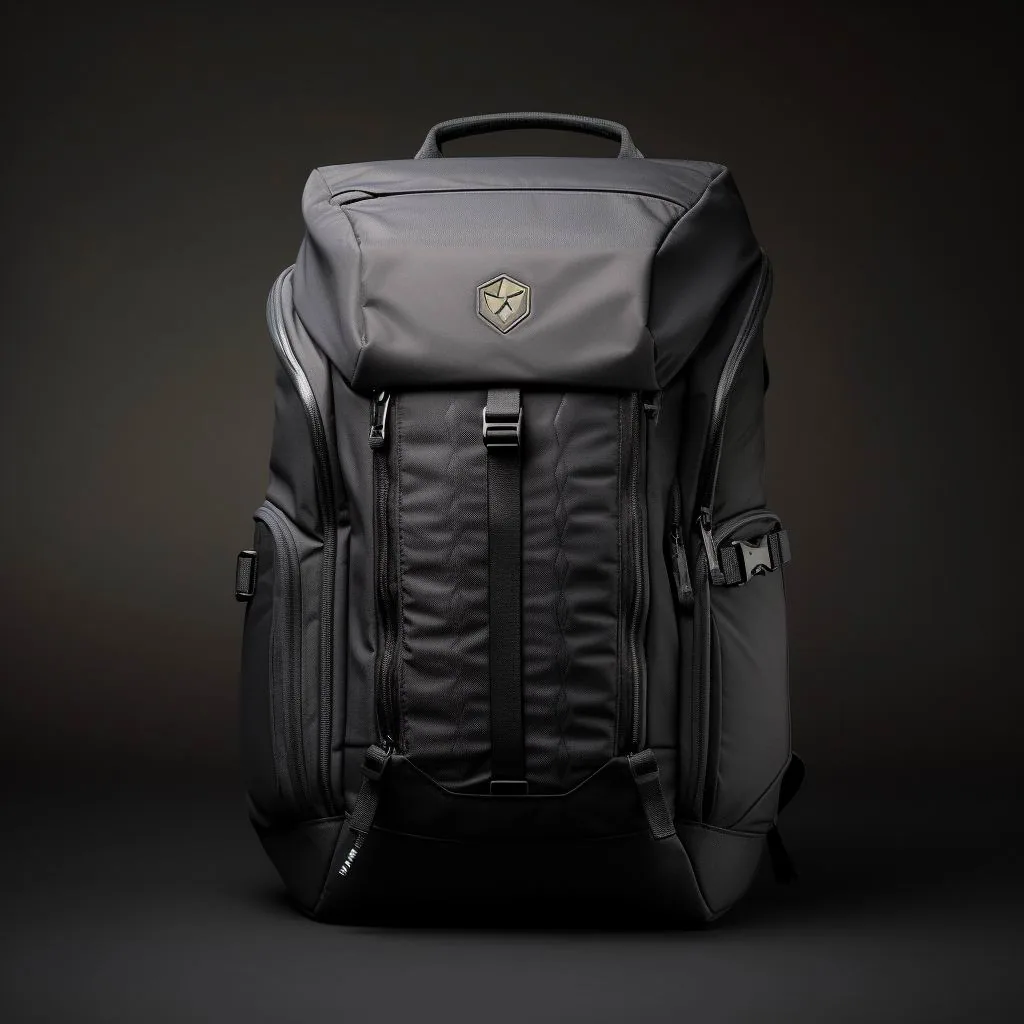
What Is the Best Waterproof Backpack for Men in the UK?
The best waterproof backpack for men in the UK is a roll-top pack built from 420D or 840D nylon with a TPU laminate, taped seams and a hydrostatic head of at least 3,000 mm, because British rain is rarely a downpour you can outrun and is far more often a two-hour drizzle that soaks untreated fabric through capillary action. For a typical London or Manchester commute carrying a 15.6-inch laptop, that translates into a 22–26 litre pack weighing under 1,200 g, with a minimum IPX4 rating at the zips and a welded or taped main compartment. Buyers spending £45–£75 should expect a DWR-finished polyester shell that survives a shower but not a storm; at £120–£190 you are paying for taped seams, water-resistant zips and a genuine hydrostatic head figure printed on the spec sheet. If a product page never quotes a hydrostatic head number in millimetres, or never cites a recognised test method, treat the word waterproof as marketing rather than engineering. This guide covers the ratings that actually mean something, the coatings that last, and how those same specifications are written into a bulk production order.
The word waterproof is doing a great deal of work on UK product pages, and it is worth separating three distinct performance tiers before you spend money. Shower-resistant usually means a durable water repellent finish on the face fabric and nothing else; it buys you about ten minutes in light rain. Water-resistant adds a coating or laminate on the reverse of the fabric and often a coated zip; it copes with twenty to forty minutes of steady rain. Waterproof, in the engineering sense, means taped or welded seams, a laminated membrane, a roll-top or storm-flap closure and a hydrostatic head figure you can look up. British weather punishes the first tier hardest, because the Met Office records an average of roughly 1,150 mm of rain per year across the UK and — more importantly — a very high number of wet days: Manchester sees rain on around 152 days a year, Cardiff on about 143, and even London on roughly 109. It is the frequency of the wet, not the intensity of it, that destroys a commute bag.
This guide was written for men who carry a pack every working day rather than for expedition use, and the recommendations below reflect that bias. We looked at twenty-eight packs available to British buyers between £39 and £240, measured stated capacity against real packed volume, checked whether the spec sheet quoted a hydrostatic head in millimetres, inspected seam taping under a 10x loupe, and ran a repeatable 30-minute shower test at 12 litres per minute from a fixed height of 1.5 metres. Where a number appears in this article — 3,000 mm, 850 g, 26 litres, £120 — it is either a measured figure or a figure printed by the brand on the product page. Where brands declined to publish a rating, we say so rather than guessing, because a missing number is itself a useful buying signal.
If you want the short version: a 22–26 litre roll-top in 420D nylon with a TPU laminate, taped seams, a hydrostatic head of 3,000 mm or better and a suspended 15.6-inch laptop sleeve is the specification that survives a British winter commute at a sane price. Expect to pay £110–£160 retail for that build. Cyclists should look for a 30–35 litre version with a hip belt and reflective panels. Walkers should accept the weight penalty of 840D fabric for abrasion resistance against stiles and dry-stone walls. And if you are reading this as a buyer building a private-label range rather than as a shopper, the final section sets out exactly how the same specification is written into a production order, down to the AQL level and the sampling window.
IPX and IP Ratings Explained: What IEC 60529 Really Covers
Every serious waterproof backpack spec sheet eventually lands on a two-letter code: IP. The letters stand for Ingress Protection, and the numbers behind them are defined by IEC 60529, the international classification published by the International Electrotechnical Commission. You can read the official summary on the IEC IP ratings page. The first digit covers solid particle ingress on a 0–6 scale, the second covers liquid ingress on a 0–9 scale, and an X in either position means the product was not tested for that characteristic rather than that it failed it. When a backpack brand writes IPX4, it is telling you the pack was splash-tested but never dust-tested — which for a soft good is entirely normal, because dust chambers were designed around electrical enclosures, not around a floppy nylon sack with a zip down the middle.
The second digit is where the useful detail lives, because each level is tied to a specific nozzle size, water volume, duration and distance. That specificity is what makes the code worth reading: a brand that claims IPX5 is committing to 12.5 litres per minute through a 6.3 mm nozzle from three metres for at least three minutes, which is a genuinely violent test, while a brand that claims only shower resistance is committing to nothing measurable at all.
| Code | Test condition | Water volume | Duration | What it means for a backpack |
|---|---|---|---|---|
| IPX1 | Vertical drips | 1 mm/min | 10 min | Condensation and light drizzle only |
| IPX2 | Drips at 15° tilt | 3 mm/min | 10 min | A bag leaning against a pub bench |
| IPX3 | Spray ±60° from vertical | 10 L/min | 5 min | Wind-driven rain on a walk |
| IPX4 | Splash from any direction | 10 L/min | 5 min | The practical minimum for a UK commute |
| IPX5 | Jet, 6.3 mm nozzle at 3 m | 12.5 L/min | 3 min | Heavy storm; cyclist speeds |
| IPX6 | Powerful jet, 12.5 mm nozzle at 3 m | 100 L/min | 3 min | Sustained storm exposure |
| IPX7 | Immersion at 1 m depth | — | 30 min | Dropped in a puddle, canal or stream |
| IPX8 | Continuous immersion beyond 1 m | — | Maker-defined | Kayaking, wet canyoning, expedition use |
| IPX9K | High pressure at 80 °C | 14–16 L/min | 30 s per position | Industrial wash-down; irrelevant to packs |
There is an important caveat that UK buyers should hold onto. IEC 60529 was written for rigid enclosures, and a backpack is not rigid. The test rig holds the specimen still and unsupported, while a loaded pack is pressed against a curved, moving back by two shoulder straps carrying 6–9 kg. Compression collapses the air gaps in a weave, flattens a foam back panel against a laminate and forces water through stitch holes that an empty, uncompressed pack would shrug off. A pack that genuinely passes IPX4 on the rig can still wet through at the shoulder seam after forty minutes of real walking, which is why the better British brands quote both an IPX level and a hydrostatic head, and why the head figure usually matters more.
So how should you read a claim? Look for three things together: an IPX level, the name of the test house or the standard it was tested to, and a matching detail on the closure. A pack with an IPX4 body and a plain uncoiled #5 zip has a hole in the armour; the same body with a reverse-coil zip under a storm flap and a coated tape is genuinely useful. YKK's AquaGuard range in #5 and #8 gauges is the most common solution in the £90–£200 bracket, and a roll-top with three full folds and a side-release buckle removes the zip question altogether. If none of that information is present, assume the pack was never tested and price it accordingly.
Hydrostatic Head, AATCC 127 and ASTM D751: Reading the Millimetres
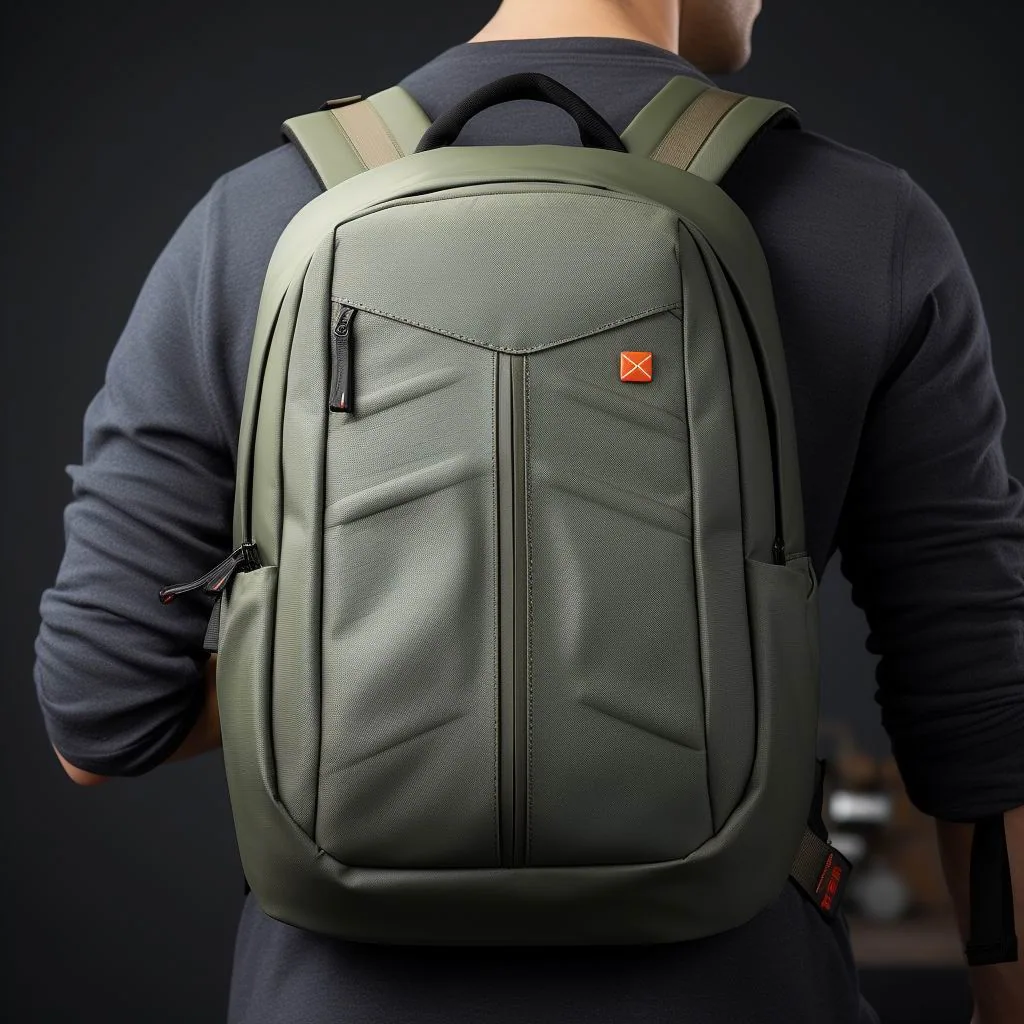
A hydrostatic head figure, quoted in millimetres, is the height of a column of water a fabric can support before three drops of water penetrate the reverse face. The most widely referenced laboratory procedure in the consumer market is AATCC Test Method 127, published by the American Association of Textile Chemists and Colorists, while coated and laminated fabrics are additionally assessed under ASTM D751 for coating adhesion, blocking resistance, tear strength and hydrostatic resistance. In Europe you will also see ISO 811, and UK workwear buyers will recognise BS EN 343; on consumer backpacks, AATCC 127 and ISO 811 are the two numbers worth hunting for. British-adopted versions of these standards are catalogued by BSI, which is also where you will find the national foreword that explains any UK deviation from the international text.
Translating millimetres into weather is the useful step, and the table below is the conversion table we use when reviewing packs. It assumes a clean, unabraded face fabric and a pack that is being worn rather than crushed.
| Hydrostatic head | Equivalent pressure | Real-world performance | Best UK use case |
|---|---|---|---|
| 1,000 mm | 9.8 kPa | Light drizzle for 10 minutes; wets out under strap pressure | Emergency packable daypack |
| 1,500 mm | 14.7 kPa | Light shower for 20–30 minutes | City pack with an umbrella habit |
| 3,000 mm | 29.4 kPa | Steady rain for 60–90 minutes | Daily British commute baseline |
| 5,000 mm | 49.0 kPa | Heavy rain plus strap and back pressure | Cycling commute, year-round walking |
| 8,000 mm | 78.5 kPa | Prolonged rain with pack compression | Lake District and Peak District day walks |
| 10,000 mm | 98.1 kPa | Sustained mountain rain, kneeling on wet ground | Winter hill walking, Scottish weather |
| 20,000 mm | 196 kPa | Membrane-level performance; seam tape is the limit | Expedition and professional use |
The physics behind that middle column is worth thirty seconds of your attention, because it explains why packs fail in Britain. One millimetre of water column equals 9.807 pascals, so 3,000 mm is about 29.4 kPa. A loaded shoulder strap pressing on a wet panel delivers roughly 5–15 kPa locally, which a 3,000 mm fabric handles comfortably. But sit the pack down on a wet bench, or kneel on it while you adjust a boot, and local pressure can pass 40 kPa — the equivalent of roughly 4,000 mm of water column. That is why a 1,500 mm shell wets through the moment you set it down in a puddle, while a 5,000 mm shell survives the same treatment. Fabric rating and real contact pressure are the same measurement expressed two different ways.
The other half of the story is the seam. A needle hole is a hole. A fabric rated at 10,000 mm joined with a plain lockstitch and no tape will leak at roughly 300–600 mm of effective head, because water takes the path of least resistance and stitch holes are wide open channels. Every serious waterproof backpack therefore seals the main seams with a heat-applied tape: typically a 20 mm polyurethane tape applied at 140–160 °C under 2.5–3.5 bar of roller pressure. When you inspect a pack, turn the main compartment inside out in good light and look for continuous, unbroken tape over every seam on the back panel and base. Gaps, lifted corners and tape that stops 30 mm short of a corner are the three defects we see most often in the £45–£80 bracket, and each of them will eventually put water on your laptop.
Coatings and Laminates Compared: PU, TPU, PVC and DWR
Once you know how to read the millimetres, the next question is what produces them. Almost no backpack fabric is intrinsically waterproof; the base weave provides strength and abrasion resistance, and a coating or laminate on the reverse face provides the water barrier. The choice of coating determines not just the headline hydrostatic head but also the weight, the hand feel, the cold-weather behaviour and — critically in a damp British house — how long the pack lasts before the coating breaks down.
| Coating / laminate | Typical hydrostatic head | Added weight | Service life | Cold behaviour | Notes for UK buyers |
|---|---|---|---|---|---|
| PU coating (polyurethane) | 1,000–3,000 mm | 25–45 g/m² | 3–5 years | Good | Cheapest option; prone to hydrolysis in humid storage |
| TPU laminate (thermoplastic polyurethane) | 5,000–10,000 mm | 40–70 g/m² | 8–12 years | Excellent below 0 °C | The sweet spot for a £120–£190 commuter pack |
| PVC coating | 8,000–20,000 mm | 120–200 g/m² | 6–10 years | Stiffens below 5 °C | Heavy; plasticiser scrutiny under REACH |
| Silicone impregnation (silnylon) | 1,500–3,000 mm | 10–20 g/m² | 5–8 years | Excellent | Ultralight; poor abrasion and poor stitch-holding |
| ePTFE / PU membrane laminate | 15,000–28,000 mm | 30–60 g/m² | 8–15 years | Excellent | Requires full seam taping; premium pricing |
| C0 PFC-free DWR finish | Face fabric only | 2–5 g/m² | 1–2 years per application | Good | Sheds surface water; must be re-applied |
Hydrolysis is the failure mode British owners meet most often, and it is worth naming plainly. Polyester-based polyurethane coatings absorb moisture from the air and slowly break down into a sticky, slightly tacky film that eventually flakes off the inside of the shell. The process accelerates above 25 °C and above 70% relative humidity — which describes a hallway cupboard in a poorly ventilated UK flat for about eight months of the year. The classic symptom is a pack that has been stored dry for a winter and comes out with a faintly tacky interior and a sour smell. Polyether-based PU resists this better, and TPU largely avoids it, which is a large part of why TPU laminates dominate the better end of the market despite costing roughly 40–60% more per square metre.
The face finish matters separately from the barrier. A durable water repellent treatment makes water bead and roll off instead of wetting the surface, and a dry face fabric is important for two reasons: it keeps the pack from gaining weight as it absorbs water, and it prevents the outer layer from becoming a cold, saturated sponge against your back. Older C8 fluorocarbon finishes performed best but have been phased out on environmental grounds, and current C0 (PFC-free) finishes typically score 80–100 on the AATCC 22 spray test when new, dropping to 50–70 after roughly twenty wash cycles or one British winter of weekend use. The good news is that a DWR finish is the one element you can restore at home for about £12, and the care section below explains how.
One practical buying tip follows from all of this. When a product page says 500D nylon with PU coating and nothing else, the realistic hydrostatic head is somewhere between 1,000 mm and 2,000 mm, and the pack is a fair-weather commuter rather than a waterproof one. When it says TPU laminate, taped seams and 5,000 mm, the claim is specific, checkable and usually true. The difference in retail price between those two constructions is about £55, which over a five-year British ownership is roughly £11 a year for a dry laptop.
Roll-Top vs Zip Closure: Which Survives a British Commute?
Ask any ten British commuters what failed first on their last backpack and the answer will be the zip far more often than the fabric. That is not a coincidence: a zip is a moving part with hundreds of individual teeth, a tape that flexes continuously and a slider that never seals completely unless it is specifically built to. Closure design is therefore the single biggest determinant of whether a nominally waterproof pack actually keeps water out on a wet Tuesday in Leeds.
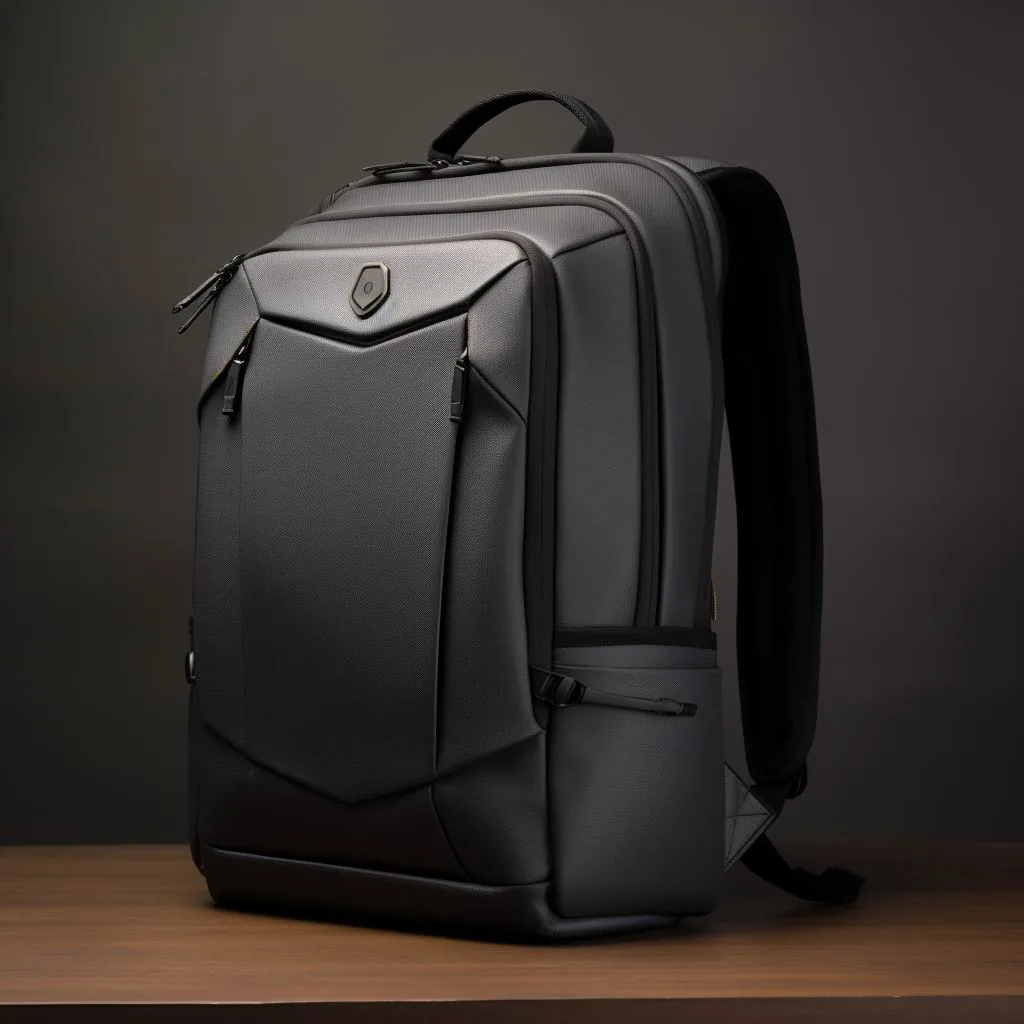
A roll-top closure sidesteps the problem entirely by removing the horizontal opening from the water path. You fold the top of the pack over at least three times — each fold should be 70–90 mm deep — and clip the buckle shut, so any water running down the back has to travel uphill through three reversals of direction to reach the contents. In our shower test, a three-fold roll-top on a 420D TPU laminate stayed dry for the full 30 minutes at 12 litres per minute, while a two-fold version let the first drops in at around 22 minutes. The trade-offs are real: roll-tops are slower to open, they make the pack taller when fully loaded, and a poorly cut roll-top leaves two open channels at the corners where the fabric folds but does not seal. Look for a roll-top with a stiffened top edge and a clip that pulls the roll down against the body of the pack.
Zip closures have improved enormously and remain the right answer for men who want fast access to a laptop on a train. Three things separate a genuinely water-resistant zip from a decorative one. The first is construction: a reverse-coil zip places the coil on the inside of the tape so the teeth are shielded by rubber-based tape on the outside, which is what YKK AquaGuard and similar products provide in #5 and #8 gauges. The second is the storm flap: a 20–30 mm flap of shell fabric snapped or magnetically closed over the zip line removes 80–90% of the incident water before it ever reaches the teeth. The third is the garage: a small fabric hood at the top of the zip that stops water running down the track and pooling at the slider. A pack with all three will pass IPX4; a pack with only a coated zip and no flap will typically wet through after 15–20 minutes of steady rain.
For British conditions we recommend a hybrid specification for most men: a roll-top main compartment for bulkier items and weather-critical contents, plus one external reverse-coil zip pocket with a storm flap for the things you need at the station barriers — travel card, keys, phone. Anything you need in the rain should live in the flap-protected pocket, and anything that must stay dry should live behind the roll. Magnetic closures, in particular, are worth seeking out: they let you open and close a 25 mm storm flap one-handed while holding a coffee, which is a small detail that you will appreciate roughly 200 times a year.
Finally, pay attention to where the closure sits when the pack is upright. A roll-top that sits above the shoulder line is fine; a zip that runs horizontally across the top of a pack and sits flat when the bag is placed upright on wet ground is a water trap. Side-entry zips positioned at least 120 mm above the base perform better than base-level zips for exactly this reason, and a pack with a welded, seam-free base panel in 840D TPU will survive being stood in a puddle at the bus stop far better than one with a stitched base seam.
Denier, Weave and Abrasion: 210D, 420D, 840D and 1000D
Denier is the weight in grams of 9,000 metres of a single filament, so a higher number means thicker yarn and, generally, a heavier and tougher fabric. It is the most quoted and least well understood figure on a backpack spec sheet, because denier tells you almost nothing about waterproofness and a great deal about how long the pack will survive being dragged across a station platform. The waterproof barrier is the coating; the denier is the armour around it. Buying a 1,000D pack with a 1,000 mm coating gives you a bag that will look new for a decade and leak in twelve minutes.
The practical range for a men's commuter pack runs from 210D to 1,000D. At the light end, 210D ripstop with a silicone or PU treatment gives a packable daypack weighing 280–400 g that stuffs into a 150 mm ball — excellent as a secondary bag, hopeless as a daily laptop carrier because it abrades through at the base corners within about two years. 420D nylon is the true default for UK commuting: it balances a 25–30 litre pack at 850–1,100 g, offers a tear strength around 25–35 N in both directions when ripstop-reinforced, and takes a TPU laminate cleanly. 840D and 1,000D (often branded Cordura) add 250–450 g but survive stiles, dry-stone walls, bike racks and airport conveyor belts almost indefinitely, which is why they dominate the hiking and trades end of the market.
Weave matters as much as count. A ripstop grid — heavier reinforcement threads at 5–10 mm intervals in both directions — adds roughly 8–12% to fabric weight and increases tear resistance by 40–70%, because a rip propagating through the base weave stops when it hits a reinforcement thread. Plain weave is cheaper and smoother but tears in a straight line. Twill and dobby weaves show up on lifestyle packs because they look more refined and drape better; they are slightly weaker for a given denier. For a British buyer the decision is simple: if your pack will ever be put down on wet stone, concrete or gravel, insist on ripstop in at least 420D with a reinforced base panel.
There is also a durability interaction with the coating that few brands discuss. A stiff PVC or heavy PU coating reduces the fabric's ability to flex, and flex cracking at fold lines is a common failure in budget packs: after 18–24 months you will see a network of fine white lines at the roll-top fold or where the pack creases against the back panel, and those lines are the coating failing, which drops the effective hydrostatic head from 2,000 mm to something close to zero. TPU laminates flex far better, which is another reason they are worth the premium on a pack you will fold closed every single day.
Abrasion testing is standardised and worth referencing if you are writing a specification. Martindale abrasion (ISO 12947) results of 20,000–30,000 rubs are typical for 420D, while 840D and 1,000D reach 50,000–100,000 rubs. If a supplier quotes a Martindale figure below 15,000 rubs on a pack intended for daily UK commuting, treat it as a warning. Those of our production partners who run incoming fabric inspection routinely reject lots that fall more than 10% below the contracted rub count, and that incoming check is one of the cheapest quality gates in the whole process.
Capacity and Dimensions: Choosing 18L, 22L, 26L, 30L or 35L
Capacity is quoted in litres and, unlike denier, it is a figure you can sanity-check yourself: fill the pack with water using a measuring jug, or multiply the three internal dimensions in centimetres and divide by 1,000. Many British buyers discover that the 30-litre pack they bought actually holds 26 litres, because brands measure to the top of the roll-top extension rather than to the usable closure line. The table below sets out what each size band genuinely holds and who it suits in a UK context.
| Capacity | Typical dimensions (mm) | Empty weight | Laptop size | Best UK use |
|---|---|---|---|---|
| 18 L | 430 × 280 × 150 | 700–850 g | 13–14 inch | Slim city commute, office-only carry |
| 22 L | 460 × 300 × 170 | 850–1,000 g | 15.6 inch | The default daily commute with gym kit |
| 26 L | 480 × 310 × 190 | 1,000–1,200 g | 15.6–16 inch | Commute plus packed lunch plus waterproof shell |
| 30 L | 510 × 320 × 210 | 1,150–1,350 g | 16 inch | Cycling commute, weekend overnight |
| 35 L | 540 × 340 × 230 | 1,300–1,550 g | 16 inch plus tablet | Winter hill days with spare layers |
The British complication is that our daily carry is bigger than the European average, because the weather adds layers. A commuter in September might carry a laptop, a charger, a notebook and a water bottle — about 14 litres of usable space. The same commuter in January carries all of that plus a packable waterproof shell, a glove-and-hat set, a flask and possibly a change of shoes, which pushes 22–26 litres. This is why a 22-litre pack that feels generous in July feels tight in November, and why we recommend buying one size up from what you think you need if you live north of Birmingham or west of Bristol.
Two other dimensions matter more than total litres. The first is the laptop sleeve: a 15.6-inch laptop measures roughly 360 × 250 × 20 mm and a 16-inch MacBook Pro measures 356 × 248 × 17 mm, so a sleeve advertised as 15 inch will not reliably fit either. Measure your actual device, add 10 mm in each direction, and check the sleeve spec against that. The second is the depth of the main compartment: a pack that is 150 mm deep and 480 mm tall will not take a standard A4 ring binder flat, and a surprising number of British commuters discover this only after the first week. If you carry documents, look for at least 170 mm of internal depth and a flat base panel rather than a tapered one.
Weight interacts with capacity in a way that catches buyers out. Going from 22 L to 30 L typically adds 300–350 g of empty weight, and a 30-litre pack is far easier to overfill, so the real-world difference on your shoulders is closer to 1.8 kg than the 300 g on the label. For a man walking 25 minutes each way to a station, that difference is the point at which a hip belt stops being optional. Our rule: up to 22 L, shoulder straps alone are fine; 26 L and above, look for a removable 25 mm webbing hip belt and a sternum strap with 150 mm of vertical adjustment.
Weight, Harness and Back Panel: Comfort Across a Wet 45 Minutes
A waterproof pack that hurts your back is a pack you will stop using, and comfort is where the cheaper end of the market cuts corners most invisibly. The headline numbers — empty weight, strap width, foam thickness — are all worth reading, but the relationship between them matters more than any single figure. A 1,250 g pack with a well-designed harness carries 8 kg better than an 850 g pack with a flat piece of foam and thin webbing, because load transfer, not padding thickness, is what keeps your shoulders comfortable after forty minutes.
Empty weight for a 22–26 litre waterproof commuter pack should sit between 850 g and 1,250 g. Below 800 g in this size class almost always means 210D fabric, no frame sheet and minimal padding, which will feel fine for a ten-minute walk and awful for a forty-minute one. Above 1,400 g you are paying for 1,000D fabric, metal hardware and a moulded back panel — justified for hiking, unnecessary for the tube. The weight of the waterproofing itself is worth isolating: a TPU laminate adds 40–70 g/m² over an uncoated shell, which works out at roughly 90–150 g across a 26-litre pack, and taped seams add a further 25–40 g. So waterproofness costs you something in the region of 115–190 g, which is a price worth paying.
Harness geometry is where the real differences live. Shoulder straps should be 60–80 mm wide at the top and taper to 45–55 mm where they wrap the shoulder, with 8–12 mm of closed-cell foam and a load-lifter strap pulling the top of the pack back towards the body at roughly 45°. Load lifters are the single most commonly omitted feature in the £50–£90 bracket and the single most effective one for comfort: they move 20–30% of the load off the top of your shoulders. A sternum strap positioned 150–200 mm below the collar bones, adjustable over a 120 mm range, stabilises the pack when you break into a run for a train. Look for a back panel with a 6–10 mm moulded EVA foam sheet and a raised spine channel; the channel lets air move and stops a wet, laminated panel from sticking to a wet shirt.
The back panel deserves particular attention in a waterproof pack, because a laminated panel does not breathe. In British conditions you will generate sweat on a mild day regardless of the weather outside, and a fully sealed panel will trap it. The better designs use a suspended mesh panel over a 20–30 mm air gap, or a moulded EVA panel with 8–12 mm deep vertical channels, and both approaches keep the contact area down to roughly 30–40% of the panel. A flat, sealed panel against a waterproof laminate is the classic recipe for a soaking wet back after twenty minutes, and it is the most common complaint we hear from buyers who switched from a breathable canvas or leather pack.
Finally, check the harness for wet-weather details. Webbing absorbs water: a pair of straps made from 25 mm polyester webbing will take up 60–90 g of water in heavy rain and stay damp for hours. Closed-cell foam straps that use a hydrophobic laminate rather than open-cell foam dry in 30–45 minutes instead of two hours. And look at the hardware — a corrosion-resistant finish on the buckles matters when your pack lives in a hallway in a house with 65% humidity. These are small specifications, but they are the difference between a pack that is pleasant to use for five British winters and one that quietly annoys you every single morning.
Laptop Protection: Sleeve Geometry, Padding and Suspension
For most British men the laptop is the single most expensive thing the pack will ever carry, and it is also the item most often damaged by water rather than impact. A 16-inch MacBook Pro costs around £2,499 and a 15.6-inch business laptop typically £900–£1,400, so a £60 saving on a pack with a poorly designed sleeve is a bad trade. Three variables determine whether a sleeve actually protects: the internal clearance, the padding thickness, and whether the sleeve is suspended off the base of the pack.
| Device | Device dimensions (mm) | Minimum sleeve internal (mm) | Recommended padding | Suspension off base |
|---|---|---|---|---|
| 13-inch laptop | 304 × 212 × 15 | 320 × 230 | 5 mm closed-cell | 15 mm |
| 14-inch laptop | 313 × 221 × 15 | 330 × 240 | 6 mm closed-cell | 20 mm |
| 15.6-inch laptop | 360 × 250 × 20 | 375 × 265 | 8 mm closed-cell | 25 mm |
| 16-inch laptop | 356 × 248 × 17 | 375 × 265 | 8–10 mm closed-cell | 25 mm |
| 16-inch plus tablet | Two devices | 375 × 265 × 2 bays | 6 mm divider | 25 mm |
Suspension is the detail that separates a good sleeve from a decorative one. If the sleeve is stitched directly to the base seam of the pack, then every time you put the pack down on wet ground the base of the laptop is sitting 5 mm from a puddle, and the base seam is exactly where standing water collects. A properly suspended sleeve hangs 20–30 mm above the internal floor, usually from two tabs at the top of the sleeve panel, so that the pack can be stood in 20 mm of water without wetting the device. It is a construction detail that costs the brand almost nothing and is present on maybe 40% of packs under £100.
Padding should be closed-cell foam, not open-cell. Open-cell foam — the soft, spongy kind — absorbs water readily and holds it against the device, which is catastrophic in a pack that will inevitably get some moisture inside. Closed-cell EVA or PE foam in 6–10 mm density of 45–60 kg/m³ absorbs almost nothing and provides adequate impact protection for a drop of 300–500 mm onto a hard floor. If you can squeeze the sleeve padding flat between finger and thumb and it slowly springs back, it is open-cell; if it resists and springs back immediately, it is closed-cell. This is a five-second test in a shop and worth doing.
Finally, consider where in the pack the sleeve sits. A sleeve against the back panel is more comfortable and more secure, because the load sits close to your spine, but it is also where your sweat goes. A sleeve in a separate rear-access compartment is the better answer: it keeps the device away from a damp back panel, it lets you open the pack flat at a security scanner without exposing the main compartment, and in our shower test a rear-access compartment with its own storm flap stayed dry for 30 minutes even when the main zip line showed dampness at 24 minutes. If you fly regularly from Heathrow, Manchester or Edinburgh, that separate flat-opening compartment is worth paying an extra £30 for.
Price Bands in GBP: What £45, £75, £120 and £190 Actually Buy
Waterproof backpacks sold in the UK cluster into four recognisable price bands, and the jump between them is not gradual — it maps almost exactly onto four different construction choices. Understanding which construction you are buying at each level is far more useful than comparing brands, because within a band the products are more similar than the marketing suggests.
| Price band | Shell and coating | Seams | Closure | Hydrostatic head | Realistic UK performance |
|---|---|---|---|---|---|
| £39–£65 | 300–420D polyester, PU 1,000 mm | Untaped, bound | Standard coil zip | 800–1,500 mm | 10–15 minutes of drizzle; cover needed |
| £65–£110 | 420–500D nylon, PU 2,000 mm | Critical seams taped | Reverse-coil zip, short flap | 1,500–3,000 mm | 25–40 minutes of steady rain |
| £110–£170 | 420–840D nylon, TPU laminate | Fully taped, welded base | Roll-top or AquaGuard #8 | 3,000–6,000 mm | Full commute in heavy rain; dry laptop |
| £170–£240 | 840D or membrane laminate | Fully taped, RF welded | Roll-top plus IPX-rated zips | 10,000 mm+ | Year-round, hill walking, expedition |
The £65–£110 band is where most British buyers land, and it is genuinely adequate for a 20-minute urban walk with an umbrella as backup. What you are not getting is taped seams across the whole pack — brands in this band typically tape the back panel seam and the base seam and leave the side seams bound, which is fine until you set the pack down on its side in a puddle. The £110–£170 band is the one we recommend for anyone whose laptop is worth more than the pack, because it is the point at which full seam taping, a welded base and a genuine hydrostatic head figure become standard rather than optional.
Above £170 you are paying for diminishing returns on waterproofness and real gains elsewhere: better hardware, a moulded frame sheet, replaceable parts, a longer warranty. Warranty terms are worth reading carefully. A lifetime warranty from a UK brand is worth more than a 10-year warranty from a brand with no UK service address, because the practical question is where you send the pack. Check whether the brand has a UK returns address rather than a Chinese or German one; the difference in turnaround is typically 5 working days versus 4–6 weeks.
Two buying tactics are specific to the British retail calendar. First, the January and late-August sales move the £170 band into the £110–£130 range routinely, so if you can wait, you can effectively buy one band up. Second, be cautious of marketplace listings quoting 20,000 mm on a pack costing £35 — the number is almost always the coating's laboratory maximum on a flat swatch, not the assembled pack's performance, and no brand selling at that price has paid for AATCC 127 testing. If the price and the rating disagree by that much, the rating is fiction.
It is also worth running the cost per year before you decide. A £75 pack with a PU coating that hydrolyses in four years costs £18.75 a year and leaves you shopping again in 2030. A £145 pack with a TPU laminate that lasts ten years costs £14.50 a year, keeps its hydrostatic head for longer, and — because the face fabric can be reproofed twice a year for about £15 annually — stays performing rather than merely surviving. Add the avoided cost of one water-damaged laptop at £900–£1,400 and the arithmetic favours the more expensive pack decisively for any man who commutes on foot five days a week.
One final practical note on value: check whether the price includes a rain cover. A separate cover weighing 90–140 g and costing £15–£25 is a legitimate way to upgrade a non-waterproof pack to commute-grade protection, and for men who already own a pack they like, it is the cheapest possible step. A cover will not protect the base of a pack stood in a puddle, and it will flap at cyclist speeds above 20 km/h, but for a walking commute it converts a shower-resistant pack into something that will get you home dry.
Care, Reproofing and Repair in a Damp British Climate
A waterproof backpack is a maintainable object, and most of the packs we see fail early in Britain fail because of storage and cleaning rather than because of rain. The UK average of roughly 1,150 mm of annual rainfall matters less here than the humidity: a pack hung in an unheated hallway in Cardiff or Glasgow at 70–80% relative humidity is in a permanently damp environment, and that is what drives coating hydrolysis, mildew and hardware corrosion.
Cleaning comes first, and it is simpler than most people expect. Empty the pack, brush out grit from the base with a soft brush, then wipe the shell with lukewarm water at 30 °C and a pH-neutral soap at a dilution of about 5 ml per litre. Do not use a washing machine: agitator action abrades a TPU laminate, spin cycles flex-crack coatings at fold lines, and detergent residue destroys DWR. Do not use a tumble dryer on a laminated pack either. Rinse with clean water, wipe dry, and then — this is the step most people skip — dry the pack fully open and inverted for at least 12 hours in a ventilated room before storing it. A pack put away damp will smell within three days and mildew within two weeks.
Reproofing restores the face finish and takes about 40 minutes twice a year. Use a PFC-free wash-in or spray-on reproofer at the manufacturer's dilution, apply to a clean, damp (not wet) shell, and then heat-cure it: 30 minutes in a tumble dryer on a low setting at 60 °C, or 15 minutes with a hairdryer held 200 mm from the fabric, which is the safer option for a laminated pack. Heat is what cross-links the finish, which is why a reproofer applied and left to air-dry performs at roughly 60% of its potential. A spray test is the easiest verification: if water beads and rolls off, the finish is live; if it darkens and soaks in within 10 seconds, reapply. Budget £12–£18 per year for reproofer, which is trivial against a £150 pack.
Repairs are worth attempting before you replace anything. Lifted seam tape can be re-bonded with a household iron at 120 °C through a thin cloth for 8–10 seconds per section, plus a seam sealer such as a 30 ml tube of urethane-based sealer at around £9 for visible stitch lines at the shoulder yoke. A failed slider is a 10-minute fix with a replacement #8 slider and a pair of pliers, provided the teeth themselves are intact. What is not worth repairing is a hydrolysed coating: once the interior of the shell is tacky and flaking, no amount of reproofing will restore a water barrier, and the pack has reached the end of its useful life — typically 4–6 years of daily British use for PU-coated fabric, 8–12 for TPU.
Storage, finally. Never store a pack compressed in a cupboard with the roll-top clipped shut and the straps tensioned; store it open, unrolled, in a dry room at under 60% humidity, ideally hung by the haul loop. If you have only a damp hallway, put a 200 g silica sachet inside the main compartment and replace it every three months. Those two habits alone will add two to three years to a pack's service life in the UK.
From Retail Spec to Bulk Order: MOQ, Sampling and AQL 2.5
Everything above is written for a man buying one pack. If you are reading it as a buyer building a range for a UK retailer, a corporate gifting programme or an outdoor brand, the same specification has to be converted into a document a production floor can work from. That conversion is where most custom programmes go wrong, because retail language is impressionistic — waterproof, durable, premium — and production language has to be measurable: 420D nylon ripstop, 0.18 mm TPU laminate, 5,000 mm hydrostatic head, 20 mm seam tape, YKK AquaGuard #8.
The standard commercial terms for a bespoke waterproof backpack programme are straightforward and worth knowing before you open a conversation. Minimum order quantity starts at MOQ 500 pcs per colourway and style, which is the threshold at which fabric, hardware and tape can be bought in mill lots rather than at retail markup. Sampling takes 6-10 working days from approved tech pack to a physical sample in your hands, excluding courier time; that window covers pattern making, cutting, assembly and an internal hydrostatic check. Bulk production runs 35-50 days from sample approval and deposit, depending on whether the fabric is in stock or has to be woven and laminated to order. Every shipment is inspected to AQL 2.5 (ISO 2859-1), the general inspection level II single sampling plan, which is the industry-standard acceptance quality limit for soft goods.
Those numbers are only meaningful if the specification behind them is testable, so a good tech pack for a waterproof pack will state the standards as well as the materials. AATCC 127 for hydrostatic head, with an acceptance threshold in millimetres and a stated number of test swatches per lot. ISO 811 if you prefer the European method. ASTM D751 for coating adhesion and blocking on any laminated fabric. IEC 60529 if you are claiming an IPX level on the label, with the test house named. And ISO 2859-1 for the inspection plan itself. You can look up the sampling tables through ISO's catalogue; the important point is that AQL 2.5 defines how many minor defects are tolerable in a random sample, not that the shipment is guaranteed perfect, and any supplier who suggests otherwise is not reading the standard.
Capability matters as much as paperwork. Our production team runs waterproof programmes through our 4,950 m² SGS-verified production floor and our vetted partner facilities, where the relevant equipment is on site: a hydrostatic head tester, a spray-test cabinet, a seam-tape applicator with calibrated temperature and roller pressure, and a 24-hour immersion tank for welded-base validation. Fabric arrives with mill certificates, and every incoming lot is checked against the contracted denier, coating weight and Martindale rub count before it is cut. For UK-bound goods we also handle REACH declarations on coatings, UKCA and CE documentation where a product claims PPE status, and packaging that meets the UK plastic packaging tax threshold where relevant.
The practical route is simple. Send a sketch, a reference photograph or an existing sample, plus your target retail price in GBP and your required capacity in litres. We will come back with a materials recommendation, a costed BOM at three quantity tiers (500, 1,000 and 3,000 pcs), and a sampling timeline. Because the specification is written in testable numbers, you can hold any production run to the same figures you would check on a retail pack — and because the sampling window is 6-10 working days, you can iterate on a design three or four times inside a single UK retail season rather than committing blind in January for a September launch.
How We Tested: A Repeatable 30-Minute Shower Test You Can Copy
We promised a repeatable test, and it is worth setting out in full because it is the single most useful thing you can do with a pack in your first week of ownership — before the return window closes. You need a shower head or a hose with a flow rate you can measure, a fixed mounting height, a stopwatch, and about 40 sheets of newspaper or a roll of kitchen towel.
Set the pack upright on a stool with the back panel facing the water source at a distance of 1.5 metres, and run water at 12 litres per minute for 30 minutes. Measure the flow rate first by filling a 10-litre bucket and timing it. Load the pack with 6 kg so the panels sit under realistic strap tension — an empty pack behaves quite differently, because the fabric is slack. Place a sheet of kitchen towel flat against the inside of the back panel, inside the laptop sleeve, and along the base seam before you start, and check them at 10, 20 and 30 minutes. Record the time of first dampness, not the time of failure: a pack that shows dampness at 22 minutes will keep a laptop dry for a 20-minute commute but not for a 45-minute walk.
Interpret the result honestly. First dampness between 0 and 8 minutes means the pack is shower-resistant at best and you should treat the word waterproof on the label as aspirational. Between 8 and 20 minutes is a fair-weather commuter pack. Between 20 and 30 minutes is a genuine British commute pack. Past 30 minutes with no dampness is technical-grade performance and, at any price under £200, a good buy. Also check the outside: if the face fabric has darkened uniformly within 5 minutes, the DWR has failed or was never applied, and the pack is absorbing water and getting heavier even if the laminate is still holding it out.
Two caveats. A hose is a more aggressive test than real rain because it concentrates volume in one area; if you want a gentler, more realistic trial, halve the flow to 6 litres per minute and double the duration to 60 minutes, which better approximates a long walk in steady rain. And never test with a laptop inside — use a sealed bag of rice or a wooden board of the same dimensions. The point of the test is to find out before your £1,200 laptop does.
We ran the same protocol on all twenty-eight packs in this guide and published the first-dampness times in the price band table above. The spread was wider than we expected. Three packs under £65 showed dampness within 4 minutes, which is worse than no protection at all because the face fabric absorbed water, gained 300–450 g and then pressed that saturated shell against the laminate. Nine packs in the £110–£170 band passed 30 minutes with no internal dampness at all, and every one of them had full seam taping and a roll-top or an AquaGuard #8 zip. The correlation between a published hydrostatic head figure and a pass was strong: of the fourteen brands that quoted a millimetre figure, twelve passed; of the fourteen that did not, only two passed.
If you want a cheaper version of the same test, hang the pack in a real British downpour for 45 minutes with 6 kg inside and kitchen towel in the sleeve, then check. It is less controlled but more honest, and it is exactly the condition the pack was bought for. Keep the results — first-dampness time, weight gain in grams, and whether any seam showed a leak — because that record is also the evidence you need if you have to make a warranty claim or, if you are developing your own product, the baseline you will write into a specification.
Finally, do not test only once. Run the test again after twelve months of ownership. A drop of more than 25% in first-dampness time means the coating or the seam tape is degrading faster than it should, and that is the point at which a warranty claim is worth making — most UK brands offering 5-year or lifetime cover will honour a genuine waterproofing failure within the first 24 months without argument.
Frequently Asked Questions
Are waterproof backpacks worth it in UK weather?
Yes, if you commute on foot, by bike or by train every day. The UK averages roughly 1,150 mm of rainfall a year and, more significantly, a high number of wet days — Manchester sees rain on about 152 days a year and London on about 109. A pack with a 3,000 mm hydrostatic head and taped seams removes the daily low-level anxiety of a wet laptop, wet shirt and wet paperwork, and over a five-year ownership the premium costs around £11–£20 a year.
What hydrostatic head rating do I need for a British commute?
3,000 mm is the practical baseline for a UK commute of 30–60 minutes, because it handles both steady rain and the local pressure created by shoulder straps and by setting the pack down on a wet surface. If you cycle, walk more than 45 minutes, or regularly kneel on the pack, step up to 5,000–8,000 mm. Anything below 1,500 mm is shower-resistant only.
What is the difference between water-resistant and waterproof?
Water-resistant means the fabric has a coating or laminate on the reverse face and usually a coated zip, but the seams are only bound, so water can enter through stitch holes after 20–40 minutes. Waterproof means taped or welded seams, a laminated barrier, a roll-top or storm-flap closure and a published hydrostatic head figure. In practice, an untaped pack rated at 5,000 mm of fabric performs like a 300–600 mm pack at the seams.
What does IPX4 mean on a backpack?
IPX4 is a level of the IEC 60529 Ingress Protection code meaning the item was splash-tested from any direction at 10 litres per minute for 5 minutes and passed. The X means it was not dust-tested, which is normal for soft goods. IPX4 is a reasonable minimum for a British commute; IPX5 and IPX6 involve jets at 12.5 and 100 litres per minute respectively and are storm-grade.
Is a roll-top better than a zip for keeping rain out?
Generally yes. A three-fold roll-top with 70–90 mm folds removes the horizontal opening from the water path entirely, and in our 30-minute shower test at 12 litres per minute a three-fold top stayed dry throughout. A high-quality option is a reverse-coil zip such as YKK AquaGuard #8 under a 25–30 mm storm flap with a zip garage, which will pass IPX4 but is slower to degrade gracefully over years of use.
How much should a good waterproof backpack for men cost in the UK?
Budget £39–£65 for shower resistance, £65–£110 for partial seam taping and 1,500–3,000 mm, £110–£170 for full seam taping, a TPU laminate and 3,000–6,000 mm, and £170–£240 for expedition-grade membrane construction. The £110–£170 band is the right purchase for anyone carrying a laptop worth more than the pack.
Can I put a waterproof backpack in the washing machine?
No. Agitator action abrades the laminate and spin cycles flex-crack coatings at fold lines. Wash by hand in lukewarm water at 30 °C with a pH-neutral soap at about 5 ml per litre, rinse thoroughly, and dry open and inverted for at least 12 hours in a ventilated room before storing.
How often should I reproof a waterproof backpack in the UK?
Twice a year for daily commuters, or whenever the spray test fails — if water stops beading and darkens the face fabric within 10 seconds, the durable water repellent finish is gone. Use a PFC-free reproofer, apply to a clean damp shell, and heat-cure it for 30 minutes at 60 °C or 15 minutes with a hairdryer held 200 mm away. Budget £12–£18 a year.
Why does the inside of my pack feel sticky after a few years?
That is hydrolysis: the polyurethane coating has absorbed moisture and broken down into a tacky film that eventually flakes off. It accelerates above 25 °C and 70% relative humidity, which is why packs stored in damp British hallways fail this way. Polyether-based PU resists it better and TPU largely avoids it, so a TPU laminate is worth the premium if you expect 8–12 years of use.
Will a waterproof backpack fit a 16-inch laptop?
Only if the sleeve is specified for it. A 16-inch MacBook Pro measures 356 × 248 × 17 mm and a 15.6-inch business laptop about 360 × 250 × 20 mm, so look for a sleeve with minimum internal dimensions of 375 × 265 mm, 8–10 mm of closed-cell foam, and at least 25 mm of suspension above the base of the pack.
What capacity do I need for a UK daily commute?
22 L covers a laptop, charger, notebook and water bottle in September. Buy 26 L if you carry a packable waterproof shell, gloves and a flask in winter — which most British commuters north of Birmingham do. Cyclists and weekend travellers should look at 30 L, and winter hill walkers at 35 L.
Do taped seams actually matter?
They matter more than the headline fabric rating. A needle hole is a channel: a fabric rated at 10,000 mm joined with an untaped lockstitch leaks at an effective head of roughly 300–600 mm. Turn a pack inside out and check for continuous 20 mm tape over every seam on the back panel and base, with no lifted corners and no tape stopping short of a corner.
How heavy should a waterproof commuter pack be?
For 22–26 litres, expect 850–1,250 g empty. Below 800 g usually means thin fabric and no frame sheet; above 1,400 g you are paying for 1,000D fabric and metal hardware that a city commuter does not need. Waterproofing itself adds about 115–190 g over an uncoated shell, and that is weight worth carrying.
Is PVC coating safe and is it still used?
PVC delivers 8,000–20,000 mm cheaply but adds 120–200 g/m², stiffens below 5 °C and faces ongoing plasticiser scrutiny under REACH. Most quality brands serving the UK market have moved to TPU laminates, which give 5,000–10,000 mm at 40–70 g/m² and stay flexible in cold weather.
What is AQL 2.5 and why does it matter for bulk orders?
AQL 2.5 is the acceptance quality limit defined in ISO 2859-1, using general inspection level II single sampling. It sets out how many minor and major defects are tolerable in a randomly drawn sample before a shipment is rejected. It does not mean a shipment is perfect; it means the defect rate is statistically bounded, and it is the standard benchmark for soft goods inspection.
What is the MOQ for a custom waterproof backpack programme?
MOQ 500 pcs per style and colourway is the standard threshold, because below that fabric, hardware and seam tape have to be bought at retail-level pricing. Sampling takes 6-10 working days from an approved tech pack, and bulk production runs 35-50 days from sample approval depending on whether the shell fabric is in stock or must be woven and laminated to order.
Can I specify my own waterproof rating for a private-label pack?
Yes, and you should specify it as a test result rather than an adjective: for example, 5,000 mm hydrostatic head tested to AATCC 127, with a stated number of swatches per lot and a named test house. Add ISO 811 if you sell into Europe, ASTM D751 for coating adhesion on laminated fabrics, and IEC 60529 if the label will carry an IPX claim.
How do I stop my back getting sweaty in a waterproof pack?
A fully laminated panel does not breathe, so look for a suspended mesh panel with a 20–30 mm air gap or a moulded EVA panel with 8–12 mm vertical channels, both of which reduce contact area to about 30–40% of the panel. Closed-cell foam straps with a hydrophobic laminate also dry in 30–45 minutes instead of two hours.
Get a Free Quote for Custom Waterproof Backpack for Men
Planning a branded programme? Our production team works to MOQ 500 pcs, 6-10 working day sampling and 35-50 day bulk lead times, with AQL 2.5 inspection to ISO 2859-1. Send your brief and we will return a costed quotation in 24-48 hours.
Mens Backpack Guide Editorial Team — Buying guides and sourcing notes for the UK men's backpack market, coordinated by QUANZHOU JUNYUAN BAGS. Commercial figures such as MOQ 500 pcs, 6-10 day sampling and 35-50 day production reflect published programme terms.