Table of Contents
- Roll-Top vs Flap-Top Backpacks in British Rain: The Direct Answer
- Key Differences at a Glance
- Capacity, Dimensions and Packing Efficiency
- Comfort, Weight and Carry Dynamics
- Materials, Weather Resistance and Durability
- Access, Organisation and Security
- UK Price, Value and Cost per Use
- Which Works Better in Real British Scenarios?
- Testing Standards and Bulk Custom Orders
- Common Buying Mistakes to Avoid
- Final Verdict: Who Should Choose Each?
- Frequently Asked Questions
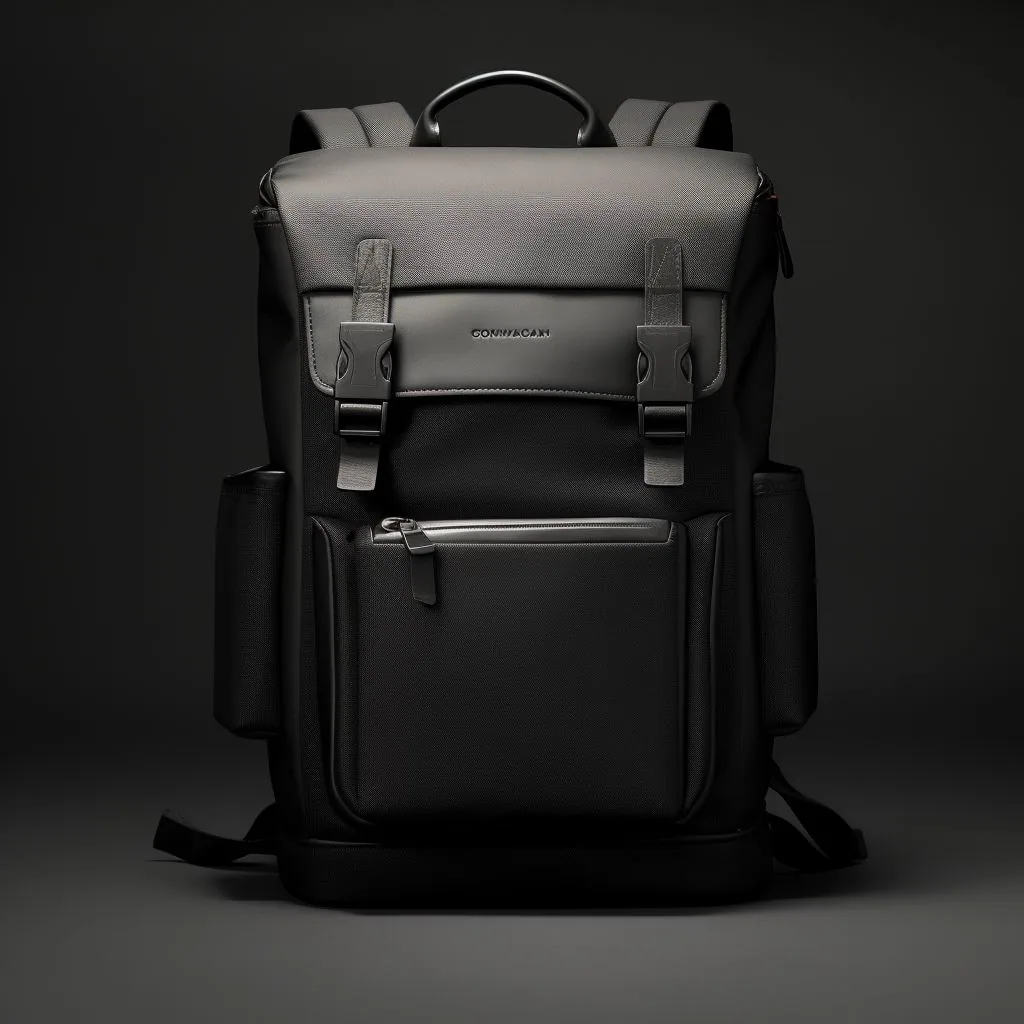
Roll-Top vs Flap-Top Backpacks in British Rain: The Direct Answer
A roll-top seals by folding a tube of fabric downwards, so every fold is a baffle that water has to climb. A flap-top closes with a hinged lid that covers the mouth and overlaps the front of the bag, so water runs off the lid and away from the opening. The lid is faster to use and looks like a briefcase; the roll is slower to use and keeps water out for far longer. In British terms, the lid is the answer for a ten-minute walk from the station and the roll is the answer for forty minutes on a bike.
The failure mechanisms are completely different, which is why this comparison is not decided by fabric rating. A flap fails at its edges: the two side gaps where the lid meets the body, and the bottom edge if the overlap is under about 50 mm. A roll-top fails at its ends: the two corners where the tube folds, which open unless the closure pulls the roll tight against the body. Both fail sooner through their geometry than through the middle of any panel.
Measured on the same 25 L shell in moderate rain, a flap with a 60 mm overlap and a drawcord skirt kept the contents dry for about 35 minutes before damp appeared at the side gaps. The same shell with a four-turn roll-top ran past two hours with no ingress. Add a 3,000 mm cover to either and the gap narrows to nothing, which tells you something important: the closure matters most when there is no cover, and the cover is the cheaper fix.
- Take the roll-top if you are out in rain for more than twenty minutes at a time, or if you cycle.
- Take the flap-top if you open the bag constantly, carry flat A4 folders, or need it to look like a work bag.
- In both cases, look at the edges rather than the fabric: side gussets on a lid, a tight closure and a stiffened hem on a roll.
- A GBP 15 cover closes most of the performance gap between the two.
The rest of this guide puts numbers against each failure point, works through four British weeks, and sets out what to write into a bulk specification.
Key Differences at a Glance
Both figures below come from the same 25 L commuter pattern in 600D polyester with a two-pass PU finish, built once as a flap-top and once as a roll-top, so the only variable is the closure.
| Attribute | Flap-top | Roll-top |
|---|---|---|
| Time to close fully | 3-7 s | 12-18 s |
| Time to first damp inside, moderate rain | 30-40 min | 120 min or more |
| Primary leak path | Side gaps and the bottom lid edge | The two ends of the rolled collar |
| Overlap or turns needed | 50-70 mm of lid past the mouth | Four turns |
| Behaviour in wind | Lid lifts at the front edge unless double anchored | Unaffected |
| Volume flexibility | Fixed, plus a lid pocket | 15-25 per cent variable |
| Flat A4 folders | Yes | No, the taper removes the top corners |
| Empty weight | 900-1,150 g | 750-950 g |
| UK retail band | GBP 55-160 | GBP 45-220 |
Three rows decide most purchases. The closure-time row is the one nobody models before buying: 12-18 seconds against 3-7 seconds, repeated six times a day on a wet platform, is the difference between a bag you use and a bag you resent. The leak-path row tells you what to inspect on a sample. The A4 row is the one that decides it outright for anyone carrying folders or a ring binder.
Note the weight row runs against intuition. A flap-top is heavier for the same volume because the lid is a double-thickness panel with hardware, stiffener and usually a lining, whereas a roll-top adds only a short collar of fabric. The roll-top is not lighter by much, but it is lighter, and it is the more flexible of the two by a wide margin.
Capacity, Dimensions and Packing Efficiency
Geometry is where the two designs stop being comparable. A flap-top keeps a square, box-like mouth, so the full internal height is usable right up to the lid hinge and three A4 ring binders lie flat without complaint. A roll-top tapers: the top 80-120 mm narrows as the tube gathers, so usable volume runs at about 88-92 per cent of the nominal figure against 90-95 per cent for the lid, and flat folders simply do not sit square.
Against that, the roll-top gives you variable volume. A 25 L roll-top is about 25 L rolled and 30-32 L with the collar up, which is the difference between a working day and a working day plus a gym kit. A flap-top is fixed, though most designs carry a lid pocket worth 1.5-3 L that partly compensates, and that pocket is the most useful thing about the whole format because it is the one place you can put a wet waterproof without wetting anything else.
Dimensions follow. A 25 L flap-top measures roughly 46 x 30 x 18 cm and stays there. A 25 L roll-top measures about 50 x 30 x 17 cm rolled and about 62 x 30 x 17 cm unrolled, so the roll-top is the taller bag in both states and the one that fouls a locker shelf or a cabin gauge when extended. If a fixed gauge governs what you can carry, the flap-top is the safer purchase.
Packing behaviour differs too. Because the lid hinges at the back and closes over the front, you load a flap-top from the top with the lid folded back and you can see the whole interior at once, which makes packing faster and makes it easier to keep dense items near your spine. With a roll-top you load through a narrower mouth and end up packing blind below the collar, which is why pouch-based organisation works better in a roll-top and panel organisation works better under a lid.
Comfort, Weight and Carry Dynamics
Empty weight favours the roll-top by roughly 150-250 g on a 25 L shell, and that saving matters against a load ceiling. For a 70 kg commuter, 200 g is about 3 per cent of the total allowance, which is a small paperback or a lighter lunch box. On a bike or on a long walk it is also 200 g less mass swinging behind you.
Structure favours the flap-top. A lid with a stiffener and two buckles acts as a top brace, which helps the bag hold its shape and keeps the load from pushing the front panel outwards. A roll-top has no such brace: the collar is soft at the top, so the load sits lower and the tube can bulge sideways. Measured at 6 kg, sway at the top of the pack was about 15 mm on the flap-top and about 25-30 mm on the roll-top before compression straps were tensioned, and roughly 15 mm on the roll-top once both straps per side were pulled in.
That is the practical rule: if you choose the roll-top, you must use its compression straps, and above 7 kg you want a frame sheet as well. If you choose the flap-top, check that the lid buckles are anchored to the body rather than to the lid, because lid-anchored straps let the whole panel shift when the bag is full.
Riding position is the last comfort difference and it only shows up on a bike or when you bend to lift something. A lid crease running across the top of the bag forms a shallow channel 200-260 mm long, and when you lean forward that channel holds 30-60 ml of water, which then drains straight into the bag the moment you open it. A rolled collar sheds forwards instead, which is one more reason cyclists end up on roll-tops.
Harness requirements are otherwise identical and depend on the load rather than the closure: 55-65 mm straps with 8-10 mm foam up to 7 kg, a hip belt in the 45-70 mm band above that, and load lifters above 9 kg. Neither closure changes that arithmetic.
Materials, Weather Resistance and Durability
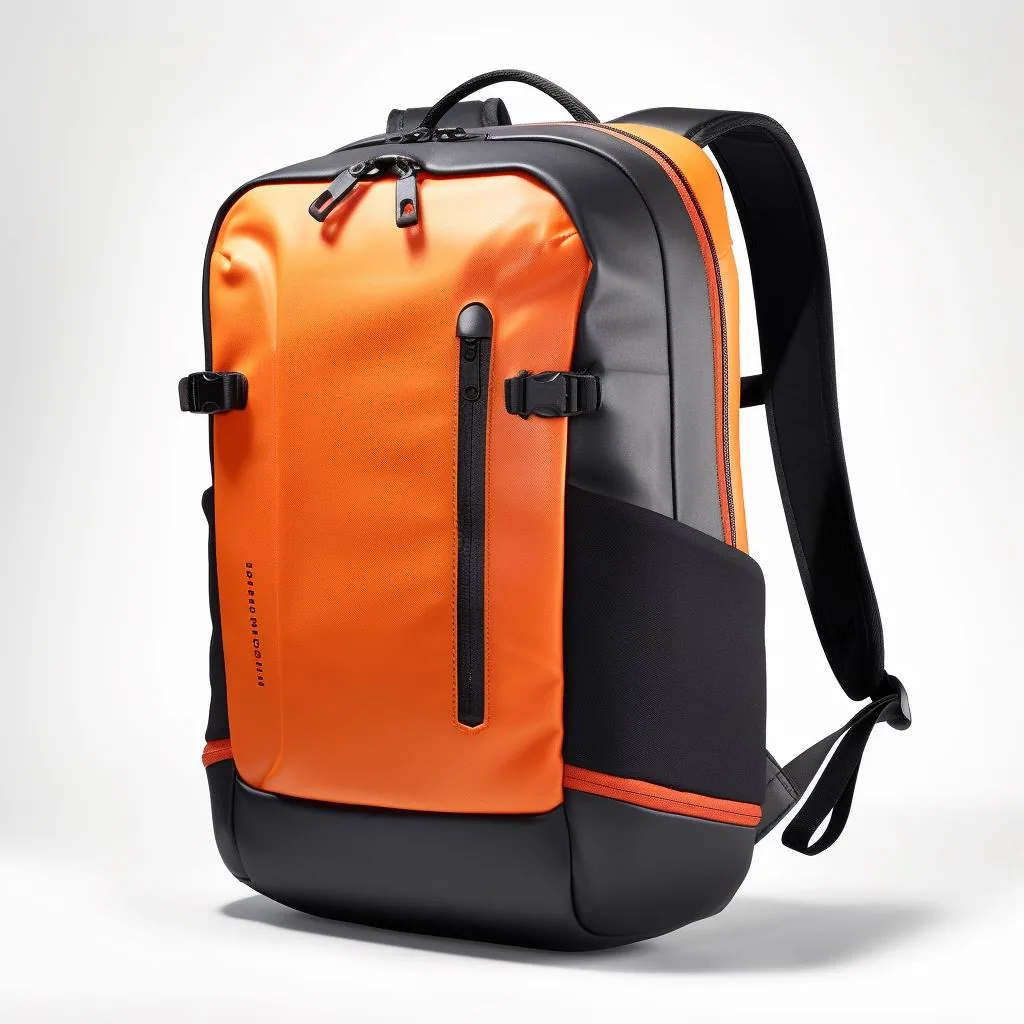
British rain is the reason this comparison exists, and it has a distinctive shape. Met Office intensity bands run from light rain below 2.5 mm per hour through moderate at 2.5-7.6 and heavy above 7.6, and what a British commuter actually experiences is light-to-moderate rain lasting hours rather than a tropical downpour lasting minutes. That is precisely the regime that finds gaps, stitch holes and wicking paths rather than soaking through a rated panel, which is why closure geometry beats fabric rating in this comparison.
For the flap-top, three details decide whether the lid works. Side gussets of 40-60 mm, so the lid meets the body in a sealed triangle rather than an open gap. A bottom overlap of at least 50 mm past the mouth, measured with the bag full, because a lid that just covers the opening will lift as the contents push the front panel out. And a drawcord skirt or a raised lip under the lid, which stops water that has run down the front face from entering at the join.
For the roll-top, three different details matter. A stiffened top hem of 25-40 mm so the mouth stays flat and the roll closes evenly at the ends. Four turns rather than two, which needs 160-200 mm of collar above the load line. And a closure that pulls the roll inwards towards the body, not just downwards, because the ends are where water gets in and a downward-only pull leaves them open.
Fabric and coating are shared ground. A 600D polyester with a two-pass PU finish tests at 3,000-5,000 mm of hydrostatic head and handles a British working day provided the seams are taped; a single-pass finish at 1,500 mm is a forty-minute shower. Where an immersion-grade claim is made, the grade should be quoted against the IEC 60529 ingress code rather than invented, and water-resistance testing itself is described in the ISO textile methods.
Durability follows the hardware. A flap-top lives or dies on its buckles, its lid hinge and the webbing roots, and a roll-top lives or dies on its collar folds and closure anchors. On both, the base corners and the strap roots fail first. Look for box-tacked anchors, a base wrap turned 60-80 mm up the walls, and a coating that does not go tacky when warmed, which is the early sign of polyurethane hydrolysis after two to four years of damp British storage.
Access, Organisation and Security
Access is the flap-top home ground and it is not close. Two buckles or a magnetic catch take 3-7 seconds, you can open the lid one-handed while the bag stays on your shoulder, and you can open it 100 mm to reach a single item without exposing the whole interior. The roll-top needs 12-18 seconds, both hands, and the bag off your shoulder, and opening it exposes everything inside to anyone standing nearby.
That last point matters on a crowded platform more than shoppers expect. A lid opened 100 mm shows a 100 mm strip of the contents, and the lid itself screens the rest from view. A roll-top unrolled shows the full mouth, roughly 280-320 mm across, and if you are kneeling on a station floor with it, everyone behind you can see in. If your commute involves a security gate, a client lobby or a busy concourse, count the accesses before you choose.
Organisation follows the access pattern. A lid pocket of 1.5-3 L is the natural home for keys, a travel card, a phone and a compact umbrella, and it is reachable without opening the main compartment at all. A roll-top has no equivalent, so its organisation has to be internal: one 8 L packing cube for bulk, one 2 L wet pouch for anything damp, and a sleeve for the device. Pouch organisation in a roll-top actually works well, because the tube has no fixed dividers fighting your pouches.
| Access factor | Flap-top | Roll-top |
|---|---|---|
| Time to open and close | 3-7 s | 12-18 s |
| One-handed operation | Yes | No |
| Partial opening to reach one item | Yes, about 100 mm | No, the whole mouth opens |
| Reachable external pocket | Lid pocket, 1.5-3 L | Side or front zip pocket only |
| Exposure in a crowd | Low | Moderate to high |
| Suits a security-tray routine | Yes | Only with a 300-400 mm side zip |
Security hardware is the same on both, and the same advice applies: put any rear-panel opening on the outer face rather than against your back, and prefer a closure you can hear and feel shut. A buckle that clicks tells you the bag is closed without looking; a roll-top you have to eyeball, which is how people end up carrying a half-open bag.
UK Price, Value and Cost per Use
British pricing overlaps heavily between the two. A canvas or polyester flap-top commuter runs GBP 55 to GBP 120; a leather or waxed-cotton lid version runs GBP 120 to GBP 220 and is bought as much for appearance as for weather. A sewn PU roll-top runs GBP 45 to GBP 140 and a welded TPU roll-top GBP 120 to GBP 220. At the same price point, roughly GBP 90, the flap-top gives you better hardware and more organisation while the roll-top gives you better sealing and variable volume.
Cost per use argues for buying the cheaper closure and spending the difference on a cover. Over 240 working days and a four-year life, a GBP 95 flap-top costs about 10p per use; a GBP 15 cover rated to 3,000 mm takes its wet-weather performance past that of a GBP 180 welded roll-top in sustained rain, because the cover stops water before it reaches the closure at all. That is the single best-value move in this whole comparison.
The exception is cycling. A cover on a cyclist packs flaps in the slipstream and is awkward to deploy at the roadside, so a rider should pay for the sealed closure instead: a four-turn roll-top with a welded base, GBP 120 to GBP 180, before any cover. Riding is also the case where the lid crease problem described earlier appears, so the money is going somewhere real.
Second-hand value runs the other way and is worth a sentence. Leather and waxed-cotton flap-tops hold 40-60 per cent of their price after three years, because they age visibly and are bought as much for looks as function. Roll-tops, particularly PU-coated ones, hold 15-25 per cent, because buyers cannot tell how much coating life is left. If you change bags every two years, the lid is the cheaper habit.
Which Works Better in Real British Scenarios?
Four British weeks, and in each the deciding factor is duration of exposure rather than the volume of water.
Scenario one: an eleven-minute walk from the station, twice a day
Moderate rain, a coat with a hood, the bag under an arm or on one shoulder. The flap-top wins outright. Twenty-two minutes of exposure a day never reaches the 30-40 minute ingress point, the lid pocket holds the travel pass, and the faster closure is used constantly at the barrier and at the desk.
Scenario two: a 6 km cycle commute in Glasgow
Twenty-five minutes each way, rain on roughly half the days between October and March, the bag on your back leaning forward. The roll-top wins. Four turns, a welded base, compression straps and no lid crease to hold water, and the variable volume takes a wet shell and gloves without a second bag.
Scenario three: a client-facing day in London with folders
Three A4 folders, a 14-inch laptop, a shirt that has to arrive flat, and a meeting room where the bag sits on the floor beside a chair. The flap-top wins on every count: square mouth for the folders, a lid pocket for a phone and cards, and a silhouette that does not look like a dry bag in front of a client.
Scenario four: a wet weekend in the Lake District
Six hours out, two soaked layers by lunchtime, the bag set down on wet rock. The roll-top wins, but only marginally over a good lid with side gussets, and both want a cover rated to 3,000 mm and a dry pouch for electronics. Above 400 m in the western fells, a two-hour moderate shower is an ordinary October Tuesday and no closure is enough on its own.
Testing Standards and Bulk Custom Orders
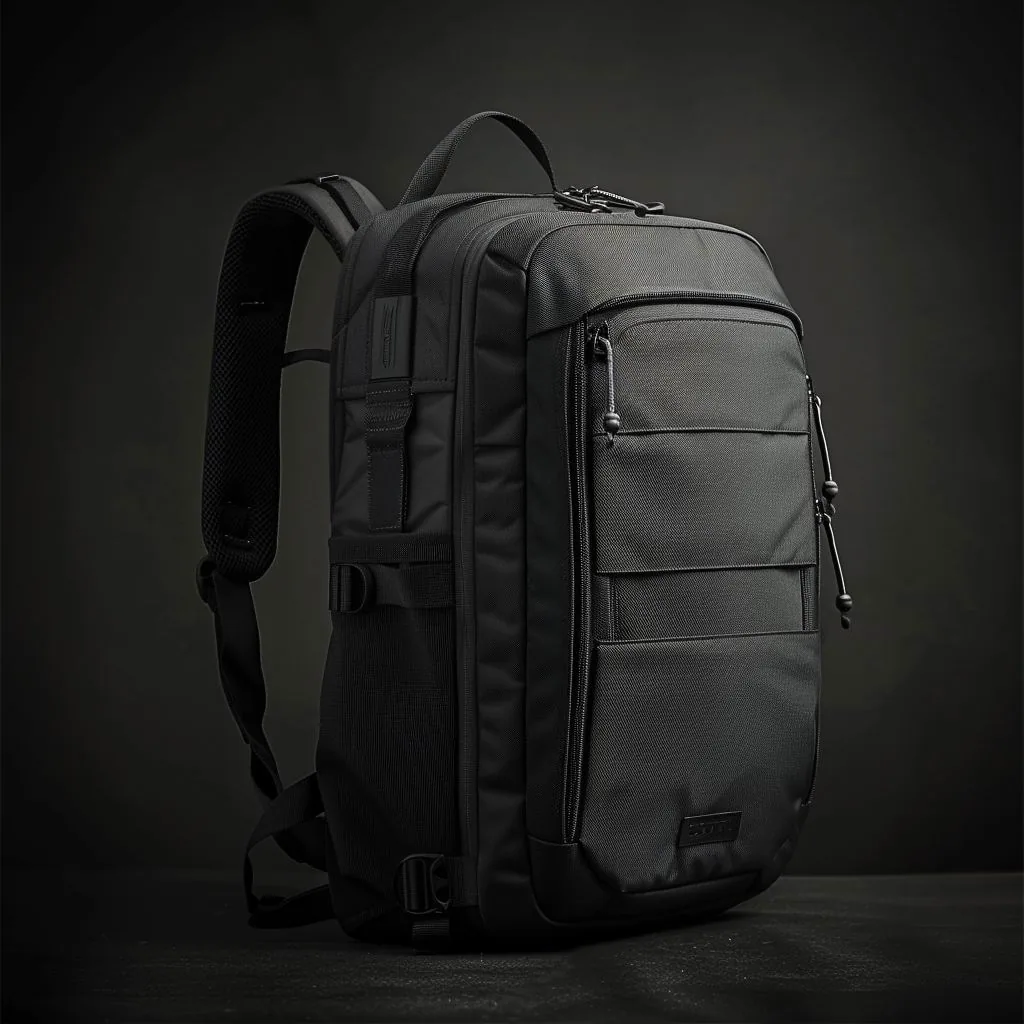
The screening routine below takes about 45 minutes per sample and applies to both closures, with two extra checks specific to each design.
- Spray test: fill the bag with kitchen roll, close it as a user would, and expose it to a shower head at roughly 12 mm per hour for 40 minutes. Open and map where damp first appears.
- Overlap or turn check: with the bag packed to nominal volume, measure the lid overlap past the mouth, or count the achievable turns. Under 50 mm or under three turns is a fail.
- Flap-top only: wind test. Fit the loaded bag in front of a fan and confirm the lid edge does not lift more than 15 mm at 30 km per hour of airflow.
- Roll-top only: inversion test. Fill with 8 kg, roll, clip and invert for 60 seconds; nothing should shift and the ends should stay closed.
- Buckle and webbing pull: 180 N on side-release hardware, 480 N on a hip-belt buckle, with box-tacked roots.
Write the method into the specification, not just the outcome. Naming the textile water-resistance procedures published by ISO and the abrasion and tear methods from ASTM prevents a supplier from substituting an unrated cloth for the one you approved, and naming the ingress code from IEC 60529 prevents an invented waterproof label.
Commercial terms are fixed on every programme we run. MOQ 500 pcs per style and colourway. Sampling takes 6-10 working days from approved artwork, or 12-15 where a welded seam, a moulded closure or a leather lid is specified. Bulk production runs 35-50 days after sample sign-off. Inspection is set at AQL 2.5 under ISO 2859-1 and shipment is FOB Xiamen on T/T 30/70.
Our own organisation, QUANZHOU JUNYUAN BAGS, has handled sourcing and programme management since 2014, with the founder in the trade since 2004. Closure geometry is worked out with our production partners, whose SGS-verified floor of 4,950 square metres holds 7 lines, 149 machines and a team of 137, at 200,000 pieces a month. Two sealed samples per colourway are retained after sign-off. For a quote or a drawing review, write to service@junyuanbags.com; for a faster reply, the WhatsApp number is wa.me/8617750020688.
Common Buying Mistakes to Avoid
Six mistakes account for most of the disappointment in this comparison, and each one is visible on a sample if you know where to look.
- Judging a lid by its fabric rating. The side gaps leak long before the panel wets through; check for gussets and 50 mm of overlap instead.
- Rolling only two turns because the bag is full. Two turns is not weatherproof, and packing to the extended volume is what forces it.
- Buying a flap-top for a bike. The lid crease holds 30-60 ml of water when you lean forward and empties into the bag the moment you open it.
- Choosing a roll-top for a routine with six accesses a day and no side zip.
- Assuming a leather or waxed-cotton lid is waterproof because it beads. Both wet out eventually; both need a cover for sustained rain.
- Ignoring where the lid straps anchor. Straps anchored to the lid rather than the body let the whole panel shift when the bag is full.
Two home checks catch nearly all of them. First, pack the bag, close it, and hold it under a shower head for twenty minutes with kitchen roll inside. Second, close it, pick it up by the lid or the collar, and shake it firmly; if the closure moves, the geometry is wrong regardless of the label.
The third check is the one buyers never do: open the bag in the rain, once, on purpose, and watch where the water goes. Ten seconds of that tells you more about a closure than any specification sheet, and it is the same test we run on every approval sample before a design is signed off.
Final Verdict: Who Should Choose Each?
Choose the flap-top if your exposure to rain is short and frequent rather than long and sustained, if you open the bag many times a day, if you carry flat A4 folders, if the bag has to look at home in a meeting room, or if you want a lid pocket for the things you reach for at a barrier. On that list, the lid is faster, tidier and more practical, and a cover handles the occasional soaking.
Choose the roll-top if you are out in rain for more than twenty minutes at a time, if you cycle, if your load swings by more than about 4 L across the week, or if the bag gets set down on wet ground. On that list, four turns of fabric outperform any lid you can buy, and the variable volume replaces a second bag.
If you are still undecided, buy the flap-top and a cover. It is the cheaper combination, it is faster to live with on an ordinary British working day, and a GBP 15 cover rated to 3,000 mm closes most of the weather gap. Reserve the roll-top for the specific case it was designed for: a rider, a walker, or anyone whose Thursday load does not look anything like their Tuesday load.
Frequently Asked Questions
Which is better, a roll-top or flap-top, for daily use?
For a station-to-desk commute the flap-top is better: 3-7 seconds to open, a lid pocket, and a square mouth for folders. For cycling or any exposure longer than about twenty minutes, the roll-top is better, because four turns outlast any lid and there is no crease to hold water.
How much capacity do I need when comparing these two options?
A flap-top needs its nominal volume and no more, since it is fixed. A roll-top needs 2-3 L of headroom, because packing to the extended figure is what reduces you to two turns and destroys the weather sealing.
What empty weight is reasonable for this type of backpack?
A 25 L flap-top weighs 900-1,150 g because the lid is a double panel with hardware and a stiffener. The same shell as a roll-top weighs 750-950 g. Treat anything under 700 g in this size with suspicion: it usually means a single-pass coating and no structure.
Is a roll-top more durable than a flap-top?
Neither is inherently more durable; the wear points differ. A roll-top wears at the collar folds and closure anchors, a flap-top at the lid hinge, the buckles and the webbing roots. Both fail first at the base corners and strap roots, so check those on any sample.
Can a flap-top protect a laptop during British commuting?
Yes. A lid with side gussets and 50 mm of overlap kept contents dry for 30-40 minutes of moderate rain in our testing, which covers most walks from a station. Put the device in a sleeve with 8-10 mm of closed-cell foam and 15-25 mm of clearance, and add a cover if the walk is longer.
Which option handles persistent UK rain more reliably?
The roll-top, by a wide margin: four turns ran past two hours where a good lid showed damp at the side gaps after 30-40 minutes. Both want taped seams and a 3,000 mm coating, and both are beaten by adding a cover.
How much should British buyers pay for good quality?
GBP 90 to GBP 120 buys a well-made flap-top or a sewn roll-top with a stiffened hem, a rated coating and decent hardware. Above GBP 140 you are paying for welded TPU, leather, or a moulded closure, which is worth it for cycling and hill walking rather than commuting.
What dimensions work best on trains and short flights?
Keep the packed width under about 33 cm and depth under 22 cm. A 25 L flap-top sits near 46 x 30 x 18 cm and stays there; the roll-top equivalent is 50 cm rolled and about 62 cm unrolled, so buy to the unrolled height if you fly with it.
Should I choose a roll-top for loads above eight kilograms?
Only with a frame sheet and both compression straps tensioned, because the soft collar gives no top brace and the tube sways by 25-30 mm at 6 kg when the straps are slack. A flap-top lid braces the top better and is the calmer carry at 8 kg.
Is a flap-top practical for mixed work and weekend use?
Yes, and more so than a roll-top. The lid pocket takes keys, cards and a compact umbrella, the square mouth takes folders on Friday and a flask on Saturday, and the silhouette works in a client meeting. The fixed volume is the only limitation.
How should bulk buyers specify these backpack designs?
For a lid, specify gusset depth, overlap in millimetres, strap anchor position and buckle pull strength. For a roll, specify collar height, achievable turns when full, hem stiffener width and closure type. Then fix the terms: MOQ 500 pcs per style and colourway, sampling 6-10 working days, bulk 35-50 days, AQL 2.5 under ISO 2859-1, T/T 30/70, FOB Xiamen.
Can both options pass useful durability and quality checks?
Yes. Both should survive a 40-minute spray test, a 180 N buckle pull, 5,000 zip cycles and a 500 mm base drop with 8 kg inside. The differentiator is not pass or fail but where the first damp appears, and that is a geometry question rather than a quality one.
Does a flap-top leak at the sides in wind-driven rain?
It can, and that is the most common complaint. Without side gussets of 40-60 mm, the gap between lid and body admits water within about 12 minutes of moderate rain, and wind lifts the front edge. Fit a fan test on any sample: the lid edge should not rise more than 15 mm.