Table of Contents
- Roll-Top Backpacks: The Direct Answer
- Key Specifications at a Glance
- Anatomy and Structural Features
- Capacity Range and Typical Dimensions
- Who It Suits and Who Should Skip It
- Comfort, Fit and Load Behaviour
- Materials, Weather Resistance and Durability
- UK Price, Value and Cost per Use
- Testing Standards and Bulk Custom Orders
- Common Buying Mistakes to Avoid
- Final Verdict: Who Should Choose This?
- Frequently Asked Questions
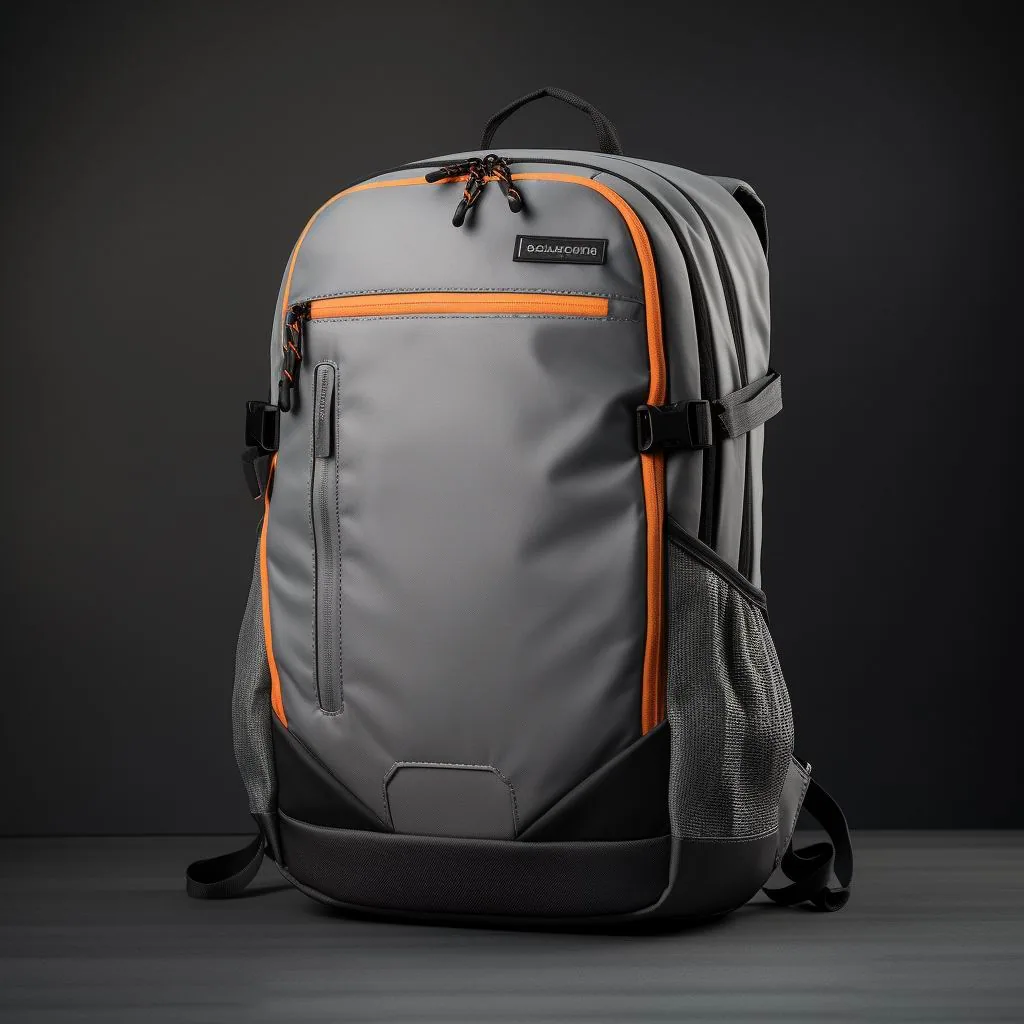
Roll-Top Backpacks: The Direct Answer
A roll-top replaces the zip across the top of a pack with an unsealed tube of fabric that you fold down two to five times and clip shut. Each fold acts as a baffle: for water to get in, it has to travel uphill through three or four creases, which is why a well-made roll-top with four turns stays dry in rain that defeats a conventional top zip in minutes. The same design also gives you a variable volume of roughly 15-25 per cent without changing bags.
The trade is access speed and geometry. Reaching into a roll-top means unclipping, unrolling and peeling the mouth open, which takes 12-18 seconds against 4-6 seconds for a zip, and it means the bag is briefly open at the top where everyone can see into it. The tapered collar also removes usable height: the top 80-120 mm of the bag narrows, so A4 folders and ring binders do not sit squarely, and an unrolled collar adds 90-140 mm of height that will foul a locker shelf or a rail rack.
So the honest summary is this. A roll-top is the right answer when the load varies between journeys and the weather is a real constraint: cycling, walking, mixed work and gym, winter commuting, and any bag that has to survive being set down in a puddle. It is the wrong answer when you need the same items six times a day, when you carry flat paperwork, or when a fixed dimension governs what you can take.
- Four turns of roll is the working standard for British rain; three is shower-resistant; two is decoration.
- Budget 90-140 mm of extra height when the collar is unrolled, and check that figure against your locker, rack or gauge.
- Specify a closure you can operate with one gloved hand, because you will be doing it in the rain.
- Accept that a roll-top is a tube: organisation comes from pouches, not from the bag.
The sections below break the design into its parts, give the numbers for each, and finish with the specification we write for a 500-piece custom order.
Key Specifications at a Glance
The figures below describe a mid-size roll-top commuter in the 22-28 L bracket, which is the size most British buyers end up with. Figures for welded TPU builds are listed separately from sewn PU builds because the two constructions behave differently in everything except volume.
| Specification | Sewn PU roll-top | Welded TPU roll-top |
|---|---|---|
| Typical nominal volume | 22-28 L | 20-26 L |
| Volume range, rolled tight to unrolled | 20 to 30 L | 18 to 28 L |
| Packed height rolled, at 25 L | 50 cm | 49 cm |
| Packed height unrolled | 60-64 cm | 59-62 cm |
| Empty weight | 750-950 g | 900-1,300 g |
| Hydrostatic head | 3,000-5,000 mm | 5,000-10,000 mm |
| Ingress grade where claimed | Shower resistant | IPX5 to IPX7 under IEC 60529 |
| Time to open and close | 12-18 s | 10-15 s |
| UK retail band | GBP 45-140 | GBP 120-220 |
The two rows that catch buyers out are the unrolled height and the open-and-close time. A 25 L roll-top that is 50 cm tall rolled becomes roughly 62 cm unrolled, which is 12 cm over the height of a standard 300 mm-deep locker shelf clearance and well over the shoulder line of a 173 cm man. And 12-18 seconds, repeated six times a day, is two minutes of standing in the rain per working day.
The weight row is the other surprise. A roll-top is often assumed to be lighter than a zip pack because there is no long zip, but the collar requires 160-200 mm of extra fabric above the load line and usually a reinforced top hem, so the saving is small or negative. What you gain is adjustability and sealing, not grams.
Anatomy and Structural Features
Seven components decide whether a roll-top works, and only two of them appear on a product page.
The collar
This is the tube of fabric above the load line. It needs 160-200 mm of usable height so you can get four turns in even when the bag is full, and its top edge needs a stiffener: a 25-40 mm webbing-reinforced hem, or a sewn-in plastic batten 3-5 mm thick. Without a stiffener the mouth curls into a smile shape, the roll goes on unevenly and the last turn leaves a gap at each end. This is the single most common defect on cheap roll-tops.
Roll direction
Roll the collar forwards, away from your body, so the final fold faces out and down. Rolling towards the back panel presses the fold against your spine, which is uncomfortable and, more importantly, lifts the fold line open as the bag flexes. Check which way the designer intended by looking at where the clip anchors sit: they belong on the front face, roughly 40-60 mm below the top of the collar when rolled.
Closure hardware
The closure has to be operable one-handed, with a glove on, in the rain. Four options dominate, and the differences are real.
| Closure | Weight | One-handed | Cost per unit | Failure mode |
|---|---|---|---|---|
| Aluminium G-hook and webbing | 18-28 g | Yes, with practice | GBP 0.60-1.20 | Webbing frays at the bar |
| Side-release buckle | 12-20 g | Yes | GBP 0.20-0.50 | Cracked spring tab in cold |
| Magnetic slider | 30-45 g | Easiest of the four | GBP 2.50-5.00 | Ice and grit jam the track |
| Cam buckle and strap | 22-35 g | No | GBP 0.40-0.90 | Slips under a full load |
Side compression straps
Two straps per side, anchored 60-80 mm apart, do more for comfort than any padding. A tube with no structure sways, and straps pull the load towards your spine. Measured at the top of a 25 L pack carrying 6 kg, sway without straps was about 30 mm through a 90-degree turn and about 15 mm with both straps tensioned. On a bike or a wet pavement, that is the difference between stable and distracting.
Side access zip
A 300-400 mm water-resistant zip running down one side, entering the main compartment below the collar, converts a roll-top from awkward to usable for commuting. You keep the collar rolled and reach the laptop through the side instead of unrolling six times a day. It is the single feature that makes a roll-top viable for office use and it costs GBP 3 to GBP 6 per unit at wholesale.
Base and back panel
A roll-top has no frame, so the base takes the load. Look for a base wrap turned 60-80 mm up the side walls in a heavier denier than the body, and a removable 1.5-2 mm HDPE sheet behind the back panel. Without the sheet, a 6 kg load in a soft tube presses the contents into your lumbar curve and the bag will not stand up when you put it down.
The laptop sleeve
Because the top tapers, a sleeve in a roll-top is best specified as a suspended hammock with 20-30 mm of clearance above the base, reachable through the side zip. A base-resting sleeve in a roll-top puts the device in the wettest, least accessible part of the bag.
Capacity Range and Typical Dimensions
Roll-top volumes are quoted in two ways and the difference matters. The nominal figure describes the bag with the collar rolled to its normal working position, usually three or four turns. The extended figure describes the collar fully unrolled, which adds 4-8 L depending on the diameter of the tube. A bag sold as 25 L is therefore 25 L rolled and about 30-32 L extended, and buyers who pack to the extended figure discover they can only manage two turns, which is exactly when the design stops being weatherproof.
The three size brackets that make sense for British use are these. Fifteen to 20 L covers a cycling or gym day with a light shell and a bottle. Twenty-two to 28 L covers a working day with a 14 or 15-inch laptop, a packed lunch and a waterproof. Thirty to 45 L covers a hill day or an overnight trip, and above about 35 L the roll-top starts to lose its advantage to a conventional lid with a drawcord skirt, because the collar becomes too wide to roll evenly.
Dimensions follow the bracket. A 25 L roll-top at 50 x 30 x 17 cm rolled becomes about 62 x 30 x 17 cm unrolled. Width and depth barely change; height is the variable, and it is the dimension that fouls lockers, rail racks and overhead bins. Measure your bag unrolled if there is any chance you will travel with the collar up: 62 cm exceeds the 55 cm height limit most UK carriers apply to cabin bags before you add anything else.
Usable volume runs slightly below nominal because the taper removes the top corners. Expect about 88-92 per cent of the stated figure as genuinely packable space against 90-95 per cent for a box-shaped zip pack. In practice that means a 25 L roll-top carries about what a 23 L conventional pack carries, and the compensation is the 4-8 L you can summon when you need it.
Who It Suits and Who Should Skip It
This format suits an identifiable buyer rather than everyone, and the clearest signal is whether your load changes from day to day.
It suits: the cyclist
Twenty-five minutes each way, no panniers, rain for a third of the year, and a load that grows by a waterproof and gloves between October and March. The roll-top absorbs that swing without a second bag, the sealed collar survives a squall, and the compression straps stop the load moving when you stand on the pedals.
It suits: the mixed work-and-gym commuter
Office on Tuesday with a laptop and a shirt, gym on Thursday with size 10 shoes and a towel. The variable volume is the whole point here: 22 L on Tuesday and 29 L on Thursday from one bag, with a wet pouch for the kit so the towel does not share space with the shirt.
It suits: the winter walker and the festival-goer
Anything that is set down on wet ground benefits from a closure with no zip across the top and a welded base. Add a cover rated to 3,000 mm for sustained rain and you have a bag that can be stood in a puddle without consequence.
It does not suit: the six-access-a-day commuter
If you take the laptop out at a security gate, at your desk, in a meeting and again on the train, 12-18 seconds per access is two minutes a day and a wet bag every time. Buy a conventional zip pack, or specify the side access zip and budget for it.
It does not suit: anyone carrying flat A4
The taper removes the top corners, so three ring binders will not sit square and the collar will not close over them. A box-shaped pack with a flat floor is the right tool. This is the most common reason a roll-top gets returned in the UK, and it is entirely predictable from the shape.
It does not suit: anyone near a strict dimension gauge
The unrolled height is 90-140 mm more than the rolled height, so a bag that fits a gauge rolled will not fit extended. If you fly regularly with the bag as cabin luggage, measure it unrolled and buy to that number.
Comfort, Fit and Load Behaviour
Comfort in a roll-top is governed by three variables: whether the load sits close to your spine, whether there is a stiffener behind the back panel, and how the collar behaves when the bag is only half full.
The first two are straightforward. A soft tube pushes its contents backwards and away from the spine as it fills, so the centre of mass can sit 40-60 mm behind the back panel at 6 kg, which levers on the shoulders. A 1.5-2 mm HDPE sheet behind the panel plus two tensioned compression straps per side pulls that back to 20-30 mm and cuts measured sway at the top of the pack from about 30 mm to about 15 mm on a 90-degree turn. Above 7 kg, add a hip belt in the 45-70 mm band; a roll-top without one is uncomfortable well before a framed pack is.
The third variable is where roll-tops differ from every other design. Half full, the collar folds down and the spare fabric bunches at the top, which concentrates whatever weight there is in the lower two-thirds of the bag. That is fine for a 3 kg load and unpleasant for an 8 kg one, because the mass ends up low and swinging against the base of your spine. Pack a roll-top so the dense items sit in the middle third rather than the bottom, and roll the collar down to remove the slack rather than leaving it flapping.
Fit follows the usual torso rule: most UK men measure 46-52 cm from the seventh cervical vertebra to the iliac crest, so a 25 L roll-top at 50 cm rolled sits in the right bracket for most, but at 62 cm unrolled it rides above the shoulder line and will catch on door frames and low luggage racks. If you buy one, get into the habit of rolling it down before you board anything.
Cold-weather behaviour is the last comfort factor and it is specific to this design. A PU-coated collar at 2 degrees Celsius becomes stiff and resists rolling, so four turns becomes three in practice, which is exactly when you need four. TPU-laminated collars stay workable well below freezing, and magnetic closures can jam with ice and grit. If you commute through a British winter on a bike, those two details matter more than the litre figure.
Materials, Weather Resistance and Durability
Two constructions dominate. A sewn shell uses a woven face fabric, usually 420D or 600D, with a polyurethane coating on the reverse and taped or sealed seams at the stress points. A welded shell uses a TPU film laminated to the face fabric and joins the panels with a radio-frequency or hot-air weld instead of stitching, which removes the needle holes entirely.
The practical difference is the water column each survives. A sewn PU roll-top tests at 3,000-5,000 mm of hydrostatic head and is shower resistant with three or four turns. A welded TPU build tests at 5,000-10,000 mm and can be graded to an ingress-protection code: the IEC 60529 system defines what IPX5, IPX6 and IPX7 actually mean in terms of water jets and immersion, and any supplier quoting an IP figure should be able to name the clause and the duration.
Coating chemistry determines the service life. Polyurethane is cheaper and quieter but hydrolyses: stored damp in a British hallway cupboard, a PU coating can go tacky and start to delaminate after two to four years. Thermoplastic polyurethane costs more, flexes below minus 20 degrees Celsius and resists hydrolysis, which is why welded dry-bag constructions use it. Neither survives a washing machine; agitation and heat above 60 degrees strip the film, and a tumble dryer will destroy a welded seam in one cycle.
Abrasion concentrates where you would expect: the base corners, the two ends of the rolled collar and the closure anchor points. Specify a base wrap in a denier one or two steps above the body, turned 60-80 mm up the walls, and check that the closure anchors are box-tacked through a reinforcement patch rather than sewn into a single layer. Those three points account for most warranty claims on this design.
The maintenance routine is short and it works. Brush grit from the collar folds every two weeks, because sand in a fold abrades the coating every time you roll it. Wipe salt or mud with water below 30 degrees Celsius. Dry the bag open, collar unrolled, for at least 24 hours, because a rolled collar traps damp and grows mildew within about three days. Re-proof the outer face once a year with a spray treatment, which costs about GBP 9 and adds a season of reliable beading.
UK Price, Value and Cost per Use
British pricing for roll-tops falls into three working bands. From GBP 45 to GBP 80 you get a sewn 420D PU shell, two turns of usable collar, a side-release buckle and no stiffener, which means the mouth curls and the weather performance is average. From GBP 80 to GBP 140 you get four turns, a reinforced top hem, a side access zip, a removable stiffener and a suspended laptop sleeve. From GBP 140 to GBP 220 you get a welded TPU shell with an ingress grade, a magnetic or machined closure, and a harness rated above 8 kg.
Cost per use favours the middle band for almost everyone. Spread over 240 working days and a three-year life, the GBP 45 bag costs about 6p per use and typically needs replacing in year two, so its real figure is nearer 9p. The GBP 110 bag costs about 15p over three years and about 9p over five, and it will still be weatherproof in year four, when the cheap one has gone tacky at the folds. The top band only makes sense if you genuinely need immersion-grade sealing, such as kayaking, winter hill walking or a daily bike commute through a wet winter.
One accessory changes the arithmetic in this category more than any other: a rain cover rated to 3,000 mm, at GBP 12 to GBP 24 depending on band. A mid-band sewn roll-top plus a cover outperforms an expensive welded shell in sustained rain, because the cover stops the water before it reaches the collar at all. Buy the bag for its volume and its harness, and buy the weather performance separately.
The value case for the roll-top rests on one thing that does not appear on a price tag: it replaces two bags. If your week genuinely varies between 20 L and 29 L, one roll-top does the job of a daypack and a commuter pack, and that is where the design earns its premium over a fixed-volume zip bag.
Testing Standards and Bulk Custom Orders
Four checks separate a genuine roll-top specification from a marketing one, and all four can be run on an approval sample in under an hour.
- Spray test: fit the bag with kitchen roll inside, roll the collar to the specified number of turns, and expose it to a shower head or sprinkler for 20 minutes at roughly 12 mm per hour. Open and check for damp at the collar ends and along the seam lines.
- Turn test: pack the bag to its nominal volume and confirm that the specified number of turns is actually achievable with the load inside. Two turns is a failure at any price.
- Inversion test: fill with 8 kg, roll, clip, then invert for 60 seconds. Nothing should spill and the closure should not slip.
- Weld peel test: on welded builds, pull a 25 mm weld strip at 90 degrees and record the force. Under 25 N per 25 mm means the weld was run too cool or too fast.
Where an ingress grade is claimed, the method matters. The ISO catalogue carries the textile water-resistance methods and ASTM publishes the abrasion and tear procedures used for the face fabric, and naming both in a specification prevents a supplier from substituting a generic shower-resistant cloth for a laminate.
Our commercial terms are fixed for every programme. MOQ 500 pcs per style and colourway. Sampling takes 6-10 working days from approved artwork, extending to 12-15 where a welded construction, a moulded closure or a custom collar stiffener is specified. Bulk production runs 35-50 days after sample sign-off. Final inspection is carried out to AQL 2.5 under ISO 2859-1, and shipment is FOB Xiamen on T/T 30/70.
QUANZHOU JUNYUAN BAGS was established in 2014 as a sourcing and programme-management operation; the founder had already spent a decade in the trade by then, having started in 2004. Collar geometry, closures and harnesses are developed with our production partners, who run 149 machines and 7 lines with 137 colleagues on 4,950 square metres of SGS-verified floor space at 200,000 pieces a month. Two sealed references are kept for each colourway so production can be checked against an agreed standard. Send your specification to service@junyuanbags.com, or use the WhatsApp line at wa.me/8617750020688.
Common Buying Mistakes to Avoid
Six mistakes account for nearly every unhappy roll-top purchase in the UK.
- Packing to the extended volume. The collar then only manages two turns, which is the point at which the design stops keeping water out.
- Ignoring the unrolled height. Ninety to 140 mm of extra height will foul a locker, a rail rack and most cabin-baggage gauges.
- Buying without a stiffened top hem, so the mouth curls and the roll leaves a gap at each end.
- Choosing one for a routine that needs six accesses a day, unless it has a side access zip.
- Expecting organisation. A roll-top is a tube; organisation comes from one 8 L cube and one 2 L wet pouch, not from the bag.
- Machine washing or tumble drying a coated or welded shell, which strips the film and destroys welds in a single cycle.
A five-minute check in the shop catches most of them. Pack the bag to the weight you actually carry, roll the collar as far as it will go, count the turns, and then hold it under a tap for two minutes with kitchen roll inside. If you cannot get four turns, or the kitchen roll is damp, the design is wrong for a British winter regardless of what the label says.
The second check is arithmetic: measure the bag unrolled and compare that height with the tightest gauge you ever have to satisfy. Buy to the unrolled number, because that is the number you will be carrying on the day you overfill it.
Final Verdict: Who Should Choose This?
Choose a roll-top if your weekly load genuinely varies by more than about 4 L, if you cycle or walk through British rain, if you set the bag down on wet ground, or if you want one bag to cover a gym day and an office day. On that list, the variable volume and the baffled closure are worth the slower access and the tapered top.
Skip it if you carry flat A4 folders, if you reach into the bag more than four times a day without a side zip, if you are close to a strict cabin gauge, or if you want the bag to organise itself. A conventional zip pack with a flat floor and a front organisation panel will serve you better on all four counts, and it will be quicker to live with.
If you do choose one, spend the money in this order. First, a stiffened top hem and a closure you can work with a gloved hand, because those decide whether the bag seals at all. Second, a side access zip, because that decides whether you will still be using it in March. Third, a removable stiffener and two compression straps per side, because those decide whether it is comfortable at 6 kg. Branding, colour and litre figures come last, and a GBP 15 rain cover covers more of the weather risk than any of them.
Frequently Asked Questions
What is a roll-top backpack and how does it differ from a standard backpack?
It replaces the zip across the top with a tube of fabric that folds down two to five times and clips shut. The folds act as baffles against rain and the design gives roughly 15-25 per cent of variable volume, at the cost of slower access and a tapered top that will not take flat A4 folders.
How much capacity does a roll-top backpack usually offer?
Nominal volumes run 15-20 L for cycling and gym use, 22-28 L for a working day with a laptop, and 30-45 L for hill days and overnight trips. A bag sold as 25 L is about 25 L rolled and 30-32 L with the collar fully extended.
Is a roll-top backpack waterproof or only water-resistant?
A sewn PU roll-top is water-resistant, typically testing at 3,000-5,000 mm of hydrostatic head. A welded TPU shell is genuinely waterproof and can be graded under IEC 60529, commonly IPX5 to IPX7. In both cases you need four turns, not two.
Which UK buyer should choose a roll-top backpack?
Cyclists, winter walkers, and anyone whose load swings by more than about 4 L across a week, such as a mixed office-and-gym routine. It is the wrong choice for anyone carrying flat ring binders or reaching into the bag six times a day.
Can I use a roll-top backpack for the daily commute?
Yes, provided it has a side access zip of 300-400 mm so you are not unrolling the collar at every platform. Without that zip, 12-18 seconds per access adds up to about two minutes a day standing in the rain.
How long does a roll-top backpack last in regular use?
A sewn PU shell gives three to five years of daily commuting before the coating goes tacky at the folds; a welded TPU shell runs eight to ten. The first failures are the base corners, the collar ends and the closure anchors, so check those three points on any sample.
What should I pay for a roll-top backpack in the UK?
GBP 45 to GBP 80 for a basic sewn shell, GBP 80 to GBP 140 for four turns, a stiffened hem, a side zip and a suspended laptop sleeve, and GBP 140 to GBP 220 for a welded TPU build with an ingress grade. The middle band is the best value for most British buyers.
Does a roll-top backpack fit a 15-inch or 16-inch laptop?
A 15-inch machine at 360 x 250 mm fits comfortably in anything from 22 L up. A 16-inch at 380 x 265 mm needs a 26 L shell or larger and a suspended sleeve with 20-30 mm of clearance, because the taper removes height at the top of the bag.
What are the main disadvantages of a roll-top backpack?
Slower access at 12-18 seconds against 4-6 for a zip, a tapered top that will not take flat A4 folders, 90-140 mm of extra height when unrolled, and very little built-in organisation. Two turns instead of four also removes most of the weather benefit.
How do I clean and maintain a roll-top backpack?
Brush grit from the collar folds every two weeks, wipe salt or mud with water below 30 degrees Celsius, dry the bag open with the collar unrolled for at least 24 hours, and re-proof the outer face once a year. Never machine wash or tumble dry a coated or welded shell.
Can I order custom roll-top backpacks in bulk for a UK team?
Yes. MOQ 500 pcs per style and colourway, sampling in 6-10 working days from approved artwork or 12-15 for welded builds, bulk production of 35-50 days after sign-off, and inspection at AQL 2.5 under ISO 2859-1 on T/T 30/70, FOB Xiamen.
How many roll turns does a roll-top backpack need to stay dry?
Four is the working standard for British rain, three is shower-resistant for about 40 minutes, and two is not worth doing. The collar must be tall enough to give four turns with the bag full, which means 160-200 mm of fabric above the load line.
How heavy should a roll-top backpack be when empty?
A 25 L sewn PU roll-top should weigh 750-950 g and a welded TPU equivalent 900-1,300 g. The collar needs 160-200 mm of extra fabric plus a stiffener, so a roll-top is rarely lighter than a zip pack of the same volume.