Table of Contents
- Zipper Chain Sizes: The Direct Answer
- What the Size Number Actually Measures
- The Size Ladder Compared
- Sliders, Pullers and the Parts That Fail First
- Matching Chain Size to Pack Position and Capacity
- Water, Grit and the British Failure Pattern
- Replacement Costs and When Repair Beats Replacement
- Specifying Zips on a Custom Backpack Order
- Failure Modes and Diagnosis
- Verdict: Which Chain Size Should You Specify?
- Frequently Asked Questions

Zipper Chain Sizes: The Direct Answer
A zipper size number is the approximate width of the closed chain in millimetres, so a #5 chain measures about 5 mm across its teeth and #10 about 10 mm, and cross-chain strength rises steeply with it: #3 fails at 250-400 N, #5 at 450-700 N, #8 at 700-1,000 N and #10 at 900-1,400 N. The correct specification for a British backpack is #8 or #10 on the main opening, #5 on secondary pockets and #3 on internal organisation, because the main zip carries the whole load and takes the most abuse. A #5 main zip on a 30 L pack will typically wear its tape out at 3-5 years of daily use, while a #8 or #10 on the same pack lasts 8-12 years for an added cost of £1.20-2.60, which is the best-value single upgrade available on any backpack. Cycle life follows the same curve, from 5,000-10,000 cycles for a #3 coil to 15,000-30,000 for a #10.
Chain size is only half the specification. Slider type, tape material and whether the zip is coil, metal or moulded tooth all matter, and a #8 chain with a cheap slider will fail before a #5 with a good one.
This guide covers the full size ladder, the test methods, and how to specify zips on a British pack. Our men's backpack guide applies the same checklist to every model reviewed, recording chain size, slider type and tape coating for each one.
What the Size Number Actually Measures
The number on a zip is the nominal width of the closed chain in millimetres, measured across the interlocked teeth or coil. A #5 coil zip has a chain roughly 5-6 mm wide and a tape width of 25-30 mm; a #10 has a chain of 10-11 mm and a tape of 38-45 mm. The convention is not perfectly standardised across manufacturers, so two #5 zips from different makers can differ by 0.5-1.0 mm, but the tape width is the more reliable physical check.
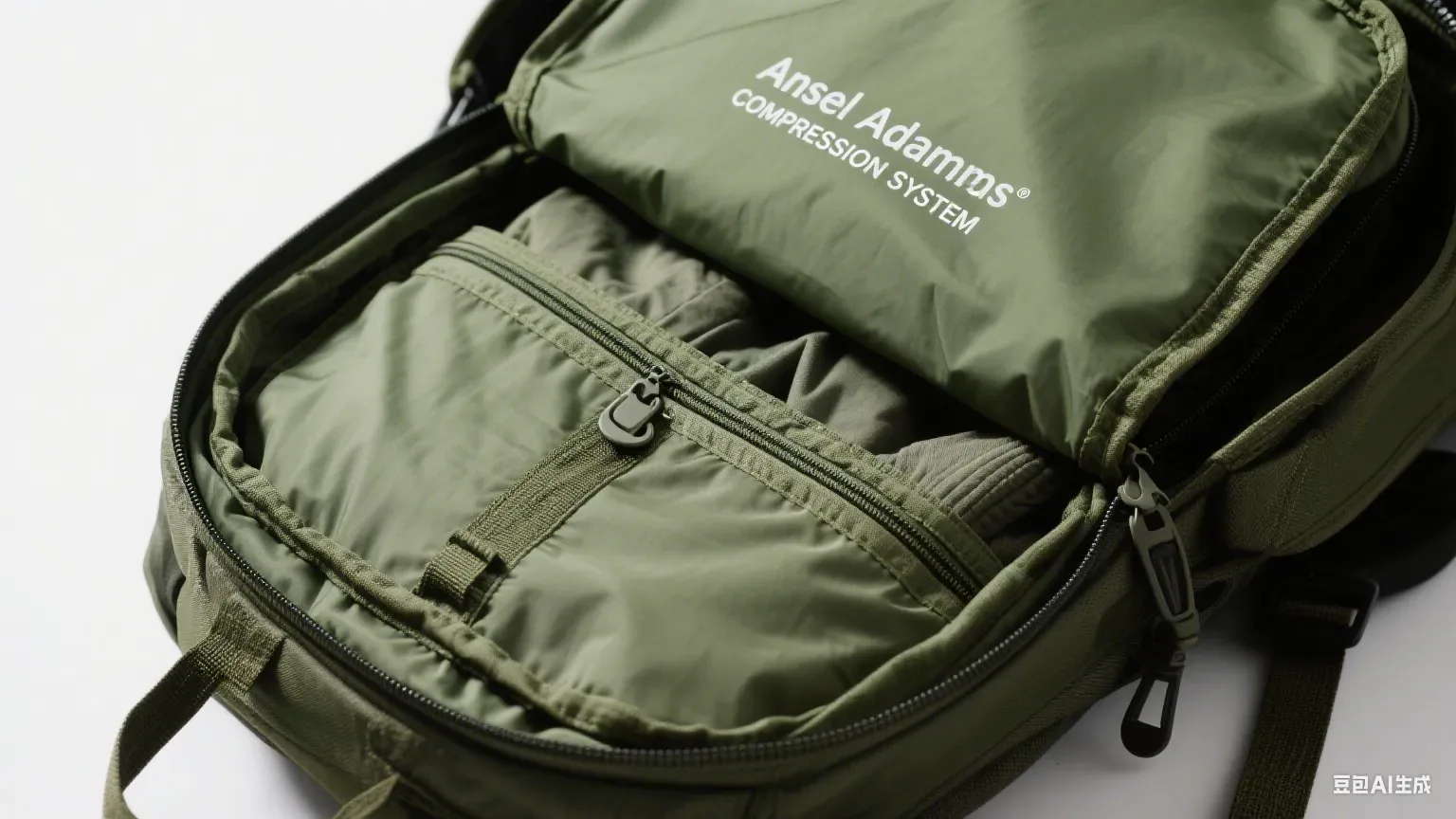
Three chain constructions exist. Coil, or spiral, zips use a continuous polyester or nylon monofilament sewn onto the tape: they are light, flexible, quiet and the standard for curved runs. Metal zips use individual brass, nickel or aluminium teeth crimped onto the tape: they are strong, look traditional and resist abrasion, but they are heavy and can jam when grit gets between the teeth. Moulded, or Vislon, zips use injection-moulded acetal teeth: they sit between the two and are the usual choice for heavy outdoor use.
Strength testing follows ASTM D2061, which covers cross-chain strength, slider pull-off and element pull-off among other measures. Our production team tests all three on every incoming zip lot and rejects any chain below 90% of nominal cross-chain strength. That protocol is applied across our UK backpack range without exception.
The Size Ladder Compared
Figures below are typical production values for coil and moulded-tooth zips with polyester tape. Cycle life is measured on a reciprocating test rig at 20 cycles per minute until the slider or the tape fails.
| Size | Chain width | Tape width | Cross-chain strength | Cycle life | Typical position |
|---|---|---|---|---|---|
| #3 | 3.0-3.5 mm | 18-22 mm | 250-400 N | 5,000-10,000 | Internal pocket |
| #4 | 4.0-4.5 mm | 22-26 mm | 350-520 N | 7,000-14,000 | Lid pocket |
| #5 | 5.0-6.0 mm | 25-30 mm | 450-700 N | 10,000-20,000 | Secondary pocket |
| #8 | 8.0-9.0 mm | 32-38 mm | 700-1,000 N | 13,000-24,000 | Main opening, 20-35 L |
| #10 | 10-11 mm | 38-45 mm | 900-1,400 N | 15,000-30,000 | Main opening, 35 L+ |
| #15 | 15-16 mm | 50-58 mm | 1,400-2,000 N | 18,000-32,000 | Expedition duffel |
| #5 metal | 5.0-6.0 mm | 25-30 mm | 500-780 N | 6,000-12,000 | Heritage styling |
Note that metal zips have a shorter cycle life than coil at the same size, typically 6,000-12,000 against 10,000-20,000, because the crimped teeth work loose against the tape. They are chosen for appearance and abrasion resistance, not longevity. Our backpack hardware guide covers the trade in full.
Sliders, Pullers and the Parts That Fail First
The slider is the component that fails, not the chain. A slider is a small die-cast or stamped body that folds two rows of teeth together, and it carries every opening and closing cycle. A standard non-locking slider on a #5 coil zip survives 10,000-20,000 cycles; the same chain with a premium slider rated for 30,000 cycles costs £0.35-0.90 more and is worth specifying on any main opening.
Four slider features matter. Auto-lock sliders engage a pin when the puller is released, so the zip will not creep open under load, and they cost £0.15-0.40 more. Reverse sliders allow the zip to open in either direction. Water-resistant sliders use a polyurethane-coated tape and a tighter throat, giving perhaps 60-80% less ingress but not genuine waterproofing. Lockable sliders have a hole for a padlock or a cable tie, which is a real deterrent on a travel pack.
Puller design is underrated. A 40-60 mm cord puller with a moulded grip can be operated with gloves at 2 °C, while a 15 mm stamped metal tab cannot. On a British hill pack that is the difference between opening a lid pocket and taking the pack off. Our vetted partner facilities fit cord pullers to every external zip above #5, a specification detail set out in our backpack specification guide.
Matching Chain Size to Pack Position and Capacity
A 20-26 L commuter pack carries 3-5 kg and its main zip sees 4-8 cycles a day, or roughly 1,500-2,900 a year. A #5 coil with an auto-lock slider gives 10,000-20,000 cycles, so 4-8 years of service, and that is adequate. Stepping to #8 costs £1.20-2.60 and roughly doubles the cycle life, which is worth it only if you open the bag very frequently.
A 30-45 L travel pack is different. It carries 8-14 kg, the main zip is often overstuffed, and the load presses outward against the chain for hours at a time. A #5 in that position creeps open and wears its tape at 3-5 years. Specification is #8 for 30-40 L and #10 above 40 L, with an auto-lock slider and a lockable puller. The cost difference is £1.20-2.60 and it is the best-value upgrade on the whole bag.
Grit and road salt cut cycle life by 30-50%, and Western Britain records 150-180 wet days a year, so packs spend much of their life damp and gritty at once. Internal pockets should use #3 or #4. There is no load on them, the smaller chain is quieter, lighter and more flexible around curves, and it saves £0.60-1.40 per pocket. Using #5 everywhere is a sign of a lazy specification, and it adds 30-70 g of unnecessary weight to a pack. Our backpack construction guide gives the full position-by-position table, including the tape widths and slider types that match each chain size and the £0.60-2.60 cost delta between them.
Water, Grit and the British Failure Pattern
Water ingress through a main zip is the most common way a British pack lets its contents down, and it has nothing to do with the fabric. A standard coil zip admits 200-600 ml per hour in sustained rain through the stitch line and between the teeth. A coated, water-resistant zip reduces that to 40-120 ml per hour, and a storm flap over the top reduces it to under 20 ml. The flap is the cheapest and most effective of the three, at £1.50-3.50.
Grit is the second British factor. Sand, road salt and dried mud work into the slider throat and abrade the teeth, and a zip that has swallowed grit typically fails at 30-50% of its rated cycle life. Western Britain records 150-180 wet days a year, so packs spend a great deal of time damp and gritty at the same time, which is the worst combination. Rinsing a zip in fresh water and brushing the teeth every 3-6 months typically restores 40-70% of the lost life.
Corrosion matters near the coast. Salt spray testing is covered by ISO 9227, and a brass or untreated steel slider will seize within 12-24 months of regular coastal exposure. Specify nickel-plated or acetal sliders for any pack sold into coastal Scotland or Cornwall. Our UK backpack care guide covers the maintenance routine.
Replacement Costs and When Repair Beats Replacement
A failed main zip is the single most repairable fault on a backpack, and it is worth repairing far more often than most owners assume. The table sets out UK costs against replacement values.
| Scenario | UK cost | Time | Verdict |
|---|---|---|---|
| Slider replacement, #5 | £2-6 DIY | 15-30 min | Always repair |
| Slider replacement, #10 | £4-9 DIY | 20-40 min | Always repair |
| Full zip replacement, cobbler | £18-40 | 3-7 days | Repair under £120 bags |
| Full zip replacement, specialist | £35-70 | 7-14 days | Repair under £200 bags |
| Replacement #8 coil, 60 cm | £3-7 parts | n/a | Parts only |
| Replacement #10 moulded, 70 cm | £5-11 parts | n/a | Parts only |
| New 30 L backpack | £55-150 | n/a | Above £70 repair cost |
The rule is simple. Replace the slider if the teeth are intact; replace the whole chain if the teeth or tape are damaged; replace the bag if the repair quote exceeds about 50% of the replacement cost. A £30 cobbler repair on a £110 pack is almost always the right decision. Our backpack repair guide walks through both procedures.
Specifying Zips on a Custom Backpack Order
Write the zip specification as size, chain type, tape material, slider type, puller type, colour and length, and name the brand. Our production team specifies YKK, SBS or IDEAL by name and rejects unbranded substitutions, because cross-chain strength on unbranded coil can fall 30-50% below nominal with no visible difference.
Commercial terms follow the standard structure. MOQ 500 pcs applies, but zips are usually a stock item so they rarely constrain lead time. Sampling takes 6-10 working days and bulk production 35-50 days from sample approval, with inspection to ISO 2859-1 at AQL 2.5. One exception: a bespoke puller with a moulded logo costs £300-700 in tooling and adds 8-12 working days.
Two specification notes prevent most failures. First, state the chain size for every position separately in the tech pack, because a factory given one number will use it everywhere and a #10 on an internal pocket is both heavy and stiff. Second, require the zip to be installed with a 3-5 mm reverse stitch at both ends and a bar-tack at the top stop, because the commonest field failure is the slider pushing past the stop rather than the chain breaking. Both points are standard in tech packs from our 4,950 m² SGS-verified production floor and in our backpack sourcing guide.
Failure Modes and Diagnosis
Slider wear is the most common failure and presents as a zip that opens behind the slider, often described as the zip being broken when it is not. The slider throat has worn 0.2-0.5 mm oversize and no longer folds the teeth together. A replacement slider costs £2-9 and fixes it in 15-40 minutes, and it is the first thing to check before writing off a bag.
Element pull-off is second and is a genuine chain failure. Individual teeth or coil sections detach from the tape, usually at the bottom of the run where the load concentrates. It appears at 4-8 years on a #5 main zip and is not repairable in the field; the whole chain must be replaced at £18-70.
Third is tape wear, and it is specific to overstuffed packs. The fabric tape carrying the coil abrades against the shell or against grit, thins and then tears, usually within 10-30 mm of the bottom stop. Reducing the habit of overstuffing prevents most of it, and moving up one chain size spreads the load over a wider tape. Our backpack maintenance checklist shows how to catch each mode before it becomes terminal.
Verdict: Which Chain Size Should You Specify?
Specify #8 for the main opening of any pack between 20 L and 35 L, and #10 above 35 L. That gives 700-1,000 N or 900-1,400 N of cross-chain strength, 13,000-30,000 cycles and 8-12 years of British daily use, for £1.20-2.60 more than a #5. It is the best-value single upgrade available on a backpack.
Use #5 on secondary external pockets and #3 or #4 internally. Use metal only where appearance justifies the shorter cycle life, and specify coated tape plus a storm flap wherever rain is expected.
If you are buying rather than specifying, pull the main zip open and check three things: the brand stamped on the slider, whether the slider auto-locks when you release the puller, and whether the tape is coated. Those three observations tell you more about the bag than any marketing claim, and they take about fifteen seconds in a shop. A pack with a branded #8 main zip, an auto-lock slider and coated tape is a bag someone specified carefully, and that care usually shows elsewhere too. Our men's backpack guide records all three for every model reviewed.
Frequently Asked Questions
What does the number on a backpack zipper actually mean?
It is the nominal width of the closed chain in millimetres. A #5 chain measures 5-6 mm across the teeth with a 25-30 mm tape, and a #10 measures 10-11 mm with a 38-45 mm tape. Cross-chain strength rises steeply with it, from 250-400 N at #3 to 900-1,400 N at #10, so the number is the single most useful specification on a pack. Cycle life scales too, from 5,000-10,000 cycles at #3 to 15,000-30,000 at #10, so the number predicts both strength and longevity.
Which zipper size should the main opening of a backpack use?
Number 8 for packs between 20 L and 35 L, and #10 above 35 L. A #5 main zip wears its tape out at 3-5 years of daily British use, while #8 gives 13,000-24,000 cycles and 8-12 years for £1.20-2.60 more. The main zip carries the whole load and takes the most abuse, so it is the last place to economise. Water-resistant coated tape plus a storm flap cuts ingress from 200-600 ml per hour to under 20 ml for £1.50-3.50.
How strong is a number 5 zip compared with a number 8?
A #5 coil zip has a cross-chain strength of 450-700 N and a cycle life of 10,000-20,000, against 700-1,000 N and 13,000-24,000 for #8. That is roughly 50% more strength and 30-50% more cycles for £1.20-2.60. On an overstuffed travel pack the difference is the gap between a zip that creeps open and one that does not. On a 45 L travel pack the wider tape also spreads load and resists the creep-open failure that plagues overstuffed #5 chains.
Why does my backpack zip open behind the slider on its own?
The slider throat has worn 0.2-0.5 mm oversize and no longer folds the teeth together, which is slider wear rather than chain failure. It is the most common fault on British packs and is fixed by replacing the slider for £2-9 in 15-40 minutes. Check this before condemning the bag, because the chain itself is usually undamaged. If the teeth have detached from the tape, the whole chain must be replaced at £18-70 rather than just the slider.
How much water gets through a backpack zip in British rain?
A standard coil zip admits 200-600 ml per hour in sustained rain through the stitch line and between the teeth. A coated water-resistant zip reduces that to 40-120 ml, and a storm flap over the top brings it under 20 ml. The flap costs £1.50-3.50 and is by far the cheapest and most effective of the three measures. Ingress usually shows as a damp patch at the base of the main compartment rather than a visible leak at the zip line.
How long does a backpack zipper last in daily UK use?
Four to eight years for a #5 main zip opened 4-8 times a day, and 8-12 years for a #8 or #10. Grit and road salt cut that by 30-50%, since particles in the slider throat abrade the teeth. Rinsing the zip in fresh water and brushing the teeth every 3-6 months typically restores 40-70% of the lost life. Drying the pack fully within 24 hours also slows corrosion of the slider and tape stitching in the British climate.
Is a metal zip better than a coil zip on a backpack?
Not for longevity. Metal has a shorter cycle life at the same size, typically 6,000-12,000 against 10,000-20,000 for coil, because crimped teeth work loose against the tape. It does resist abrasion better and looks traditional, so it suits heritage styling. For hard use, a moulded-tooth acetal zip is the better compromise at 500-780 N. Moulded acetal teeth sit between the two at 500-780 N and are the usual choice for heavy outdoor use in all weathers.
How much does it cost to replace a broken backpack zip in the UK?
A replacement slider costs £2-9 and takes 15-40 minutes. A full chain replacement runs £18-40 at a cobbler and £35-70 at a specialist, taking 3-14 days. Repair is the right call while the quote stays under about 50% of replacement cost, so a £30 repair on a £110 pack is almost always worth doing. Parts alone run £3-7 for a 60 cm #8 coil and £5-11 for a 70 cm #10 moulded chain if you sew it yourself.
What is the minimum order quantity for custom branded zippers?
MOQ 500 pcs applies to standard zips, which are a stock item and rarely constrain lead time. A bespoke puller with a moulded logo costs £300-700 in tooling and adds 8-12 working days. Sampling takes 6-10 working days overall and bulk production 35-50 days, with inspection to ISO 2859-1 at AQL 2.5. Require a 3-5 mm reverse stitch at both ends and a bar-tack at the top stop, or the slider will push past the stop.
Which zip brands should UK buyers look for on a backpack?
YKK, SBS and IDEAL are the three to look for, stamped into the slider body. Unbranded coil can fall 30-50% below nominal cross-chain strength with no visible difference, which is why our production team names the brand in every tech pack and rejects substitutions. A branded #5 will outlast an unbranded #8 in most field conditions. Look for the brand stamped into the slider body, because the tape and teeth carry no identification at all.
Should the zip slider on a backpack have an auto-lock feature?
Yes on any main opening. An auto-lock slider engages a pin when the puller is released so the zip cannot creep open under load, which matters on an overstuffed travel pack where the contents press outward for hours. It costs £0.15-0.40 more and prevents the single most annoying failure mode on a loaded bag. Non-locking sliders creep open on overstuffed packs, which is the single most annoying failure mode on a loaded travel bag.
Why do backpack zips fail faster near the coast in Britain?
Salt-laden air corrodes metal sliders, and a brass or untreated steel slider seizes within 12-24 months of regular coastal exposure. Salt spray resistance is tested under ISO 9227. Specify nickel-plated or acetal sliders for packs sold into coastal Scotland, Cornwall or Devon, and rinse the zip in fresh water monthly. Nickel-plated or acetal sliders resist salt and are worth specifying for packs used in coastal Scotland or Cornwall.
Can I use a number 3 zip on an internal backpack pocket?
Yes, and you should. Internal pockets carry no load, and a #3 chain at 250-400 N is quieter, lighter and more flexible around curves, saving £0.60-1.40 and 15-30 g per pocket. Using #5 everywhere is a lazy specification that adds 30-70 g of unnecessary weight to a finished pack. Reserve #5 for external secondary pockets where weather and grit justify the wider tape and stronger chain.
Get a Free Quote for Custom Zipper Chain Sizes
Planning a branded programme? Our production team works to MOQ 500 pcs, 6-10 working day sampling and 35-50 day bulk lead times, with AQL 2.5 inspection to ISO 2859-1. Send your brief and we will return a costed quotation in 24-48 hours.
Mens Backpack Guide Editorial Team — Buying guides and sourcing notes for the UK men's backpack market, coordinated by QUANZHOU JUNYUAN BAGS. Commercial figures such as MOQ 500 pcs, 6-10 day sampling and 35-50 day production reflect published programme terms.