Table of Contents
- Why Polyester Backpacks Degrade: The Direct Answer
- What Hydrolysis Is and Why It Attacks Polyester
- Hydrolysis and UV Compared: Nylon Versus Polyester
- Ultraviolet Damage: What the Test Data Shows
- How Degradation Is Measured in a Laboratory
- Why British Storage Conditions Are Particularly Hostile
- How to Spot Degradation Before It Becomes Failure
- Repair, Re-Coat or Replace: UK Cost Thresholds
- Specifying for Longevity on a Custom Travel Order
- Failure Modes That Are Not Chemical
- Verdict: Should You Still Buy Polyester?
- Frequently Asked Questions
Why Polyester Backpacks Degrade: The Direct Answer
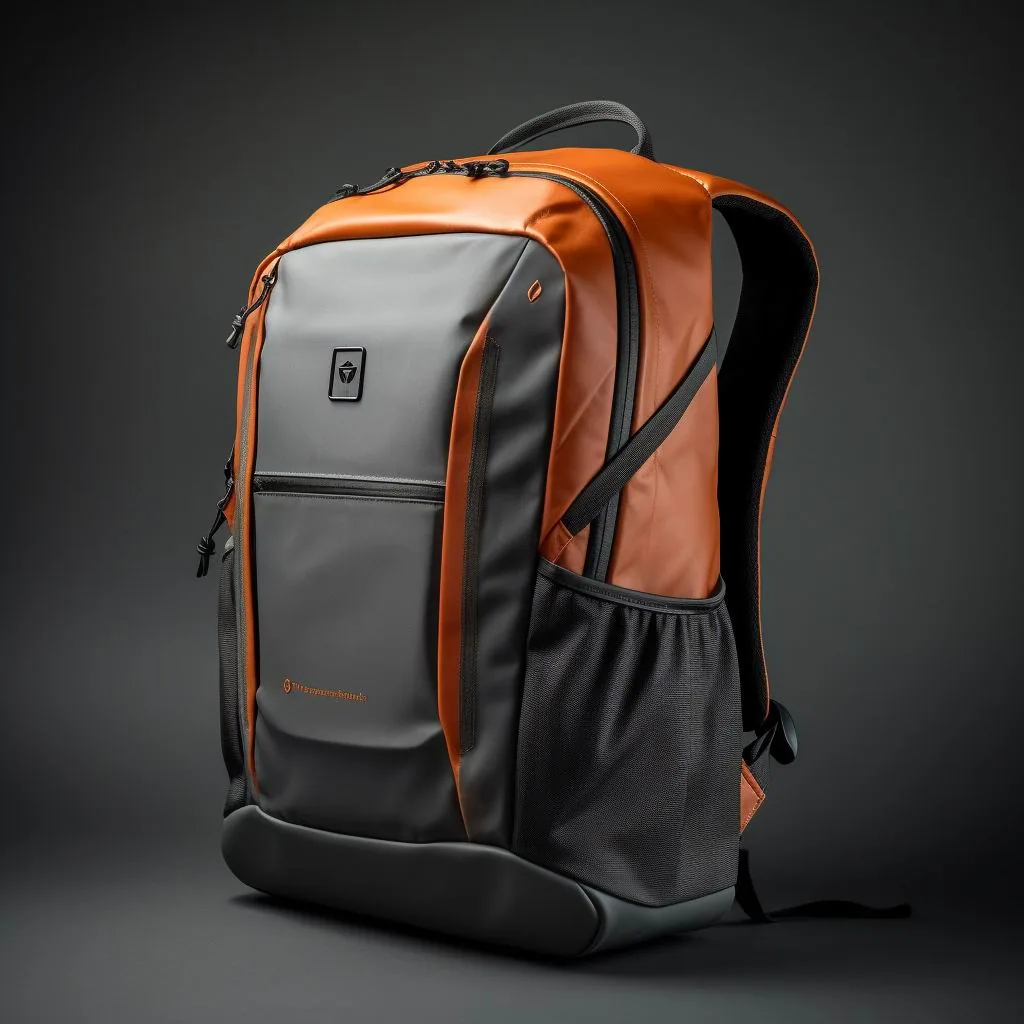
Polyester backpacks degrade because water and heat cleave the ester bonds in the polymer chain and because ultraviolet radiation breaks those same bonds at the surface, and in the British climate the coating fails long before the fabric does. A 600D polyester shell keeps 85-92% of its tensile strength after ten years of dry indoor storage, but the same fabric in a warm humid hallway loses 25-40% within 4-7 years as the polyurethane coating hydrolyses, turns chalky and separates from the cloth. Ultraviolet exposure compounds this: a shell left in direct sun for 300-400 hours loses 30-45% of its tear strength. The practical consequence for UK owners is that a travel bag used hard for five years and stored damp will fail by coating flake and seam weeping rather than by the yarn wearing through, typically at a repair cost of £12-35 against a replacement at £70-190. Polyester is not a weak material: it retains 85-92% of tensile strength after a decade of dry storage, and the chemistry only turns against it in warm humid conditions.
The failure looks like age but it is chemistry, and it is largely preventable. Three variables control the rate of loss: storage humidity, storage temperature and cumulative ultraviolet dose, and each one sits within an owner's control rather than the factory's. Getting them right is worth £70-190 in avoided replacement over a decade of British travel use.
This guide explains the mechanism, the test methods used to measure it, and the specification choices that slow it down. Our travel backpack guide applies the same reasoning to pack selection.
What Hydrolysis Is and Why It Attacks Polyester
Polyester is a condensation polymer: its chains are linked by ester bonds formed by reacting an acid with an alcohol and splitting out water. Hydrolysis is the reverse reaction. A water molecule attacks the ester bond, the chain breaks, and the molecular weight falls. Fewer, shorter chains mean lower tensile strength, lower tear strength and a fabric that cracks rather than flexes.
The reaction is catalysed by both acid and alkali and accelerates sharply with temperature. As a working rule from accelerated ageing data, every 10 °C rise roughly doubles the rate. A bag stored at 25 °C and 80% relative humidity degrades about twice as fast as the same bag at 15 °C and 50% humidity, which is exactly the difference between a damp British hallway cupboard in July and a dry loft in February.
Critically, the visible failure is usually in the coating, not the yarn. Polyurethane coatings are themselves ester-based unless specified otherwise, and they hydrolyse faster than the fabric beneath them because they are thinner and more exposed to trapped moisture. That is why the first symptom is a grey powder inside the bag rather than a hole in the outside. Accelerated ageing methods are described in ISO 1419, and the inspection protocol our production team uses is set out in our travel pack durability notes.
Hydrolysis and UV Compared: Nylon Versus Polyester
The two dominant backpack polymers fail in different ways, and the differences are large enough to drive a buying decision. Figures below are typical production values from accelerated ageing at 70 °C and 95% relative humidity, which approximates roughly five years of warm humid British storage in a 7-day exposure.
| Property | Polyester (PET) | Nylon 6,6 | Practical meaning |
|---|---|---|---|
| Water absorption | under 0.4% | 3.5-4.5% | Nylon sags when wet |
| Tensile loss after 7 d at 70 °C/95% RH | 18-32% | 8-15% | Polyester degrades faster |
| Tear loss after 300 h xenon arc | 18-28% | 30-45% | Nylon is worse in UV |
| Light fastness (blue wool) | grade 5-6 | grade 4-5 | Polyester holds colour |
| Hydrolysis resistance | moderate | good | Nylon lasts longer damp |
| Wet-strength retention | 96-99% | 85-92% | Polyester holds load wet |
| Coating adhesion after ageing | 60-75% | 75-88% | First visible failure point |
| Typical UK shell life | 5-8 years | 7-12 years | Nylon costs 40-65% more |
Read the table as a trade rather than a verdict. Polyester is better in sunlight and better when wet, but worse in warm humid storage. For a British travel bag that spends most of its life in a cupboard and gets taken out for two or three trips a year, that is the wrong side of the trade. Our travel backpack guide specifies nylon for exactly this reason.
Ultraviolet Damage: What the Test Data Shows
Ultraviolet radiation breaks polymer chains directly and generates free radicals that continue the damage after exposure ends. The effect is concentrated in the top 0.05-0.15 mm of the fabric, which is why it shows first as colour change and surface chalking rather than as a strength loss you can feel. Colour fastness to light is graded on the blue wool scale under ISO 105-B02, where grade 8 is unchanged and grade 1 is severe fading.
The dose matters more than the intensity. A travel bag used for two weeks a year in Mediterranean sun accumulates 60-90 hours of strong exposure annually, so 300-400 hours of meaningful dose takes four to six years. A commuting bag left on a south-facing office windowsill accumulates far more than owners expect, because glass transmits most of the UV-A that drives the reaction.
Nylon is the more vulnerable polymer here, losing 30-45% of tear strength after 300 hours of xenon-arc exposure against 18-28% for polyester, and it is why lightweight nylon hill packs are the category where UV failure is most visible. Solution-dyed yarn, in which the pigment is added to the polymer melt rather than dyed onto the finished cloth, lifts light fastness by one to two grades for £2.50-5.00 per pack and is the single most effective countermeasure. Our vetted partner facilities run a 300-hour xenon-arc screen on every travel shell in our UK travel range.
How Degradation Is Measured in a Laboratory
Four tests cover almost everything a buyer needs. Accelerated ageing under ISO 1419 exposes samples to elevated temperature and humidity, typically 70 °C at 95% relative humidity for 7, 14 or 28 days, and compares tensile strength before and after. Xenon-arc exposure simulates sunlight with a filtered spectrum and is usually run for 150, 300 or 500 hours.
Tensile strength itself is measured on a strip specimen under ISO 13934-1, which pulls a 50 mm wide strip at a constant rate and records the breaking force in newtons. The companion tear test, ISO 13937-2, is the more sensitive indicator of early degradation because tear strength falls faster than tensile strength in aged fabric.
Abrasion is measured by ISO 12947-2 on the Martindale machine, and it is used here as a secondary check: an aged coating abrades off far faster than a new one, so a drop in abrasion cycles is often the earliest measurable sign of hydrolysis. Our SGS-verified production base runs all four on retained samples from every production lot, keeping them for 36 months so that a field complaint can be compared against the original data. That retention protocol is described in our travel pack quality notes.
Why British Storage Conditions Are Particularly Hostile
The UK is a difficult place to store a backpack. Typical indoor relative humidity in a British home runs 55-75% in winter and 60-80% in summer, and internal temperatures in an airing cupboard or a loft regularly reach 28-35 °C in July. That combination sits exactly in the band where ester hydrolysis accelerates, and it is the reason a bag stored in an airing cupboard fails two to three years earlier than the same bag stored under a bed.
Rainfall adds a second mechanism. Western Britain sees 150-180 wet days a year and upland areas of the Lake District and western Scotland record 1,200-3,000 mm of annual rainfall, according to Met Office climate normals. A travel pack that comes home damp and is folded into a cupboard carries that moisture into storage, and mould establishes itself in 10-21 days at normal room temperature.
The practical mitigation is cheap and effective. Dry the pack fully within 24 hours, hang it open and inverted rather than folded, store it at under 60% relative humidity and below 22 °C, and keep it out of direct sunlight. Those four steps typically extend coating life from 4-7 years to 8-12 years, which is worth £70-190 in avoided replacement. Our travel pack storage guide gives the full routine.
How to Spot Degradation Before It Becomes Failure
There is a reliable sequence of warning signs, and catching the first one is the difference between a £12 fix and a £150 replacement. Stage one is loss of beading: water stops forming droplets on the outer face and instead spreads and darkens the cloth. That is the DWR finish gone, and it costs £6-12 and 20 minutes to restore.
Stage two is a chalky grey bloom on the inside face of the shell, accompanied by a faint sweet or vinegar smell. That is the polyurethane coating hydrolysing, and it is irreversible. The bag is still structurally sound and will remain usable for 12-24 months, but it will weep water through the coating rather than shedding it, and the flakes will contaminate the contents.
Stage three is coating separation, where the film lifts from the cloth in sheets and the fabric underneath appears in patches. At this point the shell has lost 40-60% of its effective strength at the affected areas and will tear under loads it previously carried. Stage four is yarn failure, and it is surprisingly rare: most British travel bags are retired at stage two or three, long before the yarn itself wears out. Our travel pack inspection checklist walks through each stage with photographs.
Repair, Re-Coat or Replace: UK Cost Thresholds
The decision is arithmetic. A professional re-coat is not economically available in the UK for a consumer bag, so the realistic options are a DIY re-proof at stage one, continued use at stage two, and replacement at stage three. The table sets out the thresholds using typical British prices.
| Degradation stage | Symptom | UK remedy cost | Remaining life |
|---|---|---|---|
| Stage 1: DWR loss | No beading, face wets out | £6-12 DIY | 12-18 months |
| Stage 2: Coating chalking | Grey bloom, vinegar smell | £0-15 liner | 12-24 months |
| Stage 3: Coating separation | Film lifts in sheets | £25-45 patch | 3-9 months |
| Stage 4: Yarn failure | Tears under normal load | Replace | 0 months |
| New mid-range replacement | 600D polyester, 40 L | £70-130 | 5-8 years |
| New premium replacement | Nylon with polyether PU | £130-190 | 8-12 years |
| Professional repair service | Panel replacement | £35-75 | 2-5 years |
The rule of thumb: spend on repair while the bag is below roughly 30% of replacement cost and the failure is localised. Once coating separation is widespread, a £130-190 replacement with a polyether-based coating is the better use of money. Our travel backpack guide applies the same threshold to every model reviewed.
Specifying for Longevity on a Custom Travel Order
Four specification decisions determine how long a polyester travel shell lasts, and all four are cheap relative to their effect. Use a polyether-based rather than an ester-based polyurethane coating: it costs £2-5 more per pack and roughly doubles coating life from 4-7 years to 8-12. Specify solution-dyed yarn for dark shades, at £2.50-5.00, to lift light fastness by one to two grades.
Third, require a coating weight of at least 35 g/m² on any shell intended for a humid market, because thin coatings under 25 g/m² hydrolyse through in under four years. Fourth, insist on a hydrolysis-resistant seam-sealing tape, since a tape that fails at 3-4 years turns a water-resistant bag into a leaking one regardless of how good the shell is.
Commercial terms are unchanged by any of this. MOQ 500 pcs per colourway, sampling 6-10 working days, bulk production 35-50 days from sample approval, and incoming inspection to ISO 2859-1 at AQL 2.5. What changes is the test schedule: our production team adds a 7-day accelerated ageing at 70 °C and 95% relative humidity to the pre-production approval, and rejects any shell losing more than 20% of its tensile strength. Our 4,950 m² SGS-verified production floor runs that screen as standard for UK-bound travel packs, and the protocol is published in our travel pack specification guide.
Failure Modes That Are Not Chemical
Not every degraded bag is a chemistry story, and misdiagnosis is common. Mould is the most frequently confused condition: it presents as dark spotting with a musty rather than a vinegar smell, it grows on the surface rather than within the coating, and it responds to cleaning at £4-9 whereas hydrolysis does not respond to anything. Mould establishes in 10-21 days at typical British room temperature once the fabric is damp.
Abrasion is the second confusable condition. Thinning at the base corners and along the lower back panel is mechanical, not chemical, and it is distinguished by fibre exposure rather than powder. It appears at 24-48 months of heavy travel use and is unaffected by storage conditions, which is the diagnostic: if a bag stored dry degrades at the same rate as one stored damp, the problem is abrasion.
Hardware corrosion is third, and it is common on travel bags that have seen coastal or tropical use. Salt spray testing is covered by ISO 9227, and a zip slider or buckle that has seized after exposure to sea air is a hardware problem that no fabric specification will solve. Our travel pack hardware guide covers the material choices.
Verdict: Should You Still Buy Polyester?
Yes, for most British buyers, but buy it with the failure mode in mind. Polyester absorbs under 0.4% water against 3.5-4.5% for nylon, holds light fastness at grade 5-6 against grade 4-5, and costs 40-65% less. Those are real advantages for a bag that gets wet regularly and sits in sunlight.
The honest caveat is storage. If your bag lives in an airing cupboard or a damp hallway, expect the coating to chalk at 4-7 years rather than 8-12, and either change where you store it or pay the premium for nylon with a polyether-based coating.
The specification we recommend is 600D or 900D polyester, polyether PU at 35-45 g/m², solution-dyed yarn in dark shades, and a DWR on the face renewed every 12-18 months at £6-12. That combination delivers 6-9 years of British travel use at £70-190 and is what our production team specifies for the mid-range of our UK travel backpack range.
Frequently Asked Questions
What causes a polyester backpack to degrade in British storage conditions?
Warm humid air cleaves the ester bonds in the polymer chain, a reaction called hydrolysis that roughly doubles in rate for every 10 °C rise. A British airing cupboard at 28-35 °C and 60-80% relative humidity sits squarely in the danger band, and the polyurethane coating hydrolyses faster than the fabric beneath it, chalking at 4-7 years. The coating fails first because it is thinner and more exposed to trapped moisture than the cloth beneath it.
How can I tell the difference between mould and coating hydrolysis?
Mould presents as dark surface spotting with a musty smell and appears within 10-21 days of the bag getting damp; it responds to cleaning at £4-9. Hydrolysis presents as a chalky grey bloom on the inside face with a faint vinegar smell at 4-7 years and is irreversible. Surface growth versus powder inside the coating is the diagnostic. If a bag stored dry degrades at the same rate as one stored damp, the problem is abrasion, not chemistry.
How much tensile strength does polyester lose under accelerated ageing tests?
Under ISO 1419 conditions of 70 °C and 95% relative humidity for 7 days, which approximates five years of warm humid storage, polyester loses 18-32% of tensile strength against 8-15% for nylon 6,6. Tear strength falls faster than tensile strength in aged fabric, which is why ISO 13937-2 is the more sensitive early indicator. Our production team rejects any travel shell losing more than 20% of tensile strength in that screen.
Is nylon or polyester better for a backpack stored in a humid UK home?
Nylon, for humid storage specifically. It loses only 8-15% of tensile strength under accelerated ageing against 18-32% for polyester, and its coating adhesion after ageing holds at 75-88% against 60-75%. The cost is a 40-65% fabric premium, and nylon is worse in UV, losing 30-45% of tear strength after 300 hours of xenon-arc exposure. For bags that sit in strong sun rather than damp cupboards, polyester is the better polymer.
How much ultraviolet exposure does it take to damage a backpack shell?
Around 300-400 hours of meaningful dose, which is four to six years for a travel bag used two weeks a year in strong sun. Nylon loses 30-45% of tear strength at that dose against 18-28% for polyester. A commuting bag on a south-facing windowsill accumulates far more than owners expect, because glass transmits most UV-A. Solution-dyed yarn lifts light fastness by one to two grades for £2.50-5.00 per pack.
What are the four warning stages before a backpack fabric fails?
Stage one is loss of beading, fixed for £6-12 with a spray. Stage two is a chalky grey bloom with a vinegar smell, giving 12-24 months of remaining use. Stage three is coating separation in sheets, with 3-9 months left. Stage four is yarn failure under normal load, at which point replacement is the only option. Most British travel bags are retired at stage two, long before the yarn itself wears out.
How much does it cost to fix a degraded backpack coating in the UK?
A DIY re-proof at stage one costs £6-12 and restores 12-18 months. There is no economically viable professional re-coat for a consumer bag, so stage three means a £25-45 patch for localised damage or a £70-190 replacement if it is widespread. Spend on repair while the cost stays under about 30% of replacement. Once separation is widespread, a £130-190 replacement with a polyether coating is the better use of money.
What coating specification should I ask for on a polyester backpack?
Ask for a polyether-based polyurethane at 35-45 g/m² rather than an ester-based coating. Polyether costs £2-5 more per pack and roughly doubles coating life from 4-7 years to 8-12. Also request solution-dyed yarn in dark shades at £2.50-5.00, which lifts light fastness by one to two grades on the blue wool scale. Thin coatings under 25 g/m² hydrolyse through in under four years, so 35 g/m² is the practical floor.
How should I store a backpack to slow down polyester degradation?
Dry it fully within 24 hours, hang it open and inverted rather than folded, keep it below 22 °C and under 60% relative humidity, and keep it out of direct sunlight. Those four steps typically extend coating life from 4-7 years to 8-12 years, which is worth £70-190 in avoided replacement over the life of the bag. Avoid airing cupboards, which routinely reach 28-35 °C in July and accelerate the reaction sharply.
What is the minimum order quantity for a custom polyester travel backpack?
MOQ 500 pcs per colourway, with sampling at 6-10 working days and bulk production 35-50 days from sample approval. Incoming fabric is inspected to ISO 2859-1 at AQL 2.5. Our production team adds a 7-day accelerated ageing screen at 70 °C and 95% relative humidity and rejects any shell losing more than 20% of tensile strength. Retained samples from every lot are kept for 36 months so field complaints can be compared against original data.
Which laboratory standards measure fabric degradation for backpacks?
Four cover it: ISO 1419 for accelerated ageing under heat and humidity, ISO 105-B02 for colour fastness to light on the blue wool scale, ISO 13934-1 for tensile strength in newtons and ISO 13937-2 for tear strength. ISO 12947-2 abrasion is a useful secondary check, because an aged coating abrades off far faster than a new one. Retained-sample comparison against the original data is what turns a test report into a usable diagnostic.
Does a wet polyester backpack lose strength compared to a dry one?
Very little. Polyester retains 96-99% of its dry strength when wet because it absorbs under 0.4% of its weight in water, against 85-92% for nylon at 3.5-4.5% absorption. That is why polyester shells do not sag or stretch in a British downpour, even though they hydrolyse faster over years of damp storage. The gap matters most on multi-day trips, where a nylon shell gains 200-400 g of absorbed water.
How long should a polyester travel backpack last in normal UK use?
Five to eight years for a mid-range 600D polyester shell, extending to 8-12 years with a polyether-based coating, solution-dyed yarn and dry storage. Most bags are retired at stage two coating chalking rather than yarn failure, which is why storage habits matter more than the denier printed on the label. Storage habits matter more than the denier printed on the label, which surprises most buyers.
Get a Free Quote for Custom Why Polyester Backpacks Degrade
Planning a branded programme? Our production team works to MOQ 500 pcs, 6-10 working day sampling and 35-50 day bulk lead times, with AQL 2.5 inspection to ISO 2859-1. Send your brief and we will return a costed quotation in 24-48 hours.
Mens Backpack Guide Editorial Team — Buying guides and sourcing notes for the UK men's backpack market, coordinated by QUANZHOU JUNYUAN BAGS. Commercial figures such as MOQ 500 pcs, 6-10 day sampling and 35-50 day production reflect published programme terms.