Table of Contents
- Photography Day Out: The Direct Answer
- What One Body and Two Lenses Actually Needs
- Insert vs Dedicated Bag: Protection Compared
- Rain, Condensation and British Weather Protection
- Laptop, Tablet and the Editing-on-the-Train Case
- Access Speed: The Side-Access Question
- Security, Discretion and the City-Day Problem
- Maintenance, Cleaning and Kit Longevity
- Specification Checklist for a Photography Day Pack
- Group Orders for Camera Clubs and Training Courses
- Tripods, Filters and the Accessories That Change the Pack
- Frequently Asked Questions
Photography Day Out: The Direct Answer
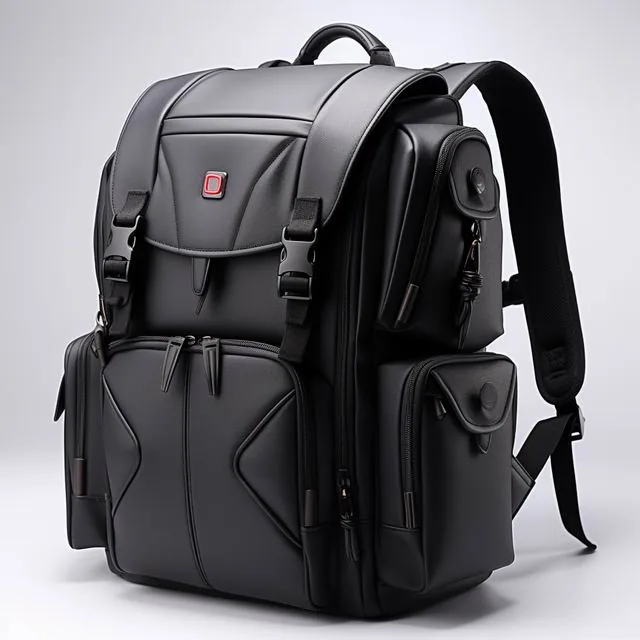
For a British day out with one body and two lenses, a padded insert in a 24-30 litre everyday pack is the better choice if you also carry a laptop, food or a coat, and a dedicated camera backpack is better if the camera is the only reason for the trip. The insert route weighs 1.55-2.35 kg all-in - a 24-30 litre pack at 1,050-1,550 g plus a 380-650 g insert plus a 1.4-1.9 kg body and lens set - and gives you one bag for everything. The dedicated camera bag route weighs 1.9-3.1 kg for the same kit and protects it better, but it announces its contents in a city, offers no room for a 600-950 g coat or a 400-700 g lunch, and has no laptop sleeve on most models below GBP 130. For a British day out that mixes photography with walking, eating and a train journey, the insert wins on total weight and on not looking like a camera bag in a crowded place. Whichever route you take, the specification that matters is the drop protection and the rain protection.
A 1.4-1.9 kg body and lens set costs GBP 900-3,600 and survives a 800 mm drop onto concrete with 10-14 mm of closed-cell foam around it and not with 6 mm. Britain gives a photographer 150-220 wet days a year, so the insert or the bag needs a rain cover at 180-260 g and a shell at 1,500-2,500 mm on a camera-carrying pack.
What One Body and Two Lenses Actually Needs
Size the insert from the gear, not from the marketing. A full-frame body is 145 x 110 x 80 mm and 650-850 g; an APS-C body is 130 x 100 x 75 mm and 450-620 g. A 24-70 mm f/2.8 zoom is 120 x 88 mm and 800-900 g; a 35 mm or 50 mm prime is 65 x 60 mm and 280-450 g; a 70-200 mm f/2.8 is 200 x 88 mm and 1,300-1,530 g. Body plus two lenses is 1.4-2.9 kg depending on the set.
That translates to 5-9 litres of protected volume with dividers: 2.5-3.5 litres for the body with a lens attached, 1.2-1.8 litres per additional lens and 0.4-0.8 litres for a filter pouch, two spare batteries at 80 g each and two 60 g memory cards. An insert of 6-10 litres at 380-650 g covers it, which is why most inserts are sold in 6, 8 and 10 litre sizes.
| Configuration | Insert volume (L) | Insert mass (g) | Pack needed | Total with body + 2 lenses (kg) |
|---|---|---|---|---|
| APS-C + 2 primes | 6 L | 380-480 | 24 L | 1.55-2.05 |
| APS-C + 24-70 + prime | 8 L | 480-560 | 26-28 L | 2.05-2.55 |
| Full frame + 24-70 + 70-200 | 10-12 L | 560-720 | 30-34 L | 2.75-3.45 |
| Full frame + 2 primes | 8 L | 480-560 | 26-28 L | 2.35-2.85 |
| Mirrorless + 3 primes | 8-10 L | 480-650 | 26-30 L | 1.85-2.45 |
Read the last column and add the rest of the day: a 500 ml bottle at 500 g, lunch at 400-700 g, a 600-950 g shell and a 1.4 kg laptop. That takes the total to 4.0-6.5 kg, which is 5-8% of an 80 kg photographer's bodyweight and comfortable for a 3-6 km walk on a day-out backpack. Cell safety testing for the power bank that runs a day of editing is defined under IEC 62133-2, published by the International Electrotechnical Commission.
Insert vs Dedicated Bag: Protection Compared
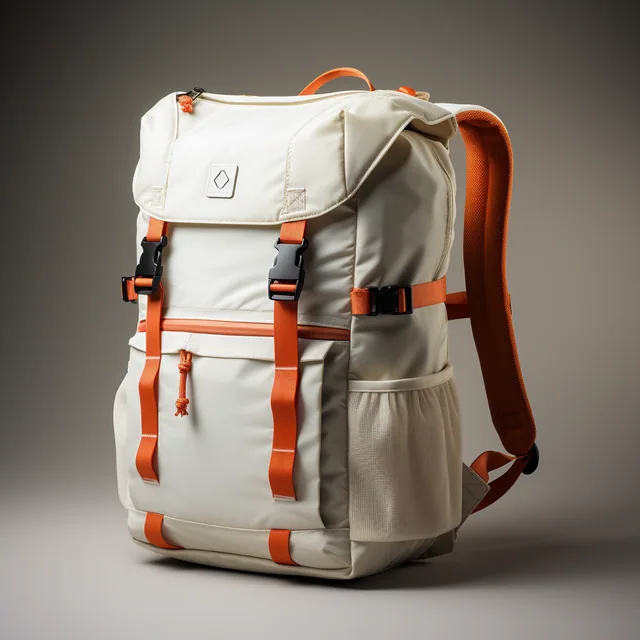
Protection is the one area where the dedicated bag wins. A camera bag has 12-18 mm of closed-cell foam on all six faces and a rigid base board, and it holds a 1.4 kg body immobile when the bag is set down hard. An insert has 10-14 mm and a semi-rigid base, and it relies partly on the host pack's own structure. In an 800 mm drop test onto concrete, a dedicated bag transmits 25-40 g of peak acceleration to the body and an insert 40-70 g.
Access is the counter-argument for the insert. A dedicated camera bag opens from the back panel, which means putting the bag down on the ground - wet, muddy or gritted - to change a lens. An insert in a side-access host pack lets you swing the pack round on one strap and change a lens in 15-25 seconds without setting it down. On a British towpath in November that difference matters four to six times a day.
Cost is roughly equal. A 8-litre insert costs GBP 35-95 and a 26-litre host pack GBP 70-160, so GBP 105-255 for a system that also carries a laptop and lunch. A dedicated camera bag with a laptop sleeve costs GBP 130-290 and carries nothing else. If you already own a good everyday pack, the insert route costs GBP 35-95 rather than GBP 130-290 on a photography day out.
Rain, Condensation and British Weather Protection
Rain is the British photography problem. A camera body is rated to IPX0-IPX2 at best and a 24-70 mm zoom has a rubber gasket at the mount that resists splashes but not sustained rain. Britain gives 150-220 wet days a year depending on region, so a day out will involve rain on 30-50% of days between October and March. Carry a rain cover at 180-260 g and a 60-90 g dry bag for the body.
A rain cover on a host pack works if the pack is upright; a camera bag worn on the back while you shoot is horizontal and the cover does not seal. The practical answer for a shooting day is a 60-90 g camera rain sleeve at GBP 8-22, which covers a body with a 70-200 mm attached and lets you shoot in 8-12 mm an hour of rain for 30-60 minutes. Keep the host pack's cover for the walking sections.
Condensation is the quieter risk. A cold camera brought into a 21-degree pub or café at 4 degrees outside condenses 1-3 g of water on the coldest surface, which is the front element and the sensor chamber. Put the camera in a sealed 6-10 litre dry bag before you go indoors and leave it for 15-25 minutes to reach room temperature. A 20 g silica sachet in the insert absorbs 6-8 g and costs GBP 4-9 for ten on a camera pack.
Laptop, Tablet and the Editing-on-the-Train Case
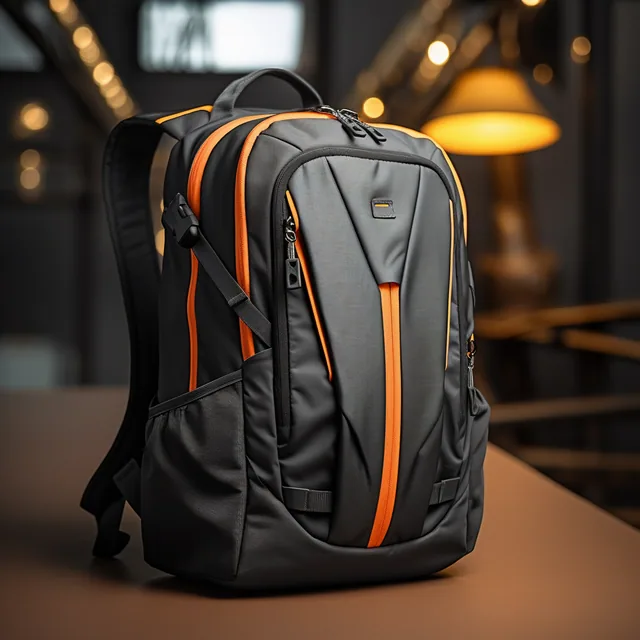
A photography day out often ends with editing on the train, which means carrying a 1.4-1.9 kg laptop plus the camera kit. That is 2.8-3.8 kg of fragile electronics in one pack, and the layout matters: laptop flat against the back panel in a suspended sleeve, camera insert in the lower half of the main compartment, and nothing heavy in an outer pocket that could press on either.
Capacity for both needs 26-30 litres: 8 litres of insert, 1.6 litres of laptop sleeve, 2.5-3.5 litres of lunch, coat and water and 4-6 litres of compression headroom. A 26-litre pack at 1,050-1,350 g is the sweet spot; below 24 litres the insert and the sleeve compete for the same space and one of them ends up under-padded on a photo-and-laptop pack.
Power is the last piece. Editing a 40-60 image set on a 14-inch laptop uses 30-55 Wh, which is 40-75% of a 65-75 Wh battery. A 20,000 mAh power bank at 380-450 g and 74 Wh adds 1.0-1.5 full charges and is within the 100 Wh aviation limit if you fly. A 65 W USB-C charger at 200-260 g and a 2 m cable at 90 g complete the kit at 670-800 g for the whole editing setup.
Access Speed: The Side-Access Question
Access speed decides whether you get the shot. A top-loading dedicated bag takes 8-15 seconds to swing round, unzip and extract a body. A side-access host pack with the insert oriented body-down takes 6-12 seconds. A front-opening insert in a clamshell pack takes 12-20 seconds because the pack must be laid flat. Over a day with 20-40 camera extractions, the difference is 4-8 minutes of standing around.
Orientation matters as much as access. Load the insert with the body lens-down and the grip up, so you lift the camera out by the grip in one motion. Keep the second lens in the adjacent divider, reachable without moving the body. And put a 60 g lens cloth and a 40 g blower in the top flap of the insert rather than in a pack pocket, because a rain-spotted front element costs you 3-5 images.
Straps and swing are the last variable. A host pack with a stabilised harness and a sternum strap lets you swing it round on one shoulder without the load sliding, which is what makes a one-handed lens change possible. A pack without a sternum strap slides 60-90 mm on the swing and needs two hands, which means putting the bag down on a wet British path.
Security, Discretion and the City-Day Problem
A dedicated camera bag announces GBP 900-3,600 of equipment to everyone in a crowded place. A plain 26-litre pack with an insert inside looks like a commuter bag, which is worth more than any lock on a British high street or a busy station. Camera theft is concentrated at transport hubs and tourist viewpoints, and the single best defence is not looking like a target.
Where you do need security, use it on the pack rather than the insert. A rear-facing laptop sleeve with the zip on the back-panel side, a lockable main zip at 40-70 g and GBP 4-9, and a hidden 200 x 130 mm document pocket behind the back foam. Keep the pack in front of you on a crowded train and never set it down at a viewpoint while you shoot from 5 m away.
Insurance closes the gap. A camera body and two lenses at GBP 900-3,600 is usually covered under a British home contents policy with personal possessions cover, at GBP 40-120 a year, but only if the item is specified and only with a GBP 100-250 excess. Dedicated camera insurance costs GBP 90-260 a year with worldwide cover and no excess. Compare both against a GBP 35-95 insert and a GBP 8-22 rain sleeve on a photography kit.
Maintenance, Cleaning and Kit Longevity
Clean the insert and the pack together. A camera insert collects grit, which abrades a lens barrel over 12-24 months, so vacuum the dividers monthly with a brush head in 90 seconds and shake out the base. A 40 g blower removes 90% of the dust from a divider seam; a 60 g lens cloth and a 30 ml cleaning fluid at GBP 6-14 handle the front element.
Wash the host pack on the standard cycle: 30 degrees, pH-neutral detergent, no fabric softener, every 8-12 weeks of use, then a fluorocarbon-free DWR re-proof at GBP 9-16 per 300 ml. Dry the insert separately and open for 8-12 hours, because a closed foam divider holds moisture for 24-36 hours and grows mould in a British hallway at 70-85% humidity within 6-10 weeks.
Replace the consumables on a schedule. Foam dividers compress after 24-36 months of daily loading and lose 20-30% of their thickness, which is when protection degrades: replace the insert at GBP 35-95 rather than the camera. Silica sachets regenerate in a 120-degree oven for 60 minutes or are replaced at GBP 4-9 for ten. A 20 g sachet in the insert is the cheapest insurance on a camera-carrying backpack.
Specification Checklist for a Photography Day Pack
Specify nine things. Capacity 26-30 litres. An insert of 8-10 litres with 10-14 mm closed-cell foam dividers and a semi-rigid base. A suspended laptop sleeve clearing 355 x 250 mm with 15 mm of floor clearance. A shell at 1,500-2,500 mm hydrostatic head. A rain cover at 180-260 g. A side-access opening on the host pack. A sternum strap and a stabilised harness for the swing.
Eight: a light-coloured lining, so a 40 g lens cloth takes 8 seconds to find rather than 40. Nine: two deep side pockets for a 500-750 ml bottle and a folded 60-90 g rain sleeve. Avoid a pack under 24 litres, which forces the insert and the laptop sleeve to compete for space, and avoid one with a curved back panel that will not let the insert sit flat on a photo day pack.
Budget GBP 105-255 for the insert and host pack system, or GBP 130-290 for a dedicated camera bag with a laptop sleeve. The system is cheaper if you already own a good pack, and it is the only route that carries lunch, a coat and a laptop as well. Add a 60-90 g rain sleeve at GBP 8-22 and a 20 g silica sachet, and the whole kit is protected for under GBP 300.
Group Orders for Camera Clubs and Training Courses
Camera clubs, photography courses and corporate media teams buy packs and inserts in volume, and the specification is set by the insert geometry rather than by the pack. Our production team works to a MOQ 500 pcs per colourway, with sampling 6-10 working days from tech-pack sign-off and bulk production 35-50 days after approval, inspected to AQL 2.5 (ISO 2859-1) under the sampling system published by the International Organization for Standardization.
For a group order, the specifications to fix are the insert volume, the divider thickness, the foam density and the laptop sleeve clearance. Our SGS-verified production base holds an 8-litre insert with 12 mm dividers at 25 kg per cubic metre density across a 500-piece run, verifies the 355 x 250 mm sleeve clearance on 32 pieces per batch, and applies a club crest by screen print at GBP 0.35-0.85 or embroidery at GBP 1.20-2.60 per unit.
Budget GBP 22-38 ex-works and GBP 31-53 landed per 26-litre pack with an 8-litre insert at 500 pieces, against GBP 105-255 retail for the same specification. Every bulk camera club pack order ships with the UKCA declaration and the REACH statement required for the Great Britain market, and with the foam and fabric test references recorded on the golden sample. See the laptop backpack range for sleeve clearances and device protection.
Tripods, Filters and the Accessories That Change the Pack
A tripod is the accessory that breaks a photography pack. A travel tripod at 1.1-1.6 kg and 350-420 mm folded does not fit inside a 26-30 litre pack alongside an 8-litre insert, and it must be carried externally in two side compression straps or a dedicated tripod sling. Check that the pack has two lower compression straps rated to hold 1.6 kg, because a tripod bouncing at 25-40 mm per step abrades the shell in 4-8 outings.
Filters and small items are the opposite problem: they disappear. A 100 mm filter system at 180-320 g, a 60 g lens cloth, a 40 g blower, two 80 g batteries and two 60 g cards are 500-640 g of small items that take 40-90 seconds to find in a single-compartment pack. Use a 1-2 litre tech pouch at 90-160 g with four elastic loops and a mesh lid, and keep it in the top third of the main compartment where it is reachable in 8-15 seconds.
A rain sleeve, a 20 g silica sachet and a 60-90 g dry bag complete the accessory set at 240-350 g and GBP 26-54. Together with the insert and the host pack, the full photography-day system is 4.0-6.5 kg in 26-30 litres, and it costs GBP 105-255 for the pack and insert plus GBP 26-54 for the accessories. That is the realistic budget for carrying a GBP 900-3,600 kit safely on a British day out.
Frequently Asked Questions
Should I use a camera insert or a camera backpack?
An insert if you also carry a laptop, lunch or a coat, and a dedicated bag if the camera is the only reason for the trip. The insert route is 1.55-2.35 kg all-in and costs GBP 35-95 if you already own a pack; a dedicated bag is 1.9-3.1 kg and GBP 130-290. The dedicated bag protects better in a drop; the insert is lighter, cheaper and does not look like camera gear.
What size camera insert do I need for two lenses?
8 litres for a body with a 24-70 mm attached plus one prime, or 10-12 litres if the second lens is a 70-200 mm f/2.8. Allow 2.5-3.5 litres for the body, 1.2-1.8 litres per additional lens and 0.4-0.8 litres for batteries, cards and filters. A 6-litre insert suits an APS-C body with two primes, at 380-480 g. A 70-200 mm f/2.8 alone needs 1.8-2.4 litres and measures 200 x 88 mm.
How much foam protects a camera in a backpack?
10-14 mm of closed-cell foam in an insert and 12-18 mm in a dedicated bag, with a rigid or semi-rigid base board. In an 800 mm drop test onto concrete, a dedicated bag transmits 25-40 g of peak acceleration to the body and an insert 40-70 g. A GBP 900-3,600 body and lens set justifies the thicker dividers and a semi-rigid base.
Can I carry a camera and a laptop in one backpack?
Yes, in 26-30 litres: 8 litres of insert, 1.6 litres of suspended laptop sleeve clearing 355 x 250 mm, and 2.5-3.5 litres for lunch, coat and water, with 4-6 litres of headroom. Below 24 litres the insert and the sleeve compete for space and one ends up under-padded. Put the laptop flat against the back panel and the insert in the lower half.
How do I protect a camera from British rain?
Carry a 180-260 g rain cover for the walking sections and a 60-90 g camera rain sleeve at GBP 8-22 for the shooting sections, which covers a body with a 70-200 mm attached in 8-12 mm an hour of rain for 30-60 minutes. Britain gives 150-220 wet days a year, so a day out involves rain on 30-50% of days between October and March.
What causes a camera to fog up when going indoors?
Condensation. A camera at 4 degrees brought into a 21-degree room condenses 1-3 g of water on the coldest surface, which is the front element and the sensor chamber. Put the camera in a sealed 6-10 litre dry bag before you go indoors and leave it 15-25 minutes to reach room temperature. A 20 g silica sachet in the insert absorbs 6-8 g and costs GBP 4-9 for ten.
How fast can I change a lens from a backpack?
6-12 seconds from a side-access host pack with the body loaded lens-down and grip up, without setting the bag down. A top-loading dedicated bag takes 8-15 seconds and requires putting the bag on the ground. Over a day with 20-40 extractions the difference is 4-8 minutes, and on a wet British towpath it also means not laying the bag in mud.
Is a camera backpack a theft risk in British cities?
Yes. A dedicated camera bag announces GBP 900-3,600 of equipment at transport hubs and tourist viewpoints, which is where camera theft concentrates. A plain 26-litre pack with an insert inside looks like a commuter bag. Add a lockable main zip at 40-70 g and GBP 4-9, and check whether your home contents policy covers the kit with personal possessions cover at GBP 40-120 a year.
What power bank do I need for editing on a train?
20,000 mAh at 380-450 g and 74 Wh. Editing a 40-60 image set uses 30-55 Wh, which is 40-75% of a 65-75 Wh laptop battery. A 20,000 mAh bank adds 1.0-1.5 full charges and stays under the 100 Wh aviation limit. Add a 65 W USB-C charger at 200-260 g and a 2 m cable at 90 g, for 670-800 g of editing kit in total.
How often should I replace a camera insert?
Every 24-36 months of regular use. Closed-cell foam dividers compress and lose 20-30% of their thickness over that period, which is when drop protection degrades. A replacement insert costs GBP 35-95 against a camera body at GBP 900-1,900. Vacuum the dividers monthly in 90 seconds to remove the grit that abrades a lens barrel within 12-24 months. A replacement costs GBP 35-95 against a camera body at GBP 900-1,900.
What is the best pack size for a photography day out?
26-30 litres, with an 8-10 litre insert. That holds a body and two lenses at 1.4-2.9 kg, a 14-inch laptop at 1.4 kg, lunch at 400-700 g, a 600-950 g shell and a 500-750 ml bottle, for 4.0-6.5 kg total, or 5-8% of an 80 kg photographer's bodyweight. Add a 180-260 g rain cover and a 60-90 g camera sleeve.
Is a rain cover and a camera sleeve both needed?
Yes, both. A pack cover at 180-260 g seals only when the pack is upright, so it works for walking and not for shooting. A camera sleeve at 60-90 g and GBP 8-22 covers a body with a lens attached while you shoot in 8-12 mm an hour of rain for 30-60 minutes. Together they are 240-350 g and GBP 26-54 of insurance on a GBP 900-3,600 kit.
How do I keep lens dust out of my camera bag?
Vacuum the insert dividers monthly with a brush head in 90 seconds, shake out the base, and use a 40 g blower on the divider seams. Keep the body mount capped when a lens is off, and store the camera lens-down so gravity works against dust. A 60 g lens cloth and 30 ml of cleaning fluid at GBP 6-14 handle the front element after a gritty British towpath walk.
What should a camera club order specify at 500 pieces?
500 pieces per colourway with sampling 6-10 working days, bulk production 35-50 days and AQL 2.5 (ISO 2859-1) inspection. Fix the insert at 8 litres with 12 mm dividers at 25 kg per cubic metre density and the sleeve clearance at 355 x 250 mm. Budget GBP 22-38 ex-works and GBP 31-53 landed per 26-litre unit, against GBP 105-255 retail.
How much does a photography day pack system cost?
GBP 105-255 for an 8-litre insert at GBP 35-95 plus a 26-litre host pack at GBP 70-160, or GBP 130-290 for a dedicated camera bag with a laptop sleeve. Add GBP 8-22 for a rain sleeve and GBP 4-9 for silica sachets. The insert route is cheaper if you already own a pack and is the only option that carries lunch, a coat and a laptop as well.
Can I use a camera insert in any backpack?
Only in one with a flat back panel and enough depth. An insert needs 8-10 litres of unobstructed volume in the lower half of the main compartment, and a curved or heavily sculpted back panel will not let it sit flat. Check the internal base dimensions against the insert's footprint, typically 260 x 170 x 190 mm for an 8-litre unit, before you buy.
Get a Free Quote for Custom Photography Day Out
Planning a branded programme? Our production team works to MOQ 500 pcs, 6-10 working day sampling and 35-50 day bulk lead times, with AQL 2.5 inspection to ISO 2859-1. Send your brief and we will return a costed quotation in 24-48 hours.
Mens Backpack Guide Editorial Team — Buying guides and sourcing notes for the UK men's backpack market, coordinated by QUANZHOU JUNYUAN BAGS. Commercial figures such as MOQ 500 pcs, 6-10 day sampling and 35-50 day production reflect published programme terms.