Table of Contents
- How Do You Test If Your Backpack Is Really Waterproof?
- What Do Waterproof Claims Actually Mean in Practice?
- How Do You Run the Spray Test Properly?
- How Do You Test Seams, Zips and Closures?
- Why Do Some Bags Leak Only When You Are Wearing Them?
- How Often Should You Re-Test During Ownership?
- What Should You Do With a Failed Result?
- What Should Bulk Buyers Specify and Verify?
- Frequently Asked Questions
How Do You Test If Your Backpack Is Really Waterproof?
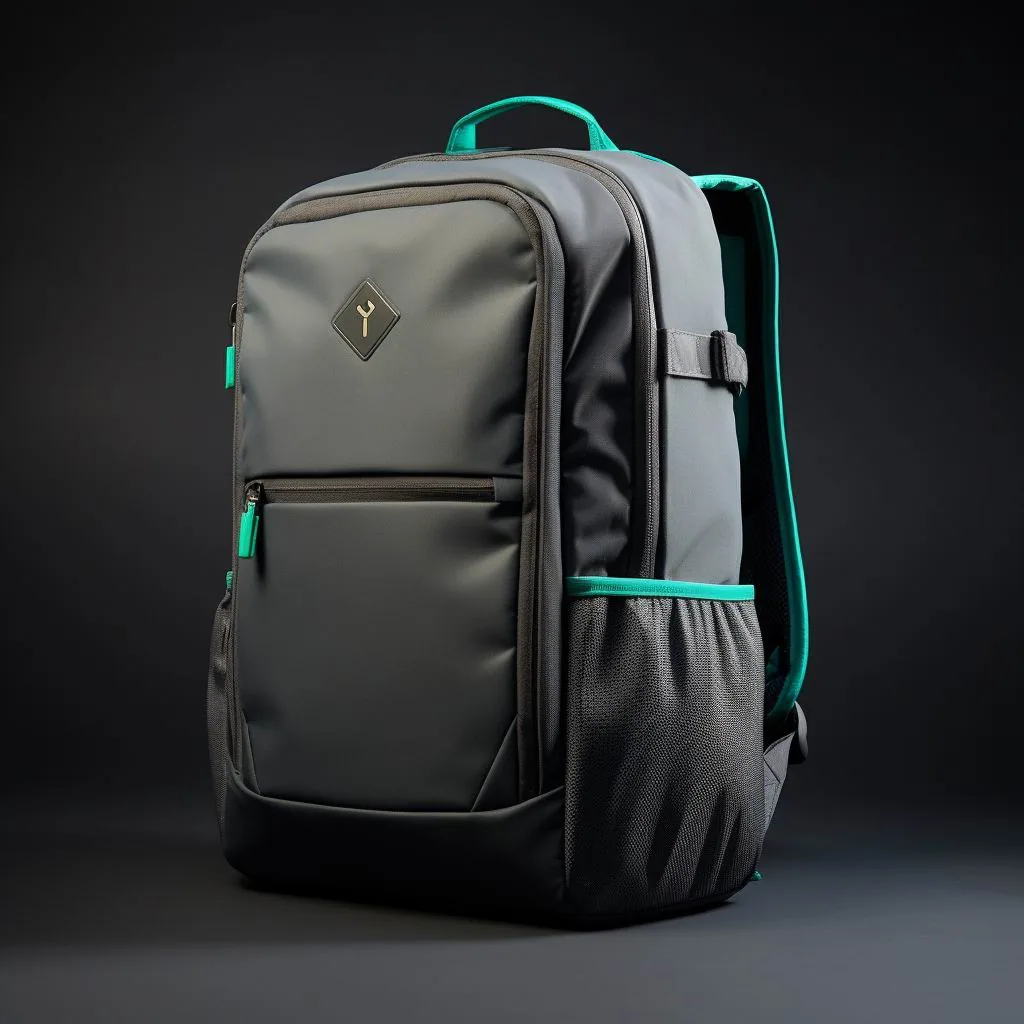
Fill the bag with dry paper towels to about 60% of its volume, hang it and spray it for nine minutes with the equivalent of 10 mm per hour of rainfall from a rose-headed watering can at one metre, then open it and check whether any paper is damp. Repeat the process standing the bag in 30 mm of water for twenty minutes to test the base, and test each seam individually with a damp cloth pressed along its length for sixty seconds. Three tests, twenty minutes total, and no ambiguity afterwards. Do this twice a year rather than trusting labels, because coatings age, seam tape lifts and zips wear, and none of that is visible from outside. Photograph each result with the date, since British retailers often accept a short video of a failed test as warranty evidence, which is far quicker than arguing about interpretation afterwards. Label every test result with the load you used, since results vary enormously with contents.
Why those particular numbers? British heavy rain is defined as anything above 7.6 mm per hour, and sustained autumn downpours in the west regularly exceed 12 mm for an hour at a time. Nine minutes of simulated rain at that intensity exposes everything except genuine immersion, which almost no commuter actually needs. Anything that survives this will survive a walk from Victoria station to a meeting without disaster.
Ratings help, but only alongside physical testing. IPX4 means splash resistant from any direction and IPX7 means immersion to 1,000 mm for thirty minutes — a hundredfold difference in real protection that marketing rarely makes clear. Hydrostatic head figures quoted in millimetres tell you how much water pressure the fabric resists, and honestly 1,500 mm handles a British downpour while anything below 800 mm will wet through at the shoulders where straps press fabric against your back. Each of those figures is unpacked properly in waterproof backpack ratings explained, and this guide assumes you simply want to know whether your own bag works today.
What Do Waterproof Claims Actually Mean in Practice?
Three terms get used interchangeably and should not be. Water resistant means treated fabric that sheds light rain for perhaps fifteen minutes before wetting out. Waterproof means construction that resists penetration indefinitely under specified pressure, usually achieved by coated fabric plus taped seams plus a closure that does not leak. Submersible means it also survives temporary immersion, which requires welded seams and a roll-top rather than anything stitched.
The standard worth knowing is ISO 811, which measures hydrostatic head: a fabric is clamped under a rising column of water and the height at which three drops penetrate is its rating. A reading of 1,500 mm is considered waterproof for practical purposes, 5,000 mm is genuinely weatherproof for hill use and 10,000 mm is the level used on technical shells. British retailers are obliged under consumer law to describe goods accurately, and the relevant guidance sits with UK government consumer rights.
Construction usually matters more than the fabric figure. A 10,000 mm membrane sewn with needle holes every 2 mm will leak along every seam, because thread wicks water through by capillary action. That is why taped seams are standard: heat-applied tape at roughly 130°C seals those holes, and it is why any honest specification names the tape width, typically 20 to 22 mm, alongside the fabric itself. Every one of those figures assumes new condition, which is exactly why measuring your own bag beats reading the label on any waterproof backpack we sell.
| Test | How to run it | Pass condition | What failure reveals |
|---|---|---|---|
| Spray test, 9 minutes | Hang loaded bag, spray at 1 m with rose can | All paper dry on removal | Fabric wetting out or zip line leaking |
| Base standing water | Stand in 30 mm water for 20 minutes | Interior completely dry | Seam tape failure or wicking through base seams |
| Seam press test | Press damp cloth along seam for 60 seconds | No damp line inside | Tape lifting at edges or needle holes unsealed |
| Shoulder pressure test | Load 8 kg, wet shoulders of jacket, walk 15 minutes | No transfer to back panel | Straps pressing moisture through coating |
| Zip focus test | Direct trickle along closed zip for 3 minutes | Interior dry behind zip | Coil zip without storm flap or garage |
| Roll-top closure test | Submerge closure to 100 mm for 2 minutes | No water past the seal | Insufficient folds, usually two rather than three |
How Do You Run the Spray Test Properly?
Set the bag up as though you were wearing it. Hang it from a hook at roughly 1,000 mm, load it with 4 to 6 kg of dry towels — paper towels work best because any moisture shows instantly — and close every zip and buckle exactly as you would on a commute. Leaving a compression strap loose or a side pocket open changes the result entirely, and most failures involve exactly those forgotten details.
Then spray evenly. A standard 9-litre watering can with a fine rose delivered over sixty seconds is approximately equivalent to heavy rain at around 10 mm per hour, so six passes across the bag's surface across nine minutes gives a realistic simulation. Rotate the bag 90 degrees every two minutes so all four faces get equal treatment, plus the underside, which people forget and which matters enormously when the bag is set down on a wet pavement.
Wait ten minutes before opening. Water can sit in the coating and migrate slowly; opening instantly and finding dry paper is no guarantee, whereas checking after ten minutes is genuinely conclusive. Inspect paper against light, check the corners at the base gusset most carefully, and write down exactly where any damp patch is, because location identifies the failure mode for the waterproof backpack repair options you will need next. Repeat everything outdoors if you can, since British drizzle arrives sideways and no hallway test reproduces that angle accurately.
How Do You Test Seams, Zips and Closures?
Seams need static testing rather than spray. Lay the bag flat with the suspect seam uppermost, place a wrung-out cloth along it for sixty seconds, and then feel the interior with your fingertips. Nine times out of ten a leaking seam announces itself within half a minute as a cool line on the inside surface, which corresponds to tape lifting at its edge rather than wholesale failure.
Zips deserve specific attention because they are the most common leak path on otherwise excellent bags. Direct a gentle trickle from a jug along the closed slider for three minutes while the bag is propped on its back, then check behind it. Coil zips without a storm flap fail in roughly ninety seconds; those with a fabric garage behind the slider usually manage the full three minutes. Anything with a rubberised Aquaguard-type zip typically survives indefinitely, though the coating abrades after about three years of daily use.
Roll-top closures must be tested separately because fold count matters enormously. Submerge just the closure to a depth of 100 mm for two minutes: three folds and a clipped top passes easily, while two folds usually lets water in within ninety seconds. Check that the webbing's end boxes are sealed too; a surprising number of leaks come through the stitching holding buckles, which is easily missed and easily fixed with a dab of sealant. Test them all before the first autumn storm arrives, especially when the bag sits in the waterproof backpack commuting range.
| Symptom found | Likely cause | Is it fixable | Indicative cost |
|---|---|---|---|
| Damp patch high on panel | Fabric wetting out, DWR gone | Yes, reproof | £9 to £14 per 300 ml can |
| Damp line along base seams | Seam tape edge lifting | Yes, reheat at 110°C | Free to £3 for new tape |
| Water behind zip | Unguarded coil zip | Partly, add sealant | £8 seam sealant |
| Whole interior damp | Coating hydrolysis | No, replace liner | £45 to £90 |
| Water past roll-top | Too few folds | Yes, technique | Free |
| Damp at buckle points | Unsealed stitching | Yes, dab sealant | £8 per tube |
Why Do Some Bags Leak Only When You Are Wearing Them?
Wearing a pack changes everything, and this explains most "it was fine in the garden" confusion. Body weight presses fabric against your back at perhaps 3 to 5 kPa, and that pressure pushes water through coatings that happily resist standing droplets. The shoulder-mounted test above reproduces it: fill the bag with 8 kg, put on a wet jacket and walk for fifteen minutes, and you will see whether straps and back panel transfer moisture.
Flexing opens the weave too. Every step cycles the fabric, and repeated bending drives water along fibres with a pumping action that static tests entirely miss. Add friction from clothing — a wool coat can move 5 mm against the panel with every stride — and you have a wear mechanism that no rating captures. Manufacturers test flat panels in clamps, which is exactly why flat tests score better than real use.
Temperature is the third variable. Water at 5°C has higher surface tension and lower penetration than warm water, so a bag that survives a Scottish November downpour may wet through in a July thunderstorm at 18°C. Cleaning agents and salt also lower surface tension, meaning a bag kept clean with detergent will pass whereas the same bag salted by a coastal walk will not. This mismatch between laboratory and field is discussed further in our waterproof field-test notes. This is why lab ratings rarely match field experience, and it is also the reason we publish real-world waterproof backpack results alongside every specification.
How Often Should You Re-Test During Ownership?
Twice a year is enough: once in October before winter arrives and again in April when the waterproof-on budgets get spent. Owners who use their bags daily on exposed commutes — cycling, walking to a station rather than driving — should add December and February checks, because coating degradation is not linear and failures cluster after roughly 200 wet hours of use.
Re-test immediately after any of three events. First, any repair: patches always need verification, and I always re-test at twenty-four and seventy-two hours. Second, any professional cleaning, because even reputable services occasionally use products that strip DWR. Third, any long storage period, since coatings degrade in storage almost as quickly as in use, particularly where humidity exceeds 60%.
Keep records in the same place you keep receipts. A single photograph of each test result, dated, makes warranty claims straightforward, and several UK retailers accept a video of a failed test as evidence — which is faster than arguing about interpretation. Note the load weight used too, since results vary with compression and a 2 kg test will always flatter a bag that routinely carries 9 kg on the commute. Owners in Cornwall, Wales and western Scotland should tighten those intervals further, because annual rainfall above 1,500 mm shortens coating life measurably. Add these checks to the routine set out in our waterproof backpack maintenance guide.
What Should You Do With a Failed Result?
Match the remedy to the diagnosis rather than buying the most expensive product. If fabric wets out but nothing penetrates, the DWR has gone and reproofing solves it — £9 to £14 per 300 ml, three applications per bag, twelve hours' curing and typically six months of renewed performance. If seam tape edges have lifted, press them at 110°C with no steam for eight seconds per 80 mm section and twenty minutes saved later.
Deep failures need different thinking. Coating hydrolysis cannot be reversed: once the interior feels chalky, no spray restores it, and patching is a stopgap at best. Compare honestly against replacement cost; at £45 to £90 for professional re-lining, anything under £150 of current value generally makes replacement more sensible. Owners should also check warranty periods, since several British brands provide lifetime terms.
Where you decide to keep the bag, install a rain cover. A purpose-made cover rated to 1,500 mm costs £12 to £28, weighs under 200 g and effectively converts any pack into something weatherproof for the commute, though it does nothing for water entering through the back panel. It is the pragmatic answer for most urban users, and it is why most bags across our waterproof backpack collection ship with one included.
What Should Bulk Buyers Specify and Verify?
Specify measurable performance rather than adjectives. Require fabric to a hydrostatic head of 1,500 mm minimum for commuting ranges and 5,000 mm for outdoor lines, both tested to ISO 811, plus 20 mm seam tape on every internal seam and an independently witnessed spray test on five random units per batch. Ask for the test report rather than the certificate; photographs and raw data tell you far more than a logo ever will.
Then agree commercial terms at the outset. Our standard position is MOQ 500 pcs per colourway, sampling in 6-10 working days including one destruction test, bulk production 35-50 days, and inspection to AQL 2.5 (ISO 2859-1) using the tables published by ISO 2859-1.
Finally, insist on internal verification being run long enough. A ninety-second spray proves almost nothing; nine minutes at achievable rainfall rates separates genuine waterproofing from marketing. Ship every order with printed care instructions, because around 40% of premature failures we see come from owners machine-washing coated fabric. Our own verification runs follow the same nine-minute protocol recommended throughout UK waterproof backpack testing.
Frequently Asked Questions
How can I test if my backpack is waterproof at home?
Fill it to roughly 60% with dry paper towels, hang it at 1,000 mm and spray for nine minutes using a rose-headed watering can, then wait ten minutes before checking every sheet against the light. Follow with twenty minutes standing in 30 mm of water to test the base seams independently. Together these take about twenty minutes and reproduce a genuine British downpour.
What hydrostatic head rating do I need in Britain?
Around 1,500 mm handles commuting and moderate rain comfortably; 5,000 mm suits regular hill use; 10,000 mm is technical shell territory. Below about 800 mm you will see wetting through where straps press fabric against your back. British heavy rain is classed as anything above 7.6 mm per hour, so most people overestimate what they actually require. Below roughly 800 mm, expect wet patches at the shoulders within twenty minutes.
What is the difference between waterproof and water resistant?
Water resistant treatments shed light rain for perhaps fifteen minutes before wetting out, while waterproof construction resists penetration indefinitely under specified pressure through coated fabric, taped seams and non-leaking closures. Anything submersible adds welded seams plus a roll-top. The practical difference appears after about twenty minutes of sustained rain, when every resistant fabric eventually wets through. Check whether seams are taped at 20 mm width, since that decides most outcomes.
What causes a backpack to leak only while being worn?
Body weight presses fabric at roughly 3 to 5 kPa, pushing water through coatings that resist standing droplets. Every step also flexes the weave, pumping moisture along fibres, and friction from clothing adds wear that laboratory clamps cannot reproduce. Around 200 wet hours of use typically triggers this behaviour on bags whose DWR has begun to fail. Roughly 200 wet hours usually triggers the shift from reliable to leaking.
How long should a backpack waterproof coating last?
Expect two to three years of daily commuting before reproofing is needed, or about 200 wet hours of exposure, whichever arrives first. Coated fabrics then start losing urethane adhesion around year four regardless of care. Storing bags below 60% relative humidity extends this considerably, and machine washing shortens it by roughly a third per cycle. Machine washing shortens that figure by roughly a third per cycle.
Can seam tape be repaired once it starts lifting?
Yes, while it is still flexible. Press with a domestic iron at 110°C with no steam, working in 80 mm sections for eight seconds each through a cotton cloth. This restores adhesion within about twenty minutes. Once tape becomes chalky or cracks when folded, replacement is needed at around £3 per metre plus fitting time. Re-test the seam afterwards for twenty minutes before trusting it again.
Is IPX7 better than a 5,000 mm hydrostatic head rating?
They measure different things and are not interchangeable. IPX7 certifies immersion to 1,000 mm for thirty minutes, which is a pass-or-fail test, whereas a hydrostatic figure describes continuous resistance to pressure through the fabric. A bag can hold IPX7 yet wet through at the shoulders where straps press, because that is a construction issue rather than a fabric one. British heavy rain begins at 7.6 mm per hour, which neither standard simulates directly.
How much rain does nine minutes of spraying simulate?
About 10 mm per hour of sustained heavy rain, since six passes of a 9-litre watering can across nine minutes deliver that intensity. British heavy rain is classed above 7.6 mm per hour, and western downpours often exceed 12 mm, so the test sits realistically in the middle of what UK commuters actually encounter. Six passes of a 9-litre can reproduces it well enough for any decision.
Should I test zips separately from the fabric?
Always. Zips are the most common leak path on otherwise excellent bags, particularly unguarded coil designs that fail within about ninety seconds of direct water. Aim a jug along the closed slider for three minutes, check behind it, and add seam sealant where stitching around buckles has not been sealed at all. Aim for three minutes per slider and check for dampness within sixty seconds of opening. Rubberised coil zips manage the full 3 minutes, but the coating abrades after about 3 years.
Can condensation inside a bag be mistaken for leaking?
Very often, yes. A warm laptop plus damp clothing can generate 5 to 10 ml of condensation overnight, appearing as a damp patch nowhere near any seam. Test with dry paper towels inside and nothing electronic, keep the room near 18°C, and inspect immediately rather than leaving the bag closed until morning. Keep rooms near 18°C during testing to minimise that confusion.
Can a rain cover make an ordinary backpack waterproof?
Practically yes for commuting. A purpose-made cover rated to 1,500 mm costs £12 to £28, weighs under 200 g and turns almost any pack into something genuinely weatherproof, though water can still enter through the back panel against your body. Most bags in our waterproof range ship with one included for exactly that reason. Expect to pay £12 to £28 for anything rated to 1,500 mm.
How often should a backpack be waterproof tested again?
Every October and April for normal users, adding December and February checks if you face daily exposed commutes or coastal weather. Also re-test twenty-four and seventy-two hours after any repair, immediately after professional cleaning, and following storage periods above 60% relative humidity, since coatings degrade in the cupboard almost as fast as they do outdoors. Always re-check twenty-four and seventy-two hours after any repair.
Is it worth reproofing a bag that fails every test?
Only where the failure is surface wetting rather than coating breakdown. If the interior feels chalky or smells faintly sweet, the urethane has hydrolysed and reproofing will not hold, making replacement the sensible option below about £150 of current value. Otherwise £9 to £14 of spray restores six months of performance within twelve hours. Compare against replacement honestly, since professional re-lining costs between £45 and £90.
What waterproof tests should bulk UK orders require?
Demand fabric tested to ISO 811 at a minimum 1,500 mm hydrostatic head for commuting ranges and 5,000 mm for outdoor lines, 20 mm seam tape on every internal seam, and a witnessed nine-minute spray test on five random units per batch. Agree MOQ 500 pcs, sampling in 6-10 working days, bulk production 35-50 days and AQL 2.5 inspection. Specify 1,500 mm minimum for commuting lines and ask for witnessed video evidence of every test.
Get a Free Quote for Custom How to Test If Your Backpack Is Really Waterproof
Planning a branded programme? Our production team works to MOQ 500 pcs, 6-10 working day sampling and 35-50 day bulk lead times, with AQL 2.5 inspection to ISO 2859-1. Send your brief and we will return a costed quotation in 24-48 hours.
Mens Backpack Guide Editorial Team — Buying guides and sourcing notes for the UK men's backpack market, coordinated by QUANZHOU JUNYUAN BAGS. Commercial figures such as MOQ 500 pcs, 6-10 day sampling and 35-50 day production reflect published programme terms.