Table of Contents
- How to Store a Leather Backpack Without Cracking: The Direct Answer
- Why Leather Cracks in Storage
- The Storage Environment: Numbers That Matter
- Never Store Leather in Plastic
- Step 1: Clean and Condition Before Storage
- Step 2: Stuff, Shape and Position
- Where to Store It: Rooms Ranked
- What Not to Do
- Checking, Airing and Refreshing Through Storage
- British Homes: The Heating Problem
- Specifying Leather That Stores Well
- Verdict: Condition, Stuff, Bag, Check
- Frequently Asked Questions
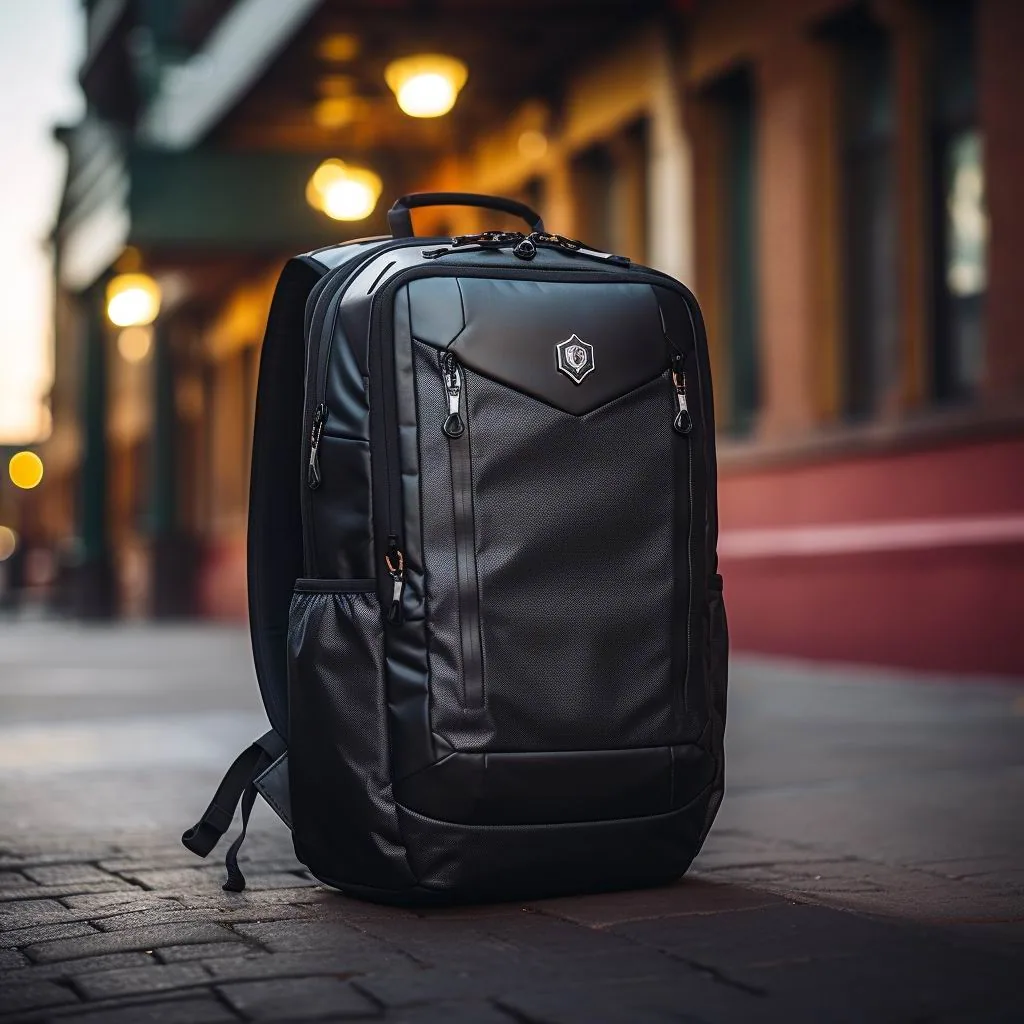
How to Store a Leather Backpack Without Cracking: The Direct Answer
Storing a leather backpack without cracking comes down to four things: condition it before it goes away, stuff it so it holds its shape, put it in a breathable cotton or non-woven bag rather than plastic, and keep the storage room between 45 and 60% relative humidity at 12-20 °C. Concretely: clean the pack, apply a cream conditioner at 5-10 ml and buff off the excess, stuff the main cavity and every pocket loosely with acid-free tissue or a cotton pillowcase so the panels are supported but not stretched, stand it upright on a shelf rather than hanging it by a strap, slip it into a cotton dust bag, and check it every 8-12 weeks. A pack prepared this way comes out of a six-month British winter in the same condition it went in. Costs are trivial: £6-18 in conditioner, £5-14 for a dust bag or an old pillowcase, and £6-15 for a hygrometer to confirm the room level, against £120-400 to replace a full-grain pack and £45-120 for professional restoration.
The failure mode is dryness, not age. Leather cracks when the oils in the hide fall below roughly 8-12% of dry weight, and a heated British home at 30-45% relative humidity pulls them out steadily over a winter.
Our leather backpack guide records thickness and finish for every model reviewed, and thick full-grain hides tolerate storage far better than thin corrected-grain ones.
Why Leather Cracks in Storage
Leather is a collagen fibre network lubricated with fats and oils introduced during tanning. Those lubricants migrate and evaporate, and the rate depends on temperature and on the humidity gradient between the hide and the air around it. In a heated British home, indoor relative humidity drops to 30-45% from October to March while the outside air is cold and wet, and that gradient pulls moisture and oils out of the hide month after month.
Below roughly 8-12% lubricant content by dry weight the collagen fibres begin to bond to each other instead of sliding, and the surface crazes. Crazing is the fine network of lines you see at a strap fold; cracking is what follows. Neither can be reversed, which is why everything in this article is prevention.
Flex resistance is measured under ISO 5402-1, which cycles a specimen over a mandrel until failure, and softness under ISO 17235, which measures how far a weighted ball depresses the surface. Both figures fall measurably after a badly stored winter. Our leather specification notes explain what to look for.
The Storage Environment: Numbers That Matter
Four variables decide the outcome and all four are measurable with a £6-15 hygrometer and a thermometer.
| Variable | Ideal range | Acceptable | Dangerous | What happens |
|---|---|---|---|---|
| Relative humidity | 45-60% | 40-65% | Under 30% or over 70% | Drying or mould |
| Temperature | 12-20 °C | 8-24 °C | Over 30 °C, under 0 °C | Oil migration, stiffening |
| Air movement | Gentle, daily | Weekly refresh | Sealed, none | Mould in 24-72 h if damp |
| Light | Dark | Indirect only | Direct sun | Fading, drying |
| Load on the pack | None | Under 2 kg | Stacked under boxes | Permanent creasing |
| Contact materials | Cotton, acid-free | Cardboard | Plastic, newspaper | Trapped damp, acid |
| Check interval | Every 8-12 weeks | Every 6 months | Once a year | Problems missed |
The two figures to act on are the humidity floor and the temperature ceiling. Below 30% relative humidity a hide loses lubricant quickly enough to craze within one winter; above 24 °C every 10 °C increase roughly doubles the migration rate. A bedroom cupboard in a heated British house typically sits at 35-45% and 18-21 °C, which is acceptable but on the dry side. Our storage environment guide covers the fixes.
Never Store Leather in Plastic
This is the single most damaging thing you can do and it is extremely common. A plastic bag, a vacuum storage bag or a sealed plastic box traps whatever moisture the leather is holding and creates a microclimate at the surface of the hide. Mould spores are present in every British home at 200-5,000 per cubic metre and on a damp surface above 70% relative humidity they germinate in 24-72 hours, with visible spotting at 48-96 hours.
Vacuum bags are worse still, because compressing a structured pack creases the panels under load and a crease held for weeks becomes permanent.
Use a cotton dust bag at £5-14, an old cotton pillowcase, or a non-woven garment bag. All three let moisture move while keeping dust and light off. If the pack came with a branded dust bag, use it: that is exactly what it is for. Our storage bag comparison ranks the options.
Step 1: Clean and Condition Before Storage
Never put a leather pack away dirty. Dust, sweat salts and body oils left on the surface for months feed microbial growth and stain the finish permanently. Wipe the whole pack with a barely damp microfibre cloth, then use a pH-neutral leather cleaner at £5-12 on the areas that touch skin: the tops of the straps, the handle and the back panel.
Let it dry for 30-60 minutes, then condition. Apply 5-10 ml of a cream emulsion at £7-16 in circular passes, leave 30-60 minutes and buff off everything the leather has not absorbed. Conditioning before storage matters more than at any other time, because the pack is about to sit in dry air for months with no chance to be re-oiled by handling.
Pay attention to the strap folds and the base corners, which are where cracking starts. Give those a second thin pass. Then wait 12-24 hours before bagging the pack, so the conditioner has fully settled. Our pre-storage conditioning routine sets the timings.
Step 2: Stuff, Shape and Position
Stuff the pack so it holds its shape without being stretched. Use acid-free tissue paper at £4-9, a clean cotton pillowcase, or an old cotton t-shirt. Fill the main cavity to about 80-90% of its volume: enough that the panels are supported from inside, not so much that the seams are under tension.
Stuff the pockets lightly too, since a flat pocket on a structured pack collapses and creases where it folds. Then close the zips and fasten the buckles loosely, which keeps the hardware from pressing into the leather and leaving an impression over months.
| Material | Breathable | Acid-free | Shape support | UK cost | Verdict |
|---|---|---|---|---|---|
| Acid-free tissue | Yes | Yes | Excellent | £4-9 | Best |
| Cotton pillowcase | Yes | Yes | Good | £5-14 | Best budget |
| Cotton t-shirt | Yes | Yes | Good | £0 | Fine |
| Bubble wrap | No | Yes | Excellent | £3-8 | Avoid |
| Newspaper | Yes | No | Good | £0-2 | Never |
| Plastic bags | No | Yes | Good | £0-3 | Never |
| Foam inserts | No | Yes | Excellent | £8-20 | Short term only |
Stand the pack upright on a shelf, or lie it flat with the back panel down. Never hang it by a single strap for months: the weight of the pack pulls on the strap root and gradually elongates the leather and the stitching there. Our storage position guide shows both options.
Where to Store It: Rooms Ranked
Location is a bigger variable than most people expect, because British homes have large internal differences in temperature and humidity.
| Location | Typical RH | Typical temp | Risk | Verdict |
|---|---|---|---|---|
| Bedroom wardrobe | 40-55% | 16-20 °C | Low | Best |
| Under-stairs cupboard | 45-60% | 14-19 °C | Low | Good |
| Spare room shelf | 40-55% | 15-20 °C | Low | Good |
| Airing cupboard | 25-40% | 30-40 °C | High, drying | Avoid |
| Loft | 45-80% | 2-30 °C | High, swings | Avoid |
| Garage or shed | 60-90% | 0-25 °C | Severe, mould | Never |
| Basement or cellar | 65-85% | 8-15 °C | Severe, mould | Never |
| Car boot | 50-95% | -5 to 45 °C | Severe | Never |
If you have no interior cupboard at all, the next best option is a climate-controlled storage unit, which holds 45-55% and 15-20 °C and costs £8-25 a month for a unit large enough for several bags. That is worth it only for a pack worth over £250, since the annual cost exceeds the price of a serviceable replacement below that figure.
The garage and the loft are the two places British owners reach for and the two worst choices. A garage swings between 60 and 90% relative humidity and mould appears within one winter; a loft swings from 2 °C to 30 °C between January and July and the thermal cycling alone will craze a finish. Guidance on damp in buildings from GOV.UK sets 70% as the threshold above which mould growth begins on surfaces. Our storage location notes cover the exceptions.
What Not to Do
Never store leather in plastic, never in a vacuum bag and never in a sealed box. All three trap moisture and the last two add compression damage.
Never store a pack near a radiator, a boiler, a hot water tank or a south-facing window. Radiators run at 60-80 °C at the surface, and a pack stored within 30 cm of one sits in a local microclimate well above 30 °C, which roughly doubles oil migration for every 10 °C rise. Direct sunlight adds ultraviolet fading: colour fastness to light is graded under ISO 105-B02 and dyed leather fades measurably after a few hundred hours of exposure.
Do not store the pack empty and flat either. An unstuffed structured pack collapses onto itself, and the fold that forms across the front panel becomes a permanent crease within 2-3 months. If you genuinely have nothing to stuff it with, pack it loosely with the bubble side of wrapping facing outward and check it monthly, or simply keep using it.
Do not store the pack with anything metal resting against it, since brass and untreated steel can transfer corrosion staining onto a light finish within weeks. Our storage mistakes list covers the rest.
Checking, Airing and Refreshing Through Storage
A stored pack is not a forgotten pack. Take it out every 8-12 weeks, open every compartment and leave it in a room at 18-22 °C for 2-4 hours, which lets any accumulated moisture escape and gives you the chance to spot a problem early.
Look for three things. White powdery bloom or green-grey spotting means mould, which needs immediate treatment. A dry, squeaky feel when you flex a strap means the conditioner has run out and you should apply another 5-10 ml. A musty smell means trapped damp somewhere, usually in a pocket or behind the back panel.
If the storage period runs beyond six months, condition again at the halfway point. A pack stored for a year in a British heated home with one conditioning at the start will usually come out dry at the strap folds. Our long storage checklist gives the full schedule.
British Homes: The Heating Problem
The specific British difficulty is that the heating season coincides with the damp season. Outside, western areas record 150-180 wet days a year and upland areas 1,200-3,000 mm of rainfall according to Met Office climate normals. Inside, central heating drives relative humidity down to 30-45% for five or six months.
That combination is what cracks leather: repeated wetting from outside followed by aggressive drying from inside. A pack used through a British winter and then stored in a heated room without conditioning has experienced the worst of both.
Two cheap interventions work. A hygrometer at £6-15 tells you whether the room needs help, and if it reads below 40% consistently, either move the pack to a cooler room or run a small humidifier at £25-60 set to 45-55%. Ventilation guidance from GOV.UK makes the same point about managing indoor humidity generally. Our UK storage calendar sets the dates.
Specifying Leather That Stores Well
Storage tolerance is a specification decision made at the factory. Full-grain from the top 10-15% of the hide stores far better than corrected grain, because the dense grain layer holds lubricant longer. Thickness helps: 1.6-2.2 mm retains oils through a winter where 1.0-1.2 mm crazes. And a finish matters: pigmented finishes lose moisture slowly, while aniline absorbs and loses it fast and needs conditioning three or four times a year.
Commercial terms follow the usual structure. MOQ 500 pcs applies, because hides are bought in lots and yield varies by 10-20% between them. Sampling takes 6-10 working days and bulk production 35-50 days from sample approval, with inspection to ISO 2859-1 at AQL 2.5. Ask for a flex resistance figure tested to ISO 5402-1 at 20,000 cycles minimum.
Specify a breathable non-woven dust bag at £0.60-1.80 per unit as part of the packaging, since it is the cheapest possible insurance against the commonest storage failure. That note is standard in tech packs issued from our 4,950 m² SGS-verified production floor and in our leather sourcing guide.
Verdict: Condition, Stuff, Bag, Check
Condition with 5-10 ml of cream, wait 12-24 hours, stuff to 80-90% with acid-free tissue or cotton, stand the pack upright, put it in a breathable cotton bag and keep the room at 45-60% relative humidity and 12-20 °C. Check every 8-12 weeks and condition again if the storage runs past six months.
Plastic, lofts, garages and airing cupboards are the four routes to a cracked pack. A bedroom wardrobe is the right answer in almost every British home.
Suede and nubuck need one variation: brush the nap with a horsehair brush at £5-12 before storage, since a nap left flat for months mats permanently, and use a breathable bag with more internal space so nothing presses against the surface.
One final precaution worth the 30 seconds it takes. Photograph the pack before it goes away, including the strap folds and base corners, so that if anything does develop over the winter you can tell whether it was already there. Several disputes over return condition turn on exactly that point.
Everything here is prevention. Once the finish has crazed, no conditioner repairs it, and £45-120 of professional restoration only improves the appearance. Our leather backpack guide records thickness and finish for every UK model reviewed.
Frequently Asked Questions
What is the best humidity for storing a leather backpack?
Forty-five to sixty per cent relative humidity at 12-20 °C, which is what a bedroom wardrobe in a heated British home typically gives you at 40-55%. Below 30% the hide loses lubricant fast enough to craze within one winter, and above 70% mould germinates on the surface in 24-72 hours. Buy a hygrometer at £6-15 and check the room before you commit the pack to it.
Can I store a leather backpack in a plastic bag?
No. Plastic traps whatever moisture the leather holds and creates a microclimate at the surface, and mould spores present in every British home at 200-5,000 per cubic metre germinate above 70% relative humidity in 24-72 hours. Use a cotton dust bag at £5-14, an old pillowcase or a non-woven garment bag, all of which keep dust off while letting moisture move.
Should I condition a leather backpack before storing it?
Yes, always, with 5-10 ml of a cream emulsion at £7-16 applied in circular passes and buffed off after 30-60 minutes. Storage is when the pack sits in dry heated air for months with no handling to redistribute oils. Give the strap folds and base corners a second thin pass, then wait 12-24 hours before bagging it so the conditioner settles fully.
Why has my leather backpack cracked while in storage?
Almost always dryness rather than age. Leather crazes once its lubricant content falls below roughly 8-12% of dry weight, and a heated British home at 30-45% relative humidity pulls oils out steadily from October to March. Storing near a radiator makes it worse, since every 10 °C rise roughly doubles migration. Crazing cannot be reversed; professional restoration costs £45-120 and only improves appearance.
How often should I check a leather backpack in storage?
Every eight to twelve weeks. Take it out, open every compartment and leave it at 18-22 °C for 2-4 hours so moisture escapes. Look for white bloom or green-grey spotting, which means mould, a dry squeaky feel at a strap fold, which means more conditioner, and any musty smell, which means trapped damp. Condition again at the halfway point if storage runs past six months.
Is it better to hang or stand a stored leather backpack?
Stand it upright on a shelf, or lay it flat with the back panel down. Hanging by a single strap for months puts the full weight of the pack on the strap root and gradually elongates both the leather and the stitching there. Stuff the cavity to 80-90% with acid-free tissue at £4-9 so the panels are supported from inside without putting the seams under tension.
Can I store a leather backpack in a loft or garage?
Neither. A British garage swings between 60 and 90% relative humidity and mould appears within one winter, while a loft swings from about 2 °C in January to 30 °C in July and the thermal cycling alone will craze a finish. Use an interior wardrobe or cupboard at 40-55% and 15-20 °C. GOV.UK guidance sets 70% relative humidity as the threshold for mould growth on surfaces.
What should I use to stuff a leather backpack for storage?
Acid-free tissue paper at £4-9, a clean cotton pillowcase at £5-14, or an old cotton t-shirt. All are breathable and acid-free. Never use newspaper, whose acid and ink transfer onto the lining, and never use bubble wrap or plastic bags, which trap moisture. Fill to 80-90% of volume so panels are supported without stretching the seams, and stuff the pockets lightly too.
How much does it cost to restore a badly stored leather pack?
Forty-five to one hundred and twenty pounds for professional cleaning, re-oiling and edge refinishing at a British leather specialist, taking 5-14 days. Routine care costs £6-18 a year and prevents the problem entirely. A replacement full-grain pack costs £120-400. Restoration improves appearance but cannot remove crazing already present in the finish, which is why prevention is the only real option.
Does a leather backpack need airing during long storage?
Yes, every 8-12 weeks for 2-4 hours at 18-22 °C with every compartment open. Sealed storage allows moisture to accumulate behind the back panel and inside pockets, where it is invisible until it becomes mould. Airing also lets you catch a dry strap fold or a musty smell early, when a £7-16 conditioning treatment fixes it rather than a £45-120 restoration.
What is the minimum order quantity for custom leather backpacks?
MOQ 500 pcs, because hides are bought in lots and cutting yield varies by 10-20% between them. Sampling takes 6-10 working days and bulk production 35-50 days from sample approval, with inspection to ISO 2859-1 at AQL 2.5. Specify full-grain at 1.6-2.2 mm with a flex resistance of 20,000 cycles to ISO 5402-1, plus a breathable dust bag at £0.60-1.80.
Should a stored leather backpack be kept in its dust bag?
Yes, provided the bag is cotton or non-woven rather than plastic. It keeps dust and light off while letting moisture move, which is exactly the balance leather needs. The branded bag your pack shipped in is ideal. Avoid sealed plastic garment covers and vacuum bags, the second of which adds compression damage by creasing the panels under load for weeks at a time. A breathable bag also blocks light, which blocks ultraviolet light, which fades dyed leather measurably after 300-600 hours of exposure under ISO 105-B02.
How long can a leather backpack stay in storage safely?
Indefinitely if humidity sits at 45-60% and you condition at the start and then every six months, and check every 8-12 weeks. Without that care, visible crazing at the strap folds can appear within one British winter of five or six months in a heated room at 30-45% relative humidity. Any storage beyond six months should include a mid-point conditioning of 5-10 ml.
Get a Free Quote for Custom How to Store a Leather Backpack Without Cracking
Planning a branded programme? Our production team works to MOQ 500 pcs, 6-10 working day sampling and 35-50 day bulk lead times, with AQL 2.5 inspection to ISO 2859-1. Send your brief and we will return a costed quotation in 24-48 hours.
Mens Backpack Guide Editorial Team — Buying guides and sourcing notes for the UK men's backpack market, coordinated by QUANZHOU JUNYUAN BAGS. Commercial figures such as MOQ 500 pcs, 6-10 day sampling and 35-50 day production reflect published programme terms.