Table of Contents
- Heritage vs Contemporary Backpacks: The Direct Answer
- Materials Compared: Leather, Canvas and Technical Nylon
- Hardware, Closures and the Details That Date a Pack
- Service Life, Repairability and the Second Decade
- British Weather and the Maintenance Burden
- Professional Context: Which Reads Right Where
- Sustainability and Materials Sourcing
- Buying Checklist for Each Philosophy
- Specifying Either Philosophy at Volume
- The First 90 Days: Breaking In Each Type
- Resale Value and the Second-Hand Market
- Frequently Asked Questions
Heritage vs Contemporary Backpacks: The Direct Answer
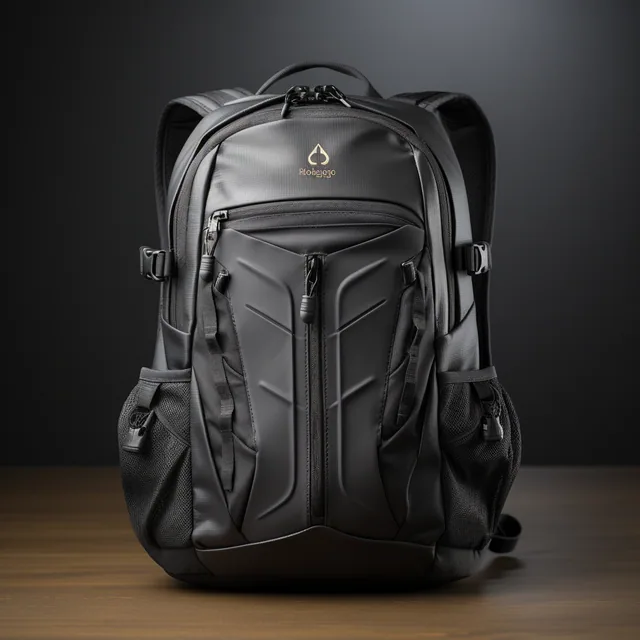
Heritage packs use full-grain leather at 1.8-2.4 mm, waxed cotton canvas at 10-18 oz and brass or Stainless hardware, weigh 1.4-2.6 kg empty and last 15-30 years with maintenance. Contemporary packs use 400-1,000-denier nylon or polyester with acetal hardware, weigh 0.8-1.6 kg empty and last 6-15 years. For a British buyer the deciding variable is not style but the journey: heritage wins on a 15-minute walk in a client-facing role, contemporary wins on a 40-minute commute with a 1.4 kg laptop and a change of weather. Weight is the sharpest difference. A 24-litre heritage pack in 14 oz waxed canvas with leather trim weighs 1,450-1,900 g; the same capacity in 600-denier recycled polyester weighs 950-1,250 g. That 350-700 g is 6-12% of a typical British commuter load, and over a 3 km walk at 4.5-5.5 km/h it adds roughly 4-7% to the energy cost of the journey. Small per day, material over 200 commuting days a year. Weather performance points the other way from intuition. Waxed canvas sheds rain well when freshly treated - a 14 oz canvas with a paraffin or beeswax finish resists 800-1,500 mm of hydrostatic head and beads for 45-90 minutes - but it needs re-waxing every 6-12 months at GBP 12-28 for a 200 ml tin.
A contemporary 600-denier shell with a PU coating holds 1,500-2,500 mm and needs a GBP 9-16 spray every 8-12 weeks. Both work in Britain; the heritage pack asks for more maintenance and rewards it with a longer life on a leather backpack.
Materials Compared: Leather, Canvas and Technical Nylon
Full-grain leather at 1.8-2.4 mm is the heritage benchmark. It has a tensile strength of 20-30 N per square millimetre, abrades at a rate that gives 15-30 years of daily use, and develops a patina rather than failing. It absorbs 8-18% of its weight in water when untreated, which is 150-400 g on a 2 kg pack, and it needs conditioning every 6-12 months with a GBP 9-24 cream. A full-grain leather pack costs GBP 180-420.
Waxed cotton canvas at 10-18 oz is the second heritage material. A 14 oz canvas weighs 475 g per square metre before waxing and 520-560 g after, resists 800-1,500 mm of hydrostatic head when freshly treated, and abrades to a soft worn look rather than a hole. It takes 30-60 minutes to re-wax with a 200 ml tin at GBP 12-28, once or twice a year in British conditions. A waxed canvas pack costs GBP 90-240 and weighs 1,300-1,900 g.
Technical nylon and polyester are the contemporary materials. A 500-denier Cordura tests at 50,000-100,000 Martindale cycles, weighs 220-280 gsm and resists 1,500-3,000 mm with a PU or TPU coating. A 1,000-denier version weighs 350 gsm and reaches 80,000-150,000 cycles. Neither needs more than a periodic re-proof spray. Abrasion test methods and their tolerances are published by the American Association of Textile Chemists and Colorists and ASTM International. See the leather backpack range for hide grades and hardware.
Hardware, Closures and the Details That Date a Pack
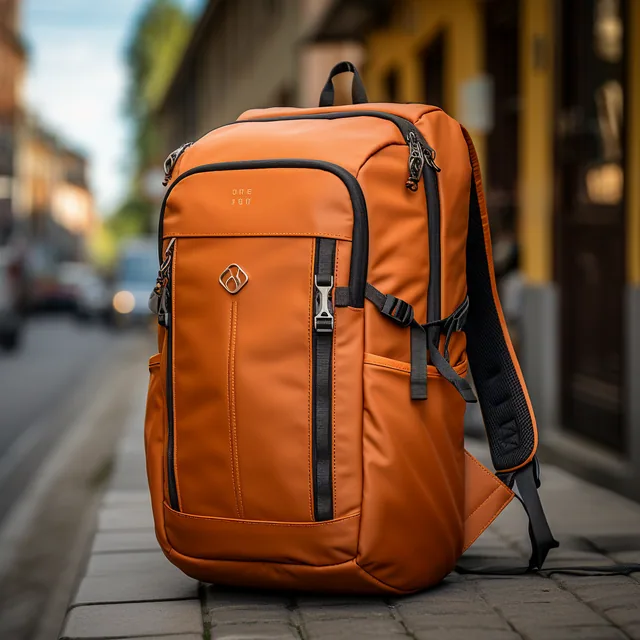
Hardware is where the two philosophies differ most visibly. Heritage packs use solid brass or stainless fittings at 25-38 mm, weighing 8-25 g each, with a roller-buckle or a bridle-leather strap closure. Brass develops a patina and lasts 20-30 years; it must pass the nickel-release limit of 0.5 micrograms per square centimetre per week if it sits in prolonged skin contact, which most solid brass does. Contemporary packs use acetal at 4-9 g per fitting, which is immune to the chloride pitting that ruins plated zinc in 18-24 months of British salt and damp.
Closures follow the same split. A heritage pack uses a flap with a buckle or a drawstring under a flap, which is slower - 6-12 seconds to open against 2-4 for a zip - but has no zipper to fail. A contemporary pack uses a coil zipper rated to 8,000-15,000 cycles, which is faster and more secure but is the single most common failure point at 35-45% of claims. A heritage pack's strap and buckle can be replaced at GBP 8-25; a contemporary pack's zipper at GBP 6-12.
There is a hybrid that works well in Britain: a contemporary shell with heritage hardware, or a waxed canvas body with a modern roll-top closure and a padded laptop sleeve. The hybrid gives the 1,500-2,500 mm water resistance and the 950-1,250 g weight of the technical approach with the repairability and the look of the heritage one. Expect to pay GBP 140-280 and to get 10-18 years of service on a hybrid heritage pack.
Service Life, Repairability and the Second Decade
Service life favours heritage on paper and is closer in practice. A full-grain leather pack lasts 15-30 years, waxed canvas 10-20 years and a 500-1,000-denier technical pack 6-15 years. But the heritage figures assume maintenance: conditioning every 6-12 months for leather, re-waxing every 6-12 months for canvas. Skipped, a leather pack cracks at the flex points in 6-10 years and a canvas pack wets through in 4-8, which is worse than the technical pack's unmaintained 6-15.
Repairability favours heritage decisively. A leather strap can be re-stitched into fresh hide by any British cobbler at GBP 12-35; a brass buckle is a standard fitting at GBP 8-25; a canvas panel can be patched at GBP 18-45. A technical pack can be re-stitched too, but a welded TPU shell cannot be patched reliably, and a coated nylon panel that has delaminated cannot be re-coated at home. Heritage packs are designed to be repaired; contemporary welded packs are designed to be replaced.
| Attribute | Heritage (leather / canvas) | Contemporary (technical nylon) | Hybrid |
|---|---|---|---|
| Empty weight, 24 L | 1,450-1,900 g | 950-1,250 g | 1,150-1,550 g |
| Water resistance | 800-1,500 mm waxed | 1,500-3,000 mm | 1,500-2,500 mm |
| Maintenance cycle | 6-12 months, GBP 12-28 | 8-12 weeks, GBP 9-16 spray | 6-12 months, GBP 12-28 |
| Main closure | Flap, buckle or drawstring | Coil zip, 8,000-15,000 cycles | Roll-top or flapped zip |
| Repairability | High, GBP 8-45 per repair | Moderate, GBP 6-35 | High, GBP 8-45 |
| Service life | 15-30 years maintained | 6-15 years | 10-18 years |
| Cost (GBP) | 180-420 | 70-220 | 140-280 |
| Cost per year (GBP) | 6.00-28.00 | 4.67-36.67 | 7.78-28.00 |
British Weather and the Maintenance Burden
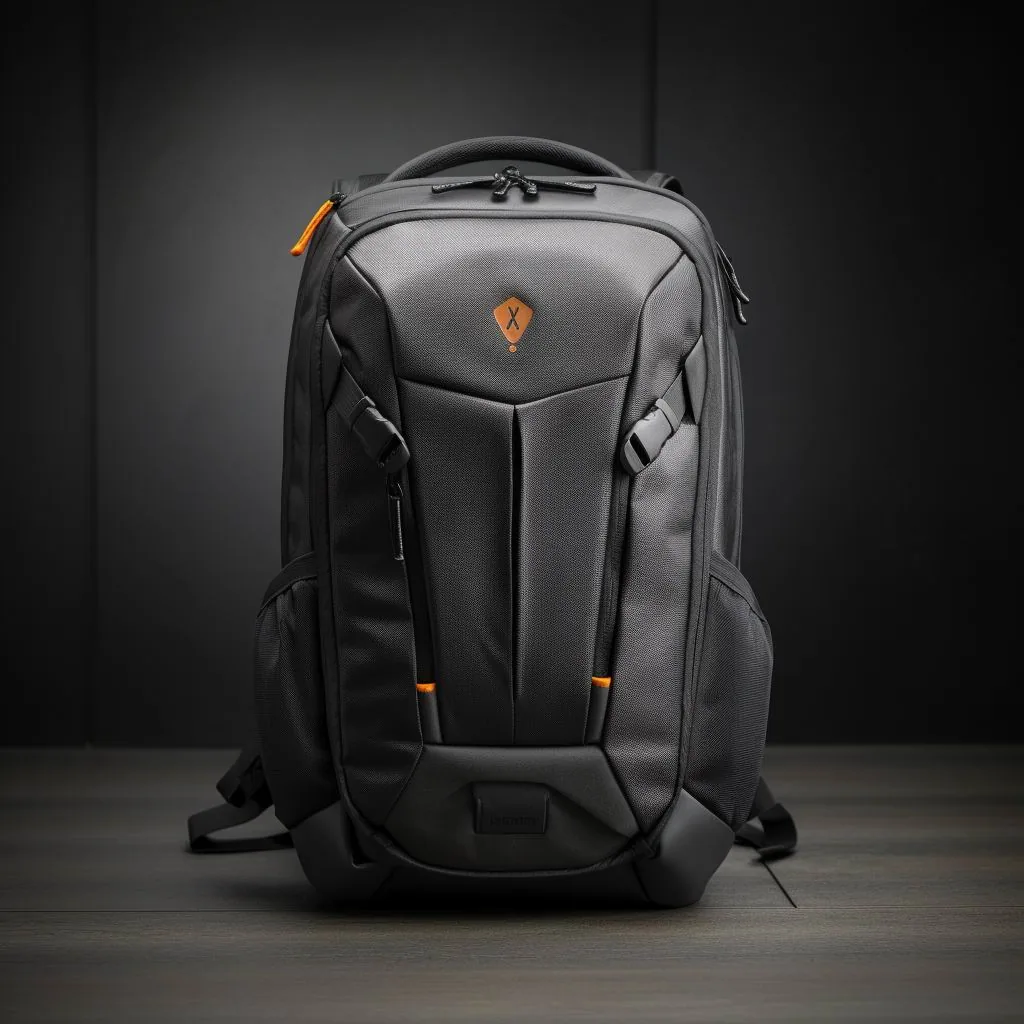
British conditions test both philosophies. England averages 150-180 wet days a year and the western Highlands 190-220, so a daily pack is damp on 40-55% of days between October and March. Waxed canvas handled well is genuinely good in this: a freshly waxed 14 oz shell beads for 45-90 minutes and dries without damage, because cotton does not hydrolyse the way a polyurethane coating does. Handled badly - stored damp in a hallway cupboard - it grows mould in 6-10 weeks.
Leather is more demanding. Full-grain hide absorbs 8-18% of its weight in water when the finish is worn, which is 150-400 g on a 2 kg pack, and it must be dried slowly at room temperature rather than on a radiator, which cracks the grain above 60 degrees. Conditioning every 6-12 months with a GBP 9-24 cream restores the finish; skipping it for two British winters produces cracking at the flap fold and the strap roots within 6-10 years.
Technical shells are the lowest-maintenance option and the most sensitive to storage. A PU-coated nylon holds 1,500-2,500 mm with a periodic spray, but a pack stored damp flakes its coating in 3-5 years and one stored dry lasts 8-12. For a British buyer who will maintain a pack, heritage is the longer-lived choice; for one who will not, a technical shell with a TPU laminate is the safer one on a daily British carry.
Professional Context: Which Reads Right Where
Context decides as much as specification. A heritage leather or waxed canvas pack reads correctly in a law firm, an architecture practice, a consultancy with a client-facing culture, and anywhere the dress code is a jacket rather than a hoodie. A contemporary technical pack reads correctly in a technology company, a creative agency, a hospital, a university and anywhere the dress code is casual. Read the room before you read the specification.
The hybrid reads correctly in both. A waxed canvas body with a modern roll-top, a padded 14-inch sleeve and minimal external branding passes in a client meeting and on a building site; it is the most versatile single choice for a British professional who moves between contexts. Expect GBP 140-280, a 1,150-1,550 g empty weight and a 10-18 year life.
Volume matters too. A heritage pack at 1,450-1,900 g empty and a slim 18-20 litre capacity carries a 14-inch laptop and documents and nothing else; the same weight in a contemporary pack is a 26-30 litre pack that carries gym kit as well. If your day includes the gym, a contemporary or hybrid pack is the honest answer. If it does not, the heritage pack's 15-30 year life is the better one on a professional carry.
Sustainability and Materials Sourcing
Neither philosophy has a monopoly on sustainability. Full-grain leather is a by-product with a 15-30 year life, but tanning is chemical-intensive: chrome-tanned leather carries a chromium III load and vegetable-tanned leather takes 30-60 days per hide and uses 8-15 kg of bark extract per hide. Look for a Leather Working Group rating on the tannery rather than a generic 'genuine leather' claim, which usually means a bonded or corrected grain at 0.6-1.2 mm that lasts 3-6 years.
Waxed cotton is biodegradable at end of life and re-waxable indefinitely, but conventional cotton uses roughly 10,000-20,000 litres of water per kilogram. Organic cotton cuts that by 60-90% and costs GBP 1.80-4.20 more per square metre. A paraffin wax finish is a petroleum product; a beeswax and pine-resin blend costs GBP 4-9 more per tin and is renewable.
Technical fabrics are recyclable in principle and rarely in practice, because a coated laminate of two polymers cannot be separated economically. A 600-denier recycled polyester saves roughly 30-50% of the CO2e of a virgin equivalent, needs a transaction certificate at GBP 60-180 per lot, and costs GBP 0.60-1.80 more per unit. The largest sustainability lever remains service life: one pack lasting 15 years beats five lasting three, whatever the material on a heritage or technical pack.
Buying Checklist for Each Philosophy
For a heritage pack, check five things. Leather thickness at 1.8-2.4 mm and a full-grain rather than corrected finish. Hardware in solid brass or stainless, not plated zinc. Stitching at 6-8 stitches per 30 mm in bonded nylon, not cotton. A strap attachment riveted and stitched, not stitched alone. And a tannery or mill that will answer a question about its rating. A pack meeting all five costs GBP 180-420 and lasts 15-30 years.
For a contemporary pack, check five different things. Shell denier at 500 or above, or a stated abrasion figure of 50,000 cycles or more. A branded #8 or #10 zipper, identified by the slider stamp. A bar tack of 40-60 stitches at the strap root. Bound or taped internal seams. And acetal or stainless hardware rather than plated zinc. A pack meeting all five costs GBP 70-220 and lasts 6-15 years.
For either, run the same two field tests. Load the pack with 5 kg and walk 400 m: if the shoulder straps dig, the harness is wrong regardless of material. Set it down in 10 mm of water for 30 minutes: if the base wets through, the construction is wrong regardless of price. Both tests take under 10 minutes and both predict the next decade better than a brand name on a heritage backpack.
Specifying Either Philosophy at Volume
British employers buying a heritage-look pack for a client-facing team, or a technical pack for a field team, specify at volume rather than retail. Our production team works to a MOQ 500 pcs per colourway, with sampling 6-10 working days from tech-pack sign-off and bulk production 35-50 days after approval, inspected to AQL 2.5 (ISO 2859-1) under the sampling system published by the International Organization for Standardization.
A heritage-look specification at volume means a 14 oz waxed cotton canvas or a 1.4-1.8 mm corrected-grain leather-look PU, solid-brass-look hardware in a nickel-free alloy, and bonded nylon stitching at 6-8 stitches per 30 mm. Our SGS-verified production base verifies hardware to the nickel-release limit and the stitching density on 32 pieces per 500-piece batch, and holds colour to a Delta E of 1.5 or less under D65 lighting across the run.
Costs at 500 pieces: a waxed canvas heritage pack GBP 22-42 ex-works and GBP 31-58 landed; a leather-look PU pack GBP 26-48 and GBP 36-66; a technical 600-denier pack GBP 16-29 and GBP 23-42. Each ships with the UKCA declaration and the REACH statement required for the Great Britain market, and each can carry a debossed or embroidered crest at GBP 0.85-2.60 per unit on a heritage-style bulk order. See the leather backpack range for hide grades and hardware.
The First 90 Days: Breaking In Each Type
Heritage and contemporary packs behave differently in their first three months, and knowing that prevents a return. A full-grain leather pack is stiff for 30-60 days and softens at the flap fold and the strap roots by day 60-90, gaining 8-15 mm of drape. A waxed canvas pack is waxy and slightly stiff for 14-30 days and then relaxes. A technical nylon pack is essentially unchanged from day one, which is its advantage and also why it never feels personalised.
Expect a heritage pack to mark. Leather picks up a scuff within 7-14 days and develops a patina at 6-12 months; waxed canvas creases permanently at the fold lines within 30 days. Both are features rather than faults, and both are the reason a heritage pack looks better at year five than at week one. A technical pack looks best on day one and declines steadily from there on a heritage backpack.
Do the maintenance in the first week, not the sixth month. Condition leather at day seven with a GBP 9-24 cream before the first soak, and re-wax canvas at day 14 before the first heavy rain. Those two 30-minute tasks set the finish that the next 15-30 years depend on, and they are far more effective as prevention than as repair after a British winter has already cracked the grain or wetted through the weave.
Resale Value and the Second-Hand Market
Resale is a real part of the cost equation and it favours heritage strongly. A full-grain leather pack at GBP 180-420 resells at 35-55% of retail after five years and 25-40% after ten; a waxed canvas pack at GBP 90-240 resells at 30-45% after five years. A technical nylon pack at GBP 70-220 resells at 15-30% after five years and under 10% after eight, because the market discounts a coated fabric with unknown remaining coating life.
Condition drives the figure more than age. A leather pack with a maintained finish, no cracked grain and original hardware fetches 1.5-2.2 times one with a cracked flap and a replaced buckle. A canvas pack that has been re-waxed annually fetches 1.3-1.8 times one that has wetted through. Photographs showing the base corners, the strap roots and the hardware are what secure the upper figure on a British resale listing.
Factor it into the per-year cost. A GBP 280 leather pack used 12 years and resold at 35% costs GBP 15.17 a year net of the GBP 98 return, against GBP 23.33 a year gross. A GBP 130 technical pack used 8 years and resold at 20% costs GBP 13.00 a year net against GBP 16.25 gross. The gap narrows but does not close, and the heritage pack retains a trade-in value the technical one does not on a long-life backpack.
Frequently Asked Questions
Which is better for British use, heritage or contemporary backpacks?
Not absolutely. Heritage leather at 1.8-2.4 mm lasts 15-30 years and waxed canvas 10-20, against 6-15 for a technical nylon pack, but heritage requires maintenance every 6-12 months and weighs 350-700 g more in the same capacity. Heritage wins a 15-minute client-facing walk; contemporary wins a 40-minute commute with a 1.4 kg laptop and changing weather. Service life runs 15-30 years for leather and 6-15 for technical nylon.
How much heavier is a heritage backpack than a technical one?
350-700 g in a 24-litre pack: 1,450-1,900 g for waxed canvas with leather trim against 950-1,250 g for 600-denier polyester. That is 6-12% of a typical British commuter load and about 4-7% more energy over a 3 km walk at 4.5-5.5 km/h. Small per day, but material across 200 commuting days a year and 130-345 hours of contact. A 24-litre technical pack weighs 950-1,250 g against 1,450-1,900 g for canvas.
Is waxed canvas waterproof enough for British rain?
Yes when freshly treated. A 14 oz canvas with a paraffin or beeswax finish resists 800-1,500 mm of hydrostatic head and beads for 45-90 minutes, and cotton dries without the hydrolysis damage that a polyurethane coating suffers. It needs re-waxing every 6-12 months at GBP 12-28 for a 200 ml tin, taking 30-60 minutes. Neglected, it wets through in 4-8 years of British use.
How often does a leather backpack need conditioning?
Every 6-12 months with a GBP 9-24 cream, and immediately after any soaking. Full-grain hide absorbs 8-18% of its weight in water when the finish is worn, which is 150-400 g on a 2 kg pack, and must be dried slowly at room temperature rather than on a radiator, which cracks the grain above 60 degrees. Skipping conditioning for two British winters cracks the flap fold within 6-10 years.
Which hardware lasts longer on a backpack, brass or plastic?
Solid brass lasts 20-30 years and develops a patina; acetal lasts 10-20 years and is immune to chloride. Plated zinc-alloy, the cheap option, pits from road salt in 18-24 months of British use. Brass must pass the nickel-release limit of 0.5 micrograms per square centimetre per week in prolonged skin contact, which most solid brass does but plated zinc often does not.
Can a heritage pack carry a laptop safely?
Yes, if it has a padded sleeve with 6-8 mm of closed-cell foam and 15 mm of floor clearance, which many heritage packs add as a modern concession. Check the internal clearance at 355 x 250 mm for a 14-inch device. A traditional flap-and-buckle pack without a sleeve needs an aftermarket 13-14 inch insert at GBP 18-42 and 180-280 g, which also protects the leather from a laptop's corners.
What is a hybrid heritage backpack and who should buy one?
A contemporary shell or a waxed canvas body with modern internals: a roll-top or flapped zip closure, a padded laptop sleeve, acetal or brass-look hardware and a ventilated back panel. It gives 1,500-2,500 mm water resistance, a 1,150-1,550 g empty weight and a 10-18 year life at GBP 140-280, and it reads correctly in both a client meeting and a casual office.
How do I care for waxed canvas in Britain?
Brush off dirt when dry, sponge with cold water only - never detergent, which strips the wax - and air-dry away from a radiator. Re-wax every 6-12 months, or when water stops beading, using a 200 ml tin at GBP 12-28 warmed to 40-50 degrees and worked in with a cloth, then cured for 24 hours. Store dry and open; a canvas pack closed damp grows mould in 6-10 weeks.
Is full-grain leather worth the cost over bonded leather?
Yes. Full grain at 1.8-2.4 mm lasts 15-30 years, while bonded or 'genuine' leather at 0.6-1.2 mm delaminates in 3-6. The price difference is GBP 60-180 at retail. Check the thickness and the edge: a full-grain edge is fibrous and unsealed or burnished, while a bonded edge is smooth and painted. Ask for a Leather Working Group rating on the tannery rather than a vague grain claim.
What repair advantage does a heritage backpack offer in Britain?
Yes. A leather strap re-stitches at GBP 12-35, a brass buckle replaces at GBP 8-25 and a canvas panel patches at GBP 18-45, all by any British cobbler. A welded TPU shell cannot be patched reliably and a delaminated coated nylon panel cannot be re-coated at home. Heritage packs are designed to be repaired; contemporary welded packs are designed to be replaced.
Which is more sustainable, leather or recycled nylon?
It depends on service life more than material. Full-grain leather is a by-product lasting 15-30 years but tanning is chemical-intensive; 600-denier recycled polyester saves 30-50% of the CO2e of virgin but cannot be recycled again once coated. One pack lasting 15 years beats five lasting three regardless of fibre, so buy the longest-lived pack you will actually maintain. Recycled fabric costs GBP 0.60-1.80 more per unit and needs a GBP 60-180 certificate.
What should I check before buying a heritage pack?
Leather at 1.8-2.4 mm full grain, solid brass or stainless hardware, bonded nylon stitching at 6-8 stitches per 30 mm, riveted and stitched strap attachments and a tannery that will answer a sourcing question. Then field-test: 5 kg for 400 m to check the harness, and 30 minutes standing in 10 mm of water to check the base. Ten minutes of testing predicts the next decade.
How much does a heritage-look pack cost at volume?
A 14 oz waxed cotton canvas specification costs GBP 22-42 ex-works and GBP 31-58 landed at 500 pieces; a leather-look PU at 1.4-1.8 mm costs GBP 26-48 and GBP 36-66. Add a debossed or embroidered crest at GBP 0.85-2.60 per unit. Our production team works to MOQ 500 pcs with sampling 6-10 working days, bulk production 35-50 days and inspection to AQL 2.5 (ISO 2859-1).
How well do heritage packs work for a British cycle commute?
Poorly. A 1,450-1,900 g leather or canvas pack with a flap closure takes 6-12 seconds to open against 2-4 for a zip, has no reflective panel and no stabilising hip belt, and absorbs water at 8-18% of its weight. For a 6-11 km London ride at 20-24 km/h, use a technical pack with a roll-top closure, a sternum strap and 200-300 square centimetres of retroreflective area.
Can I use a heritage pack for a laptop commute every day?
Yes if it has a padded sleeve, but watch the weight and the weather. A 1,450-1,900 g empty pack plus a 1.4 kg laptop, a 290-350 g charger and a 500-750 g bottle is 3.5-4.4 kg before lunch and coat. That is 4-6% of an 80 kg commuter's bodyweight and acceptable under 30 minutes. For longer journeys or a wet 40-minute walk, the technical pack's 950-1,250 g is the better choice.
What is the cost per year of each philosophy?
Heritage leather at GBP 180-420 over 15-30 years is GBP 6.00-28.00 a year plus GBP 9-24 of conditioning annually. Waxed canvas at GBP 90-240 over 10-20 years is GBP 4.50-24.00 plus GBP 12-28 of wax. Technical nylon at GBP 70-220 over 6-15 years is GBP 4.67-36.67 plus GBP 9-16 of spray. Maintained heritage is cheapest per year; unmaintained contemporary is the safest bet.
Get a Free Quote for Custom Heritage vs Contemporary Backpack Brands Compared
Planning a branded programme? Our production team works to MOQ 500 pcs, 6-10 working day sampling and 35-50 day bulk lead times, with AQL 2.5 inspection to ISO 2859-1. Send your brief and we will return a costed quotation in 24-48 hours.
Mens Backpack Guide Editorial Team — Buying guides and sourcing notes for the UK men's backpack market, coordinated by QUANZHOU JUNYUAN BAGS. Commercial figures such as MOQ 500 pcs, 6-10 day sampling and 35-50 day production reflect published programme terms.