Table of Contents
- How to Restore DWR Coating on a Backpack: The Direct Answer
- How a DWR Finish Works and How It Fails
- Diagnosing the Failure: Three Tests
- What You Need and What It Costs in the UK
- Step 1: Wash With a Technical Cleaner
- Step 2: Heat Reactivation Before You Re-Proof
- Step 3: Apply the Proofer and Cure It
- What Not to Do
- How Often: A British Re-Proofing Schedule
- British Rain, Grit and Why Beading Matters Here
- Specifying a Finish That Lasts Longer
- Verdict: Wash, Heat, Then Spray
- Frequently Asked Questions
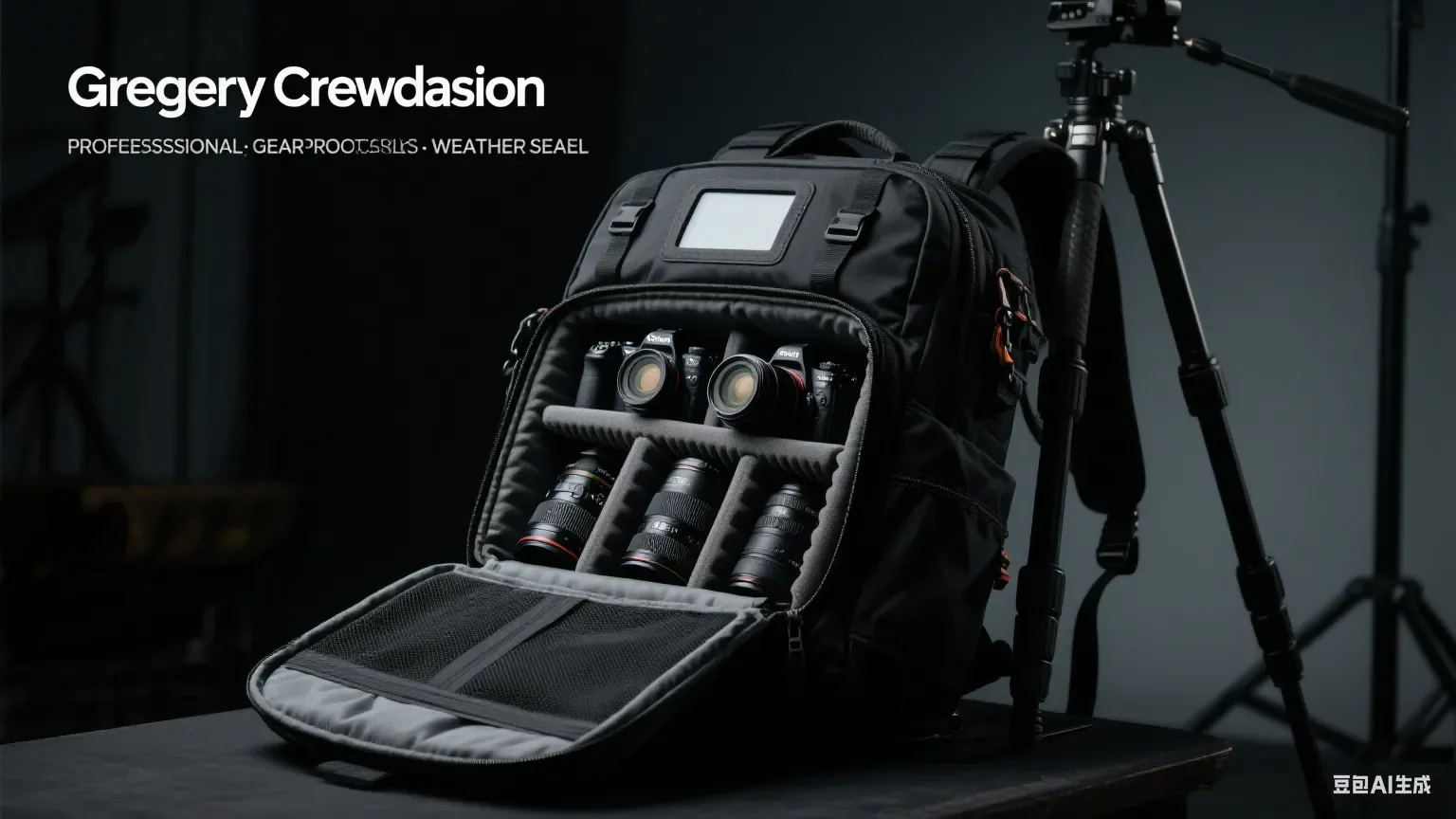
How to Restore DWR Coating on a Backpack: The Direct Answer
A durable water repellent finish fails when surface contamination and wear stop water beading, and restoring it takes three stages: wash the pack with a technical cleaner at 30-40 °C to strip the oils and detergent residue that make fabric wet out, dry it, apply heat at 60-80 °C for 20-30 minutes to reorient the fluoropolymer or hydrocarbon chains that are still bonded to the fibre, then apply a fresh spray-on or wash-in proofing agent and cure it. In Britain a commuter pack used through the wet season needs this once or twice a year, because western areas record 150-180 wet days annually and abrasion from a coat, a car seat and an overhead locker physically removes the finish at the contact points long before it degrades chemically. The job takes 60-90 minutes of which roughly 20 is hands-on, and materials cost £8-22 a year. Restoring rather than replacing turns a pack that wets out in 30-60 seconds into one that beads for 8-20 minutes of moderate rain, and it is the difference between a damp laptop and a dry one.
The sequence matters and it is often done in the wrong order. Heat and re-proofing applied over a dirty pack lock the contamination in, which is why a spray alone over an unwashed shell produces patchy, short-lived results.
Our waterproof backpack guide records which coatings and proofing treatments each UK model ships with, which determines which of the two application methods will take.
How a DWR Finish Works and How It Fails
DWR is not a membrane and it does not make fabric waterproof. It is a surface treatment of long-chain molecules bonded to each fibre that lowers the surface energy of the fabric, so water stays as a bead with a high contact angle and rolls off rather than spreading into a film. Waterproofness comes from the coating or membrane underneath; DWR exists to stop the face fabric wetting out, because a saturated face fabric conducts cold and blocks the breathability of any membrane below it.
It fails in two ways. Contamination failure is the common one: body oils, detergent residue, sunscreen and airborne grime coat the chains so water spreads across them, and this is almost always reversible with a wash. Abrasion failure is physical loss of the treatment at high-contact areas, and this needs new product rather than cleaning.
Performance is graded by the spray test, in which water is sprayed at a mounted specimen and the wetting pattern compared against a standard rating scale. The method is published as AATCC 22, and the related ISO version is ISO 4920. A new pack typically rates 90-100; anything at 70 or below wets out in real rain. Our waterproof ratings guide explains the numbers on a spec sheet.

Diagnosing the Failure: Three Tests
Three quick tests tell you which failure you have, and therefore whether a wash alone will fix it. Do them on a clean, dry pack at room temperature.
| Test | How to do it | Pass result | Fail result | What it means |
|---|---|---|---|---|
| Bead test | Drip 5 ml of water on the lid | Beads roll, 8-20 min | Spreads in under 10 s | Finish contaminated |
| Spray test | Fine mist from 15-20 cm | Surface stays dry | Darkens within 30 s | Wetting out |
| Submersion test | Press panel into 5 cm water for 60 s | No dark patch | Dark patch appears | Coating or seam fault |
| Abrasion check | Inspect strap and panel contact zones | Uniform finish | Shiny, worn patches | Physical loss |
| Seam check | Run water along taped seams for 30 s | No seepage | Beads form inside | Tape lifting |
| Interior check | Empty pack, torch inside, dark room | No light at seams | Pinpricks of light | Pinhole coating failure |
| Zip check | Spray the closed main zip for 60 s | Dry behind the tape | Damp behind the tape | Uncoated tape |
The distinction that matters is between the bead test and the abrasion check. If water spreads everywhere but the fabric looks unworn, wash it. If the shoulder straps and back panel are visibly shiny and matted while the rest still beads, the finish has been physically removed there and you need new product. Our fault diagnosis chart covers the combinations.
What You Need and What It Costs in the UK
A proofing kit costs £20-45 initially and £8-22 a year to run on one pack. Buy aerosol or pump spray rather than wash-in for a backpack, for reasons explained below.
| Item | UK cost | Purpose | Notes |
|---|---|---|---|
| Technical fabric cleaner | £6-13 | Strip contamination | Not normal detergent |
| Spray-on proofer | £7-16 | Restore beading | Preferred for packs |
| Wash-in proofer | £6-14 | Alternative | Coats the lining too |
| Soft brush | £2-5 | Agitate cleaner | Medium bristle |
| Microfibre cloths | £2-5 | Wipe and level | Lint-free |
| Tumble dryer access | £0-3 | Heat reactivation | 60-80 °C, 20-30 min |
| Hairdryer | £0-25 | Local heat cure | Keep 20-30 cm away |
| Seam sealer | £5-11 | Lifted tape | Only if needed |
Normal detergent is the enemy here. Most contain surfactants and fabric softener residues that are themselves wetting agents, and a pack washed in standard detergent will wet out faster after washing than before. Our proofing product list names the types that work.
Step 1: Wash With a Technical Cleaner
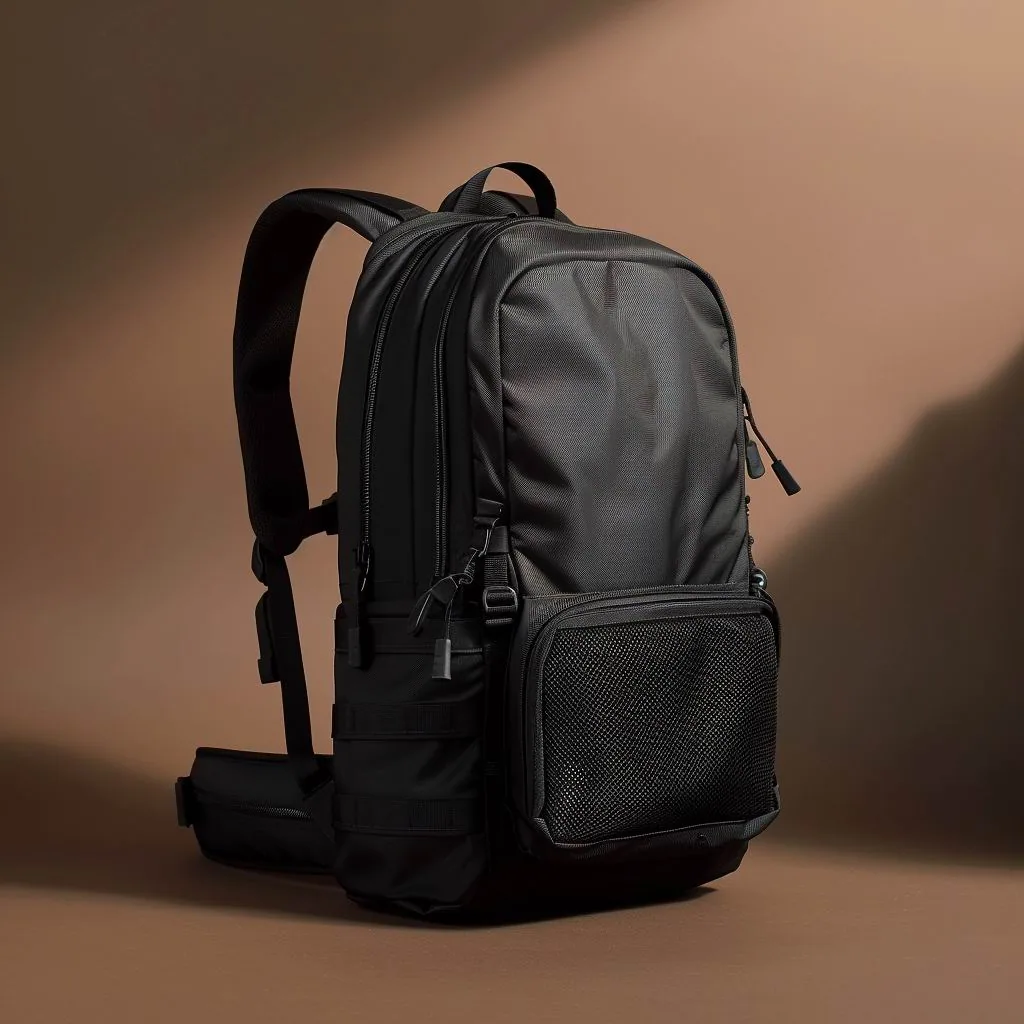
Empty the pack, open every compartment and brush out loose grit. Hand wash in a bath or basin at 30-40 °C with a technical cleaner dosed at 40-60 ml, which is roughly double the label rate for a rinse-free product because a backpack holds a surprising amount of soil in its seams and webbing.
Agitate with a soft brush rather than scrubbing hard, and pay attention to the shoulder straps and back panel, which carry the highest load of body oil and are the first areas to wet out. Rinse twice. A single rinse leaves enough surfactant behind to undermine the proofer you are about to apply, and this is the most common reason a careful re-proof gives disappointing results.
If the care label permits machine washing, use a front-loader at 30 °C with no spin beyond 600 rpm, and run an empty rinse cycle afterwards. Top-loaders with an agitator can abrade a coated shell and should be avoided. Our safe washing method sets the limits per fabric.
Step 2: Heat Reactivation Before You Re-Proof
Heat is the step almost everyone skips, and it is often sufficient on its own. The DWR chains that survive washing are disordered, and warmth lets them stand up again and present their water-repellent ends outward. Put the pack in a tumble dryer at 60-80 °C for 20-30 minutes, or use a hairdryer held 20-30 cm away over one panel at a time for 2-3 minutes each.
Stay below 80 °C. Most laminating adhesives and polyurethane coatings begin to soften above 80-100 °C, and a taped seam can creep or delaminate. A hairdryer on full heat held closer than 20 cm will exceed that locally and can leave a permanent dull patch.
Test after the heat cycle. Hold the pack under a fine mist: if it beads again at 8-20 minutes of wetting you are finished and no product is needed. Roughly one pack in three recovers fully at this stage. Our heat reactivation notes give the timings by fabric weight.
Step 3: Apply the Proofer and Cure It
Choose spray-on rather than wash-in for a backpack. A wash-in product deposits finish on the inside of the lining as well, which reduces the wicking of any moisture-managing liner and is wasted material on a pack that presents only one face to the rain. Spray gives you control over where the finish goes, and the high-wear areas need two coats.
Hang the pack, spray from 15-20 cm in slow overlapping passes until the surface is damp but not running, then level it with a microfibre cloth within 60 seconds to avoid tide marks. Give the straps, the top lid and the base corners a second coat, since those lose finish fastest. Expect 100-200 ml of product for a 30 L pack.
| Method | Coverage | Cure time | Durability | UK cost | Best for |
|---|---|---|---|---|---|
| Spray-on, aerosol | Outer face only | 20-30 min at 60-80 °C | 20-40 washes | £7-16 | Most packs |
| Spray-on, pump | Outer face only | 20-30 min at 60-80 °C | 20-40 washes | £7-14 | Spot treatment |
| Wash-in | Both faces | Tumble 40-50 min | 15-30 washes | £6-14 | Unlined shells |
| Heat alone | Existing finish | 20-30 min | Variable | £0-3 | First attempt |
| Wax finish | Canvas only | 24 hours air | 12-24 months | £8-18 | Waxed cotton |
| Seam sealer | Tape and stitch line | 12-24 hours | 2-5 years | £5-11 | Lifted tape |
| Nothing, replace pack | n/a | n/a | n/a | £55-190 | Coating failed |
Cure with heat rather than air where the label allows it. Heat-cured finishes bond to the fibre and last 20-40 washes; an air-cured one gives 60-70% of that life. Our curing and testing routine sets out the stages.
What Not to Do
Never use standard detergent, fabric softener or a stain-removal additive on a pack you intend to proof. All leave wetting agents behind, and the pack will perform worse afterwards than before. Never iron a coated shell, since a domestic iron soleplate runs at 110-200 °C and will delaminate the coating instantly.
Do not apply proofer to a dirty or damp pack. On a dirty pack you seal the contamination in; on a damp one the carrier solvent cannot displace the water and the finish cures unevenly, leaving pale streaks that are visible on any dark fabric.
Do not confuse DWR with waterproofing. Restoring the beading does not fix a failed coating, a lifted seam tape or a perished zip. If the submersion test shows a dark patch, no amount of spray will help. Our waterproof versus water resistant guide draws the line clearly.
How Often: A British Re-Proofing Schedule
British use is hard on finishes because of volume rather than intensity: many wet days, frequent drying cycles, and heavy abrasion from commuting. The table gives realistic intervals.
| Use pattern | Wash | Re-proof | Time | Annual cost |
|---|---|---|---|---|
| Daily urban commute | Every 3 months | Twice a year | 60-90 min | £14-30 |
| Daily commute, no car | Every 2 months | 3 times a year | 60-90 min | £20-44 |
| Hill walking, fortnightly | Every 3 months | Twice a year | 60-90 min | £14-30 |
| Coastal walking | Every 2 months | 3 times a year | 75-100 min | £20-44 |
| Occasional travel | Every 6 months | Annually | 60-90 min | £8-22 |
| School or college daily | Every 3 months | Twice a year | 60-90 min | £14-30 |
| Stored pack, pre-season | Annually | Annually | 60-90 min | £8-22 |
Do the job in early October, before the wet season, and again in March. Proofing a pack at the start of a wet British winter is worth roughly twice as much as doing it in June. Our seasonal maintenance calendar gives the dates.
British Rain, Grit and Why Beading Matters Here
Britain is a wet-out environment rather than a downpour environment. Western areas record 150-180 wet days a year and upland areas 1,200-3,000 mm of annual rainfall according to Met Office climate normals, so a pack spends far more time under light persistent rain than under a tropical burst. Light rain is exactly the condition where a failed DWR is most damaging, because the fabric wets out and stays wet for hours, conducting cold and soaking through to the contents.
Grit accelerates the loss. Road grime and salt spread between November and March are abrasive, and every wipe against a coat or a car seat removes a little more finish. Salt spray resistance testing under ISO 9227 is the reference for the corrosive component; the mechanical component is simply wear.
The practical answer for a British commuter is a two-layer approach: a maintained DWR for the light rain that dominates the year, and a rain cover for the sustained heavy rain that a DWR was never designed to stop. Our wet climate carry guide covers the combination.
Specifying a Finish That Lasts Longer
Three specification choices determine how often the end user needs the routine above. First, the base coating: a polyurethane coating at 1,500-3,000 mm hydrostatic head measured under AATCC 127 is the realistic minimum for a British commuter pack, and 5,000 mm is comfortable. Second, the DWR chemistry: ask for a durable finish rated to 20-40 washes rather than a mill-applied finish that survives 5-10.
Commercial terms follow the usual structure. MOQ 500 pcs applies to a specified finish because the fabric is proofed in a single lot. Sampling takes 6-10 working days and bulk production 35-50 days from sample approval, with inspection to ISO 2859-1 at AQL 2.5. A premium DWR adds £0.60-2.40 per unit at that volume.
Require a spray-test rating on the production fabric rather than on a lab swatch, and require the rating after 20 washes as well as before. Both notes are standard in tech packs issued from our 4,950 m² SGS-verified production floor and in our waterproof pack sourcing guide.
Verdict: Wash, Heat, Then Spray
Run the three tests, wash with a technical cleaner at 30-40 °C, rinse twice, heat at 60-80 °C for 20-30 minutes, retest, and only then spray a proofer at 15-20 cm and cure it with heat. That order is what makes the difference between a finish lasting 20-40 washes and one that fails in five.
Heat alone fixes roughly one pack in three, so always try it before spending money on product. Spray-on beats wash-in on a backpack because only one face meets the rain.
One last practical note on testing. Keep a small plant mister filled with tap water by the door and give the lid of the pack a single spray every month. It takes five seconds, and catching a failing finish at the mist stage means a £0-3 heat cycle rather than a full strip, wash and re-proof at £14-30.
Diary it: early October and early March suit the British year, and a pack proofed before the wet season is worth twice one proofed after it. Our waterproof backpack guide records the coating and finish of every UK model reviewed.
Frequently Asked Questions
How do I know if my backpack DWR coating has failed?
Drip 5 ml of water on the lid. If it beads and rolls off, the finish is working. If it spreads into a flat dark patch within 10 seconds the finish has failed and the fabric is wetting out. A fine mist from 15-20 cm that darkens the surface in under 30 seconds confirms it. Under the AATCC 22 spray test a new pack rates 90-100 and anything at 70 or below wets out in real rain.
Can I restore DWR on a backpack with a tumble dryer?
Yes, and try it before buying any product. Twenty to thirty minutes at 60-80 °C lets the surviving DWR chains stand up and present their repellent ends outward, and roughly one pack in three recovers fully. Stay below 80 °C because laminating adhesives and polyurethane coatings soften above 80-100 °C. A hairdryer held 20-30 cm away for 2-3 minutes per panel is the alternative.
Should I use a spray-on or a wash-in proofer?
Spray-on for a backpack. It treats only the outer face, which is the only face that meets rain, and it lets you give the straps, lid and base corners a second coat where wear is worst. Wash-in coats the lining as well, which reduces the wicking of any moisture-managing liner and wastes product. Expect 100-200 ml for a 30 L pack at £7-16.
Why does my backpack still wet out after re-proofing it?
Usually because it was washed in standard detergent. Detergent leaves surfactant residue behind that is itself a wetting agent, so the pack wets out faster after washing than before. Rinse twice with a technical cleaner at 40-60 ml, heat at 60-80 °C for 20-30 minutes, then spray. If the submersion test shows a dark patch, the coating itself has failed and no proofer will help.
How often should I re-proof a backpack in Britain?
Twice a year for a daily commuter, in early October and early March, and three times a year if you walk everywhere or live on the coast. Western British areas record 150-180 wet days, and grit and salt from November to March abrade the finish mechanically. Occasional travel packs need it annually. Each session takes 60-90 minutes and costs £8-22 a year in materials.
What temperature should I use to cure a DWR proofer?
Sixty to eighty degrees Celsius for 20-30 minutes in a tumble dryer, or 2-3 minutes per panel with a hairdryer held 20-30 cm away. Heat-cured finishes bond to the fibre and last 20-40 washes; air-cured ones give about 60-70% of that life. Never iron a coated shell, since a domestic soleplate runs at 110-200 °C and will delaminate the coating instantly.
Does restoring DWR make a backpack fully waterproof?
No. DWR makes water bead on the face fabric so it rolls off; waterproofness comes from the coating or membrane underneath, typically rated 1,500-5,000 mm hydrostatic head under AATCC 127. Restoring the beading turns a pack that wets out in 30-60 seconds into one that beads for 8-20 minutes. For sustained heavy British rain add a rain cover rated to the pack volume.
How much does it cost to re-waterproof a backpack in the UK?
Eight to twenty-two pounds a year in materials: technical cleaner at £6-13 lasts 6-10 washes and a spray-on proofer at £7-16 covers two or three full treatments. Heat alone costs nothing but tumble-dryer running time of about £0-3. A first-time kit including a brush and cloths is under £45. Professional reproofing services charge £18-40 and take 3-7 days. A full professional service including seam tape repair runs £40-85 and takes 5-10 days.
Can I use normal washing detergent before applying a proofer?
No. Standard detergent contains surfactants and often softener residue, both of which are wetting agents, and a pack washed in it will wet out faster afterwards. Use a technical fabric cleaner at £6-13 dosed at 40-60 ml and rinse twice, since a single rinse leaves enough residue to undermine the proofer. Machine washing risk: top-loaders with agitators abrade coated shells.
What is the minimum order quantity for custom waterproof backpacks?
MOQ 500 pcs, because the fabric is proofed in a single lot to keep the finish consistent. Sampling takes 6-10 working days and bulk production 35-50 days from sample approval, with inspection to ISO 2859-1 at AQL 2.5. A durable DWR rated to 20-40 washes adds £0.60-2.40 per unit. Require a spray-test rating after 20 washes, not just on a lab swatch.
Is a fluorocarbon-free DWR as good as the old finishes?
Modern hydrocarbon and silicone finishes are close, and they are what most British retailers now stock. Expect 20-40 washes of durability from a good hydrocarbon finish against 30-50 for the older C8 chemistry, and slightly slower beading in light rain. The gap narrows with heat curing. Given the environmental profile, hydrocarbon at £7-16 is the sensible default for a commuter pack.
How long does a restored DWR finish last on a backpack?
Twenty to forty washes for a heat-cured spray-on finish, and 15-30 for a wash-in. In British commuting terms that is roughly 6-12 months before beading degrades noticeably, sooner if the pack rubs against a coat or a car seat daily. The high-wear zones show it first: straps, lid and base corners. Test with 5 ml of water every three months and spot-spray those zones.
Can I re-proof a waxed canvas backpack with spray proofer?
Not usefully. Waxed cotton is proofed by the wax itself, not by a bonded surface treatment, and a spray proofer sits on top of the wax and wears off within 2-4 weeks. Re-wax instead with a paste or bar wax at £8-18, warmed to 40-60 °C and worked into the weave, then left to cure for 24 hours. That lasts 12-24 months of British use.
Get a Free Quote for Custom How to Restore DWR Coating on a Backpack
Planning a branded programme? Our production team works to MOQ 500 pcs, 6-10 working day sampling and 35-50 day bulk lead times, with AQL 2.5 inspection to ISO 2859-1. Send your brief and we will return a costed quotation in 24-48 hours.
Mens Backpack Guide Editorial Team — Buying guides and sourcing notes for the UK men's backpack market, coordinated by QUANZHOU JUNYUAN BAGS. Commercial figures such as MOQ 500 pcs, 6-10 day sampling and 35-50 day production reflect published programme terms.