Table of Contents
- How Do You Pack Wet Kit and Shoes in a Gym Backpack?
- Why Does Damp Kit Damage a Backpack So Quickly?
- What Barrier System Should You Use?
- How Should You Pack Trainers Without Ruining Anything?
- What Order Should Everything Go Into the Bag?
- How Fast Does Kit Need to Come Out of the Bag?
- How Do You Deep Clean a Gym Bag Afterwards?
- What Kills Odour Permanently Rather Than Masking It?
- What Five-Minute Routine Keeps a Gym Bag Fresh Weekly?
- What Should Volume Buyers Specify for Gym Bags?
- Frequently Asked Questions
How Do You Pack Wet Kit and Shoes in a Gym Backpack?
Double-bag anything damp in a 15-litre TPU wet bag or a lightweight polythene liner, put shoes sole-to-sole inside an additional barrier so the outsoles touch nothing else, then load wet items last and unroll everything within four hours of getting home. That sequence works because the real damage is not water itself but time: bacteria in damp fabric roughly double every twenty minutes above 20°C, and a pair of size 9 trainers holds around 30 ml of sweat after an hour's training. Containment buys you hours; nothing buys you days. Do this consistently and the bag itself never needs deodorising at all, which matters because most people abandon a gym bag long before it wears out: surveys of UK leisure-centre members put the average replacement interval at twenty-two months, driven almost entirely by smell rather than structural failure. A £12 barrier bag and ten minutes twice a week changes that completely.
Order matters as much as containment. Everything dry goes in first against your back — office clothes, laptop, wash bag — and the wet compartment loads from the outside, closest to the opening, so you can extract it without unpacking the rest. If your bag has no dedicated shoe compartment, a 400 x 300 mm drawstring shoe bag costing £6 will do the same job, and it is washable, unlike the bag itself.
Then comes the part most people skip: the reset. Shoes out, kit into the wash within four hours or into a 40°C machine cycle, bag opened wide and dried overnight at room temperature with the wet pocket inverted. Skip this twice and you are dealing with established biofilm inside the lining, which no amount of air freshener touches. Everything detailed here also applies to commuting routines covered in our gym-to-office backpack guides, where the same wet kit has to share space with work clothes.
Why Does Damp Kit Damage a Backpack So Quickly?
Three mechanisms run at once: microbial growth, hydrolysis and corrosion. Microbial growth is the visible one — gram-positive skin bacteria and fungi metabolise sweat components and produce the volatile fatty acids you smell. In the damp, warm, dark interior of a closed bag they reach counts around 10 million per square centimetre within twelve hours, and the smell becomes genuinely difficult to shift once a biofilm has formed.
Hydrolysis is slower and invisible. Polyurethane coatings — used inside almost every modern gym bag — react slowly with water, and continuous contact at 25°C shortens coating life by roughly half compared with a bag that is dried properly. This is why some linings start flaking inside three years while identical models last double that in dry use.
Corrosion is easily overlooked. Sweat contains sodium chloride at about 0.9% concentration, similar to seawater, and it wicks along webbing into metal hardware. Zip sliders and spring-loaded buckles begin seizing within about eight weeks of daily exposure, and once corrosion starts inside a coil zip, no lubrication fully recovers it. Replacement costs £4 for a slider or £22 to £45 for full strap assemblies, all avoidable with a £6 barrier bag from the gym backpack accessories list.

What Barrier System Should You Use?
Two layers beat one. The inner layer is whatever touches the wet item directly — typically a machine-washable drawstring bag or a polythene liner costing a few pounds for a pack of twenty. The outer layer should be a genuinely waterproof thing: either the bag's own welded TPU wet compartment, which typically measures 250 x 180 mm and takes a size 10 trainer, or a separate dry bag rated to IPX6.
Dry bags deserve a look even for non-swimmers. A 5-litre roll-top dry bag costs £9 to £16, weighs 90 g, holds a full change of sweaty kit plus towel when rolled loosely, and — crucially — contains odour molecules rather than merely resisting water. Roll-top closures with three folds and a clip reliably keep smells in, which zipped wet pockets generally do not, because every zip leaks vapour through the coil. Either approach beats the built-in pocket alone, which is why accessories are listed alongside every bag in our UK gym backpack range.
| Barrier method | Cost | Water hold | Odour hold | Washable |
|---|---|---|---|---|
| Nothing, kit straight in the bag | Free | None | None | Whole bag needs washing |
| Supermarket bag for life, 15 litre | £1 | Good | Poor | Wipe only |
| Drawstring shoe bag, 400 x 300 mm | £6 | Poor | Poor | Machine wash at 40°C |
| Roll-top dry bag, 5 litre, IPX6 | £9 to £16 | Excellent | Excellent | Hand wash only |
| Built-in welded TPU wet pocket | Included | Excellent | Moderate | Wipe and air dry |
| Two-layer combination, liner plus dry bag | £12 to £20 | Excellent | Excellent | Both washable |
How Should You Pack Trainers Without Ruining Anything?
Clean the outsoles first if you have been outdoors. Thirty seconds against a stiff brush removes perhaps 80% of the grit that otherwise grinds into whatever it touches, and UK paths after rain carry a lot of sand and fine gravel. Do it before you enter the gym changing room, not afterwards, and ideally before the shoes go near fabric of any kind.
Then orient them carefully. Place both shoes sole-to-sole so the dirtiest surfaces face each other, then put the pair heel-first into the bottom of the shoe compartment. This keeps debris off the lining and prevents the toe box from crushing the load above — a pair of men's trainers UK size 9 to 10 weighs 850 g to 1.1 kg, and positioned wrongly that mass deforms everything beneath it during a commute.
Insoles out if possible, and pull the tongue forward so air can move through the upper once you get home. A 20 g sachet of silica or a 30 g charcoal filter sachet costing about £4 tucked inside each shoe cuts moisture dramatically over the twelve hours they will sit there. Replace or recharge the sachet weekly at 120°C for two hours, or it stops absorbing anything and the same gym smell comes back. British winters add grit and road salt, both of which grind into linings, so brush them off every time before they meet the fabric of any wipe-clean gym backpack.
What Order Should Everything Go Into the Bag?
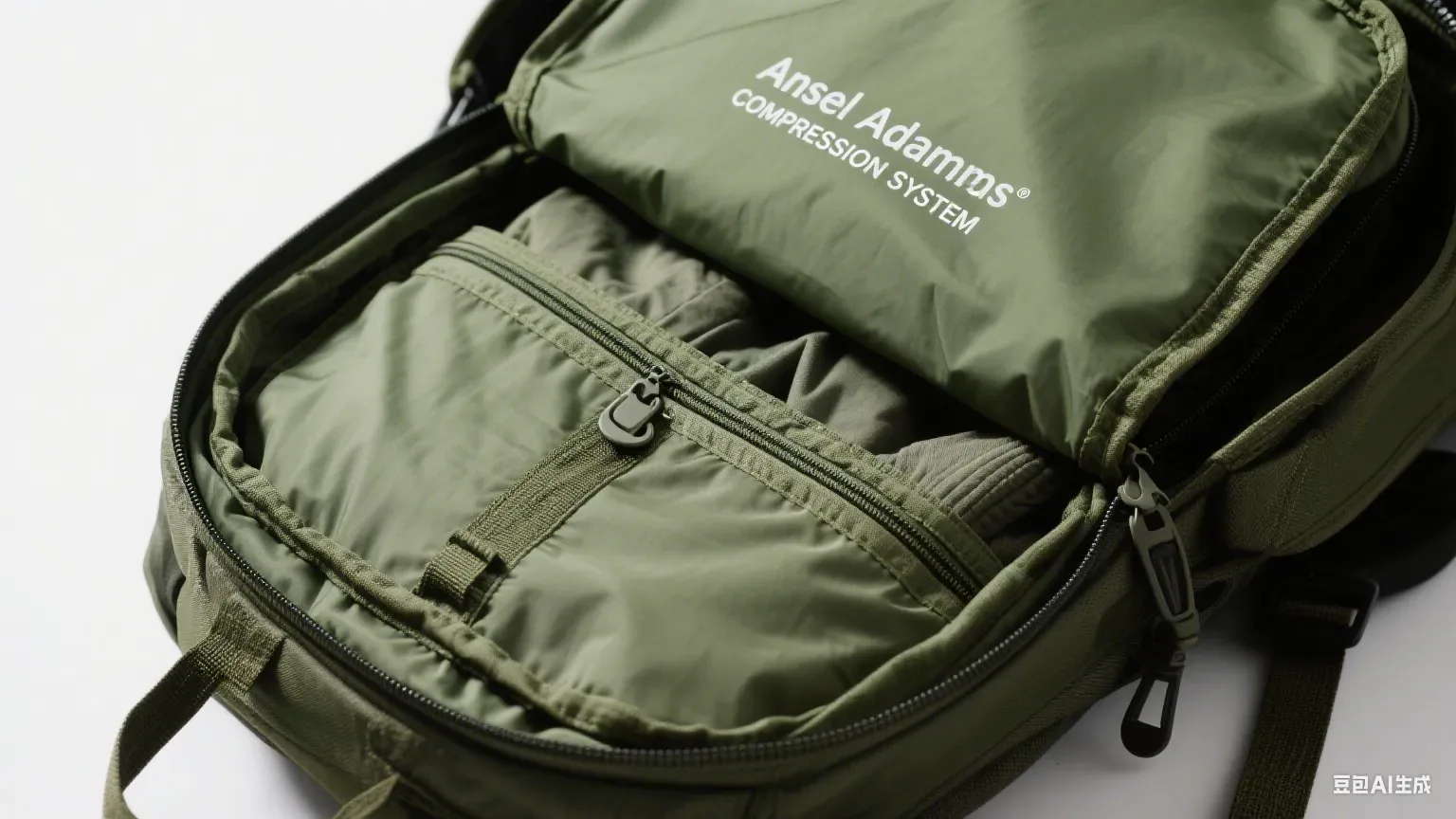
Build from the back panel forward, in four zones. Zone one, flat against your spine: laptop in a suspended sleeve and any paperwork, both dry. Zone two: rolled work clothes in a packing cube, also dry. Zone three: wash bag with liquids double-bagged in case something leaks, and finally zone four against the outer face — all wet kit and shoes.
Weight figures explain why. A typical gym commute weighs 6 to 9 kg, and the difference between good and bad distribution is measurable: contents packed with wet kit at the spine raise centre-of-mass distance by roughly 40 mm, which increases perceived load by about 12% on stairs. Keep dense objects like a 1.5 kg water bottle low and central, never in the outer mesh pockets where they swing.
Use the cube system rather than loose packing. Three cubes — one for dry clothes, one for wet kit inside the barrier, and one small one for accessories and chargers — take twenty seconds longer to pack and maybe two minutes to unpack, but they mean you never have to empty the whole bag to find keys at the bottom. Most guidance for structured gym backpacks assumes cubes, and the compartment dimensions are drawn to match standard 2 and 4-litre sizes.
How Fast Does Kit Need to Come Out of the Bag?
Four hours is the working limit. Below that mark you are dealing with moisture that dries out; beyond it you are dealing with established bacterial colonies producing odour compounds. Leave damp kit overnight and bacterial counts can reach 10 million per square centimetre within twelve hours, at which point a normal 40°C wash removes the smell but not always the residue in synthetic fibres.
If you genuinely cannot empty the bag immediately — a late finish followed by an early start is normal — create time instead. Add 50 g of bicarbonate of soda in a breathable cloth pouch inside the wet compartment, which slows bacterial growth substantially, and open the bag fully in a warm dry room rather than leaving it zipped by the door. Do not leave it in a car boot overnight: daytime boot temperatures can exceed 40°C in summer and above that, hydrolytic coating damage accelerates sharply.
Wash temperatures deserve a specific note. Synthetic gym kit washed at 30°C frequently retains body oils that later smell even after drying, so use 40°C with a sports detergent and skip fabric softener entirely — softener residues hold odour molecules to fibres and cut the wicking performance of technical fabrics by around 40% after five washes. Nine out of ten odour complaints trace back to this one habit rather than to any fault in the gym backpack designs themselves.
How Do You Deep Clean a Gym Bag Afterwards?
Empty and vacuum first, using a 6 mm crevice nozzle to get into the four bottom corners where debris collects. Then turn the bag inside out and brush every seam with a soft brush and pH-neutral cleaner diluted 5 g per litre, paying attention to the base of the wet compartment, which typically holds three times more soil per square centimetre than anywhere else.
Deodorise with chemistry rather than perfume. A 1:10 white vinegar solution sprayed inside and left twenty minutes kills most bacteria and dissolves the fatty residues; follow with a bicarbonate paste of 20 g bicarb to 10 ml water scrubbed along the seams if odour persists. Both cost pennies and neither leaves fragrance that merely masks the problem for a day.
Dry completely before reuse — twelve to twenty-four hours with the bag propped open, ideally with the wet pocket inverted and every zip running its full length. Check inside with a torch afterwards: any remaining chalky powder along seam tape indicates coating failure rather than dirt, which means the bag itself is approaching end of life. If that is where you have landed, the replacement criteria in choosing a replacement gym backpack set out what specification to buy next. Put a recurring reminder in your calendar, because nobody remembers a twenty-eight-day cycle without one, particularly with the barrier systems recommended for each hybrid gym and commute backpack.
What Kills Odour Permanently Rather Than Masking It?
Enzymatic cleaners, used monthly. Products costing £8 to £14 per 500 ml contain protease enzymes that break down the protein residues bacteria feed on, delivering results that vinegar alone cannot manage on established biofilm. Spray inside the lining, leave thirty minutes, then wipe clean — do not rinse, because the enzymes continue working for several hours afterwards.
Ultraviolet treatment works too, though more slowly. Two hours of bright indirect sunlight kills perhaps 90% of surface bacteria through UV exposure, but UV also degrades nylon at roughly 1% strength loss per fifty hours of exposure, so treat this as an occasional rather than weekly measure. A £25 battery UV sanitiser gives twenty minutes of exposure without the fabric penalty.
Finally, prevention through separation: never let wet kit share a compartment with dry clothing, never store the bag closed and damp, and never use air freshener, which adds fragrance without touching either the bacteria or the residues. Combined with the monthly enzymatic clean and the daily airing described above, this roster keeps any bag acceptable for its full service life, which we put at four to five years of gym use across our recommended gym backpack models.
What Five-Minute Routine Keeps a Gym Bag Fresh Weekly?
Build the week around one fixed evening. Empty the bag fully on the same night each week — most people find Sunday works, since Monday kit can be packed clean afterwards — turn it inside out and brush out every corner for two minutes. Grit accumulates at roughly 2 g per week in the base seams, and left alone it abrades the lining from the inside and feeds the bacterial film that causes permanent odour.
Then run three checks that take ninety seconds between them. First, smell the wet compartment with the pocket inverted; any sourness means a bicarbonate scrub tonight rather than next week. Second, fold back every strap and look for hairline cracking in the coating at fold points, which appears after roughly eighteen months of daily use and is easy to miss. Third, confirm the zip runs cleanly along its full length, because lint plus salt from a UK pavement commute is what seizes sliders fastest. Finish by airing the bag open overnight, and keep a small wet bag in place permanently so the routine is available on the days you are running late, which is standard advice across everyday gym backpack habits.
What Should Volume Buyers Specify for Gym Bags?
Start with the wet compartment itself. Specify a fully welded TPU pocket rather than a coated fabric one, since stitched construction leaks through the needle holes — around 40 per 100 mm of seam — defeating the point entirely. Require a minimum interior of 250 x 180 mm, drainage grommets at the base, and a liner material that can be wiped down with a 1:10 vinegar solution without marking.
Antimicrobial finishes are worth discussing honestly with suppliers. Silver-ion treatments add £0.80 to £1.60 per unit and reduce bacterial counts by 90% over twenty-four hours when new, but performance falls sharply after roughly thirty washes. If you want longevity, spend the same money on 210D rather than 70D lining, which resists abrasion and therefore harbours less biofilm over time.
Commercial terms and testing need writing down. Our standard position is MOQ 500 pcs per colourway, sampling in 6-10 working days including a twenty-four-hour bacterial swab comparison, bulk production 35-50 days, and inspection to AQL 2.5 (ISO 2859-1) under tables published by ISO 2859-1. Colour fastness to perspiration should be verified against AATCC test methods, because staining around collars and compartments is the leading cosmetic complaint. Ship each unit with a printed care card, which our 4,950 m² SGS-verified production floor includes as standard for every branded gym backpack order.
Frequently Asked Questions
How quickly should gym kit come out of a backpack?
Within four hours, ideally within two. Bacteria roughly double every twenty minutes above 20°C, so a twelve-hour delay can take counts near 10 million per square centimetre, producing odour that survives a normal wash. If you cannot empty it immediately, open the bag fully in a warm dry room rather than leaving it closed by the door. Anything past eight hours generally needs a 40°C wash plus enzymatic treatment to recover fully.
Can I pack wet shoes and dry clothes in the same bag?
Yes, provided there are two barriers between them. Put shoes sole-to-sole inside a drawstring bag, place that inside a roll-top dry bag rated IPX6, and load it in the outermost compartment away from anything dry. Never rely on a single layer: zipped wet pockets leak vapour continuously and stitched wet compartments leak through about 40 needle holes per 100 mm.
What is the best liner for a wet gym compartment?
Welded TPU rather than coated fabric, because stitched seams leak through every needle hole. Look for interiors around 250 x 180 mm, drainage grommets at the base, and material rated wipe-clean for 1:10 vinegar solutions. A supplementary 5-litre roll-top dry bag costing £9 to £16 handles odour better than any built-in pocket. Add a supplementary £12 dry bag and even basic pockets perform acceptably well.
How much sweat does a training session actually produce?
More than most people expect: roughly 0.8 to 1.4 litres per hour during hard training, with a pair of size 9 trainers holding about 30 ml in the upper and sock liners afterwards. That is enough to keep the entire interior above 80% relative humidity for twelve hours, which is why containment matters far more than ventilation. British leisure-centre members average about four sessions a week, so that load accumulates quickly.
Should I use fabric softener on gym kit and the bag?
No. Softener leaves cationic residues that trap odour molecules against fibres and can cut the wicking performance of technical fabrics by around 40% after five washes. Wash synthetic kit at 40°C with a sports detergent instead, skip softener entirely, and add 100 ml of white vinegar to the rinse compartment monthly instead. Use 100 ml of white vinegar in the rinse drawer monthly instead of any softener at all.
How often should a gym backpack be deep cleaned?
Every four weeks for daily users, quarterly otherwise. Empty and vacuum the corners, wipe every seam with pH-neutral cleaner at 5 g per litre, then spray with a 1:10 vinegar solution and leave twenty minutes. Monthly enzymatic cleaning at £8 to £14 per 500 ml handles established biofilm that vinegar alone cannot shift. Set it for the same day each month so it becomes automatic rather than optional.
Can a backpack lining be permanently damaged by sweat?
Yes. Sweat contains sodium chloride around 0.9%, similar to seawater, and continuous damp contact roughly halves polyurethane coating life. Hardware suffers too: zip sliders and spring buckles begin seizing within about eight weeks of daily exposure, costing £4 per slider or £22 to £45 for replacement strap assemblies. Coatings in constantly damp bags typically fail inside three years rather than five.
What is the best way to remove established gym bag smell?
Use enzymatic cleaner rather than perfume: spray inside, leave thirty minutes, then wipe without rinsing so the protease enzymes continue working. For stubborn cases scrub seams with a paste of 20 g bicarbonate of soda and 10 ml water. Two hours of bright indirect sunlight also kills about 90% of surface bacteria, though nylon loses roughly 1% strength per fifty hours of exposure.
Should I pay extra for antimicrobial gym bag linings?
When new, yes: silver-ion treatments typically cut bacterial counts by 90% over twenty-four hours, adding £0.80 to £1.60 per unit. Performance drops sharply after about thirty washes, so treat it as a bonus rather than a substitute for drying properly. Spending the same money on 210D rather than 70D lining delivers more durable benefit. After about thirty washes performance falls sharply, so never rely on it alone.
How heavy is a normal gym commute load?
Usually 6 to 9 kg, made up of a pair of trainers at 850 g to 1.1 kg, a towel around 500 g, change of clothes near 800 g and a 1.5 kg water bottle. Packing wet kit against your spine instead of at the outside increases perceived load by roughly 12% on stairs, so keep dense items low and central.
Is it safe to leave a gym bag in a car boot overnight?
Best avoided. Boot temperatures regularly exceed 40°C on summer days, which accelerates both bacterial growth and hydrolytic damage to coatings. Theft risk is the smaller issue; the real cost is a lining that starts flaking inside three years instead of five or six. Bring the bag indoors and air it. Insurance excess and replacement costs usually exceed £150, so bring it indoors instead.
Should insoles come out of trainers before packing?
Yes, always. Removing them roughly halves drying time and prevents sweat migrating into areas that stay damp for days. Pull the tongue forward too so air reaches the toe box, and add a 20 g silica sachet costing about £4 inside each shoe, recharging weekly at 120°C for two hours. Drying time roughly halves, which matters enormously on UK winter evenings.
What should bulk buyers specify for gym bag wet compartments?
Require welded TPU pockets rather than coated fabric, interior dimensions around 250 x 180 mm, drainage grommets and wipe-clean liner material. Standard terms include MOQ 500 pcs per colourway, sampling in 6-10 working days, bulk production 35-50 days and inspection to AQL 2.5. Add printed hygiene care cards to every carton. Add two spare care cards per carton so UK staff receive them with each unit.
How long does a well-kept gym backpack last?
Around 4 to 5 years of regular gym use if it is emptied the same day, cleaned monthly and dried completely each time. Failures almost always trace back to one habit: leaving damp kit sealed inside overnight. Bags that never dry out typically need replacing inside two years, regardless of how much they cost originally. Twenty-two months is the UK average, and smell is almost always the stated reason.
Get a Free Quote for Custom How to Pack Wet Kit and Shoes in a Gym Bag
Planning a branded programme? Our production team works to MOQ 500 pcs, 6-10 working day sampling and 35-50 day bulk lead times, with AQL 2.5 inspection to ISO 2859-1. Send your brief and we will return a costed quotation in 24-48 hours.
Mens Backpack Guide Editorial Team — Buying guides and sourcing notes for the UK men's backpack market, coordinated by QUANZHOU JUNYUAN BAGS. Commercial figures such as MOQ 500 pcs, 6-10 day sampling and 35-50 day production reflect published programme terms.