Table of Contents
- Gym-to-Office Backpack: The Direct Answer
- The Morning Timeline and Where Minutes Go
- Capacity and the Three-Zone Layout
- Wet Kit, Odour and the 24-Hour Rule
- Shower Kit, Toiletries and the Locker System
- Breakfast, Hydration and the Fuel Plan
- Commute Leg: Harness, Weight and Arrival State
- Specification Checklist and GBP Budget
- Corporate Wellness and Team Orders
- Evening Reset and the Next-Day Prep
- Matching the Pack to the Session Type
- Frequently Asked Questions
Gym-to-Office Backpack: The Direct Answer
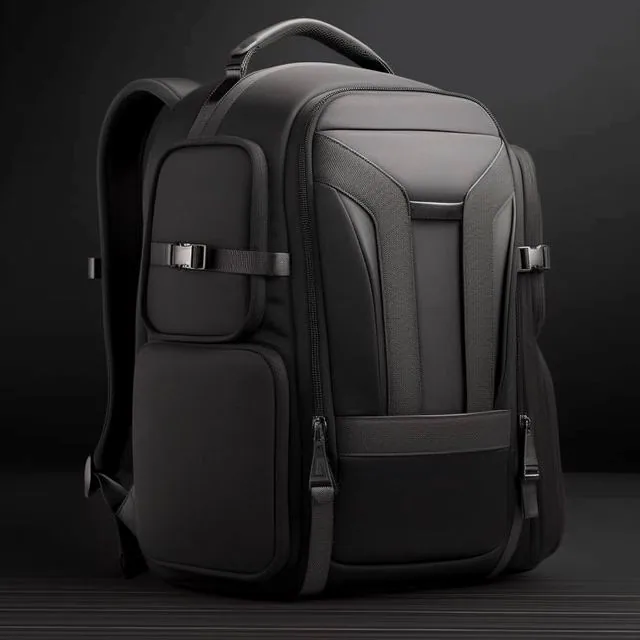
A gym-to-office morning works on one pack of 28-34 litres at 6.5-9 kg, organised into three zones: a ventilated base compartment of 5-8 litres for shoes and kit, a dry main compartment for work clothes and a laptop, and a wash-kit compartment of 2-4 litres with welded seams. The pack must open flat, because at 06:45 and again at 07:40 you are repacking it in a changing room with a 4-6 minute window and one hand on a locker door. The timing is the real constraint. A British gym-to-office morning runs 05:50 wake, 06:25 gym, 07:05 training done, 07:05-07:25 shower and dress, 07:25-07:40 repack and travel to desk or station, 08:00-08:40 commute. The repack is the failure point: a top-loading pack adds 4-7 minutes of unpacking to find a 220 g shirt, and 4-7 minutes at 07:25 is the difference between the 07:42 train and the 08:02 one. Buy the pack for the wet-kit problem, not the capacity. A training session produces 900 g-1.4 kg of damp kit and a pair of trainers carrying 40-120 g of sweat, and both must be separated from a 220-320 g shirt and a 1.4 kg laptop within 90 seconds of leaving the shower.
A gym backpack with a welded ventilated base compartment and a flat-opening main body solves it; a single-compartment pack does not.
The Morning Timeline and Where Minutes Go
Map the minutes before you buy anything. Wake 05:50, dressed and out by 06:20, at the gym 06:25, changed and training by 06:35, session 55-70 minutes, shower and dressed 07:05-07:25, repack 07:25-07:32, travel 07:32-07:50, at desk 08:00-08:30. Total 150-160 minutes, of which the pack touches three moments: the 06:25 change, the 07:05 shower and the 07:25 repack.
Each moment has a time budget. The change-in should take under 4 minutes: open flat, take out trainers, kit and a 190 g phone, close. The shower extraction should take under 2 minutes: take out a wash kit, a towel and a shirt. The repack should take under 6 minutes: wet kit into the base compartment, wash kit into the wet compartment, shirt and laptop into the dry body, shoes into the ventilated base. Twelve minutes of pack handling per morning.
| Time | Action | Pack interaction | Budget | Failure cost |
|---|---|---|---|---|
| 06:20 | Leave home | Final check, shoes and bottle | 60 sec | Forgotten kit, 15 min |
| 06:25 | Arrive, change | Open flat, extract kit | 4 min | Top-loader, +4-7 min |
| 07:05 | Shower | Extract wash kit, towel | 2 min | Rummage, +3-5 min |
| 07:25 | Repack | Wet-dry separation | 6 min | Contamination, +8-12 min |
| 07:32 | Depart | Close, shoulder | 60 sec | Overpacked zip, +2-4 min |
| 08:00 | Commute leg | Carry 6.5-9 kg | 25-45 min | Poor harness, +5-10 min |
The failure costs total 37-53 minutes of a possible bad morning, against 12 minutes of a good one. That is the real argument for a pack with three zones and a flat opening: it removes 25-40 minutes of weekly friction on a gym-to-office pack used three to five mornings a week. Abrasion and coating figures on a gym pack shell are measured under methods published by the American Association of Textile Chemists and Colorists.
Capacity and the Three-Zone Layout
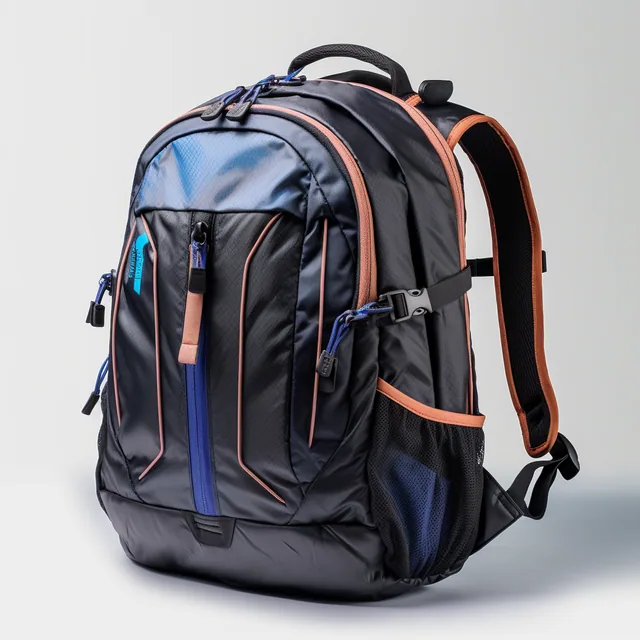
Zone one is the ventilated base compartment: 5-8 litres holding a 700-950 g pair of trainers, a 900 g-1.4 kg kit of shorts, shirt and socks and a 150-400 g towel. It needs three or four 8-10 mm drainage grommets at the lowest corner and a welded or TPU liner, because 40-120 g of sweat and 100-300 ml of shower water have to leave the compartment rather than sit in it.
Zone two is the dry main compartment: 12-18 litres holding a 220-320 g shirt folded flat in a document divider, a 400-700 g trouser or chino, a 120-250 g wash bag, a 400-700 g packed breakfast or lunch and a 500-750 ml bottle. It must be separated from zone one by a welded panel, not by a fabric divider, because a fabric divider wicks 20-40 g of moisture across in 30-60 minutes.
Zone three is the electronics and wash-kit area: a suspended 14-inch sleeve clearing 355 x 250 mm, and a 2-4 litre welded wet compartment for a used wash kit and a damp towel. Add a 1.4 kg laptop, a 290-350 g charger and a 190 g phone and the total is 6.5-9 kg, or 8-11% of an 80 kg commuter's bodyweight, in 28-34 litres on a gym commuter pack.
Wet Kit, Odour and the 24-Hour Rule
The 24-hour rule is the whole odour strategy: no damp item stays in the pack for more than 24 hours. A 900 g kit at 25-30 degrees with 40-120 g of sweat grows the bacteria that cause odour within 4-6 hours, and a pack closed overnight at 18-21 degrees reaches detectable smell in 2-3 days of repeated use. Empty the base compartment the same evening, every evening, in 90 seconds.
Use a dry bag as the first line. A 12-18 litre bag at 60-90 g holds the whole kit inside the base compartment, so the compartment liner never touches the sweat and only the bag needs washing. Wash the bag weekly at 30 degrees in 20 minutes, and the compartment monthly. That reduces the pack's cleaning cycle from weekly to monthly and extends the lining's life by 12-18 months.
Treat the smell when it appears. A 30-degree machine wash with a pH-neutral detergent removes 85-95% of the bacterial load; a 50 ml white vinegar in 500 ml water wipe, left for 20 minutes and at about GBP 0.30 a treatment, removes most of the rest. Never use bleach on a coated shell, which strips 30-50% of the coating per application. Dry the compartment fully open for 8-12 hours, because one closed damp regrows odour in 24-36 hours. See the gym backpack range for compartment layouts.
Shower Kit, Toiletries and the Locker System
The shower kit is 1.2-2.2 kg if you are not careful and 600-1,100 g if you are. Take a hanging wash bag at 180-320 g with a 180-degree hook, 100 ml of shampoo, 100 ml of shower gel, a 90 g toothbrush, 60 ml of toothpaste, a 25 g razor, 30 ml of deodorant and a 150-300 g microfibre towel. Decanting into 100 ml bottles at GBP 3-9 for a set of four saves 400-700 g against full-size containers.
A microfibre towel is the single best item in the kit. A 150-300 g towel of 400 x 800 mm absorbs 400-700 ml and dries 70-85% in 3-5 minutes of air exposure, against a cotton towel at 500-900 g that stays damp for 6-12 hours. Most British gyms provide a towel service at GBP 1-3 per use, which is worth it three days a week and not five: at five it costs GBP 15 a week against a GBP 12-28 towel that lasts 12-24 months.
Lockers close the system. A British gym locker is typically 300 x 400 x 500 mm, so a pack must compress under 300 mm wide to go in during a session. Keep a permanent locker kit if your gym allows it: a 60-90 g dry bag, a spare towel at 150-300 g and a 120-250 g wash bag left overnight, which removes 350-650 g from the daily carry and 90 seconds from the morning routine on a gym commute.
Breakfast, Hydration and the Fuel Plan
Training before work changes the fuel maths. A 60-minute session at 70-80% of maximum heart rate burns 500-750 kcal and uses 600-1,200 ml of fluid, so a gym-to-office commuter needs 400-600 kcal and 400-600 ml within 45 minutes of finishing. Carry a 400-700 g breakfast: 80 g of oats at 300 kcal, a 150 g yoghurt at 100-150 kcal, a 120 g banana at 105 kcal and a 500-750 ml bottle or shake.
Hydration should be carried, not bought. A 500 ml bottle from a British station costs GBP 1.20-2.50 against GBP 0.00 filled at home or GBP 0.30-0.60 from a gym water fountain, and over 200 gym mornings a year that is GBP 180-380 saved. Carry 750 ml to cover the 600-1,200 ml lost in the session plus the 200-400 ml of the commute, and refill at the gym.
Timing is the last variable. Eat the 400-600 kcal within 30-60 minutes of finishing training, which for a 07:05 finish means 07:35-08:05, which is the commute. Choose something eatable one-handed on a train: a 120 g banana and a 150 g yoghurt work; a bowl of oats does not. A 400-700 g packed breakfast also removes the GBP 3.50-6.50 station pastry from a GBP 30-80 monthly gym budget on a morning routine.
Commute Leg: Harness, Weight and Arrival State
The commute leg is 25-45 minutes with 6.5-9 kg, and the harness decides whether you arrive ready to work. A pack with a padded hip belt of 60-80 mm webbing moves 30-45% of the load off the shoulders; with a sternum strap set 150-200 mm below the collarbone it also stops the 40-70 mm lateral slide that a wet kit in a base compartment produces on a station staircase.
Weight distribution within the pack matters more than the total. Put the 700-950 g trainers and the 900 g-1.4 kg kit low in the base compartment, the 1.4 kg laptop flat against the back panel at kidney height, and the 400-700 g breakfast in the top third. That puts the centre of mass 80-120 mm from the back panel, against 180-260 mm for a pack loaded with the heavy items in an outer pocket, which is a 20-30% increase in perceived effort.
Arrival state is the test. A commuter arriving after a 55-70 minute session, a shower and a 35-minute commute has burned 500-750 kcal and been awake 2.5-3.5 hours. A pack that has chafed, slid or leaked has taken a further 5-15% of usable attention. The three-zone layout, the hip belt and the 24-hour wet-kit rule are what protect that on a gym-to-office backpack.
Specification Checklist and GBP Budget
Specify nine things. Capacity 28-34 litres. A welded ventilated base compartment of 5-8 litres with four 8-10 mm grommets. A flat-opening main compartment with a document divider that keeps a 220 x 300 mm shirt flat. A wet compartment of 2-4 litres with welded seams. A suspended laptop sleeve clearing 355 x 250 mm with 15 mm of floor clearance.
Six: shoulder straps of 55-70 mm with a sternum strap. Seven: a padded hip belt of 60-80 mm webbing. Eight: two elasticated side pockets for a 500-750 ml bottle and a 180-320 g wash bag. Nine: a shell at 1,500-2,500 mm hydrostatic head and a branded #8 zipper, which survives 8,000-12,000 cycles against the 60-100 openings a gym week produces on a gym commuter pack.
Budget GBP 65-150 for a pack meeting the checklist, which at three to five mornings a week over 4-6 years is GBP 10.83-50 a year. Add GBP 12-28 for a microfibre towel, GBP 14-28 for a 12-18 litre dry bag, GBP 3-9 for 100 ml decant bottles and GBP 8-18 for a hanging wash bag. The whole system is GBP 102-233 and it removes 25-40 minutes of weekly friction.
Corporate Wellness and Team Orders
Employers running wellness programmes, cycle-to-work schemes or gym partnerships buy gym-to-office packs in volume, and the specification is set by the wet compartment and the sleeve rather than by capacity. Our production team works to a MOQ 500 pcs per colourway, with sampling 6-10 working days from tech-pack sign-off and bulk production 35-50 days after approval, inspected to AQL 2.5 (ISO 2859-1) under the sampling system published by the International Organization for Standardization.
For a wellness programme, the specifications to fix are the base compartment volume, the grommet count, the sleeve clearance and the shell rating. Our SGS-verified production base holds a 6-litre welded base compartment with four 8 mm grommets across a 500-piece run, verifies the 355 x 250 mm sleeve clearance and the 30-minute base water test on 32 pieces per batch, and holds colour to a Delta E of 1.5 or less under D65 lighting.
Budget GBP 20-36 ex-works and GBP 28-50 landed per 30-litre pack at 500 pieces, against GBP 65-150 retail for the same specification. A corporate crest screen-prints at GBP 0.35-0.85 per unit or embroiders at GBP 1.20-2.60 at 4,000-9,000 stitches. Every bulk gym-to-office pack order ships with the UKCA declaration and the REACH statement required for the Great Britain market. The gym backpack range compares wet compartments and shoe storage.
Evening Reset and the Next-Day Prep
The morning is won the night before. A 6-minute evening reset removes 8-12 minutes from the morning: empty the base compartment, wash or bag the kit, refill a 750 ml bottle, repack the shirt and the laptop, check the wash kit for the 100 ml levels, and set the pack by the door. Do it at 21:30 rather than 06:15, because the 06:15 version is done tired and forgets the 190 g phone charger at a rate of roughly one morning in eight.
Prep the food the night before too. A 400-600 kcal breakfast of 80 g of oats, a 150 g yoghurt and a 120 g banana takes 4 minutes to assemble at 21:30 and 90 seconds at 06:15, and the 06:15 version is skipped on roughly one morning in five, which costs GBP 3.50-6.50 for a station pastry and 300 kcal of the wrong fuel. Put it in the fridge in a 0.5-1 litre sealed box at 90-160 g and move it to the pack on the way out.
Charge the devices overnight on a single 65 W multi-port charger: a phone, earbuds, a watch and a 20,000 mAh bank take 3.5-6 hours together at 30-65 W. A single charger at GBP 25-60 replaces four plugs, and a bedside charging station at GBP 18-45 keeps the 290-350 g charger, a 2 m cable and a 190 g phone in one place so the morning grab is one motion on a gym-to-office pack.
Matching the Pack to the Session Type
Different sessions produce different kit, and the pack layout should follow. A weights session of 55-70 minutes produces 900 g-1.2 kg of kit: shorts, a shirt, socks and a towel, plus 700-950 g of trainers. A swim session adds a 400-700 g wet towel and a 150-300 g swim kit, which is 550-1,000 g of genuinely wet load and needs the welded compartment plus a 12-18 litre dry bag rather than the compartment alone.
A run or a bike session at the gym produces the least: 600-900 g of kit plus 700-950 g of trainers, and no towel if the gym provides one. A class session produces 900 g-1.4 kg and a 150-400 g towel, because a 45-minute high-intensity class generates 300-600 ml of sweat against 150-300 ml for a weights session. Size the wet compartment at 6-8 litres for a class or swim habit and 4-5 litres for a weights habit.
Then adjust the dry side. A swim morning needs a 150-300 g microfibre towel plus a 60-90 g swim bag, which is 210-390 g more than a weights morning and takes 0.6-1.2 litres. A class morning needs 400-600 ml more water. Build one pack layout for the heaviest session you do twice a week, and use it for everything, because a layout that changes daily is a layout that gets something left behind on a gym morning.
Frequently Asked Questions
What size backpack do I need for gym and office?
28-34 litres, holding 6.5-9 kg. That is a 700-950 g pair of trainers, a 900 g-1.4 kg kit, a 150-400 g towel, a 220-320 g shirt, a 400-700 g lunch, a 1.4 kg laptop, a 290-350 g charger and a 500-750 ml bottle. Below 28 litres the wet and dry zones compete for space; above 34 litres the pack will not fit a 300 mm gym locker or a train overhead rack.
How do I keep gym kit from smelling in my backpack?
Use the 24-hour rule: empty the base compartment every evening in 90 seconds. Put the kit in a 12-18 litre dry bag at 60-90 g so the compartment liner never touches sweat, wash the bag weekly and the pack monthly at 30 degrees. A 50 ml white vinegar in 500 ml water wipe removes residual odour at about GBP 0.30. Dry fully; a compartment closed damp regrows odour in 24-36 hours.
Should I get a backpack with a shoe compartment?
Yes for a gym-to-office routine. A welded ventilated compartment of 5-8 litres with four 8-10 mm drainage grommets holds 700-950 g of trainers and 40-120 g of sweat away from a 220 g shirt and a 1.4 kg laptop. A fabric divider is not enough: it wicks 20-40 g of moisture across in 30-60 minutes. The welded compartment adds 120-260 g and GBP 8-16 to the unit cost.
How long does a gym-to-office morning actually take?
150-160 minutes: wake 05:50, at the gym 06:25, training 55-70 minutes, shower and dress 07:05-07:25, repack 6 minutes, travel 07:32-07:50, desk 08:00-08:30. Of that, 12 minutes is pack handling on a good morning and 37-53 minutes on a bad one. A flat-opening, three-zone pack removes 25-40 minutes of weekly friction. Each pack interaction costs 4-7 minutes with a top-loading pack instead of a flat one.
What should be in a gym shower kit?
A hanging wash bag at 180-320 g with a 180-degree hook, 100 ml of shampoo, 100 ml of shower gel, a 90 g toothbrush, 60 ml of toothpaste, a 25 g razor, 30 ml of deodorant and a 150-300 g microfibre towel. That is 600-1,100 g decanted, against 1.2-2.2 kg with full-size bottles. A set of four 100 ml bottles costs GBP 3-9 and saves 400-700 g.
Is a microfibre towel better than a cotton one?
Yes for a commute. A 150-300 g microfibre towel of 400 x 800 mm absorbs 400-700 ml and dries 70-85% in 3-5 minutes of air exposure, against a cotton towel at 500-900 g that stays damp for 6-12 hours. A British gym towel service costs GBP 1-3 per use, which is worth it three days a week and not five: five days is GBP 15 a week against a GBP 12-28 towel lasting 12-24 months.
What should I eat after a morning gym session?
400-600 kcal and 400-600 ml within 30-60 minutes of finishing, because a 60-minute session at 70-80% of maximum heart rate burns 500-750 kcal and uses 600-1,200 ml of fluid. Carry 80 g of oats at 300 kcal, a 150 g yoghurt at 100-150 kcal and a 120 g banana at 105 kcal, eatable one-handed on a train. That also removes a GBP 3.50-6.50 station pastry from the budget.
How much water should I carry for a gym commute?
750 ml. A 60-minute session uses 600-1,200 ml and the commute another 200-400 ml. A 500 ml bottle at a British station costs GBP 1.20-2.50 against GBP 0.00 filled at home or GBP 0.30-0.60 at a gym fountain, so filling up saves GBP 180-380 over 200 gym mornings a year. Refill at the gym and carry the bottle in an external pocket.
Can I fit a gym backpack in a British gym locker?
A 30-litre pack compresses to roughly 290 mm wide and fits a standard 300 x 400 x 500 mm gym locker; a 34-litre pack at 310-330 mm does not. Check the pack's loaded width before buying, and consider leaving a permanent locker kit of a 60-90 g dry bag, a 150-300 g towel and a 120-250 g wash bag, which removes 350-650 g from the daily carry.
How heavy is a loaded gym-to-office backpack on a British commute?
6.5-9 kg, or 8-11% of an 80 kg commuter's bodyweight. That is 900 g-1.4 kg of kit, 700-950 g of trainers, 1.4 kg of laptop, 290-350 g of charger, 400-700 g of food, a 500-750 g bottle and a 220-320 g shirt, plus a 1,150-1,550 g pack. Use a hip belt to move 30-45% off the shoulders, and keep heavy items within 80-120 mm of the back panel.
Is a hip belt needed on a gym-to-office commuter pack?
Yes above 6 kg. A padded belt with 60-80 mm of webbing moves 30-45% of the load off the shoulders, and a sternum strap set 150-200 mm below the collarbone stops the 40-70 mm lateral slide that a wet kit in a base compartment produces on a station staircase. Together they are 180-260 g and convert a 35-minute commute from tiring to neutral.
How often should I wash a gym backpack?
The dry bag weekly in 20 minutes and the pack monthly at 30 degrees with a pH-neutral detergent and no fabric softener, which strips the water-repellent finish. Wipe the base compartment weekly in 60 seconds. Re-proof the shell every 8-12 weeks of wet use with a fluorocarbon-free spray at GBP 9-16 per 300 ml, one can treating about four packs.
What is the best compartment layout for gym and office?
Three zones: a welded ventilated base of 5-8 litres for shoes and kit, a dry main body of 12-18 litres with a document divider for a 220 x 300 mm shirt and a suspended laptop sleeve, and a welded wet compartment of 2-4 litres for the used wash kit. Four openings minimum, and the whole pack must open flat so a 07:25 repack takes under 6 minutes.
How much should I spend on a gym-to-office backpack?
GBP 65-150 for a pack with a welded 5-8 litre base compartment, a flat-opening body, a suspended 355 x 250 mm sleeve and a 1,500-2,500 mm shell. At three to five mornings a week over 4-6 years that is GBP 10.83-50 a year. Add GBP 12-28 for a towel, GBP 14-28 for a dry bag and GBP 8-18 for a wash bag: GBP 99-224 all-in.
What should an employer specify for a wellness pack order?
500 pieces per colourway with sampling 6-10 working days, bulk production 35-50 days and AQL 2.5 (ISO 2859-1) inspection. Fix the 6-litre welded base compartment with four 8 mm grommets, the 355 x 250 mm sleeve clearance and the shell rating. Budget GBP 20-36 ex-works and GBP 28-50 landed per 30-litre unit, against GBP 65-150 retail. Sampling runs 6-10 working days and bulk production 35-50 days from approval.
Can I carry a suit in a gym backpack?
Only in a pack with a flat document divider of 230 x 320 mm and a stiffener board, and only if you use a 20-30 mm garment folder at 180-320 g and GBP 18-45. A folded jacket arrives wearable; a rolled one needs 6-10 minutes of ironing. Most gym-to-office commuters are better off keeping a suit at the office on Monday and carrying it home on Friday at 400-700 g.
Get a Free Quote for Custom Gym-to-Office Backpack
Planning a branded programme? Our production team works to MOQ 500 pcs, 6-10 working day sampling and 35-50 day bulk lead times, with AQL 2.5 inspection to ISO 2859-1. Send your brief and we will return a costed quotation in 24-48 hours.
Mens Backpack Guide Editorial Team — Buying guides and sourcing notes for the UK men's backpack market, coordinated by QUANZHOU JUNYUAN BAGS. Commercial figures such as MOQ 500 pcs, 6-10 day sampling and 35-50 day production reflect published programme terms.