Table of Contents
- Custom Backpack Logo Methods: The Direct Answer
- Method Comparison: Cost, Durability and Minimums
- Screen Print: The Default for Flat Panels
- Heat Transfer: Full Colour on Any Substrate
- Embroidery: The Premium Standard
- Woven Labels, Patches and Badges
- Placement, Sizing and Legibility
- Sampling and Approving a Branded Mark
- Cost Planning for a Branded Programme
- Brand Consistency Across a Product Range
- Frequently Asked Questions
Custom Backpack Logo Methods: The Direct Answer
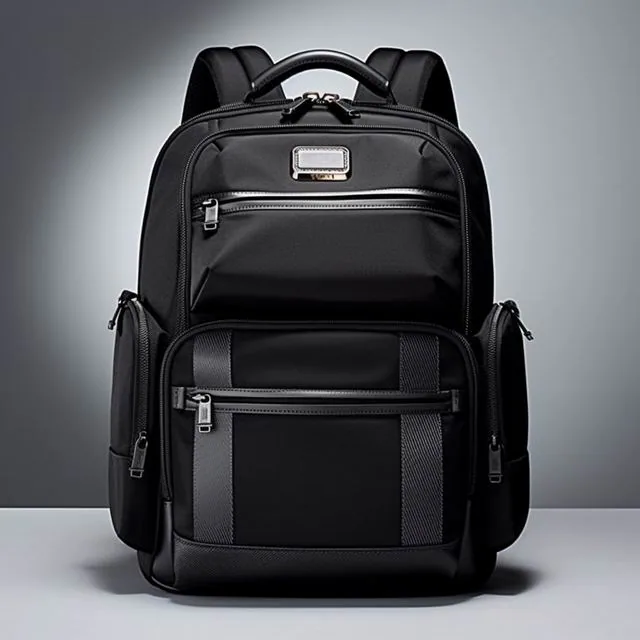
Six methods cover almost every British brief. Screen print costs GBP 0.35-0.85 per unit at 500 pieces and suits a single or two-colour mark on a flat panel. Heat transfer costs GBP 0.55-1.60 and suits a full-colour or photographic mark. Embroidery costs GBP 1.20-2.60 and suits a crest of 4,000-9,000 stitches on a structured panel. A woven label costs GBP 0.12-0.45. A debossed or embossed patch costs GBP 0.85-2.20. A rubber or silicone badge costs GBP 1.40-3.60. Choose by substrate first. A coated 600-denier polyester takes screen print, heat transfer and embroidery well. A 1,000-denier Cordura takes embroidery and patches, and screen print poorly because the weave is too coarse for a fine line. A TPU-laminated welded shell takes heat transfer and a welded badge, and cannot be embroidered because the needle holes break the waterproof membrane. Leather takes debossing and embroidery, and screen print poorly because the ink cracks at the flex point. Then choose by durability and quantity. Screen print has a GBP 25-70 screen charge per colour and no meaningful minimum; embroidery has a GBP 15-45 tape charge and works from 100 units up; a moulded rubber badge has a GBP 320-650 tool and only amortises above about 400-600 units.
At the standard MOQ 500 pcs all six are viable, and the decision is aesthetic and functional rather than economic on a custom backpack order.
Method Comparison: Cost, Durability and Minimums
The table below compares the six methods on the four variables that decide a brief: unit cost at 500 pieces, tooling or set-up, expected service life under British conditions, and the smallest legible logo size. Service life is measured to the point where the mark is visibly degraded, not to the point of failure, because a corporate mark that looks tired at 18 months reflects badly on the brand long before it falls off.
| Method | Unit cost at 500 (GBP) | Tooling (GBP) | Service life | Minimum legible size |
|---|---|---|---|---|
| Screen print | 0.35-0.85 | 25-70 / colour | 3-5 years | 25 x 25 mm |
| Heat transfer | 0.55-1.60 | 40-120 plate | 2-4 years | 15 x 15 mm |
| Embroidery | 1.20-2.60 | 15-45 tape | 5-8 years | 30 x 30 mm |
| Woven label | 0.12-0.45 | 30-90 loom set-up | 5-8 years | 12 x 40 mm |
| Debossed PU patch | 0.85-2.20 | 120-320 die | 4-7 years | 35 x 20 mm |
| Rubber / silicone badge | 1.40-3.60 | 320-650 mould | 6-10 years | 25 x 15 mm |
| Laser-etched patch | 1.80-4.20 | 80-220 setup | 5-8 years | 20 x 20 mm |
| Metal plate | 2.20-5.80 | 180-450 tool | 8-12 years | 18 x 18 mm |
Read the tooling column against your quantity. A rubber badge at GBP 1.40-3.60 plus a GBP 320-650 mould costs GBP 2.04-4.90 per unit at 500 pieces and GBP 1.72-3.90 at 1,000. Screen print at GBP 0.35-0.85 plus GBP 25-70 per screen costs GBP 0.40-0.99 at 500 and GBP 0.38-0.92 at 1,000. The mould cost is the reason a moulded badge is a third-order decision and a screen print is a first-order one on a new programme. Every bulk run is inspected to AQL 2.5 (ISO 2859-1) under the sampling system published by the International Organization for Standardization, and shipments into Great Britain carry the UKCA declaration described at gov.uk.
Screen Print: The Default for Flat Panels
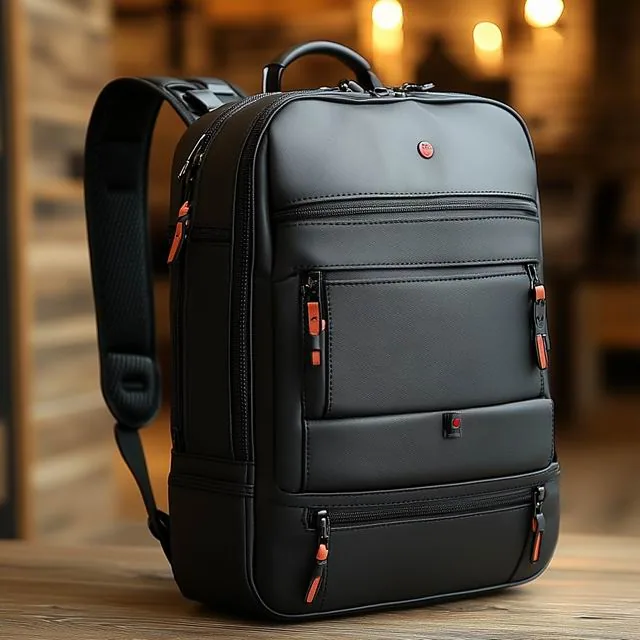
Screen print pushes ink through a mesh stencil onto the fabric, one colour per pass. It works best on a flat, smooth panel of 600-denier or finer polyester, and it is the cheapest method above 200 units. Plastisol ink gives a 0.15-0.35 mm raised deposit with good opacity on dark fabric; water-based ink gives a 0.05-0.12 mm deposit that breathes with the fabric and is softer to the touch but weaker on dark grounds.
Registration is the main quality variable. Three colours register to within 1.0-1.5 mm on a flat panel and 1.5-3.0 mm on a curved or padded one, so keep fine detail above 1.2 mm stroke width and keep the mark away from a seam or a flex point by at least 15 mm. A mark printed 8 mm from a seam will crack at the seam within 12-18 months as the panel flexes under load.
Durability under British conditions is 3-5 years to visible degradation. The failure mode is cracking at the flex point and fading from UV, at roughly 5-8% of colour strength per 500 hours of strong sun. Curing is the variable a buyer can control: a properly cured plastisol at 150-160 degrees for 2-3 minutes survives 40 domestic washes, while an under-cured one fails at 8-12. Specify the cure temperature and time on the print specification.
Heat Transfer: Full Colour on Any Substrate
Heat transfer prints a design onto a carrier film and presses it onto the fabric at 140-170 degrees and 2.5-4.0 bar for 12-25 seconds. It handles full colour, gradients and photographic detail that screen print cannot, and it works on a coated or laminated shell where ink would not bond. A single-colour transfer costs GBP 0.55-0.90 and a full-colour one GBP 0.95-1.60 at 500 pieces, with a GBP 40-120 plate or a digital print setup.
Hand feel is the trade-off. A transfer adds a 0.10-0.25 mm film that stiffens the panel and can crack at a flex point faster than screen print, giving a 2-4 year service life against 3-5. A stretch-grade transfer formulated for elastane reduces cracking and costs GBP 0.20-0.45 more per unit. Keep transfers off a high-flex area such as a shoulder strap or a roll-top closure and onto a flat front panel or a lid.
Colour accuracy is the other consideration. A transfer is printed in CMYK or with spot colours on a digital press and matched to a reference at Delta E 2.0-4.0, against Delta E 1.5-2.5 for a screen-printed spot colour. For a corporate mark with a registered brand colour, ask for a spot-colour transfer and a printed proof on the actual bulk fabric, because a proof on paper reads 1-2 Delta E darker than the same artwork pressed onto a coated shell. See the custom backpack programme page for volume terms.
Embroidery: The Premium Standard
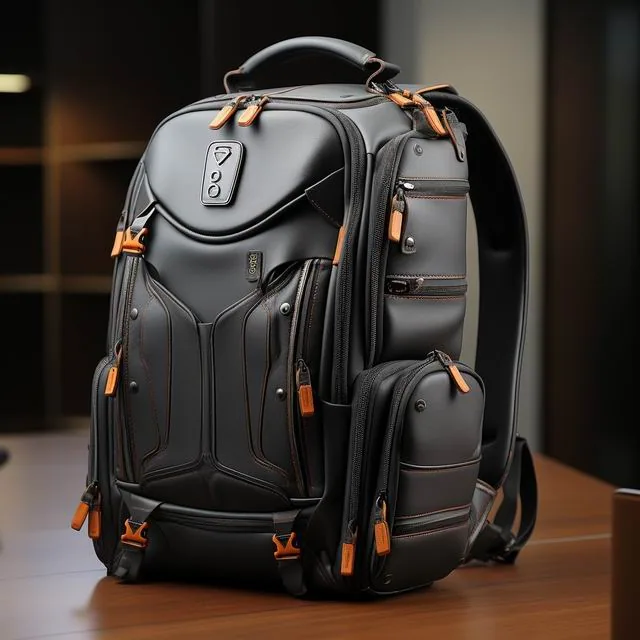
Embroidery stitches a design in rayon or polyester thread at 4,000-9,000 stitches for a typical 50 x 30 mm crest. Cost is driven by stitch count: GBP 1.20-1.80 per unit at 4,000-6,000 stitches and GBP 1.80-2.60 at 7,000-9,000, at 500 pieces. A tape charge of GBP 15-45 covers the digitising, which takes 3-6 working days and is a one-off cost that carries to every re-order.
Substrate and backing decide quality. Embroidery needs a structured panel with a 60-120 gsm backing to prevent puckering, and it needs 3 mm of clearance from any seam. On a 210-denier ripstop it will pucker without a cut-away backing at GBP 0.10-0.25 per unit. On a padded back panel it will not sit flat at all. On a waterproof laminated shell it should not be used, because each needle hole is an ingress path through the membrane.
Service life is 5-8 years, the longest of the common methods apart from a metal plate. Rayon thread fades at 8-12% per 500 UV hours against 4-6% for polyester thread, so specify polyester for a pack used outdoors in Britain. Thread thickness is the detail that decides legibility: a 40-weight thread renders a 1.5 mm letter legibly, while a 60-weight thread is needed below 1.0 mm. Keep lettering above 4 mm of cap height on a corporate crest.
Woven Labels, Patches and Badges
A woven label is the cheapest permanent mark at GBP 0.12-0.45 per unit, sewn into a seam or onto a panel with a 30-90 loom set-up. It suits a wordmark of 12 x 40 mm or larger and lasts 5-8 years. A damask weave resolves detail to 0.8 mm; a satin weave is smoother but resolves only to 1.5 mm. Specify the fold - centre fold, end fold or mitred - and the stitch line, which should be 3 mm from the label edge.
A debossed PU patch is sewn on and costs GBP 0.85-2.20 plus a GBP 120-320 die. It gives a leather-like embossed look at a fraction of the cost of a leather patch, lasts 4-7 years and works on any substrate that can take a stitch line. A rubber or silicone badge costs GBP 1.40-3.60 plus a GBP 320-650 mould, lasts 6-10 years and is the choice for an outdoor brand. Both are attached with a 3 mm stitch line or a rivet at 90 N pull strength.
A metal plate costs GBP 2.20-5.80 plus a GBP 180-450 tool and lasts 8-12 years. It is the most durable option and the heaviest, at 8-25 g. It must pass the nickel-release limit of 0.5 micrograms per square centimetre per week if it sits in prolonged skin contact, so specify stainless steel or brass rather than plated zinc. Our production team verifies hardware to the nickel limit on every branded hardware order.
Placement, Sizing and Legibility
Placement follows use. A corporate mark goes on the front panel, centred horizontally, with its top edge 40-70 mm below the top seam and 25 mm clear of any zip or pocket edge. A retail brand mark goes on the front panel at 50-80 mm, or on a woven label in the side seam for a subtler treatment. A sponsor or team mark goes on the lid or the shoulder strap, where it is visible when the pack is carried.
Size should follow viewing distance. A mark seen at 3 m - across an office, down a corridor - needs a cap height of 12-18 mm and a total width of 60-100 mm. A mark seen at 1 m - handed to a client - works at 6-10 mm cap height. A logo seen only in a photograph for e-commerce can be smaller still. Print a 1:1 proof on paper, pin it to a loaded pack and stand 3 m away; that 20-second test catches most sizing errors.
Contrast and colour count decide legibility. A single-colour mark on a contrasting ground reads best and costs least; a three-colour mark on a dark ground needs a white underbase at GBP 0.10-0.25 per unit more. Avoid a mark below 25 x 25 mm in screen print, below 30 x 30 mm in embroidery and below 15 x 15 mm in heat transfer. Keep the mark clear of a flex point by 15 mm and of a seam by 3 mm on a branded backpack panel.
Sampling and Approving a Branded Mark
Approve the mark on the actual bulk fabric, not on a paper swatch. A screen-print strike-off takes 2-4 working days and costs GBP 15-45; an embroidery sewn-out takes 3-6 working days and GBP 20-60; a transfer proof takes 2-5 working days and GBP 20-50. Each should be produced on a cutting of the specified shell in the specified colour, because ink sits differently on a coated 600-denier shell than on paper and colour shifts by Delta E 1-2.
Specify the tolerances. Registration within 1.5 mm on a flat panel and 3 mm on a curved one; colour within Delta E 2.0 of the approved proof; placement within plus or minus 3 mm of the specified coordinates; and no ink cracking after 20 cycles of a 90-degree flex test. Write those four into the defect dictionary as minor defects and the inspector will check them at AQL 2.5 (ISO 2859-1) on the finished lot.
Approve within the sampling window. Set-up and proofing run in parallel with the 6-10 working day sample cycle, so the mark is approved before the golden sample ships. If the mark is approved after, it adds 2-6 working days to the programme and pushes bulk production back by the same amount. Our production team issues strike-offs and sewn-outs with the first sample and records the approved mark on the golden sample record.
| Pack capacity | Panel | Mark width (mm) | Distance below top seam (mm) |
|---|---|---|---|
| 14-18 L | Front panel | 45-55 | 35-50 |
| 20-24 L | Front panel | 55-70 | 40-60 |
| 26-30 L | Front panel | 70-90 | 50-70 |
| 32-40 L | Front panel or lid | 80-100 | 60-80 |
| Accessory, 6-10 L | Front panel | 35-45 | 25-35 |
| Wash bag, 3-5 L | Centre front | 30-40 | 20-30 |
Cost Planning for a Branded Programme
Budget three lines: set-up, per-unit and re-order. Set-up is GBP 25-70 per screen colour, GBP 15-45 per embroidery tape, GBP 40-120 per transfer plate and GBP 320-650 per mould, paid once and carried to re-orders. Per-unit is the table figure. Re-order repeats the per-unit cost with no set-up, so a screen-printed program costs GBP 0.35-0.85 per unit on the second run and a moulded badge drops from GBP 2.04-4.90 to GBP 1.40-3.60.
Add the compliance cost where a logo touches skin or where a coating is involved. A printed panel adds a phthalate and azo screen at GBP 90-220 per colourway; a metal badge adds a nickel-release test at GBP 60-180; a rubber badge adds a phthalate screen at GBP 80-220. On a first programme that is GBP 230-620 of additional testing, which is 1.1-6.2% of a GBP 8,200-9,600 order and removes the most common cause of a detained shipment into Great Britain.
Then annualise. A 500-piece programme with a screen-printed mark costs GBP 175-425 in set-up and GBP 175-425 in per-unit printing, or GBP 350-850 total, which is GBP 0.70-1.70 per pack. A moulded badge programme costs GBP 320-650 in tooling and GBP 700-1,800 in units, or GBP 1,020-2,450, which is GBP 2.04-4.90 per pack. Over three years and two re-orders, screen print totals GBP 525-1,275 and the badge GBP 1,020-2,450 plus GBP 700-1,800 of re-order units on a running brand programme.
Brand Consistency Across a Product Range
A logo method chosen for one pack must work across the range. A brand running a 26-litre commuter pack, an 18-litre day pack and a 6-litre wash bag will find that a mark sized for the 26-litre front panel at 80 mm reads as oversized on the wash bag and that embroidery at 9,000 stitches puckers a 210-denier lining on the smaller item. Fix a sizing ladder at the start: 80 mm on a 24-34 litre pack, 55-60 mm on a 14-20 litre pack and 35-40 mm on an accessory.
Colour consistency is the second range problem. A screen-printed spot colour matches a woven label to within Delta E 2.0-3.5 across three substrates, and an embroidered thread matches a print to Delta E 3.0-5.0, because thread reflects differently from ink. Approve a single set of references - a Pantone or a RAL for print, a thread number for embroidery, and a yarn reference for a woven label - and hold all three to Delta E 3.0 or less against the master on a branded range.
Tooling carries across the range and that is the argument for consistency. An embroidery tape digitised once at GBP 15-45 is reused at no cost on every size; a print screen at GBP 25-70 per colour is reused the same way; a moulded badge tool at GBP 320-650 is reused only if the badge is the same size, which is why a moulded badge should be specified at one size for the whole range. A consistent range costs GBP 60-260 in set-up against GBP 180-780 for three separate treatments.
Plan the range launch as one production window rather than three. Sampling 6-10 working days covers the whole range if all three items are sampled together, bulk production 35-50 days covers a 500-piece split across three sizes, and inspection to AQL 2.5 (ISO 2859-1) runs on the combined lot of 500 pieces rather than on three smaller lots. That saves 4-8 weeks and GBP 240-540 of duplicated inspection cost on a multi-item order. Programme terms on a branded specification are MOQ 500 pcs per colourway with sampling 6-10 working days and bulk production 35-50 days.
Frequently Asked Questions
What is the cheapest way to put a logo on a backpack?
A woven label at GBP 0.12-0.45 per unit plus a GBP 30-90 loom set-up, or screen print at GBP 0.35-0.85 per unit plus GBP 25-70 per screen colour. Both work from 100 units upward. Screen print suits a flat front panel and a mark above 25 x 25 mm; a woven label suits a wordmark of 12 x 40 mm or larger and lasts 5-8 years against 3-5 for print.
How much does embroidery cost per backpack at 500 pieces?
GBP 1.20-2.60 per unit at 500 pieces, driven by stitch count: GBP 1.20-1.80 at 4,000-6,000 stitches and GBP 1.80-2.60 at 7,000-9,000. Add a GBP 15-45 digitising tape, which is a one-off cost carried to re-orders, and a GBP 20-60 sewn-out proof at 3-6 working days. Specify polyester thread rather than rayon, which fades at 8-12% per 500 UV hours against 4-6%.
Can you embroider a waterproof backpack without breaking the membrane?
Not through the membrane. Every needle hole is an ingress path, so a welded TPU shell should use a heat transfer or a welded badge instead. On a coated but sewn shell, embroidery is possible on a panel away from the water line, with a 60-120 gsm backing to prevent puckering and 3 mm of clearance from any seam. Specify a laminated patch over the stitch line if water resistance matters.
What size should a backpack logo be for a corporate mark?
60-100 mm wide with a cap height of 12-18 mm for a mark read at 3 m across an office or corridor; 6-10 mm cap height for a mark read at 1 m. Keep screen print above 25 x 25 mm, embroidery above 30 x 30 mm and heat transfer above 15 x 15 mm. Print a 1:1 proof, pin it to a loaded pack and stand 3 m away to check it before approving.
How long does a printed logo last on a backpack?
Screen print lasts 3-5 years to visible degradation, heat transfer 2-4, embroidery 5-8, a woven label 5-8 and a rubber badge 6-10. The failure mode for print is cracking at a flex point and UV fading at 5-8% of colour strength per 500 hours of strong sun. Keep the mark 15 mm clear of any seam or flex point and specify a proper cure at 150-160 degrees for 2-3 minutes.
Should I use a moulded rubber badge for a branded backpack?
Above about 400-600 units, yes, if the brand is outdoor-facing. A mould costs GBP 320-650 and the badge GBP 1.40-3.60 per unit, giving GBP 2.04-4.90 all-in at 500 pieces and GBP 1.72-3.90 at 1,000. It lasts 6-10 years, handles a 25 x 15 mm mark and resists British weather better than any print. Below 400 units the mould does not amortise and screen print is better value.
What is the difference between a strike-off and a sewn-out?
A strike-off is a screen-print approval sample on the actual bulk fabric, at 2-4 working days and GBP 15-45. A sewn-out is an embroidery approval sample at 3-6 working days and GBP 20-60. Both should be produced on a cutting of the specified shell colour, because ink sits differently on a coated 600-denier shell than on paper and the colour shifts by Delta E 1-2 from a paper proof.
How do I stop a printed logo cracking?
Keep it 15 mm clear of any seam, flex point or roll-top closure, place it on a flat panel, specify a cure at 150-160 degrees for 2-3 minutes, and use a stretch-grade ink or transfer on an elastic substrate. Under-cured plastisol fails at 8-12 domestic washes while properly cured ink survives 40. Avoid printing within 8 mm of a seam, which cracks within 12-18 months under load.
What tolerances should I specify for logo placement?
Registration within 1.5 mm on a flat panel and 3 mm on a curved one; colour within Delta E 2.0 of the approved proof; placement within plus or minus 3 mm of the specified coordinates; and no ink cracking after 20 cycles of a 90-degree flex test. Write these into the defect dictionary as minor defects so the inspector checks them at AQL 2.5 (ISO 2859-1) on the finished lot.
How much extra compliance testing does a branded mark need?
Yes. A printed panel adds a phthalate and azo screen at GBP 90-220 per colourway, a metal badge adds a nickel-release test at GBP 60-180 and a rubber badge adds a phthalate screen at GBP 80-220. Budget GBP 230-620 on a first programme, which is 1.1-6.2% of a GBP 8,200-9,600 order and removes the most common cause of a detained shipment into Great Britain.
Can I change the logo between wholesale backpack orders?
Yes, at the cost of a new set-up: GBP 25-70 per screen colour, GBP 15-45 per embroidery tape or GBP 320-650 for a new mould. The per-unit cost is unchanged. Approve a new golden sample with the revised mark and re-run any chemical screen on a new print colour at GBP 90-220. Keep the original artwork and tape files, which make a rebrand a 2-5 working day exercise rather than a 10-15 day one.
Which logo method works best on full-grain leather backpacks?
Debossing, at GBP 120-320 for the die and GBP 0.85-2.20 per patch, or embroidery on a structured leather panel. Screen print cracks at the flex point on full-grain leather within 12-18 months because the ink film is less elastic than the hide. A debossed patch is sewn on with a 3 mm stitch line, lasts 4-7 years and gives the embossed look expected on a British leather brief.
How much does a full-colour logo cost per backpack unit?
Heat transfer at GBP 0.95-1.60 per unit for full colour, or GBP 0.55-0.90 for a single colour, plus a GBP 40-120 plate or digital set-up. It handles gradients and photographic detail that screen print cannot, and works on a coated or laminated shell. The trade-off is a 2-4 year life against 3-5 for print, and a 0.10-0.25 mm film that stiffens the panel.
Which panel should a corporate logo be placed on for visibility?
A corporate mark on the front panel, centred horizontally, top edge 40-70 mm below the top seam and 25 mm clear of any zip or pocket edge. A retail brand mark on the front panel at 50-80 mm, or a woven label in the side seam for a subtler treatment. A team or sponsor mark on the lid or shoulder strap, where it is visible when the pack is carried.
What does logo set-up cost across a three-year programme?
Screen print totals GBP 175-425 in set-up and GBP 0.35-0.85 per unit, so roughly GBP 525-1,275 across three years and two re-orders. A moulded badge costs GBP 320-650 in tooling and GBP 1.40-3.60 per unit, or GBP 1,720-4,250 across the same period. Both carry their set-up to re-orders, so the second and third runs have no tooling line at all.
How do I check a logo on a delivered bulk order?
Compare against the approved proof under a D65 light box, checking registration within 1.5 mm, colour within Delta E 2.0 and placement within plus or minus 3 mm. Flex the panel 20 times at 90 degrees and look for cracking. Give the inspector the proof and the tolerances as part of the defect dictionary so the check runs at AQL 2.5 (ISO 2859-1) rather than by eye.
Get a Free Quote for Custom Custom Backpack Logo Methods and Cost per Unit
Planning a branded programme? Our production team works to MOQ 500 pcs, 6-10 working day sampling and 35-50 day bulk lead times, with AQL 2.5 inspection to ISO 2859-1. Send your brief and we will return a costed quotation in 24-48 hours.
Mens Backpack Guide Editorial Team — Buying guides and sourcing notes for the UK men's backpack market, coordinated by QUANZHOU JUNYUAN BAGS. Commercial figures such as MOQ 500 pcs, 6-10 day sampling and 35-50 day production reflect published programme terms.