Table of Contents
- The Five Gates from Concept to Bulk
- Gate 1: The Design Brief and Concept Sketch
- Gate 2: The Tech Pack
- Gate 3: Pattern and Material Selection
- Gate 4: The First Sample in 6 to 10 Working Days
- Gate 5: Fit and Function Revisions, Two to Three Rounds
- The Pre-Production Sample and Sign-Off
- Bulk Production: 35 to 50 Days
- Common First-Sample Failures and How to Prevent Them
- Cost and Time per Revision Round
- Frequently Asked Questions
The Five Gates from Concept to Bulk
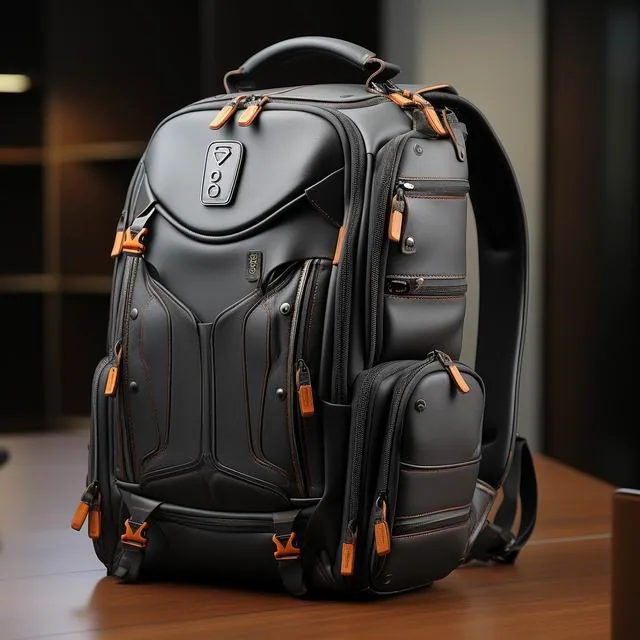
Custom backpack development runs through five gates: concept, tech pack, pattern, first sample, and pre-production approval. Each gate produces a document that the next gate depends on, and each one has a defined exit condition. Brands that skip a gate do not save time; they pay for it later in a revision round.
The end-to-end calendar is 10–16 weeks. The first sample takes 6–10 working days from an approved tech pack, complex builds take 12–15, and two to three revision rounds at 7–12 days each account for the largest single block of elapsed time. Bulk production then runs 35–50 days, before 38–48 days of sea freight to the UK.
Costs at each gate are modest individually. Sampling is $80–150 per style and is credited against bulk; pattern development is $120–350; each revision round adds $80–150 plus possible pattern rework of $60–150. The expensive variable is not money but seasonality — a two-week slip in March can cost a whole spring launch.
The table below is a realistic schedule for a new 25-litre daypack at the 500-piece minimum, assuming materials are stock colours and no component has to be tooled.
| Stage | Duration | Typical cost | Output document |
|---|---|---|---|
| Concept and brief | 3–5 days | Internal | Design brief plus sketches |
| Tech pack | 2–4 days | Internal or $150–400 | Signed tech pack v1.0 |
| Pattern and mock-up | 3–5 days | $120–350 | Pattern v1.0 plus nesting report |
| First sample | 6–10 days | $80–150 | Sample 1 plus measurement sheet |
| Revisions, 2–3 rounds | 7–12 days each | $80–150 each | Sample 2 and 3, comment log |
| Pre-production sample | 7–10 days | Usually included | Signed golden sample |
| Bulk production | 35–50 days | Per unit price | 500 finished units |
Read the table as a critical path. The 6–10 day sample is not the slow part; the revision rounds are, which is why the quality of the tech pack at gate two determines the length of the whole project.
Gate 1: The Design Brief and Concept Sketch
The design brief is the only document that is entirely yours. It should state the user, the use case, the target retail price and the non-negotiables — usually volume, laptop size, water resistance and a weight ceiling. Three to five working days of sketching follows, ending in one or two concepts taken forward.
A brief that says 'a premium commuter backpack' produces a sample nobody can approve. A brief that says '25 litres, fits a 16-inch laptop, 1.1 kg maximum, £59 retail, two colourways, water-resistant 600D, luggage pass-through, side bottle pocket' produces a tech pack that can be costed on the first attempt.
Sketch stage is also where the commercial reality should be tested. If the target retail price is £59, the wholesale price is roughly £24, and the landed cost needs to sit near £11–12 to leave a workable margin. That translates to an FOB unit price of about $10–12, which under the $8–25 band means 420D to 600D fabric, a standard lining and branded rather than premium hardware. Designing at gate one for a pack that cannot hit that band is the most expensive mistake in the process.
Two practical habits pay off here. First, sketch the back panel and strap attachment as carefully as the front — most fit problems originate on the side nobody draws. Second, annotate the sketch with dimensions in millimetres rather than describing proportions in words; the pattern maker will use those numbers directly.
Exit condition for gate one: a single concept, dimensioned, with the target FOB band agreed.
Gate 2: The Tech Pack
The tech pack is the engineering document that turns a sketch into something a factory can price and a pattern maker can cut. It takes 2–4 working days to assemble properly and is the single highest-leverage document in the project.
A workable tech pack contains: dimensioned technical drawings of front, back, side and base; a bill of materials naming fabric denier and finish, lining, foam density, zip brand and size, webbing width, buckles and thread; a construction callout for every seam; colour references in Pantone TCX; label and packaging placement; measurement points with tolerances; and a packing specification with carton dimensions. Every measurement point should be numbered and drawn onto the relevant view, because a term such as chest width means nothing without a defined start and end point, and an unnumbered point will be measured differently by two inspectors in the same week.
The packing specification matters more than most buyers expect, because carton size drives freight. A pack that folds to 60 × 45 × 40 cm at 40 pieces per carton ships at a materially different cost from one that needs 65 × 50 × 45 cm at 30 pieces.
Two failure modes are common. The first is an incomplete bill of materials, which forces the supplier to substitute and the quote to be revised twice. The second is a tech pack written as a mood board — beautiful, unpriced, and impossible to inspect against.
Our tech pack template guide sets out the page order that suppliers expect. Whatever format you use, get the tech pack numbered and version-controlled, because every later dispute will be resolved by pointing at a page and a revision number.
Gate 3: Pattern and Material Selection
Pattern and material selection run in parallel and take 3–5 working days. The pattern translates the tech pack into cutting geometry; material selection confirms that the fabric, lining, foam and hardware named in the tech pack actually exist, are in stock and meet the required performance.
Material selection is where cost is genuinely decided. Moving from 900D to 600D shell fabric, from YKK to a generic zip, or from 10 mm to 8 mm foam each remove cost without changing the silhouette — and each has a durability consequence that should be a deliberate choice rather than a substitution discovered in the sample.
Compliance belongs at this gate too. If the shell fabric carries a durable water-repellent finish, confirm the chemistry against EU restrictions on PFAS and request the safety data sheet; the European Chemicals Agency publishes the candidate list of substances of very high concern that a REACH screen tests against. Discovering a restricted finish after 500 units are cut is a write-off, not a rework.
Ask for fabric test reports with the sample, not after: tear strength, abrasion cycles and colourfastness to light and rubbing. A supplier who cannot produce them for a stock fabric is telling you the fabric is unbranded and unverified.
Exit condition: pattern v1.0 with nesting report, plus a signed material card for every component in the bill of materials. Keep that card with the tech pack, so a later substitution can be checked against the approved specification rather than against somebody's memory of a conversation. The pattern side of this gate is covered in detail in backpack pattern making.
Gate 4: The First Sample in 6 to 10 Working Days
The first sample is cut and sewn in 6–10 working days from approved tech pack, pattern and materials; complex builds with moulded foam, taped seams or new hardware take 12–15. Add 4–6 days for courier and UK customs clearance before it is in your hands.
What arrives is a prototype, not a product. Expect the first sample to be structurally sound and cosmetically approximate: stitch density may be slightly loose, the fabric may be a stock colour rather than your Pantone, and hardware may be the nearest available equivalent. Judge it on fit, proportion, construction and function — not on the colour of a zip puller that will change anyway.
Review it against four documents, in this order. The measurement sheet, to check dimensions within ±5 mm. The tech pack, to check that every specified feature exists. The pattern, to check panel breaks and strap geometry. And a loaded test — put 8–10 kg in it, wear it for twenty minutes, and note where it pulls.
Photograph everything and write comments as instructions, not impressions. 'The strap digs at the clavicle' is a feeling; 'reduce strap width at the 150 mm point from 65 mm to 55 mm and add 6 mm of foam' is an instruction that can be actioned in one round.
Most first samples fail on two or three specific points, not on the whole design. Finding them systematically is what keeps the revision count at two or three rather than five.
Send five things with the sample request and the round usually comes back right: the approved tech pack with a revision number, the pattern version, a signed lab dip for every colour, the trim card with brand names and sizes, and a single named contact who consolidates comments. Missing any one of them invites a substitution, and a substitution in round one becomes a rework in round three. Ask also for the sample to travel with its measurement sheet filled in by hand, because a form completed after the fact tends to match the tech pack rather than the bag.
Gate 5: Fit and Function Revisions, Two to Three Rounds
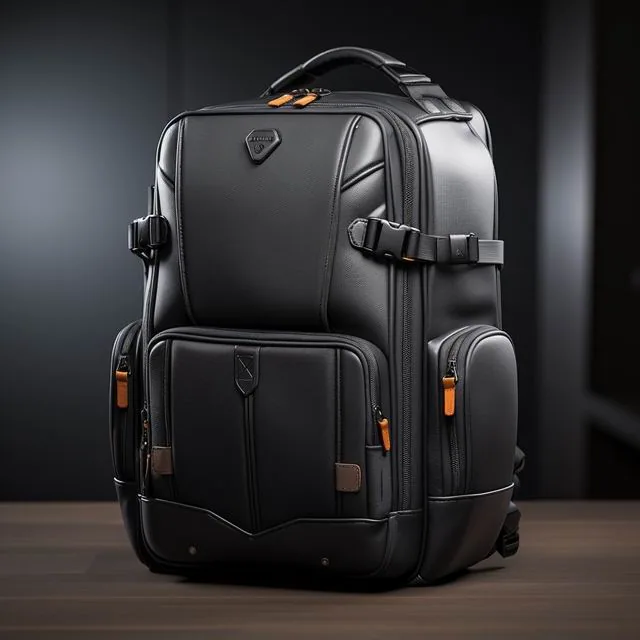
Two to three revision rounds is the normal, healthy number. Each round takes 7–12 working days including pattern adjustment, re-cutting, sewing and courier, and costs $80–150 in sampling fees with a further $60–150 if the pattern itself must change.
Round one almost always addresses fit: strap attachment height, back panel curvature, hip belt position on larger packs. Round two typically addresses function and finishing: pocket access, zip run, bartack placement, lining fit. Round three, when it happens, is usually cosmetic or commercial — a colour correction, a logo reposition, a hardware substitution for cost.
The rounds compress if comments arrive as one consolidated document rather than a stream of emails over two weeks. A single comment sheet with numbered points, each tied to a photograph and a measurement, can be actioned in one cycle; feedback spread across five messages usually costs an extra round.
There is a discipline to knowing when to stop. A sample that is 95% right and commercially sound should go to pre-production, not back for a fourth round. Perfectionism at this stage costs $200 and three weeks and rarely changes sell-through, while the season does not wait.
Track the cost of each round openly — fees, courier, and days of calendar time — and it becomes obvious which comments are worth making. A round that generates only cosmetic comments usually means the tech pack was complete; a round that moves a pocket or a strap anchor means it was not. Our sample approval checklist gives a point-by-point structure for each review.
The Pre-Production Sample and Sign-Off
The pre-production sample — sometimes called the PP sample or golden sample — is the reference against which all 500 bulk units will be judged. It is made on the production line, from production materials, by production operators, and it takes 7–10 working days after the final revision is approved. If a moulded component or a new fabric has to be ordered in, allow 12–15 working days instead.
Sign it physically, date it, and keep one copy at the facility and one in the UK. Photograph it under daylight on all six sides, and record its weight and key dimensions on the signature sheet. When a bulk unit is disputed three months later, the signed golden sample is the only document that settles the argument, because a tech pack describes intent and a sample describes reality.
Approval should be conditional on three items arriving together: the signed sample, a final measurement report with values against tolerance, and a written confirmation that materials and construction match the approved bill of materials with no substitutions.
Also confirm the logistics at this point — carton dimensions, carton marks, packing list format, and whether the goods will be inspected at AQL 2.5 under ISO 2859-1 before shipment. The sampling tables behind that standard are published by BSI. On a 500-piece lot it means a 50-piece sample with 3 defects accepted and 4 rejecting the lot.
Once the PP sample is signed and the deposit is received, bulk production starts. Everything before this point is reversible; everything after it is expensive to change.
Bulk Production: 35 to 50 Days
Bulk production runs 35–50 days from signed pre-production sample and received deposit. The range is real: 35 days suits a single-colour 600D daypack with stock trims, while 50 days covers multi-panel construction, custom moulded foam, printed fabric or a large colour count that has to be sequenced through the line.
Several things run in parallel during that window, and knowing them helps you plan. Fabric and trims are ordered at day one and typically arrive within 10–15 days. Cutting begins once material is inspected. Sewing runs in sub-assembly — straps, then panels, then assembly, then finishing — and the final 7–10 days are trimming, hardware attachment, labelling, packing and carton marking.
Two checkpoints are worth insisting on. An in-line check at roughly 30% and 70% of the run, with photographs, catches alignment, stitch density and hardware faults while the line can still correct them. A final inspection at AQL 2.5 per ISO 2859-1 then confirms the lot before it ships.
Production does not stop for your comments. If a mid-run issue appears, the choice is usually to accept a deviation, pay for rework, or delay the sailing — and all three have a cost. That is why the PP sample sign-off matters so much: it removes ambiguity at the moment when ambiguity is most expensive.
Book freight during production, not after it. A sailing booked four weeks ahead is typically 10–20% cheaper than one booked in the week the goods are ready.
Ask for a production schedule in writing at day one, broken into material arrival, cutting, sewing start, assembly and packing. It takes the supplier ten minutes to produce and gives you five dates to test against reality. A schedule that slips at cutting is recoverable; one that slips at packing is a missed sailing. Bulk runs of this length are scheduled by our production team at QUANZHOU JUNYUAN BAGS, founded in 2014 with a founding team in the trade since 2004, from a 4,950 m² SGS-verified facility of 137 people and 7 production lines.
Common First-Sample Failures and How to Prevent Them
First samples fail in predictable ways. Knowing the list in advance is the cheapest quality improvement available, because each failure traces back to a document that was vague.
Wrong dimensions. The bag measures 15–25 mm off on depth or height. Cause: seam allowance not stated on the pattern, or measurement points not defined. Prevention: measurement points numbered in the tech pack, tolerance ±5 mm.
Strap geometry wrong. Straps attach too high, too narrow, or with insufficient foam. Cause: a sketch without a back-panel drawing. Prevention: dimension the strap attachment points on the back panel drawing.
Hardware substitution. A generic buckle appears where YKK or a named brand was specified. Cause: bill of materials without brand and size. Prevention: name brand, size and finish for every component, and state that substitutions require written approval.
Colour mismatch. The shell reads a shade off. Cause: Pantone reference given without a lab dip. Prevention: require a lab dip approval before cutting.
Pocket access. A side pocket that looks fine flat cannot be reached when worn. Cause: no wear test. Prevention: load 8–10 kg and wear the sample before commenting.
Weight over target. The pack comes in 100–200 g heavier than the brief. Cause: foam density and hardware not specified. Prevention: put a weight ceiling in the tech pack and ask for it on the measurement sheet.
Document every fault the day the sample arrives, with a photograph and a measurement. A sample that has been carried for a week no longer shows the crease, the rub or the strap set that caused the complaint, and the comment becomes an argument about memory rather than a photograph of evidence.
Cost and Time per Revision Round
Each revision round has a visible cost of $80–150 in sampling fees, plus $25–45 courier, plus 7–12 working days. If the pattern changes, add $60–150 for pattern rework. Two rounds is therefore $210–390 in cash and three to five weeks of calendar time.
The hidden cost is larger. A three-week slip in a seasonal window can push a launch past the buying period, which costs a multiple of the sample fee; it also compresses the marketing runway, because photography, listings and PR all depend on having a physical product.
There is a straightforward trade: spend an extra day at gate one and gate two. A dimensioned brief and a complete bill of materials typically remove one full revision round, which is worth $100–190 and two to three weeks. That is the highest-return day in the entire development calendar.
Budget the development phase separately from the production run. Development cash is $400–1,000 across pattern, sampling and two revisions, all of which is either credited or amortised, while production is $7,000–8,000 landed for 500 units. Mixing the two in one spreadsheet hides the fact that development is cheap and delay is not.
The full production budget — unit price bands, freight, duty and VAT — is modelled separately in budgeting your first backpack production run. Read the two together and the development phase stops looking like a cost centre.
One closing arithmetic point for planning: 10–16 weeks of development plus 35–50 days of production plus 38–48 days of sea freight means a concept approved in January is saleable stock around June. Work the calendar backwards from the season, not forwards from the sketch.
Frequently Asked Questions
How long does custom backpack development take from concept to sample?
The first sample takes 6–10 working days from an approved tech pack, and 12–15 working days for complex builds. Including brief, tech pack and pattern, allow 4–6 weeks to hold a first sample in your hands.
How many sample rounds should I budget for?
Two to three rounds is typical, at 7–12 working days and $80–150 each. A complete tech pack usually removes one full round.
What is a pre-production sample?
It is the reference sample made on the production line from production materials before the bulk run. Both parties sign and date it, and it becomes the standard against which all 500 units are inspected.
What should a backpack tech pack contain?
Dimensioned drawings of every view, a bill of materials naming fabric, foam, zip and hardware specs, seam-by-seam construction notes, Pantone references, measurement points with tolerances and a packing specification.
What is the minimum order quantity for a custom design?
The MOQ is 500 pieces per style and colour. A two-colourway launch is therefore 1,000 pieces, and each colour needs its own lab dip and approval sample.
How much does sampling cost?
Sampling is $80–150 per style and is normally credited in full against the bulk order. Courier to the UK is $25–45 and is not credited.
How long does bulk production take after the sample is approved?
Bulk production runs 35–50 days from signed pre-production sample and received deposit. Add 38–48 days of sea freight before the goods are saleable stock in the UK.
Can I change the design after the pre-production sample is signed?
Only at significant cost. Once the PP sample is approved production is committed, so any change means rework, a new sample round or a delayed sailing.
Why did my first sample come out the wrong size?
The usual cause is an undefined seam allowance or unnumbered measurement points in the tech pack. Specify measurement points with a ±5 mm tolerance and the error disappears.
Do I need a pattern made for my own design?
Yes if the silhouette is new. Pattern development is $120–350 for a multi-panel backpack and takes 3–5 working days, sitting inside the sampling window.
What inspection standard applies to the bulk run?
Final inspection is at AQL 2.5 per ISO 2859-1 at general inspection level II. For a 500-piece lot that means 50 pieces inspected, with 3 defects accepted and 4 rejecting the lot.
When should I book freight?
During production, not after it. Booking four weeks ahead on the Xiamen to UK lane is typically 10–20% cheaper than booking in the week the goods are ready.
How much does the development phase cost in total?
Allow $400–1,000 across pattern, sampling and two revision rounds. Most of that is credited or amortised against the bulk order, unlike the production spend of roughly $7,000–8,000 for 500 landed units.
Get a Free Quote for Your Backpack Programme
Our production team works to MOQ 500 pcs, 6-10 working day sampling and 35-50 day bulk lead times, with final inspection to AQL 2.5 (ISO 2859-1). Send your brief and we will return a costed quotation in 24-48 hours.
Mens Backpack Guide Editorial Team — Sourcing guides and programme notes for the UK men's backpack market, coordinated by QUANZHOU JUNYUAN BAGS. Commercial figures such as MOQ 500 pcs, 6-10 day sampling and 35-50 day production reflect published programme terms.