Table of Contents
- Backpack Brands by Price Tier: The Direct Answer
- The Five Tiers and What Each Buys
- Where the Money Actually Goes
- Harness Design by Tier
- Tier-by-Tier Recommendations for British Use
- Warranty, Service and Claims Handling by Tier
- How British Conditions Shift the Tier Calculation
- Buying the Same Specification at Volume
- How Retail Margin Shapes Each Tier
- Seasonal Buying and the British Discount Calendar
- What Retailers Will Not Tell You About the Tier Ladder
- Frequently Asked Questions
Backpack Brands by Price Tier: The Direct Answer
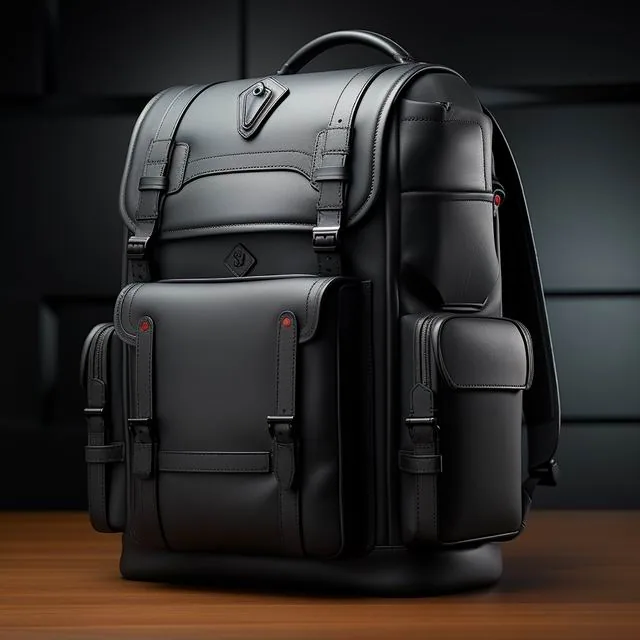
Across the British market, price buys specification in five clear bands. GBP 40-70 buys a 300-420-denier shell, a generic #5 zipper, a box-stitched strap and a 1-2 year warranty, lasting 2-4 years of daily use. GBP 70-130 buys 400-600 denier, a branded #8, a bar tack and 2-10 years of cover, lasting 4-8 years. GBP 130-220 buys 500-1,000 denier, a branded #8 or #10, a sculpted harness and a repair guarantee, lasting 8-15 years. GBP 220-320 buys a premium shell and full hardware servicing. GBP 320-400 buys leather or a technical composite with a lifetime service commitment. The value break points are GBP 70-90 and GBP 150-180. Below GBP 70 the zipper is almost always generic and the strap attachment is almost always a box stitch, which caps service life at 2-4 years regardless of brand. Above GBP 150 you enter the band where a repair programme and full spares holding become economic for the brand, which is what extends life from 6-8 years to 10-15 on a work backpack. The most common British buying mistake is paying GBP 150-220 for a fashion brand's specification. At that price you should be getting 500-denier or better, a branded zipper, bar-tacked straps and a service commitment; many fashion-led packs at GBP 150-220 still specify 300-420 denier and a generic zipper, and they last 2-4 years.
Read the specification, not the badge, and use the tier table below as the checklist.
The Five Tiers and What Each Buys
Tier one, GBP 40-70: 300-420-denier polyester, 10,000-20,000 Martindale abrasion, a generic #5 zipper at 4,000-6,000 cycles, a box-stitched strap at 60-90 kg, overlocked internal seams, plated hardware and a 1-2 year warranty. Service life 2-4 years. This is the right tier for a first job, a student year or a backup pack, and the wrong tier for a five-days-a-week commute.
Tier two, GBP 70-130: 400-600-denier polyester or nylon, 20,000-35,000 abrasion, a branded #8 at 8,000-12,000 cycles, a bar tack at 150-180 kg, bound seams, mixed hardware and a 2-10 year warranty. Service life 4-8 years. This is the sweet spot for most British commuters and the tier where the cost per year of service is lowest.
Tier three, GBP 130-220: 500-1,000-denier Cordura or high-tenacity nylon, 50,000-100,000 abrasion, a branded #8 or #10 reverse-coil at 12,000-15,000 cycles, a bar tack at 180-220 kg, bound and taped seams, acetal or stainless hardware and a repair guarantee. Service life 8-15 years. This is the tier for a daily commuter who wants to buy once, and for anyone carrying a 1.4 kg laptop five days a week on a London commute.
| Tier (GBP) | Shell | Abrasion cycles | Main zipper | Strap bar tack | Warranty | Service life |
|---|---|---|---|---|---|---|
| 40-70 | 300-420 D | 10,000-20,000 | Generic #5 | 60-90 kg box | 1-2 years | 2-4 years |
| 70-130 | 400-600 D | 20,000-35,000 | Branded #8 | 150-180 kg | 2-10 years | 4-8 years |
| 130-220 | 500-1,000 D | 50,000-100,000 | Branded #8 / #10 | 180-220 kg | Repair guarantee | 8-15 years |
| 220-320 | 1,000 D or composite | 80,000-150,000 | Branded #10, sealed | 200-240 kg | Lifetime service | 10-20 years |
| 320-400 | Full-grain leather or laminate | 100,000+ | Branded #10, metal | 220-260 kg | Lifetime + rebuild | 15-30 years |
Where the Money Actually Goes
Cost breaks down into fabric, hardware, labour and margin, and the proportions shift by tier. At GBP 50, fabric is roughly 28-38% of cost, hardware 12-18%, labour 22-30% and margin 20-30%. At GBP 150, fabric is 22-30%, hardware 18-26%, labour 24-32% and margin 18-26%. At GBP 350, fabric is 20-28%, hardware 22-30%, labour 26-34% and margin 16-24%. The hardware share roughly doubles from the bottom tier to the top, which is exactly what extends service life.
Fabric cost is driven by denier and coating. A 300-denier polyester costs GBP 1.80-3.20 per square metre at volume, 600-denier GBP 3.20-6.40 and 1,000-denier Cordura GBP 11-18. A pack uses 1.6-2.2 square metres of shell, so moving from 300 to 600 denier costs GBP 2.24-7.04 per unit and from 600 to 1,000 costs GBP 12.48-25.52. That is most of the price gap between tier one and tier three, and most of the service-life difference too.
Hardware is the second driver. A generic #5 slider costs GBP 0.18-0.45, a branded #8 GBP 0.65-1.40 and a branded #10 reverse-coil with a bonded gutter GBP 1.40-2.80. Acetal buckles cost GBP 0.22-0.65 against GBP 0.12-0.35 for plated zinc. A full hardware upgrade from generic to branded is GBP 2.50-6.50 per unit, which is 5-13% of a GBP 50 pack and 1.7-4.3% of a GBP 150 one - and it is why the upgrade appears at tier three and not at tier one on a commuter pack.
Harness Design by Tier
The harness is where the tier difference is most visible on the body. Tier one uses a 6-8 mm EVA foam pad with a 200-denier cover and a webbing strap 38-45 mm wide, with no sternum strap and no load lifters. Tier two adds a 10-12 mm moulded pad, a 50-55 mm strap and a sternum strap. Tier three adds a sculpted 12-18 mm pad with a lumbar shape, a 55-70 mm strap, load lifters and a padded hip belt. Tier four and five add an adjustable torso and a suspension system.
Load transfer improves sharply across the tiers. A tier-one harness with no hip belt puts 90-100% of the load on the shoulders. A tier-two harness with a webbing hip belt moves 30-45% to the hips. A tier-three harness with a padded belt and load lifters moves 70-85%. On a 6 kg load carried 40 minutes a day, moving from 100% to 25% shoulder loading is the difference between arriving fresh and arriving with a tight trapezius after 18 months.
Fit adjustability is the last difference. Tier one and two harnesses are fixed, typically in one length covering 45-50 cm of torso; tier three often offers two or three lengths covering 40-55 cm; tier four and five offer a sliding adjustment of 8-12 cm. British men measure 45-52 cm of torso on average, so a fixed harness fits roughly 65-75% of buyers well and the rest by luck. Try before buying, or buy from a tier that offers adjustable harnesses.
Tier-by-Tier Recommendations for British Use
For a student or a first job on a tight budget, tier one at GBP 40-70 is correct: expect 2-4 years, buy a pack with a 14-inch sleeve and accept a generic zipper. Replace rather than repair, and check the strap root at 12 months. For a five-day urban commute with a laptop, tier two at GBP 70-130 is the value answer: 4-8 years, a branded #8 and bar-tacked straps, and a cost per year of GBP 12.50-32.50.
For a daily London commute with a 1.4-1.7 kg laptop and a 40-minute journey each way, tier three at GBP 130-220 is the right spend: 8-15 years, a repair programme, and a cost per year of GBP 11.82-27.50 including one or two repairs. For a client-facing professional who needs the pack to look right as well as last, tier four at GBP 220-320 buys a smarter shell and a lifetime service commitment at GBP 14.67-32.00 a year.
| Use case | Recommended tier | Spend (GBP) | Expected life | Cost per year (GBP) |
|---|---|---|---|---|
| Student, one academic year | Tier 1 | 40-70 | 2-4 years | 10.00-35.00 |
| Urban commute, no laptop daily | Tier 2 | 70-110 | 4-8 years | 8.75-27.50 |
| London commute with laptop | Tier 3 | 130-220 | 8-15 years | 11.82-27.50 |
| Client-facing professional | Tier 4 | 220-320 | 10-20 years | 14.67-32.00 |
| Buy-it-once, lifetime use | Tier 5 | 320-400 | 15-30 years | 13.33-26.67 |
| Fleet or team order | Tier 2-3 spec at volume | 23-42 landed | 6-9 years | 2.56-7.00 |
Warranty, Service and Claims Handling by Tier
Warranty cover tracks the tiers closely. Tier one offers 1-2 years against manufacturing defects, which excludes wear and covers effectively none of what fails. Tier two offers 2-10 years, sometimes with hardware covered specifically. Tier three offers a repair guarantee with no time limit. Tier four and five offer a lifetime service commitment, sometimes including a rebuild at GBP 45-120 after 8-12 years.
Turnaround is the practical variable. A tier-two claim typically takes 21-45 days because the pack is assessed, approved and replaced. A tier-three repair takes 7-14 days. A tier-four service takes 10-21 days. During that window you need another pack, which at GBP 40-70 for a backup is a real GBP 40-70 cost that should be in your budget if you buy at tier one or two.
Spares holding is the third variable and it is what makes tier three different. A brand holding sliders at GBP 4-12, buckles at GBP 4-15 and strap webbing at GBP 8-20 can repair a pack in a week; a brand that does not hold spares replaces the whole pack or refuses the claim. Ask the retailer whether spares are stocked in Britain before you buy, because a 30-year warranty with no spares is a marketing number rather than a service commitment.
How British Conditions Shift the Tier Calculation
British weather raises the value of the upper tiers, because the failure modes it accelerates are the ones the upper tiers solve. Damp storage flakes a polyurethane coating after 3-5 years, road salt pits plated hardware within 18-24 months, and sustained rain finds an exposed zipper in 45-90 minutes. Tier three and above specify a polyester-based or TPU coating, acetal hardware and a sealed or flapped zipper, all of which are British-specific advantages.
Quantify it: a tier-two pack rated at 5 years in a dry climate typically delivers 3.5-4.5 years in Britain, a 20-30% reduction. A tier-three pack rated at 12 years delivers 9-11 years, a 12-20% reduction, because its coating and hardware are specified for wet conditions. That widens the per-year gap from roughly GBP 12.50 against GBP 11.82 to roughly GBP 16.00 against GBP 12.70, which is why the British market rewards tier three more than a dry one does.
Commute length compounds it. A British commuter carrying 4-6 kg for 40-90 minutes a day puts 200-230 days and 130-345 hours a year on a pack. At tier one that is 2-4 years of service; at tier three it is 8-15. If you commute five days a week for more than 30 minutes each way, buy tier three; if you commute three days a week or under 20 minutes, tier two is the better use of the same money on a commuter backpack.
Buying the Same Specification at Volume
The tier structure is a retail phenomenon; at volume the same specification costs far less. A tier-three specification - 600-denier shell, branded #8 zipper, bar-tacked straps at 180-220 kg, bound and taped seams, acetal hardware - costs GBP 16-29 ex-works and GBP 23-42 landed at 500 pieces, against GBP 130-220 at retail. That is a 4-8 times difference, and it is why British employers, clubs and schools buy direct rather than through a retailer.
Our production team works to a MOQ 500 pcs per colourway, with sampling 6-10 working days from tech-pack sign-off and bulk production 35-50 days after approval, inspected to AQL 2.5 (ISO 2859-1) under the sampling system published by the International Organization for Standardization. Our SGS-verified production base verifies zipper cycles and strap pull on 32 pieces per batch against the approved golden sample.
Plan the volume order against the same service-life arithmetic. A fleet pack at GBP 23-42 landed lasting 6-9 years costs GBP 2.56-7.00 per year of service, against GBP 11.82-27.50 for the same specification bought at retail. For a British employer running a cycle-to-work scheme or an onboarding programme, that is the difference between a GBP 11,500-21,000 fleet cost and a GBP 65,000-110,000 one on a 500-piece commuter programme.
How Retail Margin Shapes Each Tier
Retail price is roughly 2.2-3.4 times landed cost on a British high street, and the multiple rises with the tier. A tier-one pack landing at GBP 9-14 retails at GBP 40-70, a multiple of 3.4-5.0; a tier-two pack landing at GBP 16-26 retails at GBP 70-130, a multiple of 3.0-4.4; a tier-three pack landing at GBP 31-52 retails at GBP 130-220, a multiple of 3.0-4.2. The multiple falls as the price rises, which means the upper tiers return more product per pound than the lower ones.
Marketing spend is the reason. A fashion-led brand at tier one spends 12-22% of retail on marketing, brand collaboration and retail fit-out; a heritage outdoor brand at tier three spends 4-9% and puts the difference into fabric, hardware and a repair programme. That is why a GBP 180 heritage pack can specify 1,000-denier fabric and a repair guarantee while a GBP 180 fashion pack specifies 420 denier and a generic zipper on a retail commuter pack.
The practical consequence for a British buyer is to shop the upper tiers at the discount moments. British retail discounts commuter packs by 25-50% in the first three weeks of January and by 20-40% in the late-July back-to-school window, which puts a tier-three pack at GBP 130-220 down to GBP 78-165 and a tier-four pack at GBP 220-320 down to GBP 132-256. Buying tier three in January costs the same as buying tier two in September and delivers 8-15 years against 4-8 on a work backpack.
Seasonal Buying and the British Discount Calendar
The British calendar has four buying windows and the price difference between them is 20-50%. The January sales run from 26 December to the third week of January at 25-50% off. The back-to-school window runs from mid-July to early September at 15-35% off, with the best stock in the first two weeks. Black Friday falls in late November at 20-45% off, usually on the previous season's colours. And the spring clearance runs from late March to mid-April at 20-40% off.
Stock availability runs the other way. January has the deepest discounts and the thinnest choice, with 30-50% of colourways sold out by the second week. Back-to-school has full choice at shallower discounts. Black Friday has last season's colours at good prices. Match the window to the need: buy a specific pack in July, buy a commodity pack in January, and buy a colour you are not fussy about in November.
For a British buyer this changes the tier arithmetic. A tier-three pack at GBP 130-220 bought in January at 35% off costs GBP 84.50-143, which is tier-two money for tier-three service life: GBP 7.68-17.88 a year over 8-15 years against GBP 8.75-27.50 for a full-price tier-two pack over 4-8 years. Set a calendar reminder for 2 January and for 15 July, and buy the pack you actually want in the window on a commuter backpack.
What Retailers Will Not Tell You About the Tier Ladder
Two things distort the ladder for a British buyer. First, an own-brand or licensed pack from a large retailer often sits at tier-two money with tier-one specification, because the retailer's margin requirement of 45-60% is taken before the product is specified. A GBP 90 pack with a 45-60% margin has GBP 36-50 of product cost in it, against GBP 54-72 for a brand pack at the same retail price with a 30-40% margin.
Second, a pack's country of retail changes its price more than its cost. The same 600-denier specification retails at GBP 70-110 in Britain and the equivalent of GBP 55-90 in some other markets, largely because of VAT at 20%, a higher retail cost base and a smaller outdoor-specialist market. That is not a reason to avoid the British market, but it is a reason to compare specifications rather than prices when reading reviews written elsewhere.
The defence against both is the four-proxy check: shell denier, zipper brand and gauge, strap bar tack and internal seam treatment. A pack that passes all four is worth its tier whatever the badge says, and one that fails two or more is overpriced at any tier. Run the check in the shop in five minutes and the ladder stops mattering on a commuter backpack.
Frequently Asked Questions
What should I spend on a backpack for a British commute?
GBP 130-220 if you commute five days a week with a laptop, which buys 8-15 years and a repair guarantee at GBP 11.82-27.50 a year. GBP 70-130 if you commute three days a week or under 20 minutes each way, which buys 4-8 years at GBP 8.75-27.50. GBP 40-70 only for a student year or a backup pack, where the 2-4 year life is acceptable.
What does GBP 100 buy that GBP 50 does not?
A branded #8 zipper rated to 8,000-12,000 cycles against a generic #5 at 4,000-6,000; a bar-tacked strap at 150-180 kg against a box stitch at 60-90 kg; bound internal seams against overlocked; and 400-600-denier fabric against 300-420. Those four upgrades cost roughly GBP 6-14 in manufacturing and add 2-4 years of British service life. Those four upgrades add 2-4 years of British service life for roughly GBP 6-14 of build cost.
Is a GBP 200 backpack worth it over a GBP 120 one?
Yes if you commute daily with a laptop. GBP 130-220 buys 500-1,000-denier fabric at 50,000-100,000 abrasion cycles, a branded #8 or #10 reverse-coil zipper, acetal or stainless hardware and a repair guarantee, delivering 8-15 years against 4-8. Per year that is GBP 11.82-27.50 against GBP 15.00-30.00, and in British conditions the gap widens further because the upper tier specifies wet-weather hardware.
What causes some expensive backpacks to fail within two years?
Because price and specification are not the same thing. Fashion-led packs at GBP 150-220 often still specify 300-420-denier shells and generic zippers, and they last 2-4 years. Check the four measurable proxies - shell denier, zipper brand and gauge, strap bar tack and internal seam treatment - rather than the badge. A GBP 110 pack with a branded #8 outlasts a GBP 180 pack with a generic #5.
What is the best value price tier overall?
GBP 70-130 for occasional commuters and GBP 130-220 for daily ones. The GBP 70-130 band is where a branded zipper and a bar tack first appear, which is what takes service life from 2-4 years to 4-8. The GBP 130-220 band is where a repair programme and full spares become economic, which takes it to 8-15. Both beat the tiers above and below on cost per year of service.
How much does the fabric denier affect the price?
Substantially. A 300-denier polyester costs GBP 1.80-3.20 per square metre at volume, 600-denier GBP 3.20-6.40 and 1,000-denier Cordura GBP 11-18. A pack uses 1.6-2.2 square metres, so moving from 300 to 600 denier adds GBP 2.24-7.04 per unit and from 600 to 1,000 adds GBP 12.48-25.52. That is most of the retail gap between the first and third tiers. A pack uses 1.6-2.2 square metres of shell, so denier drives most of the gap.
How much better are the harnesses on expensive backpacks?
Yes, measurably. Tier one has a 6-8 mm foam pad and a 38-45 mm strap with no hip belt, putting 90-100% of load on the shoulders. Tier three has a 12-18 mm sculpted pad, a 55-70 mm strap, load lifters and a padded hip belt, moving 70-85% to the hips. On a 6 kg load carried 40 minutes a day, that is the difference between arriving fresh and arriving with a tight trapezius after 18 months.
How long does a warranty claim take in the UK?
Tier two typically 21-45 days, because the pack is assessed and replaced. Tier three repairs take 7-14 days and tier-four service 10-21. Budget for a backup pack at GBP 40-70 during that window if you buy below tier three. Also ask whether spares are stocked in Britain: a brand holding sliders at GBP 4-12 and buckles at GBP 4-15 repairs in a week, while one that does not replaces or refuses.
How does British weather change which price tier to buy?
Yes, it favours tier three and above. Damp storage flakes a polyurethane coating after 3-5 years, road salt pits plated hardware in 18-24 months and sustained rain finds an exposed zipper in 45-90 minutes. A tier-two pack rated at 5 years typically delivers 3.5-4.5 in Britain, while a tier-three pack rated at 12 delivers 9-11, widening the per-year gap from roughly GBP 0.68 to roughly GBP 3.30 in favour of the upper tier.
What specification is included at GBP 300 and above?
A 1,000-denier or composite shell at 80,000-150,000 abrasion cycles, a branded #10 sealed zipper, a strap bar tack at 200-260 kg, an adjustable torso of 8-12 cm, a lifetime service commitment and often a rebuild programme at GBP 45-120 after 8-12 years. At GBP 320-400 you get full-grain leather or a technical laminate with a 15-30 year service life and a cost per year of GBP 13.33-26.67.
Can I get tier-three quality at a lower price?
Yes, by buying at volume. A tier-three specification costs GBP 16-29 ex-works and GBP 23-42 landed at 500 pieces against GBP 130-220 retail, a 4-8 times difference. Our production team works to MOQ 500 pcs with sampling 6-10 working days, bulk production 35-50 days and inspection to AQL 2.5 (ISO 2859-1), and verifies zipper cycles and strap pull on 32 pieces per batch.
How do I spot a fashion pack priced as a technical pack?
Check the four proxies. A 300-420-denier shell, a generic #5 zipper with no brand stamp on the slider, a box stitch rather than a bar tack at the strap root and overlocked internal seams mean 2-4 years of life whatever the price says. Turn the pack inside out if possible and look at the corners of the main compartment: bound seams are the clearest single signal of a brand that expects the pack to last.
What does a hip belt add on a commuter pack?
Load transfer. A webbing hip belt moves 30-45% of the load off the shoulders and a padded belt with load lifters moves 70-85%. On a 6 kg load that is 1.8-4.2 kg off the trapezius. It adds 120-260 g and GBP 4-12 to the unit cost, and it is worth specifying above 5 kg or above 40 minutes of carrying. Below that, a sternum strap alone is enough on a commuter pack.
Is a leather backpack worth GBP 320-400 for daily commuting?
For a client-facing role, yes: full-grain leather at 1.8-2.4 mm lasts 15-30 years with conditioning every 6-12 months, against 8-15 for a technical shell. It weighs 1.6-2.4 kg against 1.0-1.5 kg and needs a 1,500-2,000 mm waterproof treatment rather than being inherently waterproof. Cost per year is GBP 13.33-26.67, which is competitive with the technical tiers and looks better in a meeting.
How often should I replace a commuter backpack?
Every 4-8 years at tier two and 8-15 at tier three, or when two of the three main systems fail together: the zipper, the strap attachment and the back foam. A single zipper failure at GBP 6-12 is worth repairing up to about year eight. After that the foam and lining usually degrade within 12-18 months of each other, and replacement becomes better value than sequential repairs.
What is the cheapest way to get a long-lasting pack?
Buy tier two at GBP 70-130 and maintain it: re-proof the shell with a GBP 9-16 spray every 8-12 weeks of wet use, replace a slider at GBP 6-12 rather than retiring the pack, dry it fully overnight rather than leaving it damp, and store it out of sunlight. Those four habits take a 4-8 year pack to 6-10 years for under GBP 40 of lifetime maintenance on a commuter backpack.
Get a Free Quote for Custom Backpack Brands by Price Tier
Planning a branded programme? Our production team works to MOQ 500 pcs, 6-10 working day sampling and 35-50 day bulk lead times, with AQL 2.5 inspection to ISO 2859-1. Send your brief and we will return a costed quotation in 24-48 hours.
Mens Backpack Guide Editorial Team — Buying guides and sourcing notes for the UK men's backpack market, coordinated by QUANZHOU JUNYUAN BAGS. Commercial figures such as MOQ 500 pcs, 6-10 day sampling and 35-50 day production reflect published programme terms.