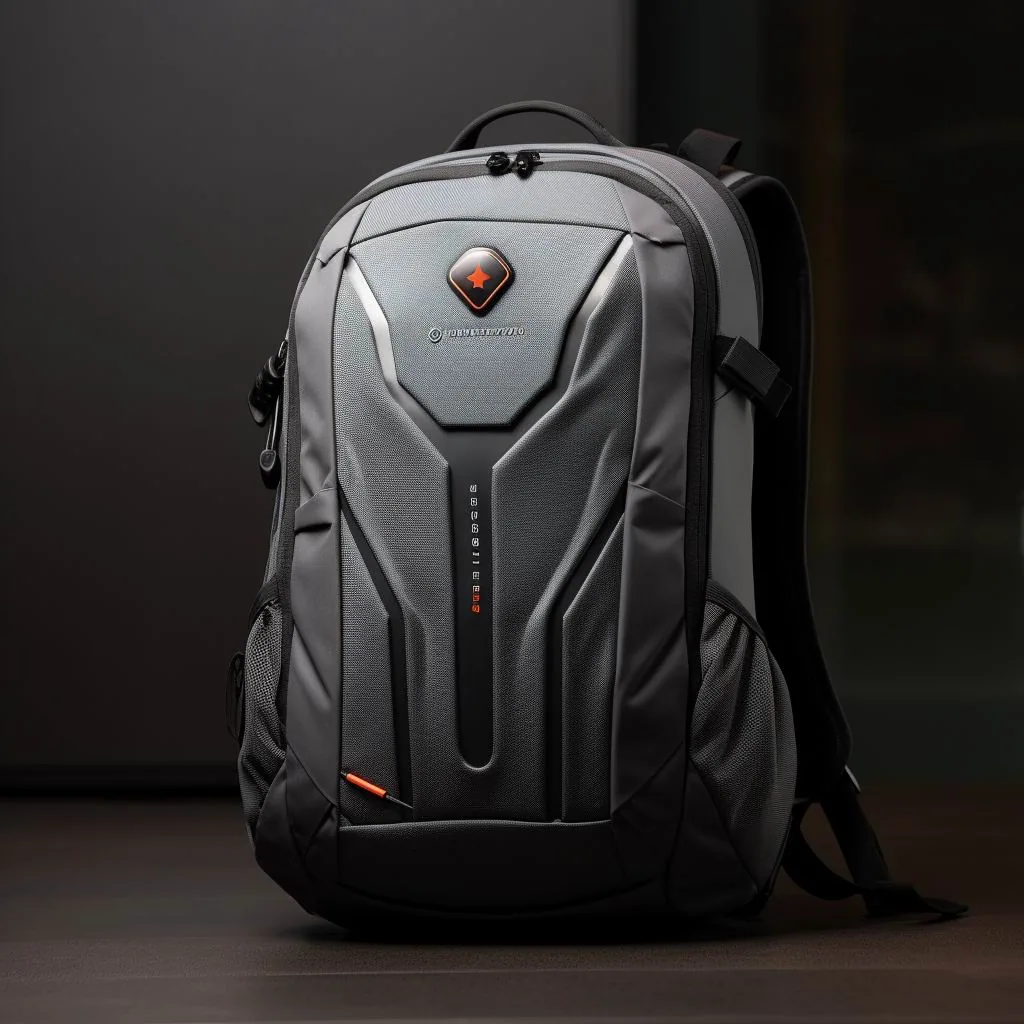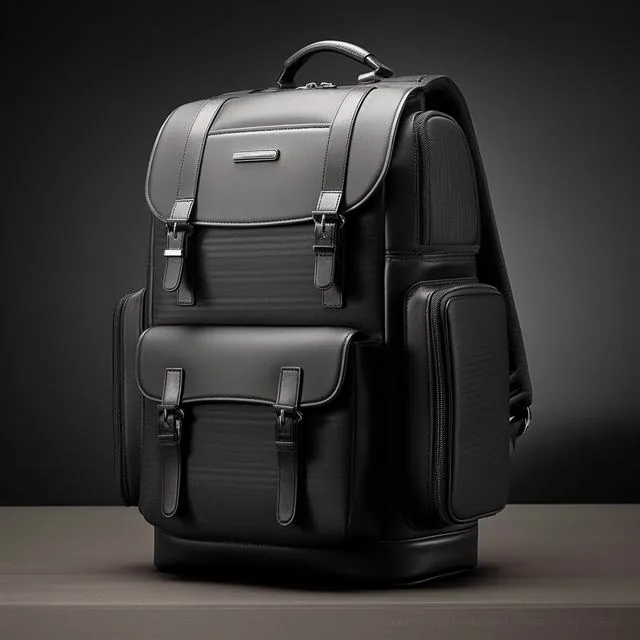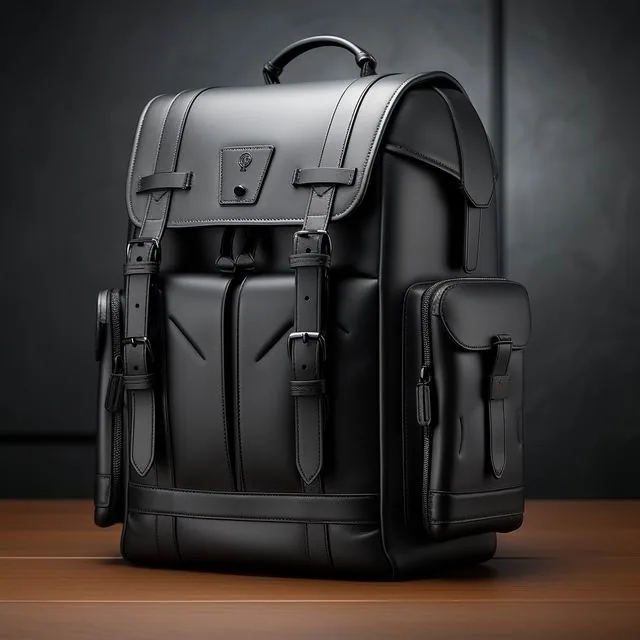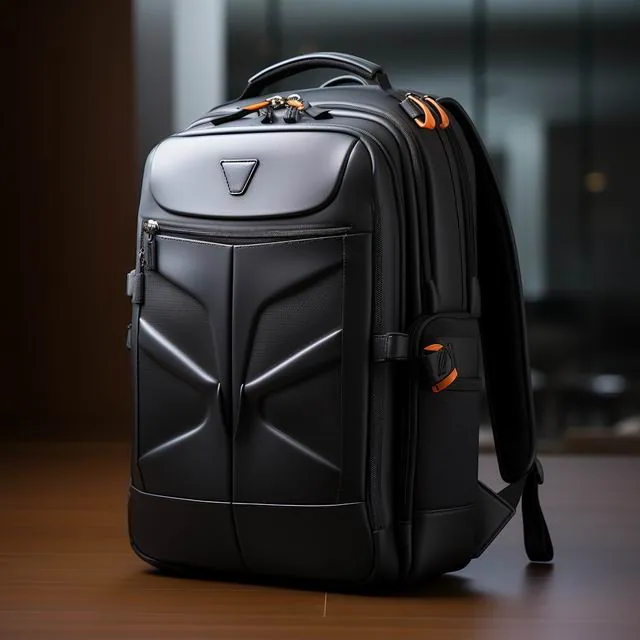
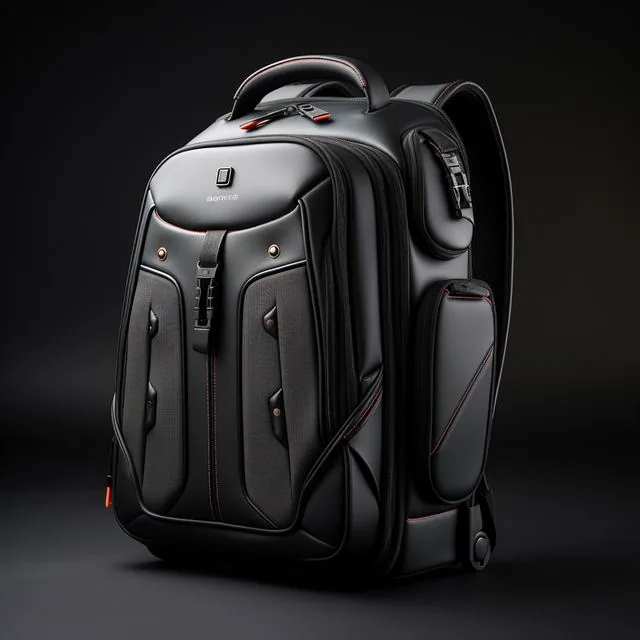
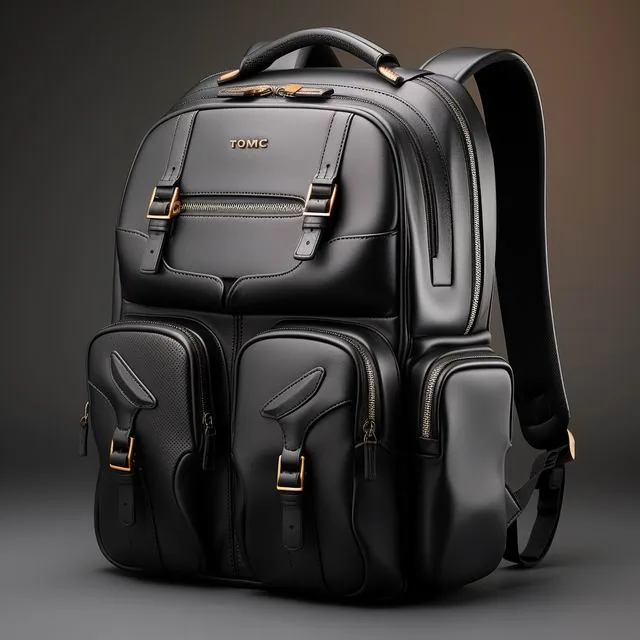
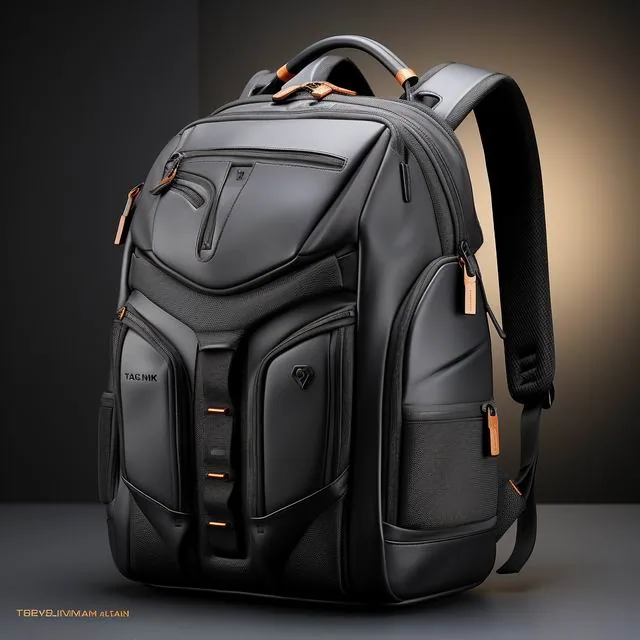
Premium backpacks designed for the modern professional, combining style, functionality, and durability for the corporate environment.
Our Business & Professional Backpacks are meticulously crafted for executives, entrepreneurs, and professionals who demand both style and functionality. Each backpack features premium materials, sophisticated design, and practical compartments to organize your business essentials.
Most professionals need 20 to 28 litres. That holds a 15 or 17 inch laptop, A4 documents, a charger, a notebook and a lunch box without looking oversized on the train. Our business range covers 20 to 35 litres at 45 x 32 x 18 cm, so 20 to 25 litres suits a light carry and 28 to 35 litres suits anyone carrying gym kit or an overnight shirt. Bigger bags simply encourage overpacking.
Yes. Our business backpacks take laptops up to 17 inches in a dedicated padded compartment, and the 45 x 32 x 18 cm body comfortably swallows A4 folders at 210 x 297 mm without folding them. Look for a suspended sleeve with padding on all sides and a separate document divider at the back, so files stay flat during a 30 minute walk and you can pull the laptop out at security without unpacking.
Between 1.2 and 1.8 kg is right for a leather or premium nylon business pack. Anything heavier adds to the 7 to 9 kg you already carry once a 2 kg laptop, charger, documents and lunch go in. Lighter nylon builds sit near 1.2 kg and full-grain leather near 1.8 kg. For a 20 minute walk each way, every 500 g saved cuts noticeable strain across 250 working days a year.
Nylon wins for daily British commuting: it weighs about 1.2 kg, sheds rain on the 150 plus wet days a year the UK averages, and needs no maintenance. Full-grain leather at around 1.8 kg looks better in a client meeting and develops a patina over 10 to 20 years, but needs conditioning twice a year. Many professionals buy nylon for the commute and keep a leather bag for meetings.
Prioritise a slim profile under 20 cm deep so you can move through rush-hour carriages, a lockable or hidden pocket for valuables on the Tube, water-resistant fabric for sudden showers, and a professional matte finish with minimal branding. A padded 15 to 17 inch compartment, a key clip and a trolley sleeve for trips through Euston or Paddington complete the list. Keep the empty weight under 1.5 kg.
Empty it every week, wipe the shell with a damp cloth, and condition leather every six months. Store it upright with the laptop removed so the padding recovers, and never leave it on a wet floor where the base absorbs water. Most wear appears on the base corners and zip pulls after 12 to 18 months, and both are repairable. Our two-year warranty covers manufacturing defects across the business range.
Yes. At 45 x 32 x 18 cm the business range fits most UK and European cabin allowances, including the 45 x 36 x 20 cm personal item allowance on easyJet. It will not meet Ryanair's free 40 x 20 x 25 cm under-seat allowance, so budget carriers may charge. Choose a 20 to 25 litre model for flying, keep the laptop in its sleeve for security, and use the trolley sleeve over your cabin case handle.
Our minimum order quantity for the business range is 500 pieces per style, with unit prices from 15 to 35 US dollars, roughly 12 to 28 pounds depending on specification and quantity. Sampling takes 7 to 10 days and production runs 25 to 30 days after sample approval. Our production team handles logo embroidery or printing, colour matching, material upgrades and interior layout changes on the same programme.
Allow 7 to 10 days for a physical sample and 25 to 30 days for bulk production once that sample is approved, so roughly five to six weeks before shipping. Add 25 to 35 days for sea freight to the UK, or 5 to 8 days by air. Our vetted partner facilities can compress sampling for repeat styles, but first orders should always include a full pre-production sample.
Logo embroidery and printing are both available, along with custom colour schemes, hardware finishes, material upgrades and interior layout redesign. Embroidery suits leather and heavy canvas, while heat-transfer or screen printing suits nylon panels. Typical logo areas run 40 to 80 mm on the front panel and 25 mm on the strap. Our production team also matches Pantone colours on webbing, lining and zip tape for corporate programmes.
Yes. The business range includes hidden pockets against the back panel, lockable zip heads and RFID-blocking card slots, which matter on crowded UK trains and in station cafes. Keep your wallet in the rear hidden pocket rather than the admin panel, use a small three-digit lock on the main compartment, and never leave the bag on a seat back. These features add roughly 50 grams and no visible bulk.
Unit prices run 15 to 35 US dollars, about 12 to 28 pounds, depending on material, hardware and order size. Nylon builds sit at the lower end and leather with premium hardware at the upper end. Tooling for custom hardware or an embroidered logo adds a one-off charge of 80 to 300 US dollars. Minimum order is 500 pieces, and unit price typically falls 8 to 15 percent between 500 and 2,000 pieces.
Yes, if you travel by rail or air more than a few times a year. A pass-through sleeve slides over a cabin case handle and takes 5 to 7 kg off your shoulders during long walks through terminals and stations. It weighs about 30 grams and costs nothing in capacity. If you only walk from home to the office, spend the money instead on better shoulder padding and a suspended laptop compartment.
Match capacity to what you actually carry. A 20 to 25 litre bag holds a 15 inch laptop, charger, notebook and lunch and looks sharp in a meeting. A 30 to 35 litre bag adds gym kit, shoes or an overnight shirt, which suits anyone travelling between sites. Since both weigh 1.2 to 1.8 kg empty, the real difference is bulk: over 30 litres starts looking like travel luggage in a client office.
Measure your device diagonally and add 10 mm. Our business backpacks are specified for laptops up to 17 inches, with a suspended padded sleeve and a false bottom that lifts the device off the bag base. A 14 inch laptop measures about 31 x 22 cm and a 16 inch model about 36 x 25 cm, both of which fit with room for a slim sleeve. Check the internal width, not just the diagonal.
Yes. The business range uses clean lines, neutral colours and minimal external branding, so it reads as professional rather than outdoorsy. A matte nylon or leather shell with a structured shape holds its form in a meeting room and stands upright on the floor. For formal client work, choose black or dark navy with leather trim, keep the bag under 30 litres, and avoid bright hardware or sporty webbing.
Expect three to five years of daily commuting from a premium nylon or leather business backpack, and five years or more if you rotate it with a second bag. First failures are usually zip pulls and base corner wear at around 24 to 36 months, and both are repairable. Our business backpacks carry a two-year warranty against manufacturing defects, and reinforced stitching plus quality base hardware extends service life significantly.
Yes, and we recommend it. A pre-production sample takes 7 to 10 days and lets you check the laptop compartment, stitching, hardware and logo placement before committing to 200 pieces. Sample costs are usually credited against the bulk order, and production then runs 25 to 30 days after approval. Our production team can adjust colour, material and interior layout at the sample stage at no extra charge on first orders.
Capacity is the first decision and the one most British professionals get wrong. The instinct is to buy bigger than needed, on the assumption that spare room costs nothing; in practice spare room gets filled, and a 35-litre bag carried half empty still weighs what it weighs and still looks like travel luggage in a meeting room. Match capacity to the single heaviest day of your working week rather than to the average one.
A 20 to 25-litre business backpack covers the standard office day: a 15-inch laptop, its charger, an A4 notebook or folder, a pen case, a phone, a wallet and a lunch box. That is the light-carry configuration and it reads as professional rather than outdoorsy. A 28 to 35-litre bag adds gym kit, a pair of shoes or an overnight shirt, and suits anyone travelling between sites two or three days a week. Our business range spans 20 to 35 litres at 45 x 32 x 18 cm, and the honest recommendation is that most people should be at the bottom half of that range.
Depth matters more than volume on a British commute. A bag deeper than 20 cm catches on train seat backs, on turnstiles and on office chair arms, and it pushes you outward into the aisle on a rush-hour carriage. Slim depth with a taller, wider footprint carries the same litres far more politely. This is why a 25-litre business pack at 18 cm deep is easier to live with than a 25-litre travel pack at 25 cm deep, even though the numbers are identical on paper.
Flying changes the calculation. At 45 x 32 x 18 cm the business range sits inside most UK and European cabin allowances, including the 45 x 36 x 20 cm personal-item allowance on easyJet, so it flies free as a second bag. It will not meet Ryanair's free 40 x 20 x 25 cm under-seat allowance, so budget carriers may charge for it. For a mixed rail-and-air working month, choose 22 to 25 litres and keep a packable folder in the laptop sleeve.
The practical test is to load the bag with what you actually carried yesterday, weigh it on bathroom scales, and see where you land. A loaded business pack should sit between 5 and 7 kg. Above 8 kg, look at what you are carrying twice: a second charger, a paper notebook you never open, a water bottle you refill at the office. Cutting 1 kg from the contents is easier and cheaper than buying a lighter bag.
The laptop compartment is the reason a business backpack exists, and it is also where cheap bags fail. Three things determine whether a compartment actually protects a device: internal clearance, padding thickness and suspension. Getting one of the three wrong leaves you with a sleeve that looks right and protects nothing.
Start with the device measurement. Measure the laptop diagonally and across its width, then add 10 mm to each dimension for clearance. A 14-inch laptop is roughly 310 x 220 mm, a 15-inch roughly 340 x 240 mm, and a 16-inch roughly 360 x 250 mm. Our business range is specified for devices up to 17 inches, which needs roughly 400 x 280 mm of internal sleeve space. Buyers frequently check the diagonal only and then find the device will not close inside the sleeve because the sleeve is 10 mm narrower than the machine.
Padding should be 8 to 12 mm of closed-cell foam on every side, not just on the back panel and the front. Open-cell foam of the same thickness compresses to nothing under a 2 kg load within a year, which is why a bag that felt protective in the shop stops being protective by month nine. Ask what the foam is, not just how thick it is.
Suspension is the third element and the cheapest to specify. A suspended sleeve is stitched to the bag only at its top edge, so the device floats inside the compartment and a false bottom lifts it 10 to 15 mm clear of the bag base. That 10 to 15 mm is what saves a laptop when the bag is set down hard on a station platform; without it, the corner of the machine takes the full impact through 3 mm of fabric. Our production team specifies a false bottom on every business compartment for exactly this reason.
Two smaller details are worth checking. The sleeve should have a strap or elastic retainer at the top so the device cannot slide out when the bag is opened upside down, and the zip on the compartment should be a branded number 8 coil at minimum, because an unbranded number 5 is the most common warranty claim on a commuter bag. Both cost pennies and both are visible on a specification sheet.
Material choice sets the weight, the price, the maintenance burden and how long the bag lasts. For a British commuter the two variables that matter most are how the shell handles rain, given that much of the UK sees rain on 150 days or more a year, and how much the empty bag weighs before you put anything in it.
Ballistic nylon is the performance choice. A 1680D ballistic weave reaches 80,000 Martindale cycles and shrugs off the abrasion of daily platform and desk contact, but it is heavy at roughly 410 g/m² and is normally used on base panels and high-wear zones rather than across a whole business shell. An 840D nylon with a TPU laminate is the better all-round business specification: it reaches 40,000 to 60,000 cycles, holds a 3,000 mm hydrostatic head, and keeps an empty bag near 1,320 g.
Abrasion resistance is measured by the Martindale method in ISO 12947, reported as cycles to breakdown. It is the single most useful number on a shell specification sheet and the one most retail listings omit. As a working rule, 15,000 cycles is the floor for a bag used five days a week; 30,000 is comfortable; 60,000 plus is effectively lifetime.
Full-grain leather is a different proposition entirely. At roughly 1,050 g/m² it pushes an empty bag to about 1,820 g, it needs conditioning twice a year in a British climate, and it will mark in heavy rain. What buys is appearance and longevity: a full-grain panel develops a patina over 10 to 20 years and reads correctly in a client meeting in a way that no synthetic does. Waxed canvas sits between the two, at 560 g/m² and 18,000 cycles, with an annual re-waxing requirement.
| Shell material | Weight (g/m²) | Abrasion cycles | Water resistance | Empty bag weight | UK retail (GBP) | Best for |
|---|---|---|---|---|---|---|
| 1680D ballistic nylon | 410 | 80,000+ | Good with DWR | 1,500 g | £95-£160 | Base panels, heavy daily commuting |
| 840D nylon, TPU laminate | 300 | 40,000-60,000 | Excellent, 3,000 mm head | 1,320 g | £85-£140 | All-weather UK commuting |
| 600D recycled polyester | 230 | 20,000-30,000 | Good with DWR | 1,180 g | £55-£95 | Corporate programmes and staff kits |
| Full-grain leather 1.4 mm | 1,050 | 25,000 | Conditioning required | 1,820 g | £180-£320 | Client-facing and executive use |
| Waxed cotton canvas 14 oz | 560 | 18,000 | Good, re-wax annually | 1,640 g | £110-£190 | Creative and agency environments |
| 420D nylon ripstop | 160 | 15,000 | Moderate | 980 g | £45-£75 | Light carry and packable spares |
The recommendation for a UK professional is unglamorous: an 840D TPU-laminated nylon shell for the bag you carry every day, and a leather bag kept for client-facing days. Buying one leather bag to do both jobs means carrying 500 g of unnecessary weight on 200-plus commuting days a year and replacing a £250 bag in five years instead of buying a £95 one that lasts ten.
Organisation is where a business bag either helps or quietly annoys you for three years. The failure mode is almost always the same: too many pockets, all of them slightly too small, so nothing goes where it was designed to go and everything ends up in the main compartment anyway.
A working business interior has four zones and not many more. The first is the device zone: the suspended laptop sleeve plus a separate tablet or document divider behind it, both accessible from the top or rear so you can pull a laptop out at airport security without unpacking. The second is the admin zone: three or four pen slots, two slip pockets sized for a UK passport at 125 x 88 mm and for a phone up to 165 mm tall, and a key clip on a short webbing leash. The third is the cable zone: one zipped mesh pocket that swallows a charger brick, a USB-C cable and a mouse without the zip catching. The fourth is the main compartment, which should be close to empty on a normal day.
Pocket dimensions matter more than pocket count. A slip pocket 120 mm deep swallows a phone and makes it hard to retrieve; 90 mm leaves the top of the phone proud of the pocket and easy to grab. A pen slot in elastic webbing stretches within a year, while a stitched-on leather or PU pen loop holds its shape. A key clip on a fixed loop means the keys sit at the bottom of the bag; a clip on a 120 mm webbing leash brings them to the opening.
Two features are worth paying for and two are not. Worth it: a lined rear document divider that keeps A4 sheets at 210 x 297 mm flat across a week of commuting, and a small zipped RFID pocket for contactless cards and a work pass. Not worth it: a dedicated business-card pocket that fits six cards and no more, and an integrated cable routing channel that assumes a laptop brick narrower than 60 mm.
Finally, look at the lining colour. A dark lining makes a black bag into a cave in which nothing is visible in a dim train carriage. A mid-grey or a branded contrast lining roughly doubles how quickly you find things, and it is a change that costs about £0.40 per unit on a production order while being one of the few interior details a customer notices every single day.
Comfort is a geometry problem, not a padding problem. Most discomfort from a business backpack comes from the load sitting in the wrong place rather than from insufficient foam, and it is fixable by specification rather than by spending more.
The governing number is total load against body weight. A loaded business pack of 5 to 7 kg on an adult of 70 to 85 kg is roughly 8 to 10 percent of body weight, which is comfortable for a 20 to 30 minute walk each way. Above 12 percent, shoulder and neck tension appears within about 40 minutes. That means the useful lever is usually what you put in the bag: dropping from 8 kg to 6 kg matters more than any harness feature.
Strap specification is the next lever. A business pack carrying 6 kg should have straps 50 to 65 mm wide at the shoulder, tapering to 40 mm where they wrap, with 8 to 10 mm of closed-cell foam. Narrower than 40 mm concentrates load on the trapezius; wider than 70 mm looks athletic rather than professional. Strap attachment should be bar-tacked or box-stitched into the back panel, not simply stitched to the top seam, because the top seam is the single most common structural failure point on a commuter bag.
Back panel design does the rest. A flat padded panel is fine for a 20-minute walk and is the slimmest option for a train commute. A suspended mesh panel adds 8 to 12 mm of depth and real ventilation, which matters on a warm Underground platform but pushes the bag further off your back and makes it catch in crowds. For a UK city commute, the flat panel is usually the better answer, provided the foam is closed-cell and the panel is cut from a single piece rather than segmented.
Two accessories earn their place. A sternum strap set at the correct height takes roughly 10 percent of the load off the shoulders and stops the straps sliding outward; it should be adjustable over about 150 mm of vertical travel so it can sit at collarbone height rather than across the chest. A trolley sleeve weighs about 30 g and takes 5 to 7 kg off your back during long terminal walks. Load lifters above the straps are genuinely useful above 8 kg and cosmetic below it.
Security on a British commute is about opportunistic theft and about not losing things, in that order. Crowded carriages, station cafes and open-plan offices present the same risk profile: somebody reaches into a bag you are not looking at, or you leave something behind.
The single most effective feature is a hidden pocket against the back panel. Because it sits between the bag and your back, it cannot be opened while you are wearing the bag, which makes it the right place for a wallet, a passport and a work pass. It should be zipped, at least 200 mm wide, and lined in a smooth fabric so cards slide out rather than catching. External side pockets and front admin pockets are the wrong place for anything valuable, and an external mesh bottle pocket is effectively an open invitation.
Lockable zips are the second tier. A number 10 coil main zip with interlocking sliders accepts a small three-digit combination lock, which costs about £6 and deters the opportunistic reach rather than a determined thief. Use a combination rather than a key: keys get lost, and a lock you cannot open at a security checkpoint is worse than no lock at all. A zip garage, a short fabric sleeve covering the zip head at the top of the bag, stops the puller being worked open one tooth at a time.
RFID blocking is worth having and is often oversold. Contactless UK bank cards operate at 13.56 MHz and a shielded liner prevents casual scanning of an uncontacted card. It does nothing against a card being physically taken, and it does nothing against a chip-and-PIN transaction. Treat it as a £2 convenience feature, not as a security system, and keep cards in the shielded rear pocket rather than relying on the shielding alone.
Two habits do more than any hardware. Never put the bag on a seat back or on the floor beside a cafe chair where you cannot see the opening, and never leave it hanging on a chair back in an open-plan office with the main compartment facing outward. Our business range pairs the hidden rear pocket with lockable main-compartment zips precisely because those two together cover the realistic risks of a UK commute.
A bespoke business backpack programme is a specification exercise with a fixed sequence. Standard programme parameters for a custom corporate build are: MOQ 500 pcs per colourway, sampling 6-10 working days for a conventional construction, bulk production 35-50 days from pre-production approval, and pre-shipment inspection to AQL 2.5 (ISO 2859-1). AQL is the acceptance quality limit defined in ISO 2859-1, and at general inspection level II a 3,000-piece order draws a 125-unit sample with 7 defects allowed and 8 triggering rejection.
Cost decomposes predictably. Unit prices on the business range run £12 to £28 depending on shell, hardware and volume, against a retail equivalent of £55 to £160 in the UK market. Fabric is roughly 30 percent of unit cost, hardware about 16 percent, labour about 18 percent, and packaging 4 to 6 percent. Tooling for custom hardware or an embroidered badge is a one-off £80 to £300. Moving from 500 to 1,000 pieces typically improves unit price by 8 to 14 percent, and from 1,000 to 3,000 by a further 6 to 10 percent.
Landed cost needs duty and VAT in it from the first quote. UK import duty on backpacks commonly falls between 3 and 12 percent depending on commodity code and outer surface material, and import VAT is charged at 20 percent at the point of entry and is recoverable as input tax by a VAT-registered business. Sea freight from Xiamen to a major UK port runs roughly 25 to 35 days port to port, plus 3 to 7 days for customs clearance and inland delivery; air freight compresses the transit leg to 5 to 8 days at roughly three times the cost.
Compliance is the buyer's responsibility, not the production base's. A plain backpack generally sits outside the UKCA sector regulations, but a regulated component such as an integrated power bank, an LED light or a heated panel brings the assembled product into scope, and the UKCA marking guidance sets out the technical file and declaration requirements. Metal hardware in skin contact should be tested for nickel release to BS EN 1811, published through BSI.
Our SGS-verified production base builds a pre-production sample on the production line from bulk materials, and that signed sample becomes the reference the bulk order is inspected against. Our production team can adjust colour, material and interior layout at the sample stage, which is the only point at which those changes are free.