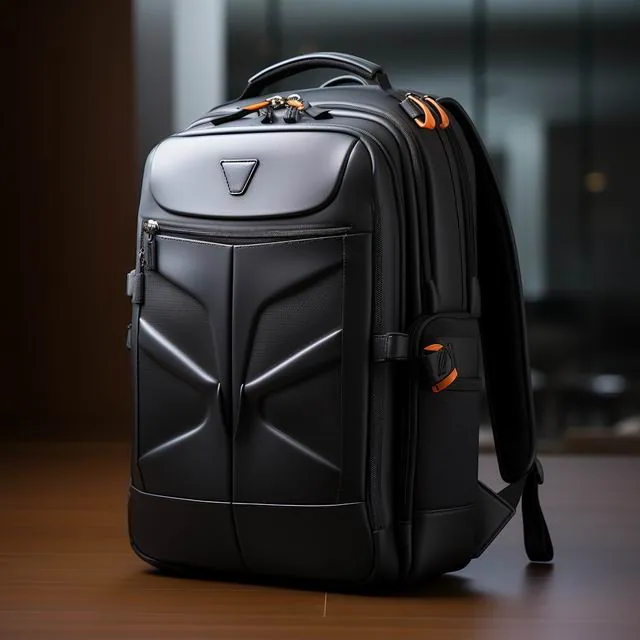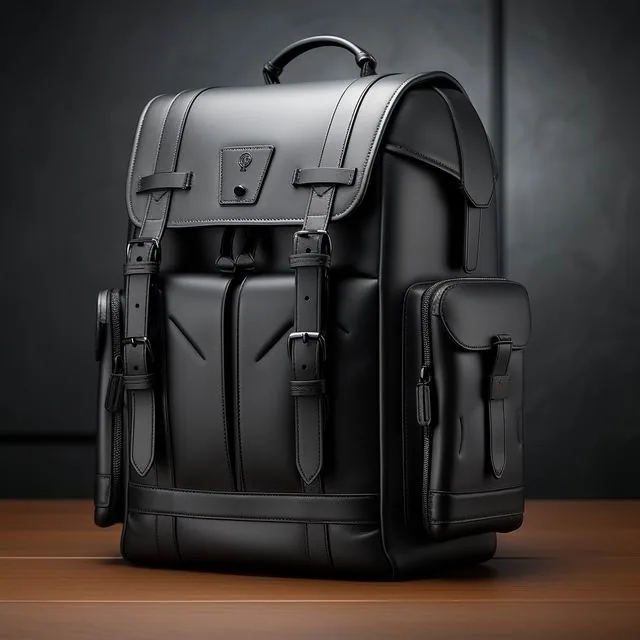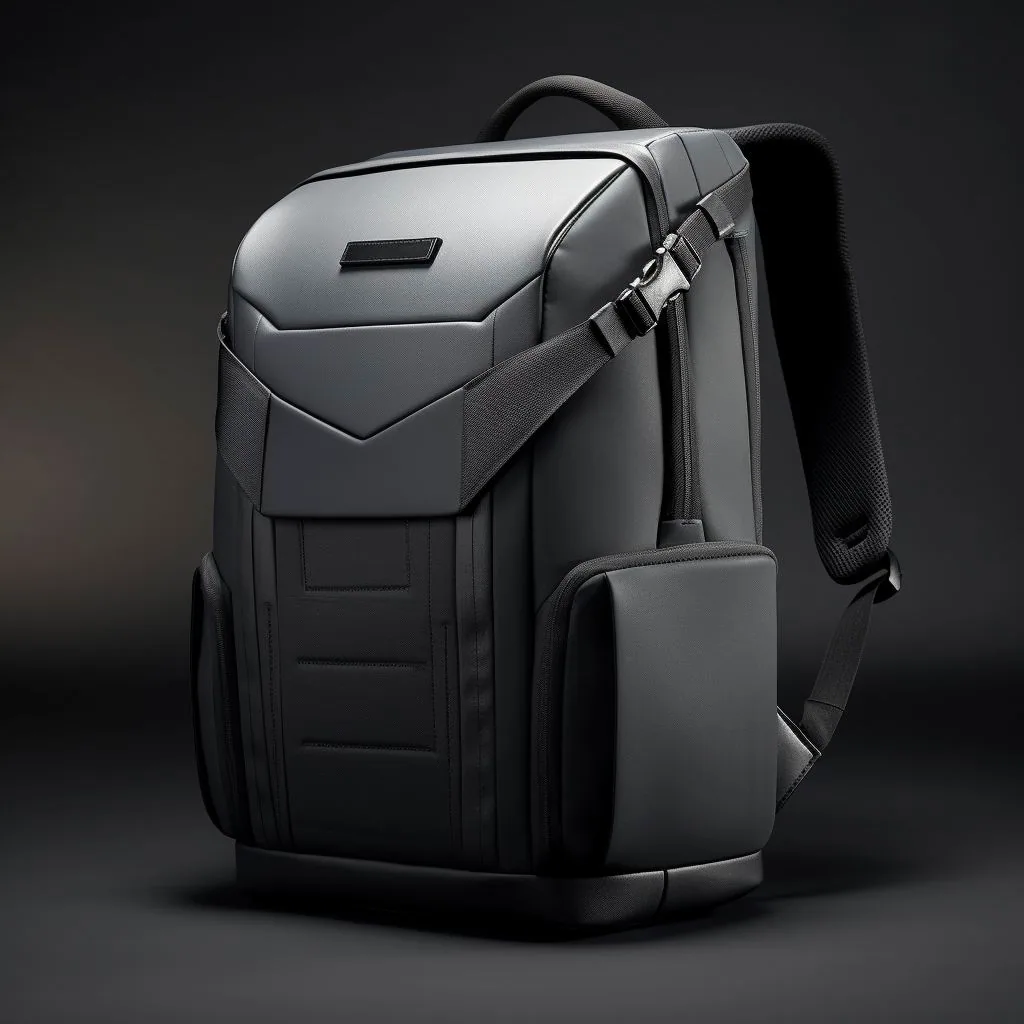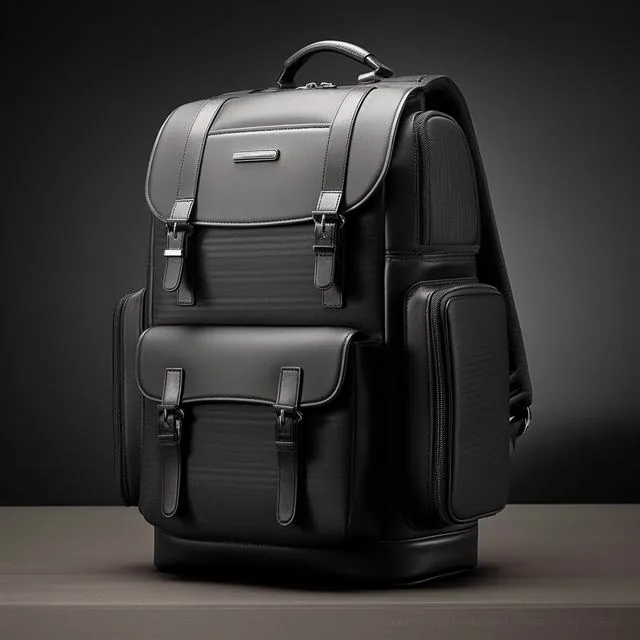
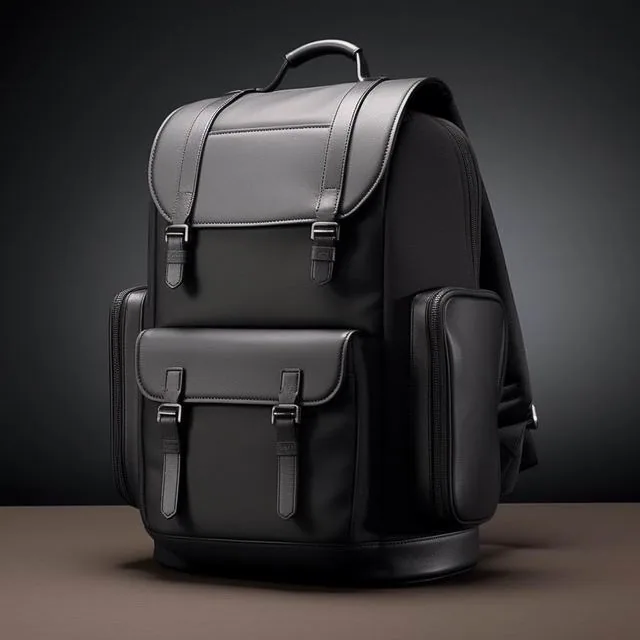
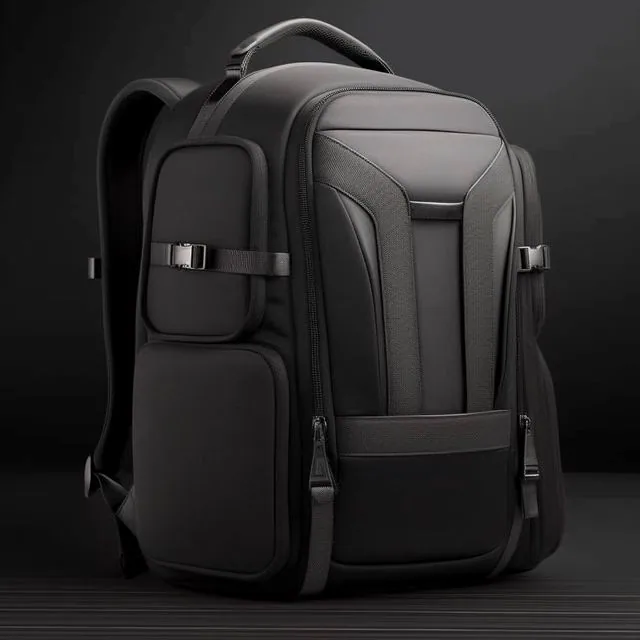
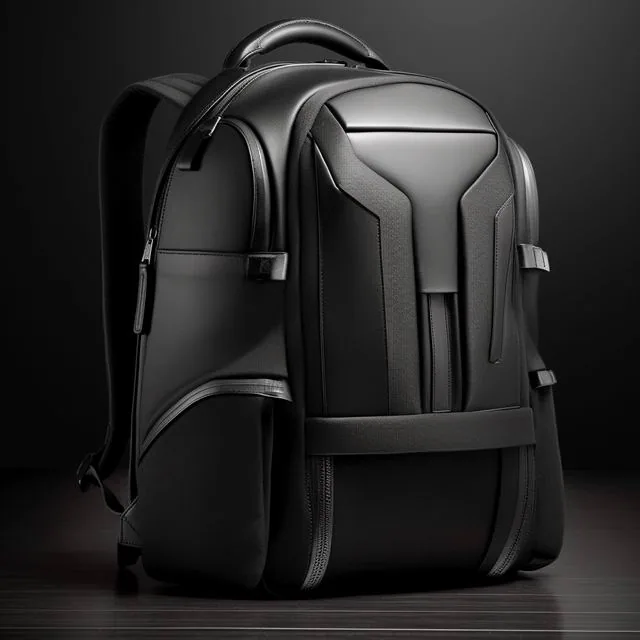
Advanced backpacks designed for tech enthusiasts, gamers, and digital professionals with cutting-edge features and superior protection.
Our Tech & Gaming Backpacks are engineered for the digital age. Featuring advanced technology integration, superior device protection, and innovative design elements that cater to gamers, developers, and tech professionals who demand the best.
Choose 30 to 40 litres with a compartment measured for a 17 inch device, roughly 400 x 280 mm internally. Our tech range runs 25 to 40 litres at 48 x 33 x 20 cm and supports up to a 17 inch laptop plus a tablet. Gaming laptops weigh 2.5 to 3.5 kg, so you also want a wide padded harness and a sternum strap to keep the load stable on the walk to the office or campus.
Between 1.5 and 2.2 kg is normal for a ballistic nylon or carbon-fibre-accented tech pack, because the padding, cable management panels and hardware add mass. Add a 3 kg gaming laptop, a 1 kg charger and accessories and you reach 6 to 7 kg, which is fine for a 20 minute walk but tiring beyond 40 minutes. If you commute daily, pick the lighter end of the range.
Yes. The built-in USB port connects to an internal cable that you plug into your own power bank, since the pack itself stores no power. A 10,000 mAh bank at 5 V gives roughly two to three full phone charges and fits the internal sleeve. Keep the bank under 100 watt-hours so it stays legal in aircraft cabins, and unplug the internal cable when the pack goes into storage.
Yes, the pack is fine, but the power bank inside it must travel in cabin baggage, never in the hold. UK and European rules allow lithium power banks up to 100 watt-hours, which covers a standard 20,000 mAh unit at about 74 watt-hours, while larger ones up to 160 watt-hours need airline approval. Remove the power bank at security if asked and keep the terminals covered.
A proper tech pack uses a shock-absorbing suspended sleeve with padding on all six sides and a reinforced base that keeps the device off the ground when the bag is set down. Our tech range specifies shock-absorbing compartments for laptop and tablet, so a 3 kg gaming laptop dropped from desk height lands on foam rather than the floor. Add a slim neoprene sleeve if you carry a 1,500 pound plus machine daily.
Ballistic nylon is the practical choice: 1680D ballistic nylon resists abrasion for 15 to 25 years, sheds British rain and weighs far less than leather. Carbon-fibre accents add structure and a premium look at a small weight penalty and higher cost. Avoid thin 300D polyester shells on gaming bags, since a 3 kg laptop will stress the seams. Check for YKK zips and bar-tacked strap attachment points.
Yes. Our tech backpacks are specified for up to a 17 inch laptop plus a tablet, with separate padded sleeves so the two do not scratch each other. In practice that means a 400 x 280 mm laptop slot and a 10 to 12 inch tablet sleeve, leaving 25 to 40 litres for a headset, controller, charger and cables. Keep the tablet in the front sleeve for quick access at airport security.
Use the integrated cable routing panel plus a small tech pouch. Our range includes dedicated cable management, so route the laptop brick into the lower sleeve, coil HDMI and USB-C cables into elastic loops, and keep a 20,000 mAh power bank in the internal pocket wired to the USB port. Label each cable, never wrap them tightly around the brick, and leave one open compartment for a mouse and headset.
Yes, our tech range includes RFID-blocking secure pockets, which shield contactless cards operating at 13.56 MHz from casual scanning. They hold two to four cards plus a passport and sit against the back panel for pickpocket resistance. RFID blocking is a sensible extra rather than a replacement for care: keep cards in the shielded pocket on the Tube, and report any loss to your bank immediately.
Mostly a styling feature, but with one practical use. LED panels or light strips draw attention and can be switched off for the office or a client visit, so look for a removable or disableable option. The practical value is visibility: a lit panel helps on unlit British streets on winter evenings. Expect LEDs to draw 2 to 5 watts from the same 10,000 mAh power bank that feeds the USB port.
Our minimum order quantity for the tech and gaming range is 500 pieces per style, with unit prices from 25 to 55 US dollars, roughly 20 to 44 pounds. Sampling takes 12 to 15 days and bulk production runs 35 to 40 days after approval, longer than a standard bag because of the electronics and cable routing. Our production team configures USB ports, LED layouts and device compartment sizing to your specification.
Allow 12 to 15 days for a working sample and 35 to 40 days for bulk production once approved, so about seven to eight weeks before dispatch. The extra time over a standard business bag covers USB port wiring, LED integration and testing of each electronic unit. Add 25 to 35 days for sea freight to the UK, or 5 to 8 days by air. Order samples early if you have a launch date.
Unit prices run 25 to 55 US dollars, about 20 to 44 pounds, depending on materials and electronics. A basic ballistic nylon shell with one USB port sits near the lower end, while adding LED lighting, carbon-fibre panels or custom compartment sizing pushes toward the top. Minimum order is 500 pieces, and unit price typically drops 8 to 15 percent between 500 and 2,000 units, with tooling charged once.
Yes. Our tech customisation covers USB port configurations, LED lighting options, cable management layouts, device compartment sizing and gaming-themed graphics. You choose port type and placement, LED colour and pattern, and internal sleeve dimensions matched to your device line. Minimum order is 500 pieces and sampling takes 12 to 15 working days, with our production team building a functional prototype so you can test charging and lighting before bulk production.
A ballistic nylon shell with a durable water-repellent finish handles a 10 to 20 minute walk in typical British rain, which falls on 150 plus days a year in much of the UK. It is not submersible, so use the rain cover or a dry bag for a laptop worth over 1,000 pounds during heavy downpours. Check that the zips are water-resistant, since seams and zip tape are where water enters first.
Look for 8 to 12 mm of closed-cell foam on every side, plus a suspended false bottom lifting the device 10 to 15 mm off the bag base. That combination survives a drop from desk height with a 3 kg gaming laptop inside. The thin 3 mm sleeves found on fashion laptop bags are not enough. Our tech range uses shock-absorbing compartments built around the device, with a separate tablet sleeve.
Pick 25 to 30 litres for a daily commute with one laptop, charger and accessories, since it fits under an aircraft seat and looks tidy in an office. Choose 35 to 40 litres if you carry a headset, controller, camera or an overnight kit, or if your laptop is a 17 inch model with a large charger brick. Both weigh 1.5 to 2.2 kg empty, so the trade-off is bulk, not weight.
Our tech and gaming backpacks carry a two-year warranty plus tech support, covering manufacturing defects in the shell, zips and integrated electronics such as USB ports and LED modules, while wear from daily use is excluded. In practice a 1680D ballistic nylon shell lasts 15 to 25 years and the electronics 2 to 3 years of daily use. Keep the power bank and cables separate, since accessories are covered by their own makers.
A gaming laptop is not a business laptop, and a bag sized for one will not do for the other. A 17-inch gaming machine measures roughly 400 x 280 mm, weighs 2.5 to 3.5 kg, and ships with a charger brick that weighs 0.8 to 1.2 kg on its own and is often larger than a paperback. Specifying a bag from the screen diagonal alone is the mistake that produces a laptop that fits but a charger that does not.
Work from the three heaviest items. A 17-inch gaming laptop at 3.2 kg, a charger brick at 1.0 kg and a full-size headset at 0.35 kg come to 4.55 kg before you add a mouse, cables, a water bottle and a jacket. That is why the tech range runs 25 to 40 litres at 48 x 33 x 20 cm: below 25 litres the charger has nowhere to go except the main compartment, where it abrades the laptop lid, and the bag visibly bulges.
Capacity choice then depends on what else travels with the machine. A 25 to 30-litre bag covers a daily commute with one laptop, its charger and a small accessory pouch, and it fits under an aircraft seat and looks tidy in an office. A 35 to 40-litre bag adds a headset, a controller or a camera cube, a spare keyboard and an overnight kit, which suits a student moving between halls and a lecture theatre, or anyone who travels to a LAN event. Both weigh 1.5 to 2.2 kg empty, so the trade-off is bulk rather than weight.
Loaded weight is the number that actually decides comfort. A 40-litre tech pack loaded to 7 kg is 10 percent of body weight on a 70 kg adult and is fine for 30 minutes; loaded to 9 kg it is uncomfortable within 20. Our tech range is specified for devices up to 17 inches plus a tablet, and the practical rule is to leave 15 percent of the volume empty so the bag closes without compressing the padding against the laptop.
For UK buyers there is one more constraint. At 48 x 33 x 20 cm the tech range exceeds the 45 x 36 x 20 cm personal-item allowance on easyJet by 3 cm in height, and it is far outside Ryanair's free 40 x 20 x 25 cm under-seat allowance. It will go in an overhead locker on most carriers, but budget flyers should either pay for priority boarding or travel with a smaller second bag and check the tech pack.
A gaming laptop worth £1,500 to £3,000 deserves more protection than a fashion laptop sleeve provides. The three elements of protection are padding thickness, suspension geometry and closure security, and only one of them is visible in a product photograph.
Padding should be 8 to 12 mm of closed-cell EVA or PE foam on all six sides of the compartment. The failure mode of cheap bags is 3 mm of open-cell foam on the front and back only, with bare lining on the sides; that protects against a knock on a desk and nothing else. Closed-cell foam of 10 mm will absorb a drop from desk height with a 3 kg device inside, because it compresses and recovers rather than bottoming out.
Suspension is what separates a real laptop compartment from a pocket. A suspended sleeve is attached at the top edge only and hangs inside the compartment, with a false bottom that lifts the device 10 to 15 mm clear of the bag base. That clearance means that when the bag is set down hard on concrete, the device decelerates through 10 mm of air and foam instead of through 3 mm of fabric against a hard floor. It costs perhaps £0.30 to specify and it is the difference between a bent corner and no damage.
Where a programme needs evidence rather than assertion, drop performance is tested by a standard method such as ASTM D5276, which drops a loaded container onto a rigid surface from a defined height and orientation and then inspects for damage. A practical in-house protocol for a UK brand is a 760 mm drop onto concrete in six orientations with a 3 kg test mass in the sleeve, followed by a functional check of the device. Ask for the protocol, the drop height and the pass criterion, not just the words "drop tested".
Closure security is the last element and the most often forgotten. A sleeve with an open top lets the device slide out when the bag is tipped forward; a retainer strap or an elastic corner set adds a few grams and stops it. Inside the bag, a separate tablet sleeve of 10 to 12 inches keeps the tablet from scratching the laptop lid, and a brushed tricot lining on both sleeves prevents the fine swirl marks that appear after a year of daily insertion.
A built-in USB port is a pass-through, not a power source. The port on the outside of the bag connects to a short cable inside, which you plug into your own power bank; the bag stores no energy. Understanding that single fact prevents most of the disappointment buyers report, because the performance of the feature is entirely determined by the bank you put in it.
Specify the bank by capacity and by output. A 10,000 mAh bank at 5 V gives roughly two to three full phone charges and weighs about 220 g; a 20,000 mAh unit gives four to six charges, weighs about 400 g, and at roughly 74 watt-hours stays comfortably under the 100 watt-hour limit that permits carriage in an aircraft cabin without airline approval. Above 100 watt-hours and up to 160 watt-hours, airlines must approve it in advance. A USB-C port with power delivery at 45 to 60 W will also top up a thin-and-light laptop, which a plain 5 V USB-A port will not.
Safety matters because a lithium cell in a soft bag is a real hazard if it is damaged. Cells should conform to IEC 62133, the international safety standard for portable sealed secondary lithium cells and batteries, and any power bank sold with or inside a bag in the UK should carry that conformity evidence along with its own declaration. Damaged, swollen or crushed banks should be retired immediately, and the internal cable should be unplugged when the bag goes into storage so the port cannot short against a stray key.
Cable management is the other half of the problem. A gaming setup carries a charger brick, a USB-C cable, an HDMI cable, a mouse and a headset, and loose cables tangle and abrade within weeks. The working layout is elastic loops of 25 to 40 mm on a dedicated panel, one zipped mesh pocket for the brick, and a fixed pocket for the power bank wired permanently to the USB port so the bank never has to be removed. Label each cable, coil it loosely rather than wrapping it tightly around the brick, and leave one compartment free for whatever arrives next.
One practical warning for British commuters: the external port cap is a water ingress point. On a bag used year-round in UK rain the port should have a moulded cover or a recessed position under a flap, because an open USB-A socket facing upward will collect water on any wet day.
A tech backpack carries 5 to 9 kg, which is two to three times the load of a fashion daypack, so the shell has to be specified for abrasion and tear rather than for appearance. The two numbers that matter are Martindale cycles and tear strength in newtons, and both should appear on a specification sheet.
Ballistic nylon remains the benchmark. A 1680D ballistic weave reaches 80,000 Martindale cycles and a tear strength around 120 N, which is why it is used on base panels and high-abrasion zones even on bags whose main shell is a lighter fabric. At 410 g/m² it is heavy and expensive, so a whole-shell application is reserved for premium builds: on a 40-litre bag it adds roughly 400 g of empty weight and £4.50 to £7.00 of unit cost.
An 840D high-tenacity nylon with a TPU laminate is the better balanced choice for most programmes. It reaches 40,000 to 60,000 cycles and 85 N tear at 300 g/m², holds a 3,000 to 5,000 mm hydrostatic head, and costs £2.20 to £3.80 more per unit than a 600D recycled polyester baseline. A 600D rPET shell at 230 g/m² and 20,000 to 30,000 cycles is the volume default and is perfectly adequate for a 25-litre commuter bag carrying 5 kg.
What to avoid is a 300D polyester shell at 140 g/m². It reaches only 10,000 to 15,000 cycles and 35 N tear, and on a bag carrying a 3 kg laptop plus a 1 kg brick the seam roots and strap attachment points will show wear within 12 to 18 months. The saving is £1.10 to £2.00 per unit, which is not worth a warranty rate that doubles.
| Shell material | Denier | Weight (g/m²) | Abrasion cycles | Tear strength (N) | Water resistance | Unit cost impact (GBP) |
|---|---|---|---|---|---|---|
| Ballistic nylon | 1680D | 410 | 80,000+ | 120 | Good with DWR | +£4.50-£7.00 |
| High-tenacity nylon | 840D | 300 | 40,000-60,000 | 85 | Excellent with TPU | +£2.20-£3.80 |
| Recycled polyester | 600D rPET | 230 | 20,000-30,000 | 60 | Good with DWR | Baseline |
| Lightweight polyester | 300D | 140 | 10,000-15,000 | 35 | Moderate | -£1.10-£2.00 |
| TPU-coated nylon | 420D | 210 | 30,000 | 70 | Excellent, 5,000 mm head | +£3.00-£4.50 |
| Carbon-fibre composite panel | 3K | 620 | N/A, rigid | N/A | Waterproof | +£8.00-£14.00 |
Abrasion resistance is measured by the Martindale method in ISO 12947. Specify a minimum cycle count and a minimum tear strength in the tech pack, and require the test report with the pre-production sample rather than accepting a generic "durable nylon" claim.
The harness on a tech backpack is doing harder work than on any other bag category, because the load is both heavy and rigid. A 3.2 kg laptop is a flat mass that does not conform to your back, and it sits closer to your spine than soft clothing would, so harness geometry has to compensate.
Strap width is the first specification. For a 5 to 7 kg load, straps should be 55 to 70 mm wide at the shoulder with 10 to 12 mm of closed-cell foam, tapering to 40 to 50 mm at the wrap. Below 50 mm the load concentrates on the trapezius and produces neck pain within 30 minutes; the foam density matters as much as the width, because low-density foam compresses to 3 mm under 6 kg and effectively becomes webbing.
A sternum strap is not optional at this weight. Set at collarbone height it pulls the two straps inward, holding them on the slope of the shoulder rather than letting them slide toward the elbow, and it transfers roughly 8 to 12 percent of the load forward onto the chest. It should adjust across 150 to 200 mm of vertical travel. A hip belt on a bag under 40 litres is usually decorative, but a padded hip fin of 80 to 100 mm that sits on the iliac crest genuinely helps above 8 kg and is worth specifying for a gaming bag.
Ventilation is the trade-off. A suspended mesh panel holds the bag 10 to 20 mm off your back and genuinely reduces sweating on a warm Underground platform or a summer walk, but it shifts the centre of mass backward, which increases the moment on your shoulders for a heavy rigid load. For a 7 kg gaming carry the better answer is often a flat closed-cell panel with vertical air channels cut into the foam: less airflow than a suspended mesh, but the load stays close to the spine where it is easier to carry.
Load lifters, the short straps running from the top of the shoulder straps to the top of the frame, pull the bag inward and stop it levering away from your back. Below 6 kg they do little; above 7 kg they are the single most effective adjustment available, and they cost about £0.25 per bag. Specify them on any tech pack over 35 litres.
Tech backpacks carry more feature claims than any other category, and some of them are genuinely useful while others exist to fill a bullet list. Sorting one from the other is mostly a matter of asking what physical problem the feature solves.
RFID blocking is real but narrow. A shielded liner is a conductive mesh that attenuates the 13.56 MHz field used by contactless payment cards, an Oyster card and a UK passport chip, which prevents a card being read while it is still in your bag. It does nothing against the card being physically taken, and it does nothing against a chip-and-PIN transaction. In practice it protects against a low-frequency risk that is already low, and costs about £2 per bag. Worth having if it is free; not worth paying a premium for.
Lockable zips and hidden rear pockets are the two features that actually reduce loss. A number 10 coil main zip with interlocking sliders takes a small three-digit lock costing about £6, and a hidden pocket against the back panel cannot be opened while the bag is worn. Together they address the realistic risks on a crowded train or in a shared workspace: an opportunistic reach and an unclosed compartment.
LED integration is mostly styling, with one genuine use. A lit panel draws attention, which is the point for a gaming aesthetic, but it also makes a pedestrian more visible on unlit British streets in winter, when it is dark before 16:00 for roughly four months of the year. Current draw is 2 to 5 W from the same power bank that feeds the USB port, so an LED strip running for an hour costs about 2 to 4 percent of a 20,000 mAh bank. Specify a switch, not a permanently live panel, and specify a removable module so the bag can be taken into a client meeting.
Cut-resistant liners and slash-proof straps are the most oversold category. A lightweight aramid or high-density PE mesh adds 120 to 200 g and £8 to £15 of cost, and it resists a casual slash rather than a determined one. For a daily UK commute, the money is better spent on a bag that does not look expensive and a rear pocket that cannot be opened while worn.
A custom tech or gaming backpack carries the longest lead time of any bag category, because electronics add a sourcing step, a wiring step and a functional test step that a conventional bag does not have. Plan around that rather than around the sewing time.
Standard programme parameters are MOQ 500 pcs per colourway for a bespoke electronics build, sampling 6-10 working days for a conventional construction rising to 12 to 15 working days where custom hardware, a moulded component or an LED module is involved, bulk production 35-50 days from pre-production approval, and pre-shipment inspection to AQL 2.5 (ISO 2859-1). AQL is defined in ISO 2859-1; at general inspection level II a 3,000-piece order draws a 125-unit sample with 7 defects allowed and 8 triggering rejection.
Unit prices on the tech range run £20 to £44 depending on shell and electronics specification. A 600D rPET shell with one USB-A pass-through sits near the lower end; adding a USB-C power-delivery module, an LED strip and carbon-fibre panel accents pushes toward the top, with tooling of £150 to £600 for a custom moulding. Electronic components should be specified by part number and by conformity evidence, not by description, because a pass-through port rated at 2 A and one rated at 5 A look identical and behave very differently.
Compliance needs particular attention. A bag containing a power bank, an LED module or a radio device is no longer outside the conformity marking regime: the component carries its own obligations and the assembled product inherits them, and the guidance on placing UKCA or CE marked products on the market in Great Britain sets out what the importer must hold. Cells should conform to IEC 62133, and any mains charger supplied in the UK must be configured for a British three-pin plug.
On landed cost, UK import duty commonly runs 3 to 12 percent depending on commodity code, import VAT is charged at 20 percent at entry and is recoverable by a VAT-registered business, and sea freight from Xiamen to a UK port takes roughly 25 to 35 days plus 3 to 7 days clearance. Our vetted partner facilities build a fully functional pre-production sample so charging, lighting and cable routing can be tested before bulk; approve that sample in writing and keep it as the inspection reference.