Wizz Air Backpack Size Guide for 2027: 40 x 30 x 20, the 10 kg Ceiling and WIZZ Priority
Wizz Air gives every passenger one free carry-on bag of up to 40 x 30 x 20 cm and 10 kg that must fit under the seat, and reserves the second cabin item, a trolley bag of up to 55 x 40 x 23 cm and 10 kg, for passengers who add WIZZ Priority or hold a bundle that includes it. Handles and wheels are excluded from the measurement, though wheels may add no more than 5 cm.
Where the easyJet question is mostly about depth in the sizer, the Wizz Air question is about weight: a bag small enough to pass the 40 x 30 x 20 box rarely reaches 10 kg, but a densely packed one does. This guide works through the volume maths, the measurement nuance that differs from other carriers, the Priority arithmetic, and the specification choices for a pack built to this box.
Two Bag Types, One of Them Free
Wizz Air's cabin structure is simple and strictly enforced. Every passenger, on every fare including Basic, may bring one carry-on bag with maximum dimensions of 40 x 30 x 20 cm and a maximum weight of 10 kg, and it must be placed under the seat in front. The second item, described as a trolley bag, has maximum dimensions of 55 x 40 x 23 cm, a maximum weight of 10 kg, goes in the overhead compartment, and is available only to passengers who purchase WIZZ Priority or hold a bundle such as WIZZ Plus or WIZZ Smart that includes it.
Two details separate Wizz from its competitors. The published dimensions exclude handles and wheels, but wheels may add no more than 5 cm to the size of the bag, which is a rule written for trolley cases and applied to backpacks as well. And Wizz states that side pockets count, so a bulging bottle pocket is measured as part of the bag rather than ignored. Both facts change how a soft pack should be loaded: keep the bottle inside, and take advantage of the fact that a fabric pack has no wheels to declare. Treat the published box as the outer limit of the body rather than as a target to pack up to.
| Bag | Maximum size | Weight | Availability | Stowage |
|---|---|---|---|---|
| Carry-on bag | 40 x 30 x 20 cm | 10 kg | Free on all fares | Under the seat in front |
| Trolley bag | 55 x 40 x 23 cm | 10 kg | WIZZ Priority or bundle | Overhead compartment |
| Checked bag | 149 x 119 x 171 cm | 10, 20, 26 or 32 kg | Purchased | Aircraft hold |
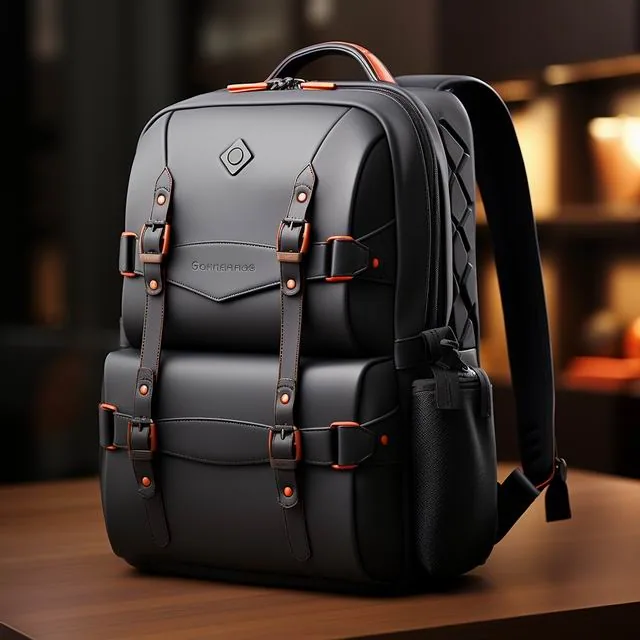
The Handles and Wheels Rule, and Why It Favours Soft Packs
Wizz Air excludes handles and wheels from the stated dimensions, with a single exception: wheels must add no more than 5 cm to the size of the bag. That is a materially more generous convention than easyJet's, which includes handles and wheels in the measurement, and it is worth understanding precisely because it changes what you can buy. A wheeled cabin case that measures 40 x 30 x 20 cm in the body but stands 45 cm tall including its handle and wheels is compliant for Wizz and oversize for easyJet on the same numbers. Backpacks therefore enjoy an advantage that wheeled cases do not, provided the body itself stays inside the box.
For a backpack, the exclusion is a free margin rather than a licence. A pack's grab handle and its haul loop are not counted, so a soft pack can be a couple of centimetres taller in the body than the nominal 40 cm and still pass, provided the body itself measures within the box. What is counted is anything that forms part of the load space: side pockets, a front shove-it pocket stuffed with a jacket, and a strap hanging loose. Tuck the straps in, keep the bottle inside the main body, and the exclusion works in your favour. A bag that needs its straps tucked in to comply is a bag that is already close to the limit.
- Handles and haul loops are excluded from the measurement.
- Wheels are excluded up to a maximum of 5 cm of added size.
- Side pockets and stuffed front pockets are counted.
- Loose straps should be tucked in so they cannot be measured as protrusions.
24 Litres of Box, About 18 Litres You Can Use
Multiply 40 by 30 by 20 and you get 24,000 cubic centimetres, or 24 litres. Nobody packs a rectangle. A soft backpack with rounded corners, a tapered top and a harness that occupies the back face realistically uses 75-80% of the bounding box, which puts the usable figure at 18-19 litres. That is the number to plan against, and it is a genuinely small allowance: enough for a change of clothes, a wash bag, a laptop and a light layer, and not enough for a week away without laundry. Plan around the usable figure and the allowance stops feeling like a puzzle.
The practical consequence is that the pack matters more than the packing technique. A travel pack optimised for this box has a squarish cross-section, minimal external pocketing, a harness that sits inside the body rather than standing proud of it, and a depth of 16-17 cm when empty so that a loaded profile lands at 20 cm. A general-purpose 22-litre daypack will usually be too tall or too deep for the box once loaded, even though its nominal capacity looks about right, because daypacks are built tall and narrow rather than short and wide. Short and wide is the shape that fills this box, and it is worth prioritising over a nominal litre rating.
| Dimension | Box maximum | Realistic loaded pack | Margin |
|---|---|---|---|
| Height | 40 cm | 37-39 cm | 1-3 cm |
| Width | 30 cm | 28-30 cm | 0-2 cm |
| Depth | 20 cm | 18-20 cm | 0-2 cm |
| Bounding volume | 24 L | 18-19 L usable | 75-80% fill |
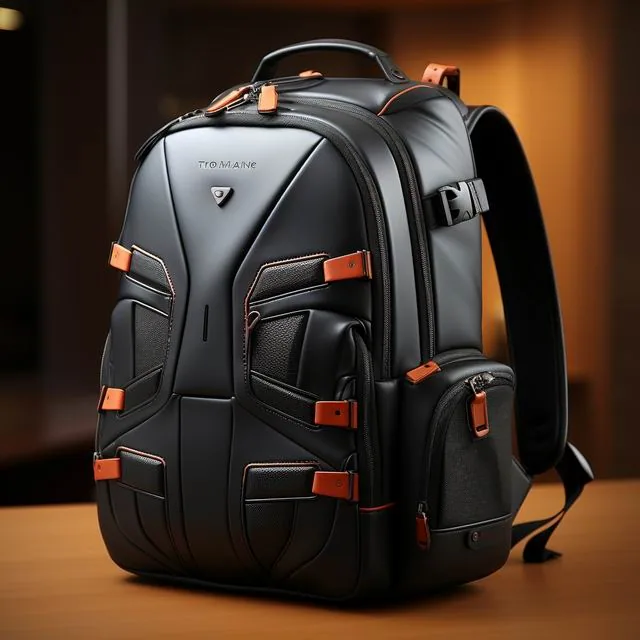
Why 10 kg, Not the Dimensions, Is the Binding Constraint
Here is the asymmetry that catches experienced travellers. Eighteen usable litres of ordinary travel kit weighs about 5-7 kg, so weight is not a problem for most people. Eighteen litres of dense kit, meaning a laptop, a camera body and lens, a charger brick, a metal wash bottle and a pair of boots, weighs 10-12 kg, and that is a fail even though the bag slides into the sizer without resistance. Wizz Air's 10 kg ceiling is half the 20 kg that used to apply to its cabin trolley bags, and it is the number that ends up costing people money far more often than the dimensions do.
Manage density rather than volume. Move the heaviest single item out of the bag and into a coat pocket on the walk to the gate; a 1.8 kg laptop in an inside pocket weighs nothing to carry and removes nearly 20% of your allowance. Choose a titanium or plastic wash bottle over glass, decant rather than carrying full-size toiletries, and pack one pair of shoes rather than two. Weighing the bag on bathroom scales the night before takes thirty seconds and is the only reliable check, because a bag that feels light is often 2 kg heavier than you think.
Empty pack 0.9-1.3 kg, clothing for two nights 1.8 kg, wash bag 0.5 kg, laptop and charger 1.9 kg, boots 0.9 kg. That is 6.0-6.4 kg before you add anything dense, leaving roughly 3.5 kg of headroom against the 10 kg ceiling.
WIZZ Priority: The Arithmetic of the Add-On
WIZZ Priority is the product that unlocks the second cabin bag, and it also buys priority check-in and priority boarding. Wizz Air publishes a fee range of roughly €10 to €60 when purchased online or through the call centre, and €65 to €75 when purchased at the airport, and the service is non-refundable. That spread is wide because pricing is dynamic by route and demand, so the same service can cost five times more on a popular Saturday in August than on a Tuesday in February, and buying at the airport is consistently the worst-value option. Pricing is shown in the booking flow, so the decision can be made with real numbers rather than a rule of thumb.
Do the comparison before you buy. If the only reason you want Priority is additional volume, compare it with a 20 kg checked bag, which is included in the WIZZ Go bundle and often costs less than Priority on routes where Priority is priced at the top of its range. If you also value priority boarding and being certain of overhead space on a full flight, Priority is better value than it looks, because Wizz guarantees trolley bag space in the cabin for Priority holders except where operational restrictions intervene. Decide on the route and date first, then price both options in the basket.
| Option | What it adds | Typical cost | Best for |
|---|---|---|---|
| Carry-on only | 40 x 30 x 20 cm, 10 kg | Free | Two nights, minimal kit |
| WIZZ Priority | Plus 55 x 40 x 23 cm, 10 kg | €10-€60 online | Full flights, certainty of locker space |
| WIZZ Go | 20 kg checked bag plus seat selection | Bundle price | Longer trips, bulky kit |
| WIZZ Plus | Trolley bag, 32 kg checked, premium seat | Bundle price | Flexible, heavier travellers |
The Cross-Carrier Trap: Wizz and easyJet Measure Differently
A pack built for one low-cost carrier is not automatically compliant with another, and the two most commonly confused are Wizz Air and easyJet. Wizz measures 40 x 30 x 20 cm and excludes handles and wheels, with a 10 kg ceiling. easyJet measures 45 x 36 x 20 cm and includes handles and wheels, with a 15 kg ceiling. The easyJet box is substantially larger, roughly 32 litres nominal against 24 litres, and nearly twice as generous on weight, so a pack that flies free on easyJet can be oversize on Wizz even though the two look superficially similar.
The trap works in both directions, and the depth figure is where the confusion concentrates. Both carriers cap depth at 20 and 20 cm, so depth is the one dimension that transfers directly, but the height and width allowances differ by 5 and 6 cm respectively, and the handle convention differs entirely. If you fly both regularly, buy to the smaller box: a pack that measures 40 x 30 x 18 cm loaded passes Wizz comfortably and sits well inside the easyJet under-seat allowance with room to spare, whereas a pack built to the easyJet maximum fails Wizz by a wide margin.
A Packing Plan That Fits 40 x 30 x 20
Work to eighteen litres and two nights, because that is what the box comfortably holds. Roll clothing rather than folding it, which typically saves 20-30% of the volume, and use one compression cube for the soft items so they behave as a single block rather than migrating to the corners of the bag. Keep the wash bag small and decanted: six 100 ml bottles take about 0.5 litres and weigh around 0.5 kg, against a full-size toiletry kit that can occupy 1.5 litres and weigh 1.2 kg before you have packed anything else. Every bottle you decant instead of carrying full size buys both volume and weight headroom.
Position the dense items deliberately. The laptop goes flat against the back panel, where it keeps the pack's profile square and the centre of mass close to your spine, not in an outer pocket where it creates a hard bulge at the widest point. Boots go at the bottom, soles outward, with socks inside them to use the dead space. Water bottle inside the main body rather than in a side pocket, since Wizz counts side pockets. Then compress: do up every strap, squeeze the bag by hand, and re-measure, because the last centimetre of depth usually comes out by hand rather than by strap.
| Item | Volume | Weight |
|---|---|---|
| Two rolled shirts and one fleece | 3.2 L | 0.9 kg |
| One pair of trousers | 1.8 L | 0.6 kg |
| Wash bag, six 100 ml bottles | 0.5 L | 0.5 kg |
| 14 in laptop and charger | 1.2 L | 1.9 kg |
| Boots, worn on the aircraft | 0 L | 0.9 kg carried |
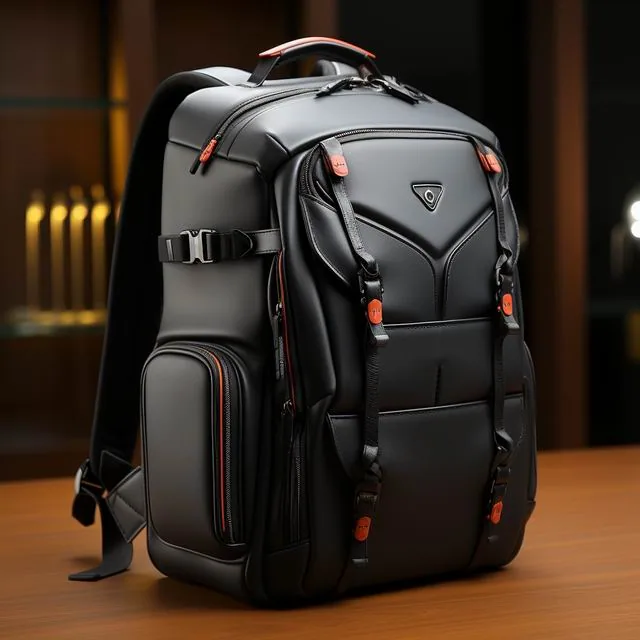
At the Gate: What Happens When It Does Not Fit
If a carry-on bag exceeds the free dimensions, or if a second bag is brought to the gate without WIZZ Priority, Wizz Air charges a fee and places the bag in the hold. Airport fees are the expensive end of the published range, and the service is purchased at the airport rate rather than the online rate, so the penalty for guessing wrong is roughly six times the cost of booking correctly in advance. There is no discretion at the aircraft door, because the sizer is a fixed frame and the agent applies the published rule. Staff apply the same rule to every passenger in the queue, so arriving early does not change the outcome.
The prevention is unglamorous and takes two minutes. Pack the bag the night before, stand it on a hard floor against a wall with a book flat on top, and read the three dimensions with everything loaded and straps done up. Then weigh it on bathroom scales. If either number is over, move the heaviest or bulkiest item into a coat pocket before you reach the queue, which is the only adjustment still available to you at that point and it costs nothing. Two minutes with a tape measure at home removes the most expensive variable in the whole journey.
Security, Electronics and Passenger Rights
Cabin dimensions are the airline's rule; liquids and electronics are the airport's. At most UK airports liquids in hand baggage are limited to containers of 100 ml or less carried in a single transparent resealable bag of about one litre capacity, with one bag per person, although a growing number of airports now allow larger containers following the installation of new scanners. Because the position varies by terminal, check the official UK hand luggage liquids guidance for your departure airport rather than assuming last year's rule still applies.
Spare lithium cells and power banks must travel in the cabin, so the under-seat backpack is where they belong, kept accessible in case they need to be produced separately at the scanner. Lithium cells intended for transport are subject to their own safety testing regime, published by the International Electrotechnical Commission, and any cell that is swollen, damaged or overheating should not be carried at all. For delays and cancellations, entitlements are summarised for travellers by the European Commission's air passenger rights pages, which remain a common reference for UK passengers on affected routes.
Building a Pack to the 40 x 30 x 20 Box
Designing to this box is a different exercise from designing to a general travel pack, because the constraint is height and width rather than depth and the target is weight as much as volume. A compliant model wants a squarish cross-section close to 30 x 18 cm, a body height of 36-38 cm so the loaded pack stays under 40 cm, minimal external pocketing, and a harness that folds inside the body. Fabric choice follows: a 300-420 denier face fabric with a light PU backing keeps an 18-litre pack under about 0.9 kg, which is 9% of the entire weight allowance before a single item goes in.
Weight is the specification most often overlooked at the design stage, and it is the one Wizz enforces. Shaving 200 g from the empty pack buys two extra shirts or a second charger within the same 10 kg ceiling, which is a more valuable selling point than an extra litre of nominal capacity that cannot be used without breaching the weight limit. QUANZHOU JUNYUAN BAGS treats empty weight as a controlled specification line with a tolerance, checked on the production sample and again at AQL 2.5 under ISO 2859-1 before despatch, rather than as an outcome left to the material choice.
The commercial framework for that kind of programme is fixed. Sampling runs 6-10 working days, or 12-15 working days for complex constructions, bulk production runs 35-50 days, inspection is released at AQL 2.5 under ISO 2859-1, and orders ship FOB Xiamen on T/T 30/70. The minimum order quantity is 500 pcs per style and colourway. Since 2014 the company has coordinated production across 4,950 square metres of SGS-verified production floor space with 137 colleagues and 7 production lines, which is enough capacity to hold a dimensional and weight tolerance across a full colourway run.
Frequently Asked Questions
What size backpack is free on Wizz Air?
One carry-on bag with maximum dimensions of 40 x 30 x 20 cm and a maximum weight of 10 kg, free on every fare including Basic, stowed under the seat in front. Handles and wheels are excluded from the measurement, though wheels may add no more than 5 cm. For a soft backpack that box is 24 litres nominal but about 18-19 litres usable, so plan for two nights of kit rather than a week.
Does the Wizz Air carry-on size include handles and wheels?
Wizz Air excludes handles and wheels from the published dimensions, with the single exception that wheels must add no more than 5 cm to the size of the bag. This is more generous than easyJet, which includes them. However, side pockets and any stuffed front pocket are counted as part of the bag, so keep a water bottle inside the main body and tuck loose straps in rather than relying on the exclusion to cover them.
What is the weight limit for Wizz Air cabin baggage?
Ten kilograms for both cabin bag types: the free 40 x 30 x 20 cm carry-on and the 55 x 40 x 23 cm trolley bag available with WIZZ Priority. For a backpack, weight is more often the binding constraint than size, because 18 usable litres of ordinary kit weighs 5-7 kg while the same volume packed densely with a laptop, camera and boots reaches 10-12 kg. Weigh the loaded bag on bathroom scales before you leave.
What is WIZZ Priority and is it worth it?
WIZZ Priority is a paid add-on that lets you bring a second cabin bag of up to 55 x 40 x 23 cm and 10 kg into the overhead compartment, alongside priority check-in and priority boarding. Wizz publishes a range of about €10 to €60 online and €65 to €75 at the airport, and it is non-refundable. It is worth it when you need the volume and want certainty of locker space on a full flight; compare it against a 20 kg checked bag, which is often cheaper.
How many litres is the Wizz Air free cabin bag?
The bounding box is 24 litres, but a soft backpack with rounded corners and a harness occupying the back face realistically uses 75-80% of it, giving 18-19 litres of usable space. That suits a change of clothes, a wash bag, a laptop and a light layer. A general 22-litre daypack is often the wrong shape for the box, because daypacks are built tall and narrow while this allowance is short and wide.
Can I take a 40 litre backpack on Wizz Air?
Only as a paid trolley bag with WIZZ Priority, and only if it compresses within 55 x 40 x 23 cm and 10 kg when loaded. A 40-litre pack is typically 50-55 cm tall and 28-32 cm deep when full, so depth is the dimension that fails and compression straps rarely bring it down evenly enough for a rigid sizer. On the basic fare, a 40-litre pack will be refused at the gate and placed in the hold at the airport rate.
What happens if my bag is too big at the Wizz Air gate?
If your carry-on exceeds 40 x 30 x 20 cm, or you bring a second cabin bag without WIZZ Priority, Wizz charges a fee and the bag goes into the aircraft hold. The fee is charged at the airport rate, which is the expensive end of the published range and roughly six times the cheapest online price. Prevent it by measuring and weighing the loaded bag at home the night before and moving bulky items into a coat pocket.
Is the Wizz Air allowance smaller than easyJet's?
Yes, materially. Wizz gives 40 x 30 x 20 cm at 10 kg, excluding handles and wheels; easyJet gives 45 x 36 x 20 cm at 15 kg, including handles and wheels. In nominal litres that is 24 against 32, and the weight ceiling is 10 kg against 15 kg. If you fly both, buy to the smaller Wizz box, because a pack measuring 40 x 30 x 18 cm loaded passes Wizz and sits comfortably inside the easyJet under-seat allowance.
Can I take a laptop and a power bank in my Wizz Air cabin bag?
Yes, and power banks must travel in the cabin rather than in the hold. Keep them in an accessible pocket in case security asks for them separately, and never carry a swollen or damaged cell. A 14-inch laptop and charger weigh about 1.9 kg, which is close to 20% of the 10 kg cabin allowance, so carry the laptop in a coat pocket on the way to the gate if you are near the limit. Liquids remain restricted to 100 ml containers at most UK airports.
Do Wizz Air side pockets count towards the size limit?
Yes. Wizz Air states that side pockets count towards the dimensions, so a bottle pocket holding a 750 ml bottle adds its full protrusion to the measurement. This is one of the clearest differences from how many travellers assume soft bags are measured. Pack the bottle inside the main body instead, keep front shove-it pockets flat rather than stuffed with a jacket, and tuck harness straps in so nothing protrudes beyond the body of the bag.
Which Wizz Air fares include the trolley bag?
The 55 x 40 x 23 cm trolley bag comes with WIZZ Priority, which is also included in the WIZZ Plus and WIZZ Smart bundles. WIZZ Go adds a 20 kg checked bag and an additional 40 x 30 x 20 cm carry-on rather than the trolley bag, so check the booking confirmation rather than the fare name, because bundle contents change. On a Basic fare, only the free under-seat carry-on is included.
How do I choose a backpack that fits both Wizz Air and easyJet?
Buy to the smaller box. Look for a pack measuring about 36-38 cm tall, 28-30 cm wide and 16-18 cm deep when empty, with minimal external pocketing and a harness that folds inside the body. That profile loads to within 40 x 30 x 20 cm for Wizz and has room to spare against easyJet's 45 x 36 x 20 cm. Keep the empty weight under about 1 kg, since Wizz's 10 kg ceiling is the tighter of the two limits.
Specifying a Pack to a Fixed Cabin Box
QUANZHOU JUNYUAN BAGS operates as a sourcing and programme-management company, and dimensional and weight compliance are written into the tech pack as controlled tolerances rather than measured after the event. Prototypes are checked loaded at the three worst points and weighed to a declared tolerance on the production sample. Production is coordinated across 4,950 square metres of SGS-verified production floor space with 137 colleagues and 7 production lines, and the company has been running programmes since 2014.
Commercial terms do not vary. Sampling runs 6-10 working days, or 12-15 for complex constructions, bulk production runs 35-50 days, inspection is released at AQL 2.5 under ISO 2859-1, and shipment is FOB Xiamen on T/T 30/70. The minimum order quantity is 500 pcs per style and colourway. Send the target box, the target empty weight and the carrier, and the team will return a construction proposal with a sampling plan.
Email: service@junyuanbags.com
WhatsApp: +86 177 5002 0688