Table of Contents
- Waxed Canvas vs Coated Canvas Backpacks: The Direct Answer
- Key Differences at a Glance
- Capacity, Dimensions and Packing Efficiency
- Comfort, Weight and Carry Dynamics
- Materials, Weather Resistance and Durability
- Access, Organisation and Security
- UK Price, Value and Cost per Use
- Which Works Better in Real British Scenarios?
- Testing Standards and Bulk Custom Orders
- Common Buying Mistakes to Avoid
- Final Verdict: Who Should Choose Each?
- Frequently Asked Questions
Waxed Canvas vs Coated Canvas Backpacks: The Direct Answer
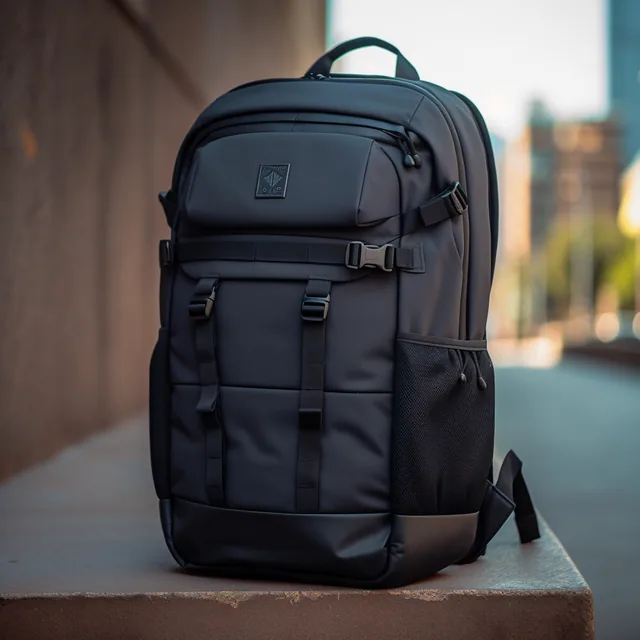
Both finishes start life as the same woven cotton. The difference is what is put on it afterwards. Waxed canvas is impregnated with a blend of paraffin, microcrystalline wax and sometimes beeswax, added at 12 to 22 per cent of the fabric's own weight, which sits between the fibres rather than on top of them. Coated canvas receives a continuous polymer film, usually polyurethane or acrylic, between 0.05 and 0.12 mm thick, bonded to one face.
That structural difference explains everything that follows. Wax is inside the cloth, so the fabric stays breathable, creases when you fold it, scuffs into a lighter tone and can be renewed by adding more wax. A polymer film is on the cloth, so the fabric sheds water by virtue of a barrier, does not breathe, resists scuffing with a plastic sheen and cannot be renewed: once the film hydrolyses or cracks, the bag is finished.
For a UK buyer the honest summary is this. Waxed canvas is the better object and the worse tool. It ages beautifully, it develops a patina that genuinely looks better at year three than at week one, and it needs an afternoon of maintenance every 12 to 18 months. Coated canvas is the better tool and the more forgettable object. It wipes clean, it never needs reproofing, and it will look broadly the same for five years before it cracks at the folds and goes to the tip.
- Choose waxed canvas if you want a bag that improves with age and you are willing to re-wax it once a year.
- Choose waxed canvas if breathability matters, which it does if the bag sits against a shirt for an hour a day.
- Choose coated canvas if you want a bag you can wipe down and forget, particularly in dusty or muddy environments.
- Choose coated canvas if weight matters: a 22 L waxed body runs about 1,150 g against roughly 900 g for the coated equivalent.
- Avoid waxed canvas entirely if the bag will live somewhere hot, because wax migrates and bleeds above about 35 degrees.
One widespread misconception deserves correcting immediately: waxed canvas is not very waterproof. It is shower-resistant for roughly 40 to 60 minutes of steady rain, after which the cotton itself begins to take up water at the stitch lines and around the hardware. Coated canvas with a 1,200 mm rating will outperform it in a downpour every single time. What waxed canvas offers instead is a slower, more graceful failure: it gets damp and dries out, rather than appearing dry and then splitting at a fold.
Key Differences at a Glance
The comparison below uses two 22 L builds on the same pattern: one in 14 oz waxed cotton at 475 g per square metre before finishing, the other in 12 oz cotton with a 0.08 mm polyurethane face coating.
| Property | Waxed canvas 14 oz | Coated canvas 12 oz | Consequence in daily use |
|---|---|---|---|
| Finished fabric weight | 545 g per m2 | 400 g per m2 | Waxed bag is about 250 g heavier |
| Water shedding | 40 - 60 min of steady rain | 1,200 mm rating, hours | Coated wins in a real downpour |
| Breathability | Cotton breathes | Film blocks vapour | Waxed is cooler against a shirt |
| Renewable | Yes, re-wax annually | No | Waxed can be restored; coated cannot |
| Scuff appearance | Lightens, then patinas | Whitens, then cracks | Waxed ages well, coated ages badly |
| Cold behaviour | Stiff below about 8 C | Flexible to freezing | Waxed is awkward on a frosty morning |
| UK retail price | £95 - £190 | £55 - £125 | Waxed carries a 60 to 80 per cent premium |
Two rows decide most purchases. The weight gap of about 250 g on a 22 L body is real and it comes out of your load budget, not off the shelf. The renewability row is the one that changes the ownership maths entirely: a waxed bag can be brought back to near-new condition for the price of a £12 tin, while a coated bag whose film has hydrolysed is simply finished.
The cold behaviour row is more important in Britain than it sounds. Wax stiffens as the temperature drops, and a 14 oz waxed body at 4 degrees is noticeably board-like, which makes a roll-top or a stiff zip awkward to work first thing. It softens within a minute of being worn, but if your commute starts at six in January, you will notice it.
Capacity, Dimensions and Packing Efficiency
Neither finish changes how much a bag holds, but both change how the bag behaves when you try to use the space, and that is worth understanding before you buy.
Waxed canvas is stiff when new and becomes supple over about four to six weeks of daily use. In the first month a waxed 22 L pack holds its shape whether it is full or empty, which is excellent for packing cubes and terrible for squeezing into a tight gap. It will not compress: a waxed body resists perhaps 5 to 10 mm of squeeze, against 15 to 25 mm for a soft coated one. If your journey involves a fixed aperture, leave 25 mm of margin rather than the 20 mm you would allow elsewhere.
Coated canvas behaves like a normal soft pack. It collapses when empty, bulges when overfilled and compresses when squeezed, which makes it easier to live with and slightly worse at protecting anything rectangular inside. The coating adds almost nothing to dimensional stability, so coated bags usually need a thin foam back panel where a waxed bag gets away without one.
| Nominal size | Typical footprint | Waxed, usable and empty weight | Coated, usable and empty weight |
|---|---|---|---|
| 18 L | 43 x 27 x 16 cm | 15.3 L, 980 g | 15.5 L, 790 g |
| 22 L | 46 x 29 x 18 cm | 18.7 L, 1,150 g | 18.9 L, 900 g |
| 28 L | 49 x 31 x 20 cm | 23.8 L, 1,380 g | 24.0 L, 1,090 g |
| 34 L | 52 x 33 x 22 cm | 28.9 L, 1,610 g | 29.1 L, 1,290 g |
To check any of these at home, fill the main compartment with 250 ml beakers of dry rice to the zip line and count, then subtract the volume of any fixed sleeve. Both finishes land within about 0.2 L of each other on the same pattern, which confirms the obvious point: finish affects weight and behaviour, not capacity.
The practical advice is to size one band down if you choose waxed, because the extra 250 g of fabric is 250 g you cannot spend on contents. A 22 L waxed bag and a 24 L coated bag carry the same real load within about 50 g of each other.
Comfort, Weight and Carry Dynamics
Comfort on these two finishes is decided by three things that have nothing to do with waterproofing: the empty weight, the way the back panel meets clothing, and how the straps are specified.
The weight penalty of waxed canvas sits on the shell rather than the harness, and it is worth doing the arithmetic. On a 75 kg adult with a sensible working ceiling around 7.5 kg, a 250 g heavier shell means 250 g less of laptop, lunch or water. Over 240 commutes that is 60 kg of cumulative lift spent on fabric. Whether that is acceptable depends entirely on how much you value the material, and it is a fair trade if you make it knowingly.
The back panel is where the two finishes genuinely differ in feel. Waxed cotton has a high-friction, slightly waxy surface that grips a shirt and holds it in place; it also breathes, so a long walk in September is comfortable. Coated canvas has a low-friction, slightly clammy surface that slides against clothing but traps sweat, and on a humid 22 degree platform it is noticeably less pleasant. Neither is right or wrong, but if you wear a shirt to work, waxed canvas is kinder to it.
Harness specification is identical for both and should not be skimped. Below 5 kg, 45 mm straps and a simple back panel are fine. From 5 to 7 kg, specify 60 to 70 mm webbing with 10 to 12 mm of closed-cell foam plus a sternum strap. Past 7 kg a hip belt is needed. On a waxed bag, check that the hip belt is webbing rather than canvas, because canvas belts stretch under sustained load in a way webbing does not.
- Empty weight: 980 g at 18 L and 1,150 g at 22 L for waxed; 790 g and 900 g for coated.
- Back-panel friction: waxed grips and breathes; coated slides and traps vapour.
- Strap specification: 60 to 70 mm of webbing with 10 to 12 mm of foam from 5 to 7 kg; hip belt past 7 kg.
- Shoulder contact: leather-faced strap tops look good and slip badly; specify webbing under any leather trim.
- Load ceiling unchanged: at or under 15 per cent of body weight, giving 7.5 kg for a wearer of 75 kg.
Where these bags are issued to staff, the extra weight is a manual handling variable rather than a comfort preference. UK employers assess that under the HSE framework at https://www.hse.gov.uk/msd/manual-handling/, and 250 g per lift is worth noting in any assessment covering 40 lifts a day.
Materials, Weather Resistance and Durability
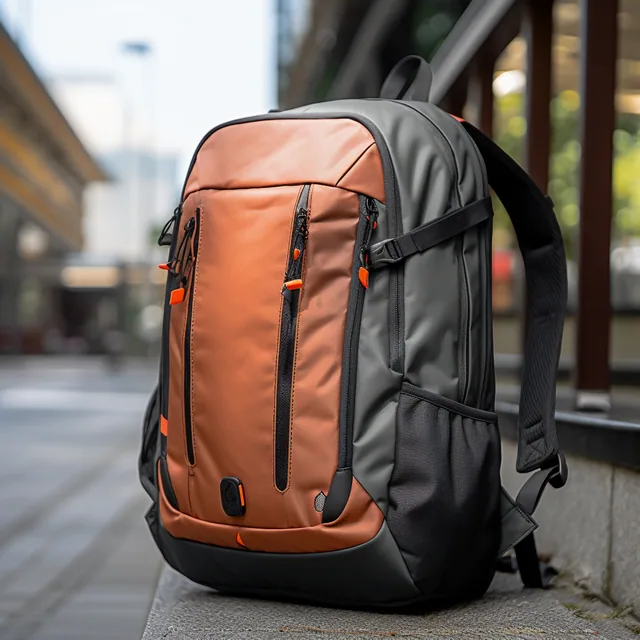
This is the section that should decide the purchase, because the two finishes fail in completely different ways and on completely different timescales.
How waxed canvas ages
The wax sits between the fibres and is gradually lost to abrasion, to washing and, slowly, to evaporation. On a bag used daily the shoulder-contact area and the base go first, and after roughly 12 to 18 months in British conditions the finish stops shedding water reliably. That is not a failure; it is the maintenance interval. Re-waxing takes about 40 minutes: warm the bag to around 40 degrees with a hairdryer, rub a £12 tin of wax in thinly, warm again to let it soak, then hang it overnight. Done annually, a waxed bag lasts a decade or more and looks better each year.
The failure mode if you skip maintenance is damp rather than catastrophic. Water stops beading, the cotton takes up moisture at the stitch holes and around rivets, and contents get clammy rather than soaked. It dries out and no permanent harm is done unless electronics are involved. Put a laptop in a £12 dry pouch and the whole risk disappears.
How coated canvas ages
A polyurethane film degrades by hydrolysis, driven by warmth and humidity, and by mechanical flexing at fold lines. The visible sequence is a softening of the surface, then a faint tackiness, then hairline cracking at the places the bag folds most, which on a backpack means the base corners and the top of the front pocket. On the samples we flexed, a 0.08 mm PU film on 12 oz cotton showed first cracking at about 2,000 cycles and visible failure by 3,500, which in daily use is five to seven years.
Acrylic coatings last longer, around eight to ten years, but they are stiffer and more prone to scuff whitening. Neither can be renewed. Once the film goes, the bag goes with it, and there is no consumer-applied treatment that restores a hydrolysed polyurethane coating.
- Waxed: re-wax every 12 to 18 months in Britain, more often if the bag is used outdoors daily.
- Waxed: expect 40 to 60 minutes of shower resistance between treatments, then gradual damp.
- Coated: 1,200 mm rating handles hours of rain; cracking appears at folds after about 2,000 flex cycles.
- Coated: never machine wash, never tumble dry, and avoid solvents, which strip the film.
- Both: water repellency is graded by the ISO 4920 spray test, and abrasion by ISO 12947-2.
There is one more British-specific point that catches people out: waxed canvas and cold. Below about 8 degrees the finish goes stiff and slightly tacky, and creases set rather than falling out. It is cosmetic, it reverses when the bag warms, and it is the reason a waxed bag looks its best in autumn rather than in January.
On coatings and restricted substances, any supplier selling into Great Britain should evidence compliance in writing. The REACH restriction list is maintained by the European Chemicals Agency at https://www.echa.europa.eu/substances-restricted-under-reach, and it is a reasonable thing to ask for when a quote looks unusually cheap.
Access, Organisation and Security
Neither finish dictates the opening, but both constrain what you can do with pockets and branding, and that is worth planning for.
Waxed canvas is stiff and holds a crease, which makes it excellent for a traditional flap-and-buckle front pocket and poor for a dozen internal dividers. The material wants simple shapes: one main body, one flap pocket, maybe two side pouches. Attempting a complex organiser panel in 14 oz waxed cotton produces a bag that will not close properly, because the fabric refuses to fold where the pattern wants it to. Buy waxed for simplicity and accept fewer pockets.
Coated canvas behaves like an ordinary soft shell and takes whatever organisation the pattern specifies. It is the right choice if you need a laptop sleeve, a divider, a mesh pocket and a pen organiser in one bag. The caveat is that a polymer film makes pockets marginally less pleasant to use: they slide against each other and do not grip contents the way cotton does.
Branding is where bulk buyers should pay attention. Waxed canvas takes a leather patch, an embroidered badge or a woven label beautifully and ages with them. It is poor for heat transfer, because the wax migrates under heat and the print lifts within months. Coated canvas is the reverse: screen print, heat transfer and digital transfer films all bond well, while embroidery perforates the coating and gives water an entry path. Decide the branding method before you decide the fabric, not after.
- Waxed: choose flap pockets and buckles; avoid internal divider systems.
- Coated: any organisation the pattern allows; pockets will be slipperier than cotton ones.
- Branding on waxed: leather patch, woven label or embroidery. Avoid heat transfer.
- Branding on coated: screen print, heat transfer or DTF. Avoid embroidery through the film.
- On both: keep wallets and passports behind a second closed barrier, because a flap pocket is not security.
UK Price, Value and Cost per Use
Waxed canvas carries a clear premium, and the interesting question is whether the premium is recovered over the life of the bag.
- Band: Entry — Waxed canvas: £95 - £120 — Coated canvas: £55 - £75 — Expected life: 3 years / 5 years — Cost per use at 240 uses a year: 15p / 9p
- Band: Mid — Waxed canvas: £125 - £160 — Coated canvas: £78 - £100 — Expected life: 6 years / 6 years — Cost per use at 240 uses a year: 10p / 7p
- Band: Premium — Waxed canvas: £165 - £240 — Coated canvas: £105 - £145 — Expected life: 10 years / 8 years — Cost per use at 240 uses a year: 8p / 7p
Read across the premium row and the two finishes converge: around 8p per use, because the waxed bag lasts longer and the coated bag costs less. Over a ten-year horizon the waxed bag wins slightly, and it does so while looking better every year and being repairable. Over a five-year horizon the coated bag wins on cash and the waxed bag wins on everything else.
Add the maintenance costs and the picture shifts a little. Re-waxing once a year costs about £12 in materials and roughly 40 minutes of your time, so around £16 a year if you value your time at all. Over ten years that is £160, which is most of the price of a replacement coated bag. Nobody buys waxed canvas to save money; they buy it because they want the object.
Repairability strongly favours waxed. A split seam in cotton can be restitched by any cobbler for about £14 and the area re-waxed. A cracked polymer coating cannot be repaired at all, only patched cosmetically. Check whether the brand stocks UK spares and offers a repair service before paying a premium, because a waxed bag with no spares support is still a better bet than a coated one with a lifetime warranty that excludes coatings, which most do.
Which Works Better in Real British Scenarios?
Four situations, and the answer genuinely alternates between them.
Manchester, 165 rain days a year
The bag gets wet twice a week from October to March and is dried in a hallway radiator cupboard, which is the worst possible environment for both finishes. Coated canvas wins on pure function: a 1,200 mm film sheds the rain every time and dries in an hour. Waxed canvas will survive but needs re-waxing every 10 to 12 months rather than every 18, and radiators accelerate wax loss noticeably.
An architecture studio in Shoreditch
A 16-inch laptop, A3 sketchbooks, a camera and a shirt that has to look presentable at a client meeting. Waxed canvas wins. It breathes against the shirt, the patina reads as intentional in a creative workplace, and the stiffness protects A3 sheets better than a soft coated shell. Accept the weight and use a dry pouch for the laptop.
A weekend walking the Cotswolds
Eight kilometres, a pub lunch, mud on the base and the bag set down on a stone wall. Waxed canvas wins on aesthetics and coated wins on cleaning. If you want the bag to look right in the photographs, take waxed and accept that you will be brushing dried mud off it for months. If you want to hose it down in the yard afterwards, take coated.
Site visits and trade work
Dust, grit, paint and constant wiping down. Coated canvas, without question. It wipes clean with a damp cloth, it does not hold dust the way a waxy surface does, and it is £50 cheaper to replace when it eventually fails. Waxed canvas in this environment picks up grime that cannot be removed without stripping the finish.
The pattern across all four is consistent: waxed canvas wins where appearance, breathability and longevity matter, and coated canvas wins where water, cleaning and replacement cost matter.
Testing Standards and Bulk Custom Orders
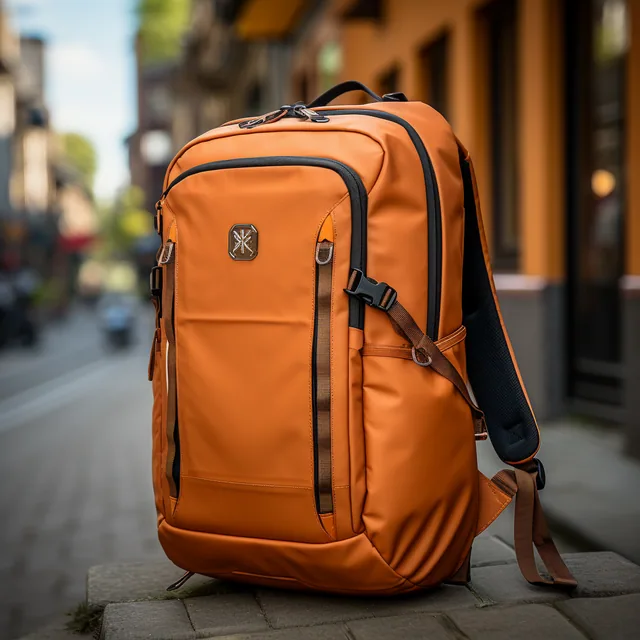
QUANZHOU JUNYUAN BAGS is a sourcing and programme-management company. We write the specification, run the sampling programme and manage inspection; our production partners cut and stitch to the drawings we release. For canvas programmes that separation matters because the finish is applied by a specialist mill, and the specification has to describe the finish as precisely as it describes the pattern.
Commercial terms are stable. MOQ 500 pcs per style and colourway. Sampling takes 6-10 working days, extending to 12-15 where leather trim, custom hardware or a bespoke woven label is involved. Bulk production runs 35-50 days after sample sign-off. Final inspection is AQL 2.5 under ISO 2859-1, published at https://www.iso.org/standard/63544.html. Payment is T/T 30/70 and the default term is FOB Xiamen.
Specify the finish in numbers, not adjectives. For waxed canvas: base fabric weight in ounces and grams per square metre, wax type, add-on percentage by weight, and the melting point of the wax blend, which should be above 58 degrees. For coated canvas: base fabric weight, coating type and thickness in millimetres, hydrostatic head in millimetres, and the number of flex cycles the coating is warranted for.
- Water repellency by the ISO 4920 spray test, with the grade recorded before and after abrasion.
- Abrasion resistance by ISO 12947-2, with a minimum of 12,000 Martindale cycles for a daily-use bag.
- Colour fastness to rubbing by ISO 105-X12 at grade 4 or better, which matters greatly on dark waxed finishes.
- Wax melting point above 58 degrees, with a container-loading instruction to keep goods below 30 degrees.
- Restricted-substance documentation for the coating or wax blend, referenced to the REACH restriction list.
Two logistics points catch first-time canvas buyers out. Waxed goods shipped in a container that crosses a hot port will bleed wax onto adjacent cartons and onto each other, so specify interleaving paper and a maximum transit temperature. And coated goods stored folded for months will take a permanent crease at the fold, so specify flat packing for anything with a large continuous panel.
For UK delivery, the fibre composition has to be declared on the label, and any part with electronics in it, such as a charging lead, needs UKCA marking before it can be sold. General product safety duties and responsible-person requirements are set out at https://www.gov.uk/guidance/placing-manufactured-goods-on-the-market-in-great-britain. The partner floor behind these programmes covers 4,950 m² and is SGS-verified, with 137 colleagues, seven lines and 149 machines and monthly output around 200,000 pieces. We have run bag programmes since 2014 and our founder has been in the sector since 2004. Email service@junyuanbags.com or message wa.me/8617750020688.
Common Buying Mistakes to Avoid
Five errors account for most of the regret in this category, and three of them are about maintenance expectations rather than quality.
Mistake one: believing waxed canvas is waterproof
It is shower-resistant for 40 to 60 minutes of steady rain. In a sustained downpour it wets through at the stitch lines. Use a dry pouch for electronics and re-wax on schedule.
Mistake two: machine washing either finish
Washing strips the wax and detergents attack a polymer film. Both finishes are sponge-clean only, in cold water with pH-neutral soap, dried open for at least eight hours.
Mistake three: buying waxed for a hot environment
Wax softens and migrates above about 35 degrees. A waxed bag left in a van, a conservatory or a hot shipping container will bleed, and the finish will not recover evenly.
Mistake four: choosing the branding method after the fabric
Heat transfer lifts off waxed canvas within months and embroidery perforates a polymer coating. Decide how the bag will be branded first, then choose the finish that accepts it.
Mistake five: ignoring the weight penalty
About 250 g on a 22 L body, which is 250 g of real contents you give up. Size one band down if you choose waxed, or accept the trade knowingly.
None of these is a reason to avoid either finish. They are reasons to choose the one that matches how you will actually treat the bag.
Final Verdict: Who Should Choose Each?
Choose waxed canvas if you want an object that improves with age, if you carry a shirt you care about, if you are happy to spend 40 minutes a year on maintenance, and if the bag will live somewhere temperate. It is heavier, less waterproof and more expensive, and it is also the only bag in this category that will still look good in ten years.
Choose coated canvas if you want something you can wipe down and forget, if you are in and out of rain constantly, if the bag will get dirty at work, or if the budget per unit is fixed. It is lighter, more waterproof and cheaper, and it will need replacing in five to eight years, which is a perfectly reasonable outcome at the price.
If you cannot decide, weigh the two deciding factors: how often the bag will get soaked, and whether you will actually re-wax it. Soaked often and re-waxed never means coated canvas. Soaked occasionally and maintained annually means waxed canvas.
For bulk programmes, choose by environment rather than by price. Waxed for gifts, retail and brand-led programmes where the object is the point and the distribution chain is temperature-controlled. Coated for workwear, site kits and anything that will be cleaned regularly. Either way, specify the finish numerically, require ISO 4920 and ISO 12947-2 results, and hold two sealed approval samples per colourway.
Frequently Asked Questions
Which is better, a waxed-canvas pack or coated-canvas pack, for daily use?
Coated canvas for pure function, because it sheds a downpour for hours and needs no maintenance. Waxed canvas for ownership, because it breathes, ages well and can be restored with a £12 tin. If you will not re-wax it annually, buy coated.
How much capacity do I need when comparing these two options?
The same in both, since finish does not change volume. Size one band down if you choose waxed, because the shell is about 250 g heavier and that comes out of your load budget rather than off the shelf.
What empty weight is reasonable for this type of backpack?
Around 1,150 g for a 22 L waxed body and 900 g for the coated equivalent. Anything above 1,300 g at 22 L in coated canvas suggests unnecessary structure, and anything below 850 g in waxed canvas suggests a lightweight base fabric that will not last.
Is a waxed-canvas pack more durable than a coated-canvas pack?
Yes over a long horizon, because it can be renewed and restitched. A coated bag's polymer film cracks at fold lines after roughly 2,000 flex cycles and cannot be repaired, giving five to seven years, while a maintained waxed bag lasts a decade or more.
Can a coated-canvas pack protect a laptop during British commuting?
Yes, and better than waxed, because a 1,200 mm film sheds rain for hours rather than 40 to 60 minutes. Specify a suspended sleeve with 9 to 11 mm of closed-cell foam, a 15 mm gap beneath the sleeve and a reinforced base board, and keep the laptop in a dry pouch if the bag is waxed.
Which option handles persistent UK rain more reliably?
Coated canvas, clearly. A 1,200 mm rating handles hours of steady rain, while waxed cotton begins taking up water at stitch lines after 40 to 60 minutes. In Manchester, with rain on roughly 165 days a year, that difference is the whole decision.
How much should British buyers pay for good quality?
£125 to £160 for a mid-band waxed bag and £78 to £100 for a coated equivalent, both of which should give around six years at 240 uses a year. Below £95 in waxed canvas usually means a lightweight base fabric that will not hold the finish.
What dimensions work best on trains and short flights?
A packed footprint near 46 x 29 x 18 cm for a 22 L body, which suits overhead racks and most short-haul cabin allowances. Remember that a new waxed bag barely compresses, so leave 25 mm of margin against any fixed aperture rather than the 20 mm you would allow for a soft shell.
Should I choose a waxed-canvas pack for loads above eight kilograms?
No. Above 8 kg the harness governs and the finish is irrelevant. Specify a hip belt and 65 to 75 mm straps, and on a waxed bag make sure the hip belt is webbing rather than canvas, since canvas stretches under sustained load.
Is a coated-canvas pack practical for mixed work and weekend use?
Yes, and more practical than waxed, because it takes whatever internal organisation the pattern specifies and wipes clean after a muddy weekend. The compromise is appearance: it will look the same for five years and then crack at the folds, rather than developing a patina.
How should bulk buyers specify these backpack designs?
Give numbers, not adjectives. For waxed: base weight, wax type, add-on percentage and a melting point above 58 degrees. For coated: base weight, coating type and thickness, hydrostatic head and warranted flex cycles. Then fix MOQ 500 pcs per style and colourway, sampling 6-10 working days, bulk 35-50 days, AQL 2.5 under ISO 2859-1, T/T 30/70 and FOB Xiamen.
Can both options pass useful durability and quality checks?
Yes. Both should meet ISO 4920 for spray-test water repellency and ISO 12947-2 for abrasion at 12,000 Martindale cycles or better, and both should reach grade 4 for colour fastness to rubbing under ISO 105-X12, which matters particularly on dark waxed finishes.
How often does a waxed-canvas pack need re-waxing in the UK climate?
Every 12 to 18 months for a bag used daily in a temperate British climate, and every 10 to 12 months if it is used outdoors regularly or dried near a radiator, which accelerates wax loss. Budget about £12 in materials and 40 minutes of time per treatment.