Table of Contents
- School Backpack vs Laptop Backpack for Sixth Form: The Direct Answer
- Key Differences at a Glance
- Capacity, Dimensions and Packing Efficiency
- Comfort, Weight and Carry Dynamics
- Materials, Weather Resistance and Durability
- Access, Organisation and Security
- UK Price, Value and Cost per Use
- Which Works Better in Real British Scenarios?
- Testing Standards and Bulk Custom Orders
- Common Buying Mistakes to Avoid
- Final Verdict: Who Should Choose Each?
- Frequently Asked Questions
School Backpack vs Laptop Backpack for Sixth Form: The Direct Answer
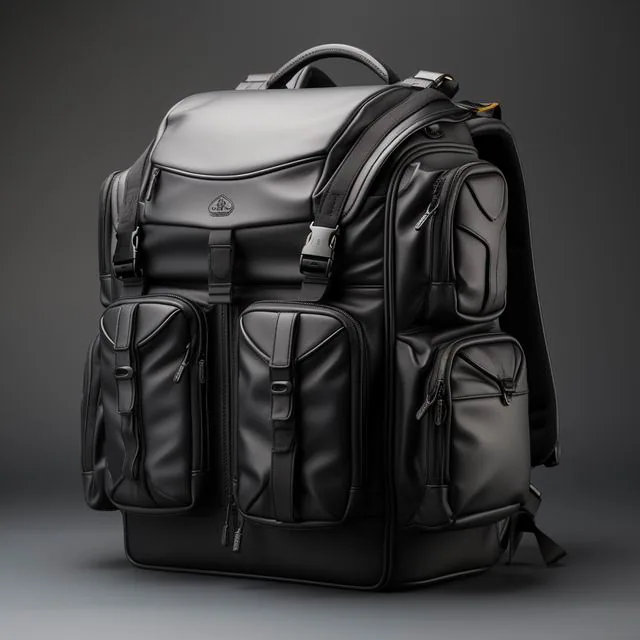
The decision comes down to one measurement that almost nobody checks: internal depth. An A4 ring binder is roughly 320 x 260 x 70 mm, and three of them stacked spine-to-spine need about 210 mm of clear internal depth. A traditional school backpack in the 28-34 L bracket gives you 220-250 mm and takes them easily. A laptop backpack in the 20-24 L bracket gives you 160-200 mm and does not, because the device sleeve and the back-panel structure eat the dimension the folders need.
That single geometry check resolves most of this comparison before any other factor is considered. If the student carries ring binders or lever-arch files, a laptop pack will not do the job and will be abandoned within a term. If the school has gone fully digital and everything lives on a Chromebook, the folders disappear and a laptop pack becomes the obvious choice, because it is lighter, tidier and protects a device the school may well hold the student responsible for.
Most sixth forms sit between those extremes, which is why the practical answer for Years 12 and 13 is usually a hybrid: a 28-32 L pack with a genuine suspended or padded 14-inch sleeve built into the back panel, a flat A4 zone in the main compartment, and a chest strap. That is a school backpack with the one feature a laptop pack does properly, and it costs GBP 60 to GBP 110 rather than the GBP 25 to GBP 45 of a supermarket bag or the GBP 90 to GBP 160 of a dedicated laptop pack.
- Carrying three or more A4 ring binders: take the school backpack, and check for 220 mm of internal depth.
- Fully digital school with a 1:1 device: take the laptop backpack, and check the sleeve fits the exact model issued.
- Mixed, which is most sixth forms: take a hybrid with both an A4 zone and a suspended sleeve.
- Either way, keep the loaded bag under one-tenth of the student body weight, and use a chest strap above 6 kg.
The rest of this guide covers what a sixth-form load actually weighs, the dimensions that decide it, the two-year service life these bags have to survive, the UK price bands, and how to specify a Year 12 bag for a whole cohort.
Key Differences at a Glance
The figures below come from representative products in each category rather than from category claims, measured with the bag packed for an ordinary Thursday in Year 12.
| Attribute | School backpack | Laptop backpack |
|---|---|---|
| Nominal volume | 28-34 L | 18-24 L |
| Internal depth available for folders | 220-250 mm | 160-200 mm |
| Clear internal height | 440-480 mm | 400-440 mm |
| Three A4 ring binders, spine to spine | Yes | No, in most 20-24 L shells |
| Device protection | None, or a slip pocket | Suspended or padded sleeve, 8-10 mm foam |
| Empty weight | 600-900 g | 900-1,300 g |
| Organisation | One or two big voids | Six to twelve dedicated pockets |
| Structure when empty | Slumps | Holds shape |
| Typical UK price | GBP 25-55 | GBP 70-160 |
| Realistic service life in sixth form | Two years with repairs | Three to four years |
Two rows carry the decision. The internal-depth row is the one that decides whether the bag is usable at all, and it is the row that never appears on a product page. The empty-weight row is the one that decides comfort, because a sixth-former working to a ceiling of about 6 kg for a 60 kg student cannot afford to spend 1,300 g of that allowance on the bag itself.
The price row is misleading in the way these things usually are. A GBP 30 supermarket bag replaced every year costs GBP 60 over two years and delivers worse device protection, whereas a GBP 90 hybrid that lasts through sixth form and into the first year of university costs about 12p per use across 480 carries. Two rounds of replacements and one ruined folder of revision notes make the GBP 90 hybrid the cheaper of the two by the end of Year 13.
Capacity, Dimensions and Packing Efficiency
Sixth-form loads are unusual because they combine two incompatible shapes. Ring binders, lever-arch files and folders are flat and rigid, needing a wide, deep, square space. A laptop, a charger and a calculator are small and dense, needing a protected slot. Packs that serve both well are rare, and the ones that do are usually 28-32 L with a sleeve on the back panel rather than a separate compartment.
Work through the arithmetic. Three A4 ring binders with 70 mm spines need 210 mm of depth plus 10-15 mm of handling clearance, so about 225 mm. A laptop sleeve bonded to the back panel takes 25-30 mm across the full width, and a suspended hammock takes 55-70 mm off the panel. If the sleeve is inside the main compartment, the available depth for folders is internal depth minus the sleeve band: a 24 L pack at 190 mm internal depth with a 60 mm hammock leaves 130 mm, which is one binder and a half.
If the sleeve is a separate external compartment against the back panel, the main compartment keeps its full depth, and a 24 L pack at 190 mm will take two binders and a folder. That is the design to look for: external device access, full-depth main compartment, flat floor. It is also the design most cheap laptop packs do not use, because a separate compartment costs more to assemble.
| What a Year 12 Thursday contains | Size or weight | Fits a school backpack | Fits a laptop backpack |
|---|---|---|---|
| Two A4 ring binders, 70 mm spines | 2 x 1.1 kg | Yes, flat | Yes, if the sleeve is external |
| One lever-arch file | 0.9 kg | Yes | Only in 24 L shells |
| 14-inch Chromebook or laptop | 325 x 225 mm, 1.4 kg | No protection | Yes, in a proper sleeve |
| Charger and cable | 0.25 kg | Loose in the main void | Dedicated pocket |
| Scientific calculator and pencil case | 0.3 kg | Loose | Dedicated pocket |
| 750 ml bottle | 0.86 kg | External sleeve | External sleeve, sometimes narrower |
| Packed lunch | 0.7 kg | Yes | Yes, but it competes with folders |
| PE or games kit, one day a week | 1.2 kg | Yes | No |
One practical note on the bottle. Sixth-formers carry 750 ml bottles far more often than adults do, and an external bottle sleeve that is too narrow for a 75 mm diameter bottle means the bottle goes inside, where it takes 0.86 kg and 1 L of space in the very zone the folders need. Check the sleeve diameter, not just its existence.
Comfort, Weight and Carry Dynamics
Weight is the real issue in sixth form, and it is the one area where the traditional school bag is genuinely dangerous rather than merely unfashionable. A Year 12 student typically weighs 55-70 kg, giving a routine ceiling of 5.5-7.0 kg. Measured sixth-form loads routinely land between 6.4 and 7.8 kg, which means a large proportion of students are carrying above ten per cent of body weight every day, on a walk of fifteen to twenty-five minutes, twice.
Two design details make that tolerable and both are cheap. A chest strap, which costs pennies, stops the load sliding onto one shoulder and is the single most effective intervention for a student who habitually carries on one side. A padded hip belt in the 45-60 mm range takes a meaningful share of the vertical load off the shoulders when it is actually tightened, which most students will do only if the belt is comfortable and does not look like hiking equipment.
Empty weight then becomes decisive. A 600 g school bag leaves 5.4 kg of allowance at a 6 kg ceiling; a 1,300 g laptop pack leaves 4.7 kg, which is 130 g less than the two binders and a laptop alone. This is the strongest argument for the hybrid: a 28-30 L pack with a sleeve at 950-1,100 g gives most of the protection with most of the allowance intact.
Carry position matters more than padding at these loads. Dense items belong within about 60 mm of the back panel: binders flat against the panel, laptop inside its sleeve, bottle and lunch in front of them. Packed the other way round, with the laptop at the front of a deep bag, a 6 kg load feels like 7 kg and the student compensates by leaning forwards, which is the posture that produces the complaints about upper-back pain.
Finally, the walk home in winter. Between November and February a sixth-former leaving at half past four is walking in the dark, often along a road rather than a path. Retroreflective material specified to the BS EN ISO 20471 performance classes is worth looking for on a school bag: a small area of compliant reflective tape is visible at around 120 m in dipped headlights against roughly 30 m for dark fabric. It is the cheapest safety feature on any bag and it is almost never on the ones sold for sixth form.
Materials, Weather Resistance and Durability
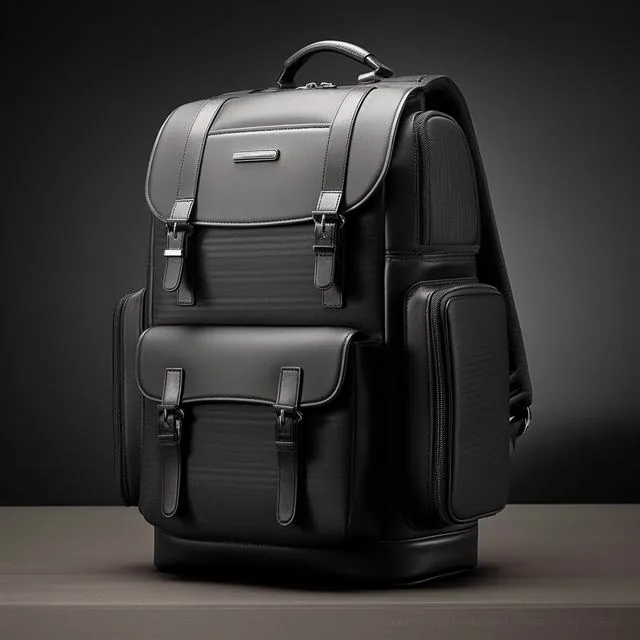
Sixth-form bags are used harder than almost any other category of pack, and not in the way adults imagine. The dominant failure is not abrasion on the base, which is what kills primary school bags. It is over-stuffing: a 30 L bag asked to hold 34 L five days a week, which puts diagonal tension across the main zip every morning and splits the tape at the bottom stop within about a year.
Specification follows from that. Ask for a #10 coil zip on the main opening of anything above 26 L, with a storm flap over it, and check that the bottom stop is box-tacked into a reinforcement patch rather than sewn into a single layer of fabric. A 600D polyester body with a 900D base wrap turned 60-80 mm up the walls survives two academic years; a 420D body without a base wrap usually does not, because the bag is put down on tarmac and concrete in a school yard several times a day.
Weather matters more than students admit. A bag that is carried from a bus stop in the rain for twenty minutes needs a coating rated at 3,000 mm with taped seams, or a rain cover rated to the same figure. A single-pass 1,500 mm finish keeps a textbook dry for about forty minutes and then wets through at the seams, which is exactly long enough to get home and ruin one folder. Given that a ruined A4 folder means reprinting notes, a GBP 15 cover is cheap insurance.
Durability of the device sleeve is the other quiet failure. A slip pocket with 3 mm of open-cell foam protects nothing and flattens within a term. Insist on 8 mm of closed-cell foam, 15-25 mm of clearance above the base so a drop onto a corridor floor does not strike the corner, and a bound internal seam. If the school has issued the device, the student is usually responsible for it, and a GBP 900 Chromebook is not a risk worth taking on a GBP 10 saving.
Both categories should also carry the right markings. Textile labelling must state fibre composition, and any electrical element such as a charging lead or a power bank sold with the bag needs UKCA marking before it can be placed on the market; the duties are set out by the Office for Product Safety and Standards, and the UK responsible-person details must appear on the packaging.
Access, Organisation and Security
Sixth-form timetables are lumpy: three subjects on Monday, one long study period on Tuesday, a double on Wednesday. That changes what good organisation means. A student who can leave two subjects in a locker needs one bag; a student whose school provides no locker space needs a bag that swallows everything and still closes.
A laptop pack wins on small-item organisation and it is not close. Dedicated slots for a calculator, pens, a phone, a charger, a travel card and a USB drive mean nothing is hunted for at the bottom of the bag in the four minutes between lessons. A school backpack gives one or two voids, and the student ends up buying a pencil case, a charger pouch and a wash bag to recreate the organisation the bag should have provided, at a cost of GBP 15 to GBP 30 and 250-400 g.
A school backpack wins on bulk access. Opening a wide top mouth and seeing the whole interior at once is faster between lessons than unzipping three compartments, and it makes it far easier to check that nothing has been left behind in a classroom. That is a real consideration for a student moving between six rooms a day.
- Dedicated slots for small items: none on a school backpack, six to twelve on a laptop pack.
- Time to find a calculator in a full bag: 20-35 s rummaging in one big void against 4-8 s from a dedicated pocket.
- Seeing the whole interior at once: yes with a school backpack, no with a laptop pack, which is opened compartment by compartment.
- Packed lunch and bottle without conflict: yes in a school bag, and only sometimes in a 24 L laptop pack.
- Aftermarket pouches needed to make it work: GBP 15-30 and 250-400 g for a school bag, GBP 0-10 for a laptop pack.
- Suits a school with no locker provision: yes for the school bag, marginal for the laptop pack.
Security is mostly about one thing in this age group: a phone and a wallet in an easily reached outside pocket on a bus. Put valuables behind a closed barrier and inside the main compartment, and prefer a rear-panel pocket that faces outwards rather than against the back. A bag carried on the front of a crowded bus with an open mesh side pocket is an invitation, and it is the most common theft route for this age group.
UK Price, Value and Cost per Use
Three bands cover the British market for sixth-form bags. From GBP 25 to GBP 55 you get a school backpack: 420D or 600D polyester, a #8 zip, no structure and no device protection, replaced roughly annually. From GBP 60 to GBP 110 you get a hybrid: 600D with a base wrap, a #10 zip, a suspended or padded 14-inch sleeve, a chest strap and usually a one-year warranty. From GBP 110 to GBP 170 you get a laptop pack or a premium hybrid with tested materials, a moulded back panel and two to five years of cover.
Cost per use over the two years of sixth form, at roughly 390 school days and two carries a day, is where the middle band wins clearly. The GBP 35 bag replaced once costs GBP 70 and about 9p per use, and it protects a GBP 900 device with nothing. The GBP 85 hybrid costs about 11p per use and survives into the first year of university. The GBP 150 laptop pack costs about 19p per use and is the right buy only if the school is fully digital and the folders have genuinely gone.
Two hidden costs belong in the calculation. The first is reprinting: a folder of notes ruined by a leaking bag costs an afternoon and, if it happens near an exam, considerably more than that. The second is the charger. Sixth-formers lose chargers at a remarkable rate, and a bag with a dedicated charger pocket that is used every day saves roughly GBP 35 a year on replacements.
If the school or a parent group is buying for a cohort, standardise. One size, one colourway, one specification, ordered at MOQ 500 pcs per style and colourway, brings the unit cost down and makes the load guidance easy to communicate: the bag weighs X, the ceiling is Y, and the chest strap is not optional.
Which Works Better in Real British Scenarios?
Four realistic sixth-form situations, each with a different answer.
Scenario one: a large comprehensive with no lockers, three A-levels
Three ring binders, two textbooks, a 14-inch Chromebook, a bottle and lunch, carried for twenty minutes each way. The school backpack wins, or more precisely a hybrid at 30-32 L with 230 mm of internal depth, an external device sleeve and a chest strap. A laptop pack simply cannot take the folders, and the student will end up carrying a second bag anyway.
Scenario two: a sixth-form college with a 1:1 laptop scheme and lockers
Everything is on the device, notes are in cloud storage, and only one subject folder is carried per day. The laptop backpack wins: 20-22 L, a suspended sleeve sized for the issued model, a charger pocket and a bottle sleeve. The load drops from around 7 kg to around 4 kg, which is comfortably inside the ceiling and transforms the daily walk.
Scenario three: a student who goes straight to a part-time job after school
Uniform, laptop, folders and then a change of clothes and a wash bag. Volume wins here: a 32-34 L school backpack with a wet pouch for the work clothes. A laptop pack forces a choice between the folders and the uniform, and the student will solve it by overstuffing, which is what breaks zips.
Scenario four: a commuting sixth-former on a bus and a train
Forty minutes each way, a crowded bus, a station and a walk in the dark from October. Take the hybrid with a reflective band, a chest strap and a rain cover, and keep the load under 6 kg by leaving one subject in a locker. The reflective element matters more than any other single feature on this route.
Testing Standards and Bulk Custom Orders
The acceptance routine for a sixth-form bag is short and it targets the failure modes described earlier: overstuffing, base abrasion and sleeve protection.
- Zip survival: overfill the bag by 15 per cent of volume, close it, and cycle the main zip 5,000 times. Check the bottom stop and the tape at the bottom of the run.
- Base drop: 500 mm onto concrete with 8 kg inside, ten times, then inspect the base wrap and the seam at the base corners.
- Sleeve protection: 500 mm corner-first drop with the issued device, or a weighted substitute of the same mass and dimensions; the sleeve must keep 15-25 mm of clearance and show no seam failure.
- Strap and buckle pull: 180 N on side-release hardware, with box-tacked strap roots covering at least 1,200 square millimetres.
- Reflective check: confirm the retroreflective area and, where a performance class is claimed, that the material is certified to BS EN ISO 20471.
Load guidance for young people is covered by the same ergonomic principles as any manual handling task, and the Health and Safety Executive publishes the risk-assessment approach used in British workplaces in its manual handling guidance. For schools buying in quantity, that means stating a target load, stating the empty weight of the bag, and giving students a number they can actually check.
Commercial terms are fixed. MOQ 500 pcs per style and colourway. Sampling takes 6-10 working days from approved artwork, or 12-15 where a moulded back panel or a custom device sleeve is specified. Bulk production runs 35-50 days after sample sign-off. Inspection is set at AQL 2.5 under ISO 2859-1 and shipment is FOB Xiamen on T/T 30/70.
QUANZHOU JUNYUAN BAGS has been a sourcing and programme-management partner to schools and brands since 2014, founded by someone in the trade since 2004. Bags are built through our production partners: 7 lines, 149 machines, 137 colleagues and 4,950 square metres of SGS-verified floor, at 200,000 pieces a month. We size the sleeve to the device the school actually issues and keep two sealed references per colourway. Parent groups and academy trusts can reach us at service@junyuanbags.com, or on WhatsApp via wa.me/8617750020688.
Common Buying Mistakes to Avoid
Seven errors account for most of the money wasted on sixth-form bags, and all of them are avoidable with a tape measure and a scale.
- Buying on litres and ignoring internal depth. Three ring binders need about 225 mm, which most 20-24 L laptop packs do not have.
- Buying a sleeve sized to a generic 14-inch figure rather than to the model the school issues. Devices vary by 10-20 mm per dimension.
- Choosing a bag that weighs 1,300 g empty when the student ceiling is 6 kg. That is 22 per cent of the allowance spent on the bag.
- Skipping the chest strap, which is the cheapest fix for the one-shoulder habit that causes most sixth-form shoulder complaints.
- Overstuffing a bag by more than about 10 per cent, which is what splits the main zip at the bottom stop.
- Ignoring reflective material for a student walking home in the dark between November and February.
- Assuming a laptop pack will take PE kit or a change of clothes on the one day a week they are needed.
The check that prevents most of them takes two minutes. Take the bag, the student heaviest folder and the actual device, put all three in, close the bag, and weigh it. If it does not close, it is the wrong volume; if it weighs more than a tenth of the student body weight, the load has to change rather than the bag.
Final Verdict: Who Should Choose Each?
Choose the school backpack, in a 28-34 L size with a base wrap and a #10 zip, if the student carries three or more ring binders or lever-arch files, if the school provides no lockers, if PE kit or a change of clothes has to come home, or if the budget is under GBP 60. Add a separate padded sleeve for the device at GBP 12 to GBP 20 and the protection problem is solved cheaply.
Choose the laptop backpack, in a 20-24 L size with an external sleeve compartment, if the school is genuinely digital, if lockers mean only one folder travels per day, and if the device is expensive enough that a drop is a serious event. Check the sleeve against the issued model and buy a chest strap if the bag does not have one.
For most sixth-formers the honest answer is neither extreme. Buy a 28-32 L hybrid at 950-1,100 g with 225 mm of internal depth, an external 14-inch sleeve with 8 mm of closed-cell foam, a chest strap, a #10 zip and a reflective band. It costs GBP 60 to GBP 110, it survives two years of sixth form and a first year at university, and it is the only option that takes a ring binder and a Chromebook on the same Thursday.
Frequently Asked Questions
Which is better, a school pack or laptop pack, for daily use?
If the student carries ring binders, the school pack is better, because three binders need about 225 mm of internal depth and most 20-24 L laptop packs give 160-200 mm. If the school is fully digital and lockers are provided, the laptop pack is better and drops the daily load from about 7 kg to about 4 kg.
How much capacity do I need when comparing these two options?
Twenty-eight to 32 L covers most sixth-form weeks with folders, a device, a bottle and lunch. Twenty to 24 L is enough only in a digital school with lockers. Below 20 L you will be carrying a second bag within a fortnight.
What empty weight is reasonable for this type of backpack?
Aim for 950-1,100 g for a 30 L hybrid with a device sleeve. A basic 30 L school bag can be 600-900 g and a structured laptop pack 900-1,300 g, but anything above about 1,100 g spends too much of a 6 kg student ceiling on the bag itself.
Is a school pack more durable than a laptop pack?
Not necessarily, but it is usually built with a heavier base and a bigger zip because it is expected to be overstuffed. The failure that kills both is the same: a main zip split at the bottom stop after being overfilled by 10-15 per cent daily. Look for a #10 coil and a box-tacked bottom stop.
Can a laptop pack protect a laptop during British commuting?
Yes, and better than any school bag. Specify 8 mm of closed-cell foam, 15-25 mm of clearance above the base, and a bound internal seam, and choose a design where the sleeve is an external compartment so folders keep the full internal depth.
Which option handles persistent UK rain more reliably?
Neither reliably at the entry price. Both need a 3,000 mm coating with taped seams, or a rain cover rated to 3,000 mm, which costs GBP 12 to GBP 24 and is the cheaper fix. A 1,500 mm finish keeps a folder dry for about forty minutes, which is just long enough to get home and ruin it.
How much should British buyers pay for good quality?
GBP 60 to GBP 110 buys a hybrid that lasts two years of sixth form and a first year at university, which is about 11p per use across 780 carries. Below GBP 55 you are buying a bag that will be replaced annually, and above GBP 150 you are paying for a laptop pack that will not take the folders.
What dimensions work best on trains and short flights?
Keep the packed width under about 33 cm and the depth under 22 cm so the bag clears bus aisles and train gangways. A 30 L school bag at 46 x 30 x 22 cm is fine; the same volume with a bulky external bottle sleeve can exceed it, so check the packed width rather than the empty one.
Should I choose a school pack for loads above eight kilograms?
No. Above 8 kg for a 60-70 kg student the load itself is the problem, and it should be reduced by leaving a subject in a locker. Whatever bag you use, specify a padded hip belt and a chest strap, and pack dense items within 60 mm of the back panel.
Is a laptop pack practical for mixed work and weekend use?
For a sixth-former, mixed use usually means school plus a part-time job, and that means a change of clothes. A 20-24 L laptop pack will not take both. A 28-32 L hybrid with a wet pouch will, which is why it is the safer single-bag purchase.
How should bulk buyers specify these backpack designs?
State the internal depth available for folders in millimetres, the sleeve dimensions against the issued device model, the empty weight ceiling, the zip gauge, the base wrap depth and the reflective area. Then fix MOQ 500 pcs per style and colourway, sampling 6-10 working days, bulk 35-50 days, AQL 2.5 under ISO 2859-1, T/T 30/70, FOB Xiamen.
Can both options pass useful durability and quality checks?
Yes. Both should survive 5,000 zip cycles overfilled by 15 per cent, ten 500 mm base drops with 8 kg inside, and a 180 N buckle pull. What separates them is geometry rather than build quality: whether the bag can take the folders at all.
Does a sixth-former need a 15-inch or 14-inch laptop sleeve?
Size it to the exact device the school issues, which is usually a 14-inch Chromebook at about 325 x 225 mm. A sleeve labelled 15-inch typically leaves 20-30 mm of slack, and a device that can move laterally by more than 15 mm inside its sleeve will strike the corner in a drop.