Table of Contents
- How Do You Pack a Carry-On Backpack for Ryanair?
- How Do You Handle Winter Layers on Budget Airlines?
- What Are the Real Ryanair and easyJet Dimensions?
- How Do You Hit 10 kg Without Leaving Anything Behind?
- Which Packing Order Fits the Most Into 55 x 40 x 20 cm?
- What Are the Liquids and Electronics Rules?
- What Actually Happens at the Boarding Gate?
- What Do You Do When It Does Not Fit?
- What Should Bulk Buyers Specify for Airline-Compliant Bags?
- Frequently Asked Questions
How Do You Pack a Carry-On Backpack for Ryanair?
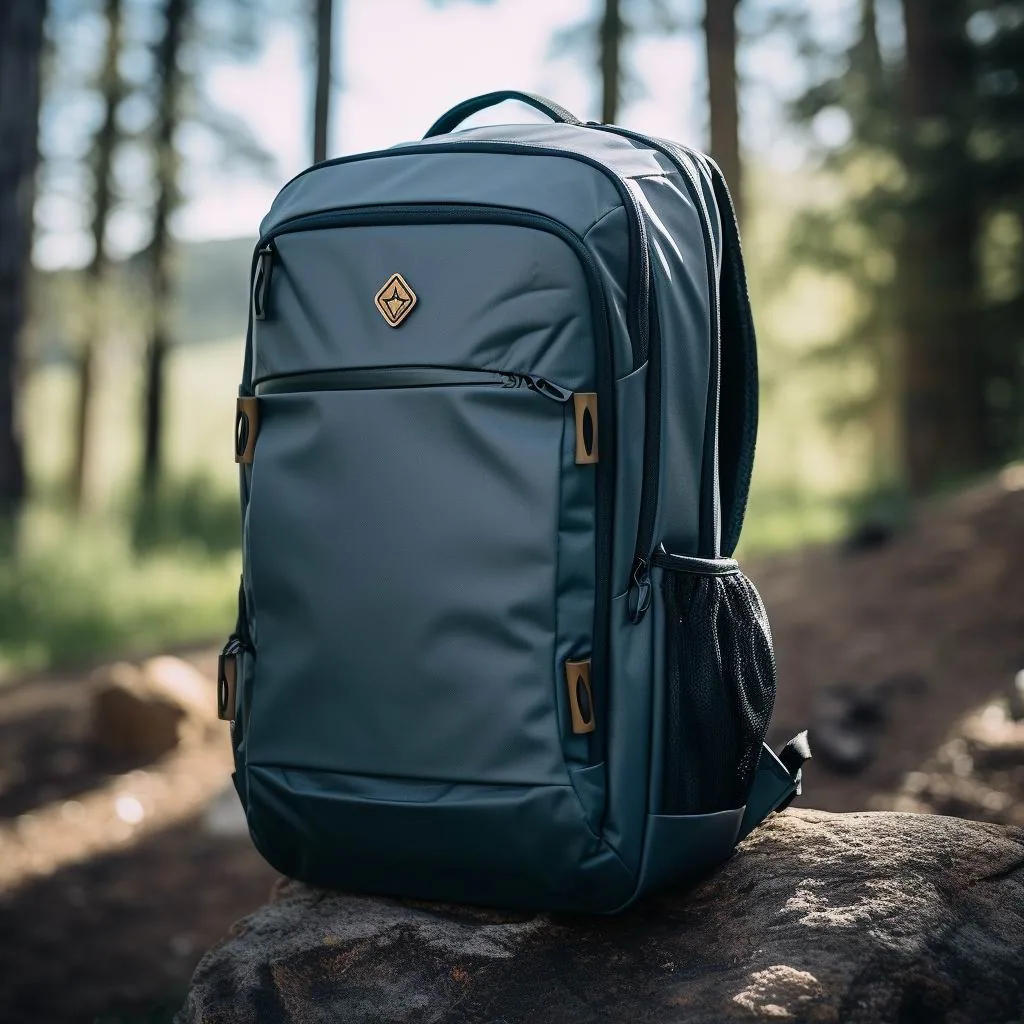
Decide which allowance you are buying first, then pack to those numbers rather than to the bag's stated capacity. Ryanair's free personal item must fit 40 x 25 x 20 cm, which is roughly 20 litres when soft-sided, while Priority boarding permits 55 x 40 x 20 cm up to 10 kg for about £6 to £38 depending on route and season. Pack in three zones — heavy items low and against your spine, liquids in one transparent 1,000 ml bag, electronics in the outermost pocket — and compress everything with straps so the bag measures at least 20 mm under the sizer dimensions before you leave for the airport. Work out before booking which allowance you genuinely need, because paying for Priority costs less than any gate charge, and measure the loaded bag with a tape rather than trusting the marketing litre figure printed on the label. Review that allowance choice on every booking, because it changes with route and season.
Volume figures deceive, which is the first thing to understand. A 40-litre backpack rolled loosely will pass the 20 cm depth test it would otherwise fail, whereas a rigid 35-litre with a moulded back panel may not: what matters is the smallest box your bag will collapse into, not what it holds. Soft construction, four compression straps and no internal frame on your chosen bag are the three features that matter most when the queue reaches the gate agent.
Then there is the weight maths, which catches more people than size does. Ryanair's 10 kg Priority limit includes every gram — bag, contents, jacket pockets if it is in the bag and your camera — with nothing except a small duty-free bag exempt. Flyers from Stansted, Luton and Edinburgh routinely see scales deployed at the gate, and the current gate-check charge runs roughly £50 to £65, which is more than most fares. Plan your kit against the capacity guidance inside airline-compliant travel backpacks before booking either allowance.
How Do You Handle Winter Layers on Budget Airlines?
Winter travel from Britain is where cabin allowances genuinely hurt, because bulk rather than weight is the constraint. A packable waterproof at 320 g rolls to roughly 250 x 120 mm, but a fleece at 400 g occupies maybe 300 x 200 x 100 mm and a proper winter coat takes a third of a 40-litre bag. Wear the bulkiest layer through the airport and carry the rest compressed in a dry bag rather than loose.
Compression genuinely pays here. Rolling three winter layers inside a 5-litre dry bag and kneading the air out takes ninety seconds and reduces their combined volume by about 40%, which typically means 25 mm less depth on the bag — often the difference between passing and failing the sizer. Do this in the queue rather than before leaving home, because compressed synthetic loft recovers slowly and travel companies advise stuffing rather than rolling for long-term storage.
Plan for arriving wet, which in Britain is not a matter of luck. Budget 150 g of extra weight allowance for absorbed water in any shell, dry everything within twelve hours of arrival, and keep electronics in a separate dry bag rather than trusting any claim about water resistance. Packable layers and a compressible approach suit winter travel backpack setups far better than rigid structures ever will, whatever their capacity figures suggest.
What Are the Real Ryanair and easyJet Dimensions?
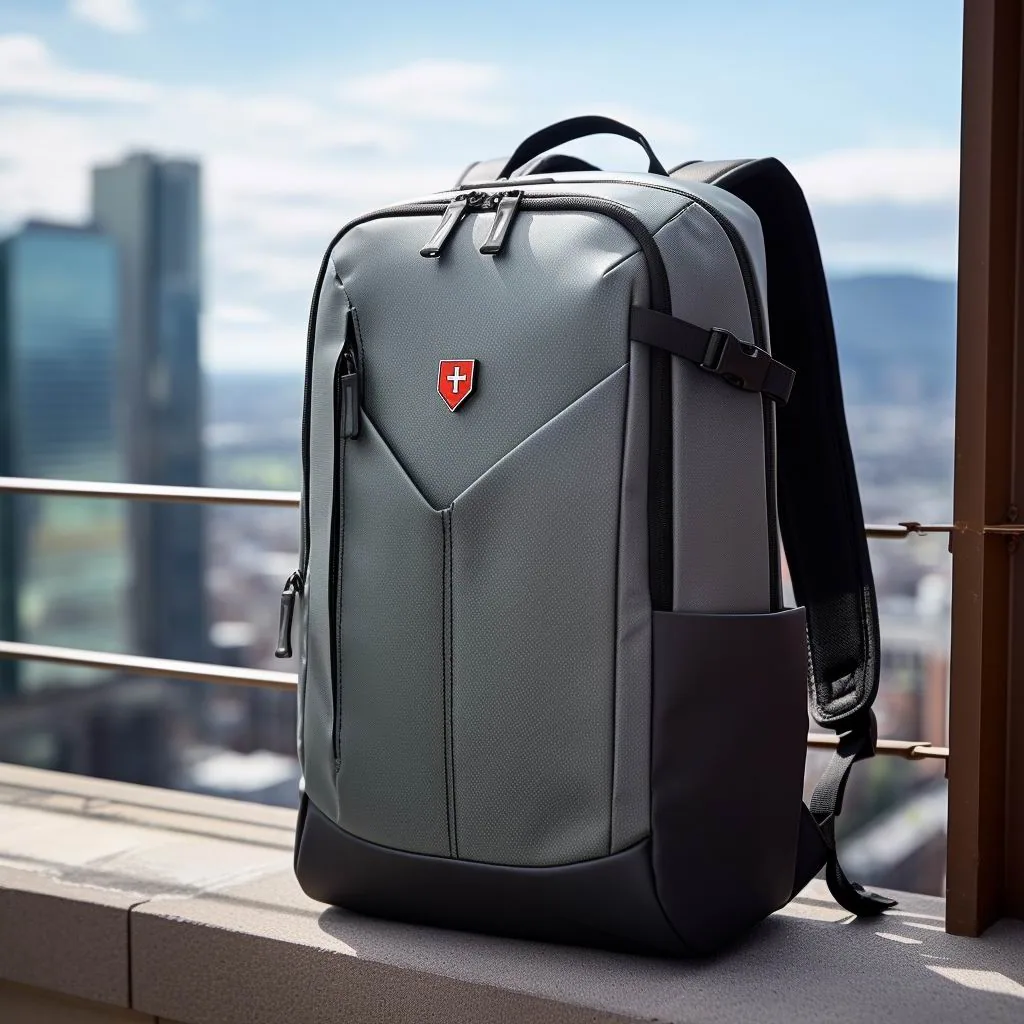
Two airlines, two very different deals. Ryanair sells Priority boarding with the larger bag included; easyJet permits one cabin bag up to 45 x 36 x 20 cm including handles and wheels, free for all passengers, up to 15 kg. On paper easyJet is more generous in every dimension; in practice its sizer checks happen more often at UK departure gates, particularly on Spanish and Greek leisure routes in summer.
Dimensions are external and total. Every part counts: handles, compression straps, side pockets, even the slight bulge created by a packed side water bottle pocket. Measure your loaded bag at home with a tape across three axes, adding 10 mm if the fabric is soft enough to bulge. Anything within 10 mm of the limit will eventually fail, because every sizer in Europe is a hard metal box with no tolerance whatsoever. Published figures describe the sizer, not your bag, so verify loaded dimensions before buying anything from UK cabin-compliant travel backpacks.
| Carrier and allowance | Maximum size | Weight limit | Typical cost |
|---|---|---|---|
| Ryanair personal item, free | 40 x 25 x 20 cm | No stated limit, must fit under seat | Free |
| Ryanair Priority plus cabin bag | 55 x 40 x 20 cm | 10 kg | £6 to £38 each way |
| easyJet under-seat bag, free | 45 x 36 x 20 cm | 15 kg | Free |
| easyJet Up Front or Extra Legroom | 56 x 45 x 25 cm | 15 kg | Fare upgrade cost |
| Wizz Air free carry-on | 40 x 30 x 20 cm | 10 kg | Free with priority |
| British Airways standard cabin | 56 x 45 x 25 cm | 23 kg | Included in most fares |
How Do You Hit 10 kg Without Leaving Anything Behind?
Weigh everything before it goes in the bag, because estimates are consistently wrong by around 40%. A representative three-day kit breaks down as follows: jeans 650 g, three t-shirts 480 g, midlayer fleece 400 g, packable waterproof 320 g, wash bag 400 g, chargers and cables 350 g, laptop 1.4 kg, spare trainers 850 g, book 300 g. That is already 5.15 kg before you count the backpack itself at 1.2 to 1.8 kg.
Three moves create headroom quickly. Swap jeans for chinos or technical trousers, saving roughly 300 g; replace a hardback with a Kindle weighing 205 g, saving about 95 g; and decant toiletries into 30 ml bottles, cutting maybe 250 g. Combined with choosing a backpack under 1.2 kg rather than 1.8 kg, those four decisions free roughly 1.25 kg — the difference between a comfortable trip and gate-side panic.
Weigh the bag at home on bathroom scales if you do not own luggage scales costing £9, holding the bag yourself and subtracting your own weight. Do it fully packed including the jacket you will carry, then aim to land 500 g under the limit, which absorbs airport purchases and damp weather. If you are over, the heaviest single category is nearly always either footwear or technology, and that is where to cut first. Weighing every item once teaches you where the real mass sits, which is why we publish weights across every travel backpack we list.
Which Packing Order Fits the Most Into 55 x 40 x 20 cm?
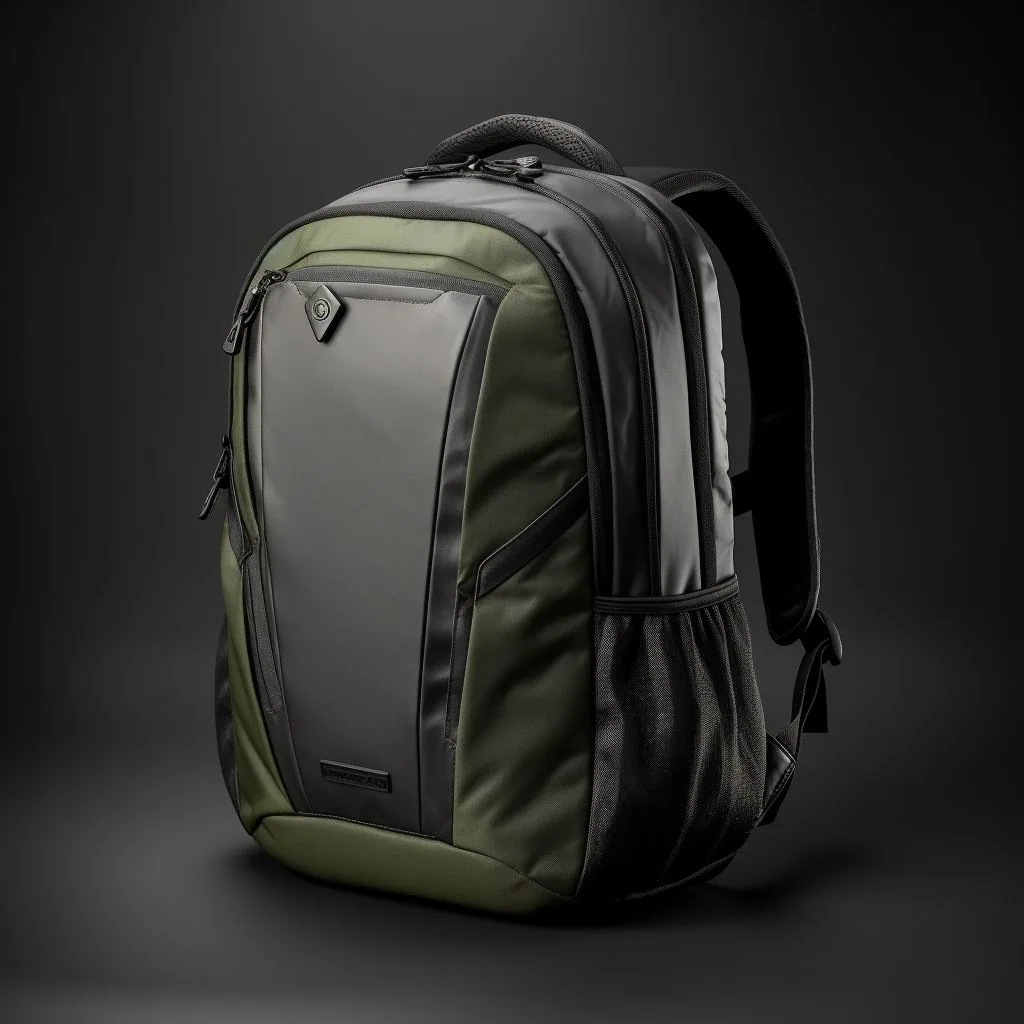
Fill from the corners outward. Contents settle into a rectangular shape only if you put soft items into every corner first: socks and underwear into the four base corners, rolled t-shirts filling the middle, then flatter items — laptop, documents, tablet — lying against the back panel where they keep everything flat. Anything tubular left loose creates voids that no amount of compression removes.
Use cubes rather than loose stacking. A 4-litre cube holding rolled t-shirts compresses them into a dense block measuring perhaps 250 x 180 x 90 mm, whereas the same six shirts stacked loosely occupy 30% more space and shift constantly. Two medium cubes plus a small one for cables typically fills the standard dimensions perfectly, leaving the top third free for the jacket you will carry through security.
Compress last and evenly. Cinch the side straps alternately in 15 mm stages, checking the depth stays under 200 mm at the thickest point, which is usually the junction between laptop compartment and main body. If the bag bulges, redistribute rather than pulling harder: overtightening simply forces the bulge elsewhere, usually into the dimension you least want it in, near the top where the sizer catches. Practise the whole layout at home once, since nobody arranges cubes well at a departure gate with a queue behind them. Practise it against the dimensions published for every bag in cabin-sized travel backpack reviews.
What Are the Liquids and Electronics Rules?
Standard security rules apply across the UK and EU: liquids in containers of 100 ml or less, all fitting inside one resealable transparent bag of up to 1,000 ml, which may be inspected separately. The official UK position is published by UK government hand luggage guidance, and it is worth reading because airport staff apply it literally, particularly regarding pastes and gels.
Electronics come out at most UK checkpoints. Keep your laptop in a dedicated compartment that opens flat to 180 degrees, because it must leave the bag and enter a tray; anything buried under four layers of clothing will be repacked by a stranger while you wait. Tablets, cameras and power banks all count, and power banks above 100 Wh require airline approval, which is almost never granted at short notice.
Two practical rules follow from this. Never check lithium batteries or power banks — the limit is 100 Wh without approval, 160 Wh with airline consent, and most 20,000 mAh packs sit right at 74 Wh. And keep liquids in the outermost pocket so the whole process takes thirty seconds rather than unpacking your carefully compressed load at the tray table. Check current UK guidance the night before flying, because rules shift and Manchester and Edinburgh apply them differently. Bags designed around these rules are flagged clearly inside UK travel backpack specifications.
What Actually Happens at the Boarding Gate?
Understand the process and you stop worrying about it. Ryanair staff check boarding passes for the Priority symbol and occasionally place bags into a metal sizer; this happens on perhaps 20% to 30% of departures, more when the flight is full or running late. Gate-checking an oversized bag plus the handling fee currently costs around £50 to £65, payable immediately by card.
The sizer is a hard box with fixed dimensions. There is no tolerance, no squeezing and no arguing — a bag 15 mm over fails. The save is to know your bag's dimensions before you get there: if a strap-created bulge takes you past the limit, undo the compression and rearrange immediately rather than trying to ram it in, since most staff will allow one repack attempt.
When flying from UK regional airports such as Leeds Bradford, Bristol or East Midlands, expect the checks randomly rather than uniformly. Observed patterns suggest early-morning leisure routes to Spain get scrutinised most, while midweek business routes rarely do. Whatever happens, keeping a folded packable daypack weighing 150 g inside your bag costs nothing and gives you somewhere to put the overflow. Arrive knowing your figures and the whole process becomes uneventful, which is the point of every packing guide in travel backpack preparation.
What Do You Do When It Does Not Fit?
Repack rather than pay. Unclip compression straps, remove your jacket and put it on — nobody counts worn clothing against either allowance — then redistribute heavy items from the lid into side pockets. If the depth is still over, take out the densest single volume, usually shoes, and carry them. Most people retrieve 15 to 20 mm with two minutes of calm reorganising while queueing.
Know your fallback costs precisely. Purchasing Priority at the gate is dramatically more expensive than adding it before check-in; paying online in advance typically costs £6 to £38 against roughly £50 to £65 at the aircraft door. If you are already certain the bag is too big, adding the allowance on your phone thirty minutes before boarding is the cheapest available move.
Learn from it for next time. If your bag failed the sizer structurally — meaning it simply cannot compress further — then it was the wrong bag for this fare class, and the person buying often-top graded soft travel packs does far better than one with a moulded back panel. Look at soft-sided travel backpacks before the next booking and check that the stated dimensions reference the actual external envelope.
What Should Bulk Buyers Specify for Airline-Compliant Bags?
Specification before sampling prevents enormous downstream problems. Require maximum external dimensions of 55 x 40 x 20 cm when fully loaded, verified with a 5 kg fill rather than empty, plus compression straps on all four faces and a stated empty weight ceiling — anything above 1.4 kg for a 40-litre cabin bag eats too much of the 10 kg allowance. Ask for a softly structured but fully collapsible back panel rather than moulded EVA.
Then agree terms before tooling. Standard practice with our production team covers MOQ 500 pcs per colourway, sampling in 6-10 working days including a loaded sizer check, bulk production 35-50 days after sample sign-off, and inspection to AQL 2.5 (ISO 2859-1) using tables published by ISO 2859-1. Yarn and coating durability should additionally be checked against abrasion methods held in the ASTM standards library, because gate-side scraping is brutal.
Finish with labelling that helps travellers rather than lawyers. Print the external dimensions and empty weight inside the main compartment, supply a laminated card with current UK cabin rules, and choose materials that shed light rain without absorbing 300 g of water. UK prices for a specification like this typically land between £28 and £52 per unit at volume, which is why cabin-compliant travel backpacks remain the most requested line we develop.
Frequently Asked Questions
What size backpack can you take on Ryanair for free?
A personal item measuring no more than 40 x 25 x 20 cm, which typically means a soft bag of around 20 litres. Anything larger requires Priority boarding, permitting 55 x 40 x 20 cm at 10 kg for roughly £6 to £38 each way. Measure your bag loaded, including handles and side pockets, since sizers have no tolerance at all.
How much does Ryanair charge if your bag is too big?
Around £50 to £65 at the boarding gate currently, plus separate checked handling depending on route, which frequently exceeds the original fare. Buying Priority online beforehand costs £6 to £38, so adding the allowance on your phone thirty minutes before boarding is the cheapest possible fallback if you know the bag will fail. Buying Priority online in advance usually costs between £6 and £38.
Can a 40-litre backpack be used as Ryanair hand luggage?
Yes if it collapses. What matters is the smallest box it compresses into, not stated capacity: a soft 40-litre with four compression straps can often meet the 20 cm depth requirement, while a rigid 35-litre with moulded EVA backing will not. Load it with 5 kg and measure three axes before travelling. Load it with 5 kg and measure all three axes before travelling.
How heavy is Ryanair's Priority cabin bag allowance?
The limit is 10 kg total, including the bag itself and every item inside it. A typical backpack weighs 1.2 to 1.8 kg empty, leaving roughly 8 kg of contents. Weigh everything at home, aim 500 g under the figure, and check the easiest wins: swapping jeans saves about 300 g and decanting toiletries another 250 g. That leaves around 8 kg of contents after the bag itself.
Which UK airports check cabin bag sizes most often?
Checks are random but cluster around busy leisure departures. Staff on early-morning Spanish and Greek routes from Stansted, Luton, Gatwick and the regional airports inspect perhaps 20% to 30% of bags, while midweek business routes are rarely checked. Always assume you will be tested, and fit a 150 g packable daypack inside for overflow. Assume every departure is checked and you will never be caught.
Is easyJet more generous than Ryanair with hand luggage?
Yes on paper. easyJet permits 45 x 36 x 20 cm up to 15 kg free for every passenger, against Ryanair's free 40 x 25 x 20 cm. However easyJet staff use sizers frequently at UK departure gates, so the practical gap is narrower than the published figures suggest. Always verify current terms before booking a fare. Always verify current terms when booking rather than relying on memory.
How do I stop my bag bulging past the 20 cm depth?
Distribute rather than simply tightening. Fill each corner with soft items, use cubes to compress clothing into dense blocks of around 250 x 180 x 90 mm, put flat items against the back panel and cinch straps alternately in 15 mm stages. If it still bulges, move something dense like shoes to your coat pocket. Check the thickest point, usually where the laptop sleeve meets the body.
What liquids rules apply on flights from UK airports?
Liquids in containers of 100 ml or less, all held in one resealable transparent bag of up to 1,000 ml, presented separately at security. The current position is published by the UK government, and staff apply it strictly to pastes and gels too. Decant into 30 ml bottles and keep them in the outermost pocket for speed. Airport staff apply these rules literally, particularly to pastes and gels.
Should laptops stay inside the backpack at security?
No, they must come out and travel in their own tray, so choose a bag with a dedicated sleeve that opens flat to 180 degrees. Tablets, cameras and power banks also count. Never bury electronics under clothing, and never put lithium cells in hold luggage: anything above 100 Wh needs airline approval. A dedicated sleeve opening flat to 180 degrees makes this quickest.
How much does a power bank have to weigh before it is restricted?
Limits are stated in watt-hours rather than weight: cells up to 100 Wh are permitted without approval, which covers most 20,000 mAh packs at around 74 Wh. Anything between 100 and 160 Wh needs airline consent that is rarely granted at short notice. Always carry power banks in cabin baggage only. Cells up to 100 Wh are permitted without any airline approval.
What should I do if the sizer rejects my bag at the gate?
Repack calmly instead of paying. Undo compression straps, put your jacket on, redistribute dense items into side pockets and remove anything tubular creating voids. Most people gain 15 to 20 mm within two minutes. If it genuinely cannot compress further, buy Priority online before the charge is applied at the aircraft door. Two minutes of calm repacking usually recovers 15 to 20 mm.
Can I wear extra clothing to reduce my bag weight?
Yes, since worn clothing does not count against either allowance, and it is the oldest trick in the book. A midlayer fleece saves 400 g and a heavy coat can save 900 g. The practical objection is comfort in airports, so carry a small packable layer rather than committing to wearing everything through a terminal. A heavy coat worn through the terminal saves about 900 g.
What size bag avoids easyJet Up Front charges entirely?
Anything within 45 x 36 x 20 cm including handles and wheels, up to 15 kg, travels free with a standard fare. Up Front and Extra Legroom tickets allow 56 x 45 x 25 cm. Confirm current terms at booking, since easyJet has revised its cabin rules several times and applies them inconsistently at different UK gates. Current easyJet rules have changed several times, so always re-check them.
What should bulk buyers specify for airline-compliant backpacks?
Require maximum loaded external dimensions of 55 x 40 x 20 cm verified with a 5 kg fill, four-sided compression straps, empty weight below 1.4 kg and a collapsible rather than moulded back panel. Standard terms are MOQ 500 pcs, sampling in 6-10 working days, bulk production 35-50 days and inspection to AQL 2.5 (ISO 2859-1). Standard terms are MOQ 500 pcs and bulk production 35-50 days.
Get a Free Quote for Custom How to Pack a Carry-On Backpack for Ryanair
Planning a branded programme? Our production team works to MOQ 500 pcs, 6-10 working day sampling and 35-50 day bulk lead times, with AQL 2.5 inspection to ISO 2859-1. Send your brief and we will return a costed quotation in 24-48 hours.
Mens Backpack Guide Editorial Team — Buying guides and sourcing notes for the UK men's backpack market, coordinated by QUANZHOU JUNYUAN BAGS. Commercial figures such as MOQ 500 pcs, 6-10 day sampling and 35-50 day production reflect published programme terms.