easyJet Backpack Size Guide: 45 x 36 x 20, 56 x 45 x 25 and the Sizer at the Gate
easyJet gives every passenger one free small cabin bag of up to 45 x 36 x 20 cm including handles and wheels, weighing up to 15 kg and stowed under the seat, plus an optional large cabin bag of up to 56 x 45 x 25 cm and 15 kg for the overhead locker, which must be paid for or included with the fare. Only two cabin bags are permitted per person, and an oversize bag at the gate goes into the hold at a charge of £60.
This guide is written for soft backpacks rather than trolley cases, so it concentrates on the measurement that actually decides the outcome: the loaded, compressed depth of a fabric pack pushed into a rigid sizer. It also covers the under-seat geometry you are aiming for, the add-on economics, and the specification decisions that matter if you are developing a cabin-compliant pack for the UK market.
The Two-Bag System in Plain Numbers
easyJet splits cabin baggage into two clearly defined types, and mixing them up is the single most common reason passengers are charged at the gate. The small under-seat bag is free for everyone on every fare, measures a maximum of 45 x 36 x 20 cm including any handles and wheels, may weigh up to 15 kg, and must fit under the seat in front of you. The large cabin bag measures a maximum of 56 x 45 x 25 cm including handles and wheels, also up to 15 kg, goes in the overhead locker, and is only available to passengers who have paid to add it, hold easyJet Plus membership, or have booked a fare that includes it.
Two further rules catch people out. The maximum number of cabin bags per person is two, one of each type, so a standard fare holder cannot add a handbag or a separate laptop bag on top of the free allowance; everything has to fit inside the single small bag before boarding. And the 15 kg figure is a ceiling rather than a right: easyJet states that you must be able to lift and carry the bag yourself. In practice, gate staff at UK airports focus on the sizer far more than the scales, though some Spanish and Italian airports check both.
| Bag | Maximum size | Weight | Who gets it | Stowage |
|---|---|---|---|---|
| Small cabin bag | 45 x 36 x 20 cm | 15 kg | All passengers, free | Under the seat in front |
| Large cabin bag | 56 x 45 x 25 cm | 15 kg | Paid add-on, Plus or included fare | Overhead locker |
| Hold bag, small | 275 cm total | 15 kg | Paid add-on, online only | Aircraft hold |
| Hold bag, standard | 275 cm total | 23 kg | Paid add-on | Aircraft hold |
Measuring a Soft Backpack the Way the Sizer Does
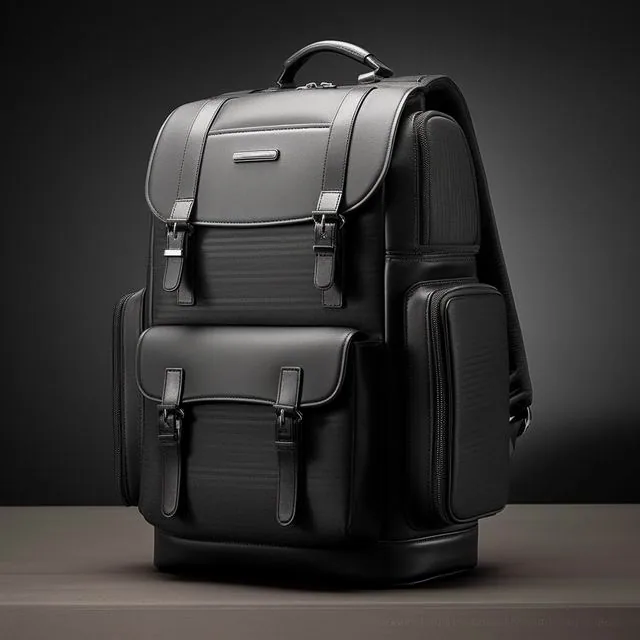
A trolley case has a fixed shape and a backpack does not, which is both the advantage and the risk. The advantage is that a soft pack can be compressed into a sizer that a rigid case would fail. The risk is that the same pack, loaded differently, is 2 cm deeper on the day you fly than it was in the shop. Measure the pack as you intend to carry it: fully packed, compression straps done up, water bottle in the side pocket, and the grab handle in whatever position it naturally falls. Then measure again after the pack has been worn for ten minutes, because harness geometry settles under load.
Work to the worst orientation rather than the best. easyJet states that dimensions include handles and wheels, so a top grab handle that stands 25 mm proud of the body counts, and so does the moulded base of a semi-rigid pack. Take three measurements, height, width and depth, at the widest points, and write them down rather than trusting a memory of the product listing. Manufacturers' stated dimensions are frequently the empty pack dimensions, and a 20-litre pack listed at 18 cm deep is routinely 23-24 cm deep once it is carrying a laptop, a wash bag and a jacket.
- Pack the bag exactly as you intend to fly with it, including the bottle and the jacket.
- Do up every compression strap and cinch before measuring.
- Measure height, width and depth at the widest points, handles included.
- Check the depth twice: once on the floor and once with the pack standing upright.
- Allow a 10-15 mm margin, because sizers are rigid and fabric packs bulge.
Why 20 cm of Depth Is the Dimension Packs Fail On
Height and width are rarely the problem for a backpack; depth is. A 45 x 36 cm footprint is generous by low-cost carrier standards, and most day packs and travel packs sit comfortably inside it. Twenty centimetres of depth is the constraint, and it is the dimension that responds most to how you pack. A pack with a structured back panel, a padded laptop sleeve against the back and a rolled jacket in front will bulge to 24-26 cm even if the body itself is only 16 cm deep when empty, because the contents push the front panel outwards in a curve rather than in a plane.
Three design features determine how badly a pack bulges. A semi-rigid or fully rigid frame sheet limits it, because the back face cannot bow outwards. Compression straps help, but only if they cross the widest part of the load; two vertical straps near the sides do almost nothing for the centre. And a clamshell opening with a square cross-section holds its shape better than a top-loader with a tapered profile, which tends to balloon at the bottom. If you regularly fly easyJet on the free allowance, a pack described as 20 cm deep when empty is the wrong purchase; look for 16-18 cm and a frame sheet.
- Empty depth of 16-18 cm gives realistic headroom against a 20 cm sizer.
- A frame sheet stops the front panel bowing outward under a rolled jacket.
- Compression straps only work if they cross the centre of the load.
- Side pockets count: a 750 ml bottle adds 8-10 mm to the width.
Under-Seat Reality: What Actually Fits Down There
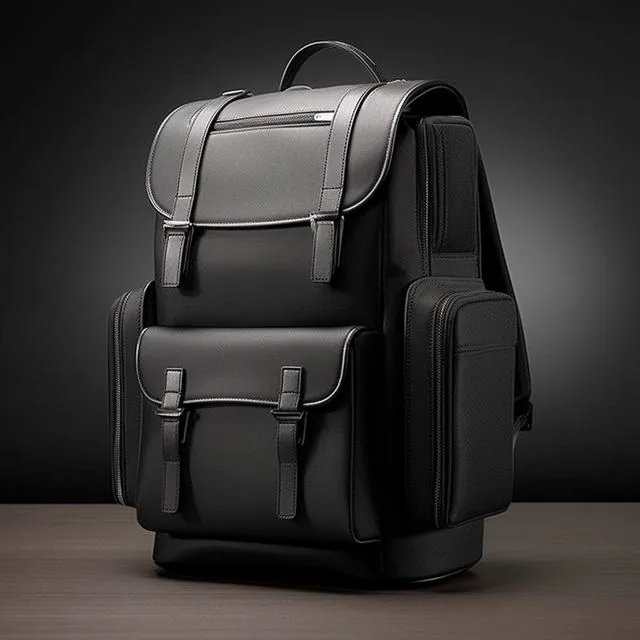
The free allowance is an under-seat allowance, which means the limiting factor is the seat in front of you rather than the dimensions on the website. On easyJet's A320 family aircraft the seat pitch is around 71-74 cm, and the usable space beneath a seat is reduced by the seat frame, the safety card pocket and, on some rows, by equipment boxes fitted under the seats in front of bulkheads and exit rows. In practice a bag that measures 45 x 36 x 20 cm fits under most seats but not under every seat, and rows with under-seat equipment boxes are the ones to avoid if you are relying on the free allowance.
Soft bags have a real advantage here, because a fabric pack can be squeezed into an irregular space that a rigid case cannot enter. A 45 cm tall pack can go in feet-first at a slight angle, and a pack that is 2 cm over on depth will usually compress enough to slide under if the harness is not bulky. The practical approach is to board, place the pack, and compress it with your feet while you fasten the seatbelt. If you are travelling on the free allowance only, avoid the very front row and any exit row, since both commonly have restricted under-seat stowage.
The 15 kg Ceiling and the Lift-It-Yourself Clause
The 15 kg allowance is generous for cabin baggage and, in practice, is rarely the binding constraint for a backpack. A 30-litre travel pack loaded with clothing for a long weekend typically weighs 6-8 kg; even with a 1.4 kg laptop, a 0.5 kg charger brick and a full wash bag, it is difficult to reach 15 kg in a bag small enough to pass the sizer. The clause that matters more is the requirement to be able to lift and carry the bag yourself, because cabin crew will not assist, and a bag you cannot lift into the locker safely becomes a manual-handling problem for you and the person in the next seat.
Weight discipline still pays off, and not only at the airport. Every kilogram carried on the back is a kilogram through security, through the terminal and up the aircraft steps, and a heavy pack tends to be an overpacked pack, which is exactly what pushes depth past 20 cm. If the scales do come out, excess charges at the airport are levied per kilogram per item per flight, and adding weight online in advance in blocks is consistently cheaper than paying at the desk. Weigh the pack at home on bathroom scales and aim for under 8 kg on a short-haul city break.
| Load | Typical weight | Comment |
|---|---|---|
| Empty 30 L travel pack | 1.1-1.6 kg | Depends on frame and fabric denier |
| Clothing for 3 nights | 2.0-3.0 kg | Rolled, in packing cubes |
| Wash bag under 100 ml rules | 0.4-0.8 kg | Decanted into 100 ml bottles |
| 14 in laptop and charger | 1.8-2.2 kg | Carry in the pack's sleeve |
| Total typical load | 5.3-7.6 kg | Comfortably inside the 15 kg ceiling |
What the Large Cabin Bag Costs and When It Is Worth It
Adding a large cabin bag is a dynamic-priced product, so the number varies by route, season and how early you book. easyJet's own fees page lists a flat £60 charge at the boarding gate, and booking online is always cheaper than paying at the airport; third-party trackers put the online range at roughly £6 to £35 one way on typical short-haul routes. A large cabin bag is also included with an Up Front or Extra Legroom seat, with easyJet Plus membership, and with Inclusive Plus fares, and every paid large cabin bag includes Speedy Boarding, which is a genuine benefit when locker space is tight.
The decision is a comparison, not a reflex. On a two-night city break, a 30-35 litre backpack inside the free 45 x 36 x 20 allowance is enough for most travellers and the add-on is unnecessary. On a five-night trip, or when you need to carry a suit, camera body or work documents that will not compress, paying for the overhead bag is cheaper than a 15 kg hold bag on many routes and saves the baggage reclaim queue at the other end. Note the trap: if you do not select a seat, easyJet auto-allocates one at check-in, and an auto-allocated Up Front or Extra Legroom seat does not carry the large bag allowance.
At the Gate: What Happens If It Does Not Fit
Boarding staff check cabin bag sizes before you board, using a rigid metal sizer. If your bag will not drop in, or if you have brought a large cabin bag without the correct seat selection or a pre-booked allowance, the bag goes into the aircraft hold and charges apply. The published gate charge for an oversize or unbooked large cabin bag is £60, which is more than ten times the cheapest online rate for the same service and roughly the cost of a decent 30-litre backpack. There is no negotiation at the point of failure, because the sizer is binary and the agent has no discretion over the dimensions.
There is one tool worth using in advance. easyJet provides a bag-sizing tool in its iOS app that uses the phone camera to estimate whether a bag fits the published maximum, and the airline is explicit that it is a guide rather than a guarantee. The reliable method is a tape measure and a hard floor: stand the pack against a wall, place a book flat on top of it, mark the wall, and read the three dimensions with the pack loaded. Do this the evening before, not in the queue, because the only fix available at the gate is a £60 one.
Measure the loaded pack with a tape measure, allow 10-15 mm of margin on every dimension, and photograph the measurement next to the bag. If it is over, move the bulkiest item into a jacket pocket before you reach the gate.
Packing to the Free Allowance Without Wasting Space
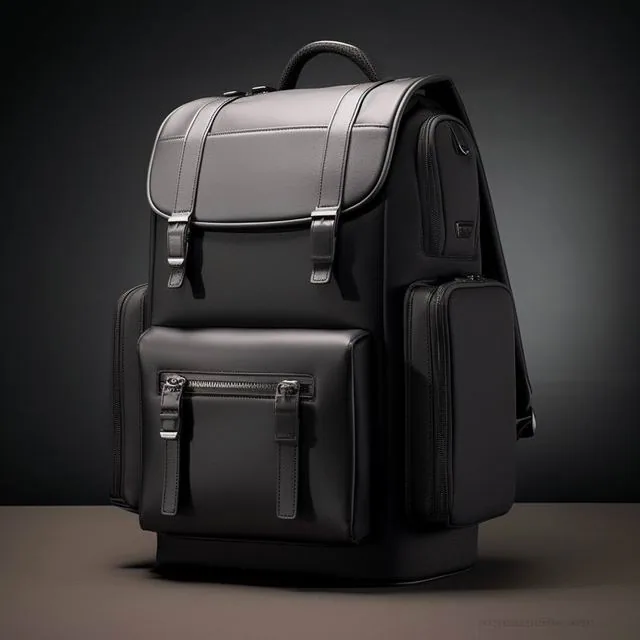
The free 45 x 36 x 20 cm box is nominally 32.4 litres, but no fabric pack fills a rectangular box, so a realistic usable figure for a soft backpack inside those dimensions is 22-26 litres. That is enough for three to four nights if you plan it, and tight for a week. The technique that matters most is rolling clothing rather than folding it, which typically saves 20-30% of the volume and reduces creasing; compression cubes add another increment by squeezing bulk out of fleeces and knitwear without expanding the pack's cross-section. Wear the bulkiest layer through security rather than carrying it, since a jacket worn on the body costs nothing against the sizer.
Distribute weight and bulk deliberately. Heavy dense items, the wash bag, the charger brick and any camera body, belong low and close to the back, which keeps the pack's centre of mass near your spine and stops the front panel bowing outward. Soft bulky items, a jacket and a spare pair of trousers, go in the outer half where they can compress. Keep the laptop flat against the back panel rather than in a front pocket, because a laptop in an outer pocket creates a hard flat bulge right where the sizer is tightest and adds 15-20 mm of depth.
| Item | Volume | Where it goes |
|---|---|---|
| Three rolled shirts | 3.0 L | Compression cube, lower half |
| Two pairs of trousers | 3.5 L | Rolled, outer half of the main body |
| Wash bag, 100 ml bottles | 0.8 L | Low and close to the back |
| 14 in laptop and charger | 1.2 L | Flat against the back panel |
| Light jacket, worn or packed | 2.5 L | Worn through security if the pack is tight |
Security, Liquids and Batteries on the Way Through
Cabin bag size is one checkpoint; security is another, and the rules there are set by the airport rather than the airline. At most UK airports liquids in hand baggage are restricted to containers of 100 ml or less, and those containers must fit comfortably in a single transparent resealable bag of about one litre capacity, roughly 20 x 20 cm, with one bag per person. Some airports now permit larger containers following the rollout of new scanner technology, so the UK government's hand luggage guidance for the specific departure airport is worth reading the day before you fly.
Power banks and spare lithium batteries must travel in the cabin rather than in the hold, which makes the backpack the correct place for them by default. Keep them accessible, because they may need to be produced separately at the scanner, and never pack a damaged or swollen cell. Separate passenger-rights protection applies if your flight is delayed or cancelled, and entitlements under the relevant regulations are summarised for travellers by the European Commission's air passenger rights pages, which remain the reference point for UK travellers on routes still governed by them. Check the current position before you rely on it.
Specifying a Cabin-Compliant Pack for a UK Range
For a brand developing a travel range, the commercial question is whether to build to the free under-seat box or to the overhead box. Building to 45 x 36 x 20 cm costs volume and therefore perceived value, because shoppers compare litres rather than compliance; building to 56 x 45 x 25 cm delivers a pack that most buyers cannot carry free on the lowest fare. A pragmatic split is a 24-26 litre under-seat model with a semi-rigid frame sheet and an 18 cm empty depth, sold alongside a 38-40 litre overhead model clearly labelled with the allowances it matches.
QUANZHOU JUNYUAN BAGS works through that decision with buyers as part of programme management, and the dimensional target is fixed in the tech pack before sampling rather than checked afterwards. Prototypes are measured loaded, with a representative 8 kg load, at the three worst points, and the result is written into the specification alongside the fabric and hardware. Sampling runs 6-10 working days, or 12-15 for complex builds, bulk production runs 35-50 days, inspection is released at AQL 2.5 under ISO 2859-1, and shipment is FOB Xiamen on T/T 30/70 with a minimum order quantity of 500 pcs per style and colourway.
Frequently Asked Questions
What size backpack is allowed on easyJet for free?
Every passenger can bring one small cabin bag free, with maximum dimensions of 45 x 36 x 20 cm including handles and wheels, and a maximum weight of 15 kg. It must fit under the seat in front of you. For a soft backpack that means measuring the loaded pack, not the empty one: a pack listed at 18 cm deep is often 23-24 cm deep once packed. Aim for an empty depth of 16-18 cm and use compression straps to hold the profile inside 20 cm at the gate.
What is the easyJet large cabin bag size?
The large cabin bag measures a maximum of 56 x 45 x 25 cm including handles and wheels, weighs up to 15 kg, and must fit in the overhead locker. It is not included with a basic fare: you either pay to add it, hold easyJet Plus membership, or book a fare such as Inclusive Plus that includes it. Every paid large cabin bag also includes Speedy Boarding. The maximum number of cabin bags per person is two, one small and one large.
Does the easyJet small cabin bag allowance include handles and wheels?
Yes. easyJet states that the 45 x 36 x 20 cm maximum includes any handles and wheels, which is stricter than some competitors who exclude them. A grab handle standing 25 mm proud of the body counts toward the height, and a moulded base or a bottle in a side pocket counts toward width. Measure at the widest points with the pack loaded and the compression straps done up, and leave 10-15 mm of margin because sizers are rigid metal cages.
How much does an easyJet large cabin bag cost?
It is dynamically priced, so the figure depends on route, season and how early you book. The published charge at the boarding gate is a flat £60, and online pricing is always cheaper than paying at the airport; third-party trackers put the online range at roughly £6 to £35 one way on typical short-haul routes. A large cabin bag is included with Up Front or Extra Legroom seats, easyJet Plus membership and Inclusive Plus fares, and it comes with Speedy Boarding.
What happens if my backpack is too big for easyJet at the gate?
Staff check sizes before boarding using a rigid sizer. A bag that will not fit, or a large cabin bag brought to the gate without the correct seat selection or a pre-booked allowance, is placed in the aircraft hold and charges apply, published at £60 at the gate. That is more than ten times the cheapest online rate. The only reliable prevention is measuring the loaded pack at home with a tape measure and leaving 10-15 mm of margin on every dimension.
Can I take a backpack and a laptop bag on easyJet?
Not on a standard fare. The maximum is two cabin bags per person, one small and one large, and only the small bag is free. A standard fare holder therefore gets one bag, and a separate laptop bag or handbag must fit inside it before boarding. Passengers who have added a large cabin bag, or whose fare or membership includes one, can carry both, with the laptop bag or backpack as the small under-seat item and the larger bag in the locker.
How many litres fit in the easyJet free under-seat allowance?
The 45 x 36 x 20 cm box is nominally 32.4 litres, but no fabric backpack fills a rectangular box, so a realistic usable figure for a soft pack inside those dimensions is 22-26 litres. That covers three to four nights with rolled clothing and compression cubes, and is tight for a week. To make the most of it, roll rather than fold clothing, keep dense items low and close to the back, and keep the laptop flat against the back panel.
Does easyJet weigh cabin bags?
The published limit is 15 kg for both cabin bag types, with the condition that you can lift and carry the bag yourself. At many UK airports staff focus on the sizer rather than the scales, but some European airports, particularly in Spain and Italy, check weight as well as size. For a backpack it rarely binds: a loaded 30-litre travel pack typically weighs 5-8 kg. Excess weight at the airport is charged per kilogram per item per flight, and adding weight online in advance is cheaper.
Which easyJet seats include a large cabin bag?
Up Front and Extra Legroom seats include the large cabin bag, as does easyJet Plus membership and an Inclusive Plus fare. Watch the auto-allocation trap: if you do not select a seat, easyJet allocates one at check-in, and while the system may place you in an Up Front or Extra Legroom seat, an auto-allocated seat does not carry the large cabin bag allowance. If the overhead bag matters, select the seat or add the bag explicitly when you book.
Is a 40 litre backpack allowed on easyJet as cabin baggage?
Only as a paid large cabin bag, and only if it compresses within 56 x 45 x 25 cm when loaded. A 40-litre pack is typically around 50-55 cm tall and 28-32 cm deep when full, so depth is the dimension that fails: compression straps may pull it to 25 cm, but the resulting bulge is usually uneven and a rigid sizer will reject it. For the free under-seat allowance, look at 22-26 litres with an empty depth of 16-18 cm.
Can I take a power bank in my easyJet cabin backpack?
Yes, and you should: power banks and spare lithium batteries must travel in the cabin, never in the hold. Keep them in an accessible pocket because they may need to be produced separately at security, and never carry a damaged or swollen cell. Liquids are separately restricted at most UK airports to containers of 100 ml or less in a single transparent resealable bag of about one litre, so check the rules for your specific departure airport before you fly.
How do I check whether my backpack fits the easyJet sizer?
Use a tape measure rather than an app. Pack the bag as you will fly, do up the compression straps, stand it against a wall with a book flat on top, and read height, width and depth at the widest points with handles included. easyJet's iOS app has a camera-based bag sizing tool, but the airline describes it only as a guide. Allow 10-15 mm of margin on each dimension, since sizers are rigid and loaded fabric packs bulge.
Developing a Cabin-Compliant Travel Pack
QUANZHOU JUNYUAN BAGS is a sourcing and programme-management company, and dimensional compliance is treated as a specification item rather than a marketing claim: prototype packs are measured loaded, with a representative 8 kg load, at the three worst points before a style is released to sampling. Production is coordinated across 4,950 square metres of SGS-verified production floor space with 137 colleagues and 7 production lines, and the company has been running programmes since 2014.
Terms are fixed. Sampling takes 6-10 working days, or 12-15 for complex constructions, bulk production runs 35-50 days, inspection is released at AQL 2.5 under ISO 2859-1, and orders ship FOB Xiamen on T/T 30/70. The minimum order quantity is 500 pcs per style and colourway. Send the target dimensions and the carrier you are designing for, and the team will come back with a construction proposal.
Email: service@junyuanbags.com
WhatsApp: +86 177 5002 0688